
We focus on men's sweaters, cardigans, knit jackets, jacquard knitwear and private label knitwear. We support B2B buyers with OEM/ODM development, sampling and bulk production planning.
Guides for custom knitwear manufacturing, yarn selection, gauge options, quality control, cost planning and tech pack preparation.
Free interactive tool
Build your spec — yarn, gauge, colour, customisation — and instantly see the typical MOQ, sample & bulk timelines and what drives your cost.
Materials
A B2B yarn and material guide for choosing cotton blends, wool blends and synthetic support fibers for custom knitwear.
Read Guide ->
Product Development
A guide to women's knitwear manufacturing for B2B brands, covering silhouette variety, fit and sizing, yarn and trend responsiveness.
Read Guide ->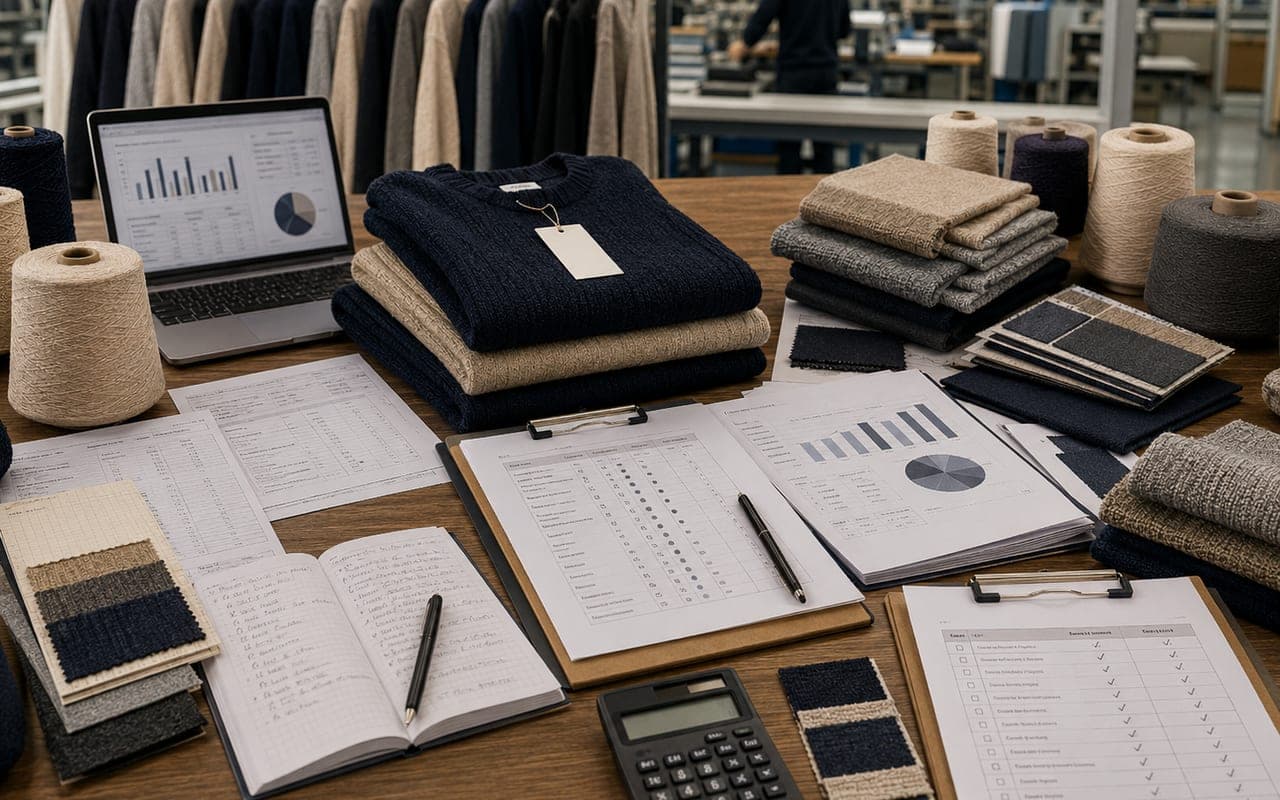
Benchmark Report
Reference benchmark ranges for B2B knitwear procurement in 2026 — MOQ, lead times, cost structure, gauge, quality control and commercial terms — to help buyers sanity-check quotes and plan with confidence.
Read Guide ->
Sustainability
Recycled-content knitwear sounds simple on a hangtag, but the fiber choice, blend ratio, and chain-of-custody paperwork decide whether the program actually scales. This briefing walks through rPET, rPA, and recycled wool — what they each bring to a knit, the blend percentages that hold a clean hand, and where the trade-offs start to bite. It also separates GRS from RCS, addresses the microfiber-shed conversation honestly, and gives a buyer-side checklist for AW and year-round recycled programs. Written for sourcing managers who need answers their tech team and their compliance team will both accept.
Read Guide ->
Materials
Cotton looks simple on a tech pack and gets expensive fast in a quote. The word covers a tier ladder that runs from commodity upland fiber to Supima-trademarked US long-staple, with mercerization, combing, and spin method layered on top. Each lever moves hand, luster, shrinkage, pilling, and price in ways that matter for spring-summer knit polos, fine-gauge crews, and lightweight cardigans. This decoder maps the commercial tiers buyers actually encounter, explains what mercerization and ring-spinning physically do to the yarn, and gives realistic FOB yarn-price bands so you can write tech packs that quote cleanly the first time.
Read Guide ->
Strategy
Most sourcing scorecards still treat per-piece FOB as the headline KPI, and most brand directors quietly know it lies. In knitwear specifically — where every program runs through yarn development, lab dips, knit-down approval, wash trials, and a sampling room that has to learn your house fit — the cost of a garment is paid across eighteen months of friction, not in a single price line on a quotation. This article lays out a three-year total cost of ownership (TCO) model for knitwear supplier relationships aimed at brand directors and VPs of sourcing who keep getting pressured to chase a 40-cent FOB delta to a new factory. We walk through how sample cost actually declines as a supplier internalizes your spec (year 1 = 100, year 2 ≈ 70, year 3 ≈ 50), why reorders compress from week 7 to week 3 once a tech pack is genuinely owned by the other side, how yarn library carry-over kills new color development charges each season, and how production calendar priority — the unwritten advantage — only accrues to brands that stay. We also do the part most of these articles skip: the honest exit triggers. Communication breakdown, repeated first-bulk quality failure, no capability growth after eighteen months — these are real reasons to leave, and we name them. The argument is not loyalty for its own sake. It is that switching suppliers each season in knitwear almost always pays a 15-25% premium the FOB line does not show.
Read Guide ->A practical guide to custom knitwear manufacturing for B2B buyers developing men's sweaters, cardigans and knit jackets.
7 min read - Guide
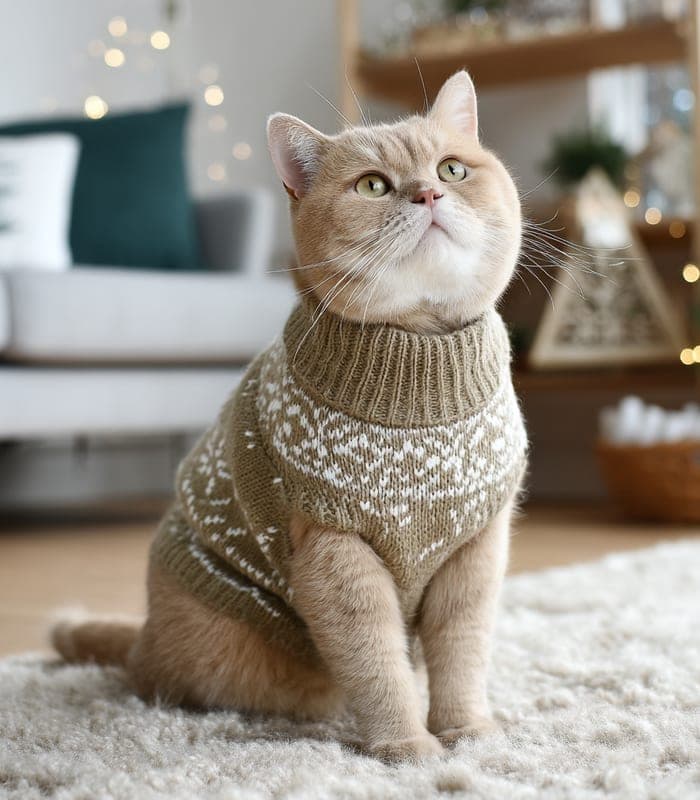
A pet knitwear sourcing read counted from our own published range: two separate size runs rather than one stretched chart, acrylic on 12 of 17 styles for wash durability, 10 of 17 at 7GG-12GG, and why the harness opening has to be on the tech pack before knitting.
6 min read - Guide
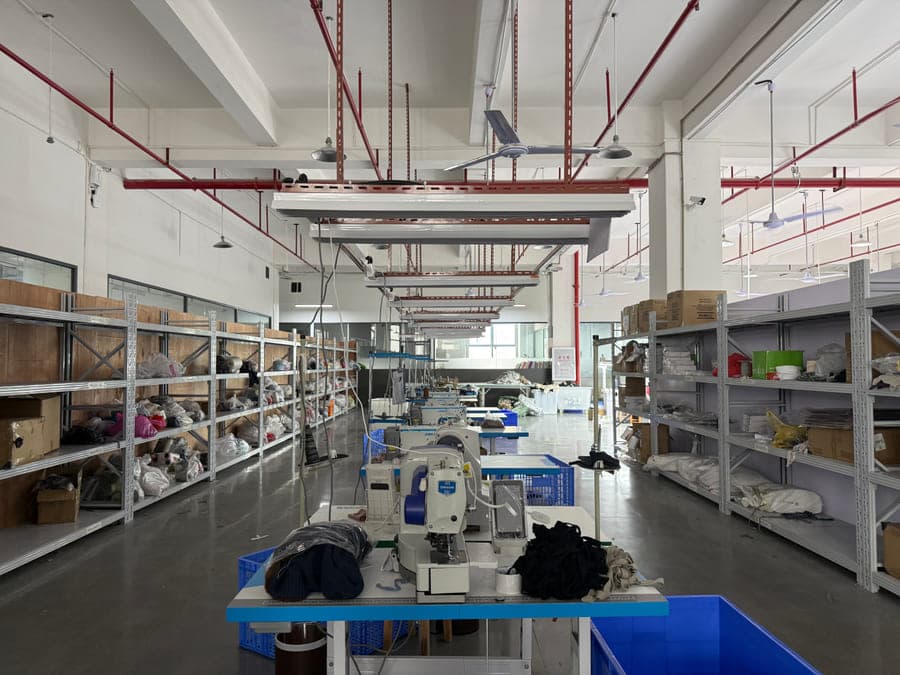
What has to be on a knitwear label for the EU — mandatory fibre composition (Reg 1007/2011) in each market language, the GPSR Responsible-Person contact, care symbols (EN ISO 3758), and a label checklist.
5 min read - Guide
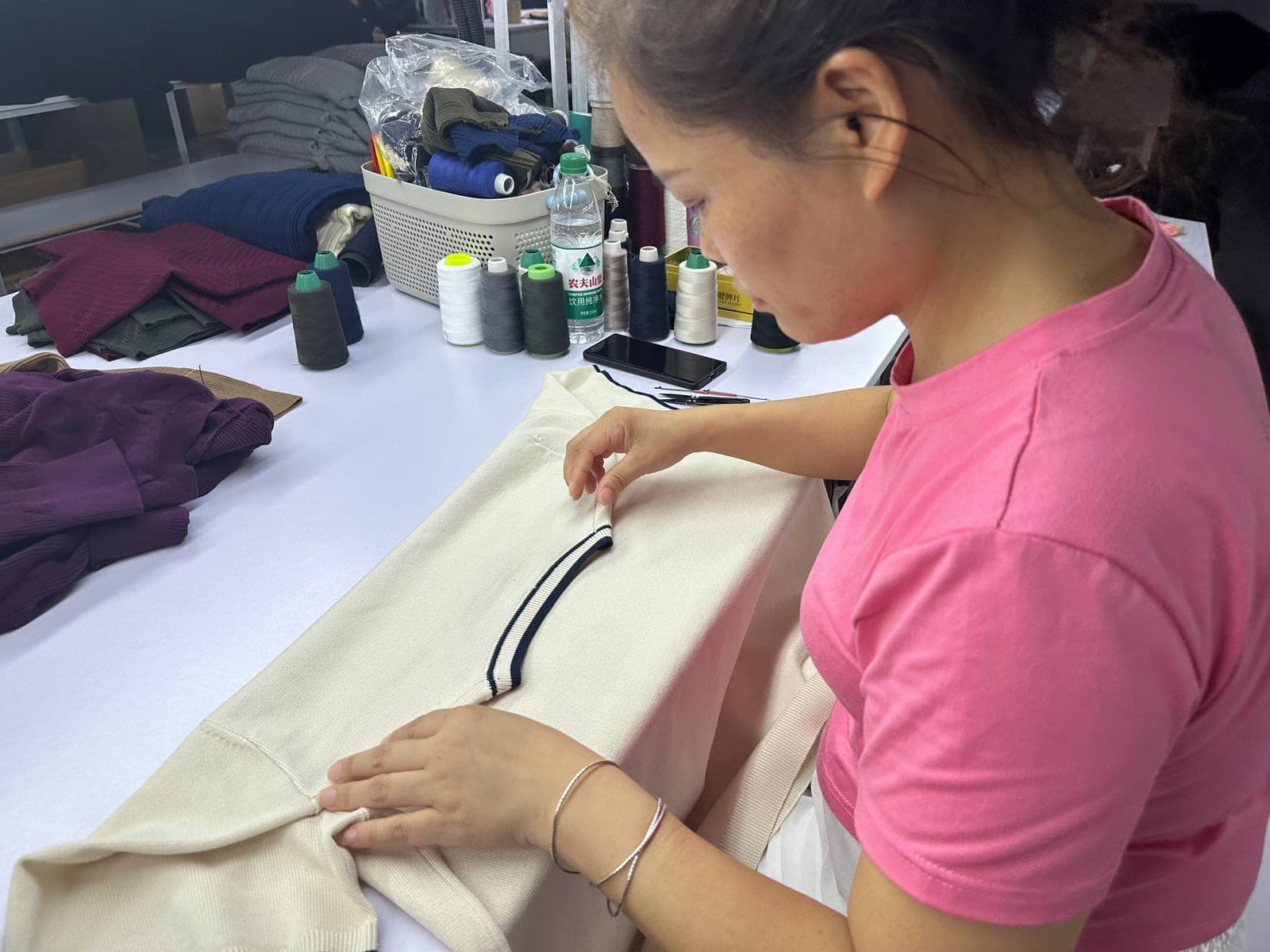
What apparel brands must confirm before importing knitwear into the EU — the GPSR EU Responsible Person, packaging EPR (LUCID/Verpackungsgesetz), OEKO-TEX, GRS, REACH and fibre labelling — plus a supplier-vetting checklist.
8 min read - Guide
Packaging compliance for apparel sold in the EU — per-country packaging EPR (register before you ship), Germany’s LUCID/Verpackungsgesetz, and the new PPWR (applies 12 Aug 2026), with a buyer checklist for polybags, cartons and mailers.
6 min read - Guide
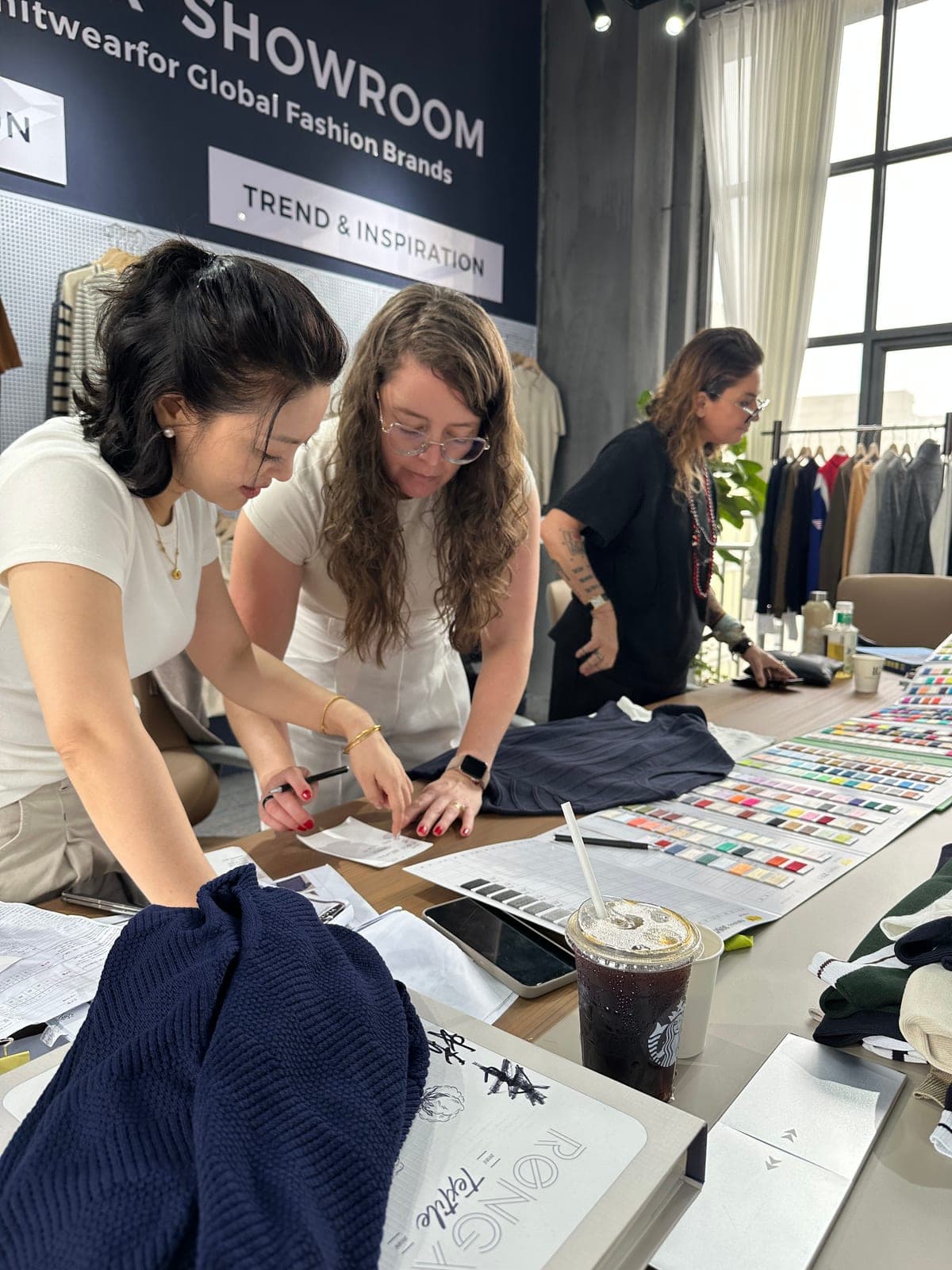
Most missed retail dates in AW knitwear do not come from a factory missing a deadline. They come from a buyer entering the calendar two or three months late and then trying to compress what a manufacturer cannot compress: yarn dyeing, PP approval, and bulk knit time. This guide walks small-to-mid brand owners through the AW26/27 knitwear buying calendar month by month, from yarn books opening in January 2026 to DTC and store launches in October–November 2026. It is written from the manufacturer side of the table, using only verifiable lead times (sample 7–25 days, bulk 30–45 days), and it shows exactly what slips — air-freight upgrades, yarn substitutions, missed window dates — when each gate is hit late.
5 min read - Guide
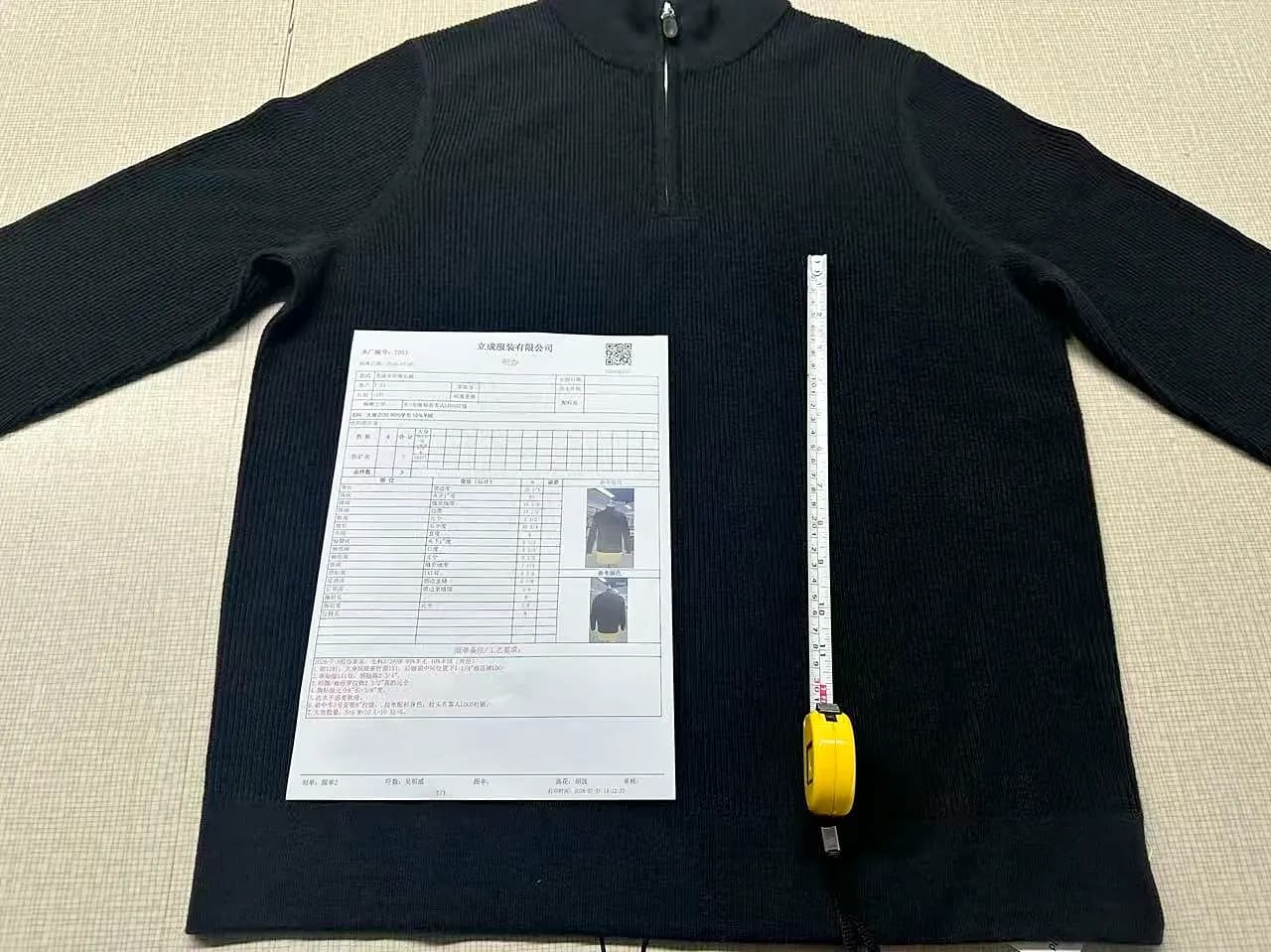
Most sourcing managers get a one-line FOB number from a knitwear factory and have no idea whether the 12.40 USD they are looking at is fair, padded, or hiding a problem that will surface at production. This briefing decomposes a representative 11-14 USD FOB mid-weight men's sweater quote into the cost components factories actually use internally: yarn (usually the largest single bucket at 35-50 percent), knitting machine time, linking labor, dyeing and finishing, trims and branding, QC, factory margin, and commercial overhead. We show ranges rather than false-precision numbers, because the real shape of the cost stack shifts with gauge, fiber, and order size. A 3GG chunky cardigan and a 14GG fine merino crew look like the same product category on paper but have inverted cost structures — one is yarn-heavy and machine-light, the other is the opposite. Knowing which line is fat and which is bone is what separates buyers who negotiate effectively from buyers who chase a five-cent reduction in the wrong place and lose a season to a panicked corner-cut. The article ends with a practical list of RFQ questions that force a supplier to reveal the assumptions inside their quote without demanding their full cost sheet, which no factory will share anyway.
7 min read - Guide
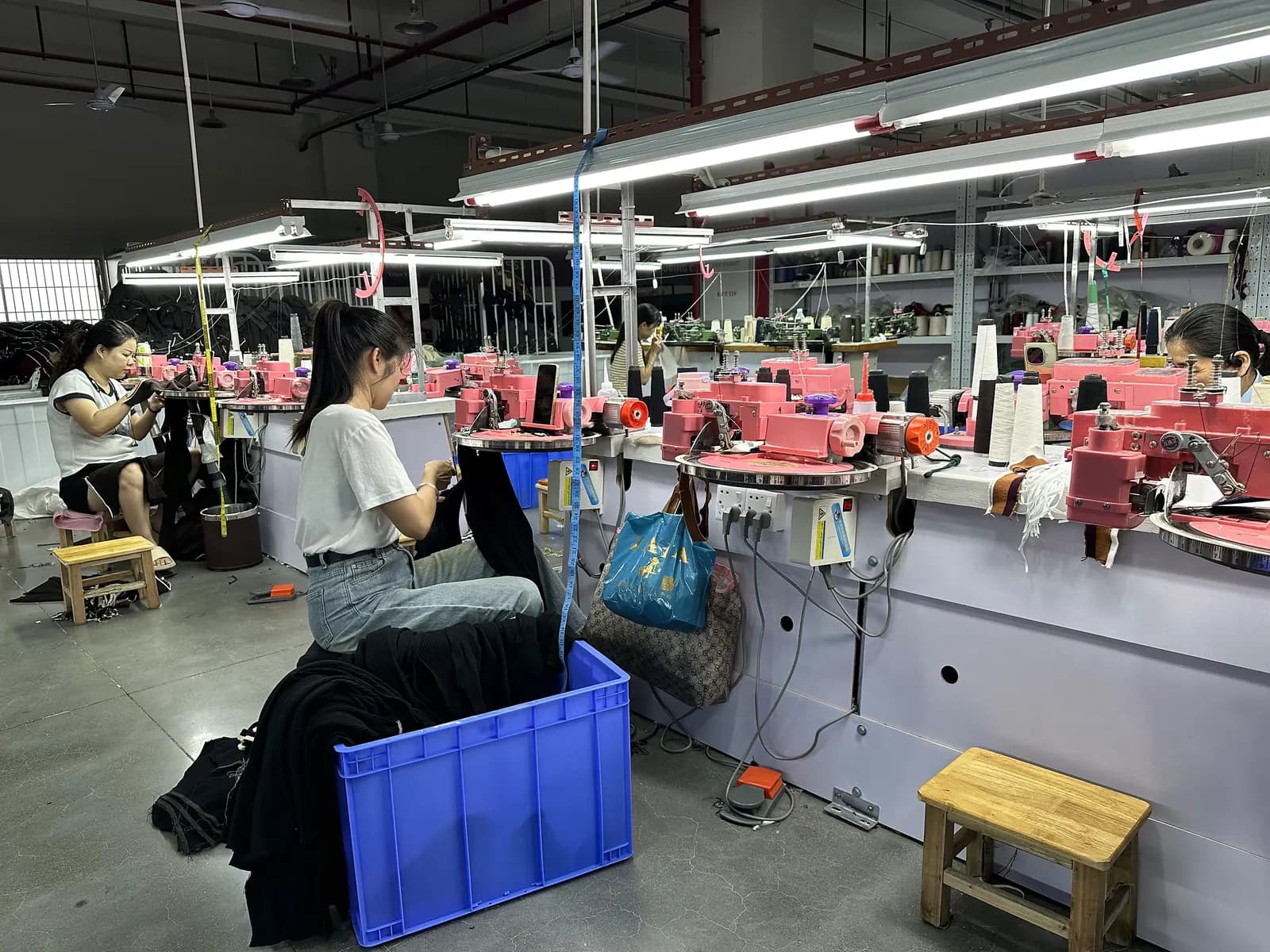
France is one of the most demanding sourcing markets we work with — French menswear, contemporary and premium-everyday brands tend to brief tightly on hand-feel, color depth, finishing detail and care labeling, and they expect the factory to push back when something is technically wrong. This playbook is written from our experience as a Dongguan-based custom knitwear manufacturer (Licheng, founded 2018) supplying brands across the EU, France included. It covers the lead time and MOQ realities for France-bound programs, the yarn and gauge directions French buyers most often pick, the quality and compliance points that come up in their tech packs, and the logistics, payment and Incoterms norms that keep France knitwear sourcing predictable from PO to landed warehouse.
6 min read - Guide
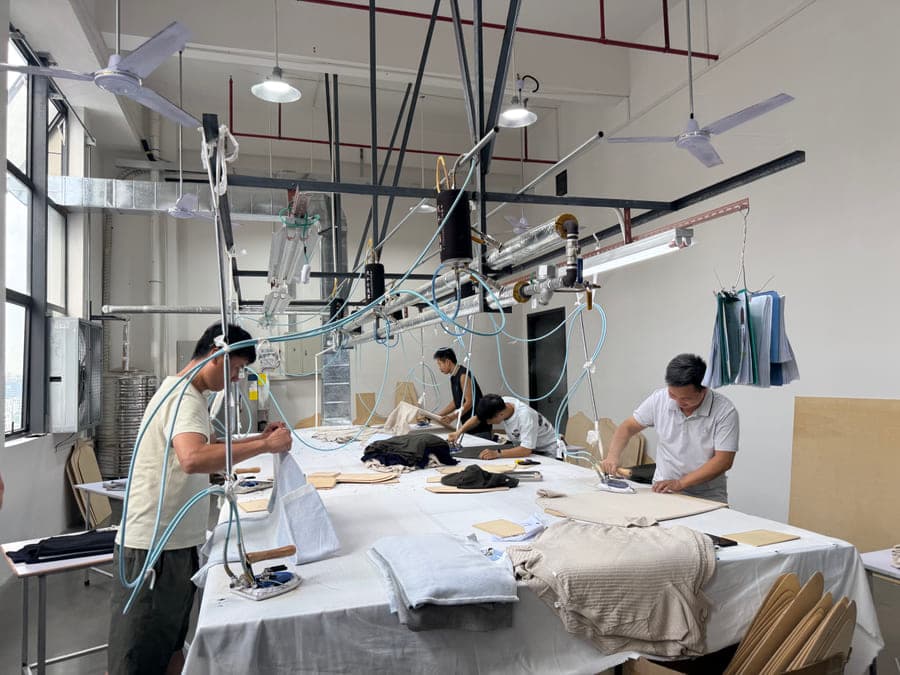
A 2026 production-timeline guide for custom sweaters: sampling 15-25 days, bulk 30-45 days, sea freight 25-35 days, ~3-4 months total from first sample to in-store, plus how to compress the timeline.
7 min read - Guide
We focus on men's sweaters, cardigans, knit jackets, jacquard knitwear and private label knitwear. We support B2B buyers with OEM/ODM development, sampling and bulk production planning.
Ready sample styles and selected custom programs can support lower-risk trials before larger seasonal orders.
Yes. Brands, including new labels preparing a first collection, can pay for a sample and see it before placing a production order. Two routes: a ready sample of a published style at USD 60 per piece in about 7 days, or a development sample from your tech pack at USD 150 per style, covering yarn sourcing, knit programming, one prototype and one revision round, in 15-25 days. Cashmere and mohair styles are quoted individually and shipping is charged at cost. Production starts only after you approve the physical sample, at our minimum of 30 pieces per colour with sizes mixed inside the 30. A sample does not commit you to a production run; we do not make garments for personal use.
Our sample fee is not refundable. Yarn sourcing, knit programming, machine setup and hand linking cost about the same whether one piece follows or five hundred, which is why the fee exists at all. It is credited against your first bulk order placed within six months of sample approval: 100% of a development sample fee, 50% of a ready sample fee.
Yes, for brands developing a style. One development piece is fine, with no commitment to bulk: a development sample is USD 150 per style and covers yarn sourcing, knit programming, one prototype and one revision round, in 15-25 days (cashmere and mohair are quoted individually). If you then go to production, the minimum is 30 pieces per colour with sizes mixed inside the 30, and the full USD 150 is credited against a first bulk order placed within six months of approving the sample. We do not make garments for personal wear.
Plain and striped styles using the same yarn and colour can be combined toward a minimum of 30 pieces, with mixed sizes. For example, four plain styles of 25 pieces each in the same yarn and colour total 100 pieces and meet that minimum. Different yarns or colours are counted separately. Jacquard and intarsia require 30 pieces per pattern; quantities from different patterns cannot be combined. Send us your styles, yarns, colours and quantities so we can confirm how the minimum applies to your project.

Get a free catalog or submit an RFQ today. Our team will respond within 24 hours.
MOQ, lead time, cost ranges, gauge selection and QC checkpoints across typical OEM/ODM knitwear programs in NA + EU. Enter your email — we'll send you the report link in 30 seconds.
No spam. Unsubscribe with one reply. We use your email only to send you the report and follow up if you want a sourcing conversation.









Brand names shown are previously serviced OEM/ODM partners. Logos are decorative and do not imply current endorsement.
