Updated 8/24/202612 min readBy Simon Liu · Licheng Knitwear
France is one of the most demanding sourcing markets we work with — French menswear, contemporary and premium-everyday brands tend to brief tightly on hand-feel, color depth, finishing detail and care labeling, and they expect the factory to push back when something is technically wrong. This playbook is written from our experience as a Dongguan-based custom knitwear manufacturer (Licheng, founded 2018) supplying brands across the EU, France included. It covers the lead time and MOQ realities for France-bound programs, the yarn and gauge directions French buyers most often pick, the quality and compliance points that come up in their tech packs, and the logistics, payment and Incoterms norms that keep France knitwear sourcing predictable from PO to landed warehouse.
French brands are not the loudest buyers we work with, but they tend to be the most exacting. Whether the program is a contemporary Parisian menswear label working a tight capsule, a heritage maison commissioning a single hero crew neck, or a digitally native premium-everyday brand scaling a core merino range, the brief that comes out of France is usually closer to a real tech pack than what we receive from many other markets — with specific yarn counts, hand-feel benchmarks, color references and finishing notes that don't tolerate substitutions. This playbook walks through how we plan France knitwear sourcing from the manufacturer side, so French buyers can pressure-test their own timeline, MOQ, costing and quality assumptions before the first PO.
Why France matters for knitwear sourcing
Common Questions
What extra obligations apply to knitwear sold in France?
France runs an extended producer responsibility scheme for textiles and has its own labelling expectations, including the Triman sorting marking. These are obligations on the party placing goods on the market, so they need to be settled with your supplier before packaging and labelling are finalised rather than after.
Ready to Start Your Project?
Get a free catalog or submit an RFQ today. Our team will respond within 24 hours.
What MOQ works for a French brand's first order?
30 pieces per colour. French independents frequently start with a tightly edited capsule in two or three colourways, which fits that minimum comfortably - remembering that the minimum counts per colour.
Which yarns and gauges do French buyers favour?
Fine and refined more often than heavy: merino, cotton and cotton blends in mid to fine gauges, with clean silhouettes. Where a British programme reaches for a chunky cable, a French one more often reaches for a finer-gauge piece with a considered fit.
How should packaging and labelling be handled for the French market?
Raise them at quotation stage. Care labelling, composition labelling and the sorting mark all have to be right at production, and changing a label after bulk is knitted is a repack at best. Label and trim development also carries its own minimums.
What lead time should a French buyer plan for a seasonal drop?
Sampling runs 15-25 days from confirmed yarn and artwork, then bulk, then sea freight. Build the calendar backwards from the in-store date and put the colour approval step first - it is the one with a third party's minimum attached to it.
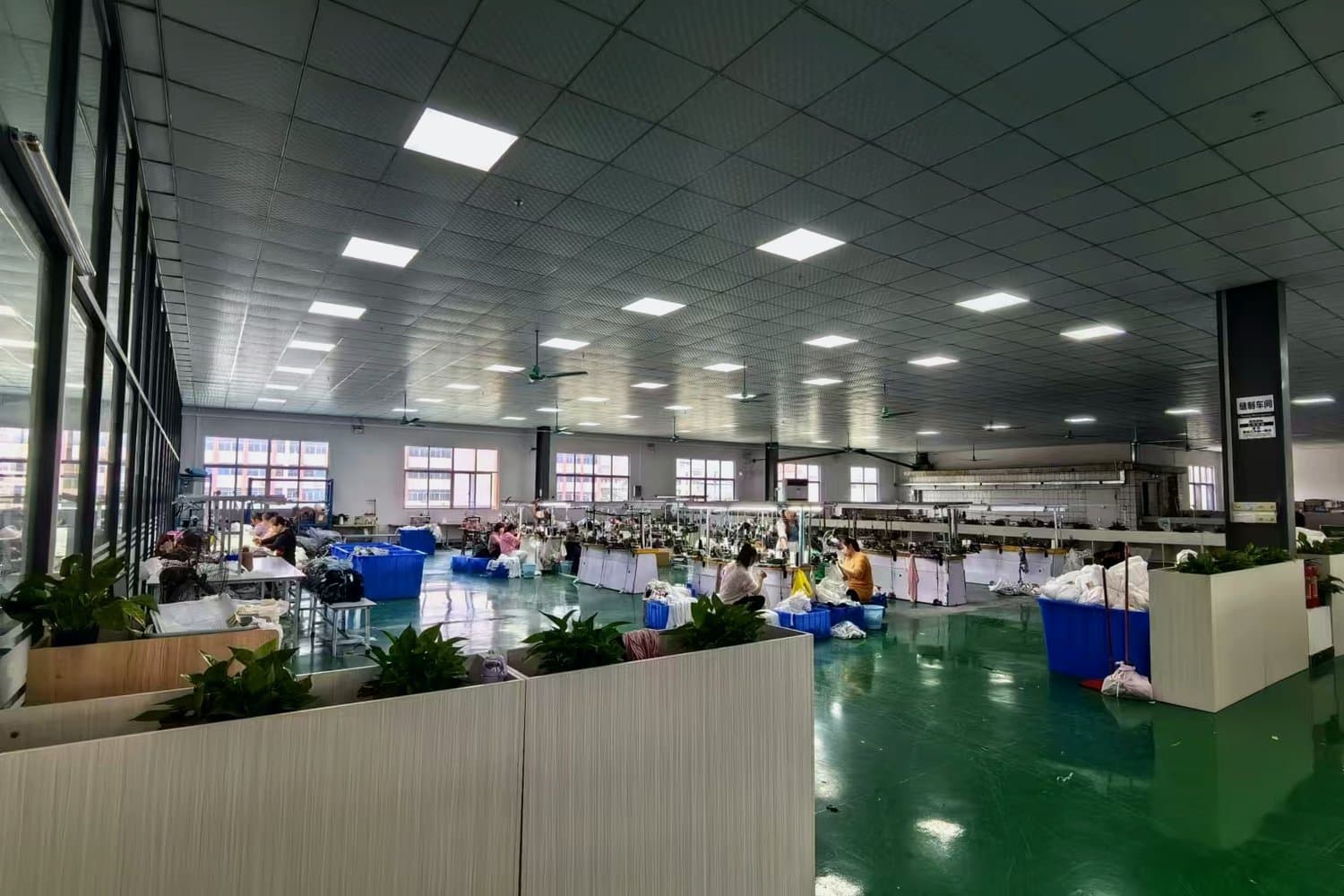
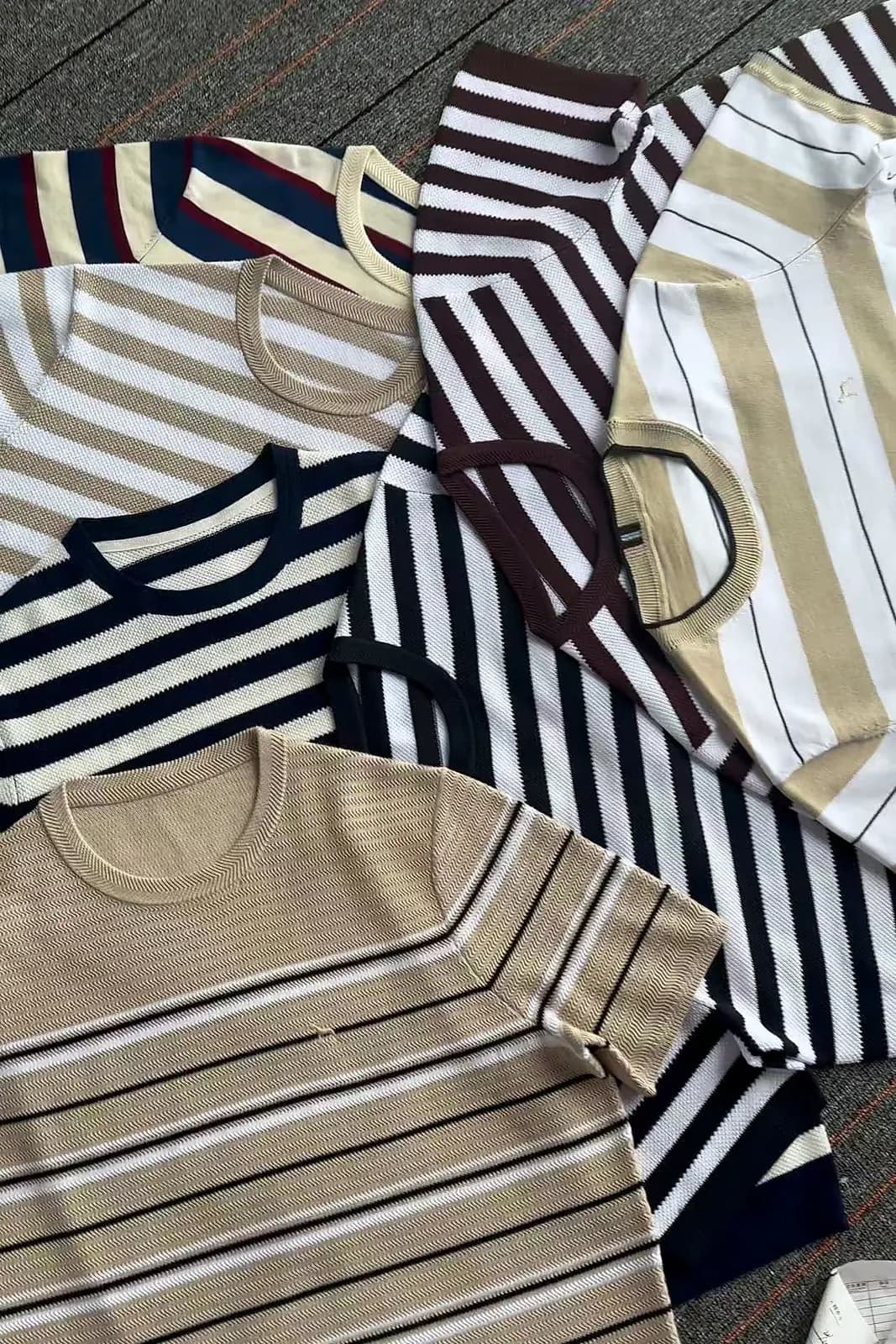
France sits in a particular place in European knitwear demand. The country has a strong domestic design culture, a critical mass of mid-to-premium menswear brands clustered around Paris, and a buyer mindset that is comfortable paying for hand-feel and finishing rather than chasing the lowest unit cost. For a Dongguan-based manufacturer like us, that profile is a good fit: French programs lean toward fine-gauge construction, sensitive yarns (merino, cotton-cashmere blends, brushed mohair), and considered styling — exactly the kind of work where the difference between a competent factory and a careful one shows up on the shelf.
We also see French buyers asking earlier and more directly about traceability, care labeling in French, and packaging that respects the brand's editorial. None of that is unique to France, but the frequency and the precision of the questions are higher than what we see from most other Western European markets. France is currently one of our supported markets alongside the US, Canada, Germany, the UK, Spain, the Netherlands and Sweden, and the volume of French RFQs we receive has been steady through both FW and SS cycles.
If you are framing France knitwear sourcing for your own team, the takeaway is that the market rewards manufacturers who can hold tight tolerances on yarn, color and finishing — not the cheapest quote. Most of the brands we onboard from France arrive with that expectation already set.
Sample lead time and bulk production realities
French buyers usually plan around a single drop or capsule per season, and they want the sample loop tight enough to leave room for revisions before bulk commitment. Our standard sample lead time is 7-25 days from confirmed tech pack and yarn approval. The spread depends almost entirely on the complexity of the style and on yarn availability — a 12GG plain merino crew on a stock yarn lands close to the 7-day end; a 5GG cable knit with a custom-dyed yarn and intarsia placement runs to the longer end. For multi-color programs, we typically build the lab dip approval into a parallel track so it doesn't push the proto sample out.
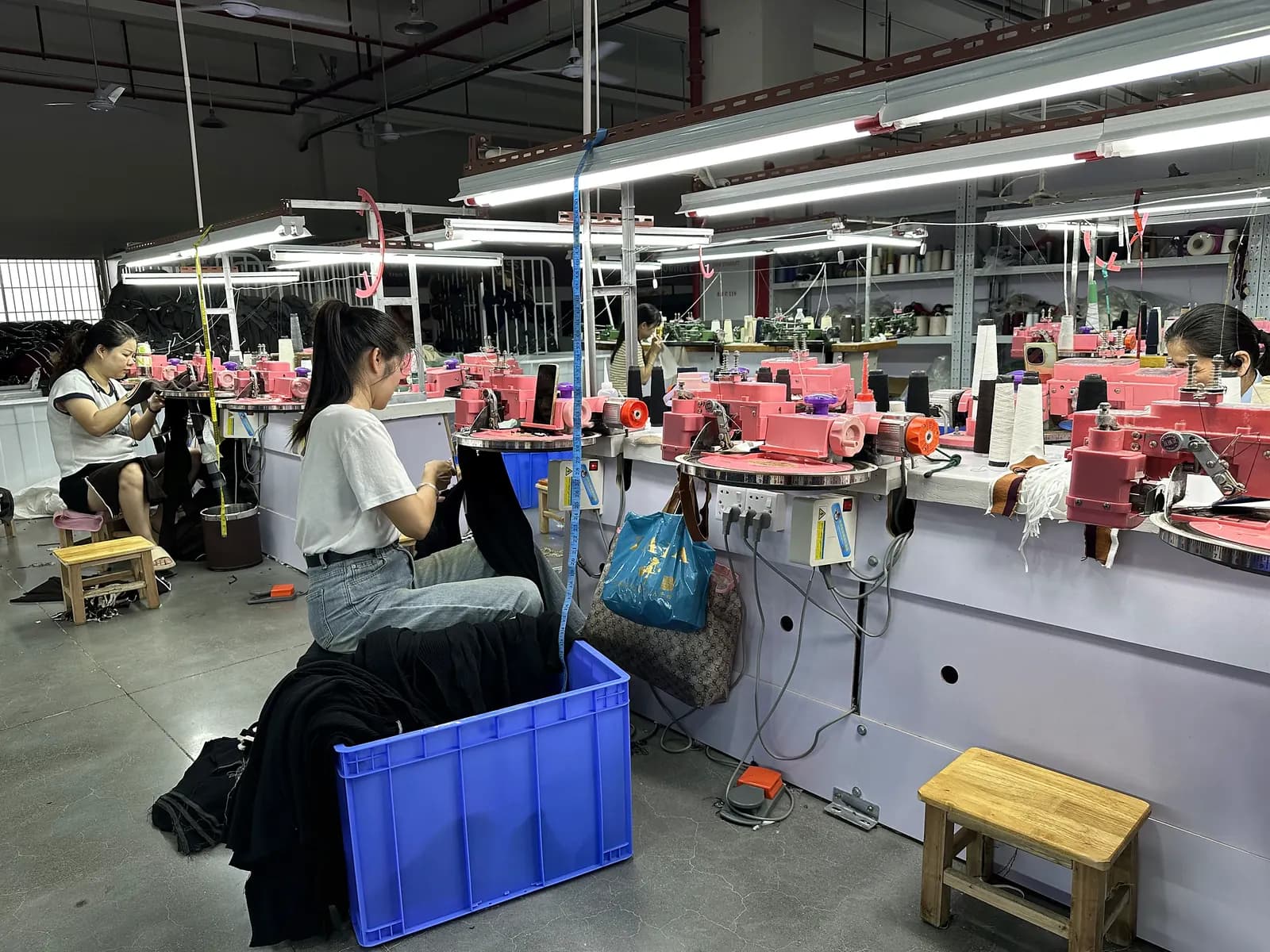
Bulk production runs 30-45 days from PO confirmation, deposit clearance and final approved PP sample. That window assumes yarn is in-house or under a confirmed delivery date from the spinner, which is why we push so hard on early yarn lock-in.
Phase
Working window
What blocks it
Tech pack + yarn selection
1-2 weeks
Late spec, indecisive yarn brief
Proto sample (1st)
7-25 days
Custom yarn, complex stitch
Fit + color rounds
2-4 weeks
Lab dip turns, courier transit
PP sample approval
1 week
Buyer sign-off speed
Bulk production
30-45 days
Yarn delivery, color count
Inspection + shipping prep
1 week
AQL re-checks
Sea freight CN -> FR port
30-40 days
Incoterm, port congestion
Working backward from a mid-September EU warehouse-in date, that means PO should be placed by late May at the latest, with sampling kicked off in February. Brands that compress this calendar typically end up paying air freight on at least part of the order, which is avoidable with realistic planning. Our seasonal knitwear planning guide maps the same logic across both FW and SS cycles.
MOQ and commercial terms for typical French brand sizes
Our catalog MOQ is 30 pieces per color. A typical first PO from a French contemporary brand we onboard looks like 4-8 styles in 2-3 colors each at 30-80 pieces per color — comfortably above MOQ on most colors, sometimes right at it on niche shades that exist mainly to fill out the color story.
Three commercial notes that matter for France-bound programs:
First, French buyers tend to negotiate on detail rather than price headline. We get more questions about whether the woven label is centre-back or side-seam, whether the polybag is recycled, and whether the carton mark uses the brand's exact reference number than we get aggressive price challenges. Build that detail into the cost line from the first quote rather than discovering it three rounds later.
Second, color count drives cost in ways that surprise first-time buyers. Each additional color triggers a separate dye lot and lab dip cycle. On a 30-piece-per-color minimum, going from three colors to six doesn't just double the SKU count — it adds setup time and increases the chance that at least one color slips the timeline. Our MOQ guide for custom sweaters walks through this trade-off in detail, and the low MOQ knitwear guide covers how startup-stage French brands can structure a credible first order without overbuying.
Third, for French DTC brands, reorders matter more than first POs. A successful style will reorder multiple times in a season, and the unit cost on those reorders is what drives margin. We hold yarn references and approved color standards for at least one season after first production so reorder runs don't restart the development loop.
Yarn and gauge directions French buyers favor
The yarn brief we receive from France skews toward natural and natural-blend fibers with a refined hand. The most common requests in our pipeline from French menswear brands:
Merino wool for premium-everyday crew necks, mock necks and half-zips — see our merino wool knitwear guide.
Cotton-cashmere blends for trans-seasonal pieces that need softness without the weight of pure wool.
Brushed mohair for fashion-forward statement sweaters, especially in winter capsules.
Heavier wool blends in 3GG-5GG for fisherman-style cables and chunky cardigans tied to French country and coastal aesthetics.
Cotton and linen-cotton blends for SS knit polos and lightweight crews.
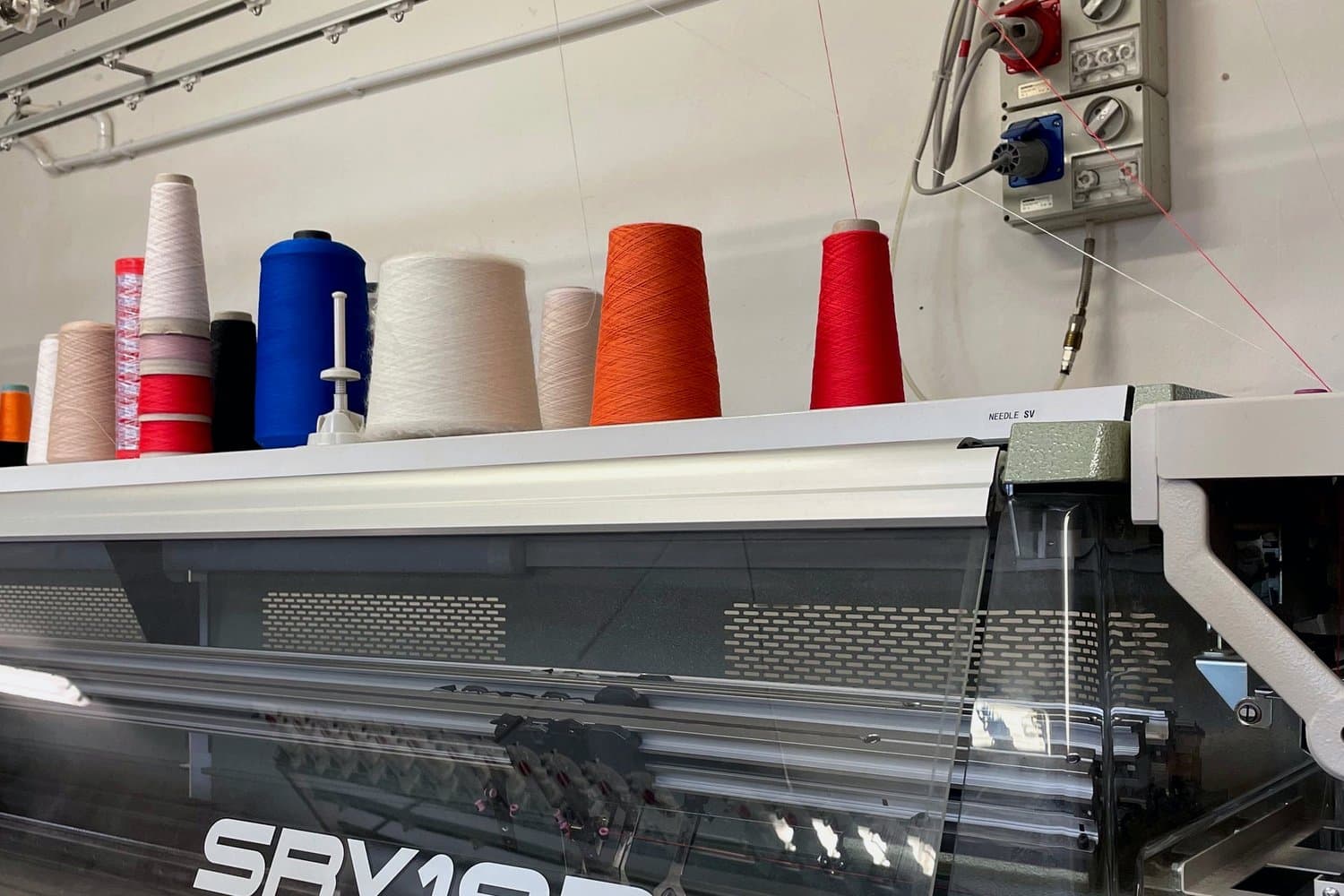
On gauge, French programs cluster around 7GG and 12GG for the bulk of contemporary menswear, with 5GG showing up for textured fall pieces and 3GG-5GG for chunky winter cardigans. The 12GG fine end is where we see the most French interest in clean styling — half-zips, johnny collars, fine cable knits — because the finer gauge holds shape and reads as premium without screaming for attention. Our knit gauge guide and the more focused 5GG vs 7GG vs 12GG comparison cover the trade-offs.
For brands that want to position around sustainability — a topic that comes up in nearly every French RFQ now, even when it isn't a hard requirement — recycled wool, recycled cotton and certified yarn options are available; the sustainable and recycled yarn guide covers what to specify. Supporting documents for traceability and material claims can be discussed on request once a program is moving forward.
Quality control and compliance considerations
French quality expectations are concrete and measurable. The recurring asks we see in French tech packs:
Measurement tolerance tight enough to avoid graded-size drift across the size range. We work XS-3XL and grade rules need to be locked at the PP stage.
Color matching held to the approved lab dip across the full dye lot, not just a target shade. Metamerism — the same color reading differently under store light vs daylight — is a frequent flag, and the color approval guide explains how we set this up.
Pilling resistance specified, especially on merino and cotton-cashmere where soft-hand yarns are more prone to pill. The anti-pill knitwear guide goes deeper.
Care labeling in French, with the correct fiber percentages, country of origin and care symbols compliant with French and EU labeling rules. We confirm copy with the buyer before bulk.
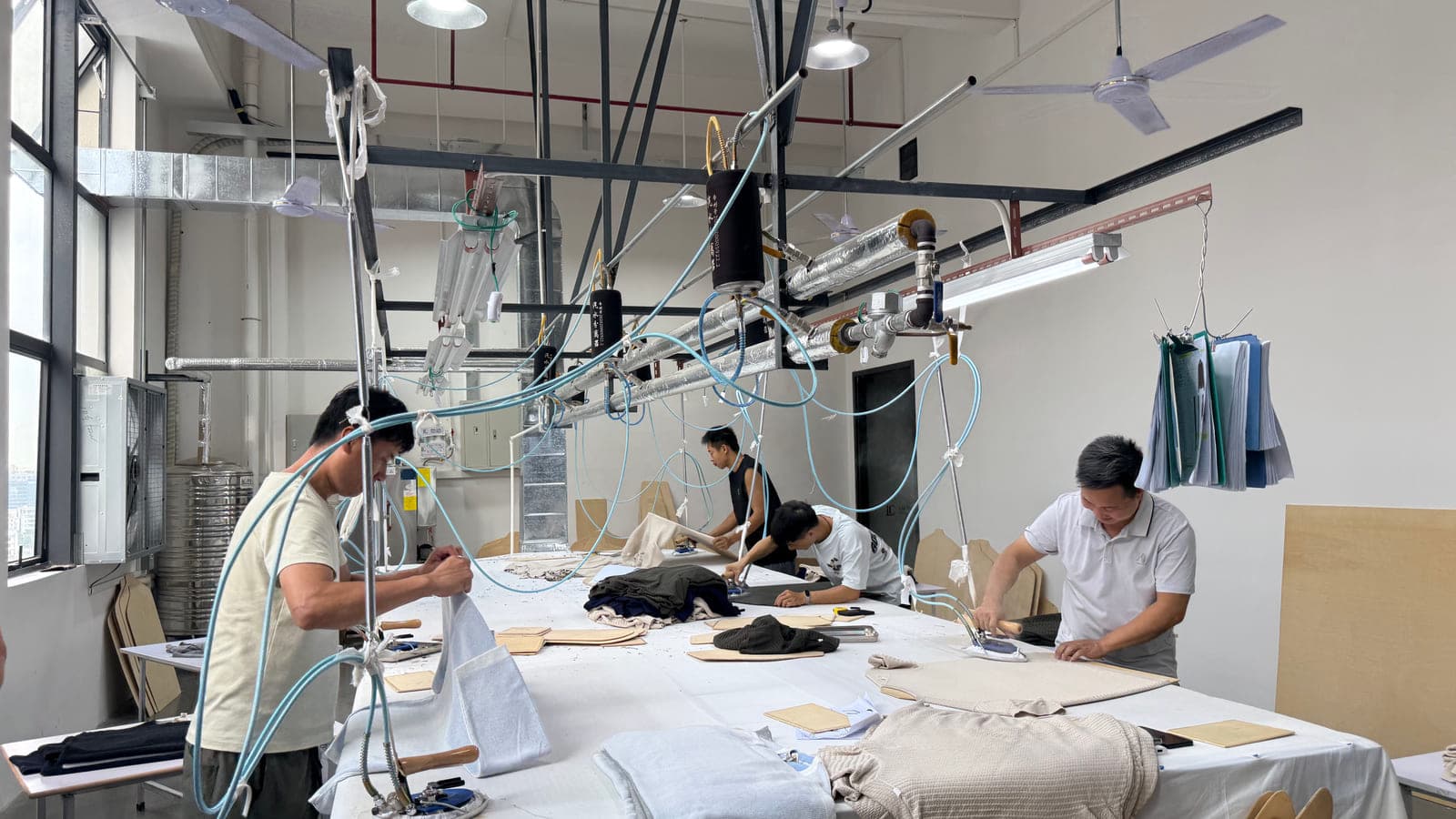
Needle and metal detection through the full inspection process, especially for zip and trim items.
Our standard inspection is AQL-based with workmanship, measurement, color and packing checks. For French buyers who want independent verification, the third-party inspection guide covers how to brief an external inspector. On certifications: any specific scheme needs to be specified at the yarn brief stage because it constrains which yarn references we can quote against. The certifications guide walks through what each one actually covers; we treat them as material-level claims that need real documentation, not marketing claims.
Logistics, payment and Incoterms notes
Most France-bound shipments from our facility move by sea container, either from a South China port to a French port directly, or via Rotterdam with onward truck. Transit time is roughly 30-40 days depending on routing and season; the peak FW shipping window typically adds a few days because of port congestion. Air freight is workable for replenishment of fast-moving styles or for missed deadlines, but at a multiple of the per-piece freight cost — it should be the exception, not the plan.
Incoterms we see most often with French buyers:
FOB is the default for established brands with their own freight forwarder. The brand controls the lane and the cost line is transparent.
CIF / CFR for buyers who want us to arrange ocean freight to a named French port and quote inclusive of cost and insurance to that point.
DDP is increasingly requested by smaller French DTC brands who want a landed door-to-door cost. We can structure DDP through a partner forwarder, but the quote needs the final delivery address and the buyer's EORI number upfront.
On payment, the standard split for our French customers is a deposit on PO confirmation and balance against copy bill of lading before shipment, paid by international bank transfer. Letters of credit are workable for larger orders but add cost and time; for first-PO smaller programs we generally don't recommend them. The knitwear payment terms guide covers the full set of options and what each one signals about risk on both sides. Landed cost — including import VAT, customs clearance and inland delivery from the port to the buyer's 3PL — is laid out in the knitwear landed cost guide, which is essential reading before committing to a target retail price for the French market.
A quick note on customs: knitwear from China entering France attracts standard EU import duty plus French import VAT. Brands that consolidate shipments with other EU-bound goods through a Rotterdam or Antwerp warehouse can sometimes optimize VAT cash flow, but the structure depends on the brand's own accounting setup — not something the factory advises on directly. What we do prepare carefully is the documentation side: commercial invoice, packing list and bill of lading prepared accurately to avoid customs delays.
If you're planning a real project around any of the points above, we'd be glad to take a quick look. Send a short brief and we'll come back within one business day with a practical direction, MOQ + lead time estimate, and a sample plan if it makes sense.
Our catalog MOQ is 30 pieces per color. Most French brands we onboard place a first PO of 4-8 styles in 2-3 colors each, with 30-80 pieces per color depending on whether the color is a core shade or a story color. Going below 30 pieces per color on the same yarn is sometimes possible if multiple SKUs share the yarn reference, but it usually adds a cost-per-piece premium.
Plan on roughly 4-6 months end-to-end. Sampling runs 7-25 days per round and typically takes two to three rounds (proto, fit, PP). Bulk production is 30-45 days after PO and PP approval. Sea freight from China to a French port is roughly 30-40 days. For a FW season landing in EU 3PL by late summer, that means sampling needs to start in February and PO placed by late May.
French menswear brands skew toward 7GG and 12GG fine-gauge constructions for premium-everyday pieces, and 3GG-5GG for chunky fall and winter cardigans. The most common yarns are merino wool, cotton-cashmere blends, brushed mohair for fashion pieces, and heavier wool blends for cable knits. Cotton and linen-cotton appear in SS programs.
Yes, we can structure DDP shipping to a named French address through a partner forwarder. To quote DDP we need the final delivery address, the buyer's EORI number, and confirmation of which cost lines the buyer wants broken out separately (FOB equivalent value, freight, duty and VAT). For brands with their own freight forwarder, FOB from a South China port remains the most transparent option.
French-language care labels with the correct fiber percentages, country of origin and care symbols are part of standard private-label production for France-bound programs and do not add meaningful cost. They do need to be locked at the PP sample stage. The cost driver is woven-label complexity, not language.
We focus on men's sweaters, cardigans, knit jackets, jacquard knitwear and private label knitwear. We support B2B buyers with OEM/ODM development, sampling and bulk production planning.
MOQ, lead time, cost ranges, gauge selection and QC checkpoints across typical OEM/ODM knitwear programs in NA + EU. Enter your email — we'll send you the report link in 30 seconds.
No spam. Unsubscribe with one reply. We use your email only to send you the report and follow up if you want a sourcing conversation.
Brands We've Worked With
Brand names shown are previously serviced OEM/ODM partners. Logos are decorative and do not imply current endorsement.