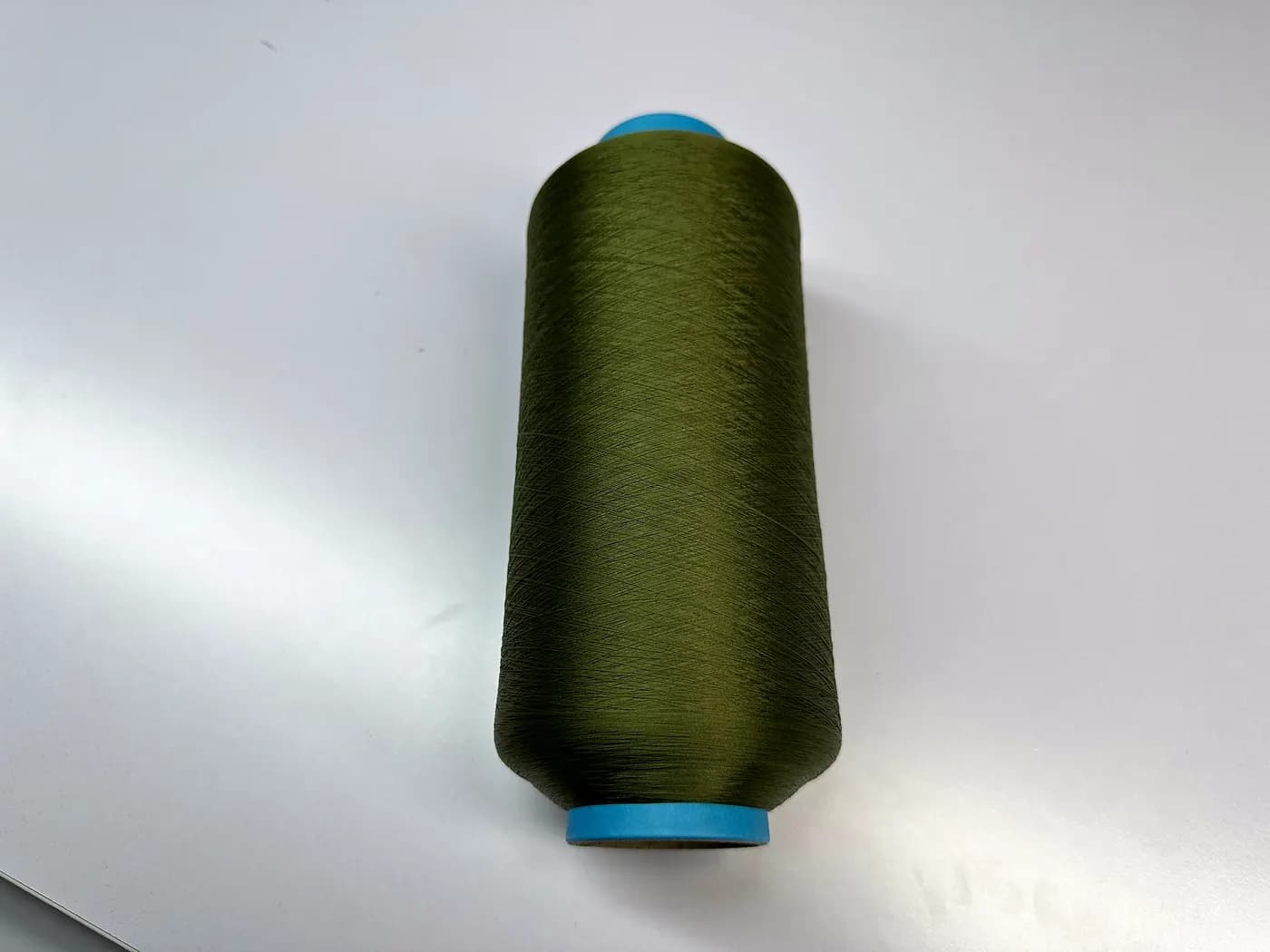
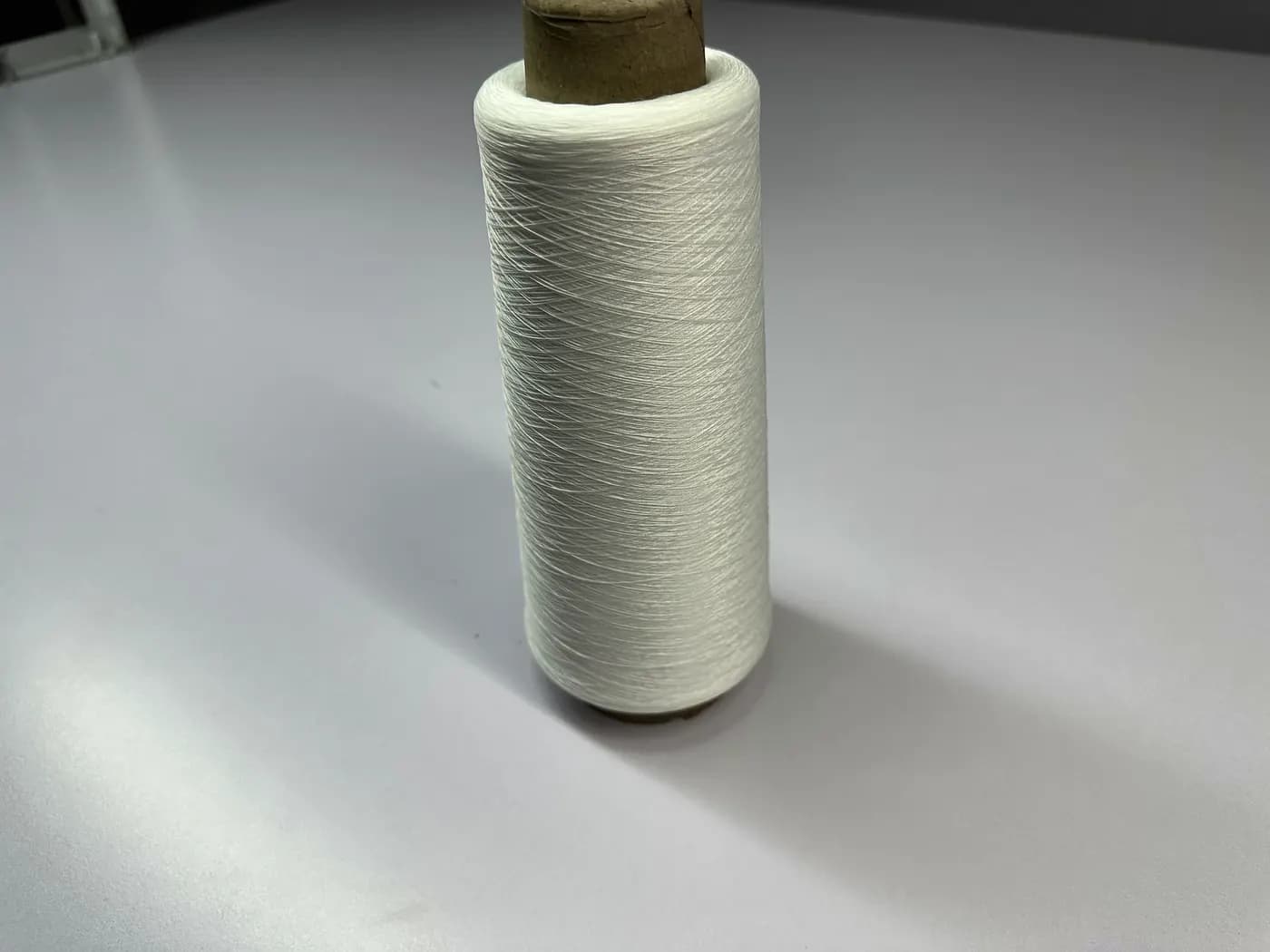
Cotton Knitwear Decoder: Pima, Supima, Mercerized, Ring-Spun, and What Each Costs
Updated 10/9/202612 min readBy Simon Liu · Licheng Knitwear
Cotton looks simple on a tech pack and gets expensive fast in a quote. The word covers a tier ladder that runs from commodity upland fiber to Supima-trademarked US long-staple, with mercerization, combing, and spin method layered on top. Each lever moves hand, luster, shrinkage, pilling, and price in ways that matter for spring-summer knit polos, fine-gauge crews, and lightweight cardigans. This decoder maps the commercial tiers buyers actually encounter, explains what mercerization and ring-spinning physically do to the yarn, and gives realistic FOB yarn-price bands so you can write tech packs that quote cleanly the first time.
The short answer. Cotton is a tier ladder with three independent levers: staple length, spin method, and finish. Yarn runs from about $3.50/kg for open-end carded upland to roughly $30/kg for combed Sea Island - all under the same "100% cotton" tech-pack label. Picking the wrong tier for the gauge is why two cotton polos quote three times apart. Match tier to gauge and end use before you ask for a price.
Tier
FOB yarn (USD/kg)
Where it belongs
Open-end carded upland
$3.50 - $5.00
Heavy basics, low-tier jersey
Ring-spun combed upland
Ready to Start Your Project?
Get a free catalog or submit an RFQ today. Our team will respond within 24 hours.
The full ten-tier ladder, including organic, recycled and Pima bands, is further down.
Cotton is the easiest fiber to specify badly. "100% cotton" on a tech pack covers a range that runs from a $3.50/kg open-end carded yarn spun from short-staple upland to a $30/kg combed Sea Island. The finished knits sit on the same rack with the same fiber-content label, and the buyer who didn't sort out the tier in advance gets to explain to their merchant why two cotton polos quote 3x apart.
This is a sourcing decoder, not a textile-science lecture. The goal is to give you the vocabulary mills already use, the price bands those words actually point at, and a framework for deciding which combination of staple length, spin method, and finish belongs in your tech pack for a given product and price point. If you source spring-summer fine-knit cotton — polos, crews, lightweight cardigans, knit tees — this is the language your quotes are written in whether you use it or not.
The Cotton Tier Ladder, From Commodity to Luxury
Common Questions
What is the difference between Pima and Supima cotton?
Pima refers to an extra-long staple cotton type. Supima is a trademark that certifies American-grown Pima and comes with a licensing chain, so it can be verified in a way that a generic Pima claim cannot. If traceability matters for your claim, the trademark is the part that carries weight.
What does mercerisation do to cotton?
It treats the yarn so the fibre swells and straightens, which raises lustre, deepens dye uptake and improves strength. It is the reason a mercerised cotton polo reads as premium against an untreated one in the same construction and colour.
What is the difference between ring-spun, combed and open-end yarn?
They describe how the yarn was made. Ring-spun and combed yarns are smoother, stronger and more even, which shows in hand and in pilling behaviour. Open-end is cheaper and coarser. Spinning method is frequently the real difference between two quotes that name the same fibre.
Which cotton tier suits which end use?
Match the tier to the gauge and the product. Fine-gauge polos and layering pieces reward long-staple and mercerised yarns because the fabric is fine enough to show them; heavier casual crews in coarse gauge often do not, and paying for a premium tier there is money the customer will not see.
How should a cotton specification be written so quotes come back comparable?
Name the fibre type, the spinning method, whether mercerised, the yarn count, and the gauge. Quotes that differ wildly on the same silhouette usually differ on one of those five, and a specification that omits them invites each supplier to assume a different answer.
Cotton fiber is graded primarily by staple length — the average length of an individual fiber. Longer fibers spin into smoother, stronger, less hairy yarns. That's most of the story. Origin, variety, and certification programs layer on top.
The commercial tiers a knitwear buyer will actually encounter:
Tier
Typical staple
Origin examples
What it's used for
Upland (standard)
22-28 mm
India, China, US, Brazil, West Africa
Mass-market basics, heavier knits, open-end yarn
BCI / Better Cotton
22-28 mm
Same as upland
Same as upland, with sustainability claim
Organic (GOTS / OCS)
22-28 mm
India, Turkey, US, Tanzania
Brand-story basics, midweight knits
Recycled cotton
Variable, often <22 mm
Global (post-industrial, post-consumer)
Blended with virgin, heathered effects
Egyptian / Pima
34-40 mm
Egypt (Giza), Peru, US, Israel
Premium polos, fine-gauge crews
Supima (US Pima, licensed)
35-42 mm
United States only
Premium branded knits with marketing claim
Sea Island
44 mm+
West Indies, very limited
Ultra-luxury, niche volumes
A few things to internalize before we go further.
BCI (Better Cotton Initiative) is a mass-balance program, not a physical traceability one. The cotton in your garment was not necessarily grown on a BCI farm; an equivalent volume was. Communicate that honestly to your retailer if they care.
"Egyptian cotton" is a geographic claim with weak enforcement globally. The Cotton Egypt Association runs a logo program, but plenty of yarn sold as "Egyptian" in the trade isn't certified. Supima is the opposite — a registered trademark of American Pima growers with a licensing chain you can audit from gin to garment. If a marketing story matters, Supima is the traceable choice; if you just want the hand of long-staple cotton, generic combed Pima from Peru is often the better-value pick.
Sea Island sits at the top of the ladder and almost never makes commercial sense for fashion knitwear. Mention it so the buyer in the room knows it exists, then move on.
What Mercerization Actually Does
Mercerization is a caustic-soda (sodium hydroxide) treatment applied to cotton yarn or fabric under tension. The fiber, which is normally bean-shaped in cross-section and a bit twisted, swells and becomes rounder and straighter. The optical and physical effects:
Luster — the rounder fiber reflects light more uniformly, giving cotton the subtle sheen people associate with premium polo shirts.
Dye uptake — mercerized cotton accepts about 25% more dye, so colors are deeper and more saturated with less wash-down.
Tensile strength — yarn strength increases by roughly 20%, which improves durability and machine processability.
Dimensional stability — slightly better shrinkage performance, though not a substitute for proper finishing.
There are two common levels: standard mercerization (yarn or piece) and "double mercerization," which is a second pass for additional sheen — common on premium Italian-style polo yarns. The cost adder for single mercerization is roughly 10-15% on the yarn price; double mercerization adds another 8-15% on top.
Mercerization is wasted on heavily textured, brushed, or rustic-handle product. It belongs on smooth-faced jersey, pique, interlock, and fine-gauge plain knits where light reflection and color depth are part of the value story. Specify it on a chunky 5gg cable and you've burned money for an effect nobody can see.
Ring-Spun vs Open-End vs Combed: Why Spin Method Matters
Fiber tier sets the ceiling. Spin method decides how close you get to it.
Open-end (rotor) spinning is fast, cheap, and produces a yarn that's bulkier, weaker, and hairier than ring-spun. The fibers are oriented less uniformly. Open-end is fine for heavy basics — sweatshirts, towels, work-tee jersey, lower-tier polos — and the cost saving versus ring-spun is meaningful, often 15-25% at the yarn level.
Ring-spun is the traditional method. Fibers are drafted and twisted continuously, producing a yarn that's smoother, stronger, and more uniform. Most knitwear above the bargain tier is ring-spun.
Combed is a preparation step that happens before spinning. Combing removes the shortest fibers (noils) and aligns the rest. Combed cotton yarn — almost always ring-spun — is the standard for fine-gauge premium knits. It's smoother, less pilly, and accepts mercerization better.
Carded yarn skips the combing step. It's hairier and more textured. There's a legitimate aesthetic case for carded yarn in rustic or heritage-handle product; there's also a cost case for it in basic programs.
For a buyer writing a tech pack, the practical hierarchy:
Open-end carded — heavy basics, lowest cost
Ring-spun carded — midweight knits with some texture
Ring-spun combed — fine-gauge premium, the default for polos and crews above $40 retail
Ring-spun combed mercerized — premium polo yarn, color-rich smooth-faced knits
Each step up costs more. Each step up shows in the garment.
Slub, Neppy, and Other Textured Yarns
Not every cotton yarn is meant to be smooth. Slub yarn has intentional thick-and-thin variations spun in, giving knit fabric a casual, hand-loomed look that reads well in vintage and Americana programs. Neppy yarns include deliberate flecks of contrasting color. Marl yarns twist two colors together for a heathered effect.
These textures are usually built on a ring-spun base and add roughly 5-15% to the yarn cost depending on complexity. They're a useful lever when you want cotton to feel less generic without leaving the fiber. They do not pair well with mercerization — the whole point of slub is irregularity, and mercerization smooths it out.
Realistic FOB Yarn Price Bands
The single most useful thing for a buyer is a sense of what each tier of yarn actually costs landed at the knitter. Yarn is sold by the kilo, and a typical men's fine-gauge cotton sweater uses 350-550g of yarn. The numbers below are rough industry bands for combed/un-mercerized cotton at standard counts (24/2, 30/2, 32/2) at the time of writing — they move with cotton futures and freight, so treat them as a 2026 directional reference, not a quote.
Yarn type
Typical FOB price (USD/kg)
Notes
Open-end carded upland
$3.50 - $5.00
Heavy basics, low-tier jersey
Ring-spun carded upland
$4.50 - $6.50
Midweight knits
Ring-spun combed upland
$5.50 - $7.50
Standard premium baseline
Organic combed (GOTS)
$7.00 - $10.00
20-40% adder over conventional
Mercerized combed cotton
$7.00 - $10.00
Smooth-faced polo yarn
Recycled cotton blends
$5.00 - $8.00
Usually blended 20-50% with virgin
Pima / Egyptian combed
$9.00 - $14.00
Long-staple, premium hand
Supima licensed combed
$11.00 - $16.00
Trademark + traceability premium
Mercerized Pima/Supima
$13.00 - $18.00
Polo-yarn premium tier
Sea Island
$30.00+
Rare, made-to-order
A knit polo that takes 400g of yarn moves from roughly $2 of fiber cost on open-end upland to $6+ on mercerized Supima. That's before knitting, linking, finishing, packing, freight, and margin — but it's the part of the cost stack the buyer controls with one line on the tech pack.
Writing the Cotton Spec So Quotes Come Back Apples-to-Apples
The most common reason cotton quotes vary wildly between mills is that the buyer left room for interpretation. A clean cotton-knit spec line includes:
Fiber tier and origin — e.g., "100% combed Peruvian Pima" or "100% US Supima, licensed"
Yarn count and ply — e.g., 30/2 or 40/2
Spin method — ring-spun, open-end, etc.
Combed or carded
Finishing on the yarn — mercerized (single or double), gassed/singed, etc.
Certification requirement, if any — GOTS, OCS, BCI, Supima license number
If any of those is missing, every mill fills the gap with whatever yields the best apparent price, and your quotes aren't comparable. We see this routinely on RFQs: three quotes back, all priced on different yarn, with the buyer reading the cheapest one as a market signal. It isn't — it's a different product.
Matching Cotton Tier to Gauge and End Use
There's no universal best cotton. There's the right cotton for the construction. A working framework:
3-5 gauge chunky knits — carded ring-spun or even open-end is fine; the construction does the visual work. Long-staple is wasted.
7-9 gauge midweight crews and cardigans — ring-spun combed upland or organic. Mercerization optional based on color story.
12-14 gauge fine knits, polos, jersey-look crews — combed long-staple (Pima/Supima), often mercerized. This is where fiber tier shows up most clearly in the hand and luster.
Lightweight summer knits with intentional texture — slub or marl yarns on a combed ring-spun base; skip mercerization.
Garment-dyed programs — combed ring-spun, often unmercerized to keep the chalky, washed character; long-staple still helps with durability through repeated washing.
At Licheng we work the 3GG to 18GG gauge range with a 30 piece MOQ per colour (plain and striped styles in the same yarn and colour can be combined), and the most expensive sourcing mistake we see new buyers make is over-speccing fiber on a heavy-gauge construction or under-speccing it on a fine-gauge polo. Both show up in the finished garment.
Sustainability Claims That Hold Up
If the buyer's downstream account cares about a cotton sustainability story, the practical hierarchy of claims a mill can actually back up:
GOTS-certified organic — strongest claim; transaction-certificate chain from farm to finished garment. Roughly 20-40% yarn-price adder vs conventional.
OCS (Organic Content Standard) — verifies organic content but not full processing chemistry. Lower bar than GOTS.
BCI / Better Cotton — mass-balance, not physical traceability. Easy to claim, weak as a marketing differentiator.
Recycled (GRS / RCS) — verifiable when documented; usually a blend because 100% recycled cotton is mechanically weak.
Supima — not a sustainability claim, but a traceability one. The license chain is real.
Don't put a logo on the hangtag you can't show a transaction certificate for. Buyers in the US and EU should assume that claim will be tested eventually.
The Short Version
Cotton is a tier ladder with three independent dimensions: fiber length, spin method, and finish. Each step up costs real money and shows up in the garment in specific, predictable ways. The buyer who learns the vocabulary writes tech packs that quote cleanly, picks the right tier for each gauge and price point, and stops getting surprised by quote spread on what looked like the same product. The buyer who doesn't pays for premium fiber on knits that can't show it, or specifies open-end on a polo that needed combed long-staple, and either way leaves money or quality on the table.
---
Talk to our team about this
If you're planning a real project around any of the points above, we'd be glad to take a quick look. Send a short brief and we'll come back within one business day with a practical direction, MOQ + lead time estimate, and a sample plan if it makes sense.
Only if the traceability story matters to your customer. Supima is a licensed trademark with a documented chain from US grower to finished garment, which is genuinely useful for brands making a Made-in-USA-fiber or full-traceability claim. The fiber itself is excellent but not categorically superior to top-grade Peruvian Pima or genuine Giza Egyptian, both of which usually quote 15-25% cheaper at the yarn level. If you don't need the trademark on the hangtag, ask your mill to quote combed Peruvian Pima as a value alternative for the same hand and luster.
Visually, yes — mercerized cotton has a distinct soft sheen, especially in deep solid colors, and dyes look more saturated and less chalky. By feel it's smoother and a touch cooler to the touch. The reliable test is to compare two swatches side by side under daylight; the luster difference is unmistakable on smooth-faced knits like pique or interlock. On textured constructions the effect is muted, which is exactly why mercerizing rustic or slub yarns rarely makes sense. Ask your mill for a mercerized and unmercerized swatch in the same color before you commit.
For heavy-gauge basics where the construction provides the visual identity and the price target is tight — think 5gg cotton cardigans for value retail, garment-dyed tees, or any program landing under roughly $25 retail wholesale. Open-end saves 15-25% at the yarn level and processes faster, which compounds at scale. It's a bad choice anywhere the fabric face needs to read clean and smooth, especially fine-gauge polos and lightweight crews, because the inherent hairiness and lower fiber alignment show up immediately on a smooth surface and pill faster in wear.
Yarn is typically 25-40% of the FOB cost of a fine-gauge cotton knit, so moving from combed upland at around $6/kg to mercerized Supima at around $15/kg on a 400g garment adds roughly $3.60 of fiber cost, which usually translates to $4-5 at FOB after handling. That can be the difference between a $14 and $19 FOB on the same silhouette. The lever is real but bounded — a luxury yarn won't rescue poor knitting or bad finishing, and a generic yarn well-knit and well-finished will outperform expensive yarn run carelessly.
For a premium polo or fine-gauge crew at mid-to-upper price points: "100% combed Pima cotton, ring-spun, 30/2, mercerized." That gives the mill a clear, common spec that quotes consistently across suppliers without locking you into the Supima trademark premium. For a midweight cardigan or crew at a more accessible price: "100% combed cotton, ring-spun, 24/2." Add a certification line only if you'll actually verify the claim downstream. Vague specs invite cheap substitutions; over-specified ones limit your supplier pool and inflate your quote unnecessarily.
We focus on men's sweaters, cardigans, knit jackets, jacquard knitwear and private label knitwear. We support B2B buyers with OEM/ODM development, sampling and bulk production planning.
MOQ, lead time, cost ranges, gauge selection and QC checkpoints across typical OEM/ODM knitwear programs in NA + EU. Enter your email — we'll send you the report link in 30 seconds.
No spam. Unsubscribe with one reply. We use your email only to send you the report and follow up if you want a sourcing conversation.
Brands We've Worked With
Brand names shown are previously serviced OEM/ODM partners. Logos are decorative and do not imply current endorsement.