Climate & Season
Select weight and warmth for your target season.
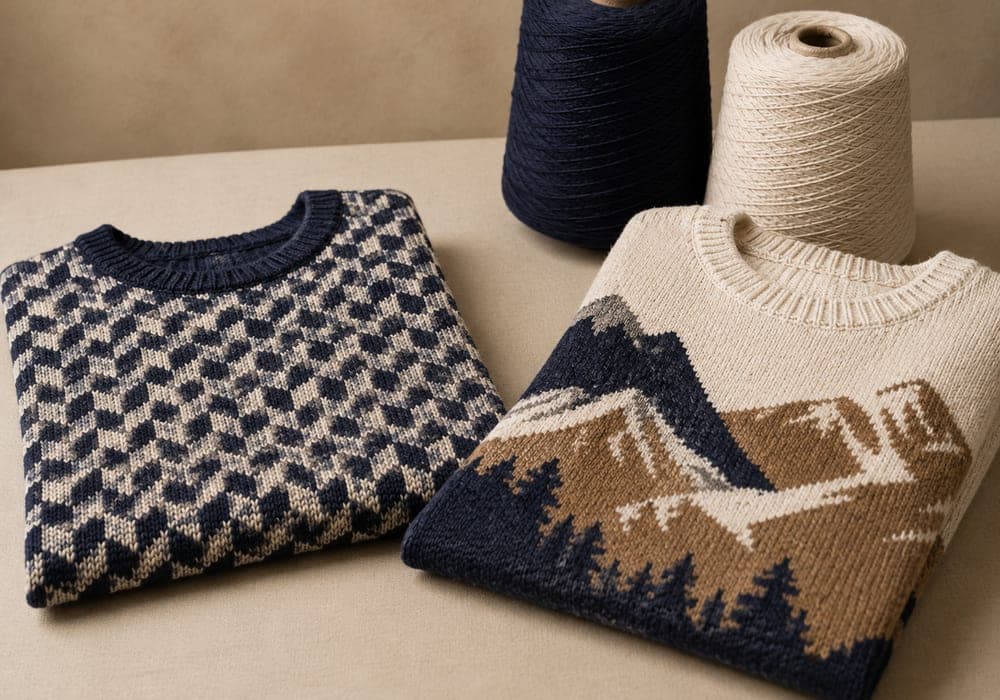
Our jacquard and intarsia knitwear capability helps buyers developing graphic sweaters, Nordic patterns, logo-free seasonal artwork and color-blocked knitwear. The work focuses on practical B2B development decisions rather than retail-style visuals, connecting product direction, material choices, sample review, production feasibility and export-ready quality control. Buyers can use this page to understand what information should be prepared, which technical decisions affect cost and lead time, and how Licheng Knitwear turns an initial sourcing request into a sample-ready or production-ready plan.
Gauge Range
3GG - 18GG
Quality
Stage-based checks
Manufacturing
Custom knitwear support
Global Markets
USA, Europe and more
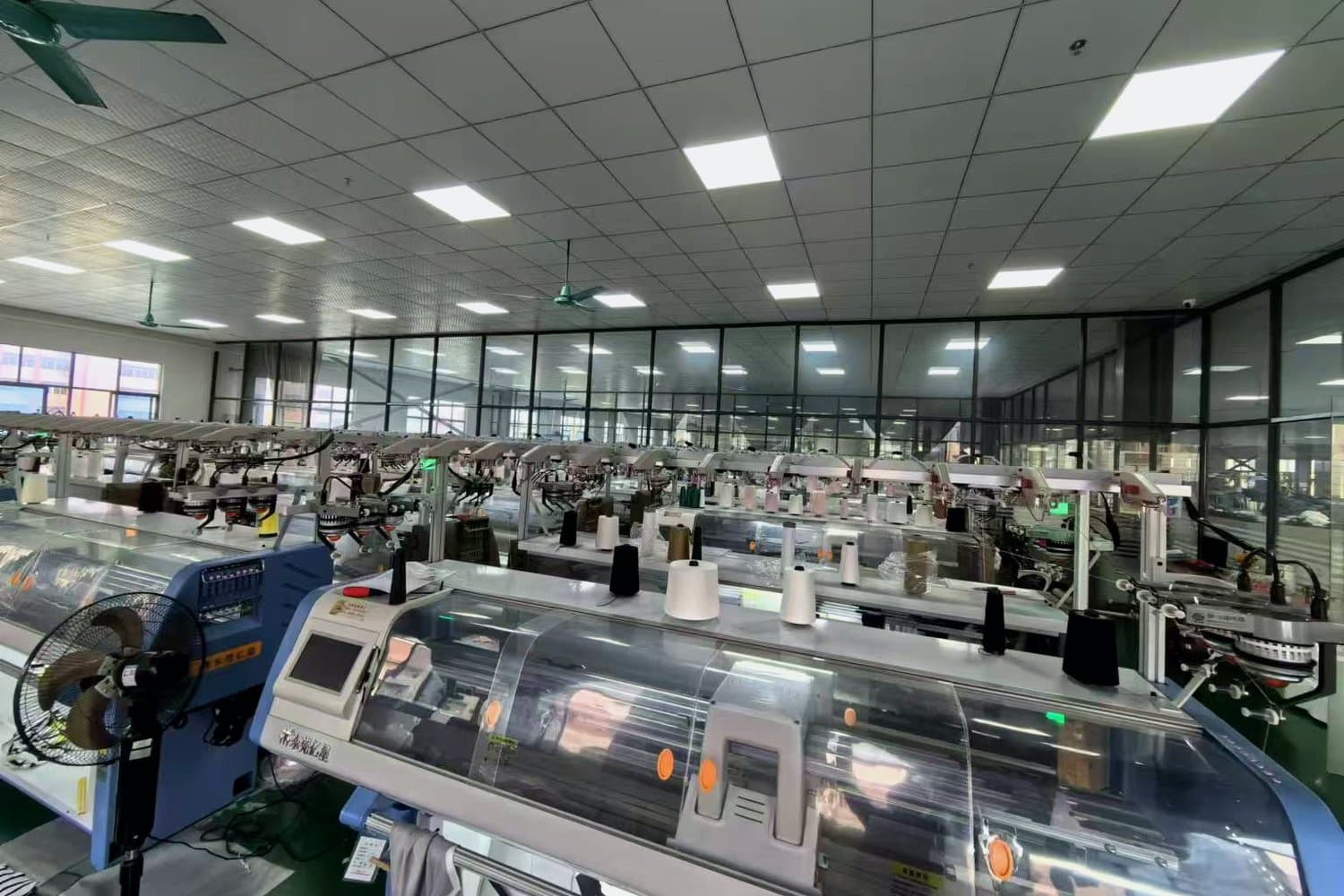
Consider practical factors before sampling. The right capability choice affects texture, cost, handfeel, timeline and market fit.
Select weight and warmth for your target season.
Match texture, drape and premium handfeel.
Plan sweaters, cardigans, polos or jackets.
Align with buyer preference and price point.
Our jacquard and intarsia knitwear capability helps buyers developing graphic sweaters, Nordic patterns, logo-free seasonal artwork and color-blocked knitwear. The work focuses on practical B2B development decisions rather than retail-style visuals, connecting product direction, material choices, sample review, production feasibility and export-ready quality control. Buyers can use this page to understand what information should be prepared, which technical decisions affect cost and lead time, and how Licheng Knitwear turns an initial sourcing request into a sample-ready or production-ready plan.
Technical review covers artwork feasibility, yarn color count, repeat size, pattern placement, intarsia area planning, jacquard tension control and sample approval. The goal is to make each development route clear before sampling: what the buyer should provide, what the factory needs to confirm, which risks may affect cost or lead time, and which details should be checked again before bulk production. In a normal project review, the team checks the buyer's reference photo, tech pack, target quantity, expected price level, yarn direction, gauge preference, trim requirements, label plan and target market. If information is missing, the page should guide the buyer toward practical next steps instead of forcing a retail-style product decision too early. This helps reduce unclear quotation requests, sample revisions caused by missing specifications, and production delays caused by late packaging or QC requirements.
Choosing between the two techniques is a cost and feasibility decision, not a styling one. Jacquard carries the unused colours as floats on the reverse of the fabric, which is why colour count per course is the binding constraint — as a working guide two to four colours per row keeps the reverse clean and the fabric stable, and a lining or birdseye backing is needed once floats get long. Intarsia uses a separate yarn carrier per colour block and leaves no floats, so the number of colour blocks is far less restricted and the fabric stays single-thickness, but the trade-off is slower knitting and a higher piece cost. Pattern resolution follows gauge: a motif that reads cleanly at 12GG can lose its edges at 5GG, so fine text and small brand marks have to be proved on a swatch before they go into a tech pack. Colour is worked to Pantone TCX references with lab dips for approval. On multi-colour knits the tests that matter are colourfastness to washing (ISO 105-C06) and to rubbing (ISO 105-X12), because dye migration between adjacent colour blocks is the most common late-stage failure, plus pilling to ISO 12945-2 (Martindale) where floats sit against the body.
Placement scale changes the answer more than pattern complexity does. A yoke or a chest panel is one planning problem; an all-over programme that runs across the body, the sleeves and a full back panel is another, because every course then carries floats and the garment gains weight in the places a wearer notices first - shoulders and upper sleeve. On an all-over development, tell us early whether the pattern must continue across the sleeve seam and whether the back panel is a single scene or a repeat. Both are decided before knitting, not after, and both change the sampling time rather than only the price.
Pattern work is usually specified together with its trims: fringed edges, tipping, contrast plackets and woven labels are quoted in the same review, because a fringe along a patterned hem has to be planned into the knitting, not added to a finished panel. The same construction covers a fashion monogram: a large knitted-in letterform or initial on the back or chest is intarsia or two-colour jacquard, the same route as a school or club crest, and it is bound by the same limits - stitch count decides how much of a curve or serif survives, and a motif that reads cleanly at 12GG can lose its edges at 5GG, so it is proved on a swatch before it enters a tech pack.
This capability is suitable for Nordic jacquard sweaters, patterned cardigans, graphic crew neck sweaters, color-block knitwear and seasonal capsule products. It is especially useful when buyers need consistent product specifications, repeatable sample feedback, private label presentation or a sourcing plan that can move from idea to production without unnecessary rework. Buyers working on multi-style programs can use the same capability framework across sweater, cardigan and knit jacket developments so that yarn, gauge, workmanship, packaging and inspection expectations remain consistent across the collection. The same two techniques run across men's, women's and children's programmes - sweaters, cardigans, longline and belted shapes, vests, knit jackets and accessories. Pattern work is not a menswear-only capability; the difference between a men's and a women's development is the block and the placement, not the machine.
Recommended for Nordic, Canada, Europe, the UK and North America where pattern clarity, winter styling and commercial color planning matter. The emphasis is on sourcing confidence, clear communication, realistic product development and material decisions that match buyer positioning instead of generic fashion imagery. For North American buyers, the focus is usually practical development, commercial styling and clear RFQ information. For European, German and UK buyers, the focus often includes material handfeel, restrained styling, quality consistency and careful documentation. For Nordic and Canadian buyers, the capability is frequently connected with cold-weather layering, heavier gauges and wool-blend directions.
Artwork should be reviewed before sampling because color count, gauge, pattern scale and yarn thickness can change both cost and production stability. Avoid relying on tiny text or brand marks inside the knit pattern unless feasibility is confirmed.
Practical sequence that avoids re-sampling: confirm colour count per course and repeat size against the chosen gauge, run a patterned swatch before the full sample, approve lab dips against Pantone TCX, then check ISO 105-C06 and ISO 105-X12 results on the actual colour combination rather than on solid ground colour. Final inspection is at AQL 2.5 under ISO 2859-1 with needle detection before packing.
Working with us as a jacquard supplier. Patterned knitwear is where most sourcing goes wrong, because the artwork a brand sends and the artwork a machine can knit are rarely the same thing. Two limits decide it. Jacquard carries every colour across the full row, so each additional colour per course adds floats on the reverse and adds weight - which is why a four-colour Fair Isle body behaves differently from a two-colour one even at the same gauge. Intarsia has no floats at all, so blocks of colour stay single-layer and light, but each colour block needs its own yarn carrier, which limits how many separate shapes one row can hold. Pattern resolution also moves with gauge: the same artwork reads cleanly at 12GG and turns blocky at 5GG. Send the artwork at any stage - a photo, a sketch or a full tech pack - and we will come back with what is knittable, what needs redrawing and which route (jacquard or intarsia) gives the handfeel you want. Colours are matched to Pantone TCX with lab dips before bulk, and colourfastness is checked to ISO 105-C06. MOQ is 30 pieces per colour and sampling runs 15-25 days from confirmed artwork and yarn.
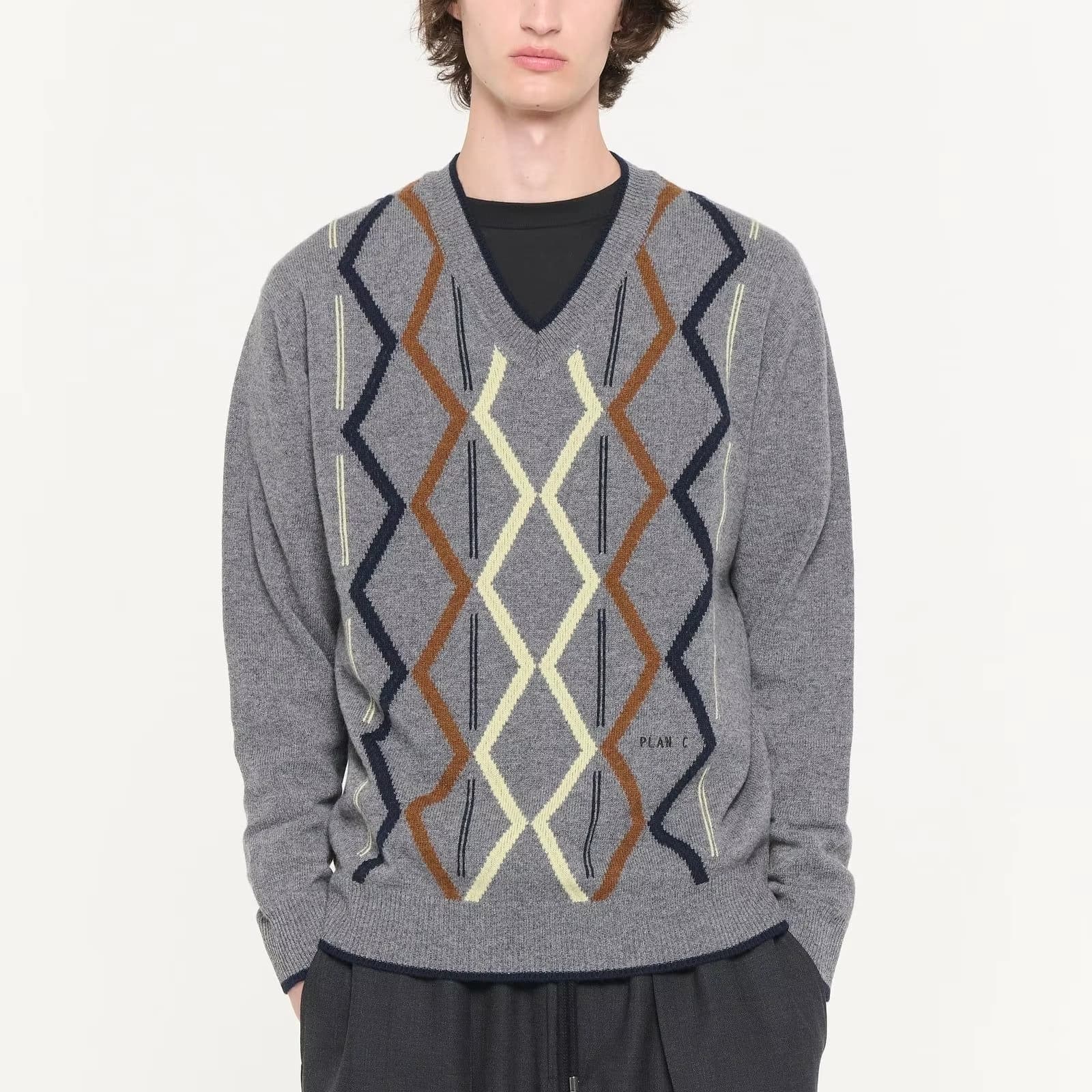
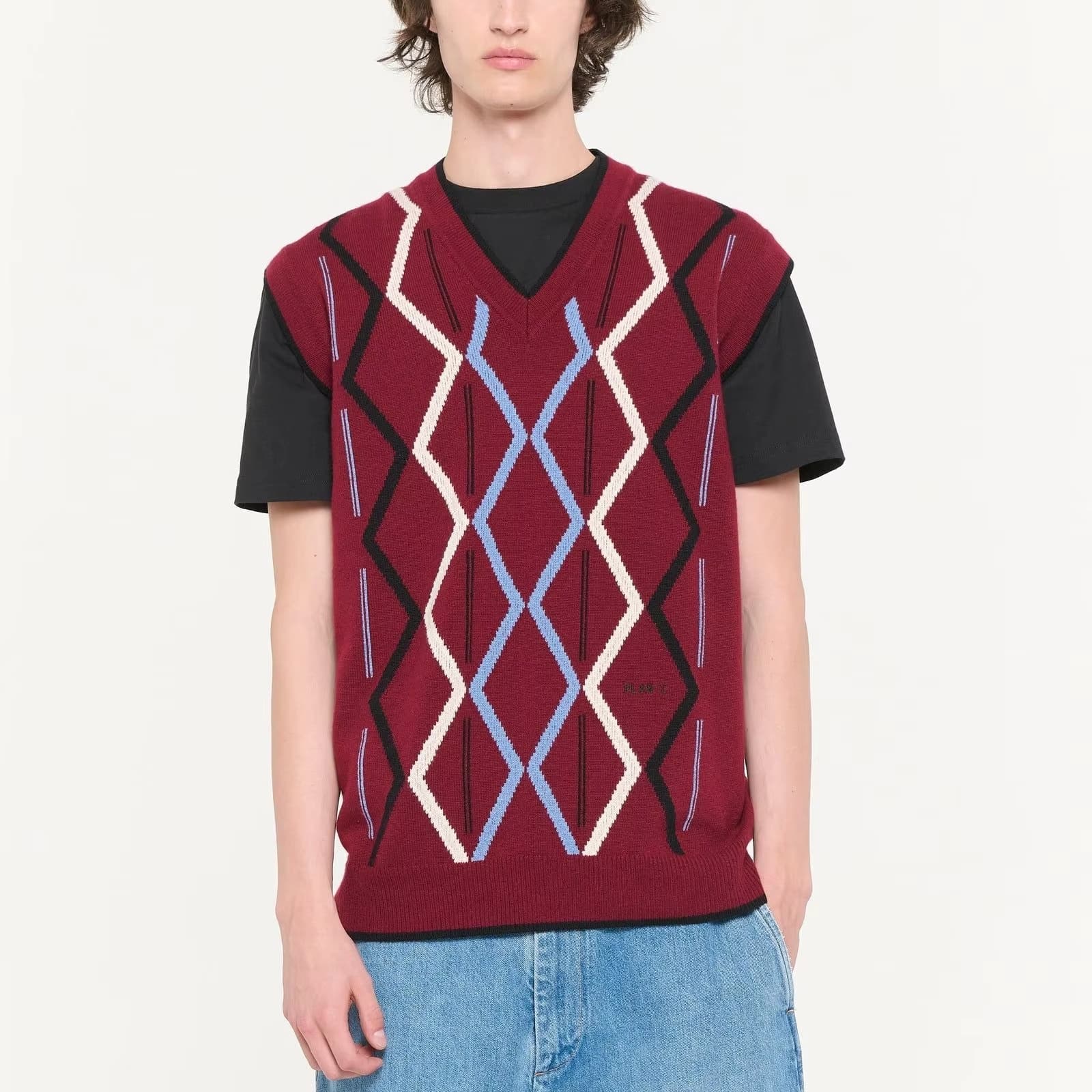
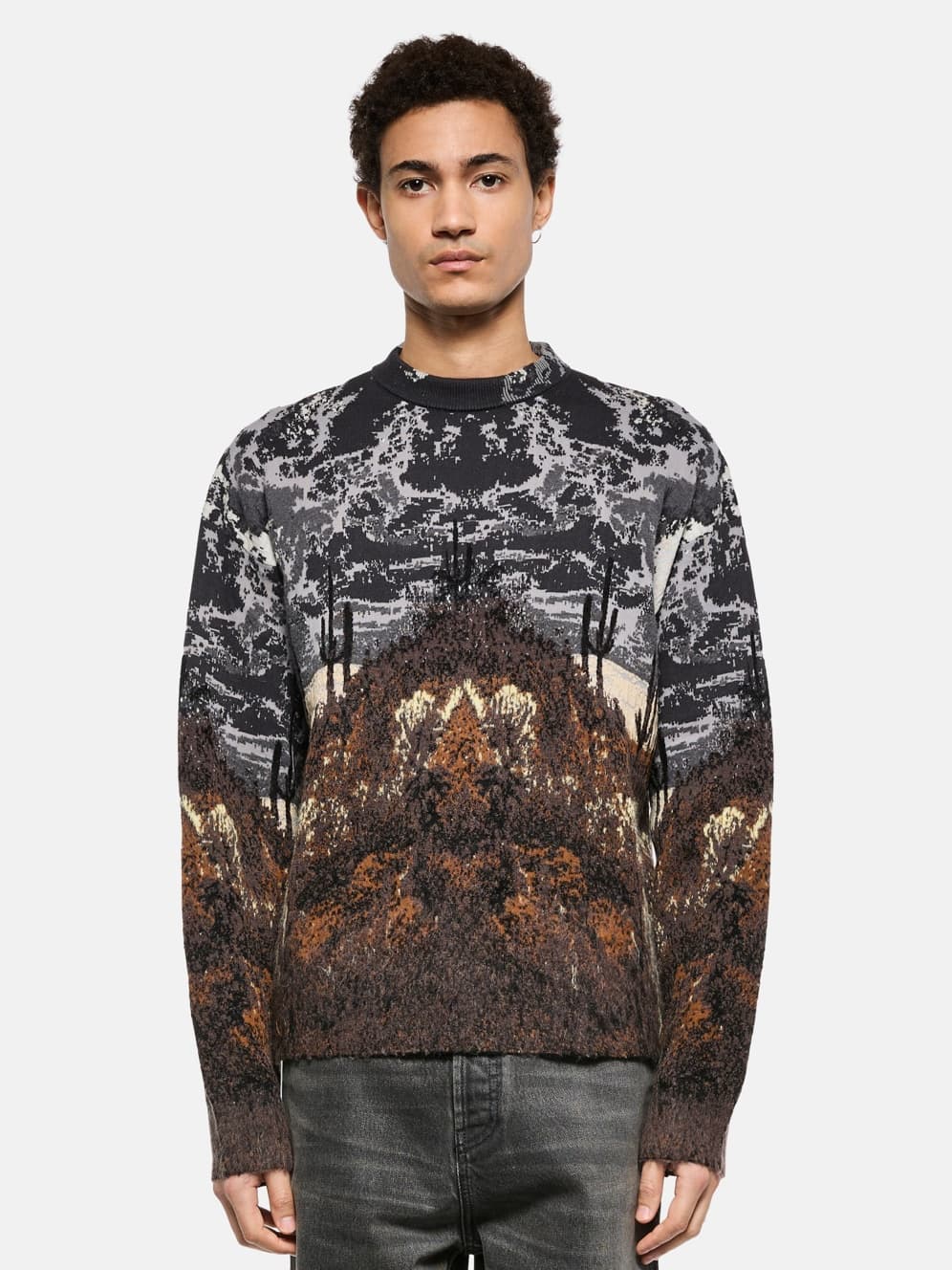
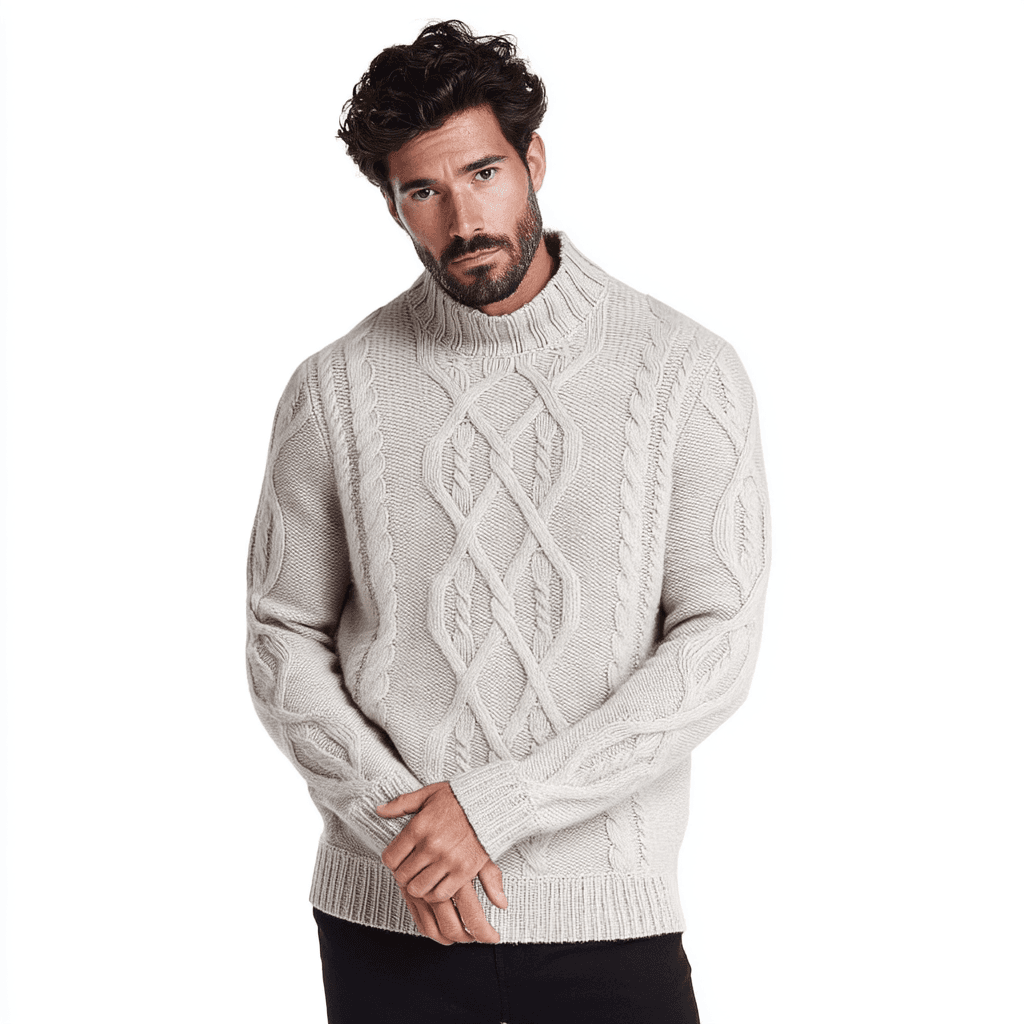
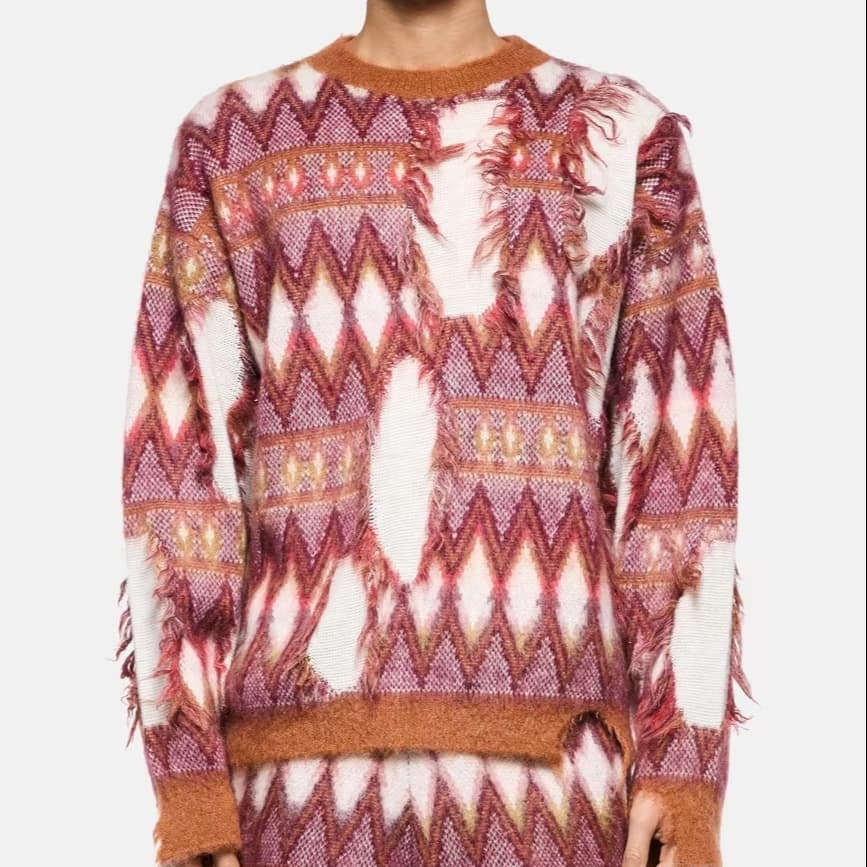
Existing product directions that can use this capability.
Other capabilities
Share your concept, sketch or reference.
We recommend gauge, yarn and construction.
We develop samples and refine until approved.
Confirm details, size specs and production plan.
Quality manufacturing with on-time delivery.
Related materials
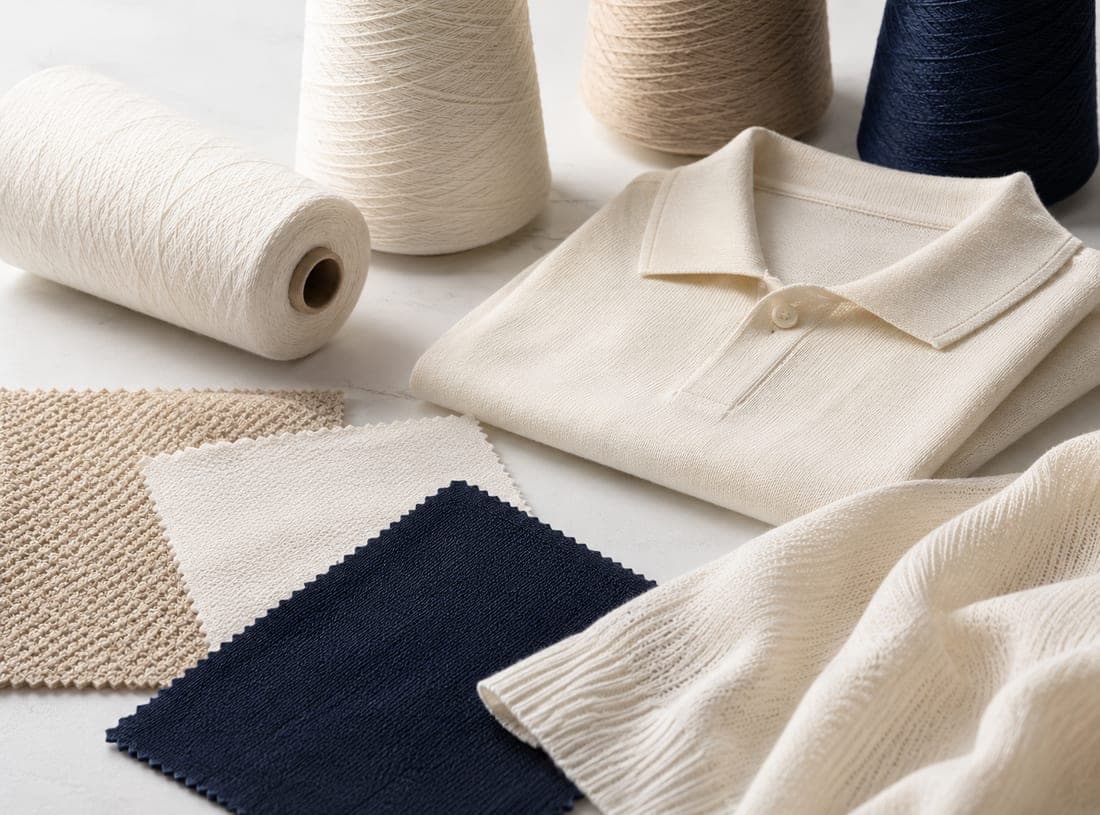
Breathable cotton yarn direction for spring, summer and transitional custom knitwear.
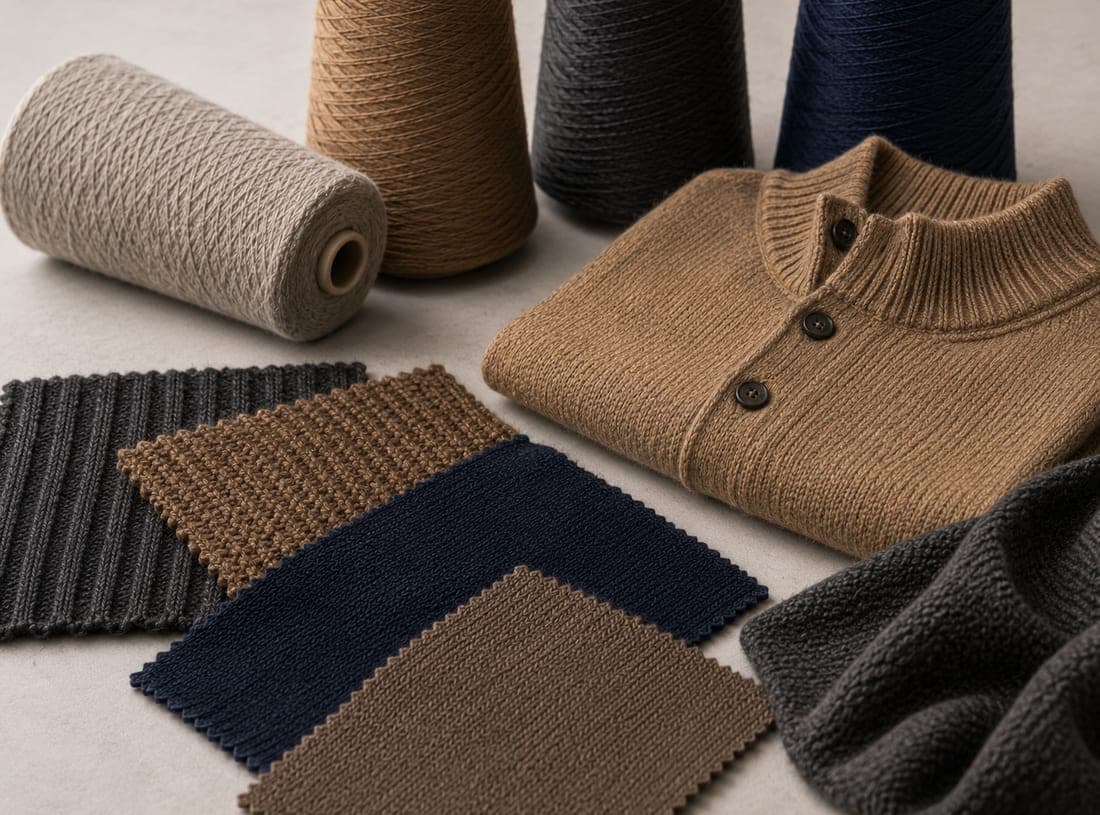
Balanced warmth, cost control and premium handfeel for fall and winter knitwear programs.
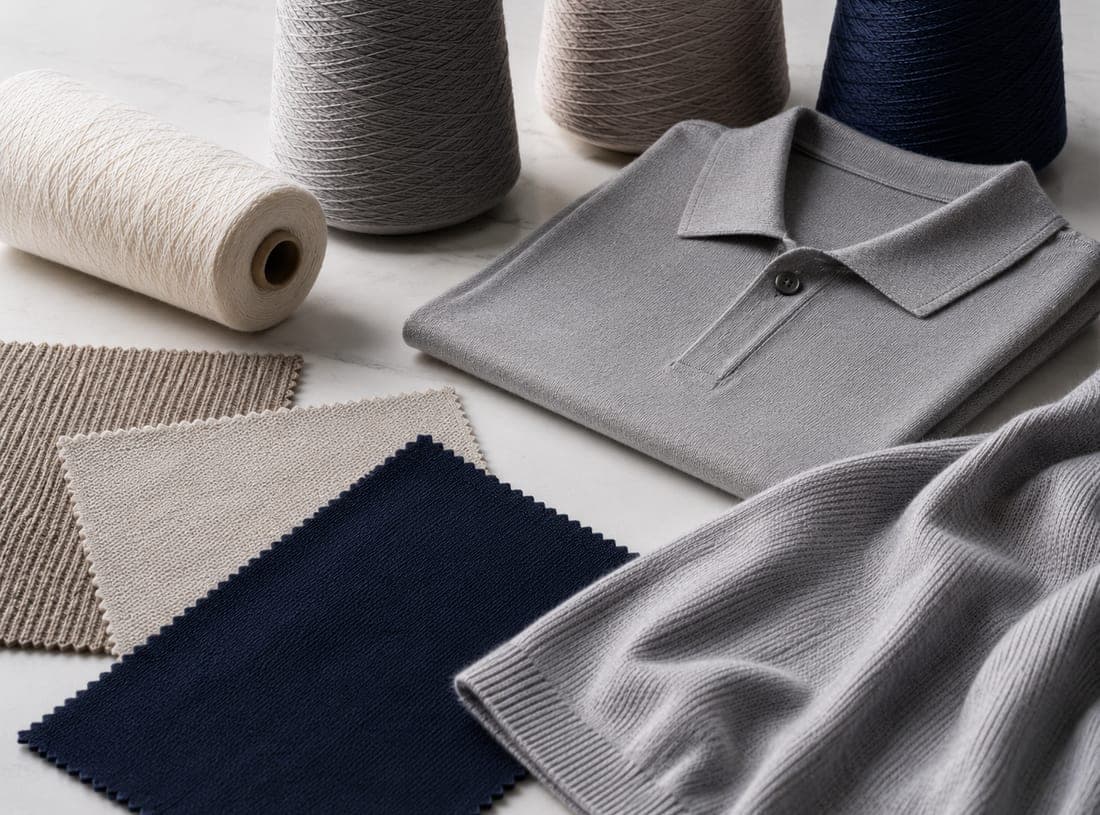
Fine wool direction for premium lightweight sweaters and refined menswear knitwear.
Related guides
No. Jacquard and intarsia start at the same 30 pieces per colour per style as plain knitwear, with sizes mixed inside the 30. What changes is the development work: your artwork is reviewed as a knit chart for colour count, gauge and float length, and the knitting program is written from it, which the development sample covers.
Yes, one piece is fine and there is no commitment to bulk. A development sample costs USD 150 per style and covers yarn sourcing, writing the knitting program from your artwork, one prototype and one revision round, in 15–25 days; cashmere and mohair styles are quoted individually. If you do place a bulk order within six months of approving the sample, the full USD 150 is credited against it, and bulk starts at 30 pieces per colour per style with sizes mixed inside the 30.
Artwork complexity, color count, gauge, yarn composition and placement all affect jacquard cost. The artwork should be reviewed as a knit chart before sampling.
Jacquard knits multiple colours per row carrying yarns on the back (repeating patterns); intarsia uses separate colour blocks with no floats (clean large graphics and logos).
Intarsia for large solid colour blocks and logos; jacquard for detailed repeating motifs. We advise from your artwork.
Yes - both add complexity versus a plain knit; we quote per design and gauge.
We partner with your team to turn ideas into best-selling knitwear. From concept and sampling to bulk production and delivery, our experts guide every step.
MOQ, lead time, cost ranges, gauge selection and QC checkpoints across typical OEM/ODM knitwear programs in NA + EU. Enter your email — we'll send you the report link in 30 seconds.
No spam. Unsubscribe with one reply. We use your email only to send you the report and follow up if you want a sourcing conversation.
Brands We've Worked With









Brand names shown are previously serviced OEM/ODM partners. Logos are decorative and do not imply current endorsement.