
We focus on men's sweaters, cardigans, knit jackets, jacquard knitwear and private label knitwear. We support B2B buyers with OEM/ODM development, sampling and bulk production planning.
Buyer FAQ
Clear answers for sourcing teams before inquiry.
Find practical answers about MOQ, sampling, yarn, gauge, OEM/ODM, private label, shipping, quality control and catalog requests.
Sourcing Topics
Organized by buyer questions.
Manual Review
Send details if your case is specific.
No False Claims
Compliance is confirmed by real documents.
General
We focus on men's sweaters, cardigans, knit jackets, jacquard knitwear and private label knitwear. We support B2B buyers with OEM/ODM development, sampling and bulk production planning.
We mainly support apparel brands, wholesalers, e-commerce brands, sourcing managers and private label buyers. The site is structured for North America and Europe B2B knitwear sourcing.
Our content and product directions focus on the USA, Canada, Europe, Nordic countries, Germany and the UK. Other markets can be discussed according to product requirements.
Please send a product idea, reference photo, tech pack, size chart, material preference, quantity plan or target price. Even partial information can help us suggest a practical development path.
MOQ
30 pieces per colour per style, the same minimum as our human garment range. Pet product is not treated as a side line with a different floor. The two size runs - XS/S/M and L/XL/2XL - are graded separately, so a style offered in both is two styles.
30 pieces per colour per style, the same as our garment range, even though the unit value is far lower. 18 of our 30 published accessory styles are one size, so that minimum covers the whole style rather than being split across a size run.
30 pieces per colour per style, applied to each size system separately. Our published range uses two: XS-XL on 12 maternity styles and 0-24m on 6 baby styles. A matching mother-and-baby set is therefore two styles and two minimums, which is the thing brands most often under-budget.
30 pieces per colour per style using stock yarn. That figure is the same across all 63 published men's cardigans, including chunky and pattern-led styles. Custom-dyed colours carry a mill minimum on the yarn itself, which we quote separately.
30 pieces per colour per style using stock yarn, the same across all 8 published women's cardigans. Custom-dyed colours carry a separate yarn mill minimum.
30 pieces per colour per style using stock yarn, the same across all 6 published women's knit jackets.
30 pieces per colour per style using stock yarn, the same across all 10 published styles in this category.
30 pieces per colour per style using stock yarn, the same as any other garment in our range. A vest is not treated as a filler style with a different minimum.
30 pieces per colour per style. That is per style and colour, not per size - the full Newborn-12y run is covered by the one minimum.
30 pieces per colour per style. Maternity and baby use two different size systems - 12 published styles are graded XS-XL and 6 are graded 0-24m - and the minimum applies to each separately.
30 pieces per colour per style, the same minimum as our human garment range. We grade in two separate runs - XS/S/M for small dogs and L/XL/2XL for larger breeds - and the minimum applies to each.
30 pieces per colour per style, the same as our garment range, even though the unit value is far lower.
30 pieces per colour per style using stock yarn. Custom-dyed yarn raises the minimum because the dye lot itself has a mill minimum - we confirm the practical number after seeing your colour card.
30 pieces per colour per style on stock yarn. Across our 41 published polo styles the index price band runs USD 8.97-66.05 per piece at that minimum, depending on fibre and gauge.
30 pieces per colour per style on stock yarn - the same minimum as our menswear programs. Our 37 published women's sweater styles sit in a USD 11.97-44.27 index band at that quantity.
From 30-100 pieces per colour with specialist factories using in-stock yarns, versus 300-1,000+ at most factories.
Most factories set 300-1,000 pieces per style, often per colour. Small-brand specialists can go to 30-100 pieces per colour using in-stock yarns.
A real 30-100 pc/colour minimum, stock-yarn programmes, fast samples (15-25 days), transparent line-item costing, and a factory that treats a small first order as a relationship.
For custom knitwear a low MOQ is around 30-100 pieces per colour. Most factories want 300-1,000+; specialists that work with small brands go as low as 30 using in-stock yarns.
Design around stock yarn colours, share one yarn across styles, and limit colour count. Custom dyeing raises the minimum.
Design around in-stock yarn colours, share one yarn across several styles, and limit your colour count. Custom Pantone dyeing raises the minimum.
They can be. Check certifications (OEKO-TEX, ISO 9001), real production photos or video, and order a paid sample before bulk.
Yes. Factories set up for small brands accept from 30 pcs per colour, especially when you design around stock yarns. Custom Pantone dyeing usually raises the minimum.
From 30 pieces per colour using in-stock yarns; a custom-dyed colour adds a small-lot dyeing surcharge rather than a higher minimum, while nominated speciality yarns may raise it.
The 30 is per colour per style; sizes inside one colour are yours to split. A second colour is a second 30.
Yes, with a factory set up for small brands - check certs, real photos and order a sample first. We treat a 30-piece first order as the start of a relationship.
Yes, modestly - fixed setup and yarn dye-lot costs spread over fewer pieces. The trade-off is far lower upfront inventory risk.
Modestly. Fixed setup and yarn dye-lot costs spread over fewer pieces, so unit cost is higher. The trade-off is far lower upfront inventory risk.
Ready sample styles and selected custom programs can support lower-risk trials before larger seasonal orders.
Our published MOQ is 30 pieces per colour, and that number comes from the dye lot rather than from machine time: yarn is dyed in batches, and roughly 30 garments' worth of yarn is the smallest batch that keeps both cost and shade under control. Because the floor sits on the dyed yarn rather than on the style, styles that share one yarn in one colour are counted together against it. Four styles at 25 pieces each, all in the same yarn and the same colour, is 100 pieces on a single dye lot and is accepted. What does not combine is a second colour or a second yarn - each is its own dye lot with its own floor. So the first question to settle is not how many styles you have, it is how many yarn-and-colour combinations they add up to.
30 pieces per colour is the catalogue minimum, and a trial order can be discussed separately. Sampling is 15-25 days from a confirmed tech pack.
Our catalogue MOQ is 30 pieces per colour per style, using stock yarns - that is the figure we quote on product pages and in our published price bands. Fully bespoke development carries a higher minimum, because custom-dyed yarn, specialty fibre and custom artwork each bring their own mill minimums. Gauge, colour count, trims and order plan all affect where that lands, so we confirm the practical number after reviewing your requirement. Ready sample styles and trial orders can be discussed separately.
Ready sample styles may allow more flexible trial discussion because the development direction is already clearer. The final quantity still depends on material availability and customization needs.
Yes. Gauge can affect yarn consumption, production planning and machine arrangement. Heavy gauge or special pattern styles may need different MOQ discussion from simple fine gauge styles.
Private label packaging can be discussed for smaller orders, but some packaging materials may have their own MOQ. Buyers should confirm labels, hangtags and packaging early.
MOQ depends on yarn, gauge, color count, style complexity, size range and packaging needs. We review these details before suggesting a practical order direction.
Trial order discussion may be possible when yarn, style and quantity are suitable. Final MOQ is confirmed after requirement review.
Custom colors can increase MOQ because yarn dyeing or sourcing may require minimums. Available yarn colors may allow more flexible discussion.
No. Jacquard and intarsia start at the same 30 pieces per colour per style as plain knitwear, with sizes mixed inside the 30. What changes is the development work: your artwork is reviewed as a knit chart for colour count, gauge and float length, and the knitting program is written from it, which the development sample covers.
Prepare target quantity, color plan, size range and market requirements. This helps the supplier evaluate realistic options.
Most factories set 300-1,000 pieces per style, often per colour. Small-brand specialists can go down to 30-100 pieces per colour when you design around in-stock yarns.
Yes. Designing around in-stock yarn colours lets some factories accept orders from 30 pieces per colour. Asking for a custom Pantone dye usually raises the minimum because the mill must dye a full batch.
Usually per colour, per style, because each colour needs its own yarn dye lot. Using stock colours is the main way to keep the per-colour minimum low.
Sampling
Most programmes reach approval in two to three rounds. A clean tech pack with confirmed measurements, a yarn spec and a physical colour reference often gets there in two; vague briefs and late design changes push a programme into a fourth or fifth.
A fit or revised-proto round usually takes 7-10 days per cycle, after the first round inside the standard 15-25 day window. Each extra cycle delays the start of the 30-45 day bulk window by about a week.
Yes. Measure it first, launder it to your care instructions, then measure again. Twisting and shrinkage often appear only after washing, and a body that relaxes from 68 cm to 71 cm is a finishing problem to fix before bulk, not after.
Yes. Brands, including new labels preparing a first collection, can pay for a sample and see it before placing a production order. Two routes: a ready sample of a published style at USD 60 per piece in about 7 days, or a development sample from your tech pack at USD 150 per style, covering yarn sourcing, knit programming, one prototype and one revision round, in 15-25 days. Cashmere and mohair styles are quoted individually and shipping is charged at cost. Production starts only after you approve the physical sample, at our minimum of 30 pieces per colour with sizes mixed inside the 30. A sample does not commit you to a production run; we do not make garments for personal use.
Yes, for brands developing a style. One development piece is fine, with no commitment to bulk: a development sample is USD 150 per style and covers yarn sourcing, knit programming, one prototype and one revision round, in 15-25 days (cashmere and mohair are quoted individually). If you then go to production, the minimum is 30 pieces per colour with sizes mixed inside the 30, and the full USD 150 is credited against a first bulk order placed within six months of approving the sample. We do not make garments for personal wear.
In daylight, next to the physical Pantone TCX chip or swatch, for example beside a window. Approving a colour under warm shop lighting is how the wrong shade reaches bulk.
Precisely and in one structured batch: "shorten body by 2 cm" rather than "a bit shorter", referenced to the tech pack measurement, with must-fix items separated from nice-to-have, and confirmed in writing.
Yes. Fit, gauge, yarn, color, trims and construction details can be adjusted before bulk production.
Sampling usually takes 15-25 days from confirmed tech pack and yarn after yarn, gauge, artwork and measurement details are confirmed. Complex jacquard, embroidery or trim requirements may need more review time.
Sample timing depends on yarn availability, gauge, stitch complexity, artwork, trims, labels and the clarity of the buyer's comments. Clear input usually reduces revision time.
A complete tech pack is helpful but not always required for the first discussion. Reference photos, target material, size direction and quantity plan can also support an early sample proposal.
Yes. Sampling is often used to review fit, yarn, gauge, stitch and trims. Specific comments such as measurement changes or yarn adjustment are easier to action than general feedback.
A reference photo can be a starting point, but additional notes are needed for material, size, gauge and fit. The first sample should be treated as a development sample, not a final production standard.
Yes, one piece is fine and there is no commitment to bulk. A development sample costs USD 150 per style and covers yarn sourcing, writing the knitting program from your artwork, one prototype and one revision round, in 15–25 days; cashmere and mohair styles are quoted individually. If you do place a bulk order within six months of approving the sample, the full USD 150 is credited against it, and bulk starts at 30 pieces per colour per style with sizes mixed inside the 30.
Sampling time depends on tech pack readiness, yarn availability, gauge and customization complexity. Final lead time is confirmed after review.
Yes, reference photos can be reviewed. The supplier may need extra discussion to confirm material, gauge, measurements and construction.
Sample revision can be discussed after buyer feedback. Revision scope depends on design complexity, material availability and agreed sample terms.
We develop a first proto from your spec in 15-25 days from confirmed tech pack and yarn, you review fit, hand and colour, we revise as needed, then you approve before bulk.
No fixed sample cost is promised publicly. Cost depends on yarn, gauge, artwork, trims and development complexity.
Typically a proto plus one or two revisions to reach approval; complex styles may need more. We confirm per project.
A tech pack, reference photo, size chart, yarn preference, target quantity and deadline can make review more efficient.
Samples are usually paid (often credited against a bulk order). They confirm quality before you commit.
Bulk production should start only after buyer review and pre-production confirmation. Details are confirmed case by case.
Materials
A Scope Certificate shows that a company is certified for a standard and scope. A Transaction Certificate documents a specific shipment of certified material, and it is what substantiates a claim such as "recycled" or "organic" on your order.
7GG covers 93 of our 129 published men's sweater styles - it is the four-season default. 3GG-5GG is chunky winter, 12GG-18GG is fine-gauge and layering.
Through brushing/raising the surface of mohair or brushed-yarn knits, creating a soft halo. We control the brush level so it survives wash and wear.
Merino (soft, fine), lambswool (classic warmth), and wool blends with acrylic or cotton for value and durability. Each suits a different price point and hand.
It depends on positioning: merino for soft year-round knits, lambswool for classic warmth, cotton for spring-summer, cashmere blends for premium, acrylic blends for value. Match yarn to season and price point.
Match the fibre to season, price point and hand: cotton/linen for spring-summer, merino and wool for year-round, cashmere blends for luxury, acrylic and recycled for value. Tell us your season and target price and we recommend.
Merino is soft, breathable, warm year-round and naturally odour-resistant - a versatile premium fibre for sweaters across seasons.
Decide on pure vs cashmere-blend, set quality grade and ply, request lab dips and a sample, and verify fibre content. We offer cashmere-blend programmes.
On direct landed cost, yes — acrylic yarn at $4-6/kg FOB versus wool at $9-14/kg drives a real $3-7 FOB delta per sweater that is hard to erase with finishing. The harder question is total lifetime cost. If you sell acrylic into a premium channel where the consumer expects wool, return rates and review scores can eat the savings within one season. If you sell it into a value channel where the consumer expects price and washability, acrylic is straightforwardly cheaper end-to-end. The decision is channel-driven, not just cost-driven.
Only if the traceability story matters to your customer. Supima is a licensed trademark with a documented chain from US grower to finished garment, which is genuinely useful for brands making a Made-in-USA-fiber or full-traceability claim. The fiber itself is excellent but not categorically superior to top-grade Peruvian Pima or genuine Giza Egyptian, both of which usually quote 15-25% cheaper at the yarn level. If you don't need the trademark on the hangtag, ask your mill to quote combed Peruvian Pima as a value alternative for the same hand and luster.
Require two documents on every shipment: a mill spec sheet from the spinner stating fiber origin, average fiber length, and average fiber diameter; and an independent third-party test report from Intertek, SGS, Bureau Veritas or equivalent covering fiber content and average fiber diameter (micron). Tests should reference your PO number. Pull retention samples at incoming QC and weigh them against tech-pack target weight. For ongoing programs, occasionally send a retention sample to a different lab than the supplier uses. The cost of testing per shipment is small compared to the cost of a returns wave from sub-grade goods reaching customers.
For brands making animal-welfare or traceability claims to consumers or retailers, yes — RWS is currently the most defensible third-party chain-of-custody standard, and the Transaction Certificate trail is what lets you back up a claim if challenged. For brands that are quietly buying non-mulesed wool without making the claim publicly, a clean National Wool Declaration or grower attestation may be enough. The premium for RWS over comparable non-certified merino is typically modest at yarn level (often 10-20 percent), and most of the cost lives in the documentation work rather than the fiber itself. Buy the certification you intend to use commercially.
Yes. The Responsible Wool Standard covers animal welfare and land management in the wool supply chain, and it is the standard behind welfare-style claims on wool products.
Acrylic leads our published range at 12 of 17 styles, and that is a functional choice rather than a cost one: pet product is washed far more often than human knitwear and needs to hold colour and shape through it. Several of our acrylic styles are specified anti-pilling. Wool appears on 5 styles and merino on 2 for premium programmes where the owner buys on fibre.
Cotton or bamboo appears on 12 of our 18 published styles - cotton on 11, bamboo on 4 - because for baby product skin contact is the entry requirement rather than a preference. Where warmth is needed next to skin we specify merino rather than coarse wool; our baby hooded sweater is 100% merino for that reason. Organic cotton appears on several styles, and GOTS and OEKO-TEX Standard 100 documentation is available.
44 of our 63 published cardigans sit at 7GG-12GG, and that is where a cardigan programme normally belongs. Only 9 are chunky 3GG-5GG - those photograph well but weigh more per piece and cost more to ship. We run 3GG to 18GG in house and confirm the band once the yarn and target fabric weight are fixed.
6 of our 8 published styles sit at 7GG-12GG. One is chunky 3GG-5GG for a cardigan-as-outerwear direction, and one is 12GG and finer for layering. We run 3GG to 18GG in house.
All 6 published styles are 3GG-5GG, and that is deliberate. A knit jacket has to hold structure that a cardigan does not, and at this gauge the structure comes from the fabric itself rather than from interlining. Finer-gauge pieces sit in our cardigan range instead.
Every one of our 10 published styles sits at 7GG-12GG. Coarser gauges seat out quickly in a bottom, and finer ones lack the body to hold a shape. This is the narrowest gauge band of any category in our range, and that is a construction decision rather than a styling one.
Cotton leads the range, appearing in 11 of our 18 published kids' styles, with 3 of those in 100% cotton for the most skin-sensitive programmes. Wool appears in 5 styles for winter outerwear pieces. The yarn list for kidswear is chosen for skin contact first.
Cotton appears in 11 of our 18 published styles and bamboo in 4, both chosen for next-to-skin softness rather than price. Wool appears in 4 and merino in 3 where warmth is needed. Cotton blend indexes at USD 14.98 per piece and wool blend at USD 17.36, both at MOQ 30 FOB.
Acrylic leads our range at 12 of 17 published styles, and that is a functional choice rather than a cost one: pet product is washed far more often than human knitwear and needs to stay colour-stable and in shape. Wool appears in 5 styles and merino in 2 for premium pet programmes where the owner buys on fibre.
7GG is where most of our jacket work sits - 16 of our 18 published jacket styles - because it holds structure without becoming coat-heavy. Go to 3GG-5GG when you want a genuine outerwear weight, and 12GG-18GG for zip-through layers worn under a coat.
Cotton is the summer standard and covers 16 of our 22 polo styles. Cotton-wool holds the collar better over a season and suits four-season ranges - it costs roughly USD 2-3 more per piece at the same gauge.
Merino for next-to-skin shape retention, cashmere blend where hand feel leads. Both hold a fitted line better than cotton, which relaxes with wear - that is why our fitted styles use them.
Merino works across gauges: 12-14GG for fine layering knits, 7GG for mid-weight. We knit 3GG-18GG.
Wool, merino, cashmere blends, cotton, linen, acrylic, recycled/GRS, mohair and alpaca, across 3GG-18GG gauges.
No - brushed acrylic or wool blends can achieve a similar fuzzy hand at lower cost; real mohair gives a finer, longer halo. We offer both.
Yes - merino is soft, breathable, warm year-round and naturally odour-resistant, making it versatile across seasons.
Yes - blends (e.g. wool/acrylic, cotton/cashmere) balance cost, hand and durability. We advise the blend ratio for your target price and feel.
Yes. Cashmere blends (with merino, wool or cotton) cut cost while keeping a soft hand, and suit accessible-luxury positioning.
A reasonable mass-market bar is ISO 12945-2 (Martindale) pilling grade 3-4 minimum after 2,000 cycles, or ASTM D3512 (random tumble) grade 3 minimum after 30 minutes. Hold the mill to this on production yarn, not just the development sample. High-bulk acrylic with proper twist and an anti-pill finish can hit grade 4 reliably; cheap short-staple acrylic will fail at grade 2 within the first two home washes. Specifying the threshold and testing on bulk is the single biggest lever you have against pilling complaints.
Visually, yes — mercerized cotton has a distinct soft sheen, especially in deep solid colors, and dyes look more saturated and less chalky. By feel it's smoother and a touch cooler to the touch. The reliable test is to compare two swatches side by side under daylight; the luster difference is unmistakable on smooth-faced knits like pique or interlock. On textured constructions the effect is muted, which is exactly why mercerizing rustic or slub yarns rarely makes sense. Ask your mill for a mercerized and unmercerized swatch in the same color before you commit.
It can be, if disclosed and priced accordingly. Recycled cashmere has a real sustainability story and the better mills now produce yarn with acceptable hand. The catch is fiber length: mechanically recovered fiber is almost always shorter than virgin, which means more pilling and shorter garment life unless blended with virgin longs. If you go this route, spec the percentage of recycled content, require traceability to the recycler, and adjust pilling-test acceptance criteria realistically. Do not market it as "the same as virgin Grade A." Customers who care about sustainability also tend to be informed buyers; the honest framing performs better than the marketing-spin version.
Three checks. First, ask for the IWTO-12 test certificate on the specific wool top lot before bulk — this is a standard document any real spinner can produce. Second, send a PP sample to an independent lab (SGS, Intertek, Bureau Veritas) for an OFDA or laserscan micron reading plus ISO 1833 fiber-content analysis. Third, ask the factory which spinner they use and verify directly with the spinner that the lot exists. If any of those three steps gets pushback, the lot probably is not what you were told. The combined cost of all three is small compared to a bulk reject.
For a custom 100% cashmere program with a specific yarn count, ply and color, you should expect minimums driven by the spinner more than the knitter. Dyed cashmere yarn typically requires a minimum dye lot in the range of 30-50kg per color from the spinner. That translates to roughly 80-150 finished garments per color depending on style weight. If you work in stock colors from the spinner's standing range, MOQs can drop. Licheng's standard knitwear MOQ of 30 pieces per color (plain and striped styles in the same yarn and color can be combined) applies to most yarns, but cashmere-specific dye-lot economics often push the realistic floor higher unless you accept a stock yarn color.
In September 2026, cotton or cotton blends came up in about one in five enquiries. Wool, merino, cashmere, mohair and alpaca combined came up in about one in six.
Better Cotton is a mass-balance sustainable cotton sourcing scheme, usually specified for cotton programmes at a retailer's request.
Finer than our garments. 13 of 30 published accessory styles are 12GG or above - every sock in the range is 12GG, along with fine scarves and liner gloves. 10 styles are chunky 3GG-5GG for beanies, wrap scarves and blankets, and 7 sit at 7GG-12GG. For comparison, fine gauge is only about 4% of our menswear range.
All 8 published vests carry wool in the composition, and 6 of those also carry cotton - the transitional build that keeps selling past autumn. The 3 priced styles sit on a wool-blend fibre median of USD 17.36. Any vest can be re-quoted in merino or cashmere on the same construction.
3-5GG for chunky AW knits, 7GG for mid-weight, 12-14GG for fine and fashion knits. We knit the full 3GG-18GG range.
Brushed surfaces can pill more; we pair them with anti-pill treatment and yarn selection to keep the hand without excessive shedding.
From 30 pieces per colour using stock wool yarns; custom-dyed colours may raise the minimum.
Yes. Acrylic and cotton blends are the most economical; merino, alpaca and cashmere raise the unit cost most.
From 30 pcs per colour using stock merino; custom-dyed colours may raise the minimum.
From 30 pcs per colour for small brands using available yarns; pure cashmere and custom colours may carry higher yarn minimums.
Nylon earns its place in three specific situations: rib structures that need elastic recovery (cuffs, hems, collars on fitted or athletic styles), high-abrasion zones (elbows, heel/toe in sock or legwear knits), and any product story emphasizing durability or athletic performance. It does not improve hand, warmth, or drape, so adding it to a relaxed-fit body fabric is wasted cost. The classic productive use is an 88/7/5 cotton/nylon/elastane 1x1 rib trim on an athletic polo sweater, where the nylon and elastane together prevent the rib bagging out after a season.
For heavy-gauge basics where the construction provides the visual identity and the price target is tight — think 5gg cotton cardigans for value retail, garment-dyed tees, or any program landing under roughly $25 retail wholesale. Open-end saves 15-25% at the yarn level and processes faster, which compounds at scale. It's a bad choice anywhere the fabric face needs to read clean and smooth, especially fine-gauge polos and lightweight crews, because the inherent hairiness and lower fiber alignment show up immediately on a smooth surface and pill faster in wear.
Yes, and most sweater programs do. A common pattern is Australian merino for superfine baselayer styles where the fineness is non-negotiable, and South American or South African RWS-certified merino at 19.5-21 micron for mid-weight sweaters where the consumer-perceived difference is small. The risk is in the labeling and the claim — if your hangtag says 'Australian merino' and the bulk is Uruguayan, you have a problem regardless of how good the fiber is. Either keep claims generic ('100% merino wool, RWS-certified') or run separate SKUs by origin.
No. For GRS, RWS and GOTS the claim is valid only if the yarn is certified and the chain-of-custody documentation flows through every link to your order. The knitter specifies and passes through the certificates rather than owning the claim.
Merino is softer against the skin and costs considerably more: our published yarn index medians are USD 44.27 for 100% merino against USD 17.36 for wool blend. Whichever you choose, ask for pilling results to ISO 12945-2 and check the zip placket after a wash test to ISO 6330.
Accessories run finer than our garments: 13 of 30 published styles are 12GG and above, which covers socks, fine scarves and liner gloves. 10 styles are chunky 3GG-5GG for beanies and blankets, and 7 sit in the middle at 7GG-12GG.
30% wool in a blend does meaningfully shift the hand, the warmth, and the breathability versus pure acrylic — your QC team can confirm this with a wrist-warmth test on competing samples. That said, do not over-claim. Marketing it as warm, soft, and easier to care for than pure wool is defensible. Marketing it as a wool sweater is not. The cleanest copy approach is to lead with the blend ratio ("70% acrylic, 30% wool") and let the consumer make their own judgment. Lock the actual ratio on production yarn with a third-party fiber-content test before bulk ships.
Yarn is typically 25-40% of the FOB cost of a fine-gauge cotton knit, so moving from combed upland at around $6/kg to mercerized Supima at around $15/kg on a 400g garment adds roughly $3.60 of fiber cost, which usually translates to $4-5 at FOB after handling. That can be the difference between a $14 and $19 FOB on the same silhouette. The lever is real but bounded — a luxury yarn won't rescue poor knitting or bad finishing, and a generic yarn well-knit and well-finished will outperform expensive yarn run carelessly.
All cashmere pills initially. This is a function of the fiber, not a defect. Short loose fibers on the yarn surface ball up with friction and shed off in the first three to five wears. What separates good cashmere from bad is what happens after that. Grade A 2-ply, properly finished, settles into a smooth surface after the initial shedding period and pills only lightly under heavy wear. Sub-grade or shorts-blended yarn keeps pilling indefinitely because there is always another short fiber working its way to the surface. Spec Martindale pilling test grade 3-4 minimum after 2000 cycles as your acceptance bar.
Our standard MOQ is 30 pieces per color per style, which holds for merino programs as well. The constraint for RWS programs is usually the yarn-side minimum at the spinner — RWS-certified yarn in a specific micron, color and ply often carries its own minimum (commonly 50-100 kg per shade for dyed lots). For first-season buyers we usually recommend running undyed natural or one or two stock RWS shades for the first drop to avoid stranded yarn inventory, then expanding the color range once sell-through is proven. We can also pool yarn buys across SKUs to hit the spinner minimum.
OEKO-TEX Standard 100 on the material is a common, practical baseline for chemical-safety reassurance on garments worn against the skin.
6 of our 8 published styles sit at 7GG-12GG, the classic over-shirt weight. 2 are 5GG-7GG for heavier cable and argyle vests worn as a mid-layer. Pattern work should be costed as its own line - 3 of our 8 vests carry cable or argyle.
Acrylic and other synthetic fibers do shed microfibers in domestic washing, and this is increasingly on the regulatory radar in the EU and California. The honest sourcing levers are: specify long-staple, tightly-twisted yarn (sheds less than short-staple), apply a singeing and brushing finish that locks fibers in the structure, and recommend cold-wash care that reduces fiber breakage. Some buyers also include guidance to use a Guppyfriend bag or similar filter. There is no current standard for low-shed synthetic certification, so the conversation is about reasonable best practice rather than a verifiable claim. Do not promise zero shed.
For a premium polo or fine-gauge crew at mid-to-upper price points: "100% combed Pima cotton, ring-spun, 30/2, mercerized." That gives the mill a clear, common spec that quotes consistently across suppliers without locking you into the Supima trademark premium. For a midweight cardigan or crew at a more accessible price: "100% combed cotton, ring-spun, 24/2." Add a certification line only if you'll actually verify the claim downstream. Vague specs invite cheap substitutions; over-specified ones limit your supplier pool and inflate your quote unnecessarily.
Inner Mongolian and Mongolian fiber carries the highest market price because of fineness, length and brand recognition built up over decades of supply to European luxury houses. Afghan and Iranian fiber can be excellent quality in absolute terms but trades at a discount due to lower buyer familiarity and less consistent supply infrastructure. Chinese-spun yarn dominates the world supply chain even when the raw fiber is sourced from elsewhere, because the dehairing and spinning expertise is concentrated in Inner Mongolia and Hebei. For sourcing decisions, focus on fiber length, micron and mill reputation rather than country alone — a well-graded Mongolian fiber spun in Inner Mongolia is often a better buy than a marketing-driven Inner Mongolian claim with weak documentation.
Sampling lead times at Licheng run 15-25 days for both, but the merino sourcing side adds time on the front end if RWS documentation is required. Plan on 1-2 extra weeks before sampling starts to confirm yarn availability, lock in the spinner, and route the Transaction Certificate. Bulk production runs 30-45 days as standard once yarn is in hand. The variable to watch is dyed-yarn lead time — RWS yarn in a custom color is often 4-6 weeks at the spinner before it even reaches us. Booking yarn at PP approval, not at PO, is the single biggest schedule lever.
Yes. We can suggest wool blends, cotton blends, acrylic blends and other yarn options based on market and budget.
Yes. Wool blends, cotton blends, acrylic blends and textured yarns are common directions for B2B programs.
Common options include cotton blends, wool blends, acrylic blends, nylon support yarns and mixed compositions. The best choice depends on season, target price, hand feel and market.
Cotton blends are often useful for cleaner lightweight styles, while wool blends are better for warmer fall/winter programs. Blended yarns can balance hand feel, durability, warmth and cost.
European programs often use wool blends, cotton wool blends and cleaner yarn surfaces. Sustainable yarn discussions can be reviewed according to buyer requirements without making unsupported claims.
Wool blends and heavier gauge structures are common for Nordic winter programs. Buyers should review warmth, garment weight, stitch texture and target price together.
Yes. Target price, market, season and desired hand feel can guide yarn suggestions. Final cost still depends on gauge, garment weight, quantity and finishing.
Wool, merino, cashmere blends, cotton, linen, acrylic, recycled/GRS, mohair and alpaca, across 3GG-18GG gauges.
Yes - tell us the season, price point and hand you want and we recommend the fibre and blend, with stock options to keep MOQ low.
Common directions include cotton, wool blend, merino wool, cashmere blend, acrylic blend, recycled yarn and organic cotton. Suitability depends on season, handfeel, cost and market.
Yes - recycled and GRS-certified yarn options are available for a sustainability story.
Cotton can work for breathable, casual and transitional knitwear. Gauge, shrinkage and structure should be reviewed before sampling.
Wool blend is useful when warmth, handfeel and seasonal texture matter. Composition can be adjusted by cost level and buyer positioning.
Merino wool can support softer, finer and more premium knitwear directions. Cost, care and yarn source should be reviewed.
Recycled yarn options can be discussed according to material availability and buyer requirements. Documents depend on actual yarn source and order arrangement.
Yes. Special yarns, custom colors and limited sourcing can affect sampling and bulk lead time. This should be reviewed during RFQ.
Cotton (and cotton blends) for breathable spring-summer knits; wool and merino for warmth and year-round wear. Many brands run both by season.
Yes, alternative yarns can be suggested based on season, handfeel, price point and target market after the product direction is reviewed.
It depends on grade - basic cotton is economical; merino and fine wool cost more than standard cotton but less than cashmere.
Cashmere blend can support a softer premium handfeel, but cost, care and yarn availability should be reviewed before sampling.
Yes - across 3GG-18GG gauges, in your colours and trims, from 30 pieces per colour.
Acrylic blend can be considered when buyers need practical cost control and easy-care positioning. Final handfeel and quality expectations should be sampled.
Mohair or alpaca directions can create a distinctive fuzzy handfeel, but shedding, care and cost implications should be discussed before confirmation.
Gauge
3GG is heavier, 5GG suits winter cardigans and jackets, 7GG is balanced, and 12GG is better for fine lightweight styles.
The site content is built around 3GG-18GG capability, with common buyer choices such as 3GG, 5GG, 7GG and 12GG. Gauge should be selected together with yarn and garment weight.
5GG usually creates a heavier and more textured garment, while 7GG is a balanced mid-heavy option for many commercial sweater and cardigan programs. The right choice depends on style and market.
7GG and 12GG are practical starting points for many Germany programs because they support clean structure and commercial fit. Heavier 5GG can be used for winter texture.
Often yes, but the result will change in weight, texture, drape and cost. A sample or swatch is recommended when changing gauge.
No. Lower gauge means chunkier structure, not automatically better quality. Quality depends on yarn, knitting, measurements, finishing and suitability for the target product.
Gauge is the number of needles per inch - lower GG (3-5) is chunky, higher GG (12-14) is fine. We knit 3GG-18GG.
3-5GG for chunky winter knits, 7GG for mid-weight, 12-14GG for fine and fashion knits. Tell us the season and we will recommend.
Yes. We run 3GG to 18GG, so chunky cables and fine-gauge fashion knits are both in range.
Gauge refers to knitting machine fineness and affects texture, weight, handfeel and cost. Lower gauge is usually heavier; higher gauge is usually finer.
5GG is often used for heavier texture, chunky stitches and cooler-season knitwear. Final suitability depends on yarn and design.
7GG is a balanced mid-gauge direction for many sweaters and cardigans. It can work for commercial seasonal programs.
12GG supports finer, smoother and lighter knitwear. It is often suitable for refined layering styles.
A style can be reviewed in another gauge, but fit, weight, texture and cost may change. Sampling is recommended.
Yes. Gauge affects yarn count, production time, weight and machine planning, which can influence cost direction.
OEM/ODM
Yes. We can review tech packs, reference photos, measurements and target price requirements.
OEM usually follows the buyer's tech pack or specific design. ODM can start from factory sample directions or development suggestions, then be adjusted for the buyer's brand and market.
Yes, a photo can start the discussion. For sampling, buyers should also confirm material, gauge, size, target market and which parts of the photo should be followed or changed.
Yes. North America buyers can start with private label sweaters, cardigans or knit jackets. Labels, hangtags, size stickers and packaging can be discussed after product direction is clear.
Yes. A buyer may begin with an ODM sample direction and then refine it into a more specific OEM product after feedback. This is common when the first direction needs faster review.
OEM makes to your own design and spec; ODM develops designs you can brand. We offer both, plus private label.
A tech pack or reference plus yarn, colour, quantity and target price. We develop a sample, then bulk.
From 30 pieces per colour using in-stock yarns.
Artwork complexity, color count, gauge, yarn composition and placement all affect jacquard cost. The artwork should be reviewed as a knit chart before sampling.
OEM if you have your own designs or tech packs; ODM if you want us to develop styles you brand. Many buyers mix both.
Yes - OEM, ODM and private label with your labels, hangtags and packaging, from 30 pcs per colour.
Private Label
We can support brand labels, hangtags, polybags, carton marks and packaging direction for private label programs.
Yes. UK cardigan programs can include woven labels, hangtags, care labels, size stickers and carton requirements. Artwork and placement should be confirmed early.
Yes. Embroidery can be reviewed by logo size, stitch density, placement and yarn surface. Artwork files and color references are needed for accurate sampling.
Prepare woven label artwork, care label text, hangtag artwork, size sticker rules and packaging instructions. Clear files help avoid sampling and packing delays.
Yes. Private label packaging can be included after product direction is clear. Buyers should confirm label artwork, hangtags, care labels and carton requirements before bulk production.
Woven labels, care labels, size labels, hangtags, polybags, size stickers and carton marks can be discussed.
Final artwork is not always needed for the first discussion, but label size, placement and language requirements should be reviewed early.
Buyer-specific packaging can be discussed according to quantity, destination, carton details and brand requirements.
It can. Labels, hangtags and packaging materials may require additional confirmation and sourcing time.
Shipping
The site is structured for buyers in the USA, Canada, Europe, Nordic countries, Germany and the UK.
Canada winter programs should start sampling early because yarn, gauge, trims and packing details can affect timing. Confirming bulk production details before the season window is important.
Yes. Carton marks, size stickers, hangtags and polybag requirements can be prepared according to buyer instructions. These details should be confirmed before packing.
Quality Control
Typical checks include measurements, workmanship, knitting defects, color, labeling, packing and final inspection.
Common checks include measurements, workmanship, finishing, surface cleanliness, label placement, packing and carton condition. Buyer-specific standards should be shared before bulk production.
Yes. ODM and OEM projects both need measurement, workmanship, finishing and packing standards. The development route does not replace quality control.
Yes. Measurement tolerance should be confirmed before bulk production so the factory and buyer use the same inspection standard.
A tech pack gives clear measurements, construction notes, material direction and trim requirements. This makes sample comments and bulk inspection more objective.
Common issues include measurement variance, pilling, color difference, loose linking, shrinkage, finishing defects and packing errors.
Measurements should be checked against the confirmed size chart and tolerance. Final inspection can include appearance and packing review.
No supplier should promise zero risk. Clear specs, sample approval and staged QC can reduce preventable issues.
Typical checks include material appearance, workmanship, measurements, finishing, labels, packing and carton information.
Third-party inspection can be discussed based on buyer requirements and order arrangement. Details should be confirmed before bulk production.
RFQ / Catalog
Please include product direction, material preference, gauge, estimated quantity, target price, target market, sample deadline and packaging needs. This makes the quotation direction more practical.
Quotations may change if yarn, gauge, garment weight, artwork, trims, packaging or quantity changes after sampling. Clear RFQ details reduce this risk.
Compliance
Yes. We have an appointed EU Authorized Representative under the EU GPSR, are registered for German packaging EPR via the LUCID register (registration DE4680505763138), and produce to OEKO-TEX Standard 100, GRS, GOTS and ISO 9001 processes. Compliance documents are available for buyer review before bulk.
Yes. We have an appointed EU Authorized Representative under the GPSR, German packaging EPR registration via LUCID (DE4680505763138), and OEKO-TEX Standard 100, GRS, GOTS and ISO 9001 processes — so product-safety responsibility and packaging EPR are covered before goods are placed on the EU market.
The Ecodesign for Sustainable Products Regulation, Regulation (EU) 2024/1781, known as ESPR. The framework is in force, and its recital 49 names textiles, in particular garments and footwear, as a priority for the first working plan.
The transitional registration submission dates have been extended twice and now sit at 27 October 2029, 2030 and 2031. For brands importing finished knitwear they are usually irrelevant, because registration binds substances imported at one tonne a year or more, not articles.
75 mg/kg of content under REACH Annex XVII entry 72, in force since 1 November 2020. The entry 77 emission limit that applied from 6 August 2026 excludes articles covered by entry 72, so it does not apply to consumer clothing.
Fibre-content and care labelling, GPSR safety/traceability, packaging EPR (LUCID and others, PPWR coming), and REACH chemical limits. We support the full set.
REACH restricts hazardous substances (SVHCs, azo dyes, certain chemicals) in textiles sold in the EU. Compliant knitwear stays within these limits.
Extended Producer Responsibility makes whoever places packaging on a market register and pay for its recovery (e.g. Germany's LUCID/VerpackG, France, others). It covers polybags, hangtags and cartons.
Fibre-composition labelling, care information, GPSR safety/traceability, packaging EPR (e.g. Germany's LUCID), and REACH chemical limits. We support all of these.
Fibre composition by percentage in EU languages, plus care information; GPSR also requires traceability and safety information. We apply compliant labels to your spec.
No. amfori BSCI is an audit programme. A factory receives an audit report with a rating (typically A through E), not a certificate. Buyers who say a supplier is "BSCI certified" are using shorthand for "has a current amfori BSCI audit on the platform." The audit is valid for one or two years depending on the rating and is hosted on the amfori sustainability platform.
Not in itself. The EU regulates textile chemical safety primarily through REACH, which sets legal substance limits. OEKO-TEX Standard 100 is a voluntary certification that demonstrates compliance with REACH and stricter limits on top. Many EU retailers and marketplaces require it commercially even though it is not a legal mandate, and for products targeting children under 36 months (Class I) it is a near-universal buyer requirement.
Recital 36 of the ESPR links the passport to a unique product identifier, a unique operator identifier and a unique facility identifier. The facility identifier means a brand must know, and be able to evidence, which factory made the garment.
Only when a Candidate List substance is above 0.1% w/w and totals more than one tonne a year per importer. Both thresholds must be met for notification.
Not yet. From 19 July 2026 the ban under Article 25 of the Ecodesign Regulation binds large companies - those exceeding two of three thresholds: 250 employees, EUR 50 million turnover or EUR 25 million balance sheet. Medium-sized companies follow from 19 July 2030.
On your own brand order we knit artwork you hold the rights to. Resort and mountain names can be registered trademarks, and under Switzerland's Swissness rules the Swiss cross signals Swiss origin, which a garment made in China does not have. Public-domain alpine motifs — snowflakes, peaks, pines, chalets, edelweiss — carry no such restriction.
No. They are separate registrations with separate fees and separate registers. Your polybag and carton obligations do not cover the garment.
Yes - we provide compliant labelling, OEKO-TEX/GRS materials and documentation; the importer remains the EU economic operator.
Use tested materials (e.g. OEKO-TEX Standard 100), compliant dyes and finishing, and keep documentation. We produce to these standards.
Yes if you sell into EPR markets - register and report packaging volumes. We can adjust packaging (recyclable, minimal) to ease compliance.
Yes - with compliant labels, OEKO-TEX tested materials, and documentation for GPSR, packaging and REACH.
Origin marking rules vary, but fibre composition labelling is mandatory in the EU. We provide accurate composition for your labels and customs.
Yes. Since the EU General Product Safety Regulation (GPSR) applied on 13 December 2024, products sold to EU consumers — including knitwear — need an EU-based Responsible Person whose contact appears on the product, packaging and online listing. We have one appointed, so the obligation does not fall back on you as the importer.
SEDEX is the membership platform on which suppliers and buyers exchange ethical data. SMETA (Sedex Members Ethical Trade Audit) is the audit methodology — available as 2-pillar (labour and health and safety) or 4-pillar (adds environment and business ethics) — that produces the actual audit report stored on the SEDEX platform. "We're on SEDEX" alone does not mean a factory has been audited; ask for the SMETA report and the SEDEX site number.
We do not issue OEKO-TEX certificates ourselves — only accredited testing institutes can issue them, and they are held by the certified party (typically the mill, dye house, finishing plant, or garment maker). We work with yarn mills and dye houses that hold their own Standard 100 scope certificates on materials we source, and we forward those certificates to buyers as part of the production documentation when the PO is structured around them. If a finished-garment certificate is required, we will scope that as a separate project with the testing institute.
Not yet law, but the working plan points to durability such as pilling and dimensional stability, fibre composition disclosure, recycled content, microfibre release, end-of-life handling, and substances of concern carried through the passport.
No. It is assessed per component article, so a zip pull, a button and a knitted panel are assessed separately. A substance that looks negligible across a whole sweater can sit above 0.1% in a trim alone.
The revised Waste Framework Directive entered into force on 16 October 2025. Member States must transpose it by mid-2027 and have national schemes operating by April 2028. Some countries, France in particular, already run textile EPR, so check country by country.
Directive (EU) 2025/1892 requires Member States to transpose it by 17 June 2027, and to ensure extended producer responsibility schemes are established by 17 April 2028. Four countries already charge today: France, the Netherlands, Hungary and Latvia.
Packaging rules are tightening (PPWR) and GPSR is in force. Plan compliant labelling and packaging into development from the start.
No, but OEKO-TEX Standard 100 tests for many of the same harmful substances and helps demonstrate chemical safety alongside REACH.
Yes - recyclable polybags, biodegradable options and minimised packaging to support EPR and PPWR direction.
Both - we provide compliant product and documentation; the importer is the EU economic operator responsible for placing it on the market. We help you meet the requirements.
Yes - we support EU compliance including GPSR traceability, fibre labelling and packaging EPR considerations.
OEKO-TEX Standard 100 (harmful-substance testing), GRS scope and transaction certificates for recycled-content claims, REACH/SVHC test reports, and accurate EU fibre-composition labelling — all available for buyer review.
Yes — LUCID registration DE4680505763138. Registering before the first shipment avoids German market holds, because retailers and marketplaces check it.
SA8000 is a full management-system certification — comparable in rigour to ISO 9001 — and it requires documented policies, internal audits, management review, training and corrective-action systems maintained over a three-year certification cycle with annual surveillance. The cost and ongoing effort are significantly higher than a one-off BSCI or SMETA audit, so factories generally only pursue it when a major customer or corporate group requires it.
Standard 100 is a product certification — it tests a finished textile article for harmful substance limits. STeP (Sustainable Textile and Leather Production) is a facility certification — it audits a manufacturing site for environmental management, chemical management, occupational health and safety, social responsibility and quality management. A product can be Standard 100 certified without being made in a STeP facility, and a STeP facility can produce non-certified products. EU buyers focused on sustainability sometimes ask for both.
Because the passport has to identify the facility that made the garment. A brand buying through an agent that keeps the factory confidential cannot declare a facility it has never been told, and that is the requirement with the longest lead time.
No. The GPSR applies in Northern Ireland but not in Great Britain, which still runs on the older product-safety framework. The same sweater sold in London follows GB rules; sold in Belfast it follows EU rules, including the EU-established Responsible Person requirement.
No. CBAM's definitive phase covers iron and steel, aluminium, cement, fertilisers, electricity and hydrogen - not textiles or garments. The only realistic exposure is the metal content of trims such as zips, and textiles are not due for formal review until 2030.
No. The obligation attaches to whoever first makes the product available on the market in that country, which is the importer or the brand. A factory outside the EU is not the producer in a standard OEM arrangement.
We do not make unverified compliance claims on our website. When a buyer's project requires a specific audit or certification, we discuss what is realistically available per project, what timelines are involved, and how the documentation will be structured. For material-level claims such as recycled content, we forward the supplier (mill) certificates and link them to the order in a verifiable chain rather than re-issuing claims under our own name.
Go to oeko-tex.com and use the Label Check or Certificate Validity Check tool. Enter the certificate number and the holder name as they appear on the document. The site will return the current status — valid, expired, or not found — along with the article description on file. Cross-check that the holder name matches the actual supplier, the product class matches your end use, and the article description covers what you are buying. A PDF on its own is not proof; the live registry record is.
Whether it will name the facility in writing; whether fibre composition can be traced to the yarn lot; whether recycled content comes with transaction certificates rather than a statement; and what durability testing it already runs, and by which method.
Which restriction entry the test report covers and what figure it shows; whether SVHC screening covered the components, not just the fabric; whether the documentation works for both GB and Northern Ireland shipments; and who the Responsible Person is for Northern Ireland and EU sales.
Entry 72 by number, with its substance list: formaldehyde at 75 mg/kg, the listed PAHs, extractable metals, azo dye precursors, disperse dyes, phthalates and solvents. Asking a lab for "REACH testing" without naming entry 72 tends to buy a broad SVHC screen that does not answer the retailer's question.
It depends on the member state. The directive says Member States shall ensure a producer established in another Member State appoints one, but only that Member States may provide that a producer established in a third country does. For a UK, US or Chinese seller that means checking each national implementing law rather than relying on the directive.
For most emerging apparel brands sourcing from China, Vietnam or Bangladesh, a current 4-pillar SMETA audit or a current amfori BSCI audit at rating B or above is a sensible baseline — it gives third-party visibility into labour, health and safety, environment and business ethics without excluding most of the SME factory base. Reserve SA8000 as a requirement for higher-volume programmes or specific brand commitments, and always pair any audit with your own factory visits or a buyer-led audit.
No. Standard 100 is a chemical-safety standard — it certifies that the finished article does not contain regulated harmful substances above defined limits. It says nothing about organic content, recycled content, animal welfare, water use, energy use, or working conditions. If a brand wants to make sustainability claims, separate certifications are needed: GOTS or OCS for organic content, GRS or RCS for recycled content, RWS for responsible wool, and audited social standards like BSCI or SEDEX for labor practices.
Reported fees across the live schemes run roughly EUR 0.006 to EUR 0.20 per item. On a 5,000-piece drop that is between EUR 30 and EUR 1,000 per market. Eco-modulation can move it materially, which is why composition and durability are worth deciding at development.
Net weight per garment, exact fibre composition as it will appear on the label, a category classification consistent with Annex IVc, and durability or recyclability attributes where you want the eco-modulation discount.
Market
Our catalogue MOQ is typically 30 pieces per colour, which makes a focused first capsule realistic for an independent Nordic brand. Fair Isle and intarsia patterns stay at 30 pieces per colour, and a colour dyed for the order is possible from 30 with a small-lot dyeing surcharge that falls away at the mill's 100–300-piece dye lot. Only fully custom yarn (a specific micron, exclusive blend or marl spun for you) raises the minimum, usually to 100–300 pieces per colour. Plan the colour count tightly on the first PO to keep total commitment manageable.
Our catalogue MOQ is typically 30 pieces per colour for styles and yarns already in our development library. For fully custom yarn that has to be dyed for your order, the practical floor is higher because the yarn mill sets its own minimum dye-lot. UK independents most often land at 30-50 pieces per colour for a trial capsule and 100-300 pieces per colour for an established AW range, where custom-dyed yarn becomes workable.
Our catalog MOQ at Licheng is 30 pieces per color, per style for catalog-based development. For fully bespoke OEM with custom yarn, the practical minimum is higher because yarn purchasing and dye-lot minimums apply. Most Benelux DTC first orders land at 30-100 pieces per color across one to three styles.
For an AW collection landing on Spanish or Portuguese retail floors in late September to early October, we recommend confirming yarn by early February, locking the sales sample by mid-March, and placing the bulk PO no later than the first week of May. That timing absorbs Licheng's 30-45 day bulk window plus 28-35 days sea transit to Algeciras, Valencia, Barcelona or Leixões, and leaves customs and last-mile margin before the floor date.
No. Our FOB price is set at the factory gate in China and does not change based on the buyer's US destination. What changes is the buyer's downstream freight and inland-haul cost. We quote FOB Shenzhen or FOB Yantian and the buyer's forwarder routes from there — LA/Long Beach for West Coast buyers, NY/NJ, Norfolk or Savannah for East Coast buyers.
Our catalog MOQ is 30 pieces per color. Most French brands we onboard place a first PO of 4-8 styles in 2-3 colors each, with 30-80 pieces per color depending on whether the color is a core shade or a story color. Going below 30 pieces per color on the same yarn is sometimes possible if multiple SKUs share the yarn reference, but it usually adds a cost-per-piece premium.
Most knitted sweaters fall under HS heading 6110 and attract Canada's MFN (Most-Favoured-Nation) duty rate of 18% on imports from China. China is not a free-trade partner under CUSMA, CPTPP or CETA, so no preferential rate is available on China-origin knitwear. GST of 5% then applies on the duty-paid value. Buyers should confirm the exact HS subheading for each style with their licensed Canadian customs broker — fibre content, gender, and construction can shift the classification within heading 6110.
Plan for 30 to 45 days of bulk production from approved sales sample and confirmed PO, plus a few days for AQL inspection and cartoning before FOB. A first proto sample runs 7 to 25 days depending on yarn availability and construction complexity. For a typical 5-style AW capsule, budget 16 to 18 weeks from tech-pack release to port-of-loading.
Catalog styles start at 30 pieces per colour, which suits the typical Iberian independent or growing private label buying 200-800 pieces per style across three or four colourways. Full OEM development on standard yarn stays at 30 pieces per colour; a colour dyed for the order is possible from 30 pieces with a small-lot dyeing surcharge, which falls away at the mill's 100-300-piece dye lot.
FCL ocean from Yantian or Shenzhen typically runs 30-38 days port-to-port to Rotterdam or Antwerp, plus customs clearance and inland delivery. LCL adds consolidation time. Air freight to Schiphol or Liège is faster but is rarely cost-effective except for samples or urgent top-up drops.
Plan on 7-25 days for sample development, then 30-45 days for bulk after order confirmation and material readiness. Add ocean transit of about 2-3 weeks to West Coast US ports or 4-5 weeks to East Coast US ports via Panama. For a fall/winter program, that means tech-pack confirmation by late winter is realistic, and earlier for tight West Coast on-floor dates.
Plan on roughly 4-6 months end-to-end. Sampling runs 7-25 days per round and typically takes two to three rounds (proto, fit, PP). Bulk production is 30-45 days after PO and PP approval. Sea freight from China to a French port is roughly 30-40 days. For a FW season landing in EU 3PL by late summer, that means sampling needs to start in February and PO placed by late May.
Realistically by February. Sample lead time is 7–25 days per round and most Nordic FW programmes need at least proto, fit and pre-production samples. Add bulk lead time of 30–45 days from approved PP and PO, plus 30–40 days sea freight to Gothenburg or Aarhus, and any delays in sign-off start eating into the launch window. Start two seasons ahead if you can.
Ocean transit from the Yantian or Shenzhen container ports to Vancouver runs about 14-18 days port-to-port, plus 3-5 days for customs clearance and inland trucking to a Vancouver-area 3PL. Toronto via the all-water Halifax route or via Vancouver plus rail typically lands 28-35 days port-to-port. Add our 30-45 day bulk production lead time before ex-factory, and a Canadian buyer should plan a 75-90 day window from PO confirmation to cartons-on-the-dock for an ocean shipment.
Our sample lead time is 7-25 days. The lower end (7-12 days) is achievable when yarn is in stock and construction is straightforward; the upper end (20-25 days) is normal when yarn has to be sourced from a mill, custom colour is required, or the design includes intarsia, jacquard or special finishing. Plan for at least one round of revision in your overall calendar.
Our catalog MOQ is typically 30 pieces per color, per style. A three-color program on a single style is 90 pieces. For multi-style capsules, the binding constraint is usually yarn purchasing economics rather than the per-style MOQ — consolidating yarn shades across styles within the same drop is the most effective way to manage this.
100% merino in 7GG and 12GG, lambswool blends in 5GG and 7GG, and cashmere blends in 12GG cover the majority of the German AW assortment we produce. Cotton-merino blends in 12GG and 14GG show up for transitional styles. Gauges from 3GG through 18GG are all available, with 5GG, 7GG and 12GG being the most commonly specified.
It depends on the use case. For a traditional fisherman or Aran-inspired hero piece we usually recommend 3GG–5GG in a wool or wool/alpaca blend — that is where the thermal performance and visual weight live. For a layering crew that goes under a shell jacket, 7GG merino blend at 18.5 micron is a more sensible default. We run 3GG to 18GG in-house, so we can match the brief rather than the other way around.
For autumn-winter, Dutch and Belgian briefs lean toward 5GG-7GG mid-weight pullovers and 3GG-5GG chunky cardigans and knit jackets. For smart-casual workwear knits we see a lot of 7GG-12GG half-zips and mock necks. Spring-summer briefs are usually 12GG fine knit polos, crews and lightweight cardigans.
Spanish buyers, particularly for the cold interior, lean to 5GG and 7GG chunky and mid-gauge AW pieces in recycled wool, lambswool, alpaca blends and brushed yarns. Portuguese buyers often skew finer, with 12GG merino, cotton-rich transitional knits and lightweight cardigans sharing floor space with heavier AW styles, and a longer SS window for linen and cotton blends.
Yes, and many of our US buyers do exactly this. We typically plan the calendar against the tighter West Coast on-floor deadline and use the longer East Coast in-season window as the more forgiving back-end. Production happens once; the buyer's forwarder handles the split between US ports.
French menswear brands skew toward 7GG and 12GG fine-gauge constructions for premium-everyday pieces, and 3GG-5GG for chunky fall and winter cardigans. The most common yarns are merino wool, cotton-cashmere blends, brushed mohair for fashion pieces, and heavier wool blends for cable knits. Cotton and linen-cotton appear in SS programs.
Our catalogue MOQ is typically 30 pieces per colour, which works well for the smaller Canadian brand sizes we see. A four-style capsule with two colourways per style at 60-100 pieces per colour comfortably hits MOQ and delivers enough size depth for a DTC or boutique launch. Custom yarn dyeing pushes the per-colour minimum higher because yarn mills run minimum dye batches, so first orders are often easier to plan around our stock-dyed yarn options.
Brief and tech pack to the factory by early March 2026. Proto sample approved late March to mid April, fit sample on size set late April, PP sample signed mid May, bulk PO confirmed late May. Bulk runs 30-45 days, then 28-35 days sea freight to a UK port, plus customs clearance. This gets you a mid-September warehouse landing with a sensible buffer.
Across our US buyer mix, 7GG and 12GG dominate fine-and-mid-gauge programs (more West Coast-leaning), while 5GG and 3GG-5GG chunky drive heavier fall/winter pieces (more East Coast-leaning). We support 3GG through 18GG and confirm gauge per design at sample stage.
Sample lead time at Licheng is 7-25 days depending on yarn availability and complexity. Bulk production is 30-45 days from approved PP sample and confirmed PO, counted from when yarn arrives in our Dongguan factory. Add 30-38 days ocean freight on top to estimate door arrival in the Benelux.
Yes. We set care labels with local-language fibre composition and care symbols at the sales-sample stage so they are fixed before bulk. Yarn and trim REACH documentation is available on request through our yarn suppliers and is provided to the customer at confirmation rather than displayed as a public certification badge. Third-party inspection by SGS, Intertek, Bureau Veritas or a buyer-nominated agent can be scheduled at pre-shipment.
Yes, we can structure DDP shipping to a named French address through a partner forwarder. To quote DDP we need the final delivery address, the buyer's EORI number, and confirmation of which cost lines the buyer wants broken out separately (FOB equivalent value, freight, duty and VAT). For brands with their own freight forwarder, FOB from a South China port remains the most transparent option.
Yes, where the buyer nominates a yarn that carries that certificate and accepts the corresponding chain-of-custody and transaction certificate flow. We are a manufacturer, not a yarn mill, so the certificate lives with the yarn — we support the production-side documentation and traceability. We do not publish certification logos that are not actively held on a programme; documents are available on request rather than displayed publicly.
Yes. Canadian textile labelling rules require care instructions and fibre content to appear in both English and French on goods sold at retail in Canada. We produce bilingual woven care labels and bilingual hangtags at the factory rather than asking the brand to relabel cartons in Canada — it is faster and cheaper to print correctly the first time. Buyers send the French translation with the tech pack; if it is missing we flag it before PP sample approval so bulk does not start with the wrong label.
FOB is the most common choice once you have a UK freight forwarder relationship — you control the carrier and absorb duty and VAT cleanly. CIF works for first-time buyers but is less transparent on freight margin. DDP is available for brands without import infrastructure but typically costs more all-in once you grow.
We run AQL inspection plus needle and metal detection on every bulk shipment as a default. Fibre composition, formaldehyde, and azo-dye test reports are arranged per shipment when specified in the PO. Audit summaries and other compliance documents can be shared on request under NDA — we do not publish certification logos because scope and validity should be confirmed against the specific PO.
We run AQL inspection and needle and metal detection internally and welcome third-party inspections by SGS, Intertek, Bureau Veritas or a buyer-nominated agency. Material test reports and supporting documentation aligned to common European retailer requirements are available on request rather than displayed publicly. Specific certification needs are confirmed up-front during sampling.
FOB Yantian or FOB Shenzhen is our default for any Iberian buyer with an established European freight forwarder, because it gives the buyer control of routing, consolidation and customs brokerage. CIF is workable for buyers who prefer a single landed-to-port figure. We do not typically run DDP into Spain or Portugal for new accounts because Iberian VAT and customs are better handled by a local broker.
Yes. We produce care labels in the buyer's required content and language, including the fiber-content disclosure expected under US FTC rules. Labeling is briefed at tech-pack stage and confirmed at PP sample. Compliance documents are available on request and are not displayed publicly.
French-language care labels with the correct fiber percentages, country of origin and care symbols are part of standard private-label production for France-bound programs and do not add meaningful cost. They do need to be locked at the PP sample stage. The cost driver is woven-label complexity, not language.
Most Nordic accounts run FOB Shenzhen or FOB Yantian, with their own forwarder handling freight and customs into the EU/EEA. Standard payment terms on a new account are 30% T/T deposit on PO confirmation and 70% T/T against copy bill of lading before the vessel sails. Net terms are discussed case-by-case once a few seasons of clean delivery history are in place.
Most Canadian buyers with an established broker relationship are best served by FOB Yantian or FOB Shenzhen — they keep control over freight costs, customs brokerage and duty drawback opportunities. DDP suits first-time importers who want a single landed price and are willing to pay a modest premium for simplicity. CIF or DAP sits in between: we handle ocean freight and insurance to the port or named destination, the buyer's broker handles clearance and duty. We can quote any of these on request.
Yes. We produce against agreed REACH declarations covering substances such as azo dyes, nickel release and phthalates. We can supply material composition statements and inspection reports on request. For children's knitwear we work to the cord and drawstring expectations UK retailers commonly specify. Compliance documents are shared with buyers directly rather than displayed publicly.
Most programs ship FOB Yantian or FOB Shenzhen, with the buyer's forwarder handling sea freight to Hamburg or Bremerhaven (typically 32 to 40 days port-to-port). Payment is standard T/T: 30% deposit on PO, 70% against B/L copy. L/C at sight is available for first-time programs. Pricing is quoted in USD; EUR-denominated POs (approx. conversion at PO date) are accommodated as a commercial convenience.
Construction
30 pieces per colour, and sizes can be mixed within the 30.
Hand-linking joins panels stitch-by-stitch for cleaner, flatter seams (premium); machine/overlock linking is faster and lower-cost. We offer both.
Each panel is knitted to its final shape and linked together, giving clean, flat seams and minimal yarn waste - the hallmark of quality sweaters.
Fully-fashioned knits each panel to shape and links them with minimal waste and cleaner seams; cut-and-sew cuts pieces from knit fabric and sews them, which is faster but wastes more yarn.
Yes. We can source metal, nylon coil or moulded zips, one-way or two-way, with a standard or branded puller, or fit zips you supply.
For premium sweaters and fine gauges where seam quality matters. We advise per product and price point.
For some lightweight jersey or fleece-like knit styles where speed matters more than the fully-fashioned finish. We advise per product.
Fully-fashioned is generally higher quality and more durable for sweaters; cut-and-sew suits certain jersey or lightweight styles. We advise by product.
The knitted front stretches and the zip does not, so a badly joined placket waves after the first wash. We tape and stabilise the placket before setting the zip and wash-test the pre-production sample.
Full-fashioned shaping, plain/rib/cable/jacquard/intarsia structures, and hand or machine linking across 3GG-18GG.
Full-fashion for classic, durable sweaters and premium positioning; cut-and-sew for certain casual jersey knits. We can do both.
Yes - fully-fashioned uses more skilled labour and linking; cut-and-sew can be cheaper at volume but wastes more material.
Across the zip styles we publish, the entry price per style has a median of USD 17.36, from USD 12.97 for a cotton-linen quarter-zip polo to USD 66.05 for wool-cashmere pieces. Yarn and construction decide where yours lands.
Sourcing
No. In our September 2026 enquiries, about one in three buyers started with reference photos and fewer than one in ten had a finished tech pack. A photo plus your size range and target fibre is enough to start sampling.
No. Our minimum is 30 pieces per colour per style and it does not move. Below that, the fixed costs of the knitting programme, the yarn lot and the sample push the unit price up steeply rather than gently.
Mid-to-chunky gauges of 3GG-7GG, which trap warmth and hold structure. All six of our published women's knit jackets are 3GG-5GG for that reason.
When anything changes - a new colour, a yarn swap or a gauge change - treat it as fresh development and approve a sample again. An identical reorder against the approved PP sample usually skips sampling.
Fine gauge needs fine yarn, around 2/48Nm or finer, which has little tolerance for tension error and breaks easily. It also needs separate fine-gauge machines, knitting time climbs steeply, and linking the small, tight loops takes an operator who does it regularly.
They are level. On the construction field alone it is 25 zip and 25 button; counting garment names as well it is 29 zip and 26 button, with the balance shawl-collar or open-front.
7GG and coarser. Nine of our 18 published children's styles are 7GG, with 3GG and 5GG for chunky and patterned pieces. Children's knits are judged on warmth and durability through repeated washing, and a fine-gauge children's sweater disappoints after ten washes.
Fit is the intended silhouette - slim, regular or relaxed. Size spec is the exact measurements for each size. Grading is how those measurements step up or down between sizes. A range fits predictably only when all three are right and consistent.
Sampling over two to three rounds takes 3-6 weeks, yarn sourcing 1-3 weeks (longer for custom dye), bulk production 30-45 days, sea shipping 3-6 weeks, and customs and delivery 1-2 weeks.
About two to three months: roughly 15-25 days of sampling once the specification is confirmed, 30-45 days of bulk production, plus freight. For a November event, start the conversation in August or September.
A measure of yarn thickness, written for example as 2/26 or 2/48. A lower count means a thicker yarn, which usually means a heavier, lower-gauge knit; it drives hand-feel, warmth and price.
Vector artwork - AI, EPS or a PDF with live paths - is best, because it scales to the exact size without losing definition. A clean high-resolution image is workable and often enough to quote from, though it may need redrawing before production.
In our index, 100% merino has a median of USD 44.27 per piece against USD 13.98 for 100% cotton - about 3.2 times - for the same factory at the same MOQ of 30 pieces per colour. Moving a style from a cotton blend to merino roughly triples the FOB.
Around 30,000 to 50,000 pieces a month, or roughly 1,000 to 1,800 pieces a day depending on gauge, yarn, stitch structure and order complexity. On-time delivery on planned production runs above 95%.
For larger orders, where a bank guarantee of payment adds security for both sides. Deposit plus balance by bank transfer remains the most common arrangement for custom knitwear.
Strictly, Fair Isle is the Shetland tradition of no more than two colours in any row. Nordic covers Norwegian and Icelandic traditions such as the lusekofte, Setesdal, selburose and lopapeysa. On the machine they are all the same technique: two-colour jacquard.
12GG fine gives a flat, shirt-like surface and a collar that holds its shape without bulk. At 5GG-7GG a polo reads as knitwear - effectively a sweater with a collar - so it suits autumn/winter layering instead.
30 pieces per colour per style, with sizes mixed inside those 30. The minimum applies to each style and colour separately, so a sweater, beanie and scarf in two colours is six style-colours, or 180 pieces.
Across our 241 published men's styles, 57 name a zip and 33 name a button, out of the 92 that carry a front closure at all. Strip out the 13 quarter- and half-zip pullovers and it is 44 full-length zips to 33 buttons. In a cardigan-only range the two are effectively level, so the answer depends on whether your range is layering-led or cardigan-led.
MOQ ranges, sample and bulk lead times, cost drivers and compliance by sourcing country - so buyers can match supplier to order type.
Europe needs specific compliance (GPSR, packaging EPR, EU fibre labelling); North America focuses on customs, duties and CPSIA for kids. We handle full NA and EU compliance and labelling.
Ready-made (stock) styles ship faster with low risk but limited differentiation; custom (OEM/ODM) is built to your design, yarn, colour and trims for a unique product. Many brands start with ready samples then move to custom.
There is no single best - it depends on order size and product. China for low-MOQ fashion knitwear and variety; Bangladesh for low-cost volume; Vietnam for premium fine-gauge at scale; Turkiye for EU near-shore speed.
China for low-MOQ fashion knitwear and the widest yarn/gauge range; Vietnam for premium fine-gauge at scale; Bangladesh for low-cost high volume with large MOQs.
Look for verifiable certificates, a real factory walkthrough, a gauge and yarn range that fits your product, a reasonable MOQ (from 30/colour for small brands), and responsive sampling.
Three: writing and proving the knitting programme for that body, size set and gauge; the yarn lot, taken from our stock yarn colours (an exact colour dyed to order is also possible at 30 pieces, for a small-lot dyeing surcharge that falls away at the mill's 100-300-piece dye lot); and one properly made sample approved before bulk. None of them gets smaller if you order fewer pieces.
In September 2026, about four in ten raised sampling in their first message. Roughly one in five asked for zip-front pieces, the same share asked for motifs knitted in through jacquard or intarsia, and cardigans were the most-requested garment.
A knit jacket has to work as an outer layer: it holds its structure when worn open, has a functional zip or button closure, and usually carries working pockets. A sweater is a mid-layer, often at a finer gauge and with no closure.
Work backwards from the date stock is needed: allow for yarn confirmation and any sample change of 15-25 days, bulk production of 30-45 days, and sea freight and customs of around 30 days. For stock on the shelf by 1 October, that means placing the PO in early July.
Four things, roughly in order: knitting time, because panels need more courses; yarn cost, because finer counts cost more per kilogram; a higher reject rate until the style is dialled in; and linking labour, because a fine seam carries roughly twice the stitches per inch.
44 of our 71 published cardigans sit in the 7GG-12GG band. Chunky 3GG-5GG cardigans dominate mood boards but are only 9 of 71 in the actual range.
Cotton appears in 11 of our 18 published children's styles and wool in 6. Five use organic cotton and three recycled fibre, a higher share than our adult shelf, with alpaca, cashmere and merino on one style each.
In the article's illustrative regular-fit example: half chest grows 2.5 cm per size, body length 2 cm, and sleeve length and shoulder width 1.5 cm each. Your own fit block sets the actual base.
For a January-February in-store date, around August-September of the prior year. The spring/summer runway is shorter than it feels because in-store dates arrive soon after the holidays.
When the specification is confirmed - garment, colour, size range, artwork and quantity. Everything before that is negotiation time, and on a group order it is usually longer than people expect.
A small swatch dyed to match your target colour and approved before bulk dyeing. Lab-dip rounds are a common source of timeline slippage, so they belong in the calendar from the start.
Because the smallest mark a stitch can make is one stitch. A letter needs its strokes and its counters - the spaces inside letters like a, e and o - to each be more than one stitch wide; below that the word fills in and becomes a shape.
Not meaningfully. The published median for knit jackets and outerwear is USD 21.61 against USD 22.73 for sweaters and pullovers. Construction adds far less than yarn does, so a cotton knit jacket typically lands below a merino crew-neck.
The published planning ranges are USD 15-35 for cardigans and USD 20-45 for zip cardigans and knit jackets. Merino and premium wool styles sit at USD 28-55, and cashmere or premium blends at USD 45-95 and above. They are planning ranges, not quotations.
The sample fee covers pattern, knit-down and fit; the 30% deposit at order confirmation buys yarn and books machine time; the 70% balance is paid after a passed pre-shipment inspection and releases the goods at FOB handover.
Traditionally unspun lopi wool - light, airy and noticeably rougher than merino. If a brief says "Icelandic" and the sample comes back in merino it will feel wrong, so name the handfeel you want in the brief.
Four constructions: a two- or three-button placket, a Johnny or open collar with no placket, a camp collar, and a quarter- or half-zip front. Each needs something different at sampling - a square placket, a separately specified collar rib, or a zip tape matched to gauge.
63.1% of our published men's range sits at 7GG-12GG. Chunky 3GG-5GG is only 5.8% and fine 12GG and above only 4.1%, despite chunky knits dominating autumn mood boards. We run 3GG to 18GG in house, and the band is confirmed once the yarn count and target fabric weight are fixed.
For small brands: from 30 pieces per colour, samples in 15-25 days and bulk in 30-45 days is competitive for custom knitwear.
Yes - we produce for both markets with the correct labelling, certifications and packaging for each, from one development process.
Custom adds development and sampling (15-25 days) plus bulk (30-45 days); ready styles skip development. Custom is worth it for brand differentiation.
China specialists go lowest (from 30 pieces per colour). Bangladesh typically needs 1,000-5,000+ and long lead times.
China specialists go lowest (from 30 per colour). Bangladesh typically needs 1,000-5,000+ pieces and long lead times.
Yes. Not the cheapest, but the most flexible: low MOQ, the widest yarn and gauge range, fast samples and full EU/NA compliance.
Keep one body colour and tell the groups apart by the crest, by a trim colour on the collar and cuffs, or by where the mark is placed. Two body colours means two yarn lots, and for a group smaller than sixty that usually settles the question.
Wool and wool blends for natural warmth and resilience, and brushed or boucle yarns for loft and texture. A hybrid construction can pair the knit body with a woven or fleece lining for extra wind resistance.
Keep the approved PP sample as the reference standard, specify dye-lot matching, reorder enough to use a full dye lot where possible, and stay with the same factory so the programme and know-how carry over.
Barely. 12GG uses less yarn, but the yarn is finer and dearer and the panels take longer, so the two roughly cancel and fibre and structure move the price more than gauge. Above 12GG that stops being true.
Zip styles and their trims, any patterned yarn for Fair Isle, jacquard or intarsia, and cashmere or cashmere-blend base yarn. Solid-body colours beyond the pattern colours can be confirmed later without moving the critical path.
Published index medians at MOQ 30 per colour run from USD 13.98 for 100% cotton and USD 14.98 for a cotton blend to USD 22.73 for sweaters and USD 44.27 for 100% merino - nearly four times from low to high, so choose the fibre first.
Because knit fabric stretches and recovers. A grade that looks tidy on a spec sheet can still feel off on the body, which is why a size-run sample is used to confirm the grading at the chosen gauge and fibre.
Fall/winter leans on 3GG-7GG chunky to mid gauges in wool, merino, cashmere and blends. Spring/summer leans on 12GG-18GG fine gauges in cotton, merino, recycled yarns and acrylic.
Three things: artwork that needs redrawing, colour approval by committee, and collecting sizes from every member. The most common cause of a stalled group order is waiting for people to confirm their size.
Yarn-dye colours the yarn before knitting; piece-dye and garment-dye colour after knitting. Each affects colour consistency, hand-feel and cost differently.
Not as a smooth gradient. Knitting and embroidery build colour from discrete threads, so a gradient is reproduced as bands. That can be kept deliberately, but it is a decision to make at artwork stage, not a surprise at sampling.
No. A 95/5 cashmere blend on a cotton base has a median of USD 45.77, while the same 5% on a wool base is USD 66.05. The base yarn, not the cashmere percentage, drives most of the difference.
North America accounts for about 40-45% of exports and Europe 30-35%, with South America at 10-15% and the Middle East and other regions at 5-10%. Nordic and premium European knitwear are active development markets.
EXW: you collect from the factory and handle everything. FOB: the factory delivers to the port. CIF: the factory arranges freight and insurance to your port. DDP: the factory delivers to your door with duties paid - simplest for the buyer, and the highest quoted price.
Yes. A yoke-only design concentrates the pattern around the shoulders on a plain body, so it is lighter, cleaner and more affordable to produce. All-over pattern uses the most yarn, the longest sampling and carries the highest price.
Published index medians at MOQ 30 per colour run from USD 14.98 for a cotton blend and USD 17.36 for a wool blend to USD 19.48 for the polo category, USD 26.48 for mohair or alpaca and USD 66.05 for cashmere on a wool base. Pick the fibre first; the price follows.
Published index medians per piece FOB at MOQ 30 per colour: USD 14.98 cotton blend, USD 17.36 wool blend, USD 26.48 mohair or alpaca, USD 31.48 cashmere blend, USD 44.27 100% merino, USD 66.05 cashmere on a wool base. 136 of 185 priced men's styles sit on the wool-blend median, so USD 17.36 is the most useful planning anchor. These move with yarn prices and are not a quotation.
Compare quotes against typical ranges to spot red flags (e.g. unrealistic 3-day samples) and negotiate from a realistic baseline.
Samples 15-25 days, bulk 30-45 days, plus 25-35 days sea freight. Plan backwards from your in-store date.
Yes - review our ready sample directions to validate fit and quality, then move to custom yarn, colour, trims and labels for your own line.
China - low MOQ, fast samples (15-25 days), the widest yarn and gauge range, and full EU/NA compliance suit small and growing brands.
China - low MOQ, fast samples (15-25 days), wide variety and EU/NA compliance suit small and growing brands.
From 30 pcs per colour for small-brand specialists, samples in 15-25 days and bulk in 30-45 days.
Knit jacket is the broad category. A knit bomber is one silhouette within it - cropped body, ribbed hem and cuffs, sporty - while shackets and overshirts sit at the shirt-jacket end. Bomber suits streetwear, shacket smart-casual, and a structured hybrid outdoor and heritage.
Usually. Fixed costs such as set-up and sampling spread across more units, and larger yarn purchases unlock better rates. Scale can also be used to move from stock to custom yarn, and a growing relationship tends to bring more favourable payment terms.
Ask whether its minimum is the same at 18GG as at 12GG. A factory that quotes 3GG-18GG either owns dedicated fine-gauge machinery or plans to subcontract, and the answer separates the two.
Because it is the one that surfaces problems. A custom zip has its own sourcing window before knitting, the front band has to be knitted to a stable width and tension so the zip does not ripple after washing, and zip lengths are discrete, so size runs have to be rounded somewhere.
Per style, and in a first programme across two or three age bands rather than the full Newborn-12 years. Neck opening, sleeve-to-body proportion and ease all change between a newborn and a 10-year block, and not in a straight line.
At 12GG and above there is far less yarn and proportionally more machine time and finishing, so the fixed set-up weighs more heavily per piece. On a 3GG-5GG chunky body the garment is mostly yarn and the set-up is a smaller share of the total.
A stated tolerance such as plus or minus 1 cm on each point of measure, with the measuring method written down, so production and QC have a clear pass or fail.
In sampling rounds and in yarn sourcing for custom dye lots. For fall/winter the pressure sits upstream in yarn; for spring/summer it is the calendar itself. Build explicit buffer into both rather than planning on the best case.
No. A rush can compress the gaps between stages, prioritise the job in the queue and use faster freight, but it cannot remove sampling - without an approved sample, the first time anyone sees the garment is when the whole order arrives.
Fully-fashioned panels are knitted to the exact garment shape and linked together - cleaner, more premium and with less waste. Cut-and-sew garments are cut from knitted fabric and sewn.
Left chest is the default and safest position: it is where a crest is expected, the flattest area on most bodies and the least affected by movement. Larger centre-chest crests work, but must be planned around any placket, zip line or cable panel.
112 styles priced by one factory at the same MOQ tier of 30 pieces per colour, collected on 30 July 2026 from our published storefront listings. Groups with fewer than three styles are withheld, and listings with no stated composition are excluded from the fibre table.
Peak-season loading in the autumn/winter buying window, and lab-dip or colour-approval rounds. Lead times start only after sample approval and yarn confirmation, so both belong in the calendar from the start.
The Incoterm, the deposit percentage and its trigger, a balance tied to a passed inspection rather than a date, how the sample fee is treated, fibre, gauge and measurement tolerances locked to the approved sample, and any certifications you need named.
A cardigan - historically clasped with pewter fasteners, today more often buttoned or zipped. A "Norwegian sweater" brief should state pullover, button-through or full zip, because a zip through an all-over jacquard changes the pattern planning.
Less than most knits. Of our 28 published knit polos, 12 are spring/summer and 16 are all-season, which is why the polo is worth building a programme around rather than treating as a seasonal add-on.
Our polo median is USD 19.48 against USD 22.73 for sweaters and pullovers, even though a polo adds a collar and placket. The category median mostly reports which fibres get used in that category rather than construction difficulty: our pullovers skew to heavier wool-rich builds and our polos to lighter cotton-rich ones. Budget by fibre first, then adjust for construction.
Confirm the silhouette and closure first, then a proto to check structure and warmth, then a fit sample across sizes. Allow slightly longer sampling than for a sweater, because a knit jacket uses more yarn and a more complex construction.
On an identical reorder, shade drift between dye lots. On a modified one, differences in fit and hand-feel - which is why a modified reorder is re-sampled and re-quoted if the yarn or gauge changes.
A reference garment or clear photos of the front, back, collar and cuff; the target yarn, or ask us to recommend one; the colours and approximate quantity per colour; and your target landed cost if you have one. A full tech pack is not required.
Wool blend: 46 of the 58 priced cardigans in our range, at a published index median of USD 17.36. That is a more useful planning anchor than the all-cardigan median of USD 19.73.
A cardigan, a hoodie and a pullover cover the wardrobe - our 18 published children's styles split evenly, six of each. Adding a fourth silhouette usually adds tooling and grading work before it adds sales.
Order 30 and keep the spares. They cover a late joiner, a wrong size or a garment damaged before the event, and the five extra pieces are the lowest-cost insurance in the whole project.
Yes. The fit sample confirms the base size on a real body or form; the size-run confirms the grading across the whole range. Skipping the size run is a common and expensive mistake.
Group styles on shared yarn to streamline sourcing, stagger development so sampling capacity is not overwhelmed, and plan reorder windows too - a mid-season reorder needs the same lead time as the original.
The date, the rough quantity, the garment type or a reference photo, the crest artwork and your colours if they are fixed. Missing pieces do not block a first response; the date is the one item that changes the answer.
Your true per-unit cost: the FOB price plus freight, duty and clearance. It is the number to budget on, not FOB.
Only slightly, and we tell you before sampling: thickening a keyline, simplifying an internal element, or resetting a motto in a face with more open counters. That is a normal part of putting a mark on knitwear, not a redesign.
Yes. The figures are published under CC BY 4.0, so they can be quoted and reused, including commercially, with attribution to Licheng Knitwear and a link to the index page. New editions are published quarterly rather than edited in place.
Inquiries are answered within 3 hours, regular styles usually get a same-day initial quote, and complex styles are quoted within 24 hours of a complete tech pack. Stating quantity, gauge and yarn up front avoids a back-and-forth.
They often do. As trust builds over repeat orders, terms usually become more favourable, alongside a steadier order rhythm. A smaller first trial order with milestone payments is the usual way to start.
Merino for soft, next-to-skin contemporary ranges; unspun lopi for a true Icelandic handle; wool-cashmere blends for a premium price point; and wool-acrylic for stability and price in volume programmes, with pilling expectations agreed to ISO 12945-2.
A button placket that pulls. The placket has to be knitted or linked square, and it is the first thing to check on a polo sample.
Sampling runs about 15–25 days from a confirmed tech pack and yarn, and bulk 30–45 days after approval. Add time for lab dips, nominated trims and shipping, and work backwards from the date the collection has to be in store.
AW2027 yarn is normally committed between October 2026 and January 2027. Because 225 of our 241 men's styles are tagged all-season, the same yarn booking often serves both a transitional programme and the AW programme, so booking once at a slightly larger quantity usually beats splitting it across two windows at two prices.
30 pieces per colour per style, the same across all 241 published men's styles including chunky and Fair Isle. Samples take 15-25 days from a confirmed tech pack and yarn; bulk runs 30-45 days after sample approval depending on quantity.
Check certifications with scope, a real factory walkthrough, a gauge/yarn range that fits your product, a reasonable MOQ (from 30/colour for small brands), and responsive sampling.
Yes - a paid sample (15-25 days) confirms quality, fit and yarn before you commit to bulk.
Samples 15-25 days, bulk 30-45 days, plus 25-35 days sea freight to NA/EU.
Trend
If the artwork covers more than roughly a hand's width, knit it in with jacquard or intarsia. If it is smaller, or has fine internal detail, apply it with embroidery or appliqué. A large embroidered motif stiffens the panel; a small knitted-in crest at 7GG becomes a blur.
The join. Knit stretches and suede, nylon and shearling do not, so every seam where they meet has to be engineered - the seam allowance, the stabiliser tape and the rib depth around it.
Volume from yarn weight, knitted at 3GG-5GG, where a thick yarn on a coarse machine holds the shape; and volume from opened tension at 7GG, where the stitch density is programmed looser so the same yarn occupies more space.
12GG is the dominant gauge across our published men's spring/summer styles, with 16GG at the finest end. Keeping a winter gauge with a thinner yarn gives a garment that is lighter but still reads as winter; gauge plus structure is what makes a knit wearable in May.
For most patterned holiday knitwear out of China, the practical cutoff is mid-July. That assumes the proto and fit samples are already approved, the yarn is qualified, and the PP sample can be signed in late July. A PO issued in August forces the brand into either air freight or a store-date slip — there is no realistic way to compress eight weeks of patterned bulk knitting and ocean transit further than that.
12GG and 14GG are the SS-appropriate gauges. 12GG suits mesh, pointelle, and relaxed crews where some weight supports drape. 14GG is the polo and refined-crew gauge, with a denser surface that takes pastel dyes more cleanly. Coarser gauges belong to AW programs.
January or February 2026. That is when AW yarn books open at the mills and when manufacturers can show you the qualities that will actually be available for the season. Waiting until April means working with leftover or substituted yarns.
The return of properly heavy heritage knitwear at 3GG-5GG gauge — cable, fisherman and shetland-style sweaters in real chunky weight, anchored by cream and oatmeal but extending into denim blue and dark brown. This is the trend with the longest lead-time exposure because chunky yarn in natural shades is the first category to get booked out at mills.
A few extra days inside the normal 15-25 day sampling window for the first artwork approval, because embroidery and appliqué are done through a partner workshop. It does not change the minimum.
About the same as a straight knit jacket: the suede front removes knitting time but adds cutting and joining. Our published index median for knit jackets is USD 21.61 per piece at MOQ 30 per colour.
Because the pattern was graded up instead of the tension being opened. A standard-density fabric cut to a bigger block is larger but not fuller: it hangs off the shoulder without body and the hem collapses.
Cellulosics. Across 49 published spring/summer styles, cotton appears in 40, viscose in 9, bamboo in 7 and linen in 5, while wool and cashmere appear in 2 each as blend components for transitional weights.
In our book it is - 32 of 65 women's styles run at 7GG. Chunky gauges dominate seasonal imagery and a much smaller share of actual orders. Build the range around 7GG and treat 3GG as the accent.
Air freight from South China to the US or EU runs roughly five times ocean cost per kilogram, and the multiple widens in peak Q4 when air capacity tightens. On a 400-gram sweater in retail packaging, the freight delta alone can erase the order's margin. Air can save a launch date, but it should be modeled as a margin decision, not a default fallback.
Yarn should be booked by December 2026 for any volume that depends on a specific count, color, or fibre blend — particularly linen-cotton in fine counts and washed-pastel dye lots. Late confirmation in February 2027 often means substituting yarn or color, which compromises the premium read of the garment.
Plan for roughly 90–110 days from PO to ex-factory: yarn dyeing 4–8 weeks (often running in parallel with PP approval), bulk knit 30–45 days, then linking, wash, finishing, and AQL inspection. Sea freight then adds 18–35 days depending on the destination.
Not finished, but maturing. The raw oversized shape from 2022-2025 is being refined into a 'relaxed but tailored' fit with corrected shoulder line, controlled sleeve and anchored body length. Tech packs carrying the older oversized block will produce samples that look dated for AW26. Plan to re-grade your core blocks as part of the season's development cost.
Yes. On a knitted ground a pocket is structural: an unsupported pocket mouth grows with wear and does not come back, so the opening is stabilised, and a zip pocket's tape is set so it does not ripple the fabric.
Decide before the neckline is knitted, because the two need different neckline constructions. A removable collar lets one body serve two price points; its hardware then carries the weight and needs nickel-release checks.
A drop shoulder, an extended armhole, and a body length shortened in proportion to the width. These are pattern and programming decisions to name in the tech pack; a garment graded two sizes up has none of them.
Published index medians at MOQ 30 per colour run from USD 13.98 for 100% cotton and USD 14.98 for a cotton blend to USD 19.48 for knit polos, USD 19.73 for cardigans and USD 22.73 for sweaters. The full spread is about 1.6 times.
More than the word "mohair" suggests. We are asked for anything from 30% to 75% mohair content, and both hand-feel and cost track the percentage closely. Specify the percentage rather than leaving it to the factory.
Patterned construction is slower on the machine — a multi-color fair-isle panel can knit 30–50% slower than a plain panel of the same weight — and each additional color adds a yarn lot to qualify, a lab dip to approve, and a dye-lot risk. Heavier holiday gauges (3GG–5GG chunky) also use more grams per piece, which lengthens dye and knitting time. The cumulative effect is two to four extra weeks versus a basic crew on the same calendar.
Working backwards: in-store March to April 2027 requires ex-factory January to February 2027. Bulk runs 30-45 days at our typical lead time, so PO must be confirmed and bulk yarn dyed by mid-November 2026 to early January 2027. Sample lead time is 7-25 days, with pre-production samples confirmed October to November 2026.
Only on a catalog program we have already developed and tested. For new constructions or new gauges, skipping prototyping pushes risk into the PP sample or, worse, into bulk. Two prototype rounds in March–April is the safer plan.
Four to six weeks earlier than you would for a 12GG basic. Chunky 3GG-5GG yarn in cream, oatmeal, camel and natural shades has tight mill allocation and a long replenishment cycle. Confirming yarn early protects both your price and your delivery date — late booking on heritage programs is the most common reason chunky AW26 orders ship behind schedule.
A rib variant, also called half-brioche or fisherman rib, where alternate rows tuck to give a fuller, softer fabric. It uses more yarn per centimetre than plain rib, and loose tension changes the measurements, so it needs a swatch round before the graded sample.
No. The minimum stays 30 pieces per colour per style, with sizes mixed inside those 30. A nominated trim such as a fur collar can add days before the production clock starts.
Mohair blends give the longest, most visible halo at the highest yarn cost; wool-alpaca blends give a softer, shorter halo with less prickle and more drape; brushed lambswool is the most economical route to a similar look, produced by finishing.
It replaces a woven shirt in a wardrobe rather than a sweater, so it keeps selling when the weather warms. Thirteen of our 37 published men's spring/summer styles are knit polos - more than a third.
Because it is two garments, and knit bottoms need more linking and finishing than a body does. Median FOB is $40.03 for knit bottoms and two-piece sets against $21.73 for a knit dress or skirt, from our own published price bands at MOQ 30 per colour.
Sometimes, and we will tell you honestly whether we can. We assess capacity, the product complexity, and whether the approval chain can hit a tighter SLA. We will not skip the PP sample on patterned holiday product, and we will not promise an ex-factory date we do not believe in. If the math does not work, we will say so before the deposit, not after.
Cotton tees compete with fast fashion on price and streetwear on graphics, and most heritage and contemporary brands cannot win on either axis. A fine-gauge knit polo wins on hand-feel and construction, carries a higher AUR, and sits in the wardrobe between a tee and a shirt where competitive pressure is lower.
Our catalog MOQ is 30 pieces per color. Bespoke developments — new yarns, new constructions — usually run higher because yarn mill minimums (often 100 kg+ for dyed-to-order) drive the floor. Combining colorways and styles on the same yarn helps you hit minimums efficiently.
Late in the AW26 development cycle — typically by early to mid AW26 sampling. Knit polos are fine-gauge (usually 12GG) pieces where placket construction, collar shape and yarn selection often need at least one round of revision. Starting in late AW26 leaves room for proto, fit and PP samples without compressing the SS27 bulk window.
Gauge and yarn first, then structure, then colour with the structure in front of you, then applied detail, then mixed materials and pockets. Applied detail is the layer to cut first if the costing comes back high.
Choosing the second material before the gauge. The gauge sets how much the knit will move, and that decides what the join has to absorb. Adding a hybrid build, a new colour and new artwork in the same first run is the other one.
The target garment weight, or a reference garment the factory can weigh. It resolves by itself whether the volume should come from yarn weight or from opened tension.
Yes, as development rather than shelf selection. Only 2 of our 49 published spring/summer styles are relaxed fit, and 3 carry an open structure such as waffle, moss stitch or honeycomb open-work - pointelle, mesh and ajour are under-represented on the shelf.
It is the main price driver. A 95/5 cashmere blend on a cotton base has a median FOB of $45.77; the same 5% cashmere on a wool base is $66.05. Same cashmere content, about $20 apart. Specifying "5% cashmere" without specifying the base does not specify price.
It is a legitimate option and worth modeling. A late-November in-store date moves the bulk ex-factory deadline to early October, which gives roughly three extra weeks across the calendar — enough to absorb a slow proto round or a late yarn swap. The trade-off is a shorter sell-through window and less time at full price. For brands running their first holiday capsule, the longer calendar usually pays for itself in reduced air-freight risk.
Our catalog MOQ is 30 pieces per color across the standard size set XS through 3XL. Bespoke linen-cotton counts or custom washed-pastel lab-dips require a higher commitment per color because mill dye lots are larger; we walk buyers through the specific minimums during the initial quote.
Approving PP samples late. Every day of delay between PP approval and bulk start either comes out of the bulk knit window (which compresses quality) or pushes ship date, which then forces sea-to-air freight upgrades costing USD 4–8 per piece on landed cost.
Earth tones continue strong into AW26 — camel, oatmeal, cream, taupe, olive, dark brown and rust all carry through. The palette is extending rather than rotating out, with deeper reds (maroon, burgundy, brick) layering in as accents. For SS27 the earth-tone base softens into lighter naturals with red continuing as accent. Plan for dye-lot management on the natural shades as they are reorder-sensitive.
Book 5GG cardigan yarn and any 3GG chunky first - they compete for the same machine time and yarn lots, and tighten 4-6 weeks before the rest. Fine-gauge 12GG merino and cashmere blends can be held later in the calendar.
Comparison
Jacquard carries every colour across the row as floats on the reverse, so colour count per row is the constraint. Intarsia uses a separate yarn carrier for each colour block and leaves no floats, so the fabric stays single-thickness and light, but it knits more slowly and costs more.
About 7 days, because the programme exists and the yarn is in house. From a confirmed tech pack and yarn, a new development takes about 15-25 days.
Portugal enters at 0% under intra-EU free movement, Turkey at 0% under the EU-Turkey Customs Union with an A.TR certificate, and China pays 12% MFN duty on most knitwear under HS 6110.
The machine knits body and sleeves as tubes and shapes them at the same time on multiple needle beds, so a three-dimensional garment comes off the machine in one piece. Both cutting and linking disappear.
Missing target quantity. Knitwear pricing is highly volume-sensitive — yarn dyeing, trims, labels and machine setup all amortize differently at 30 pieces vs 500 pieces per color — so without a quantity the factory has to either quote at MOQ or guess. A simple line like 'target 200 pcs/color, 3 colors' closes this gap in seconds.
No. OEM describes who designed the product — the buyer designed it, the factory manufactured it. Private label describes whose brand is on the finished product — the buyer's labels, hangtag and packaging are used. A sweater can be OEM and private label at the same time, but it can also be ODM and private label, where the factory designed the sweater and the buyer just added their labels. Private label is a packaging and branding arrangement, not a design ownership model.
Usually not. Each gauge has a yarn-count envelope set by the needle channel. A 2/30 Nm cotton runs on 7GG and 12GG but is too coarse for 14GG. A 2/72 Nm cotton runs cleanly on 14GG but lacks coverage on 7GG. Plan yarn and gauge together, not separately.
On a same-color seam under normal viewing, hand-linked and machine-linked seams look nearly identical from the outside. The difference shows up on the inside of the garment under close inspection, on contrast-color neckbands where the chain stitch is visible, and on fine-gauge fabric (12GG and above) where hand linking holds the loop alignment more precisely. Overlock is always visually distinguishable from either linking method because of the folded edge and wrapping thread.
From our observation of small-brand first programs, total landed cost typically runs 15 to 30 percent above the FOB unit price. The gap is widest on small LCL shipments where port handling, demurrage risk and per-piece sampling amortize across few units. By the second or third reorder at higher volume the gap usually narrows to 8 to 15 percent. Build the higher end of that range into your first program model and treat anything saved as upside.
Dye-lot mismatch is the most commonly missed at final inspection because factory lighting often hides shade variation that becomes obvious under daylight or D65 store lighting. A light box check at final QC and a written one-lot-per-garment rule from the start of the PO are the two cheapest controls. Linking inconsistency is the second most missed, because it can pass a visual check at final but fail after the consumer's first wash.
Sixty minutes is enough for a first-call vetting that decides whether to invest in a paid sample, not for a full social compliance or capacity audit. Treat it as the gate before you spend money. Full audits — factory visit, social compliance, capacity verification — come later, only for suppliers who clear this stage.
The 30 pcs/color baseline applies to catalog-style developments that fit within our standard yarn and gauge library. Fully custom yarn dye lots, specialty yarns or complex jacquards may carry higher minimums because the yarn mill itself sets a floor. We document the MOQ logic per project before the PO so there are no surprises.
Colourfastness to washing to ISO 105-C06 and to rubbing to ISO 105-X12, tested on the actual colour combination, because dye migration between adjacent colour blocks does not show on a solid ground.
No. It is 30 pieces per colour per style, with sizes mixed inside the 30, on either route. Bulk lead time, labelling and the QC route are also the same.
It can be, at 0% under the EU-UK Trade and Cooperation Agreement, but only if the rules of origin are met - a real question when the yarn came from outside the EU.
Cut-and-sew, which loses yarn to pattern nesting and seam allowance. Fully-fashioned and whole-garment knit to shape and have no cutting waste. On a USD 44 merino that waste is worth arguing about; on a USD 14 cotton it usually is not.
Not always. If you are in concept stage, it is honest to say so and ask the factory to ODM a spec — that is a development quote, not a bulk quote, and a serious factory will handle it. The red flag is sending a mood image and *expecting* a firm bulk price, because that requires assumptions the factory has not been authorized to make.
By default, yes. Under standard ODM terms the factory owns the design and the underlying pattern, and is free to offer the same body to other buyers in different colours and labels. If exclusivity matters to your brand, contract for it separately — either a paid exclusivity fee on that pattern, a time-limited regional exclusivity, or full design buyout. Get exclusivity in writing on the PO; it is not implied by paying for samples.
In our typical industry range, yes — about 10–20% more for the same garment, mostly from yarn cost, longer knit time and tighter QC. The exception is when 12GG is built in a very premium yarn (extra-fine merino, silk blend) and 14GG is built in standard mercerised cotton; in that case yarn cost can dominate and flip the comparison.
Typical industry linking labor falls in the range of $0.10-$0.25 per garment for overlock, $0.30-$0.70 for machine linking, and $0.80-$2.50 for full hand linking, in USD FOB China. The figure depends on gauge, seam length, yarn behavior and how many seams are linked. We break out linking as its own line in quotations so buyers can see the cost of the spec.
Negotiable: sample fee (often refundable against bulk), trim setup (sometimes waived for repeat customers), packaging revision charges (avoidable with disciplined approval). Semi-negotiable: lab-dip rounds (caps can be agreed), gauge change-over (depends on quantity). Mostly fixed: yarn dye-house minimums, color dye-lot minimums, port handling, demurrage day rates, FX rates. The non-negotiable items are still controllable through planning — pick fewer colors, pre-clear documents, lock FX.
For a new yarn, gauge, or finish combination, both tests are essential before PP approval. For a repeat order on a yarn that has already shipped clean and where the dyer and finisher have not changed, a documented shrinkage check on the bulk run is usually enough; pilling can be referenced to the previous test. If anything in the supply chain has changed — new dye house, new yarn lot from a different mill, new finishing line — treat it as a new yarn and re-test.
Treat it as Amber, not automatic Red. Some factories have buyer NDAs that prevent sharing even redacted reports. Ask instead for a description of their typical AQL findings: what defects appear most often, what their internal reject rate runs at, and which third-party inspectors they have worked with. Specific answers are fine; vague ones are not.
Two reasons. First, our standard production gauges (5GG, 7GG, 12GG) match how we have scheduled in-house capacity, so most catalog projects do not wait for a free knitting machine. Second, we publish a peak-season buffer in writing before the PO is issued, so the 30–45 day window we quote reflects what we can actually hold to, not the best-case scenario.
Not necessarily. At Licheng catalog MOQ is 30 pieces per colour for both OEM and ODM. The difference is what drives the floor: OEM MOQ is set by yarn dye-lot minimums and knit programming time, ODM MOQ by whether the factory already holds yarn. For unusual yarn blends or certified fibres, OEM minimums can rise to 100-300 pieces per colour; a specific colour on standard yarn stays at 30, with a small-lot dyeing surcharge below the mill's dye lot. ODM minimums tend to stay closer to the catalog base because the yarn is in-house.
On areas that lie flat during production - left chest, centre front, upper back and sleeve - because it is worked on the flat panel before the pieces are linked. Artwork that crosses a seam changes the order of operations.
A colour change or a label change does not touch the knitting programme. A gauge or fibre change, or grading to your own size chart, is development work and moves the timeline back toward 15-25 days.
For in-season replenishment, very small first runs where total outlay matters most, programmes that need face-to-face fit iteration, and very short lead-time luxury programmes. Proximity wins those before price does.
We run computerised flat knitting from 3GG to 18GG and build fully-fashioned and cut-and-sew knitwear. Whole-garment needs a specific machine class; if your style genuinely requires it, ask and we will say plainly whether we can knit it or you are better served elsewhere.
Because FOB China, EXW factory, CIF destination port and DDP all produce very different numbers — the difference can be 10–25% of the unit price depending on volume and destination. Without an Incoterm, two factories will quote on two different bases and the buyer cannot compare. Stating 'FOB Shenzhen' or 'CIF Hamburg' in the RFQ removes that noise.
14GG, by a clear margin. It is the only commercial flat-knit gauge that consistently reads as fine knit rather than sweater at retail. 12GG comes close in a fine yarn but stitches are still visible up close.
On internal hidden seams — pocket bags, lining attachment, sleeve shaping under a jacket lining — overlock is fine and is the standard choice. On visible seams of a premium-positioned product (neckband, shoulder, cuff), we do not recommend overlock because the seam reads as cut-and-sew construction and contradicts the premium positioning the rest of the garment is trying to signal.
Demurrage hits when the container sits at the destination terminal past free days, usually because customs is waiting on a document. Pre-clearance is the answer: have your broker confirm the HS code, the certificate of origin, any sustainability claims you make (RWS, GRS, OEKO-TEX) and the commercial invoice before the vessel arrives. Most demurrage on first imports comes from missing or contradictory documents, not from import volume. Free days are typically 4 to 7; most shipments clear comfortably inside that window when documents are ready.
Fully fashioned construction reduces twisted side-seam risk (risk 3) and linking inconsistency at the shoulder (risk 8) because panels are knit to shape and joined at fixed stitch points. Cut-and-sew on knit fabric increases both, plus a small amount of shrinkage risk because cut edges relax differently. Cut-and-sew is faster and cheaper, so it has its place; the trade-off should be a conscious one in the tech pack, not an afterthought.
Ask for the quote before the call as part of the document pack, then audit on the call. The quote tells you whether they bothered to read your reference style. The call tells you whether the quote is defensible. Auditing without a quote on the table makes the conversation abstract; you want concrete numbers to probe.
Both. Our catalog, tech responses and order documentation are available in English, German and Spanish, and we work with buyers in those languages directly during sampling and production. The technical vocabulary in DE and ES has been reviewed for knitwear-specific terminology rather than machine-translated.
Not reliably, and the two routes price and behave completely differently. Send the photo and we will say which it is and which route gets you closer.
51 today, alongside 411 styles developed to customers' specifications. They run from USD 6.50 to USD 66.00 per piece by quantity; 34 are 12GG fine gauge, and by season 20 are spring/summer, 17 all-season and 14 autumn/winter.
When you need a wide gauge and technique range in one house, fibre access such as cashmere, merino, mohair and alpaca at 30 pieces a colour, unit cost at volume even after duty, or you plan on a normal seasonal calendar where sea freight costs nothing in time.
When the piece is jersey-weight, the volume is high and the silhouette is simple. Forcing fully-fashioned onto a basic tee-weight knit adds cost the customer cannot see.
From our experience at Licheng, a complete RFQ — one that covers all 15 fields in this article — typically gets a firm quote in 2–3 working days. An incomplete RFQ usually takes 7–10 working days because of clarification rounds. The bottleneck is rarely the costing itself; it is the back-and-forth on missing information.
ODM with private label packaging is almost always fastest because the design, pattern and grading already exist. Expect sample lead time of 5-15 days and bulk lead time of 30-40 days at Licheng. OEM adds development time on top because each silhouette is patterned and sampled from scratch — realistic total time from concept to delivered bulk is two to four months. White label is fastest of all when the product exists in stock, but options are limited to whatever the factory already produces.
MOQ at Licheng is 30 pcs per colour on the catalogue regardless of gauge. Sampling cost is typically higher on 14GG than 7GG because more machine time and finer yarn are consumed, and revision risk is higher. Sampling lead time also extends from roughly 7–12 days at 7GG to 14–25 days at 14GG for an averagely complex piece.
We run machine linking comfortably from 5GG to 12GG. At 3GG chunky the loops are too large and irregular for the loader to feed reliably, and at 14GG the loops are too small for the standard linker setup. For both ends of the gauge range, we route the work to hand linking instead.
DDP (Delivered Duty Paid) moves freight, port fees, duty and last-mile delivery to the seller's side, so they show up inside the unit price instead of as separate invoices. For a first program where the finance partner wants one number to budget against, DDP is often easier. The trade-offs are that DDP unit prices are higher, less transparent, and you have less control over the freight forwarder. Most established small brands move from DDP on the first order to FOB or FCA once they have built relationships with their own forwarder and broker.
Before bulk yarn is committed. A size set sample is the only reliable way to catch mis-grading (risk 9) early, because grading rules that look correct in M can compound across the run to fail at XS or 3XL. The extra sample time — typically 5 to 10 days within the 7 to 25 day window — and the extra yarn used for samples is small relative to the cost of a mis-graded bulk delivery. We recommend size-set approval whenever the size range spans more than three sizes or when the brand is a new fit block.
Seven to twenty-five days is the honest range for a non-trivial knit sample. Inside that, simpler 7GG crews on stocked yarn lean toward the shorter end; intarsia, jacquard, or styles requiring yarn dyeing lean longer. Anyone quoting under five days for a new style is using existing programs or overpromising. Bulk after sample approval typically runs 30-45 days.
We sign mutual NDAs on request and have a written policy that buyer artwork, tech packs and developed constructions are not published on our public catalog. The constructions in our catalog are either house designs or buyer-approved publishable items. This is a contractual commitment, not a verbal one.
AQL 2.5 under ISO 2859-1, with needle detection on every carton before packing, and colour worked to Pantone TCX references with lab dips approved before bulk.
Yes. Ordering an existing style, marking it up by hand and sending it back is faster and far less ambiguous than writing a spec from a drawing, and it removes most second sample rounds.
MOQ per colour rather than per style; gauge range in-house and what is outsourced; whether duty documentation such as an A.TR comes with the quote; and sampling time for a genuinely custom piece. Then compare landed cost per piece, not FOB.
Ask which machines would knit the style, how many of them the factory has, and for video of one running a whole-garment style. A factory on standard flat machines can make excellent fully-fashioned knitwear but cannot make whole-garment.
Yes, and we recommend it for first orders. The important thing is that the RFQ is identical across recipients — same quantity, same gauge, same Incoterm, same delivery date. The most common reason buyers see wildly different quotes is not factory pricing strategy but inconsistent RFQ inputs that make the quotes incomparable.
Yes, and this is a common path. Many emerging brands begin with two or three ODM styles in private label packaging to validate category and learn buyer feedback, then commission OEM development on styles they want to own outright. The factory relationship, fit data, label setup and quality systems carry over, so the second cycle moves faster than the first. The key is being honest with yourself and the factory about which styles need to be exclusively yours and which are happy as catalog adaptations.
Treating gauge as a finish choice instead of a design choice. Gauge is set before yarn and structure are locked, not after. The most expensive late-stage problem we see is a tech pack written for 7GG hand and weight that the brand then asks to be "upgraded" to 14GG without changing yarn count, target weight or price — the result does not exist on any machine.
Specify the method explicitly per seam, not as a single line at the top of the construction page. Write "neckband to body: full-needle hand linking, matching yarn" and "shoulder seam: hand-linked on grain" rather than just "linking." Request a labeled seam cross-section photograph during sampling, and confirm in writing which method will be used in bulk. We document the agreed method in the production order so it cannot be silently substituted.
The categories are universal — yarn dyeing, sampling, lab dips, trims, port handling, freight, FX — but the typical USD ranges differ. Bangladesh tends to have lower labor-driven items (sample fees, QC day rates) but higher logistics complexity and yarn-import duty pass-throughs because most fine yarn is sourced from China anyway. Vietnam sits between the two on cost but with stronger high-gauge capability for synthetic blends. Our [China vs Vietnam vs Bangladesh sourcing guide](/resources/china-vs-vietnam-vs-bangladesh-knitwear-sourcing) compares total cost rather than headline unit price for exactly this reason.
Not always, but it is highly recommended for the first order with a new factory, for high-value yarns, and for orders with complex artwork or grading. Even when not used, the option of third-party inspection in the PO contract changes the factory's incentive, because they know an independent inspector could be sent. For repeat orders with a known supplier on a stable program, the factory's own AQL inspection plus the buyer's review of the inspection report is usually sufficient. The decision should sit in the risk plan, not in the budget.
The business license usually says — manufacturing license types are different from trading. Cross-reference on gsxt.gov.cn. Ask for video of the knitting floor during the call (not pre-recorded). Ask gauge-specific questions about their machine park: how many 7GG flatbed machines, which brand, what condition. A trading company in front of a factory is not a problem if disclosed; one pretending to be a factory is.
FOB is not your real cost. Lower revision rounds, fewer late shipments, traceable yarn lots that make reorders actually match, and a documented after-sale process all reduce total cost of ownership. For high-volume basic styles, a large generic factory may still be the right answer; for custom or mid-volume programs where each disruption is expensive, the savings move the other way.
Cost
In the article's illustrative model, a USD 18 FOB sweater lands near USD 25 once sea freight, a 30% duty placeholder, clearance and inland delivery are added - about 39% above FOB. The duty line is the variable to confirm with a licensed customs broker for your HTS code.
Indicatively US$10-45 FOB per piece for most knitwear in 2026 - around $10-18 for acrylic/cotton blends, $18-36 for wool/merino, and $29-49 for cashmere blends. Pure cashmere and heavy knit jackets cost more. Yarn and order quantity are the biggest drivers; your exact price is confirmed by a quote.
FOB unit price + freight + insurance + import duty + customs/broker fees + inland delivery. Budget all of these, not just the FOB price.
Twice is on the high end of normal but not automatically a red flag. For very complex knitwear — heavy custom dyeing, intarsia, multi-yarn jacquard, or chunky hand-finished pieces — a 2x ratio can be legitimate because setup costs are unusually high relative to material. For straightforward fine-gauge crews and cardigans, the gap should land closer to 1.5-1.8x. If your supplier is quoting a 2x ratio on a simple piece, ask them to walk through the costing buckets. A real factory can explain where the extra money is sitting. If they cannot or will not, treat that as a negotiation signal.
Because the exact percentage exposes both their margin assumption and their mill relationship, and most factories will not share either with a buyer they do not have a long relationship with. The yarn percentage on a specific style is also genuinely sensitive — it depends on the exact yarn count and consumption assumption, which is intellectual property the factory has built up over many programs. A reasonable factory will tell you the assumed yarn weight per garment and the broad fiber spec, which is enough for you to sanity-check the quote against market yarn prices yourself.
Sweaters, pullovers and cardigans sit under heading 6110, split by fibre: 6110.11 wool, 6110.12 cashmere, 6110.19 other fine animal hair, 6110.20 cotton, 6110.30 man-made fibres and 6110.90 other materials. The full 8-10 digit line and its rate come from the destination schedule.
Our published index band runs USD 13.97-66.05 per piece at MOQ 30 per colour, across 129 styles. Fibre drives most of it: cotton blend around USD 14.98, wool blend USD 17.36, 100% merino USD 44.27, cashmere blend USD 31.48.
Yarn is bought by weight in dye-lot minimums, and premium fibres (merino, cashmere, alpaca) cost far more than acrylic. A heavier, chunky knit also uses more yarn than a fine-gauge piece.
It varies by country, fibre and HS code (e.g. US and EU knitwear duties differ by material). Check your HS classification; we provide accurate fibre composition for it.
Many will credit it against the bulk invoice. Outright refund is less common because the factory has already paid their programmer, dyer, and linker for the sample work, but crediting against the bulk PO is a reasonable ask and frequently granted, especially for orders comfortably above MOQ. Get this in writing before the sample is invoiced. A typical structure is "sample fees credited at 50-100 percent against bulk invoice upon PO confirmation." Suppliers who refuse any sample credit at all are usually small operations that genuinely cannot afford it, not necessarily ones trying to take advantage of you.
Look at trim and packaging spec first because that is genuinely negotiable without affecting garment quality. After that, look at finishing — is every treatment in the spec actually doing work, or did anti-pill end up in there by default? Then look at order size and color count, because dye lot economics can move the number meaningfully. Yarn, machine time, and linking are the wrong places to start; pushing on those usually buys you a quiet downgrade rather than a real saving. Margin is the worst place to push because it kills the relationship over multiple seasons.
The global 10% Section 122 tariff expired on 23 July 2026, and Section 301 forced-labour tariffs took effect on 24 July at two tiers - 10% or 12.5% depending on a USTR determination for each economy. Your broker should confirm which tier applies before a season is costed.
Yes. Fixed costs - yarn dye-lot minimums, machine setup and line changeovers - are spread over fewer pieces, so the per-unit cost is higher at low volumes. The trade-off is far lower upfront inventory risk.
Consolidate orders for FCL, optimise packaging/volume, confirm the correct HS code, and use duty-free routes where eligible.
Yes, and many established brands do exactly this, particularly when they have an existing relationship with a mill they trust. Sending your own yarn removes the dye-lot setup from the supplier's quote entirely and can drop the sample cost by 1-3 dollars depending on the piece. Two cautions. First, the factory will not warranty performance the same way if you supply the yarn — pilling, shrinkage, and finish quality become partly your problem. Second, you need enough yarn on hand to cover both sample and bulk, which means you are taking on inventory risk before the design is approved.
Because the cost stack inverts. The 3GG chunky uses a lot of yarn but knits in minutes and links quickly because the stitches are large. The 14GG fine uses less yarn but spends hours on the machine and requires slower, more skilled linking because the stitches are tiny. The yarn savings on a 14GG style get largely consumed by the additional machine time and labor. This is also why fine-gauge factories tend to be specialized — they have invested in higher-precision machines and more experienced linking operators that chunky-knit factories do not need.
Our sample fee is not refundable. Yarn sourcing, knit programming, machine setup and hand linking cost about the same whether one piece follows or five hundred, which is why the fee exists at all. It is credited against your first bulk order placed within six months of sample approval: 100% of a development sample fee, 50% of a ready sample fee.
Yes. Because the fibre selects the HTS subheading, the same style in wool (6110.11) and in acrylic (6110.30) can carry different duty rates. That makes fibre a commercial decision as well as a hand-feel one, and it is worth discussing with your factory and broker before sampling.
Our published index band for this category is USD 17.36-51.97 per piece at MOQ 30 per colour. Where a style lands depends on gauge, yarn, colour count and quantity - chunky 3GG bodies use several times the yarn of a 12GG layer.
Freight, insurance, import duty, customs/broker fees and inland delivery. Add these to the FOB price to estimate your landed cost.
Because the sample itself is one piece — the cost of making that single piece does not change based on what you order afterward. What changes is the bulk unit price, which falls as more pieces absorb the same fixed setup costs. A common misconception is that committing to a larger PO should reduce the sample fee. It does not directly. What it can do is move the supplier to credit the sample fee against the bulk invoice or absorb the cost as a courtesy, because they value the larger order. That is a relationship lever, not a cost-structure lever.
You do not, directly, and you should not ask. What you can do is benchmark the total FOB against two or three other factories of similar tier for the same spec. If three factories cluster within a 5-8 percent band of each other on the same spec, that band is roughly where a sustainable price sits. If one factory is 20 percent below the others, that supplier is either making mistakes in their costing, planning to downgrade something at PP stage, or running at unsustainable margin. None of those are good for you across multiple seasons of production.
The article lists five levers: fibre and HTS choice, comparing FOB against DDP quotes, consolidating into full containers with fewer styles, larger runs that spread sampling and freight, and confirming the duty rate before sampling so the programme still works at target margin.
Use in-stock yarns and colours, share yarn across styles, simplify the pattern where possible, and keep trims standard on entry products - then scale proven styles to spread fixed costs.
Three quick checks. First, ratio: bulk should land between roughly 55-65 percent of the sample price for typical knitwear at 300-1000 piece volumes. A ratio below 50 percent deserves scrutiny. Second, willingness to itemize: ask the factory for cost broken into yarn, dye/setup, labor, and overhead. A straight supplier will share at least rounded buckets. Third, comparison to a second supplier on the same tech pack. Within a tier, sample fees should cluster within 20 percent of each other. An outlier on the high end with a suspiciously low bulk quote is the classic padded-sample pattern. Walk through the costing before you commit.
No, and asking will damage the relationship before it starts. No knitwear factory in China or anywhere else will share their real internal cost sheet with a customer, and any cost sheet they do hand over will be a sanitized version assembled to justify the quote rather than reveal it. Instead, ask the targeted questions described in this article — yarn supplier and consumption, machine type and output assumption, linking points, dye lot size, trim spec. The answers to those questions tell you what you actually need to know without forcing the factory into a position where they have to lie.
Yarn type and weight, gauge and complexity, construction and linking, finishing, order quantity, and trims and packaging.
Use stock yarns, share yarn across styles, simplify construction, and scale quantity to spread fixed setup costs.
Yarn is bought by weight in dye-lot minimums; premium fibres like merino and cashmere and custom colours raise cost most.
Yarn composition, gauge, style complexity, color count, quantity, finishing and packaging are major cost factors.
Fixed costs - yarn dye-lot minimums, machine setup and line changeovers - are spread over fewer pieces, so the per-unit cost is higher at low volumes. The trade-off is much lower upfront inventory risk.
A final price should not be confirmed before requirements are reviewed. Public content is for planning, not final quotation.
Yes. Acrylic and cotton blends are the most economical; merino, alpaca and cashmere blends raise the unit cost significantly.
Simplify color count, clarify size plans, review alternative yarns and align packaging requirements early.
Yarn type and weight, gauge and complexity, construction and linking, finishing, order quantity, and trims/packaging.
Yes. Labels, hangtags, polybags, stickers and carton marks can affect cost and coordination time.
Use stock yarns, share yarn across styles, simplify construction, and scale quantity to spread fixed costs. We advise on trade-offs.
Gauge can affect yarn count, weight, machine planning and production time, so it may change cost direction.
Yes - we can break the quote into yarn, knitting, linking, finishing, trims and packaging so you see where cost sits.
Capability
We change three things together rather than just grading the pattern up: the stitch tension is opened so the fabric keeps drape instead of going limp, the shoulder is dropped and the armhole extended so the volume sits where it should, and the body is widened with a proportionally shortened length. Rib depth at neck, cuff and hem is then tuned so the garment holds its shape after wash. We confirm all of it on a knitted swatch before the graded sample.
7GG is the usual home for it - 276 of our published styles are knitted at 7GG - and we work across 3GG-18GG in house. Going chunkier (5GG or 3GG) gives more presence but less drape; going finer (12GG) keeps the drape but loses the airy look. We will knit the same yarn at two tensions so you can choose from fabric rather than from a description.
Three routes. A wool/alpaca blend gives drape and a soft halo with less prickle than mohair. A mohair blend gives a longer, more visible halo. A brushed lambswool is the most economical of the three and is the easiest to repeat in bulk. Melange, marl and multi-colour stripe effects are knitted in the yarn rather than printed. Tell us your target price, season weight and care requirement and we will name a specific composition.
A physical yarn or fabric swatch is the most reliable, TCX next, TPG last - not because TPG is wrong, but because it is a paper standard and paper and spun yarn reflect light differently, so a match that looks right on a chip can read a half-tone off in a knitted panel. Most seasonal colour cards quote TPG, so send it anyway: we convert it, tell you where the risk sits, and confirm on the first lab dip. Standard is 3 lab-dip rounds, checked in a D65 light box to a deltaE under 1.5.
Yes. We knit half-cardigan stitch (half-brioche / fisherman rib) and full-cardigan rib, plus plain jersey, 1x1 and 2x2 rib, cable, pointelle and open-work, jacquard and intarsia. Half-cardigan is usually developed at 5GG-7GG where the stitch has room to bloom.
Yes. We knit half-cardigan stitch (also called half-brioche or fisherman rib) and full-cardigan rib, alongside plain jersey, 1x1 and 2x2 rib, cable, pointelle and open-work, jacquard and intarsia. Half-cardigan is usually developed at 5GG-7GG where the stitch has room to bloom; send a reference or tech pack and we will knit a swatch before the full sample.
Less than you expect. Mid-tone warm neutrals - oatmeal, ecru, turtledove grey, camel - let cable, rib, pointelle and jacquard read clearly because the shadow inside the stitch has somewhere to fall. Very dark navy, charcoal and black flatten the same structure; at two metres a cable that reads beautifully in oatmeal can disappear in black. If the colourway has to be dark, we usually go a gauge heavier, deepen the cable, or add a contrast trim. Decide the structure and the shade together rather than in sequence.
30 pieces per colour per style, and sizes may be mixed inside that 30 - so a first collection or a test drop is workable without committing to a full size run per colour. Development samples take about 15-25 days from a confirmed tech pack and yarn; bulk production runs 30-45 days depending on quantity and how much customization the style carries.
Yes. We deliberately open the stitch density at 7GG to get a relaxed, airy handle for oversized silhouettes, and we can run it in hairy yarns such as mohair and alpaca blends or add a brushed finish. Because loose tension changes both the measurements and the yarn consumption, we confirm it on a knitted swatch first, then apply it to the graded sample.
Not by lab dip. A melange or marl is blended before spinning, so you approve the yarn itself and the approval sample must be knitted rather than wound on a card - the blend only resolves at fabric scale. Yarn-dyed stripes are approved colour by colour and then again as a knitted repeat, because the proportion changes how each colour reads. Allow one extra approval round in the schedule for either.
The usual routes are a wool/alpaca blend, a mohair blend, or a wool base with a brushed finish. Alpaca gives drape and a soft halo with less prickle than mohair; mohair gives a longer, more visible halo; a brushed lambswool is the most economical of the three. Melange, marl and multi-colour stripe effects are knitted in the yarn rather than printed. We will recommend a specific composition once we know your target price, season weight and care requirements.
Yes. Send us the code (TPG or TCX) or the card and we will lab-dip it in your chosen yarn and gauge, 3 rounds as standard, D65 light box, deltaE under 1.5. We will also tell you honestly if the shade will fight the stitch structure you have chosen, and what to change if it does. Minimum order stays 30 pieces per colour with sizes mixed inside that 30.
It depends on area and detail. Knitted-in (jacquard, intarsia, argyle) is built by the machine as the panel is made - no separate process step, it washes exactly like the ground fabric, and it is the right route for anything covering a large area. Embroidery or appliqué is stitched onto the finished flat panel and is the right route for a logo, a crest, a small placed motif, or artwork with detail finer than the stitch can resolve. We will tell you which one your artwork needs when we see it, and neither route changes the 30-piece-per-colour minimum.
Yes. Embroidery is applied to the flat panel before the garment is linked, so placement is limited to areas that lie flat in production - left chest, centre front, upper back, sleeve. Embroidery on a knit needs backing so the stitching does not pull the ground fabric, and we choose that backing against your gauge and fibre and confirm it on a swatch before the sample. Colour count in the artwork drives the cost more than the size does.
Yes, and it is knitted in, not stitched on. Argyle is a knitted-in diamond-and-overcheck pattern built with intarsia and a fine overcheck line, so it has no floats behind the diamonds and washes as one fabric. We knit it on vests, V necks, crew necks, cardigans and polos, in wool blends, wool/cotton and mohair. MOQ is 30 pieces per colour with sizes mixed inside that 30.
The minimum stays 30 pieces per colour per style either way. Embroidery and appliqué are commissioned through a partner workshop, so they add a step to the schedule rather than to the minimum - allow a few extra days inside the normal 15-25 day sampling window for the first artwork approval. Knitted-in patterning adds nothing to the schedule because the machine does it while the panel is being made.
Yes - 34 of our published styles carry contrast or hybrid construction: suede fronts and sleeve panels, shearling and faux-fur collars, shawl and shirt collars, nylon contrast panels and pockets, ribbed trims against a woven or suede shell, and applied varsity-style patches. The join is the engineering problem rather than the material: knit stretches and suede, nylon and shearling do not, so seam allowance, stabiliser and the rib depth around the join are set at sample stage and re-checked on the first bulk panel.
Yes. 27 of our published styles carry pockets - patch, chest, kangaroo, zip, flap and nylon-contrast. On a knitted ground a pocket is structural as well as decorative, because an unsupported pocket mouth will grow with wear, so we stabilise the opening; for zip pockets the tape is set so the zip does not ripple the fabric around it. Pockets are an economical way to lift a plain sweater into a designed piece without adding artwork.
Product
Yes. We run full OEM/ODM private-label production - custom colours, sizing (One size (custom sizing on request)), yarn and gauge, plus woven main labels, care labels, hangtags and custom packaging under your own brand. Dongguan Licheng Garment holds OEKO-TEX STANDARD 100, ISO 9001, GRS and GOTS.
Yes. We run full OEM/ODM private-label production - custom colours, sizing (One size (custom sizing on request)), yarn and gauge, plus woven main labels, care labels, hangtags and custom packaging under your own brand. Dongguan Licheng Garment holds OEKO-TEX STANDARD 100, ISO 9001, GRS and GOTS.
Yes. We run full OEM/ODM private-label production - custom colours, sizing (Adult S/M/L), yarn and gauge, plus woven main labels, care labels, hangtags and custom packaging under your own brand. Dongguan Licheng Garment holds OEKO-TEX STANDARD 100, ISO 9001, GRS and GOTS.
Yes. We run full OEM/ODM private-label production - custom colours, sizing (Standard 120×150 cm (custom on request)), yarn and gauge, plus woven main labels, care labels, hangtags and custom packaging under your own brand. Dongguan Licheng Garment holds OEKO-TEX STANDARD 100, ISO 9001, GRS and GOTS.
Yes. We run full OEM/ODM private-label production - custom colours, sizing (0–24m), yarn and gauge, plus woven main labels, care labels, hangtags and custom packaging under your own brand. Dongguan Licheng Garment holds OEKO-TEX STANDARD 100, ISO 9001, GRS and GOTS.
Yes. We run full OEM/ODM private-label production - custom colours, sizing (0–24m), yarn and gauge, plus woven main labels, care labels, hangtags and custom packaging under your own brand. Dongguan Licheng Garment holds OEKO-TEX STANDARD 100, ISO 9001, GRS and GOTS.
Yes. We run full OEM/ODM private-label production - custom colours, sizing (0–24m), yarn and gauge, plus woven main labels, care labels, hangtags and custom packaging under your own brand. Dongguan Licheng Garment holds OEKO-TEX STANDARD 100, ISO 9001, GRS and GOTS.
Yes. We run full OEM/ODM private-label production - custom colours, sizing (0–24m), yarn and gauge, plus woven main labels, care labels, hangtags and custom packaging under your own brand. Dongguan Licheng Garment holds OEKO-TEX STANDARD 100, ISO 9001, GRS and GOTS.
Yes. We run full OEM/ODM private-label production - custom colours, sizing (0–24m), yarn and gauge, plus woven main labels, care labels, hangtags and custom packaging under your own brand. Dongguan Licheng Garment holds OEKO-TEX STANDARD 100, ISO 9001, GRS and GOTS.
Yes. We run full OEM/ODM private-label production - custom colours, sizing (0–24m), yarn and gauge, plus woven main labels, care labels, hangtags and custom packaging under your own brand. Dongguan Licheng Garment holds OEKO-TEX STANDARD 100, ISO 9001, GRS and GOTS.
Yes. We run full OEM/ODM private-label production - custom colours, sizing (One size (custom sizing on request)), yarn and gauge, plus woven main labels, care labels, hangtags and custom packaging under your own brand. Dongguan Licheng Garment holds OEKO-TEX STANDARD 100, ISO 9001, GRS and GOTS.
Yes. We run full OEM/ODM private-label production - custom colours, sizing (One size (custom sizing on request)), yarn and gauge, plus woven main labels, care labels, hangtags and custom packaging under your own brand. Dongguan Licheng Garment holds OEKO-TEX STANDARD 100, ISO 9001, GRS and GOTS.
Yes. We run full OEM/ODM private-label production - custom colours, sizing (Newborn–12y), yarn and gauge, plus woven main labels, care labels, hangtags and custom packaging under your own brand. Dongguan Licheng Garment holds OEKO-TEX STANDARD 100, ISO 9001, GRS and GOTS.
Yes. We run full OEM/ODM private-label production - custom colours, sizing (Newborn–12y), yarn and gauge, plus woven main labels, care labels, hangtags and custom packaging under your own brand. Dongguan Licheng Garment holds OEKO-TEX STANDARD 100, ISO 9001, GRS and GOTS.
Yes. We run full OEM/ODM private-label production - custom colours, sizing (Newborn–12y), yarn and gauge, plus woven main labels, care labels, hangtags and custom packaging under your own brand. Dongguan Licheng Garment holds OEKO-TEX STANDARD 100, ISO 9001, GRS and GOTS.
Yes. We run full OEM/ODM private-label production - custom colours, sizing (Newborn–12y), yarn and gauge, plus woven main labels, care labels, hangtags and custom packaging under your own brand. Dongguan Licheng Garment holds OEKO-TEX STANDARD 100, ISO 9001, GRS and GOTS.
Yes. We run full OEM/ODM private-label production - custom colours, sizing (XS–XL), yarn and gauge, plus woven main labels, care labels, hangtags and custom packaging under your own brand. Dongguan Licheng Garment holds OEKO-TEX STANDARD 100, ISO 9001, GRS and GOTS.
Yes. We run full OEM/ODM private-label production - custom colours, sizing (XS–XL), yarn and gauge, plus woven main labels, care labels, hangtags and custom packaging under your own brand. Dongguan Licheng Garment holds OEKO-TEX STANDARD 100, ISO 9001, GRS and GOTS.
Yes. We run full OEM/ODM private-label production - custom colours, sizing (XS–XL), yarn and gauge, plus woven main labels, care labels, hangtags and custom packaging under your own brand. Dongguan Licheng Garment holds OEKO-TEX STANDARD 100, ISO 9001, GRS and GOTS.
Yes. We run full OEM/ODM private-label production - custom colours, sizing (XS–XL), yarn and gauge, plus woven main labels, care labels, hangtags and custom packaging under your own brand. Dongguan Licheng Garment holds OEKO-TEX STANDARD 100, ISO 9001, GRS and GOTS.
Yes. We run full OEM/ODM private-label production - custom colours, sizing (XS–XL), yarn and gauge, plus woven main labels, care labels, hangtags and custom packaging under your own brand. Dongguan Licheng Garment holds OEKO-TEX STANDARD 100, ISO 9001, GRS and GOTS.
Yes. We run full OEM/ODM private-label production - custom colours, sizing (XS–XL), yarn and gauge, plus woven main labels, care labels, hangtags and custom packaging under your own brand. Dongguan Licheng Garment holds OEKO-TEX STANDARD 100, ISO 9001, GRS and GOTS.
Yes. We run full OEM/ODM private-label production - custom colours, sizing (XS–XL), yarn and gauge, plus woven main labels, care labels, hangtags and custom packaging under your own brand. Dongguan Licheng Garment holds OEKO-TEX STANDARD 100, ISO 9001, GRS and GOTS.
Yes. We run full OEM/ODM private-label production - custom colours, sizing (XS–3XL), yarn and gauge, plus woven main labels, care labels, hangtags and custom packaging under your own brand. Dongguan Licheng Garment holds OEKO-TEX STANDARD 100, ISO 9001, GRS and GOTS.
Yes. We run full OEM/ODM private-label production - custom colours, sizing (XS-3XL), yarn and gauge, plus woven main labels, care labels, hangtags and custom packaging under your own brand. Dongguan Licheng Garment holds OEKO-TEX STANDARD 100, ISO 9001, GRS and GOTS.
Yes. We run full OEM/ODM private-label production - custom colours, sizing (XS–3XL), yarn and gauge, plus woven main labels, care labels, hangtags and custom packaging under your own brand. Dongguan Licheng Garment holds OEKO-TEX STANDARD 100, ISO 9001, GRS and GOTS.
Yes. We run full OEM/ODM private-label production - custom colours, sizing (XS–3XL), yarn and gauge, plus woven main labels, care labels, hangtags and custom packaging under your own brand. Dongguan Licheng Garment holds OEKO-TEX STANDARD 100, ISO 9001, GRS and GOTS.
Yes. We run full OEM/ODM private-label production - custom colours, sizing (XS–3XL), yarn and gauge, plus woven main labels, care labels, hangtags and custom packaging under your own brand. Dongguan Licheng Garment holds OEKO-TEX STANDARD 100, ISO 9001, GRS and GOTS.
Yes. We run full OEM/ODM private-label production - custom colours, sizing (XS–3XL), yarn and gauge, plus woven main labels, care labels, hangtags and custom packaging under your own brand. Dongguan Licheng Garment holds OEKO-TEX STANDARD 100, ISO 9001, GRS and GOTS.
Yes. We run full OEM/ODM private-label production - custom colours, sizing (XS–3XL), yarn and gauge, plus woven main labels, care labels, hangtags and custom packaging under your own brand. Dongguan Licheng Garment holds OEKO-TEX STANDARD 100, ISO 9001, GRS and GOTS.
Yes. We run full OEM/ODM private-label production - custom colours, sizing (XS–3XL), yarn and gauge, plus woven main labels, care labels, hangtags and custom packaging under your own brand. Dongguan Licheng Garment holds OEKO-TEX STANDARD 100, ISO 9001, GRS and GOTS.
Yes. We run full OEM/ODM private-label production - custom colours, sizing (XS-3XL), yarn and gauge, plus woven main labels, care labels, hangtags and custom packaging under your own brand. Dongguan Licheng Garment holds OEKO-TEX STANDARD 100, ISO 9001, GRS and GOTS.
Yes. We run full OEM/ODM private-label production - custom colours, sizing (XS–3XL), yarn and gauge, plus woven main labels, care labels, hangtags and custom packaging under your own brand. Dongguan Licheng Garment holds OEKO-TEX STANDARD 100, ISO 9001, GRS and GOTS.
Yes. We run full OEM/ODM private-label production - custom colours, sizing (XS-3XL), yarn and gauge, plus woven main labels, care labels, hangtags and custom packaging under your own brand. Dongguan Licheng Garment holds OEKO-TEX STANDARD 100, ISO 9001, GRS and GOTS.
Yes. We run full OEM/ODM private-label production - custom colours, sizing (XS-3XL), yarn and gauge, plus woven main labels, care labels, hangtags and custom packaging under your own brand. Dongguan Licheng Garment holds OEKO-TEX STANDARD 100, ISO 9001, GRS and GOTS.
Yes. We run full OEM/ODM private-label production - custom colours, sizing (XS-3XL), yarn and gauge, plus woven main labels, care labels, hangtags and custom packaging under your own brand. Dongguan Licheng Garment holds OEKO-TEX STANDARD 100, ISO 9001, GRS and GOTS.
Yes. We run full OEM/ODM private-label production - custom colours, sizing (XS-3XL), yarn and gauge, plus woven main labels, care labels, hangtags and custom packaging under your own brand. Dongguan Licheng Garment holds OEKO-TEX STANDARD 100, ISO 9001, GRS and GOTS.
Yes. We run full OEM/ODM private-label production - custom colours, sizing (XS-3XL), yarn and gauge, plus woven main labels, care labels, hangtags and custom packaging under your own brand. Dongguan Licheng Garment holds OEKO-TEX STANDARD 100, ISO 9001, GRS and GOTS.
Yes. We run full OEM/ODM private-label production - custom colours, sizing (XS-3XL), yarn and gauge, plus woven main labels, care labels, hangtags and custom packaging under your own brand. Dongguan Licheng Garment holds OEKO-TEX STANDARD 100, ISO 9001, GRS and GOTS.
Yes. We run full OEM/ODM private-label production - custom colours, sizing (XS-3XL), yarn and gauge, plus woven main labels, care labels, hangtags and custom packaging under your own brand. Dongguan Licheng Garment holds OEKO-TEX STANDARD 100, ISO 9001, GRS and GOTS.
Yes. We run full OEM/ODM private-label production - custom colours, sizing (XS–3XL), yarn and gauge, plus woven main labels, care labels, hangtags and custom packaging under your own brand. Dongguan Licheng Garment holds OEKO-TEX STANDARD 100, ISO 9001, GRS and GOTS.
Yes. We run full OEM/ODM private-label production - custom colours, sizing (XS, S, M (custom on request)), yarn and gauge, plus woven main labels, care labels, hangtags and custom packaging under your own brand. Dongguan Licheng Garment holds OEKO-TEX STANDARD 100, ISO 9001, GRS and GOTS.
Yes. We run full OEM/ODM private-label production - custom colours, sizing (L, XL, 2XL (custom on request)), yarn and gauge, plus woven main labels, care labels, hangtags and custom packaging under your own brand. Dongguan Licheng Garment holds OEKO-TEX STANDARD 100, ISO 9001, GRS and GOTS.
Yes. We run full OEM/ODM private-label production - custom colours, sizing (XS, S, M (custom on request)), yarn and gauge, plus woven main labels, care labels, hangtags and custom packaging under your own brand. Dongguan Licheng Garment holds OEKO-TEX STANDARD 100, ISO 9001, GRS and GOTS.
Yes. We run full OEM/ODM private-label production - custom colours, sizing (L, XL, 2XL (custom on request)), yarn and gauge, plus woven main labels, care labels, hangtags and custom packaging under your own brand. Dongguan Licheng Garment holds OEKO-TEX STANDARD 100, ISO 9001, GRS and GOTS.
Yes. We run full OEM/ODM private-label production - custom colours, sizing (XS, S, M (custom on request)), yarn and gauge, plus woven main labels, care labels, hangtags and custom packaging under your own brand. Dongguan Licheng Garment holds OEKO-TEX STANDARD 100, ISO 9001, GRS and GOTS.
Yes. We run full OEM/ODM private-label production - custom colours, sizing (XS–XL), yarn and gauge, plus woven main labels, care labels, hangtags and custom packaging under your own brand. Dongguan Licheng Garment holds OEKO-TEX STANDARD 100, ISO 9001, GRS and GOTS.
Yes. We run full OEM/ODM private-label production - custom colours, sizing (XS–XL), yarn and gauge, plus woven main labels, care labels, hangtags and custom packaging under your own brand. Dongguan Licheng Garment holds OEKO-TEX STANDARD 100, ISO 9001, GRS and GOTS.
Yes. We run full OEM/ODM private-label production - custom colours, sizing (XS–XL), yarn and gauge, plus woven main labels, care labels, hangtags and custom packaging under your own brand. Dongguan Licheng Garment holds OEKO-TEX STANDARD 100, ISO 9001, GRS and GOTS.
Yes. We run full OEM/ODM private-label production - custom colours, sizing (XS–XL), yarn and gauge, plus woven main labels, care labels, hangtags and custom packaging under your own brand. Dongguan Licheng Garment holds OEKO-TEX STANDARD 100, ISO 9001, GRS and GOTS.
Yes. We offer full OEM/ODM private-label production - custom colours, sizing (XS–3XL), yarn and gauge, plus woven main labels, care labels, hangtags and custom packaging for your own brand. Dongguan Licheng Garment is an OEKO-TEX STANDARD 100, ISO 9001, GRS and GOTS certified knitwear factory.
Yes. We offer full OEM/ODM private-label production - custom colours, sizing (XS–3XL), yarn and gauge, plus woven main labels, care labels, hangtags and custom packaging for your own brand. Dongguan Licheng Garment is an OEKO-TEX STANDARD 100, ISO 9001, GRS and GOTS certified knitwear factory.
Yes. We offer full OEM/ODM private-label production - custom colours, sizing (XS–3XL), yarn and gauge, plus woven main labels, care labels, hangtags and custom packaging for your own brand. Dongguan Licheng Garment is an OEKO-TEX STANDARD 100, ISO 9001, GRS and GOTS certified knitwear factory.
Yes. We offer full OEM/ODM private-label production - custom colours, sizing (XS–3XL), yarn and gauge, plus woven main labels, care labels, hangtags and custom packaging for your own brand. Dongguan Licheng Garment is an OEKO-TEX STANDARD 100, ISO 9001, GRS and GOTS certified knitwear factory.
Kids' sweaters, cardigans, hoodies and sets, with child-safe trims and compliant labelling, in soft yarns and your colours and branding.
Women's sweaters, cardigans, knit jackets, knit dresses and bottoms, in any yarn and gauge, with custom fit, colours, trims and labels.
Knit bomber jackets, shackets (shirt-jackets), hybrid knit jackets and heavyweight cardigans, with zippers, woven panels, faux-fur trims and custom hardware.
A turtleneck has a tall collar that folds over; a mock neck has a shorter, unfolded stand collar. Both are warm, smart-casual styles we produce to spec.
V-neck, crew, argyle, ribbed and button or zip knit vests and gilets, in wool, cotton, merino and blends, with your colours and labels.
Johnny-collar, button-placket, zip and long- or short-sleeve knit polos in cotton, cotton-silk, merino and blends, with custom collars, trims and labels.
A cardigan opens at the front with buttons or a zipper; a pullover is closed and pulled over the head. Cardigans suit layering and trims; pullovers are simpler and faster to produce.
Crew necks are casual and versatile for layering; V-necks read smarter and pair with collared shirts. Many brands offer both - we develop either from your spec.
A quarter-zip opens about a quarter of the way down for a small placket; a half-zip opens further for more ventilation and a deeper collar. Both are popular smart-casual styles.
Full-zip, button-front, shawl collar, bomber-style and mock-neck cardigans, in cotton, wool, merino, cashmere blend and acrylic, with custom trims and labels.
Yes. We offer full OEM/ODM private-label production — custom colours, sizing (XS–3XL), yarn and gauge, plus woven main labels, care labels, hangtags and custom packaging for your own brand.
Yes. We offer full OEM/ODM private-label production — custom colours, sizing (XS–3XL), yarn and gauge, plus woven main labels, care labels, hangtags and custom packaging for your own brand.
Yes. We offer full OEM/ODM private-label production — custom colours, sizing (XS–3XL), yarn and gauge, plus woven main labels, care labels, hangtags and custom packaging for your own brand.
Yes. We offer full OEM/ODM private-label production — custom colours, sizing (XS–3XL), yarn and gauge, plus woven main labels, care labels, hangtags and custom packaging for your own brand.
Yes. We offer full OEM/ODM private-label production — custom colours, sizing (XS–3XL), yarn and gauge, plus woven main labels, care labels, hangtags and custom packaging for your own brand.
Yes. We offer full OEM/ODM private-label production — custom colors, sizing (XS–3XL), yarn and gauge, plus woven main labels, care labels, hangtags and custom packaging for your own brand.
MOQ is 30 pieces per color (plain and striped styles in the same yarn and color can be combined). FOB pricing is tiered: about USD 23.88 at 30 pcs, 20.88 at 100 pcs, 17.11 at 1,000 pcs and 13.89 at 8,000+ pcs, depending on yarn, gauge and customization.
MOQ is 30 pieces per colour (plain and striped styles in the same yarn and colour can be combined). FOB pricing is tiered by quantity and depends on yarn, gauge and customization — request a quote with your target quantity for exact pricing.
MOQ is 30 pieces per colour (plain and striped styles in the same yarn and colour can be combined), and sizes may be mixed within that 30. Indicative FOB is USD 12.80-18.80 per piece at MOQ 30 per colour, depending on yarn, gauge, colour count and quantity. That is a published range from our own yarn cost index, not a quote - send your target quantity and we will price it exactly.
MOQ is 30 pieces per colour (plain and striped styles in the same yarn and colour can be combined), and sizes may be mixed within that 30. Indicative FOB is USD 9.98-13.98 per piece at MOQ 30 per colour, depending on yarn, gauge, colour count and quantity. That is a published range from our own yarn cost index, not a quote - send your target quantity and we will price it exactly.
MOQ is 30 pieces per colour (plain and striped styles in the same yarn and colour can be combined), and sizes may be mixed within that 30. Pricing for this style is quoted on request because it varies by yarn, gauge, colour count and quantity. MOQ is 30 pieces per colour and sizes may be mixed within that 30 - send your target quantity and we will price it.
MOQ is 30 pieces per colour (plain and striped styles in the same yarn and colour can be combined), and sizes may be mixed within that 30. Indicative FOB is USD 51.97-59.99 per piece at MOQ 30 per colour, depending on yarn, gauge, colour count and quantity. That is a published range from our own yarn cost index, not a quote - send your target quantity and we will price it exactly.
MOQ is 30 pieces per colour (plain and striped styles in the same yarn and colour can be combined), and sizes may be mixed within that 30. Indicative FOB is USD 19.65-28.98 per piece at MOQ 30 per colour, depending on yarn, gauge, colour count and quantity. That is a published range from our own yarn cost index, not a quote - send your target quantity and we will price it exactly.
MOQ is 30 pieces per colour (plain and striped styles in the same yarn and colour can be combined), and sizes may be mixed within that 30. Indicative FOB is USD 22.98-26.98 per piece at MOQ 30 per colour, depending on yarn, gauge, colour count and quantity. That is a published range from our own yarn cost index, not a quote - send your target quantity and we will price it exactly.
MOQ is 30 pieces per colour (plain and striped styles in the same yarn and colour can be combined), and sizes may be mixed within that 30. Indicative FOB is USD 17.98-23.98 per piece at MOQ 30 per colour, depending on yarn, gauge, colour count and quantity. That is a published range from our own yarn cost index, not a quote - send your target quantity and we will price it exactly.
MOQ is 30 pieces per colour (plain and striped styles in the same yarn and colour can be combined), and sizes may be mixed within that 30. Indicative FOB is USD 16.97-25.99 per piece at MOQ 30 per colour, depending on yarn, gauge, colour count and quantity. That is a published range from our own yarn cost index, not a quote - send your target quantity and we will price it exactly.
MOQ is 30 pieces per colour (plain and striped styles in the same yarn and colour can be combined), and sizes may be mixed within that 30. Indicative FOB is USD 52.48-59.62 per piece at MOQ 30 per colour, depending on yarn, gauge, colour count and quantity. That is a published range from our own yarn cost index, not a quote - send your target quantity and we will price it exactly.
MOQ is 30 pieces per colour (plain and striped styles in the same yarn and colour can be combined), and sizes may be mixed within that 30 - so a first collection or a test drop is workable. Scarves, wraps, throws and premium-yarn accessories are quoted per style - our published accessories median is driven by hats and socks, and the garment medians do not fit them either. Send your target quantity and yarn and we price it exactly.
MOQ is 30 pieces per colour (plain and striped styles in the same yarn and colour can be combined), and sizes may be mixed within that 30 - so a first collection or a test drop is workable. Scarves, wraps, throws and premium-yarn accessories are quoted per style - our published accessories median is driven by hats and socks, and the garment medians do not fit them either. Send your target quantity and yarn and we price it exactly.
MOQ is 30 pieces per colour (plain and striped styles in the same yarn and colour can be combined), and sizes may be mixed within that 30 - so a first collection or a test drop is workable. We publish an indicative median of about USD 2.83 per piece for small knit accessories such as hats, gloves and socks at MOQ 30 per colour - a figure from our own yarn cost index, not a quote. Send your target quantity and yarn and we price it exactly.
MOQ is 30 pieces per colour (plain and striped styles in the same yarn and colour can be combined), and sizes may be mixed within that 30 - so a first collection or a test drop is workable. Scarves, wraps, throws and premium-yarn accessories are quoted per style - our published accessories median is driven by hats and socks, and the garment medians do not fit them either. Send your target quantity and yarn and we price it exactly.
MOQ is 30 pieces per colour (plain and striped styles in the same yarn and colour can be combined), and sizes may be mixed within that 30 - so a first collection or a test drop is workable. Pricing is quoted on request for this style because it varies by yarn, gauge, colour count and quantity. Send your target quantity and we price it.
MOQ is 30 pieces per colour (plain and striped styles in the same yarn and colour can be combined), and sizes may be mixed within that 30 - so a first collection or a test drop is workable. Babywear is quoted per style and size range - baby sizes use far less yarn than the adult garments our published cost index is built on, so those medians do not apply here. Send your target quantity and yarn and we price it exactly.
MOQ is 30 pieces per colour (plain and striped styles in the same yarn and colour can be combined), and sizes may be mixed within that 30 - so a first collection or a test drop is workable. Pricing is quoted on request for this style because it varies by yarn, gauge, colour count and quantity. Send your target quantity and we price it.
MOQ is 30 pieces per colour (plain and striped styles in the same yarn and colour can be combined), and sizes may be mixed within that 30 - so a first collection or a test drop is workable. Babywear is quoted per style and size range - baby sizes use far less yarn than the adult garments our published cost index is built on, so those medians do not apply here. Send your target quantity and yarn and we price it exactly.
MOQ is 30 pieces per colour (plain and striped styles in the same yarn and colour can be combined), and sizes may be mixed within that 30 - so a first collection or a test drop is workable. Babywear is quoted per style and size range - baby sizes use far less yarn than the adult garments our published cost index is built on, so those medians do not apply here. Send your target quantity and yarn and we price it exactly.
MOQ is 30 pieces per colour (plain and striped styles in the same yarn and colour can be combined), and sizes may be mixed within that 30 - so a first collection or a test drop is workable. Babywear is quoted per style and size range - baby sizes use far less yarn than the adult garments our published cost index is built on, so those medians do not apply here. Send your target quantity and yarn and we price it exactly.
MOQ is 30 pieces per colour (plain and striped styles in the same yarn and colour can be combined), and sizes may be mixed within that 30 - so a first collection or a test drop is workable. Pricing is quoted on request for this style because it varies by yarn, gauge, colour count and quantity. Send your target quantity and we price it.
MOQ is 30 pieces per colour (plain and striped styles in the same yarn and colour can be combined), and sizes may be mixed within that 30 - so a first collection or a test drop is workable. We publish an indicative median of about USD 2.83 per piece for small knit accessories such as hats, gloves and socks at MOQ 30 per colour - a figure from our own yarn cost index, not a quote. Send your target quantity and yarn and we price it exactly.
MOQ is 30 pieces per colour (plain and striped styles in the same yarn and colour can be combined), and sizes may be mixed within that 30 - so a first collection or a test drop is workable. We publish an indicative median of about USD 2.83 per piece for small knit accessories such as hats, gloves and socks at MOQ 30 per colour - a figure from our own yarn cost index, not a quote. Send your target quantity and yarn and we price it exactly.
MOQ is 30 pieces per colour (plain and striped styles in the same yarn and colour can be combined), and sizes may be mixed within that 30 - so a first collection or a test drop is workable. Scarves, wraps, throws and premium-yarn accessories are quoted per style - our published accessories median is driven by hats and socks, and the garment medians do not fit them either. Send your target quantity and yarn and we price it exactly.
MOQ is 30 pieces per colour (plain and striped styles in the same yarn and colour can be combined), and sizes may be mixed within that 30 - so a first collection or a test drop is workable. Pricing is quoted on request for this style because it varies by yarn, gauge, colour count and quantity. Send your target quantity and we price it.
MOQ is 30 pieces per colour (plain and striped styles in the same yarn and colour can be combined), and sizes may be mixed within that 30 - so a first collection or a test drop is workable. Scarves, wraps, throws and premium-yarn accessories are quoted per style - our published accessories median is driven by hats and socks, and the garment medians do not fit them either. Send your target quantity and yarn and we price it exactly.
MOQ is 30 pieces per colour (plain and striped styles in the same yarn and colour can be combined), and sizes may be mixed within that 30 - so a first collection or a test drop is workable. Kidswear is quoted per style and size range - children's sizes use less yarn than the adult garments our published cost index is built on, so those medians do not apply here. Send your target quantity and yarn and we price it exactly.
MOQ is 30 pieces per colour (plain and striped styles in the same yarn and colour can be combined), and sizes may be mixed within that 30 - so a first collection or a test drop is workable. Kidswear is quoted per style and size range - children's sizes use less yarn than the adult garments our published cost index is built on, so those medians do not apply here. Send your target quantity and yarn and we price it exactly.
MOQ is 30 pieces per colour (plain and striped styles in the same yarn and colour can be combined), and sizes may be mixed within that 30 - so a first collection or a test drop is workable. Kidswear is quoted per style and size range - children's sizes use less yarn than the adult garments our published cost index is built on, so those medians do not apply here. Send your target quantity and yarn and we price it exactly.
MOQ is 30 pieces per colour (plain and striped styles in the same yarn and colour can be combined), and sizes may be mixed within that 30 - so a first collection or a test drop is workable. Kidswear is quoted per style and size range - children's sizes use less yarn than the adult garments our published cost index is built on, so those medians do not apply here. Send your target quantity and yarn and we price it exactly.
MOQ is 30 pieces per colour (plain and striped styles in the same yarn and colour can be combined), and sizes may be mixed within that 30 - so a first collection or a test drop is workable. We publish an indicative median of about USD 14.98 per piece for this type at MOQ 30 per colour - a figure from our own yarn cost index, not a quote. Send your target quantity and yarn and we price it exactly.
MOQ is 30 pieces per colour (plain and striped styles in the same yarn and colour can be combined), and sizes may be mixed within that 30 - so a first collection or a test drop is workable. We publish an indicative median of about USD 66.05 per piece for this type at MOQ 30 per colour - a figure from our own yarn cost index, not a quote. Send your target quantity and yarn and we price it exactly.
MOQ is 30 pieces per colour (plain and striped styles in the same yarn and colour can be combined), and sizes may be mixed within that 30 - so a first collection or a test drop is workable. Pricing is quoted on request for this style because it varies by yarn, gauge, colour count and quantity. Send your target quantity and we price it.
MOQ is 30 pieces per colour (plain and striped styles in the same yarn and colour can be combined), and sizes may be mixed within that 30 - so a first collection or a test drop is workable. We publish an indicative median of about USD 14.98 per piece for this type at MOQ 30 per colour - a figure from our own yarn cost index, not a quote. Send your target quantity and yarn and we price it exactly.
MOQ is 30 pieces per colour (plain and striped styles in the same yarn and colour can be combined), and sizes may be mixed within that 30 - so a first collection or a test drop is workable. We publish an indicative median of about USD 17.36 per piece for this type at MOQ 30 per colour - a figure from our own yarn cost index, not a quote. Send your target quantity and yarn and we price it exactly.
MOQ is 30 pieces per colour (plain and striped styles in the same yarn and colour can be combined), and sizes may be mixed within that 30 - so a first collection or a test drop is workable. We publish an indicative median of about USD 17.36 per piece for this type at MOQ 30 per colour - a figure from our own yarn cost index, not a quote. Send your target quantity and yarn and we price it exactly.
MOQ is 30 pieces per colour (plain and striped styles in the same yarn and colour can be combined), and sizes may be mixed within that 30 - so a first collection or a test drop is workable. We publish an indicative median of about USD 14.98 per piece for this type at MOQ 30 per colour - a figure from our own yarn cost index, not a quote. Send your target quantity and yarn and we price it exactly.
MOQ is 30 pieces per colour (plain and striped styles in the same yarn and colour can be combined), and sizes may be mixed within that 30 - so a first collection or a test drop is workable. We publish an indicative median of about USD 14.98 per piece for this type at MOQ 30 per colour - a figure from our own yarn cost index, not a quote. Send your target quantity and yarn and we price it exactly.
MOQ is 30 pieces per colour (plain and striped styles in the same yarn and colour can be combined), and sizes may be mixed within that 30 - so a first collection or a test drop is workable. Pricing is quoted on request for this style because it varies by yarn, gauge, colour count and quantity. Send your target quantity and we price it.
MOQ is 30 pieces per colour (plain and striped styles in the same yarn and colour can be combined), and sizes may be mixed within that 30 - so a first collection or a test drop is workable. Pricing is quoted on request for this style because it varies by yarn, gauge, colour count and quantity. Send your target quantity and we price it.
MOQ is 30 pieces per colour (plain and striped styles in the same yarn and colour can be combined), and sizes may be mixed within that 30 - so a first collection or a test drop is workable. Indicative FOB is USD 59.97-68.99 per piece at MOQ 30 per colour, tiered by quantity and dependent on yarn, gauge and colour count. Send your target quantity and we price it exactly.
MOQ is 30 pieces per colour (plain and striped styles in the same yarn and colour can be combined), and sizes may be mixed within that 30 - so a first collection or a test drop is workable. Indicative FOB is USD 16.99-28.99 per piece at MOQ 30 per colour, tiered by quantity and dependent on yarn, gauge and colour count. Send your target quantity and we price it exactly.
MOQ is 30 pieces per colour (plain and striped styles in the same yarn and colour can be combined), and sizes may be mixed within that 30 - so a first collection or a test drop is workable. We publish an indicative median of about USD 17.36 per piece for this type at MOQ 30 per colour - a figure from our own yarn cost index, not a quote. Send your target quantity and yarn and we price it exactly.
MOQ is 30 pieces per colour (plain and striped styles in the same yarn and colour can be combined), and sizes may be mixed within that 30 - so a first collection or a test drop is workable. Indicative FOB is USD 24.97-33.99 per piece at MOQ 30 per colour, tiered by quantity and dependent on yarn, gauge and colour count. Send your target quantity and we price it exactly.
MOQ is 30 pieces per colour (plain and striped styles in the same yarn and colour can be combined), and sizes may be mixed within that 30 - so a first collection or a test drop is workable. Indicative FOB is USD 49.97-58.99 per piece at MOQ 30 per colour, tiered by quantity and dependent on yarn, gauge and colour count. Send your target quantity and we price it exactly.
MOQ is 30 pieces per colour (plain and striped styles in the same yarn and colour can be combined), and sizes may be mixed within that 30 - so a first collection or a test drop is workable. We publish an indicative median of about USD 45.77 per piece for this type at MOQ 30 per colour - a figure from our own yarn cost index, not a quote. Send your target quantity and yarn and we price it exactly.
MOQ is 30 pieces per colour (plain and striped styles in the same yarn and colour can be combined), and sizes may be mixed within that 30 - so a first collection or a test drop is workable. We publish an indicative median of about USD 31.48 per piece for this type at MOQ 30 per colour - a figure from our own yarn cost index, not a quote. Send your target quantity and yarn and we price it exactly.
MOQ is 30 pieces per colour (plain and striped styles in the same yarn and colour can be combined), and sizes may be mixed within that 30 - so a first collection or a test drop is workable. We publish an indicative median of about USD 44.27 per piece for this type at MOQ 30 per colour - a figure from our own yarn cost index, not a quote. Send your target quantity and yarn and we price it exactly.
MOQ is 30 pieces per colour (plain and striped styles in the same yarn and colour can be combined), and sizes may be mixed within that 30 - so a first collection or a test drop is workable. Indicative FOB is USD 26.88-35.88 per piece at MOQ 30 per colour, tiered by quantity and dependent on yarn, gauge and colour count. Send your target quantity and we price it exactly.
MOQ is 30 pieces per colour (plain and striped styles in the same yarn and colour can be combined), and sizes may be mixed within that 30 - so a first collection or a test drop is workable. Indicative FOB is USD 58.97-66.99 per piece at MOQ 30 per colour, tiered by quantity and dependent on yarn, gauge and colour count. Send your target quantity and we price it exactly.
MOQ is 30 pieces per colour (plain and striped styles in the same yarn and colour can be combined), and sizes may be mixed within that 30 - so a first collection or a test drop is workable. Indicative FOB is USD 17.88-26.99 per piece at MOQ 30 per colour, tiered by quantity and dependent on yarn, gauge and colour count. Send your target quantity and we price it exactly.
MOQ is 30 pieces per colour (plain and striped styles in the same yarn and colour can be combined), and sizes may be mixed within that 30 - so a first collection or a test drop is workable. We publish an indicative median of about USD 45.77 per piece for this type at MOQ 30 per colour - a figure from our own yarn cost index, not a quote. Send your target quantity and yarn and we price it exactly.
MOQ is 30 pieces per colour (plain and striped styles in the same yarn and colour can be combined), and sizes may be mixed within that 30 - so a first collection or a test drop is workable. We publish an indicative median of about USD 45.77 per piece for this type at MOQ 30 per colour - a figure from our own yarn cost index, not a quote. Send your target quantity and yarn and we price it exactly.
MOQ is 30 pieces per colour (plain and striped styles in the same yarn and colour can be combined), and sizes may be mixed within that 30 - so a first collection or a test drop is workable. We publish an indicative median of about USD 13.98 per piece for this type at MOQ 30 per colour - a figure from our own yarn cost index, not a quote. Send your target quantity and yarn and we price it exactly.
MOQ is 30 pieces per colour (plain and striped styles in the same yarn and colour can be combined), and sizes may be mixed within that 30 - so a first collection or a test drop is workable. We publish an indicative median of about USD 14.98 per piece for this type at MOQ 30 per colour - a figure from our own yarn cost index, not a quote. Send your target quantity and yarn and we price it exactly.
MOQ is 30 pieces per colour (plain and striped styles in the same yarn and colour can be combined), and sizes may be mixed within that 30 - so a first collection or a test drop is workable. Indicative FOB is USD 25.88-35.99 per piece at MOQ 30 per colour, tiered by quantity and dependent on yarn, gauge and colour count. Send your target quantity and we price it exactly.
MOQ is 30 pieces per colour (plain and striped styles in the same yarn and colour can be combined), and sizes may be mixed within that 30 - so a first collection or a test drop is workable. We publish an indicative median of about USD 17.36 per piece for this type at MOQ 30 per colour - a figure from our own yarn cost index, not a quote. Send your target quantity and yarn and we price it exactly.
MOQ is 30 pieces per colour (plain and striped styles in the same yarn and colour can be combined), and sizes may be mixed within that 30 - so a first collection or a test drop is workable. Indicative FOB is USD 29.97-38.99 per piece at MOQ 30 per colour, tiered by quantity and dependent on yarn, gauge and colour count. Send your target quantity and we price it exactly.
MOQ is 30 pieces per colour (plain and striped styles in the same yarn and colour can be combined), and sizes may be mixed within that 30 - so a first collection or a test drop is workable. Indicative FOB is USD 16.97-24.99 per piece at MOQ 30 per colour, tiered by quantity and dependent on yarn, gauge and colour count. Send your target quantity and we price it exactly.
MOQ is 30 pieces per colour (plain and striped styles in the same yarn and colour can be combined), and sizes may be mixed within that 30 - so a first collection or a test drop is workable. Indicative FOB is USD 36.99-45.99 per piece at MOQ 30 per colour, tiered by quantity and dependent on yarn, gauge and colour count. Send your target quantity and we price it exactly.
MOQ is 30 pieces per colour (plain and striped styles in the same yarn and colour can be combined), and sizes may be mixed within that 30 - so a first collection or a test drop is workable. Indicative FOB is USD 25.88-35.99 per piece at MOQ 30 per colour, tiered by quantity and dependent on yarn, gauge and colour count. Send your target quantity and we price it exactly.
MOQ is 30 pieces per colour (plain and striped styles in the same yarn and colour can be combined), and sizes may be mixed within that 30 - so a first collection or a test drop is workable. We publish an indicative median of about USD 45.77 per piece for this type at MOQ 30 per colour - a figure from our own yarn cost index, not a quote. Send your target quantity and yarn and we price it exactly.
MOQ is 30 pieces per colour (plain and striped styles in the same yarn and colour can be combined), and sizes may be mixed within that 30 - so a first collection or a test drop is workable. We publish an indicative median of about USD 44.27 per piece for this type at MOQ 30 per colour - a figure from our own yarn cost index, not a quote. Send your target quantity and yarn and we price it exactly.
MOQ is 30 pieces per colour (plain and striped styles in the same yarn and colour can be combined), and sizes may be mixed within that 30 - so a first collection or a test drop is workable. Indicative FOB is USD 25.88-35.99 per piece at MOQ 30 per colour, tiered by quantity and dependent on yarn, gauge and colour count. Send your target quantity and we price it exactly.
MOQ is 30 pieces per colour (plain and striped styles in the same yarn and colour can be combined), and sizes may be mixed within that 30 - so a first collection or a test drop is workable. We publish an indicative median of about USD 44.27 per piece for this type at MOQ 30 per colour - a figure from our own yarn cost index, not a quote. Send your target quantity and yarn and we price it exactly.
MOQ is 30 pieces per colour (plain and striped styles in the same yarn and colour can be combined), and sizes may be mixed within that 30 - so a first collection or a test drop is workable. Indicative FOB is USD 25.99-55.00 per piece at MOQ 30 per colour, tiered by quantity and dependent on yarn, gauge and colour count. Send your target quantity and we price it exactly.
MOQ is 30 pieces per colour (plain and striped styles in the same yarn and colour can be combined), and sizes may be mixed within that 30 - so a first collection or a test drop is workable. Indicative FOB is USD 19.97-31.99 per piece at MOQ 30 per colour, tiered by quantity and dependent on yarn, gauge and colour count. Send your target quantity and we price it exactly.
MOQ is 30 pieces per colour (plain and striped styles in the same yarn and colour can be combined), and sizes may be mixed within that 30 - so a first collection or a test drop is workable. Indicative FOB is USD 8.97-14.59 per piece at MOQ 30 per colour, tiered by quantity and dependent on yarn, gauge and colour count. Send your target quantity and we price it exactly.
MOQ is 30 pieces per colour (plain and striped styles in the same yarn and colour can be combined), and sizes may be mixed within that 30 - so a first collection or a test drop is workable. Indicative FOB is USD 29.88-37.99 per piece at MOQ 30 per colour, tiered by quantity and dependent on yarn, gauge and colour count. Send your target quantity and we price it exactly.
MOQ is 30 pieces per colour (plain and striped styles in the same yarn and colour can be combined), and sizes may be mixed within that 30 - so a first collection or a test drop is workable. Indicative FOB is USD 41.97-54.99 per piece at MOQ 30 per colour, tiered by quantity and dependent on yarn, gauge and colour count. Send your target quantity and we price it exactly.
MOQ is 30 pieces per colour (plain and striped styles in the same yarn and colour can be combined), and sizes may be mixed within that 30 - so a first collection or a test drop is workable. Indicative FOB is USD 41.97-53.89 per piece at MOQ 30 per colour, tiered by quantity and dependent on yarn, gauge and colour count. Send your target quantity and we price it exactly.
MOQ is 30 pieces per colour (plain and striped styles in the same yarn and colour can be combined), and sizes may be mixed within that 30 - so a first collection or a test drop is workable. Indicative FOB is USD 53.42-57.99 per piece at MOQ 30 per colour, tiered by quantity and dependent on yarn, gauge and colour count. Send your target quantity and we price it exactly.
MOQ is 30 pieces per colour (plain and striped styles in the same yarn and colour can be combined), and sizes may be mixed within that 30 - so a first collection or a test drop is workable. Indicative FOB is USD 20.88-32.66 per piece at MOQ 30 per colour, tiered by quantity and dependent on yarn, gauge and colour count. Send your target quantity and we price it exactly.
MOQ is 30 pieces per colour (plain and striped styles in the same yarn and colour can be combined), and sizes may be mixed within that 30 - so a first collection or a test drop is workable. We publish an indicative median of about USD 17.36 per piece for this type at MOQ 30 per colour - a figure from our own yarn cost index, not a quote. Send your target quantity and yarn and we price it exactly.
MOQ is 30 pieces per colour (plain and striped styles in the same yarn and colour can be combined), and sizes may be mixed within that 30 - so a first collection or a test drop is workable. We publish an indicative median of about USD 17.36 per piece for this type at MOQ 30 per colour - a figure from our own yarn cost index, not a quote. Send your target quantity and yarn and we price it exactly.
MOQ is 30 pieces per colour (plain and striped styles in the same yarn and colour can be combined), and sizes may be mixed within that 30 - so a first collection or a test drop is workable. Indicative FOB is USD 18.95-27.85 per piece at MOQ 30 per colour, tiered by quantity and dependent on yarn, gauge and colour count. Send your target quantity and we price it exactly.
MOQ is 30 pieces per colour (plain and striped styles in the same yarn and colour can be combined), and sizes may be mixed within that 30 - so a first collection or a test drop is workable. Indicative FOB is USD 21.97-29.99 per piece at MOQ 30 per colour, tiered by quantity and dependent on yarn, gauge and colour count. Send your target quantity and we price it exactly.
MOQ is 30 pieces per colour (plain and striped styles in the same yarn and colour can be combined), and sizes may be mixed within that 30 - so a first collection or a test drop is workable. We publish an indicative median of about USD 66.05 per piece for this type at MOQ 30 per colour - a figure from our own yarn cost index, not a quote. Send your target quantity and yarn and we price it exactly.
MOQ is 30 pieces per colour (plain and striped styles in the same yarn and colour can be combined), and sizes may be mixed within that 30 - so a first collection or a test drop is workable. We publish an indicative median of about USD 66.05 per piece for this type at MOQ 30 per colour - a figure from our own yarn cost index, not a quote. Send your target quantity and yarn and we price it exactly.
MOQ is 30 pieces per colour (plain and striped styles in the same yarn and colour can be combined), and sizes may be mixed within that 30 - so a first collection or a test drop is workable. Indicative FOB is USD 26.66-35.99 per piece at MOQ 30 per colour, tiered by quantity and dependent on yarn, gauge and colour count. Send your target quantity and we price it exactly.
MOQ is 30 pieces per colour (plain and striped styles in the same yarn and colour can be combined), and sizes may be mixed within that 30 - so a first collection or a test drop is workable. We publish an indicative median of about USD 14.98 per piece for this type at MOQ 30 per colour - a figure from our own yarn cost index, not a quote. Send your target quantity and yarn and we price it exactly.
MOQ is 30 pieces per colour (plain and striped styles in the same yarn and colour can be combined), and sizes may be mixed within that 30 - so a first collection or a test drop is workable. Scarves, wraps, throws and premium-yarn accessories are quoted per style - our published accessories median is driven by hats and socks, and the garment medians do not fit them either. Send your target quantity and yarn and we price it exactly.
MOQ is 30 pieces per colour (plain and striped styles in the same yarn and colour can be combined), and sizes may be mixed within that 30 - so a first collection or a test drop is workable. Pricing is quoted on request for this style because it varies by yarn, gauge, colour count and quantity. Send your target quantity and we price it.
MOQ is 30 pieces per colour (plain and striped styles in the same yarn and colour can be combined), and sizes may be mixed within that 30 - so a first collection or a test drop is workable. Pet knitwear is quoted per style and size - a dog or cat sweater uses far less yarn than the adult garments our published cost index is built on, so those medians do not apply here. Send your target quantity and yarn and we price it exactly.
MOQ is 30 pieces per colour (plain and striped styles in the same yarn and colour can be combined), and sizes may be mixed within that 30 - so a first collection or a test drop is workable. Pet knitwear is quoted per style and size - a dog or cat sweater uses far less yarn than the adult garments our published cost index is built on, so those medians do not apply here. Send your target quantity and yarn and we price it exactly.
MOQ is 30 pieces per colour (plain and striped styles in the same yarn and colour can be combined), and sizes may be mixed within that 30 - so a first collection or a test drop is workable. Pricing is quoted on request for this style because it varies by yarn, gauge, colour count and quantity. Send your target quantity and we price it.
MOQ is 30 pieces per colour (plain and striped styles in the same yarn and colour can be combined), and sizes may be mixed within that 30 - so a first collection or a test drop is workable. Pricing is quoted on request for this style because it varies by yarn, gauge, colour count and quantity. Send your target quantity and we price it.
MOQ is 30 pieces per colour (plain and striped styles in the same yarn and colour can be combined), and sizes may be mixed within that 30 - so a first collection or a test drop is workable. Pricing is quoted on request for this style because it varies by yarn, gauge, colour count and quantity. Send your target quantity and we price it.
MOQ is 30 pieces per colour (plain and striped styles in the same yarn and colour can be combined), and sizes may be mixed within that 30 - so a first collection or a test drop is workable. We publish an indicative median of about USD 26.48 per piece for this type at MOQ 30 per colour - a figure from our own yarn cost index, not a quote. Send your target quantity and yarn and we price it exactly.
MOQ is 30 pieces per colour (plain and striped styles in the same yarn and colour can be combined), and sizes may be mixed within that 30 - so a first collection or a test drop is workable. We publish an indicative median of about USD 66.05 per piece for this type at MOQ 30 per colour - a figure from our own yarn cost index, not a quote. Send your target quantity and yarn and we price it exactly.
MOQ is 30 pieces per colour (plain and striped styles in the same yarn and colour can be combined), and sizes may be mixed within that 30 - so a first collection or a test drop is workable. We publish an indicative median of about USD 17.36 per piece for this type at MOQ 30 per colour - a figure from our own yarn cost index, not a quote. Send your target quantity and yarn and we price it exactly.
MOQ is 30 pieces per colour (plain and striped styles in the same yarn and colour can be combined), and sizes may be mixed within that 30 - so a first collection or a test drop is workable. We publish an indicative median of about USD 13.98 per piece for this type at MOQ 30 per colour - a figure from our own yarn cost index, not a quote. Send your target quantity and yarn and we price it exactly.
MOQ is 30 pieces per colour (plain and striped styles in the same yarn and colour can be combined), and sizes may be mixed within that 30 - so a first collection or a test drop is workable. We publish an indicative median of about USD 14.98 per piece for this type at MOQ 30 per colour - a figure from our own yarn cost index, not a quote. Send your target quantity and yarn and we price it exactly.
MOQ is 30 pieces per colour (plain and striped styles in the same yarn and colour can be combined), and sizes may be mixed within that 30 - so a first collection or a test drop is workable. We publish an indicative median of about USD 14.98 per piece for this type at MOQ 30 per colour - a figure from our own yarn cost index, not a quote. Send your target quantity and yarn and we price it exactly.
MOQ is 30 pieces per colour (plain and striped styles in the same yarn and colour can be combined), and sizes may be mixed within that 30 - so a first collection or a test drop is workable. Pricing is quoted on request for this style because it varies by yarn, gauge, colour count and quantity. Send your target quantity and we price it.
MOQ is 30 pieces per colour (plain and striped styles in the same yarn and colour can be combined), and sizes may be mixed within that 30 - so a first collection or a test drop is workable. We publish an indicative median of about USD 14.98 per piece for this type at MOQ 30 per colour - a figure from our own yarn cost index, not a quote. Send your target quantity and yarn and we price it exactly.
MOQ is 30 pieces per colour (plain and striped styles in the same yarn and colour can be combined), and sizes may be mixed within that 30 - so a first collection or a test drop is workable. Pricing is quoted on request for this style because it varies by yarn, gauge, colour count and quantity. Send your target quantity and we price it.
MOQ is 30 pieces per colour (plain and striped styles in the same yarn and colour can be combined), and sizes may be mixed within that 30 - so a first collection or a test drop is workable. We publish an indicative median of about USD 44.27 per piece for this type at MOQ 30 per colour - a figure from our own yarn cost index, not a quote. Send your target quantity and yarn and we price it exactly.
MOQ is 30 pieces per colour (plain and striped styles in the same yarn and colour can be combined), and sizes may be mixed within that 30 - so a first collection or a test drop is workable. Pricing is quoted on request for this style because it varies by yarn, gauge, colour count and quantity. Send your target quantity and we price it.
MOQ is 30 pieces per colour (plain and striped styles in the same yarn and colour can be combined), and sizes may be mixed within that 30 - so a first collection or a test drop is workable. We publish an indicative median of about USD 31.48 per piece for this type at MOQ 30 per colour - a figure from our own yarn cost index, not a quote. Send your target quantity and yarn and we price it exactly.
MOQ is 30 pieces per colour (plain and striped styles in the same yarn and colour can be combined), and sizes may be mixed within that 30 - so a first collection or a test drop is workable. Pricing is quoted on request for this style because it varies by yarn, gauge, colour count and quantity. Send your target quantity and we price it.
MOQ is 30 pieces per colour (plain and striped styles in the same yarn and colour can be combined), and sizes may be mixed within that 30 - so a first collection or a test drop is workable. We publish an indicative median of about USD 17.36 per piece for this type at MOQ 30 per colour - a figure from our own yarn cost index, not a quote. Send your target quantity and yarn and we price it exactly.
MOQ is 30 pieces per colour (plain and striped styles in the same yarn and colour can be combined), and sizes may be mixed within that 30 - so a first collection or a test drop is workable. We publish an indicative median of about USD 31.48 per piece for this type at MOQ 30 per colour - a figure from our own yarn cost index, not a quote. Send your target quantity and yarn and we price it exactly.
MOQ is 30 pieces per colour (plain and striped styles in the same yarn and colour can be combined), and sizes may be mixed within that 30 - so a first collection or a test drop is workable. Pricing is quoted on request for this style because it varies by yarn, gauge, colour count and quantity. Send your target quantity and we price it.
MOQ is 30 pieces per colour (plain and striped styles in the same yarn and colour can be combined), and sizes may be mixed within that 30 - so a first collection or a test drop is workable. We publish an indicative median of about USD 26.48 per piece for this type at MOQ 30 per colour - a figure from our own yarn cost index, not a quote. Send your target quantity and yarn and we price it exactly.
MOQ is 30 pieces per colour (plain and striped styles in the same yarn and colour can be combined), and sizes may be mixed within that 30 - so a first collection or a test drop is workable. We publish an indicative median of about USD 31.48 per piece for this type at MOQ 30 per colour - a figure from our own yarn cost index, not a quote. Send your target quantity and yarn and we price it exactly.
MOQ is 30 pieces per colour (plain and striped styles in the same yarn and colour can be combined), and sizes may be mixed within that 30 - so a first collection or a test drop is workable. We publish an indicative median of about USD 31.48 per piece for this type at MOQ 30 per colour - a figure from our own yarn cost index, not a quote. Send your target quantity and yarn and we price it exactly.
MOQ is 30 pieces per colour (plain and striped styles in the same yarn and colour can be combined), and sizes may be mixed within that 30 - so a first collection or a test drop is workable. We publish an indicative median of about USD 66.05 per piece for this type at MOQ 30 per colour - a figure from our own yarn cost index, not a quote. Send your target quantity and yarn and we price it exactly.
Yes - both are standard constructions across our 3GG-18GG gauge range, in any yarn, with your colours and labels.
Yes - markets like the US (CPSIA) and EU have child-safety requirements on trims, drawcords and labelling. We produce to the applicable standards.
From 30 pieces per colour, samples 15-25 days, bulk 30-45 days.
Yes - hybrid construction (knit body with woven or faux-suede front panels) is a specialty; we source and apply the panels and trims to spec.
Merino, lambswool and cashmere blends for softness against the neck; fine gauges (12-14GG) for a sleek look. We advise by season and price point.
Yes - vests are a strong layering and trans-seasonal piece; they use less yarn than a full sweater, which can help cost and MOQ.
Cotton and cotton-silk for breathable spring-summer polos; merino for year-round. We knit fine gauges (12-14GG) for a clean polo surface.
Usually slightly - the front opening, plackets, buttons or zippers and extra finishing add labour and trims cost.
Yes - YKK or metal zippers with branded or custom pulls, plus collar height, fabric and labels to your spec.
From 30 pieces per colour, samples in 15-25 days and bulk in 30-45 days.
Yes. Yarn composition, color, gauge, fit, woven label, hangtag, care label and packaging can be adjusted for private label programs.
Our published motif styles run from 3GG to 12GG, most often 7GG–12GG. Lower gauges give a chunkier, more graphic look; higher gauges hold finer detail. Fine points and small text need 12GG; at 5GG a motif has to be drawn bolder. Prove it on a swatch at the actual gauge before the tech pack is final.
It is knitted in 80% alpaca wool, 20% nylon at 5GG, with Textured knit pattern adds depth and visual interest; alpaca wool provides exceptional warmth without bulk.. We can also review merino wool, cotton-cashmere, organic cotton, linen blends and recycled yarns, and adjust gauge, colour, fit and trims to your target season and price.
It is knitted in mohair / alpaca yarn at 7GG, with Fingerless, ribbed cuff, 3D seamless knit, flexible and warm. We can also review merino wool, cotton-cashmere, organic cotton, linen blends and recycled yarns, and adjust gauge, colour, fit and trims to your target season and price.
It is knitted in wool blend yarn at 12GG, with socks construction. We can also review merino wool, cotton-cashmere, organic cotton, linen blends and recycled yarns, and adjust gauge, colour, fit and trims to your target season and price.
It is knitted in 75% combed cotton, 22% polyamide, 3% elastane at 12GG, with socks construction. We can also review merino wool, cotton-cashmere, organic cotton, linen blends and recycled yarns, and adjust gauge, colour, fit and trims to your target season and price.
It is knitted in 60% cotton, 40% acrylic at 3GG, with Intricate jacquard patterns inspired by indigenous motifs; reversible design; fringed edges. We can also review merino wool, cotton-cashmere, organic cotton, linen blends and recycled yarns, and adjust gauge, colour, fit and trims to your target season and price.
It is knitted in bamboo fiber blend at 12GG, with Delicate chest embroidery, button closures, adjustable shoulder straps. We can also review merino wool, cotton-cashmere, organic cotton, linen blends and recycled yarns, and adjust gauge, colour, fit and trims to your target season and price.
It is knitted in organic cotton and cashmere blend at 3GG, with Classic cable knit pattern, contrasting elbow patches, buttoned shoulder. We can also review merino wool, cotton-cashmere, organic cotton, linen blends and recycled yarns, and adjust gauge, colour, fit and trims to your target season and price.
It is knitted in bamboo and organic cotton blend at 7GG, with Classic Peter Pan collar, flared skirt, back button closure. We can also review merino wool, cotton-cashmere, organic cotton, linen blends and recycled yarns, and adjust gauge, colour, fit and trims to your target season and price.
It is knitted in 100% merino wool at 7GG, with Attached hood with ear details, front zipper, ribbed hem. We can also review merino wool, cotton-cashmere, organic cotton, linen blends and recycled yarns, and adjust gauge, colour, fit and trims to your target season and price.
It is knitted in 100% organic cotton at 3GG, with Chunky knit texture, natural wooden buttons, ribbed cuffs. We can also review merino wool, cotton-cashmere, organic cotton, linen blends and recycled yarns, and adjust gauge, colour, fit and trims to your target season and price.
It is knitted in organic cotton and recycled polyester blend at 7GG, with Matching top and bottom, subtle geometric patterns, elastic waistband, buttoned neckline. We can also review merino wool, cotton-cashmere, organic cotton, linen blends and recycled yarns, and adjust gauge, colour, fit and trims to your target season and price.
It is knitted in 100% chenille polyester at 3GG, with Oversized cable knit pattern; plush texture; available in various sizes. We can also review merino wool, cotton-cashmere, organic cotton, linen blends and recycled yarns, and adjust gauge, colour, fit and trims to your target season and price.
It is knitted in wool blend yarn at 3GG, with Classic cable knit, ribbed cuff, timeless style. We can also review merino wool, cotton-cashmere, organic cotton, linen blends and recycled yarns, and adjust gauge, colour, fit and trims to your target season and price.
It is knitted in 70% wool, 30% cashmere at 3GG, with Oversized dimensions allow multiple styling options (shawl, wrap); soft texture with subtle sheen adds elegance.. We can also review merino wool, cotton-cashmere, organic cotton, linen blends and recycled yarns, and adjust gauge, colour, fit and trims to your target season and price.
It is knitted in cashmere yarn at 7GG, with Touchscreen-compatible fingertips, sleek style, subtle decoration. We can also review merino wool, cotton-cashmere, organic cotton, linen blends and recycled yarns, and adjust gauge, colour, fit and trims to your target season and price.
It is knitted in 50% wool, 50% acrylic at 3GG, with Prominent cable-knit patterns with a large, fluffy pom-pom; ribbed cuff for secure fit. We can also review merino wool, cotton-cashmere, organic cotton, linen blends and recycled yarns, and adjust gauge, colour, fit and trims to your target season and price.
It is knitted in 70% merino wool, 30% nylon at 7GG, with Versatile design that can be worn as a balaclava or hood; adjustable drawstrings for customization. We can also review merino wool, cotton-cashmere, organic cotton, linen blends and recycled yarns, and adjust gauge, colour, fit and trims to your target season and price.
It is knitted in wool blend yarn at 7GG, with Fold-over mitten flap, button-secured, switch between mitten & fingerless. We can also review merino wool, cotton-cashmere, organic cotton, linen blends and recycled yarns, and adjust gauge, colour, fit and trims to your target season and price.
It is knitted in bamboo viscose blend at 12GG, with socks construction. We can also review merino wool, cotton-cashmere, organic cotton, linen blends and recycled yarns, and adjust gauge, colour, fit and trims to your target season and price.
It is knitted in organic cotton yarn at 12GG, with Waffle weave for breathability; lightweight and versatile; machine washable. We can also review merino wool, cotton-cashmere, organic cotton, linen blends and recycled yarns, and adjust gauge, colour, fit and trims to your target season and price.
It is knitted in 100% extra-fine merino wool at 12GG, with Classic beret shape with a modern knit texture; lightweight and breathable. We can also review merino wool, cotton-cashmere, organic cotton, linen blends and recycled yarns, and adjust gauge, colour, fit and trims to your target season and price.
It is knitted in cashmere yarn at 3GG, with Intricate cable-knit patterns; ribbed cuffs and hem; snug-fitting hood. We can also review merino wool, cotton-cashmere, organic cotton, linen blends and recycled yarns, and adjust gauge, colour, fit and trims to your target season and price.
It is knitted in 100% combed cotton at 7GG, with Playful cherry print with round neckline and button closure. We can also review merino wool, cotton-cashmere, organic cotton, linen blends and recycled yarns, and adjust gauge, colour, fit and trims to your target season and price.
It is knitted in 50% wool, 50% acrylic blend at 7GG, with Intricate Fair Isle knitting across the chest and sleeves, ribbed trims for a snug fit. We can also review merino wool, cotton-cashmere, organic cotton, linen blends and recycled yarns, and adjust gauge, colour, fit and trims to your target season and price.
It is knitted in 70% cotton, 30% acrylic at 7GG, with Elegant patterns with classic button-down front. We can also review merino wool, cotton-cashmere, organic cotton, linen blends and recycled yarns, and adjust gauge, colour, fit and trims to your target season and price.
It is knitted in 100% organic cotton with brushed interior at 3GG, with Classic cable knit pattern with ribbed cuffs and hem for durability and snug fit. We can also review merino wool, cotton-cashmere, organic cotton, linen blends and recycled yarns, and adjust gauge, colour, fit and trims to your target season and price.
It is knitted in organic cotton yarn at Confirmed per design (3GG-18GG in-house range), with Minimalist design with ribbed cuffs and hem; front kangaroo pocket; no drawstrings for safety. We can also review merino wool, cotton-cashmere, organic cotton, linen blends and recycled yarns, and adjust gauge, colour, fit and trims to your target season and price.
It is knitted in mohair / alpaca yarn at 7GG, with Textured knit with shawl collar and toggle buttons. We can also review merino wool, cotton-cashmere, organic cotton, linen blends and recycled yarns, and adjust gauge, colour, fit and trims to your target season and price.
It is knitted in 70% wool, 30% recycled polyester blend at 7GG, with Horizontal stripes inspired by the Fisherman's aesthetic, relaxed fit with drop shoulders. We can also review merino wool, cotton-cashmere, organic cotton, linen blends and recycled yarns, and adjust gauge, colour, fit and trims to your target season and price.
It is knitted in 100% cotton yarn at 7GG, with Hand-knit with intricate patterns and sleeveless design. We can also review merino wool, cotton-cashmere, organic cotton, linen blends and recycled yarns, and adjust gauge, colour, fit and trims to your target season and price.
It is knitted in 100% combed cotton at Confirmed per design (3GG-18GG in-house range), with Front button closure; ribbed detailing; relaxed fit for layering. We can also review merino wool, cotton-cashmere, organic cotton, linen blends and recycled yarns, and adjust gauge, colour, fit and trims to your target season and price.
It is knitted in fine-knit merino wool at 7GG, with Clean lines with single-tone design, subtle texture variations for visual interest. We can also review merino wool, cotton-cashmere, organic cotton, linen blends and recycled yarns, and adjust gauge, colour, fit and trims to your target season and price.
It is knitted in wool blend yarn at 5GG, with Traditional Nordic patterns; front zipper; lined hood for warmth. We can also review merino wool, cotton-cashmere, organic cotton, linen blends and recycled yarns, and adjust gauge, colour, fit and trims to your target season and price.
It is knitted in organic cotton yarn at 7GG, with Color-block pattern with relaxed fit and ribbed cuffs. We can also review merino wool, cotton-cashmere, organic cotton, linen blends and recycled yarns, and adjust gauge, colour, fit and trims to your target season and price.
It is knitted in 80% organic cotton, 20% recycled polyester blend at 12GG, with Delicate floral embroidery on the front, ribbed neckline, cuffs, and hem. We can also review merino wool, cotton-cashmere, organic cotton, linen blends and recycled yarns, and adjust gauge, colour, fit and trims to your target season and price.
It is knitted in 60% cotton, 40% acrylic at 5GG, with Animal ears on hood; front pouch pocket; playful embroidered details. We can also review merino wool, cotton-cashmere, organic cotton, linen blends and recycled yarns, and adjust gauge, colour, fit and trims to your target season and price.
It is knitted in 80% cotton, 20% polyester at Confirmed per design (3GG-18GG in-house range), with Bold horizontal stripes; ribbed cuffs and hem; comfortable hood. We can also review merino wool, cotton-cashmere, organic cotton, linen blends and recycled yarns, and adjust gauge, colour, fit and trims to your target season and price.
It is knitted in 60% organic cotton, 40% recycled polyester blend at 3GG, with Chunky knit texture with playful patterns like geometric shapes or subtle animal motifs. We can also review merino wool, cotton-cashmere, organic cotton, linen blends and recycled yarns, and adjust gauge, colour, fit and trims to your target season and price.
It is knitted in wool blend yarn at 7GG, with Classic button-down with V-neck and front pockets. We can also review merino wool, cotton-cashmere, organic cotton, linen blends and recycled yarns, and adjust gauge, colour, fit and trims to your target season and price.
It is knitted in 100% lambswool at 3GG, with Traditional cable knit pattern offers a timeless look; lambswool ensures softness and warmth.. We can also review merino wool, cotton-cashmere, organic cotton, linen blends and recycled yarns, and adjust gauge, colour, fit and trims to your target season and price.
It is knitted in cashmere yarn at 12GG, with Ultra-soft texture; compact and lightweight; comes with a matching travel pouch. We can also review merino wool, cotton-cashmere, organic cotton, linen blends and recycled yarns, and adjust gauge, colour, fit and trims to your target season and price.
It is knitted in 100% organic cotton at 3GG, with Classic cable-knit patterns with front buttons serving as nursing access points; timeless design ensuring versatility.. We can also review merino wool, cotton-cashmere, organic cotton, linen blends and recycled yarns, and adjust gauge, colour, fit and trims to your target season and price.
It is knitted in 70% merino wool, 30% cashmere at 7GG, with Adjustable tie waist; longline silhouette; soft, luxurious feel. We can also review merino wool, cotton-cashmere, organic cotton, linen blends and recycled yarns, and adjust gauge, colour, fit and trims to your target season and price.
It is knitted in 100% recycled acrylic at 3GG, with High-low hem for back coverage; chunky knit for warmth; drop shoulders for relaxed fit. We can also review merino wool, cotton-cashmere, organic cotton, linen blends and recycled yarns, and adjust gauge, colour, fit and trims to your target season and price.
It is knitted in 95% cotton, 5% spandex at Confirmed per design (3GG-18GG in-house range), with Hidden vertical zippers along colorblock lines for easy nursing access; tunic length and oversized fit align with the athleisure trend.. We can also review merino wool, cotton-cashmere, organic cotton, linen blends and recycled yarns, and adjust gauge, colour, fit and trims to your target season and price.
It is knitted in 70% wool, 30% recycled polyester at 7GG, with Classic Fair Isle patterns with hidden zippers along the chest for nursing; taps into the "fisherman aesthetic" trend.. We can also review merino wool, cotton-cashmere, organic cotton, linen blends and recycled yarns, and adjust gauge, colour, fit and trims to your target season and price.
It is knitted in 60% bamboo viscose, 40% organic cotton at 7GG, with Side ruching for growth; breathable and moisture-wicking fabric; relaxed fit with flattering drape. We can also review merino wool, cotton-cashmere, organic cotton, linen blends and recycled yarns, and adjust gauge, colour, fit and trims to your target season and price.
It is knitted in 80% merino wool, 20% organic cotton at 7GG, with Hidden side zippers for discreet nursing access, relaxed fit, crew neckline; embodies the "quiet luxury" trend focusing on quality and understated elegance.. We can also review merino wool, cotton-cashmere, organic cotton, linen blends and recycled yarns, and adjust gauge, colour, fit and trims to your target season and price.
It is knitted in 100% organic cotton at 7GG, with Mid-length with side slits; ribbed texture for stretch; crew neckline; long sleeves. We can also review merino wool, cotton-cashmere, organic cotton, linen blends and recycled yarns, and adjust gauge, colour, fit and trims to your target season and price.
It is knitted in 95% modal, 5% spandex at 12GG, with Seamless construction; delicate lace trim on neckline and cuffs; stretchable fabric accommodating all trimesters. We can also review merino wool, cotton-cashmere, organic cotton, linen blends and recycled yarns, and adjust gauge, colour, fit and trims to your target season and price.
It is knitted in 80% organic cotton, 20% recycled polyester at 7GG, with Button detailing on shoulders for nursing access; textured knit pattern; extended length for coverage. We can also review merino wool, cotton-cashmere, organic cotton, linen blends and recycled yarns, and adjust gauge, colour, fit and trims to your target season and price.
It is knitted in french terry with fleece lining at 7GG, with Hidden 2-way zipper across the chest for easy nursing; fleece lining over the bust area provides additional warmth, ideal for colder climates.. We can also review merino wool, cotton-cashmere, organic cotton, linen blends and recycled yarns, and adjust gauge, colour, fit and trims to your target season and price.
It is knitted in 60% bamboo, 40% organic cotton at 7GG, with Adjustable front wrap for easy nursing access; soft, breathable fabric offers comfort and a flattering silhouette.. We can also review merino wool, cotton-cashmere, organic cotton, linen blends and recycled yarns, and adjust gauge, colour, fit and trims to your target season and price.
It is knitted in wool blend knit body / woven nylon sleeves at 7GG–12GG (confirmed per design), with Ribbed knit body with woven nylon sleeves, stand collar and full-zip front. We can also review merino wool, cotton-cashmere, organic cotton, linen blends and recycled yarns, and adjust gauge, colour, fit and trims to your target season and price.
It is knitted in cotton / acrylic at 7GG–12GG (confirmed per design), with intarsia, crew neck, sweater silhouette. We can also review merino wool, cotton-cashmere, organic cotton, linen blends and recycled yarns, and adjust gauge, colour, fit and trims to your target season and price.
It is knitted in wool / cotton blend at Confirmed per design (3GG–18GG in-house range), with textured, crew neck. We can also review merino wool, cotton-cashmere, organic cotton, linen blends and recycled yarns, and adjust gauge, colour, fit and trims to your target season and price.
It is knitted in wool / cotton blend at Confirmed per design (3GG–18GG in-house range), with fair isle, turtleneck. We can also review merino wool, cotton-cashmere, organic cotton, linen blends and recycled yarns, and adjust gauge, colour, fit and trims to your target season and price.
It is knitted in merino wool blend at 7GG–12GG (confirmed per design), with Ribbed knit body with a removable faux-fur collar and full-zip front. We can also review merino wool, cotton-cashmere, organic cotton, linen blends and recycled yarns, and adjust gauge, colour, fit and trims to your target season and price.
It is knitted in faux suede shell / wool blend rib knit trim at 7GG–12GG (confirmed per design), with Faux-suede shell finished with rib-knit collar, cuffs and hem. We can also review merino wool, cotton-cashmere, organic cotton, linen blends and recycled yarns, and adjust gauge, colour, fit and trims to your target season and price.
It is knitted in cotton / cashmere blend at Confirmed per design (3GG–18GG in-house range), with crew neck. We can also review merino wool, cotton-cashmere, organic cotton, linen blends and recycled yarns, and adjust gauge, colour, fit and trims to your target season and price.
It is knitted in cashmere blend at Confirmed per design (3GG–18GG in-house range), with pattern, mock neck. We can also review merino wool, cotton-cashmere, organic cotton, linen blends and recycled yarns, and adjust gauge, colour, fit and trims to your target season and price.
It is knitted in merino wool at Confirmed per design (3GG–18GG in-house range), with crew neck. We can also review merino wool, cotton-cashmere, organic cotton, linen blends and recycled yarns, and adjust gauge, colour, fit and trims to your target season and price.
It is knitted in wool / acrylic at 7GG–12GG (confirmed per design), with argyle, crew neck, sweater silhouette. We can also review merino wool, cotton-cashmere, organic cotton, linen blends and recycled yarns, and adjust gauge, colour, fit and trims to your target season and price.
It is knitted in wool / nylon blend at 7GG–12GG (confirmed per design), with Chunky knit body with a removable faux-fur collar, button front and patch pockets. We can also review merino wool, cotton-cashmere, organic cotton, linen blends and recycled yarns, and adjust gauge, colour, fit and trims to your target season and price.
It is knitted in wool / acrylic blend knit with woven sleeve panels at 7GG–12GG (confirmed per design), with Ribbed knit body with woven sleeve panels, crew-neck funnel collar and full-zip front. We can also review merino wool, cotton-cashmere, organic cotton, linen blends and recycled yarns, and adjust gauge, colour, fit and trims to your target season and price.
It is knitted in wool blend at 7GG–12GG (confirmed per design), with intarsia, crew neck, sweater silhouette. We can also review merino wool, cotton-cashmere, organic cotton, linen blends and recycled yarns, and adjust gauge, colour, fit and trims to your target season and price.
It is knitted in wool / cotton blend at Confirmed per design (3GG–18GG in-house range), with contrast, crew neck. We can also review merino wool, cotton-cashmere, organic cotton, linen blends and recycled yarns, and adjust gauge, colour, fit and trims to your target season and price.
It is knitted in cotton / cashmere blend at Confirmed per design (3GG–18GG in-house range), with drawstring. We can also review merino wool, cotton-cashmere, organic cotton, linen blends and recycled yarns, and adjust gauge, colour, fit and trims to your target season and price.
It is knitted in cotton / cashmere blend at Confirmed per design (3GG–18GG in-house range), with hooded, zip pocket. We can also review merino wool, cotton-cashmere, organic cotton, linen blends and recycled yarns, and adjust gauge, colour, fit and trims to your target season and price.
It is knitted in cotton blend at Confirmed per design (3GG–18GG in-house range), with crew neck. We can also review merino wool, cotton-cashmere, organic cotton, linen blends and recycled yarns, and adjust gauge, colour, fit and trims to your target season and price.
It is knitted in cotton / nylon / silk blend at Confirmed per design (3GG–18GG in-house range), with pattern, v neck. We can also review merino wool, cotton-cashmere, organic cotton, linen blends and recycled yarns, and adjust gauge, colour, fit and trims to your target season and price.
It is knitted in wool / cotton blend at Confirmed per design (3GG–18GG in-house range), with fair isle. We can also review merino wool, cotton-cashmere, organic cotton, linen blends and recycled yarns, and adjust gauge, colour, fit and trims to your target season and price.
It is knitted in wool blend at 5GG–7GG (confirmed per design), with fair isle, quarter-zip, sweater silhouette. We can also review merino wool, cotton-cashmere, organic cotton, linen blends and recycled yarns, and adjust gauge, colour, fit and trims to your target season and price.
It is knitted in 50% wool / 50% acrylic at 7GG–12GG (confirmed per design), with Ribbed knit body with a removable faux-fur collar and full-zip front. We can also review merino wool, cotton-cashmere, organic cotton, linen blends and recycled yarns, and adjust gauge, colour, fit and trims to your target season and price.
It is knitted in wool / cotton blend at Confirmed per design (3GG–18GG in-house range), with ribbed, mock neck, full zip. We can also review merino wool, cotton-cashmere, organic cotton, linen blends and recycled yarns, and adjust gauge, colour, fit and trims to your target season and price.
It is knitted in faux suede front / wool knit sleeves at 7GG–12GG (confirmed per design), with V-neck cardigan-jacket with a faux-suede front panel, wool knit sleeves and a covered button placket. We can also review merino wool, cotton-cashmere, organic cotton, linen blends and recycled yarns, and adjust gauge, colour, fit and trims to your target season and price.
It is knitted in cotton at 12GG–14GG (confirmed per design), with ribbed, polo collar, knit polo silhouette. We can also review merino wool, cotton-cashmere, organic cotton, linen blends and recycled yarns, and adjust gauge, colour, fit and trims to your target season and price.
It is knitted in mohair / acrylic at 5GG–7GG (confirmed per design), with brushed fuzzy, crew neck, sweater silhouette. We can also review merino wool, cotton-cashmere, organic cotton, linen blends and recycled yarns, and adjust gauge, colour, fit and trims to your target season and price.
It is knitted in cotton / wool blend at 5GG–7GG (confirmed per design), with textured, full-zip, knit jacket silhouette. We can also review merino wool, cotton-cashmere, organic cotton, linen blends and recycled yarns, and adjust gauge, colour, fit and trims to your target season and price.
It is knitted in wool / cotton blend at Confirmed per design (3GG–18GG in-house range), with v neck, button down. We can also review merino wool, cotton-cashmere, organic cotton, linen blends and recycled yarns, and adjust gauge, colour, fit and trims to your target season and price.
It is knitted in cotton / cashmere blend at Confirmed per design (3GG–18GG in-house range), with v neck, zip pocket. We can also review merino wool, cotton-cashmere, organic cotton, linen blends and recycled yarns, and adjust gauge, colour, fit and trims to your target season and price.
It is knitted in wool / cotton blend at Confirmed per design (3GG–18GG in-house range), with intarsia, turtleneck. We can also review merino wool, cotton-cashmere, organic cotton, linen blends and recycled yarns, and adjust gauge, colour, fit and trims to your target season and price.
It is knitted in merino wool at Confirmed per design (3GG–18GG in-house range), with heavy gauge. We can also review merino wool, cotton-cashmere, organic cotton, linen blends and recycled yarns, and adjust gauge, colour, fit and trims to your target season and price.
It is knitted in wool blend at 5GG–7GG (confirmed per design), with fair isle, turtleneck, sweater silhouette. We can also review merino wool, cotton-cashmere, organic cotton, linen blends and recycled yarns, and adjust gauge, colour, fit and trims to your target season and price.
It is knitted in faux suede front / wool blend knit sleeves at 7GG–12GG (confirmed per design), with Rib-knit stand collar, cuffs and hem, textured knit sleeves and a faux-suede front panel. We can also review merino wool, cotton-cashmere, organic cotton, linen blends and recycled yarns, and adjust gauge, colour, fit and trims to your target season and price.
It is knitted in faux suede shell / wool blend rib knit trim at 7GG–12GG (confirmed per design), with Faux-suede shell finished with contrast rib-knit collar, cuffs and hem. We can also review merino wool, cotton-cashmere, organic cotton, linen blends and recycled yarns, and adjust gauge, colour, fit and trims to your target season and price.
It is knitted in merino wool at Confirmed per design (3GG–18GG in-house range), with button placket. We can also review merino wool, cotton-cashmere, organic cotton, linen blends and recycled yarns, and adjust gauge, colour, fit and trims to your target season and price.
It is knitted in merino wool at Confirmed per design (3GG–18GG in-house range), with pattern, crew neck. We can also review merino wool, cotton-cashmere, organic cotton, linen blends and recycled yarns, and adjust gauge, colour, fit and trims to your target season and price.
It is knitted in merino wool at Confirmed per design (3GG–18GG in-house range), with rolled edge, v neck. We can also review merino wool, cotton-cashmere, organic cotton, linen blends and recycled yarns, and adjust gauge, colour, fit and trims to your target season and price.
It is knitted in merino wool at Confirmed per design (3GG–18GG in-house range), with striped, crew neck. We can also review merino wool, cotton-cashmere, organic cotton, linen blends and recycled yarns, and adjust gauge, colour, fit and trims to your target season and price.
It is knitted in merino wool at Confirmed per design (3GG–18GG in-house range), with striped, half placket. We can also review merino wool, cotton-cashmere, organic cotton, linen blends and recycled yarns, and adjust gauge, colour, fit and trims to your target season and price.
It is knitted in modal / cotton at 12GG–14GG (confirmed per design), with fine gauge, crew neck, knit set silhouette. We can also review merino wool, cotton-cashmere, organic cotton, linen blends and recycled yarns, and adjust gauge, colour, fit and trims to your target season and price.
It is knitted in wool / acrylic at 5GG–7GG (confirmed per design), with fair isle, polo collar, knit polo silhouette. We can also review merino wool, cotton-cashmere, organic cotton, linen blends and recycled yarns, and adjust gauge, colour, fit and trims to your target season and price.
It is knitted in wool / acrylic at 5GG–7GG (confirmed per design), with cable-knit, crew neck, sweater vest silhouette. We can also review merino wool, cotton-cashmere, organic cotton, linen blends and recycled yarns, and adjust gauge, colour, fit and trims to your target season and price.
It is knitted in cotton / wool at 7GG–12GG (confirmed per design), with striped, crew neck, sweater silhouette. We can also review merino wool, cotton-cashmere, organic cotton, linen blends and recycled yarns, and adjust gauge, colour, fit and trims to your target season and price.
It is knitted in wool / polyester blend at 7GG–12GG (confirmed per design), with Heavyweight knit body with a cream faux-shearling collar, dual zip and button closure and patch pockets. We can also review merino wool, cotton-cashmere, organic cotton, linen blends and recycled yarns, and adjust gauge, colour, fit and trims to your target season and price.
It is knitted in wool blend knit body / woven nylon sleeves at 7GG–12GG (confirmed per design), with Ribbed knit body with woven nylon sleeves, funnel collar and full-zip front. We can also review merino wool, cotton-cashmere, organic cotton, linen blends and recycled yarns, and adjust gauge, colour, fit and trims to your target season and price.
It is knitted in wool at 7GG–12GG (confirmed per design), with Heavyweight knit body with a black faux-fur collar, dual zip and button closure and patch pockets. We can also review merino wool, cotton-cashmere, organic cotton, linen blends and recycled yarns, and adjust gauge, colour, fit and trims to your target season and price.
It is knitted in wool / polyester blend at 7GG–12GG (confirmed per design), with Reversible build: ribbed knit on one face, quilted water-resistant panel on the other, with a hood and full-zip front. We can also review merino wool, cotton-cashmere, organic cotton, linen blends and recycled yarns, and adjust gauge, colour, fit and trims to your target season and price.
It is knitted in wool blend knit with nylon panelling at 7GG–12GG (confirmed per design), with Ribbed knit body and sleeves with a lined turn-down collar and full-zip front. We can also review merino wool, cotton-cashmere, organic cotton, linen blends and recycled yarns, and adjust gauge, colour, fit and trims to your target season and price.
It is knitted in merino wool blend at 7GG–12GG (confirmed per design), with textured, V-neck, sweater silhouette. We can also review merino wool, cotton-cashmere, organic cotton, linen blends and recycled yarns, and adjust gauge, colour, fit and trims to your target season and price.
It is knitted in wool / cotton blend at Confirmed per design (3GG–18GG in-house range), with patchwork, stand collar, full zip. We can also review merino wool, cotton-cashmere, organic cotton, linen blends and recycled yarns, and adjust gauge, colour, fit and trims to your target season and price.
It is knitted in wool / cotton blend at Confirmed per design (3GG–18GG in-house range), with pattern, v neck. We can also review merino wool, cotton-cashmere, organic cotton, linen blends and recycled yarns, and adjust gauge, colour, fit and trims to your target season and price.
It is knitted in wool / cotton blend at Confirmed per design (3GG–18GG in-house range), with ribbed, turtleneck. We can also review merino wool, cotton-cashmere, organic cotton, linen blends and recycled yarns, and adjust gauge, colour, fit and trims to your target season and price.
It is knitted in wool / nylon at 7GG–12GG (confirmed per design), with textured, stand collar, half-zip, sweater silhouette. We can also review merino wool, cotton-cashmere, organic cotton, linen blends and recycled yarns, and adjust gauge, colour, fit and trims to your target season and price.
It is knitted in wool / cotton blend at Confirmed per design (3GG–18GG in-house range), with striped, short sleeve, crew neck. We can also review merino wool, cotton-cashmere, organic cotton, linen blends and recycled yarns, and adjust gauge, colour, fit and trims to your target season and price.
It is knitted in faux suede front / wool blend knit sleeves at 7GG–12GG (confirmed per design), with Tall ribbed funnel collar, textured knit sleeves, welt pockets and a faux-suede front panel. We can also review merino wool, cotton-cashmere, organic cotton, linen blends and recycled yarns, and adjust gauge, colour, fit and trims to your target season and price.
It is knitted in wool / cotton blend at Confirmed per design (3GG–18GG in-house range), with cable knit, crew neck. We can also review merino wool, cotton-cashmere, organic cotton, linen blends and recycled yarns, and adjust gauge, colour, fit and trims to your target season and price.
It is knitted in wool / acrylic at 5GG–7GG (confirmed per design), with fair isle, button-front, cardigan silhouette. We can also review merino wool, cotton-cashmere, organic cotton, linen blends and recycled yarns, and adjust gauge, colour, fit and trims to your target season and price.
It is knitted in wool / cashmere blend at Confirmed per design (3GG–18GG in-house range), with buttonless. We can also review merino wool, cotton-cashmere, organic cotton, linen blends and recycled yarns, and adjust gauge, colour, fit and trims to your target season and price.
It is knitted in wool / cashmere blend at Confirmed per design (3GG–18GG in-house range), with mock neck. We can also review merino wool, cotton-cashmere, organic cotton, linen blends and recycled yarns, and adjust gauge, colour, fit and trims to your target season and price.
It is knitted in wool / cashmere blend at Confirmed per design (3GG–18GG in-house range), with zip pocket. We can also review merino wool, cotton-cashmere, organic cotton, linen blends and recycled yarns, and adjust gauge, colour, fit and trims to your target season and price.
It is knitted in acrylic / mohair at 5GG–7GG (confirmed per design), with brushed fuzzy, polo collar, knit polo silhouette. We can also review merino wool, cotton-cashmere, organic cotton, linen blends and recycled yarns, and adjust gauge, colour, fit and trims to your target season and price.
It is knitted in cotton / polyamide blend at Confirmed per design (3GG–18GG in-house range), with crew neck. We can also review merino wool, cotton-cashmere, organic cotton, linen blends and recycled yarns, and adjust gauge, colour, fit and trims to your target season and price.
It is knitted in wool / cotton blend at Confirmed per design (3GG–18GG in-house range), with ribbed, full zip. We can also review merino wool, cotton-cashmere, organic cotton, linen blends and recycled yarns, and adjust gauge, colour, fit and trims to your target season and price.
It is knitted in 100% extra-fine merino wool at 5GG, with Classic ribbed knit pattern offering elasticity and texture; provides warmth and breathability; minimalist design ensures versatility across different outfits.. We can also review merino wool, cotton-cashmere, organic cotton, linen blends and recycled yarns, and adjust gauge, colour, fit and trims to your target season and price.
It is knitted in cashmere yarn at 7GG, with Sleek, unadorned silhouette with a snug fit; double-layered for added warmth. We can also review merino wool, cotton-cashmere, organic cotton, linen blends and recycled yarns, and adjust gauge, colour, fit and trims to your target season and price.
It is knitted in wool blend yarn at 12GG, with Clean lines with subtle ribbed texture; lightweight yet warm; fringed edges for added elegance. We can also review merino wool, cotton-cashmere, organic cotton, linen blends and recycled yarns, and adjust gauge, colour, fit and trims to your target season and price.
It is knitted in organic cotton yarn at 12GG, with Lightweight, ribbed cuff, optional decorative stitching, hypoallergenic. We can also review merino wool, cotton-cashmere, organic cotton, linen blends and recycled yarns, and adjust gauge, colour, fit and trims to your target season and price.
It is knitted in 100% certified organic cotton at 12GG, with Lightweight and breathable fine knit; eco-friendly material appeals to sustainability-conscious consumers; suitable for transitional weather.. We can also review merino wool, cotton-cashmere, organic cotton, linen blends and recycled yarns, and adjust gauge, colour, fit and trims to your target season and price.
It is knitted in 72% merino wool, 25% polyamide, 3% elastane at 12GG, with socks construction. We can also review merino wool, cotton-cashmere, organic cotton, linen blends and recycled yarns, and adjust gauge, colour, fit and trims to your target season and price.
It is knitted in 100% acrylic (anti-pilling) at 7GG, with pullover with stylish ombre effect. We can also review merino wool, cotton-cashmere, organic cotton, linen blends and recycled yarns, and adjust gauge, colour, fit and trims to your target season and price.
It is knitted in 70% acrylic, 30% cotton at 5GG, with Boho-inspired fringe along the hem, loose knit for breathability, side slits for enhanced mobility. We can also review merino wool, cotton-cashmere, organic cotton, linen blends and recycled yarns, and adjust gauge, colour, fit and trims to your target season and price.
It is knitted in 50% wool, 50% acrylic at 3GG, with Traditional cable-knit pattern, turtleneck design for neck warmth, reinforced stitching for longevity. We can also review merino wool, cotton-cashmere, organic cotton, linen blends and recycled yarns, and adjust gauge, colour, fit and trims to your target season and price.
It is knitted in 100% acrylic (anti-pilling) at 7GG, with small-dog sweater construction. We can also review merino wool, cotton-cashmere, organic cotton, linen blends and recycled yarns, and adjust gauge, colour, fit and trims to your target season and price.
It is knitted in 60% cotton, 40% acrylic at 7GG, with Hoodie style offering a casual look. We can also review merino wool, cotton-cashmere, organic cotton, linen blends and recycled yarns, and adjust gauge, colour, fit and trims to your target season and price.
It is knitted in organic cotton yarn at Confirmed per design (3GG-18GG in-house range), with Attached hood for added style and warmth, front pocket detail, breathable and hypoallergenic material. We can also review merino wool, cotton-cashmere, organic cotton, linen blends and recycled yarns, and adjust gauge, colour, fit and trims to your target season and price.
It is knitted in 70% merino wool, 30% acrylic at 3GG, with Hand-knitted cable design providing warmth and comfort. We can also review merino wool, cotton-cashmere, organic cotton, linen blends and recycled yarns, and adjust gauge, colour, fit and trims to your target season and price.
It is knitted in 70% merino wool, 30% acrylic at 7GG, with small-dog sweater construction. We can also review merino wool, cotton-cashmere, organic cotton, linen blends and recycled yarns, and adjust gauge, colour, fit and trims to your target season and price.
It is knitted in wool blend yarn at 5GG, with Traditional Nordic patterns, ribbed cuffs and hem, high collar for added warmth. We can also review merino wool, cotton-cashmere, organic cotton, linen blends and recycled yarns, and adjust gauge, colour, fit and trims to your target season and price.
It is knitted in 85% polyester, 15% nylon at 7GG, with small-dog sweater construction. We can also review merino wool, cotton-cashmere, organic cotton, linen blends and recycled yarns, and adjust gauge, colour, fit and trims to your target season and price.
It is knitted in 100% acrylic (anti-pilling) at 7GG, with Pullover vest style allowing freedom of movement. We can also review merino wool, cotton-cashmere, organic cotton, linen blends and recycled yarns, and adjust gauge, colour, fit and trims to your target season and price.
It is knitted in 60% cotton, 40% acrylic at 7GG, with small-dog sweater construction. We can also review merino wool, cotton-cashmere, organic cotton, linen blends and recycled yarns, and adjust gauge, colour, fit and trims to your target season and price.
It is knitted in 88% polyester, 12% elastane at 12GG, with Bold horizontal stripes for a sporty look, lightweight and quick-drying material, elasticated cuffs for secure fit. We can also review merino wool, cotton-cashmere, organic cotton, linen blends and recycled yarns, and adjust gauge, colour, fit and trims to your target season and price.
It is knitted in cashmere yarn at 5GG, with Minimalist design with a sleek silhouette, stretchable fabric, easy-to-wear pullover style. We can also review merino wool, cotton-cashmere, organic cotton, linen blends and recycled yarns, and adjust gauge, colour, fit and trims to your target season and price.
It is knitted in 50% wool, 50% acrylic at 7GG, with Turtleneck design providing warmth and comfort. We can also review merino wool, cotton-cashmere, organic cotton, linen blends and recycled yarns, and adjust gauge, colour, fit and trims to your target season and price.
It is knitted in 100% acrylic (anti-pilling) at 7GG, with Features subtle animal ears (e.g., cat, bear) for a whimsical touch; snug fit with a ribbed edge. We can also review merino wool, cotton-cashmere, organic cotton, linen blends and recycled yarns, and adjust gauge, colour, fit and trims to your target season and price.
It is knitted in 60% recycled wool, 30% polyester, 10% nylon at 5GG, with Bold color-blocking design aligns with current fashion trends; use of recycled materials emphasizes sustainability.. We can also review merino wool, cotton-cashmere, organic cotton, linen blends and recycled yarns, and adjust gauge, colour, fit and trims to your target season and price.
It is knitted in 50% cotton, 50% acrylic at 12GG, with Loose, slouchy fit with bold horizontal stripes; lightweight knit for transitional seasons. We can also review merino wool, cotton-cashmere, organic cotton, linen blends and recycled yarns, and adjust gauge, colour, fit and trims to your target season and price.
It is knitted in 85% acrylic, 12% nylon, 3% conductive fibre at 7GG, with Conductive fingertips for devices, warm, modern design. We can also review merino wool, cotton-cashmere, organic cotton, linen blends and recycled yarns, and adjust gauge, colour, fit and trims to your target season and price.
It is knitted in cashmere yarn at 12GG, with socks construction. We can also review merino wool, cotton-cashmere, organic cotton, linen blends and recycled yarns, and adjust gauge, colour, fit and trims to your target season and price.
It is knitted in acrylic yarn at 3GG, with Bold color blocks; fade-resistant; quick-drying; machine washable. We can also review merino wool, cotton-cashmere, organic cotton, linen blends and recycled yarns, and adjust gauge, colour, fit and trims to your target season and price.
It is knitted in 80% cotton, 17% polyamide, 3% elastane at 12GG, with socks construction. We can also review merino wool, cotton-cashmere, organic cotton, linen blends and recycled yarns, and adjust gauge, colour, fit and trims to your target season and price.
It is knitted in alpaca and synthetic fiber blend at 12GG, with Delicate lace knit patterns integrated into the sweater, offering a feminine touch. We can also review merino wool, cotton-cashmere, organic cotton, linen blends and recycled yarns, and adjust gauge, colour, fit and trims to your target season and price.
It is knitted in organic cotton and modal blend at 7GG, with Boat neckline, three-quarter sleeves, and an asymmetrical hemline. We can also review merino wool, cotton-cashmere, organic cotton, linen blends and recycled yarns, and adjust gauge, colour, fit and trims to your target season and price.
It is knitted in 55% cotton, 40% polyester, 5% elastane at Confirmed per design (3GG-18GG in-house range), with Quarter-zip front, stand-up collar, ribbed cuffs & hem. We can also review merino wool, cotton-cashmere, organic cotton, linen blends and recycled yarns, and adjust gauge, colour, fit and trims to your target season and price.
It is knitted in cashmere and wool blend at 7GG, with Turtleneck, long sleeves, belted waist, and a straight silhouette. We can also review merino wool, cotton-cashmere, organic cotton, linen blends and recycled yarns, and adjust gauge, colour, fit and trims to your target season and price.
It is knitted in 50% wool, 50% acrylic at 5GG, with Zip front, hood, subtle embroidery details. We can also review merino wool, cotton-cashmere, organic cotton, linen blends and recycled yarns, and adjust gauge, colour, fit and trims to your target season and price.
It is knitted in 100% cotton at 12GG, with Cable-knit texture for a timeless appeal; ribbed cuffs and hem for added structure; embroidered logo on the chest. We can also review merino wool, cotton-cashmere, organic cotton, linen blends and recycled yarns, and adjust gauge, colour, fit and trims to your target season and price.
It is knitted in 100% combed cotton at 12GG, with Classic cable-knit texture; ribbed cuffs and hem. We can also review merino wool, cotton-cashmere, organic cotton, linen blends and recycled yarns, and adjust gauge, colour, fit and trims to your target season and price.
It is knitted in cotton blend at Confirmed per design (3GG-18GG in-house range), with Classic hoodie design, relaxed fit, front pocket, drawstring hood. We can also review merino wool, cotton-cashmere, organic cotton, linen blends and recycled yarns, and adjust gauge, colour, fit and trims to your target season and price.
It is knitted in organic cotton & merino wool blend at 12GG, with Slim fit, fine ribbed texture, extended cuffs and hem for layering. We can also review merino wool, cotton-cashmere, organic cotton, linen blends and recycled yarns, and adjust gauge, colour, fit and trims to your target season and price.
It is knitted in organic cotton blended with recycled polyester at 7GG, with Timeless ribbed texture with a flattering V-neckline; slim fit. We can also review merino wool, cotton-cashmere, organic cotton, linen blends and recycled yarns, and adjust gauge, colour, fit and trims to your target season and price.
It is knitted in organic cotton with crochet-style knit at 7GG, with Sleeveless design with intricate crochet patterns, midi length, and a flared hem. We can also review merino wool, cotton-cashmere, organic cotton, linen blends and recycled yarns, and adjust gauge, colour, fit and trims to your target season and price.
It is knitted in tencel & recycled cotton blend at 12GG, with Lightweight knit, breathable fabric, slim fit, roll neck. We can also review merino wool, cotton-cashmere, organic cotton, linen blends and recycled yarns, and adjust gauge, colour, fit and trims to your target season and price.
It is knitted in 80% lambswool, 20% nylon at 5GG, with Full-zip front, traditional Fair Isle pattern, ribbed cuffs & hem. We can also review merino wool, cotton-cashmere, organic cotton, linen blends and recycled yarns, and adjust gauge, colour, fit and trims to your target season and price.
It is knitted in modal & spandex blend at Confirmed per design (3GG-18GG in-house range), with Body-hugging fit, decorative buttons on cuffs or shoulder, smooth finish. We can also review merino wool, cotton-cashmere, organic cotton, linen blends and recycled yarns, and adjust gauge, colour, fit and trims to your target season and price.
It is knitted in modal and cashmere blend at 7GG, with Form-fitting sweater with a classic V-neckline, adorned with subtle embellishments such as small beads or embroidery near the neckline.. We can also review merino wool, cotton-cashmere, organic cotton, linen blends and recycled yarns, and adjust gauge, colour, fit and trims to your target season and price.
It is knitted in bamboo viscose & organic cotton blend at Confirmed per design (3GG-18GG in-house range), with Relaxed fit, side slits for ease of movement, extended back hem, minimalist design. We can also review merino wool, cotton-cashmere, organic cotton, linen blends and recycled yarns, and adjust gauge, colour, fit and trims to your target season and price.
It is knitted in organic cotton and recycled polyester blend at 7GG, with High-rise waist with wide elastic band; ribbed texture; subtle side slits at hem. We can also review merino wool, cotton-cashmere, organic cotton, linen blends and recycled yarns, and adjust gauge, colour, fit and trims to your target season and price.
It is knitted in lightweight knit at Confirmed per design (3GG-18GG in-house range), with Longline design, low sleeves, open front, relaxed hood. We can also review merino wool, cotton-cashmere, organic cotton, linen blends and recycled yarns, and adjust gauge, colour, fit and trims to your target season and price.
It is knitted in 100% extra fine non-mulesed merino wool at 5GG, with Wide raglan detailing, front neck detail, elongated ribbed cuffs, signature yellow intarsia tab on back neck. We can also review merino wool, cotton-cashmere, organic cotton, linen blends and recycled yarns, and adjust gauge, colour, fit and trims to your target season and price.
It is knitted in wool and synthetic blend at 7GG, with Intricate jacquard patterns inspired by traditional motifs, adding visual interest. We can also review merino wool, cotton-cashmere, organic cotton, linen blends and recycled yarns, and adjust gauge, colour, fit and trims to your target season and price.
It is knitted in modal and recycled polyester blend at 7GG, with Athleisure-inspired jogger cut; contrasting side stripes; ribbed cuffs. We can also review merino wool, cotton-cashmere, organic cotton, linen blends and recycled yarns, and adjust gauge, colour, fit and trims to your target season and price.
It is knitted in organic cotton at Confirmed per design (3GG-18GG in-house range), with Open-front design, relaxed fit, front pockets, soft hood. We can also review merino wool, cotton-cashmere, organic cotton, linen blends and recycled yarns, and adjust gauge, colour, fit and trims to your target season and price.
It is knitted in 100% cashmere at 12GG, with Fine-gauge knit with a smooth finish, luxurious feel, elegant drape. We can also review merino wool, cotton-cashmere, organic cotton, linen blends and recycled yarns, and adjust gauge, colour, fit and trims to your target season and price.
It is knitted in 65% viscose, 35% acrylic at 12GG, with V-neckline with classic polo collar; ribbed knit for a flattering fit; short sleeves suitable for layering. We can also review merino wool, cotton-cashmere, organic cotton, linen blends and recycled yarns, and adjust gauge, colour, fit and trims to your target season and price.
It is knitted in 55% linen, 45% cotton at 7GG, with cardigan construction. We can also review merino wool, cotton-cashmere, organic cotton, linen blends and recycled yarns, and adjust gauge, colour, fit and trims to your target season and price.
It is knitted in bamboo viscose with elastane at 12GG, with Breathable, lightweight knit with a subtle V-neck, offering a sleek and minimalist design.. We can also review merino wool, cotton-cashmere, organic cotton, linen blends and recycled yarns, and adjust gauge, colour, fit and trims to your target season and price.
It is knitted in 100% acrylic at 12GG, with Bold color-block stripes for a modern look; ribbed cuffs and hem for a snug fit; relaxed fit for comfort. We can also review merino wool, cotton-cashmere, organic cotton, linen blends and recycled yarns, and adjust gauge, colour, fit and trims to your target season and price.
It is knitted in 80% merino wool, 20% cashmere at 5GG, with Half-zip collar, relaxed fit, ribbed hem & cuffs. We can also review merino wool, cotton-cashmere, organic cotton, linen blends and recycled yarns, and adjust gauge, colour, fit and trims to your target season and price.
It is knitted in organic cotton and recycled wool blend at 7GG, with Sleek, body-skimming silhouette with a high neckline and subtle ribbed texture. We can also review merino wool, cotton-cashmere, organic cotton, linen blends and recycled yarns, and adjust gauge, colour, fit and trims to your target season and price.
It is knitted in 80% merino wool, 20% cashmere at 7GG, with cardigan construction. We can also review merino wool, cotton-cashmere, organic cotton, linen blends and recycled yarns, and adjust gauge, colour, fit and trims to your target season and price.
It is knitted in wool blend at 5GG, with Adjustable waist channels, button closure, cozy hood. We can also review merino wool, cotton-cashmere, organic cotton, linen blends and recycled yarns, and adjust gauge, colour, fit and trims to your target season and price.
It is knitted in cashmere blend at 5GG, with Slim fit with kangaroo pocket, ribbed detailing, cozy hood. We can also review merino wool, cotton-cashmere, organic cotton, linen blends and recycled yarns, and adjust gauge, colour, fit and trims to your target season and price.
It is knitted in 100% certified organic cotton at 7GG, with cardigan construction. We can also review merino wool, cotton-cashmere, organic cotton, linen blends and recycled yarns, and adjust gauge, colour, fit and trims to your target season and price.
It is knitted in 100% organic cotton at 7GG, with Relaxed fit with dropped shoulders, minimalistic design emphasizing comfort. We can also review merino wool, cotton-cashmere, organic cotton, linen blends and recycled yarns, and adjust gauge, colour, fit and trims to your target season and price.
It is knitted in 100% merino wool at 5GG, with Oversized silhouette with intricate cable knit patterns. We can also review merino wool, cotton-cashmere, organic cotton, linen blends and recycled yarns, and adjust gauge, colour, fit and trims to your target season and price.
It is knitted in 60% acrylic, 20% wool, 20% polyester at 7GG, with cardigan construction. We can also review merino wool, cotton-cashmere, organic cotton, linen blends and recycled yarns, and adjust gauge, colour, fit and trims to your target season and price.
It is knitted in alpaca & recycled polyester blend at 3GG, with Loose fit, chunky cable knit pattern, dropped shoulders, high fold-over neck. We can also review merino wool, cotton-cashmere, organic cotton, linen blends and recycled yarns, and adjust gauge, colour, fit and trims to your target season and price.
It is knitted in soft knit blend (exact composition varies) at 12GG, with Classic polo collar with button placket; soft knit fabric for all-day comfort; tailored fit to enhance silhouette. We can also review merino wool, cotton-cashmere, organic cotton, linen blends and recycled yarns, and adjust gauge, colour, fit and trims to your target season and price.
It is knitted in 100% merino wool at 7GG, with All-over ribbed texture providing elasticity and a snug fit, enhancing warmth. We can also review merino wool, cotton-cashmere, organic cotton, linen blends and recycled yarns, and adjust gauge, colour, fit and trims to your target season and price.
It is knitted in qu matte beads yarn (stretchy and breathable) at 12GG, with Lightweight and breathable fabric; classic polo collar with button placket; versatile design suitable for various occasions. We can also review merino wool, cotton-cashmere, organic cotton, linen blends and recycled yarns, and adjust gauge, colour, fit and trims to your target season and price.
It is knitted in bamboo viscose and elastane blend at 7GG, with Tapered leg with ribbed ankle cuffs; mid-rise waist; discreet side pockets. We can also review merino wool, cotton-cashmere, organic cotton, linen blends and recycled yarns, and adjust gauge, colour, fit and trims to your target season and price.
It is knitted in 65% viscose, 35% nylon at 7GG, with cardigan construction. We can also review merino wool, cotton-cashmere, organic cotton, linen blends and recycled yarns, and adjust gauge, colour, fit and trims to your target season and price.
It is knitted in 60% wool, 40% acrylic at 5GG, with Full-zip front, structured silhouette, stand-up collar. We can also review merino wool, cotton-cashmere, organic cotton, linen blends and recycled yarns, and adjust gauge, colour, fit and trims to your target season and price.
It is knitted in 70% wool, 30% acrylic at 7GG, with cardigan construction. We can also review merino wool, cotton-cashmere, organic cotton, linen blends and recycled yarns, and adjust gauge, colour, fit and trims to your target season and price.
It is knitted in 70% lambswool, 30% nylon at 5GG, with Full-zip front, cable-knit pattern, high collar. We can also review merino wool, cotton-cashmere, organic cotton, linen blends and recycled yarns, and adjust gauge, colour, fit and trims to your target season and price.
It is knitted in recycled wool with jacquard knit pattern at 7GG, with A-line cut with intricate jacquard patterns, long sleeves, and a modest V-neck. We can also review merino wool, cotton-cashmere, organic cotton, linen blends and recycled yarns, and adjust gauge, colour, fit and trims to your target season and price.
It is knitted in organic cotton with a hint of linen at 7GG, with Cropped wide-leg silhouette; elastic waistband; subtle knit patterns for added depth. We can also review merino wool, cotton-cashmere, organic cotton, linen blends and recycled yarns, and adjust gauge, colour, fit and trims to your target season and price.
It is knitted in cashmere & silk blend at 5GG, with Intricate knit patterns, fitted silhouette, soft drape. We can also review merino wool, cotton-cashmere, organic cotton, linen blends and recycled yarns, and adjust gauge, colour, fit and trims to your target season and price.
It is knitted in linen and cotton blend at 7GG, with Textured knit pattern with side slits and a relaxed V-neck, combining style with ease of movement.. We can also review merino wool, cotton-cashmere, organic cotton, linen blends and recycled yarns, and adjust gauge, colour, fit and trims to your target season and price.
It is knitted in wool and organic cotton blend at 7GG, with Subtle textured knit pattern with ribbed cuffs and hem. We can also review merino wool, cotton-cashmere, organic cotton, linen blends and recycled yarns, and adjust gauge, colour, fit and trims to your target season and price.
It is knitted in cashmere and silk blend at 12GG, with Refined V-neckline with delicate buttons and a slightly cropped fit. We can also review merino wool, cotton-cashmere, organic cotton, linen blends and recycled yarns, and adjust gauge, colour, fit and trims to your target season and price.
It is knitted in cashmere and merino wool blend at 7GG, with Relaxed wide-leg cut; adjustable drawstring waistband; minimalistic design for timeless appeal. We can also review merino wool, cotton-cashmere, organic cotton, linen blends and recycled yarns, and adjust gauge, colour, fit and trims to your target season and price.
This style is knitted in viscose / cotton blend at 12GG (fine), with block stripe intarsia, camp collar, short sleeve. We can also review alternatives such as merino wool, cotton-cashmere, organic cotton and recycled blends, and adjust gauge, colour, fit and trims to match your target season and price.
This style is knitted in cotton at 12GG (fine), with houndstooth jacquard, open placket, short sleeve. We can also review alternatives such as merino wool, cotton-cashmere, organic cotton and recycled blends, and adjust gauge, colour, fit and trims to match your target season and price.
This style is knitted in 100% cotton at 12GG (fine), with moss-stitch texture, open collar, short sleeve. We can also review alternatives such as merino wool, cotton-cashmere, organic cotton and recycled blends, and adjust gauge, colour, fit and trims to match your target season and price.
This style is knitted in cotton / polyester blend at 7GG, with chunky rib, mock neck, button placket. We can also review alternatives such as merino wool, cotton-cashmere, organic cotton and recycled blends, and adjust gauge, colour, fit and trims to match your target season and price.
This style is knitted in cotton / acrylic blend at 12GG (fine), with open pointelle texture, distressed hem, crew neck. We can also review alternatives such as merino wool, cotton-cashmere, organic cotton and recycled blends, and adjust gauge, colour, fit and trims to match your target season and price.
This style is knitted in cotton / linen blend at 12GG (fine), with fine multi-colour stripe, open knit, short sleeve. We can also review alternatives such as merino wool, cotton-cashmere, organic cotton and recycled blends, and adjust gauge, colour, fit and trims to match your target season and price.
This style is knitted in 100% cotton at 12GG (fine), with honeycomb open-work, shirt collar, button front. We can also review alternatives such as merino wool, cotton-cashmere, organic cotton and recycled blends, and adjust gauge, colour, fit and trims to match your target season and price.
This style is knitted in 100% mercerized cotton at 12GG (fine), with ikat diamond intarsia, V neck, button front. We can also review alternatives such as merino wool, cotton-cashmere, organic cotton and recycled blends, and adjust gauge, colour, fit and trims to match your target season and price.
This style is knitted in 100% combed cotton at 12GG (fine), with fine rib, two-button placket, long sleeve. We can also review alternatives such as merino wool, cotton-cashmere, organic cotton and recycled blends, and adjust gauge, colour, fit and trims to match your target season and price.
This style is knitted in 100% combed cotton at 12GG (fine), with plain jersey knit, ribbed trims, crew neck. We can also review alternatives such as merino wool, cotton-cashmere, organic cotton and recycled blends, and adjust gauge, colour, fit and trims to match your target season and price.
This style is knitted in 60% cotton 40% cashmere at 12GG (fine), with vertical pinstripe, V neck, button front. We can also review alternatives such as merino wool, cotton-cashmere, organic cotton and recycled blends, and adjust gauge, colour, fit and trims to match your target season and price.
This style is knitted in 95% cotton 5% elastane at 12GG (fine), with fine rib, four-button henley placket, slim fit. We can also review alternatives such as merino wool, cotton-cashmere, organic cotton and recycled blends, and adjust gauge, colour, fit and trims to match your target season and price.
This style is knitted in 100% combed cotton at 12GG (fine), with cable knit, marl yarn, crew neck. We can also review alternatives such as merino wool, cotton-cashmere, organic cotton and recycled blends, and adjust gauge, colour, fit and trims to match your target season and price.
This style is knitted in 100% combed cotton at 12GG (fine), with herringbone texture, three-button placket, long sleeve. We can also review alternatives such as merino wool, cotton-cashmere, organic cotton and recycled blends, and adjust gauge, colour, fit and trims to match your target season and price.
This style is knitted in 100% combed cotton at 12GG (fine), with cable knit, V neck, button front with patch pockets. We can also review alternatives such as merino wool, cotton-cashmere, organic cotton and recycled blends, and adjust gauge, colour, fit and trims to match your target season and price.
This style is knitted in 100% mercerized cotton at 12GG (fine), with windowpane check jacquard, shirt collar, button front. We can also review alternatives such as merino wool, cotton-cashmere, organic cotton and recycled blends, and adjust gauge, colour, fit and trims to match your target season and price.
This style is knitted in cotton at 7GG, with ribbed knit, funnel neck, full-length zip with side pockets. We can also review alternatives such as merino wool, cotton-cashmere, organic cotton and recycled blends, and adjust gauge, colour, fit and trims to match your target season and price.
With two separate graded runs rather than one chart stretched from XS to 2XL - 11 published styles are graded XS/S/M for small breeds and cats, 6 are L/XL/2XL for larger dogs. A dachshund and a French bulldog can share a chest measurement and still need different back lengths. Both runs carry custom sizing on request, and your tech pack should state back length and chest girth, not chest alone.
Yes, and it must be on the tech pack before knitting. Seven of our 12 published maternity styles carry nursing access - wrap, hidden zip, side zip and button placket are all represented - and each solves the problem differently, which changes the panel shaping. A zip added to a finished knitted panel will ripple, and the opening sits across the bust where it shows.
Yes, and it should be specified on the tech pack before knitting. Feeding openings and closures are a construction decision that affects panel shaping and rib placement, not a styling detail that can be added at sampling.
With two separate graded runs rather than one stretched chart - 11 published styles are graded XS/S/M and 6 are graded L/XL/2XL. Breed shape varies more than human body shape, so we develop fit on breed-shape blocks rather than scaling down a human pattern.
Hats, scarves, gloves, socks, blankets and boxed sets sit in our 30 published accessory styles. 18 of those are one size, 6 are graded adult S/M/L, and blankets run to a standard 120x150 cm with custom sizes on request.
Yes. Nominate the zip brand and size on the tech pack and we book it alongside the yarn, so trims and knitting run on one lead-time clock rather than two.
Yes - jacquard and argyle are knitted in, not printed. Colour count drives cost and knitting time far more than pattern complexity does, so tell us the colour count early.
Yes. Cropped lengths are fixed against a body measurement rather than a garment measurement, because that is where 2-3 cm of drift between sample and bulk usually comes from.
Development samples take about 15–25 days from confirmed tech pack and yarn. Bulk production typically runs 30–45 days depending on quantity, yarn availability and customization complexity.
From 30 pieces per colour, samples 15-25 days, bulk 30-45 days.
Yes - we develop and grade the size run to your measurements and target fit during sampling.
From 30 pieces per colour; nominated hardware (YKK, custom buttons) may add a small minimum and lead time.
From 30 pieces per colour.
From 30 pieces per colour using in-stock yarns.
From 30 pieces per colour, samples 15-25 days, bulk 30-45 days.
Yes - both in any yarn, gauge and colour, with custom trims, labels and packaging, from 30 pieces per colour.
From 30 pieces per colour using in-stock yarns.
From 30 pieces per colour; nominated branded zippers may add a small minimum and lead time.
Yes - corozo, metal or horn buttons and YKK or metal zippers, sourced to spec or buyer-nominated.
Yes. The 7GG wool blend construction is designed for mid-heavy seasonal programs serving North America and Europe apparel buyers.
At Licheng it is 30 pieces per colour, the same as plain knits, and sizes can be mixed within the 30. Samples take 15–25 days and bulk 30–45 days.
Development samples run about 15-25 days from a confirmed tech pack and yarn. Bulk is typically 30-45 days depending on quantity, yarn availability and how much customization the style carries.
Development samples take about 15-25 days from confirmed tech pack and yarn. Bulk production typically runs 30-45 days depending on quantity, yarn availability and customization complexity.
Yes, and it has to be specified on the tech pack before knitting because it changes the panel shaping. Six of our published styles use a dedicated small-dog sweater construction built around exactly these openings. Cutting a hole into a finished knitted panel is how a garment ladders on the first walk.
Hats and berets, scarves and wraps, gloves and mittens, socks, blankets and throws, plus hybrids such as a convertible balaclava-hood. Blankets run to a standard 120x150 cm with custom sizes on request. Socks and gloves are graded Adult S/M/L and should be planned like garments rather than like accessories, because a sock a size out is unwearable.
Through construction rather than grading. Our published range uses high-low hems, side ruching and releasing side seams, and wrap or tie constructions that adjust. Grading a standard women's block up a size does not work, because bust, waist and hip do not move together - the result is tight where it matters and loose everywhere else.
The zip. A metal zip in a custom length or with a branded puller needs its own sourcing window, and that window sits before knitting rather than after. The zip also changes the front band construction, which is the hardest part of a cardigan to get right. Across our 63 published men's cardigans, 28 name a zip and 23 name a button, with 4 shawl-front styles - no style carries both.
Because the band was knitted at the wrong width or tension for the body fabric. It is the most common reason an otherwise good cardigan sample reads as wrong, and it shows up after washing rather than on the machine. We specify band width and tension on the tech pack and wash-test the first sample.
The collar and cuff rib is specified for width, tension and rib structure on the tech pack, then wash-tested on the first sample rather than assumed. 2 of our 6 published jackets use a stand-up collar, which is the construction most exposed to this.
Recovery is specified, not assumed. The rib structure, blend and finishing are chosen for recovery and then tested before bulk, and the waistband construction and elastic channel are specified on the tech pack. Knit bottoms lose shape faster than any other knit garment when this is left open.
At the armhole and neckline. Those edges take the most handling and are the most visible, so we link the rib rather than overlocking it. It is the single clearest difference between a developed vest and a filler one.
Trim, button and cord placement are reviewed against children's-wear norms before sampling rather than after. Requirements differ by market, so tell us where the product ships at the tech pack stage and we work to that market's rules.
Yes. Booking both on one yarn lot is how the two pieces actually match on the retail floor - splitting them across lots is the usual reason a matched set reads as two different colours.
Yes. Harness openings and leg placement are specified on the tech pack before knitting, because they change panel shaping. 6 of our published styles use a dedicated small-dog sweater construction built around exactly these openings.
15-25 days from a confirmed tech pack and yarn. Dyed-to-order yarn or a fine 18GG gauge sits at the longer end.
This style is knitted in wool / cotton blend. We can also review alternatives such as merino wool, cotton-cashmere, acrylic-wool and recycled blends, and adjust gauge, colour, fit and trims to match your target season and price.
This style is knitted in cotton blend. We can also review alternatives such as merino wool, cotton-cashmere, acrylic-wool and recycled blends, and adjust gauge, colour, fit and trims to match your target season and price.
This style is knitted in wool blend. We can also review alternatives such as merino wool, cotton-cashmere, acrylic-wool and recycled blends, and adjust gauge, colour, fit and trims to match your target season and price.
This style is knitted in cashmere. We can also review alternatives such as merino wool, cotton-cashmere, acrylic-wool and recycled blends, and adjust gauge, colour, fit and trims to match your target season and price.
This style is knitted in mohair. We can also review alternatives such as merino wool, cotton-cashmere, acrylic-wool and recycled blends, and adjust gauge, colour, fit and trims to match your target season and price.
This style is knitted in merino wool. We can also review alternatives such as merino wool, cotton-cashmere, acrylic-wool and recycled blends, and adjust gauge, colour, fit and trims to match your target season and price.
This style is knitted in merino blend. We can also review alternatives such as merino wool, cotton-cashmere, acrylic-wool and recycled blends, and adjust gauge, colour, fit and trims to match your target season and price.
A cotton-wool blend at 12GG, around 320 gsm for a clean mid-weight handfeel. We can also review 3GG-18GG and alternative yarns such as merino wool, cotton-cashmere or recycled blends to match your target season and price.
This style is knitted in alpaca. We can also review alternatives such as merino wool, cotton-cashmere, acrylic-wool and recycled blends, and adjust gauge, colour, fit and trims to match your target season and price.
Yes. Zipper quality, front placket structure, pocket direction and trim details can be reviewed during sample development.
Yes. We knit on our own flat-bed machines across 3GG-18GG, so Textured knit pattern adds depth and visual interest; alpaca wool provides exceptional warmth without bulk. can be re-scaled, re-coloured or replaced with your artwork, and the neckline, fit, trims and length adjusted to your tech pack. We also add embroidery, appliqué and custom branding. This style is developed for B2B apparel brands and private-label buyers in North America and Europe.
Yes. We knit on our own flat-bed machines across 3GG-18GG, so rib can be re-scaled, re-coloured or replaced with your artwork, and the neckline, fit, trims and length adjusted to your tech pack. We also add embroidery, appliqué and custom branding. This style is developed for B2B apparel brands and private-label buyers in North America and Europe.
Yes. We knit on our own flat-bed machines across 3GG-18GG, so socks construction can be re-scaled, re-coloured or replaced with your artwork, and the neckline, fit, trims and length adjusted to your tech pack. We also add embroidery, appliqué and custom branding. This style is developed for B2B apparel brands and private-label buyers in North America and Europe.
Yes. We knit on our own flat-bed machines across 3GG-18GG, so jacquard can be re-scaled, re-coloured or replaced with your artwork, and the neckline, fit, trims and length adjusted to your tech pack. We also add embroidery, appliqué and custom branding. This style is developed for B2B apparel brands and private-label buyers in North America and Europe.
Yes. We knit on our own flat-bed machines across 3GG-18GG, so embroider can be re-scaled, re-coloured or replaced with your artwork, and the neckline, fit, trims and length adjusted to your tech pack. We also add embroidery, appliqué and custom branding. This style is developed for B2B apparel brands and private-label buyers in North America and Europe.
Yes. We knit on our own flat-bed machines across 3GG-18GG, so cable can be re-scaled, re-coloured or replaced with your artwork, and the neckline, fit, trims and length adjusted to your tech pack. We also add embroidery, appliqué and custom branding. This style is developed for B2B apparel brands and private-label buyers in North America and Europe.
Yes. We knit on our own flat-bed machines across 3GG-18GG, so Classic Peter Pan collar, flared skirt, back button closure can be re-scaled, re-coloured or replaced with your artwork, and the neckline, fit, trims and length adjusted to your tech pack. We also add embroidery, appliqué and custom branding. This style is developed for B2B apparel brands and private-label buyers in North America and Europe.
Yes. We knit on our own flat-bed machines across 3GG-18GG, so Matching top and bottom, subtle geometric patterns, elastic waistband, buttoned neckline can be re-scaled, re-coloured or replaced with your artwork, and the neckline, fit, trims and length adjusted to your tech pack. We also add embroidery, appliqué and custom branding. This style is developed for B2B apparel brands and private-label buyers in North America and Europe.
Yes. We knit on our own flat-bed machines across 3GG-18GG, so cable, rib can be re-scaled, re-coloured or replaced with your artwork, and the neckline, fit, trims and length adjusted to your tech pack. We also add embroidery, appliqué and custom branding. This style is developed for B2B apparel brands and private-label buyers in North America and Europe.
Yes. We knit on our own flat-bed machines across 3GG-18GG, so Oversized dimensions allow multiple styling options (shawl, wrap); soft texture with subtle sheen adds elegance. can be re-scaled, re-coloured or replaced with your artwork, and the neckline, fit, trims and length adjusted to your tech pack. We also add embroidery, appliqué and custom branding. This style is developed for B2B apparel brands and private-label buyers in North America and Europe.
Yes. We knit on our own flat-bed machines across 3GG-18GG, so Touchscreen-compatible fingertips, sleek style, subtle decoration can be re-scaled, re-coloured or replaced with your artwork, and the neckline, fit, trims and length adjusted to your tech pack. We also add embroidery, appliqué and custom branding. This style is developed for B2B apparel brands and private-label buyers in North America and Europe.
Yes. We knit on our own flat-bed machines across 3GG-18GG, so Versatile design that can be worn as a balaclava or hood; adjustable drawstrings for customization can be re-scaled, re-coloured or replaced with your artwork, and the neckline, fit, trims and length adjusted to your tech pack. We also add embroidery, appliqué and custom branding. This style is developed for B2B apparel brands and private-label buyers in North America and Europe.
Yes. We knit on our own flat-bed machines across 3GG-18GG, so Fold-over mitten flap, button-secured, switch between mitten & fingerless can be re-scaled, re-coloured or replaced with your artwork, and the neckline, fit, trims and length adjusted to your tech pack. We also add embroidery, appliqué and custom branding. This style is developed for B2B apparel brands and private-label buyers in North America and Europe.
Yes. We knit on our own flat-bed machines across 3GG-18GG, so waffle can be re-scaled, re-coloured or replaced with your artwork, and the neckline, fit, trims and length adjusted to your tech pack. We also add embroidery, appliqué and custom branding. This style is developed for B2B apparel brands and private-label buyers in North America and Europe.
Yes. We knit on our own flat-bed machines across 3GG-18GG, so Classic beret shape with a modern knit texture; lightweight and breathable can be re-scaled, re-coloured or replaced with your artwork, and the neckline, fit, trims and length adjusted to your tech pack. We also add embroidery, appliqué and custom branding. This style is developed for B2B apparel brands and private-label buyers in North America and Europe.
Yes. We knit on our own flat-bed machines across 3GG-18GG, so Playful cherry print with round neckline and button closure can be re-scaled, re-coloured or replaced with your artwork, and the neckline, fit, trims and length adjusted to your tech pack. We also add embroidery, appliqué and custom branding. This style is developed for B2B apparel brands and private-label buyers in North America and Europe.
Yes. We knit on our own flat-bed machines across 3GG-18GG, so fair isle, rib can be re-scaled, re-coloured or replaced with your artwork, and the neckline, fit, trims and length adjusted to your tech pack. We also add embroidery, appliqué and custom branding. This style is developed for B2B apparel brands and private-label buyers in North America and Europe.
Yes. We knit on our own flat-bed machines across 3GG-18GG, so Elegant patterns with classic button-down front can be re-scaled, re-coloured or replaced with your artwork, and the neckline, fit, trims and length adjusted to your tech pack. We also add embroidery, appliqué and custom branding. This style is developed for B2B apparel brands and private-label buyers in North America and Europe.
Yes. We knit on our own flat-bed machines across 3GG-18GG, so Textured knit with shawl collar and toggle buttons can be re-scaled, re-coloured or replaced with your artwork, and the neckline, fit, trims and length adjusted to your tech pack. We also add embroidery, appliqué and custom branding. This style is developed for B2B apparel brands and private-label buyers in North America and Europe.
Yes. We knit on our own flat-bed machines across 3GG-18GG, so stripe can be re-scaled, re-coloured or replaced with your artwork, and the neckline, fit, trims and length adjusted to your tech pack. We also add embroidery, appliqué and custom branding. This style is developed for B2B apparel brands and private-label buyers in North America and Europe.
Yes. We knit on our own flat-bed machines across 3GG-18GG, so Hand-knit with intricate patterns and sleeveless design can be re-scaled, re-coloured or replaced with your artwork, and the neckline, fit, trims and length adjusted to your tech pack. We also add embroidery, appliqué and custom branding. This style is developed for B2B apparel brands and private-label buyers in North America and Europe.
Yes. We knit on our own flat-bed machines across 3GG-18GG, so Clean lines with single-tone design, subtle texture variations for visual interest can be re-scaled, re-coloured or replaced with your artwork, and the neckline, fit, trims and length adjusted to your tech pack. We also add embroidery, appliqué and custom branding. This style is developed for B2B apparel brands and private-label buyers in North America and Europe.
Yes. We knit on our own flat-bed machines across 3GG-18GG, so Traditional Nordic patterns; front zipper; lined hood for warmth can be re-scaled, re-coloured or replaced with your artwork, and the neckline, fit, trims and length adjusted to your tech pack. We also add embroidery, appliqué and custom branding. This style is developed for B2B apparel brands and private-label buyers in North America and Europe.
Yes. We knit on our own flat-bed machines across 3GG-18GG, so rib, color block can be re-scaled, re-coloured or replaced with your artwork, and the neckline, fit, trims and length adjusted to your tech pack. We also add embroidery, appliqué and custom branding. This style is developed for B2B apparel brands and private-label buyers in North America and Europe.
Yes. We knit on our own flat-bed machines across 3GG-18GG, so rib, embroider can be re-scaled, re-coloured or replaced with your artwork, and the neckline, fit, trims and length adjusted to your tech pack. We also add embroidery, appliqué and custom branding. This style is developed for B2B apparel brands and private-label buyers in North America and Europe.
Yes. We knit on our own flat-bed machines across 3GG-18GG, so rib, stripe can be re-scaled, re-coloured or replaced with your artwork, and the neckline, fit, trims and length adjusted to your tech pack. We also add embroidery, appliqué and custom branding. This style is developed for B2B apparel brands and private-label buyers in North America and Europe.
Yes. We knit on our own flat-bed machines across 3GG-18GG, so Chunky knit texture with playful patterns like geometric shapes or subtle animal motifs can be re-scaled, re-coloured or replaced with your artwork, and the neckline, fit, trims and length adjusted to your tech pack. We also add embroidery, appliqué and custom branding. This style is developed for B2B apparel brands and private-label buyers in North America and Europe.
Yes. We knit on our own flat-bed machines across 3GG-18GG, so Classic button-down with V-neck and front pockets can be re-scaled, re-coloured or replaced with your artwork, and the neckline, fit, trims and length adjusted to your tech pack. We also add embroidery, appliqué and custom branding. This style is developed for B2B apparel brands and private-label buyers in North America and Europe.
Yes. We knit on our own flat-bed machines across 3GG-18GG, so Ultra-soft texture; compact and lightweight; comes with a matching travel pouch can be re-scaled, re-coloured or replaced with your artwork, and the neckline, fit, trims and length adjusted to your tech pack. We also add embroidery, appliqué and custom branding. This style is developed for B2B apparel brands and private-label buyers in North America and Europe.
Yes. We knit on our own flat-bed machines across 3GG-18GG, so Adjustable tie waist; longline silhouette; soft, luxurious feel can be re-scaled, re-coloured or replaced with your artwork, and the neckline, fit, trims and length adjusted to your tech pack. We also add embroidery, appliqué and custom branding. This style is developed for B2B apparel brands and private-label buyers in North America and Europe.
Yes. We knit on our own flat-bed machines across 3GG-18GG, so High-low hem for back coverage; chunky knit for warmth; drop shoulders for relaxed fit can be re-scaled, re-coloured or replaced with your artwork, and the neckline, fit, trims and length adjusted to your tech pack. We also add embroidery, appliqué and custom branding. This style is developed for B2B apparel brands and private-label buyers in North America and Europe.
Yes. We knit on our own flat-bed machines across 3GG-18GG, so Hidden vertical zippers along colorblock lines for easy nursing access; tunic length and oversized fit align with the athleisure trend. can be re-scaled, re-coloured or replaced with your artwork, and the neckline, fit, trims and length adjusted to your tech pack. We also add embroidery, appliqué and custom branding. This style is developed for B2B apparel brands and private-label buyers in North America and Europe.
Yes. We knit on our own flat-bed machines across 3GG-18GG, so fair isle can be re-scaled, re-coloured or replaced with your artwork, and the neckline, fit, trims and length adjusted to your tech pack. We also add embroidery, appliqué and custom branding. This style is developed for B2B apparel brands and private-label buyers in North America and Europe.
Yes. We knit on our own flat-bed machines across 3GG-18GG, so Side ruching for growth; breathable and moisture-wicking fabric; relaxed fit with flattering drape can be re-scaled, re-coloured or replaced with your artwork, and the neckline, fit, trims and length adjusted to your tech pack. We also add embroidery, appliqué and custom branding. This style is developed for B2B apparel brands and private-label buyers in North America and Europe.
Yes. We knit on our own flat-bed machines across 3GG-18GG, so Hidden side zippers for discreet nursing access, relaxed fit, crew neckline; embodies the "quiet luxury" trend focusing on quality and understated elegance. can be re-scaled, re-coloured or replaced with your artwork, and the neckline, fit, trims and length adjusted to your tech pack. We also add embroidery, appliqué and custom branding. This style is developed for B2B apparel brands and private-label buyers in North America and Europe.
Yes. We knit on our own flat-bed machines across 3GG-18GG, so Seamless construction; delicate lace trim on neckline and cuffs; stretchable fabric accommodating all trimesters can be re-scaled, re-coloured or replaced with your artwork, and the neckline, fit, trims and length adjusted to your tech pack. We also add embroidery, appliqué and custom branding. This style is developed for B2B apparel brands and private-label buyers in North America and Europe.
Yes. We knit on our own flat-bed machines across 3GG-18GG, so Button detailing on shoulders for nursing access; textured knit pattern; extended length for coverage can be re-scaled, re-coloured or replaced with your artwork, and the neckline, fit, trims and length adjusted to your tech pack. We also add embroidery, appliqué and custom branding. This style is developed for B2B apparel brands and private-label buyers in North America and Europe.
Yes. We knit on our own flat-bed machines across 3GG-18GG, so turtleneck can be re-scaled, re-coloured or replaced with your artwork, and the neckline, fit, trims and length adjusted to your tech pack. We also add embroidery, appliqué and custom branding. This style is developed for B2B apparel brands and private-label buyers in North America and Europe.
Yes. We knit on our own flat-bed machines across 3GG-18GG, so Adjustable front wrap for easy nursing access; soft, breathable fabric offers comfort and a flattering silhouette. can be re-scaled, re-coloured or replaced with your artwork, and the neckline, fit, trims and length adjusted to your tech pack. We also add embroidery, appliqué and custom branding. This style is developed for B2B apparel brands and private-label buyers in North America and Europe.
Yes. We knit on our own flat-bed machines across 3GG-18GG, so intarsia can be re-scaled, re-coloured or replaced with your artwork, and the neckline, fit, trims and length adjusted to your tech pack. We also add embroidery, appliqué and custom branding. This style is developed for B2B apparel brands and private-label buyers in North America and Europe.
Yes. We knit on our own flat-bed machines across 3GG-18GG, so textured, crew neck can be re-scaled, re-coloured or replaced with your artwork, and the neckline, fit, trims and length adjusted to your tech pack. We also add embroidery, appliqué and custom branding. This style is developed for B2B apparel brands and private-label buyers in North America and Europe.
Yes. We knit on our own flat-bed machines across 3GG-18GG, so fair isle, turtleneck can be re-scaled, re-coloured or replaced with your artwork, and the neckline, fit, trims and length adjusted to your tech pack. We also add embroidery, appliqué and custom branding. This style is developed for B2B apparel brands and private-label buyers in North America and Europe.
Yes. We knit on our own flat-bed machines across 3GG-18GG, so rib, full zip can be re-scaled, re-coloured or replaced with your artwork, and the neckline, fit, trims and length adjusted to your tech pack. We also add embroidery, appliqué and custom branding. This style is developed for B2B apparel brands and private-label buyers in North America and Europe.
Yes. We knit on our own flat-bed machines across 3GG-18GG, so crew neck can be re-scaled, re-coloured or replaced with your artwork, and the neckline, fit, trims and length adjusted to your tech pack. We also add embroidery, appliqué and custom branding. This style is developed for B2B apparel brands and private-label buyers in North America and Europe.
Yes. We knit on our own flat-bed machines across 3GG-18GG, so mock neck can be re-scaled, re-coloured or replaced with your artwork, and the neckline, fit, trims and length adjusted to your tech pack. We also add embroidery, appliqué and custom branding. This style is developed for B2B apparel brands and private-label buyers in North America and Europe.
Yes. We knit on our own flat-bed machines across 3GG-18GG, so argyle can be re-scaled, re-coloured or replaced with your artwork, and the neckline, fit, trims and length adjusted to your tech pack. We also add embroidery, appliqué and custom branding. This style is developed for B2B apparel brands and private-label buyers in North America and Europe.
Yes. We knit on our own flat-bed machines across 3GG-18GG, so Chunky knit body with a removable faux-fur collar, button front and patch pockets can be re-scaled, re-coloured or replaced with your artwork, and the neckline, fit, trims and length adjusted to your tech pack. We also add embroidery, appliqué and custom branding. This style is developed for B2B apparel brands and private-label buyers in North America and Europe.
Yes. We knit on our own flat-bed machines across 3GG-18GG, so contrast, crew neck can be re-scaled, re-coloured or replaced with your artwork, and the neckline, fit, trims and length adjusted to your tech pack. We also add embroidery, appliqué and custom branding. This style is developed for B2B apparel brands and private-label buyers in North America and Europe.
Yes. We knit on our own flat-bed machines across 3GG-18GG, so drawstring can be re-scaled, re-coloured or replaced with your artwork, and the neckline, fit, trims and length adjusted to your tech pack. We also add embroidery, appliqué and custom branding. This style is developed for B2B apparel brands and private-label buyers in North America and Europe.
Yes. We knit on our own flat-bed machines across 3GG-18GG, so hooded, zip pocket can be re-scaled, re-coloured or replaced with your artwork, and the neckline, fit, trims and length adjusted to your tech pack. We also add embroidery, appliqué and custom branding. This style is developed for B2B apparel brands and private-label buyers in North America and Europe.
Yes. We knit on our own flat-bed machines across 3GG-18GG, so pattern, v neck can be re-scaled, re-coloured or replaced with your artwork, and the neckline, fit, trims and length adjusted to your tech pack. We also add embroidery, appliqué and custom branding. This style is developed for B2B apparel brands and private-label buyers in North America and Europe.
Yes. We knit on our own flat-bed machines across 3GG-18GG, so fair isle, quarter zip can be re-scaled, re-coloured or replaced with your artwork, and the neckline, fit, trims and length adjusted to your tech pack. We also add embroidery, appliqué and custom branding. This style is developed for B2B apparel brands and private-label buyers in North America and Europe.
Yes. We knit on our own flat-bed machines across 3GG-18GG, so rib, full zip, mock neck can be re-scaled, re-coloured or replaced with your artwork, and the neckline, fit, trims and length adjusted to your tech pack. We also add embroidery, appliqué and custom branding. This style is developed for B2B apparel brands and private-label buyers in North America and Europe.
Yes. We knit on our own flat-bed machines across 3GG-18GG, so V-neck cardigan-jacket with a faux-suede front panel, wool knit sleeves and a covered button placket can be re-scaled, re-coloured or replaced with your artwork, and the neckline, fit, trims and length adjusted to your tech pack. We also add embroidery, appliqué and custom branding. This style is developed for B2B apparel brands and private-label buyers in North America and Europe.
Yes. We knit on our own flat-bed machines across 3GG-18GG, so mohair, brushed can be re-scaled, re-coloured or replaced with your artwork, and the neckline, fit, trims and length adjusted to your tech pack. We also add embroidery, appliqué and custom branding. This style is developed for B2B apparel brands and private-label buyers in North America and Europe.
Yes. We knit on our own flat-bed machines across 3GG-18GG, so full zip can be re-scaled, re-coloured or replaced with your artwork, and the neckline, fit, trims and length adjusted to your tech pack. We also add embroidery, appliqué and custom branding. This style is developed for B2B apparel brands and private-label buyers in North America and Europe.
Yes. We knit on our own flat-bed machines across 3GG-18GG, so v neck, button down can be re-scaled, re-coloured or replaced with your artwork, and the neckline, fit, trims and length adjusted to your tech pack. We also add embroidery, appliqué and custom branding. This style is developed for B2B apparel brands and private-label buyers in North America and Europe.
Yes. We knit on our own flat-bed machines across 3GG-18GG, so v neck, zip pocket can be re-scaled, re-coloured or replaced with your artwork, and the neckline, fit, trims and length adjusted to your tech pack. We also add embroidery, appliqué and custom branding. This style is developed for B2B apparel brands and private-label buyers in North America and Europe.
Yes. We knit on our own flat-bed machines across 3GG-18GG, so intarsia, turtleneck can be re-scaled, re-coloured or replaced with your artwork, and the neckline, fit, trims and length adjusted to your tech pack. We also add embroidery, appliqué and custom branding. This style is developed for B2B apparel brands and private-label buyers in North America and Europe.
Yes. We knit on our own flat-bed machines across 3GG-18GG, so heavy gauge can be re-scaled, re-coloured or replaced with your artwork, and the neckline, fit, trims and length adjusted to your tech pack. We also add embroidery, appliqué and custom branding. This style is developed for B2B apparel brands and private-label buyers in North America and Europe.
Yes. We knit on our own flat-bed machines across 3GG-18GG, so button placket can be re-scaled, re-coloured or replaced with your artwork, and the neckline, fit, trims and length adjusted to your tech pack. We also add embroidery, appliqué and custom branding. This style is developed for B2B apparel brands and private-label buyers in North America and Europe.
Yes. We knit on our own flat-bed machines across 3GG-18GG, so pattern, crew neck can be re-scaled, re-coloured or replaced with your artwork, and the neckline, fit, trims and length adjusted to your tech pack. We also add embroidery, appliqué and custom branding. This style is developed for B2B apparel brands and private-label buyers in North America and Europe.
Yes. We knit on our own flat-bed machines across 3GG-18GG, so rolled edge, v neck can be re-scaled, re-coloured or replaced with your artwork, and the neckline, fit, trims and length adjusted to your tech pack. We also add embroidery, appliqué and custom branding. This style is developed for B2B apparel brands and private-label buyers in North America and Europe.
Yes. We knit on our own flat-bed machines across 3GG-18GG, so fine gauge, crew neck, knit set silhouette can be re-scaled, re-coloured or replaced with your artwork, and the neckline, fit, trims and length adjusted to your tech pack. We also add embroidery, appliqué and custom branding. This style is developed for B2B apparel brands and private-label buyers in North America and Europe.
Yes. We knit on our own flat-bed machines across 3GG-18GG, so fair isle, stripe can be re-scaled, re-coloured or replaced with your artwork, and the neckline, fit, trims and length adjusted to your tech pack. We also add embroidery, appliqué and custom branding. This style is developed for B2B apparel brands and private-label buyers in North America and Europe.
Yes. We knit on our own flat-bed machines across 3GG-18GG, so Heavyweight knit body with a cream faux-shearling collar, dual zip and button closure and patch pockets can be re-scaled, re-coloured or replaced with your artwork, and the neckline, fit, trims and length adjusted to your tech pack. We also add embroidery, appliqué and custom branding. This style is developed for B2B apparel brands and private-label buyers in North America and Europe.
Yes. We knit on our own flat-bed machines across 3GG-18GG, so Heavyweight knit body with a black faux-fur collar, dual zip and button closure and patch pockets can be re-scaled, re-coloured or replaced with your artwork, and the neckline, fit, trims and length adjusted to your tech pack. We also add embroidery, appliqué and custom branding. This style is developed for B2B apparel brands and private-label buyers in North America and Europe.
Yes. We knit on our own flat-bed machines across 3GG-18GG, so textured, V-neck, sweater silhouette can be re-scaled, re-coloured or replaced with your artwork, and the neckline, fit, trims and length adjusted to your tech pack. We also add embroidery, appliqué and custom branding. This style is developed for B2B apparel brands and private-label buyers in North America and Europe.
Yes. We knit on our own flat-bed machines across 3GG-18GG, so patchwork, full zip can be re-scaled, re-coloured or replaced with your artwork, and the neckline, fit, trims and length adjusted to your tech pack. We also add embroidery, appliqué and custom branding. This style is developed for B2B apparel brands and private-label buyers in North America and Europe.
Yes. We knit on our own flat-bed machines across 3GG-18GG, so rib, turtleneck can be re-scaled, re-coloured or replaced with your artwork, and the neckline, fit, trims and length adjusted to your tech pack. We also add embroidery, appliqué and custom branding. This style is developed for B2B apparel brands and private-label buyers in North America and Europe.
Yes. We knit on our own flat-bed machines across 3GG-18GG, so half zip can be re-scaled, re-coloured or replaced with your artwork, and the neckline, fit, trims and length adjusted to your tech pack. We also add embroidery, appliqué and custom branding. This style is developed for B2B apparel brands and private-label buyers in North America and Europe.
Yes. We knit on our own flat-bed machines across 3GG-18GG, so buttonless can be re-scaled, re-coloured or replaced with your artwork, and the neckline, fit, trims and length adjusted to your tech pack. We also add embroidery, appliqué and custom branding. This style is developed for B2B apparel brands and private-label buyers in North America and Europe.
Yes. We knit on our own flat-bed machines across 3GG-18GG, so zip pocket can be re-scaled, re-coloured or replaced with your artwork, and the neckline, fit, trims and length adjusted to your tech pack. We also add embroidery, appliqué and custom branding. This style is developed for B2B apparel brands and private-label buyers in North America and Europe.
Yes. We knit on our own flat-bed machines across 3GG-18GG, so Sleek, unadorned silhouette with a snug fit; double-layered for added warmth can be re-scaled, re-coloured or replaced with your artwork, and the neckline, fit, trims and length adjusted to your tech pack. We also add embroidery, appliqué and custom branding. This style is developed for B2B apparel brands and private-label buyers in North America and Europe.
Yes. We knit on our own flat-bed machines across 3GG-18GG, so Lightweight and breathable fine knit; eco-friendly material appeals to sustainability-conscious consumers; suitable for transitional weather. can be re-scaled, re-coloured or replaced with your artwork, and the neckline, fit, trims and length adjusted to your tech pack. We also add embroidery, appliqué and custom branding. This style is developed for B2B apparel brands and private-label buyers in North America and Europe.
Yes. We knit on our own flat-bed machines across 3GG-18GG, so ombre can be re-scaled, re-coloured or replaced with your artwork, and the neckline, fit, trims and length adjusted to your tech pack. We also add embroidery, appliqué and custom branding. This style is developed for B2B apparel brands and private-label buyers in North America and Europe.
Yes. We knit on our own flat-bed machines across 3GG-18GG, so Boho-inspired fringe along the hem, loose knit for breathability, side slits for enhanced mobility can be re-scaled, re-coloured or replaced with your artwork, and the neckline, fit, trims and length adjusted to your tech pack. We also add embroidery, appliqué and custom branding. This style is developed for B2B apparel brands and private-label buyers in North America and Europe.
Yes. We knit on our own flat-bed machines across 3GG-18GG, so cable, turtleneck can be re-scaled, re-coloured or replaced with your artwork, and the neckline, fit, trims and length adjusted to your tech pack. We also add embroidery, appliqué and custom branding. This style is developed for B2B apparel brands and private-label buyers in North America and Europe.
Yes. We knit on our own flat-bed machines across 3GG-18GG, so Hoodie style offering a casual look can be re-scaled, re-coloured or replaced with your artwork, and the neckline, fit, trims and length adjusted to your tech pack. We also add embroidery, appliqué and custom branding. This style is developed for B2B apparel brands and private-label buyers in North America and Europe.
Yes. We knit on our own flat-bed machines across 3GG-18GG, so Attached hood for added style and warmth, front pocket detail, breathable and hypoallergenic material can be re-scaled, re-coloured or replaced with your artwork, and the neckline, fit, trims and length adjusted to your tech pack. We also add embroidery, appliqué and custom branding. This style is developed for B2B apparel brands and private-label buyers in North America and Europe.
Yes. We knit on our own flat-bed machines across 3GG-18GG, so small-dog sweater construction can be re-scaled, re-coloured or replaced with your artwork, and the neckline, fit, trims and length adjusted to your tech pack. We also add embroidery, appliqué and custom branding. This style is developed for B2B apparel brands and private-label buyers in North America and Europe.
Yes. We knit on our own flat-bed machines across 3GG-18GG, so Pullover vest style allowing freedom of movement can be re-scaled, re-coloured or replaced with your artwork, and the neckline, fit, trims and length adjusted to your tech pack. We also add embroidery, appliqué and custom branding. This style is developed for B2B apparel brands and private-label buyers in North America and Europe.
Yes. We knit on our own flat-bed machines across 3GG-18GG, so Minimalist design with a sleek silhouette, stretchable fabric, easy-to-wear pullover style can be re-scaled, re-coloured or replaced with your artwork, and the neckline, fit, trims and length adjusted to your tech pack. We also add embroidery, appliqué and custom branding. This style is developed for B2B apparel brands and private-label buyers in North America and Europe.
Yes. We knit on our own flat-bed machines across 3GG-18GG, so Bold color-blocking design aligns with current fashion trends; use of recycled materials emphasizes sustainability. can be re-scaled, re-coloured or replaced with your artwork, and the neckline, fit, trims and length adjusted to your tech pack. We also add embroidery, appliqué and custom branding. This style is developed for B2B apparel brands and private-label buyers in North America and Europe.
Yes. We knit on our own flat-bed machines across 3GG-18GG, so Conductive fingertips for devices, warm, modern design can be re-scaled, re-coloured or replaced with your artwork, and the neckline, fit, trims and length adjusted to your tech pack. We also add embroidery, appliqué and custom branding. This style is developed for B2B apparel brands and private-label buyers in North America and Europe.
Yes. We knit on our own flat-bed machines across 3GG-18GG, so color block can be re-scaled, re-coloured or replaced with your artwork, and the neckline, fit, trims and length adjusted to your tech pack. We also add embroidery, appliqué and custom branding. This style is developed for B2B apparel brands and private-label buyers in North America and Europe.
Yes. We knit on our own flat-bed machines across 3GG-18GG, so Delicate lace knit patterns integrated into the sweater, offering a feminine touch can be re-scaled, re-coloured or replaced with your artwork, and the neckline, fit, trims and length adjusted to your tech pack. We also add embroidery, appliqué and custom branding. This style is developed for B2B apparel brands and private-label buyers in North America and Europe.
Yes. We knit on our own flat-bed machines across 3GG-18GG, so Boat neckline, three-quarter sleeves, and an asymmetrical hemline can be re-scaled, re-coloured or replaced with your artwork, and the neckline, fit, trims and length adjusted to your tech pack. We also add embroidery, appliqué and custom branding. This style is developed for B2B apparel brands and private-label buyers in North America and Europe.
Yes. We knit on our own flat-bed machines across 3GG-18GG, so cable, rib, embroider can be re-scaled, re-coloured or replaced with your artwork, and the neckline, fit, trims and length adjusted to your tech pack. We also add embroidery, appliqué and custom branding. This style is developed for B2B apparel brands and private-label buyers in North America and Europe.
Yes. We knit on our own flat-bed machines across 3GG-18GG, so Classic hoodie design, relaxed fit, front pocket, drawstring hood can be re-scaled, re-coloured or replaced with your artwork, and the neckline, fit, trims and length adjusted to your tech pack. We also add embroidery, appliqué and custom branding. This style is developed for B2B apparel brands and private-label buyers in North America and Europe.
Yes. We knit on our own flat-bed machines across 3GG-18GG, so crochet can be re-scaled, re-coloured or replaced with your artwork, and the neckline, fit, trims and length adjusted to your tech pack. We also add embroidery, appliqué and custom branding. This style is developed for B2B apparel brands and private-label buyers in North America and Europe.
Yes. We knit on our own flat-bed machines across 3GG-18GG, so Relaxed fit, side slits for ease of movement, extended back hem, minimalist design can be re-scaled, re-coloured or replaced with your artwork, and the neckline, fit, trims and length adjusted to your tech pack. We also add embroidery, appliqué and custom branding. This style is developed for B2B apparel brands and private-label buyers in North America and Europe.
Yes. We knit on our own flat-bed machines across 3GG-18GG, so Longline design, low sleeves, open front, relaxed hood can be re-scaled, re-coloured or replaced with your artwork, and the neckline, fit, trims and length adjusted to your tech pack. We also add embroidery, appliqué and custom branding. This style is developed for B2B apparel brands and private-label buyers in North America and Europe.
Yes. We knit on our own flat-bed machines across 3GG-18GG, so intarsia, rib can be re-scaled, re-coloured or replaced with your artwork, and the neckline, fit, trims and length adjusted to your tech pack. We also add embroidery, appliqué and custom branding. This style is developed for B2B apparel brands and private-label buyers in North America and Europe.
Yes. We knit on our own flat-bed machines across 3GG-18GG, so Open-front design, relaxed fit, front pockets, soft hood can be re-scaled, re-coloured or replaced with your artwork, and the neckline, fit, trims and length adjusted to your tech pack. We also add embroidery, appliqué and custom branding. This style is developed for B2B apparel brands and private-label buyers in North America and Europe.
Yes. We knit on our own flat-bed machines across 3GG-18GG, so Fine-gauge knit with a smooth finish, luxurious feel, elegant drape can be re-scaled, re-coloured or replaced with your artwork, and the neckline, fit, trims and length adjusted to your tech pack. We also add embroidery, appliqué and custom branding. This style is developed for B2B apparel brands and private-label buyers in North America and Europe.
Yes. We knit on our own flat-bed machines across 3GG-18GG, so cardigan construction can be re-scaled, re-coloured or replaced with your artwork, and the neckline, fit, trims and length adjusted to your tech pack. We also add embroidery, appliqué and custom branding. This style is developed for B2B apparel brands and private-label buyers in North America and Europe.
Yes. We knit on our own flat-bed machines across 3GG-18GG, so Breathable, lightweight knit with a subtle V-neck, offering a sleek and minimalist design. can be re-scaled, re-coloured or replaced with your artwork, and the neckline, fit, trims and length adjusted to your tech pack. We also add embroidery, appliqué and custom branding. This style is developed for B2B apparel brands and private-label buyers in North America and Europe.
Yes. We knit on our own flat-bed machines across 3GG-18GG, so rib, color block, stripe can be re-scaled, re-coloured or replaced with your artwork, and the neckline, fit, trims and length adjusted to your tech pack. We also add embroidery, appliqué and custom branding. This style is developed for B2B apparel brands and private-label buyers in North America and Europe.
Yes. We knit on our own flat-bed machines across 3GG-18GG, so Adjustable waist channels, button closure, cozy hood can be re-scaled, re-coloured or replaced with your artwork, and the neckline, fit, trims and length adjusted to your tech pack. We also add embroidery, appliqué and custom branding. This style is developed for B2B apparel brands and private-label buyers in North America and Europe.
Yes. We knit on our own flat-bed machines across 3GG-18GG, so Relaxed fit with dropped shoulders, minimalistic design emphasizing comfort can be re-scaled, re-coloured or replaced with your artwork, and the neckline, fit, trims and length adjusted to your tech pack. We also add embroidery, appliqué and custom branding. This style is developed for B2B apparel brands and private-label buyers in North America and Europe.
Yes. We knit on our own flat-bed machines across 3GG-18GG, so Classic polo collar with button placket; soft knit fabric for all-day comfort; tailored fit to enhance silhouette can be re-scaled, re-coloured or replaced with your artwork, and the neckline, fit, trims and length adjusted to your tech pack. We also add embroidery, appliqué and custom branding. This style is developed for B2B apparel brands and private-label buyers in North America and Europe.
Yes. We knit on our own flat-bed machines across 3GG-18GG, so Lightweight and breathable fabric; classic polo collar with button placket; versatile design suitable for various occasions can be re-scaled, re-coloured or replaced with your artwork, and the neckline, fit, trims and length adjusted to your tech pack. We also add embroidery, appliqué and custom branding. This style is developed for B2B apparel brands and private-label buyers in North America and Europe.
Yes. We knit on our own flat-bed machines across 3GG-18GG, so Full-zip front, structured silhouette, stand-up collar can be re-scaled, re-coloured or replaced with your artwork, and the neckline, fit, trims and length adjusted to your tech pack. We also add embroidery, appliqué and custom branding. This style is developed for B2B apparel brands and private-label buyers in North America and Europe.
Yes. We knit on our own flat-bed machines across 3GG-18GG, so Cropped wide-leg silhouette; elastic waistband; subtle knit patterns for added depth can be re-scaled, re-coloured or replaced with your artwork, and the neckline, fit, trims and length adjusted to your tech pack. We also add embroidery, appliqué and custom branding. This style is developed for B2B apparel brands and private-label buyers in North America and Europe.
Yes. We knit on our own flat-bed machines across 3GG-18GG, so Textured knit pattern with side slits and a relaxed V-neck, combining style with ease of movement. can be re-scaled, re-coloured or replaced with your artwork, and the neckline, fit, trims and length adjusted to your tech pack. We also add embroidery, appliqué and custom branding. This style is developed for B2B apparel brands and private-label buyers in North America and Europe.
Yes. We knit on our own flat-bed machines across 3GG-18GG, so Refined V-neckline with delicate buttons and a slightly cropped fit can be re-scaled, re-coloured or replaced with your artwork, and the neckline, fit, trims and length adjusted to your tech pack. We also add embroidery, appliqué and custom branding. This style is developed for B2B apparel brands and private-label buyers in North America and Europe.
Yes. We knit on our own flat-bed machines across 3GG-18GG, so Relaxed wide-leg cut; adjustable drawstring waistband; minimalistic design for timeless appeal can be re-scaled, re-coloured or replaced with your artwork, and the neckline, fit, trims and length adjusted to your tech pack. We also add embroidery, appliqué and custom branding. This style is developed for B2B apparel brands and private-label buyers in North America and Europe.
Yes. The block stripe intarsia, camp collar, short sleeve is developed on our own flat-bed machines (3GG-18GG in house), so the intarsia, camp collar, short sleeve can be re-scaled, re-coloured or replaced with your artwork, and the collar, placket, trims and fit adjusted to your tech pack. This style is developed for B2B apparel brands and private-label buyers in North America and Europe.
Yes. The houndstooth jacquard, open placket, short sleeve is developed on our own flat-bed machines (3GG-18GG in house), so the houndstooth, short sleeve can be re-scaled, re-coloured or replaced with your artwork, and the collar, placket, trims and fit adjusted to your tech pack. This style is developed for B2B apparel brands and private-label buyers in North America and Europe.
Yes. The moss-stitch texture, open collar, short sleeve is developed on our own flat-bed machines (3GG-18GG in house), so the short sleeve can be re-scaled, re-coloured or replaced with your artwork, and the collar, placket, trims and fit adjusted to your tech pack. This style is developed for B2B apparel brands and private-label buyers in North America and Europe.
Yes. The chunky rib, mock neck, button placket is developed on our own flat-bed machines (3GG-18GG in house), so the mock neck, ribbed can be re-scaled, re-coloured or replaced with your artwork, and the collar, placket, trims and fit adjusted to your tech pack. This style is developed for B2B apparel brands and private-label buyers in North America and Europe.
Yes. The open pointelle texture, distressed hem, crew neck is developed on our own flat-bed machines (3GG-18GG in house), so the distressed, crew neck can be re-scaled, re-coloured or replaced with your artwork, and the collar, placket, trims and fit adjusted to your tech pack. This style is developed for B2B apparel brands and private-label buyers in North America and Europe.
Yes. The fine multi-colour stripe, open knit, short sleeve is developed on our own flat-bed machines (3GG-18GG in house), so the short sleeve, multi stripe can be re-scaled, re-coloured or replaced with your artwork, and the collar, placket, trims and fit adjusted to your tech pack. This style is developed for B2B apparel brands and private-label buyers in North America and Europe.
Yes. The honeycomb open-work, shirt collar, button front is developed on our own flat-bed machines (3GG-18GG in house), so the honeycomb, shirt collar, open-work can be re-scaled, re-coloured or replaced with your artwork, and the collar, placket, trims and fit adjusted to your tech pack. This style is developed for B2B apparel brands and private-label buyers in North America and Europe.
Yes. The ikat diamond intarsia, V neck, button front is developed on our own flat-bed machines (3GG-18GG in house), so the intarsia, ikat, v neck can be re-scaled, re-coloured or replaced with your artwork, and the collar, placket, trims and fit adjusted to your tech pack. This style is developed for B2B apparel brands and private-label buyers in North America and Europe.
Yes. The fine rib, two-button placket, long sleeve is developed on our own flat-bed machines (3GG-18GG in house), so the ribbed can be re-scaled, re-coloured or replaced with your artwork, and the collar, placket, trims and fit adjusted to your tech pack. This style is developed for B2B apparel brands and private-label buyers in North America and Europe.
Yes. The plain jersey knit, ribbed trims, crew neck is developed on our own flat-bed machines (3GG-18GG in house), so the ribbed, crew neck can be re-scaled, re-coloured or replaced with your artwork, and the collar, placket, trims and fit adjusted to your tech pack. This style is developed for B2B apparel brands and private-label buyers in North America and Europe.
Yes. The vertical pinstripe, V neck, button front is developed on our own flat-bed machines (3GG-18GG in house), so the pinstripe, v neck can be re-scaled, re-coloured or replaced with your artwork, and the collar, placket, trims and fit adjusted to your tech pack. This style is developed for B2B apparel brands and private-label buyers in North America and Europe.
Yes. The lightweight plain knit, oversized fit, crew neck is developed on our own flat-bed machines (3GG-18GG in house), so the crew neck, oversized can be re-scaled, re-coloured or replaced with your artwork, and the collar, placket, trims and fit adjusted to your tech pack. This style is developed for B2B apparel brands and private-label buyers in North America and Europe.
Yes. The fine rib, four-button henley placket, slim fit is developed on our own flat-bed machines (3GG-18GG in house), so the henley, ribbed can be re-scaled, re-coloured or replaced with your artwork, and the collar, placket, trims and fit adjusted to your tech pack. This style is developed for B2B apparel brands and private-label buyers in North America and Europe.
Yes. The cable knit, marl yarn, crew neck is developed on our own flat-bed machines (3GG-18GG in house), so the marl, cable knit, crew neck can be re-scaled, re-coloured or replaced with your artwork, and the collar, placket, trims and fit adjusted to your tech pack. This style is developed for B2B apparel brands and private-label buyers in North America and Europe.
Yes. The herringbone texture, three-button placket, long sleeve is developed on our own flat-bed machines (3GG-18GG in house), so the herringbone can be re-scaled, re-coloured or replaced with your artwork, and the collar, placket, trims and fit adjusted to your tech pack. This style is developed for B2B apparel brands and private-label buyers in North America and Europe.
Yes. The cable knit, V neck, button front with patch pockets is developed on our own flat-bed machines (3GG-18GG in house), so the cable knit, v neck can be re-scaled, re-coloured or replaced with your artwork, and the collar, placket, trims and fit adjusted to your tech pack. This style is developed for B2B apparel brands and private-label buyers in North America and Europe.
Yes. The windowpane check jacquard, shirt collar, button front is developed on our own flat-bed machines (3GG-18GG in house), so the windowpane, shirt collar can be re-scaled, re-coloured or replaced with your artwork, and the collar, placket, trims and fit adjusted to your tech pack. This style is developed for B2B apparel brands and private-label buyers in North America and Europe.
Yes. The ribbed knit, funnel neck, full-length zip with side pockets is developed on our own flat-bed machines (3GG-18GG in house), so the funnel neck, full zip, ribbed can be re-scaled, re-coloured or replaced with your artwork, and the collar, placket, trims and fit adjusted to your tech pack. This style is developed for B2B apparel brands and private-label buyers in North America and Europe.
Yes, and they should be booked on the same yarn and the same lab dips. Running the accessory separately is the most common reason a matching hat and sweater read as two different shades on the shop floor, and it is usually noticed only once the product is on the rail.
All 18 published styles are graded on one Newborn-12y chart, so a range keeps a consistent fit as the customer's child grows. Grading rules are applied across the full run rather than per size block.
Yes, and they should be booked on the same yarn and the same lab dips. Running the accessory separately is the usual reason a matching hat and sweater read as two different shades on the shop floor.
Sampling is usually 15-25 days from confirmed tech pack and yarn after yarn, gauge, zipper and measurement details are confirmed.
It is developed for B2B apparel brands, wholesalers and private-label buyers in North America and Europe (USA, Canada and the EU).
Yes. Regular is the sampled fit, not a limit. We re-calculate the panel for a dropped shoulder, a wider body and a deeper armhole. A sleeveless body takes unisex sizing unusually well, because there is no sleeve length to reconcile between a men's and a women's block. MOQ stays 30 pieces per colour, with sizes mixed inside that 30.
Yes. Gauge, rib width, yarn blend and body weight can be adjusted based on target market, season and price direction.
Yes, and it is worth specifying deliberately. An opened tension gives the airy, slightly under-knitted handle of the current relaxed direction, but it changes the measurements - a fitted block cannot simply be graded up and slackened, the panel is re-calculated. We confirm the handle on a knitted swatch before the graded sample. Best results at 5GG-7GG.
Yes. Woven labels, hangtags, care labels, size stickers, polybags and export carton packaging can be prepared for B2B buyers.
Yes. Wool / acrylic is the sampled build because it launders hard. For a softer, hairier handle we use wool/alpaca blends, mohair blends or brushed lambswool. Alpaca gives drape and a soft halo with less prickle than mohair; mohair gives a longer, more visible halo; brushed lambswool is the most economical of the three and the easiest to repeat in bulk. Send a target handle or a reference garment and we will propose a spec.
Yes. Buyers can provide artwork, reference images or pattern direction. The artwork will be reviewed for stitch clarity, color count and yarn feasibility.
Please prepare artwork direction, target colors, yarn preference, size chart and target market so the knit chart and sample plan can be reviewed.
A wool acrylic blend is practical for warmth, texture and cost control. Other yarn compositions can be reviewed based on buyer requirements.
Yes. The heavy rib structure and warmer hand feel make it suitable for Nordic and other cold-weather European assortments.
Yes. Ready sample styles can be used as references, then adjusted for yarn, color, fit, label and packaging before bulk planning.
Yes. Ready sample review helps buyers evaluate product direction before committing to a fully custom program.
Lead Time
Plan about 3-4 months from first sample to in-store: roughly 15-25 days for sampling, 30-45 days for bulk production, and 25-35 days for sea freight to North America or Europe. Reorders of an approved style are faster, around 30 days plus freight.
A proto sample typically takes 15-25 days, plus one or two revision rounds. Custom Pantone colours add about 5-10 days for lab dips; designing around in-stock yarn colours is faster.
Bulk production is usually 30-45 days after sample approval, depending on order size, gauge, yarn and how labour-intensive the details are (jacquard, intarsia, hand-linking and embroidery take longer).
Use stock yarns and colours, send a clear reference or tech pack up front, approve samples quickly in writing, keep construction simple for the first run, and order early for autumn/winter peak season.
Sea freight is about 25-35 days port-to-port to North America or Europe, plus inland delivery and customs. Air freight is 5-10 days at a much higher cost and is best for urgent or small shipments.
Work back from your in-store date by 3-4 months for a first order, and add buffer for autumn/winter when knitwear capacity is tight. Reorders need about 30 days plus freight.
Startups
Launch with two or three hero styles, design around in-stock yarn colours to keep MOQ low (from ~30 pieces per colour), order a sample before bulk, and place a small first run to validate demand before scaling.
Specialist factories accept from around 30 pieces per colour using in-stock yarns. Most large factories want 300-1,000+, which is why choosing a small-brand-focused manufacturer matters.
No. A reference photo and basic specs (yarn, colour, gauge, fit) are enough to begin; a tech pack improves accuracy and is worth building as you grow.
Plan about 3-4 months from first sample to in-store: 15-25 days for samples, 30-45 days for bulk, and 25-35 days sea freight to North America or Europe.
Reorder
Around 30 days when yarn and colour are already approved, versus 30-45 days for new development.
We hold approved yarn for repeat buyers so reorders skip dyeing and start faster, with lower colour-matching risk.
The standard 30 pieces per colour applies; repeat colours on stock yarn are quickest and lowest-risk.
Colour
You supply a Pantone or physical standard; the mill dyes a lab dip for your approval; then bulk yarn is dyed to the approved lab dip. Stock colours skip dyeing.
You send a Pantone or physical standard; the mill dyes a lab dip; you approve it; then bulk yarn is dyed to the approved lab dip. Stock colours skip dyeing.
You supply a Pantone (TCX/TPX) reference; the mill dyes a lab dip, we send it for approval, then dye the bulk yarn to the approved standard. Stock colours skip the dyeing step.
Often 1-2 rounds to hit the standard; unusual shades may need more.
Often 1-2 rounds to hit the standard. Tight or unusual shades may need more. We send lab dips for sign-off before bulk dyeing.
A lab dip is a small dyed yarn sample for colour sign-off before bulk. It prevents costly colour mismatches on the full order.
Not the MOQ - a custom-dyed colour still starts at 30 pieces per colour, with a small-lot dyeing surcharge below the mill's 100-300-piece dye lot, and the lab dip adds 7-15 days. Designing around in-stock colours keeps cost and lead time lowest.
Yes - a small-lot dyeing surcharge below 100-300 pieces per colour, and 7-15 extra days for the lab dip. The MOQ stays at 30 pieces per colour; in-stock colours keep cost and lead time lowest.
Yes - a small-lot dyeing surcharge below 100-300 pieces per colour, and 7-15 extra days for the lab dip. The MOQ stays at 30 pieces per colour; in-stock colours keep cost and lead time lowest.
Sustainability
Yes - recycled and GRS-certified yarns (rPET, recycled wool/cotton blends) for a verifiable sustainability story.
Not automatically. GRS requires an unbroken chain of custody, which means every facility that handles the material — spinner, knitter, dyer, finisher, garment maker — must hold its own GRS certification, and each transfer between them requires a Transaction Certificate issued by the certification body. If any link is uncertified, the finished garment cannot legally carry the GRS claim even when the input yarn is genuinely GRS. Plan the certified routing into the sourcing decision upfront. For programs that need the finished-garment claim, we route through GRS-certified partner factories and provide the TC chain per lot on request.
We do not hold our own scope certificate as a CMT factory, and we are direct about this — claiming otherwise would be inaccurate. What we do is route POs to spinners and mills that hold the relevant scope certificates (GRS, RCS, GOTS, OCS, OEKO-TEX STANDARD 100) and forward the transaction certificates that accompany the shipment to the buyer. Documentation requests are handled per project; structure the PO around a certified mill and we will pass the paperwork through.
Licheng itself does not hold a GOTS or OCS scope certificate. For organic-claimed orders we work with spinning and dyeing mills that hold their own valid scope certificates and route final garment make-up through a partner factory that holds the appropriate certification when the buyer structures the PO around it. We forward transaction certificates from the certified suppliers and coordinate the chain — but the final claim depends on the buyer specifying the standard up front and accepting the additional cost and lead time the certified route requires.
No. We do not currently hold our own GRS or RCS scope certificate, and we do not make recycled-content claims about Licheng as a manufacturer. When buyers specify recycled-content yarn on the PO, we source from mills that hold their own scope certificates and forward the supplier scope certificate and per-shipment transaction certificate for buyer review. If your program requires the on-pack GRS or RCS logo, the finished-goods knitter must also be scope-certified — we will tell you this at quoting stage so the routing decision is made before sampling.
Recyclable polybags, biodegradable bags and minimised packaging to support EU EPR and PPWR direction.
For most commercial knit programs, 25-30% recycled content blended with virgin or natural fiber holds hand-feel close to the reference swatch and keeps pilling resistance in normal range. At 50%, you start seeing more surface fuzz after wash and slightly reduced dye depth on darker shades — manageable, but it needs tighter QC and the design team should approve the actual blend swatch, not the virgin reference. Above 70%, hand-feel becomes a design choice rather than a compromise. Chemically recycled polyester is the exception and can run at higher percentages without the hand penalty, at a meaningful price premium.
Yarn choice, by a wide margin. Fibre and spinning typically dominate the cradle-to-gate footprint of a knit garment. A meaningful share of the bill of materials moved from virgin to certified-recycled feedstock will outperform any operational change downstream. Gauge optimisation is the strongest free lever — it cuts both carbon and yarn cost when applied to over-specified chunky styles.
A scope certificate (SC) is issued to a facility for one year and proves the site is approved to process certified organic material. A transaction certificate (TC) is issued per shipment and proves a specific consignment is certified material covered by the seller's scope. Both are required for a legal organic claim — the SC alone is never enough. The TC is what actually enables the next processor or the brand to make a GOTS or OCS claim about the material.
A scope certificate proves that a specific facility (e.g. a spinning mill) is certified by an approved certification body to process recycled material under GRS or RCS for stated fiber types. It is renewed annually. A transaction certificate (TC) proves that a specific shipment of certified material moved from one certified site to the next, with the recycled percentage and weight stated. The scope certificate proves capability; the TC proves your specific shipment. For a defensible recycled-content claim you need both — the scope certificate on file, and a TC for the yarn lot that went into your goods.
Yes - GRS transaction certificates and OEKO-TEX documentation back recycled-content and chemical-safety claims, so you avoid greenwashing.
Most commercial recycled-wool yarn weighted as high-quality is dominated by post-industrial input — mill scrap, spinning waste and cutting-room clip — because the fiber is cleaner, the color is sortable and the staple length is workable. Post-consumer recycled wool, made from shredded end-of-life garments, exists and is technically the stronger sustainability story, but the staple is shorter, the baseline color is grayer and the neps are more visible. Many "recycled wool" yarns are a blend of both. Ask the spinner specifically what percentage is post-industrial versus post-consumer if the distinction matters for your claim.
They can be, if the yarn ships with a GRS or RCS transaction certificate tied to a scope-certified spinner, and if you keep the document chain from spinner to garment. They are not defensible from a hangtag claim alone or from an unverified mill statement. The minimum audit trail is: spinner scope certificate, transaction certificate per shipment, and matched lot numbers on the PO.
Three places: a missing TC at the spinner (the yarn was real organic but no TC was issued for that lot), a TC that was issued but never travelled with the yarn shipment to the knitter, and an end factory that holds only the spinner TC and assumes that covers the finished garment. The garment factory needs its own outgoing TC referencing every preceding TC in the chain back to the spinner.
Technically possible but practically rare. Mechanical recycling shortens fiber length each pass, so 100% recycled wool yarn tends to be coarse and color-limited, and 100% recycled cotton at fine knitwear gauges (12GG and up) is uncommon. Most recycled wool yarn sold today is a 40-70% recycled wool blend with virgin wool or synthetic strength fibers. Most recycled cotton yarn is 20-30% recycled with 70-80% virgin. If your spec sheet says 100% recycled, expect to either accept a coarser chunky-gauge product or revise the spec — and either way the percentage on the transaction certificate is what governs the claim.
More honest than most brands currently are. All synthetic knits shed microfibers in laundering, including recycled polyester — this is well-documented and increasingly familiar to engaged consumers. The defensible position is to spec the construction to minimize shed (tighter ply twist, denser knit structure, mercerized cotton in cotton blends, reduced brushing intensity, enzyme finishing) and communicate that the garment was engineered to reduce fiber release, rather than claiming it does not shed. Overclaiming on this point invites scrutiny and reputational risk that the marketing benefit rarely outweighs.
On long-haul lanes from China to Europe or North America, air freight typically adds roughly 5-15 kg CO2e per garment versus sea, depending on lane and garment weight. That is often larger than the entire fibre stage. Most air freight in knitwear is a recovery move for a missed calendar — the cheapest carbon reduction in the program is usually planning the season properly so sea freight is feasible.
Plan on two to four weeks beyond the standard 30 to 45 day knit production timeline. TCs are issued after shipment and any gap in the chain requires the certification body to investigate before signing off. A buyer asking for an organic-claimed bulk delivery in the same 35-day window as a conventional order is almost always going to discover that something in the documentation chain was skipped.
Specify the percentage and the feedstock split, not just the word recycled. For example: "50% mechanically recycled wool (minimum 30% post-consumer) / 50% virgin wool, GRS scope-certified spinning mill, transaction certificate required per bulk shipment before goods ship." Require the mill scope certificate at sample stage and confirm its number against the Textile Exchange database. Require the transaction certificate to be in hand before bulk ships. Match the wording on your hangtag and product page exactly to what the TC states — round the audited number, do not round it up.
Plan for sample lead time to stretch from our standard 15-25 days to roughly 15-21 days, because certified yarn typically ships from a specific spinner against a Transaction Certificate rather than coming from local stock. Custom-dye colors add another two to three weeks at the front of the calendar and may trigger yarn-dye minimums above your style MOQ. Bulk production at 30-45 days generally holds. Budget two to three rounds of yarn-blend swatches before sign-off, especially if the brand has not run recycled before — getting blend ratio and hand-feel agreed early prevents a second round of bulk-yarn ordering that has its own lead time.
At a minimum: (1) yarn percentage and certification name with scope certificate reference, (2) target finished garment weight in grams per size with tolerance, (3) dye-house name and ZDHC conformance level, (4) polybag PCR content and FSC paper for trims, (5) Incoterm and freight mode with an air-freight escalation rule, (6) Martindale or ASTM pill-resistance grade with pre-bulk test required. Anything less leaves the carbon claim unsupported.
OCS is the practical entry point if your goal is a credible organic-content claim — it verifies the certified fibre is present and traceable through the chain but does not regulate dyestuffs or labour. GOTS is the stronger claim and the one most buyers think of, but it requires every processor in the chain to hold GOTS scope covering chemistry and social criteria, which narrows your supplier options and raises cost. Pick the standard before you pick the yarn.
Pre-consumer (pre-industrial) feedstock is waste generated inside the textile system — cutting room scraps, dye lot rejects, knit panel offcuts. It never reached a consumer. Post-consumer feedstock is actual used garments collected, sorted and shredded back to fiber. Post-consumer is more credible for a sustainability story aimed at consumers (it is what most DTC buyers picture), more expensive, lower volume and color-limited. GRS lists the split on the transaction certificate. If your narrative relies on saving garments from landfill, you need post-consumer specifically — the scope certificate alone does not tell you which is in your yarn.
We can assemble the inputs a carbon report needs — yarn transaction certificates, dye-house ZDHC level, packaging PCR certificate, bill of lading with mode and lane — but we do not run a proprietary LCA model and we do not issue a branded CO2e number we cannot defend. If your sustainability team uses a tool like Higg MSI, Made2Flow or a retailer-mandated calculator, we provide the line-level evidence those tools require. Treat us as the data source, not the modeller.
Trends
Texture and dimension (cable, brushed, boucle), tonal and melange colour, retro/preppy and streetwear graphics, and sustainable yarns. We develop to current trend direction.
Yes - send a moodboard or reference and we translate it into yarn, gauge, structure and colour for your line.
Plan 3-4 months from first sample to in-store: 15-25 days sampling, 30-45 days bulk, 25-35 days freight.
Lead time
Reorders are usually faster than a first order - around 30 days when yarn and colour are already approved, versus 30-45 days for new development.
Yes - keep yarn in our stock program, reuse approved colours, and forecast early so yarn can be reserved. We run a reorder and yarn-stock program for repeat buyers.
The standard 30 pieces per colour applies; repeat colours on stock yarn are quickest.
Typically 15-25 days for a first prototype plus one revision, depending on yarn availability and design complexity.
Usually 30-45 days for bulk, plus about 25-35 days sea freight to North America or Europe. Plan your calendar backwards from your in-store date.
Stock yarn removes dyeing time from the front end, but knitting, linking and finishing still set a floor of roughly 15-25 days for a sample.
Quality
Yes - we welcome third-party QC (e.g. AQL inspection before shipment) and provide access for inspectors. We also run our own multi-step QC.
For untreated wool at 5-7GG with a dry-clean care label, ±3% length and ±3% width is the workhorse spec. For superwash merino at 12GG with a machine-wash label, you can tighten to ±1.5% length and ±2.0% width — but only if the manufacturer commits to wet pre-treatment in the finishing line and you gate bulk on a PP wash test against ISO 5077 or AATCC 135. Anything tighter than ±1.5% becomes inspector-unfriendly and tends to generate disputes.
Fibre length. Short fibres have more loose ends to migrate to the surface and form fuzz. Specifying combed long-staple fibre — long-staple cotton, worsted wool, longer-grade cashmere — addresses the root cause more reliably than any downstream finishing treatment.
AQL 2.5 for major defects is common for knitwear; we inspect fabric, workmanship, linking, measurements and finished goods, with needle detection.
Three typical causes. First, bulk yarn came from a different mill lot than the PP, with slightly different cuticle treatment or twist. Second, steam dwell time on panels was shortened in bulk to hit ship date. Third, the PP sample was dry-measured but never wash-tested, so the consumer-wash behaviour was never actually checked. The fix is to gate the PO on a PP wash test (not just a dry measurement) and to require bulk yarn lot disclosure.
They work, but with a ceiling. Enzyme/cellulase wash on cotton and resin-type anti-pill finishes on wool typically buy you about one grade on the Martindale or ICI scale. They are useful when stacked on top of good yarn choice and combed/singed processing — they cannot rescue a fundamentally short-fibre or poorly twisted yarn.
Before shipment, on finished, packed goods - so any issue is caught before it leaves the factory.
Partially. Cotton shrinks because the fibres swell in water and the yarn relaxes as it dries. The relaxation can be partly reversed by stretching the garment back to shape during line-drying, but buyers cannot assume the consumer will do this. The reliable controls are mercerised yarn (pre-tensioned in caustic soda at the mill) and finished-garment wet pre-treatment before final QC. Wool felting, by contrast, is irreversible.
Either is acceptable; the choice depends on your fabric and your market. Martindale (ISO 12945-2) suits flat and fine-gauge knits and is the European default. ICI pillbox (ISO 12945-1) or ASTM D3512 random tumble better stresses chunky and lofted knits and is more common with North American buyers. Specify the method, cycle count and minimum grade explicitly in the tech pack.
We record the yarn lot against your style. Reorders are matched to it rather than re-sourced, which is where most hand-feel drift between runs comes from.
No. Knit fabric is anisotropic — it shrinks at different rates along wales (length) than along courses (width), and the two directions need separate tolerances. A single combined number creates ambiguity at inspection. Standard practice is to specify each direction at each point of measurement on the tech-pack, e.g. body length ±2.0%, chest width ±2.5%, sleeve length ±2.5%.
Steam pressing and final finishing can mask incipient fuzz that the first home wash releases. We recommend doing a wash-and-dry test on the sample before approval — domestic conditions are the real test, not the inspection table — and asking your factory to run abrasion testing on washed fabric, not just on as-finished fabric.
Technically yes, but it should require a buyer countersignature because changing the label changes the shrinkage liability allocation. If you approved a PP under a dry-clean label and then ask for the bulk to ship with a machine-wash label, the manufacturer must re-run the PP wash test under the new condition. Otherwise you have approved one product and shipped another. We block label changes at our end until the test result is in writing.
Yes, with controlled directional brushing and the right test thresholds, brushed mohair can pass commercially acceptable grades — typically a grade or so lower than smooth-faced equivalents. The honest practice, though, is to disclose expected fuzz behaviour to the end consumer through care copy. Brushing is what creates the hand the customer is paying for, and suppressing it completely would defeat the product.
Material and colour checks, knitting workmanship, linking and seam strength, measurement/tolerance, needle (metal) detection, washing/finishing review, and AQL inspection before shipment.
AQL 2.5 for major defects is standard for knitwear; we can align to your AQL on request.
Yes - we welcome third-party QC before shipment in addition to our own multi-step checks.
Logistics
Typically 25-35 days port-to-port to North America or Europe, plus customs clearance and inland delivery. Air freight is faster for samples or urgent top-ups.
For sweaters and cardigans moving from South China to US East Coast or Northern Europe ports, the break-even sits at roughly 12-15 CBM once destination fees are honestly loaded in. Below 12 CBM, LCL is reliably cheaper. Above 15 CBM, you pay more on LCL and wait longer. The 12-15 zone is where you must quote both and compare against your on-shelf deadline. If freight markets are spiking, the inflection moves lower — sometimes to 10 CBM — because LCL per-CBM rates rise faster than FCL all-in rates. Always pull a fresh quote on borderline loads rather than relying on last quarter's math.
Sea (LCL or FCL) for bulk - far cheaper per piece; air for samples, small urgent orders or to hit a tight launch. We advise the mix.
Use 100 pieces per CBM as a planning number for retail-folded, poly-bagged mid-gauge knitwear (7-12GG crewnecks, polos, light cardigans). Heavy 3-5GG cardigans and chunky knits run closer to 70-90 pieces per CBM. Fine-gauge spring polos can hit 130-160. If the factory ships in solid-pack export cartons without individual poly bags, you'll fit 180-220 per CBM but you lose retail-readiness. Ask your factory for actual carton dimensions and pieces-per-carton early — most can give you carton sizes by week three of production. Multiply cartons by carton volume to get an honest CBM figure for forwarder quotes.
We provide FOB with export docs and commercial invoice/packing list; your freight forwarder handles ocean transport and import clearance.
Ask the forwarder to itemize all destination charges in writing before you book. The line items you want to see are CFS destination handling (per CBM with a minimum), deconsolidation fee, ISF filing, customs entry, manifest/documentation, demurrage-free days, storage rate after free time, and trucking from the CFS warehouse to your final delivery point. A clean origin rate that hides 800 dollars of destination invoice is the most common LCL trap. If a forwarder won't itemize destination charges up front, switch forwarders. Reputable consolidators publish their CFS rate cards and will share them on request.
Yes, modestly. LCL cargo gets touched 3-5 more times than FCL: loading at origin CFS, consolidation into the master container, deconsolidation at destination, sorting on the CFS floor, and final pickup. Each touch is a chance for carton crush, forklift damage, or moisture exposure if the CFS is poorly run. We typically see 0.3-0.8% of LCL cartons arriving with some cosmetic carton damage versus near-zero on a properly loaded FCL. For knitwear inside poly bags inside double-wall export cartons, this rarely translates to product damage — but it does mean you should photograph carton condition at receiving and file claims promptly if you see crushed corners or water staining.
When your PO cubes between 35 and 50 CBM. A 40ft container has about 58-60 CBM usable, so a 35 CBM load wastes a lot of air and you still pay full box freight. Often it's cheaper to book one 20ft (which holds 26-28 CBM usable) plus an LCL leg for the remaining 7-22 CBM. The trade-off: you now coordinate two loadings and two BLs, and the LCL portion arrives 5-10 days later. For buyers with a tight on-shelf date this complexity isn't worth the saving. For buyers with a flexible window and a clean factory, the hybrid approach can save 600-1200 USD on a borderline shipment.
Private label
Pick your styles and yarns, set colours and trims, add your woven labels and hangtags, approve a sample, then run bulk. We support OEM, ODM and full private label from 30 pieces per colour.
Woven main and care labels, embroidery, jacquard logos, leather patches, hangtags and custom packaging.
From 30 pieces per colour, samples in 15-25 days and bulk in 30-45 days - roughly 3-4 months from first sample to in-store.
Care
Fibre composition and care symbols are required, and many markets need country of origin. The EU also requires specific fibre-content labelling. We apply compliant care labels to your spec.
Usually hand-wash or gentle cold machine wash and dry flat to avoid stretching and shrinkage. We set the care instructions based on the yarn and any treatments.
Yes - washes and treatments are tested on the approved sample for shrinkage, hand and colourfastness before bulk production.
Technique
Jacquard knits multiple colours across a row carrying yarns on the back (good for repeating patterns); intarsia uses separate yarn blocks per colour with no floats (good for large, clean colour blocks and logos).
Intarsia for large solid colour-block graphics; jacquard for detailed repeating motifs. We advise based on your artwork and gauge.
Yes - both add complexity and time versus a plain knit; intarsia is usually more labour-intensive. We quote per design.
Jacquard knits multiple colours per row carrying yarns on the back (repeating patterns); intarsia uses separate colour blocks with no floats (clean large graphics and logos).
Intarsia for large solid colour blocks and logos; jacquard for detailed repeating motifs. We advise from your artwork.
Yes - both add complexity versus a plain knit; we quote per design and gauge.
Finishing
Garment, stone and enzyme washes for a worn-in hand, plus pigment and garment dye for vintage effects. Each is tested for shrinkage, hand and colourfastness before bulk.
Yes. Brushing and raising create a soft, fuzzy surface; we also offer anti-pill treatment and hand-feel softening.
Hand-linking joins knit panels with cleaner, flatter seams than machine overlock - preferred for premium knitwear. We offer both hand and machine linking.
Washes and special finishing add sampling and testing time and are confirmed on the approved sample before bulk production.
Trims
Yes - corozo, metal (with engraved logo), horn and resin buttons, plus YKK and metal/coil zippers with branded pulls. Send a reference or sample and we match it.
Yes. We apply buyer-nominated hardware (for example YKK or custom-engraved buttons) during production; nominated trims may carry their own minimums and a little extra lead time.
Buttons, zippers, drawcords and cord-stops, suede or knit elbow patches, contrast tipping on collars and cuffs, and custom rib trims.
Standard trims fit our 30 pcs per colour MOQ. Custom-engraved buttons or branded zippers may add a supplier minimum and a few days of sourcing.
Supplier vetting
Ask for certifications with their scope (OEKO-TEX, ISO 9001, GRS), real production photos or video, business registration, and references, then order a sample.
Check business registration, ask for certifications with their scope (OEKO-TEX, ISO 9001, GRS), request real production photos or video, and order a paid sample before committing to bulk.
No verifiable certificates, stock-photo-only galleries, vague MOQ or lead-time answers, refusal to sample, and prices far below market.
Common ones are OEKO-TEX Standard 100 (harmful-substance tested), ISO 9001 (quality management system) and GRS (recycled content). Always ask for the certificate and its exact scope, then verify it.
Yes. A paid sample (15-25 days) confirms quality, fit and yarn before bulk and exposes any capability gaps.
Yes. A paid sample - usually 15-25 days - confirms quality, fit and yarn hand before you commit capital to a full production run.
Quotation
FOB unit price, yarn and gauge, MOQ, sample and bulk lead times, customisation and trims, packaging, and payment terms.
Yarn choice, gauge and complexity, order quantity (MOQ spreads setup cost), trims and finishing, and whether the colour is stock or custom-dyed.
Yarn dye-lot minimums, custom trim and hardware minimums, lab dip and sample fees, special finishing, and packaging. Ask for each as a line item.
RFQ
Product type, a reference image or tech pack, target quantity and colours, yarn and gauge preference, target price, target market, and your timeline.
No. A reference photo and basic specs are enough to start. A tech pack improves accuracy, but a good factory can develop from a clear description.
A well-structured RFQ should get a first response within a few business hours to a day. We typically reply within 4 business hours.
Small brands
Yes. Specialist factories work with small and emerging brands from around 30-100 pieces per colour, so you can validate demand before scaling up.
Design around in-stock yarns to keep MOQ low, limit your colour count, and start with one or two proven styles before expanding the range.
Plan about 15-25 days for samples, 30-45 days for bulk, and 25-35 days freight to North America or Europe - roughly 3-4 months from first sample to in-store.
Case Study
For most mid-market brands it is realistic if the design direction is locked before yarn selection starts, not in parallel. The four weeks is measured backward from tech-pack handoff to the factory, not from concept. In practice that means design direction settles in late February, yarn library selection happens through early March, and the lock happens roughly four weeks before tech packs leave in late March. Brands that try to run yarn selection and silhouette design in parallel almost always slip the lock. The discipline is sequencing, not speed.
You can, but you are buying speed with risk. Thirty days fits one sample cycle and a rushed PPS, which means you are committing bulk volume before you have seen how the new supplier responds to corrections. If the calendar truly does not allow 60 days, the safer move is usually to keep the old supplier on a portion of the season and onboard the new one against next season's earliest style in parallel. Brands that try to swap a full season in 30 days are the same brands that show up six months later asking how to unwind a bad first PO.
It is achievable, but only under specific conditions. The capsule has to be 8-12 SKUs in a single yarn family with 2-3 colors, sized within a standard XS-3XL break, and built on ODM development from a reference rather than ground-up custom. The brand also has to commit to a one-week brief lock, 48-hour feedback turnarounds, and a frozen SKU list after Day 21. Outside those guardrails, 90 days starts slipping fast. A more typical full-development knitwear program runs 120-150 days, so the 90-day version is a disciplined exception, not the default.
Practically, one strong full season plus the early read on a second season is enough to start. We have seen brands lock too early — calling something an engine SKU after a single launch month that benefited from press or a stockist push that won't repeat. The cleaner signal is sell-through at full margin across the natural season window (eight to twelve weeks for AW knitwear), plus reorder demand from at least two stockists. If both are present, freeze the tech pack. If you are still asking whether it's a hero, it isn't yet.
Most first-time brands we work with land between 18 and 35 SKUs at debut, with 25-30 being the sweet spot. Below 18 you cannot build a coherent collection story on the website; above 35 you start straining a single founder's decision bandwidth and burning through development weeks on styles that will not earn their slot at retail. The composite case in this article used 30 SKUs across eight base patterns and twelve colorways, which is on the higher end of comfortable for a debut without a dedicated production manager. If you are running solo, consider 20-25 SKUs for round one and use the second PO to expand.
Yes, in our experience, and the math is almost always in favor of inspecting. A single-level normal AQL-2.5 inspection on a 300-500 piece run is a modest fixed fee — far less than the cost of a single returns event on a defect that ships to DC. The reason brands skip it on small styles is they assume the risk is proportional to volume; it is not. A 15 percent reject rate on a 400-piece style is still 60 returned units, which on a knitwear price point is real money. Inspect everything that ships.
Yes, openly. Capable factories prefer it because it gives them a concrete target to hit and a fair comparison. The ones who get defensive when they hear there will be paired QC are the ones you most need to know about early. Framing it as "we have a reference garment and we will compare side by side" is normal commercial language; it is not adversarial. The only thing you should not share is the incumbent's pricing — that turns a quality validation into a price war and you lose the signal.
We work at a 30-piece-per-color-per-style minimum, which is genuinely low for the industry. A typical D2C capsule lands at 60-90 pieces per SKU across 2-3 colors, so total program volume is usually 500-1,200 pieces. Below that, your per-piece development cost (patterns, samples, lab dips) eats your margin. Above 1,500-2,000 pieces total, you have headroom for a slightly more complex capsule — for example a second yarn family — without breaking the 90-day clock. The MOQ guide covers the math in more detail.
Direct FOB renegotiation on small-volume reorders rarely works and often damages the relationship. Factories quote against time-and-materials reality, and a 200-piece repeat doesn't change their reality. What does work is structural: pre-booking yarn against a forecast, consolidating POs into a calendar the factory can slot, freezing the tech pack so sampling cost disappears, and stabilizing commercial terms so admin cost falls. These compound. The eight percent we typically see in our composite cases comes from this stack, not from anyone redrawing the quote sheet.
If you are working ODM with a manufacturer that has its own pattern team, a formal tech pack is not required to begin development. References, yarn selections, fit preferences, and a willingness to sign physical samples are enough to start. If you are working OEM, the answer is the opposite — without a tech pack, OEM development collapses into endless revisions, because there is no shared source of truth. The honest answer for most first-time brands is that ODM without tech packs is faster and cheaper for round one, and the tech-pack discipline can come in PO two or three once you have learned what your fit actually looks like.
Roughly when the brand has an in-house or contracted customs broker and is moving enough volume on a style that the per-entry brokerage cost amortizes well. For most mid-market brands that means hero SKUs and any style buying in container quantities go FOB, while long-tail styles and small replenishment orders stay DDP. The breakeven is not really about per-piece cost — it is about whether the brand's ops team has the bandwidth to manage clearance without distraction. If the answer is no, DDP is the right call regardless of the per-piece spread.
Standard practice is a mutual NDA signed before the tech pack moves, plus watermarking or visible style codes on every page of the pack. Avoid sending grading rules, full size sets, or proprietary stitch programs in the first round; the reference garment and a single graded size are usually enough for the new supplier to quote and sample. If a factory pushes back on signing an NDA at the discovery stage, that itself is data about how they will treat your IP later. Real protection comes from working with established factories who have repeat western customers and reputational exposure, not from paperwork alone.
Reset expectations early. Natural-fiber yarns dyed to Pantone TCX references will land within a commercial tolerance, not on the nose, and hi-low or mélange constructions will carry visible variation by design. Submit your TCX references on Day 7 and accept the first lab dip that reads correctly under store lighting. If your team insists on exact match under daylight, fluorescent, and tungsten, you need a synthetic-fiber yarn — which is a different brief and a different hand-feel. Most D2C creatives accept the tradeoff once it is explained in physical samples rather than on screen.
For a small brand this generally means committing to roughly 60-70 percent of expected reorder volume on a specific SKU at a specific gauge in a specific yarn, ideally three to four months ahead of the relevant dye block. The commitment is rarely a binding PO — it's a forecast the factory uses to aggregate yarn buys across customers. The brand carries some risk if reorders underperform, but the upside is access to better lots and locked pricing. Without a forecast, the brand sits at the back of the line and buys whatever yarn the spinner has left.
It comes down to dye-lot economics. Yarn dyeing has minimum batch sizes set by the dye vat and the cost of mounting the dye job, and for the yarn weights typical in mid-gauge sweaters that floor lands at roughly 30 garments worth of yarn per color per style. Below that, either the per-unit cost climbs sharply or the mill batches your color with another client's order, which extends lead times and reduces control over the exact shade. Thirty pieces per colorway is the smallest run that lets a first-time brand keep both cost and color consistency under control.
The mill needs a minimum economic batch size for a custom dye lot, usually larger than a 30-piece MOQ. When a brand orders sub-MOQ verbally, the mill runs the minimum batch and uses the surplus elsewhere — often padding a similar shade for another customer. If those two orders go through the same finishing line on different days with slightly different parameters, the finished pieces can drift apart on shade. The written version of MOQ flex specifies lot allocation, finishing schedule, and shade-tolerance acceptance criteria. Verbal does not.
It depends on gauge and complexity, but the principle is half of what you would normally run, capped by the supplier's stated bulk MOQ. For finer-gauge garments where setup cost is higher, a 300-500 piece first PO is realistic; for chunkier 3GG-7GG styles a 150-300 piece first PO is workable. The number matters less than the logic: enough volume to expose real production behavior across the XS-3XL size run and across multiple cartons, but not so much that a single quality failure costs you the season. If the supplier will not bulk at half your normal volume, that is a useful data point in itself.
The schedule slips by approximately the same amount. There is no slack to absorb a one-week brief delay inside a 90-day plan — sampling, dye, knitting, and inspection all have minimum durations that cannot be compressed. The honest answer is to either push the on-shelf date by a week and use sea freight, or hold the date and accept higher air-freight cost on the back end. The least good option, which we sometimes see, is to compress sampling or skip a sample round, which usually shows up as a quality problem in the bulk.
Build a defined seasonal palette per engine SKU — typically four to six colorways the SKU is approved to run in, with sealed lab dips on file. Color rotation within that palette is reorder-track behavior: no new sampling, just confirm the lot against the existing reference. Adding a color outside the palette is a development-track event — it needs fresh lab dips and ideally a strike-off in the actual stitch structure. The discipline is to plan the palette annually rather than ad-hoc, so the factory's lab work is bounded and predictable.
Sometimes, but rarely without compromise. Real compression usually means cutting sample rounds (which raises the risk of bulk problems), pulling from existing ODM patterns instead of developing new fits (which limits how distinctive the collection feels), or air-freighting the final shipment at three to five times the sea-freight cost. We have shipped debut collections in 70-75 days when a brand committed early, ran a single PP round, and accepted the catalog patterns. If you need 60 days, you are probably better served buying a small run of existing ODM styles and saving custom development for the following season.
Build the rule into the development brief at the start of the season, not at the negotiation table. The written rule is simple: any change to construction, linking, finishing, or fiber blend after the gold seal sample requires QA sign-off in writing and a revised AQL inspection plan. Finance does not have to agree with the rule emotionally — they just have to acknowledge that the savings on the spreadsheet are conditional on QA approval. Most of the time, asking QA to sign off in writing kills the bad ideas before they reach the factory.
When the second sample does not meaningfully address the first round of comments, walk away. That is the clearest signal that the supplier either cannot or will not correct, and both are disqualifying. Other clean exit points are a failed third lab dip without a credible explanation, a sudden MOQ or price change after the sample is approved, or any discovery that the yarn actually used in the sample does not match what was specified. The cost of walking at day 30 is one paid sample and four weeks of merchandiser time. The cost of walking at day 90 after a bad PO ships is an order of magnitude higher.
No, plan for sea freight on the bulk of the volume and air freight only on the hero SKUs and any units the marketing window genuinely cannot live without. Air freight on a sweater is significant per-piece cost, and for basics that will sell across the season, sea freight is fine even if it arrives a few weeks into the launch. The exception is a true hard date — a paid influencer launch, a collab announcement, a press window — where the cost of being a week late exceeds the cost of flying the goods. Decide this on Day 7, not Day 80.
Treat development as a deliberately separate workstream with its own brief cycle, its own sample budget, and its own production slot allocation. The most common failure is the founder reactively cramming new ideas into engine reorders to save time, which contaminates the discipline. A useful rule: development POs are scheduled at fixed points in the year (typically two new-program windows per year for a small brand) and engine reorders never get tweaked to accommodate them. If a new piece is ready in time for the window, it ships; if not, it waits.
Three show up repeatedly. First, re-dye fees on hard-to-match colors, especially darker shades and very saturated brights, which can add 50-150 dollars per off-spec lab dip. Second, packaging — first-time brands often forget to budget polybags, hangtags, size stickers, and inner cartons, which together usually add around 0.80 to 1.40 dollars per piece even with stock options. Third, air-freight rescues on styles that needed an extra sample round, which can add 1-2 dollars per piece on the affected SKUs. None of these are large individually, but together they explain why landed cost typically runs 3-6 percent over the original quote.
Strategy
Bring two numbers, not one. Keep the per-piece FOB on the dashboard because that conversation isn't going away, but add a second line: three-year rolling all-in cost per piece, including amortized sampling, lab-dip and color development, internal coordination hours, and markdown exposure from missed reorder windows. Stated that way, even a CFO who has never seen a knit-down will recognize that comparing year-one cost on a new supplier to year-three cost on an incumbent is apples to oranges. Frame the switch decision as a capital allocation question, not a procurement question, and you usually get a more honest hearing.
Calendar time and program volume both matter. A brand running two seasons a year with 10-15 styles per drop typically reaches the efficiency curve we describe around month 18-24, assuming reasonable continuity in construction types and yarn qualities. Brands that reset their construction story every season — moving from cardigans one year to fully fashioned polos the next to mohair the year after — never really get there, because the supplier is effectively in year one on each new technique. If you want the TCO benefits, give the supplier overlap between seasons, not a new category each time.
It holds more strongly for low-MOQ programs, not less. At MOQs around 30 pieces per color (plain and striped styles in the same yarn and color can be combined), sampling and color development are a much higher percentage of total program cost than they are at thousand-piece runs, so the year-on-year compression of those costs has a bigger relative impact. The reorder lead time benefit is also disproportionately important at small scale, because small brands often re-issue best-sellers mid-season to bridge to the next drop. If anything, season-rotation is more punishing for small brands than for large ones, because they have less negotiating leverage to absorb the friction.
Dual-sourcing is sensible for risk, but split it by category rather than by style. Put one supplier on your fully fashioned and complex constructions where the year-three benefits compound most, and the other on a clearly defined adjacent category — say, basic flat-knit crewnecks or zip cardigans. Don't run the same style at both suppliers across alternating seasons; you will pay year-one costs at both factories permanently. The goal is two long-term relationships in parallel lanes, not one relationship being constantly auditioned against another.
Run the test on additive program, not replacement program. Give the new supplier a clearly bounded trial — usually two to three styles in a category your incumbent doesn't run well, or a small capsule that wouldn't fit your incumbent's calendar — and evaluate them over at least two full seasons before drawing conclusions. Be transparent with the incumbent that you're trialling, framed as capacity expansion rather than competitive review. Most mature suppliers understand that brands need backup options, and reacting honestly tends to deepen the primary relationship rather than damage it. What burns relationships is hidden parallel testing that the incumbent finds out about later.
Commercial Terms
Almost always, yes — but the premium varies. On small orders (under 500 pieces) shipping LCL, DDP typically runs 2-4 percent above the equivalent FOB-plus-freight-plus-duty self-managed cost, which is a fair convenience charge. On larger orders moving full containers, the gap widens to 5-8 percent because freight rates negotiated by a brand with annual volume beat what a supplier's forwarder quotes spot. The real cost of DDP isn't the markup itself — it's the loss of visibility into freight and duty cost movements, which makes future negotiations harder. Brands shipping over 5,000-8,000 pieces a year usually save by moving to FOB.
Partially. Incoterms 2020 only requires the seller to provide minimum cargo insurance under Institute Cargo Clause C, which covers major catastrophic perils like fire, sinking, vessel collision, and general average — but not theft, water damage from rain or condensation, contamination, or forklift damage at port. For knitwear, where the realistic damage modes are moisture and rough handling rather than the ship sinking, clause C coverage is genuinely thin. Buyers who want comprehensive protection should either negotiate clause A (all risks) coverage from the supplier, which raises the CIF price, or buy their own supplemental policy through a marine cargo broker. The annual premium for a brand-side open cargo policy is usually modest.
Sometimes, but it's complicated. U.S. Customs allows a foreign entity to act as importer of record (IOR), but the foreign IOR needs a CBP-assigned identifier and typically appoints a U.S. customs broker to handle filings. In practice, most Chinese knitwear suppliers offering DDP work with a U.S.-based forwarder who acts as IOR on the supplier's behalf, with the buyer named as the ultimate consignee. This works fine for routine knitwear shipments under standard HTSUS classifications. It gets messier if CBP flags the shipment for review, asks for additional documentation on fiber content, or assesses anti-dumping duty. Buyers should confirm in writing who is named IOR and who responds to CBP inquiries.
Four things, ideally arranged before you place the first FOB PO. First, a freight forwarder relationship at origin — for Pearl River Delta knitwear, a forwarder with a Shenzhen office. Second, a customs broker at destination who will file your entries and advise on classification. Third, importer-of-record credentials — an EIN and a CBP account for the U.S., an EORI number for the EU or UK. Fourth, a current understanding of the HTSUS or TARIC classification for your products, including the duty rate and any applicable trade remedy duties. The whole setup takes 3-5 weeks. Run the first FOB shipment as a small order so any paperwork friction surfaces on low stakes.
DAP delivers goods to your named destination ready for unloading, but the buyer handles import customs clearance and pays duty. DDP does the same plus clears customs and pays duty on the buyer's behalf. Pick DAP over DDP when you have a competent customs broker and want visibility into actual duty cost and classification — useful if your product range crosses multiple HTS lines or includes items potentially subject to anti-dumping review. DAP also makes sense in markets where the buyer's local broker negotiates better duty deferment or bonded warehouse terms than a foreign supplier's forwarder can. We see DAP used more in European programs than U.S. ones.
Production
Usually yes, but not always. Stiffness can come from yarn (low-twist failure, hard hand on the cone), from knit structure (loop length too tight), or from finishing (under-steamed, under-softened, or no enzyme on a cotton that needs it). Diagnose in that order: ask the factory for a swatch of raw yarn and a swatch of pre-finish fabric. If both feel stiff, the problem is upstream of finishing and softener won't fix it. If only the finished garment feels stiff, it's a finishing issue and steaming/softener parameters are the lever.
Technically possible, practically risky. Even with the same Pantone target, yarn-dye and piece-dye produce slightly different color depth and surface character on the same yarn, and most eyes will see the difference when pieces are laid side by side under daylight. For a six-style collection meant to read as one brand color, pick one dye route across the whole color story. If lead time forces you to mix, restrict the mixed route to accessories or trim pieces where the color is not directly compared to the main bodies.
Plain jersey, by a clear margin. It runs at the machine's natural speed with no transfer cycles, uses the least yarn, and is the most forgiving on yarn substitution. For a volume basics range, plain body with rib trims is almost always the right baseline. Differentiate with yarn character (melange, slub, recycled, brushed) rather than stitch complexity to keep unit cost competitive.
Related but not identical. Brushing is mechanical — wire-brush cylinders raise fibers on a dry or damp garment. Milling/fulling is a wet process where wool fibers are agitated in warm water to felt slightly and bulk up. Both produce a softer surface but the structure is different: brushed knits keep their loop definition; milled knits look denser and less defined. A 5GG lambswool can be brushed, milled, or both. Specify which one against a physical reference.
Plan 7-14 days for the first round of lab dips, plus 5-10 days for each revision round. Yarn-dye lab dips are skeins from the dye mill. Piece-dye and garment-dye lab dips are small knitted swatches dyed in the actual production route. We recommend approving lab dips under D65 daylight and a secondary light source like store fluorescent or incandescent to catch metamerism — colors that match under one light and shift under another. Most rejections happen because metamerism was not checked at lab dip stage.
Yes, but with discipline. A plain body with a 2x2 rib collar and 1x1 rib hem is a very common, well-behaved combination. A classic cable down the front of an otherwise plain body works cleanly. Stacking two heavy stitches in one garment — for example, a full aran body with a double-bed jacquard yoke — creates real fit, weight and cost problems. Our practical rule is one heavy stitch story per garment, with light supporting textures on trims.
We knit 3GG through 18GG in Dongguan. Each stitch family has a gauge sweet spot. Cable and fisherman rib look best at 3GG-7GG; finer than 7GG and the texture flattens out. Jacquard reads cleanly at 5GG-12GG. Plain works across the full range. We confirm gauge and stitch together at sample brief stage, because changing one usually changes the other.
Use a published test method and a numerical grade. Common ones are ICI pilling box (typically 5000 cycles) and Martindale (typically 2000 to 7000 rubs depending on garment category). Specify the cycle count and a minimum grade on the 1–5 visual scale (3.5 is a sensible mass-market target; 4 or better is premium). Don't write 'no pilling' — that is unachievable on natural-fiber knits and produces defensive responses rather than measurable commitments.
Different dye lot. Each time the mill dyes yarn, the result lands within a tolerance band but not at the exact same point — typically Grade 4 to 4-5 on the gray scale, which is visible on direct comparison. The mitigation is to dye a larger lot up front and reserve yarn for anticipated reorders, or to ask the mill to match the original lot reference rather than the original Pantone, which gets you closer but still not identical. For programs where color consistency over multiple seasons is critical, build dye-lot reservation into the season-one PO.
Almost always, yes. Fine-gauge yarns have shorter fibers in their structure and less loft to work with. Aggressive brushing breaks fibers, produces a halo on the surface, and causes heavy shedding and pilling in early wear. If a buyer wants a soft surface on 12GG, the better levers are a higher-quality fiber input (combed cotton, longer-staple wool) and a softener-led finish, not mechanical brushing. We will produce a side-by-side sample if a buyer insists, so the trade is visible before bulk commits.
Not necessarily. Garment-dye uses different equipment and a different water-to-fabric ratio than piece-dye, and the comparison depends on the specific dye house. Some garment-dye routes are more water-efficient on small batches because you can dye only the sizes you have orders for; some are less efficient because the lower fabric-to-bath ratio raises water per garment. Do not assume any dye route is greener without data. If sustainability is part of the brief, ask the dye house for their water and energy figures per kilo of fabric and document the answer rather than relying on a category-level claim.
Significantly. A plain sweater sample sits at the fast end of our 7-25 day sample window; a full aran or double-bed jacquard sits at the slow end. In bulk, plain runs at the machine's natural rate; full aran can take 2-3x the machine time per piece. We quote stitch-heavy programs at the longer end of our 30-45 day bulk lead time so the schedule is realistic. If a launch date is tight, lighter stitch choices are usually the better path.
Samples run 15-25 days from a confirmed tech pack and yarn. Bulk is 30-45 days after sample approval, depending on quantity. Yarn dyeing sits inside that and cannot be compressed - it is 4-8 weeks at the mill for a dyed-to-order colour.
Yes. Nominate the brand, size and finish on the tech pack and we source to it. Note that a custom zip carries its own lead time ahead of knitting, so it should be fixed before sampling rather than during.
Before knitting starts. 3 of our 6 published jackets carry a full-zip front, and a custom length, branded puller or colour-matched tape each carries its own sourcing window that sits ahead of production, not inside it.
Both pieces are knitted from one yarn lot. Splitting a set across lots is the usual reason two pieces that measured correctly still read as different colours on the retail floor.
Most commonly: heavy softener that masked an underlying hand problem. Silicone and fatty-acid softeners coat the fiber and feel excellent on day one. By the third home wash they begin to come off and the garment's real hand surfaces. The fix is to test samples after three accelerated wash cycles before approving the program, and to spec softener category and hand-retention rather than a one-time tactile approval. The other common cause is bulk steaming run faster than sample steaming — same operation, different parameters, different result.
Usually piece-dye, because you can knit the greige run uninterrupted and dye in one bath without committing to dyeing yarn up front. Yarn-dye works at 300 pieces but the yarn-dye mill MOQ may push you to dye more kilos than you need, leaving surplus on the floor. Garment-dye works too but the bath economics get awkward at small piece counts unless you combine sizes. We typically route 300-piece custom solid orders through piece-dye unless the buyer specifically wants yarn-dye color depth or garment-dye character.
When the design has large blocks of solid color with hard edges and no float-back, intarsia is usually the right answer — no floats on the inside, full color saturation, no float length limits. Jacquard wins when the pattern is repeating, distributed across the panel, and uses 2-3 colors per row. Above 4-5 colors per row, intarsia almost always beats jacquard on both quality and cost. We cover this trade-off in detail in our jacquard vs intarsia guide.
Pricing
Our published accessory index median is USD 2.83 per piece FOB at MOQ 30 - the lowest entry point in our catalogue. Read it as a range-level figure: it spans a cotton sock to a cashmere travel blanket. Our product pages also print a yarn-family median beside it, and that figure is a catalogue-wide median for that yarn across all garment types, not the price of the accessory. Use USD 2.83 to sanity-check whether the line fits your margin model, then quote each style individually.
Our published index median for accessories is USD 2.83 per piece FOB at MOQ 30 - by a wide margin the lowest entry point in our catalogue. Note that our product pages also print a fibre-family median next to it, and that figure is the catalogue-wide median for that fibre across all garment types, not an accessory price. For accessories, USD 2.83 is the number to plan against, and a cashmere scarf or a wool blanket is quoted individually.
Our published index median for cardigans is USD 19.73 per piece FOB at MOQ 30. The fibre moves that far more than the silhouette does: wool blend sits at USD 17.36, cashmere blend at USD 31.48, and cashmere on a wool base at USD 66.05. 44 of the 52 priced cardigans are wool blend.
Our published index median for cardigans is USD 19.73 per piece FOB at MOQ 30. Within that, cotton blend sits at USD 14.98, wool blend at USD 17.36, cashmere blend at USD 31.48 and cashmere on a wool base at USD 66.05. The fibre decision, not the silhouette, moves the number.
Our published index median for knit jackets is USD 21.61 per piece FOB at MOQ 30. Wool blend is present in 5 of the 6 styles at a USD 17.36 fibre median; one style uses cashmere on a wool base at USD 66.05. Ask for the per-piece weight alongside the FOB - chunky gauge is heavy and freight is a real part of landed cost.
Knit dresses index at USD 21.73 per piece FOB at MOQ 30; knit bottoms and sets index at USD 40.03. Sets are the most expensive line in our whole book because two separately knitted pieces have to match and be graded together.
It depends on the product type rather than the age. Our published index medians at MOQ 30 FOB: sweaters and pullovers USD 22.73, knit jackets USD 21.61, cardigans USD 19.73, sweater vests USD 11.78. On fibre, cotton blend sits at USD 14.98 and 100% cotton at USD 13.98.
It is quoted per style against a tech pack. Unlike our garment categories, the pet range does not carry a published category median - a small-dog sweater uses a fraction of the yarn a men's pullover does. The yarn-family figures printed on the product pages, such as USD 17.36 for a wool blend, are catalogue-wide medians for that yarn across all garment types, not the price of the pet garment. Send the style, fibre, gauge and size run and we price it directly.
By product type at MOQ 30 per colour FOB: cardigans USD 19.73, knit dresses USD 21.73, sweaters and pullovers USD 22.73, and knit bottoms or sets USD 40.03. Sets are nearly double a pullover because they are two garments. On yarn, cotton blend indexes at USD 14.98 - near the bottom of our fibre ladder - so the fibre this category requires is also its most affordable; the cost pressure is construction, not yarn.
By product type at MOQ 30 FOB: sweaters and pullovers USD 22.73, knit dresses USD 21.73, cardigans USD 19.73, knit bottoms and sets USD 40.03. Cashmere gift-tier pieces run USD 45.77 on a cotton base and USD 66.05 on a wool base.
Per style, against the tech pack. We publish a per-style FOB index across most of our catalogue, but the pet range is quoted individually rather than from a published median - so send the style, fibre, gauge and size run and we will price it directly.
Branding
Woven main and care labels, embroidery, jacquard logos, leather patches, heat-transfer, neck prints and hangtags.
Embroidery or a woven label for a premium feel; jacquard for a knitted-in logo; heat-transfer for fine detail. We advise per placement and knit.
Standard branding fits the 30 pieces/colour MOQ; nominated custom trims may add a small minimum and lead time.
Packaging
Polybag, biodegradable bag, gift box, custom tissue, barcode and care-label sets, and retail-ready packing to your spec.
Yes - branded polybags, hangtags, boxes and barcode/labelling so goods arrive shelf-ready.
FOB with export documents; your forwarder handles ocean freight (25-35 days to NA/EU) and import clearance. Air freight for samples or urgent orders.
Custom
From your sketch, reference or tech pack we spec yarn, gauge, structure and trims, make a sample in 15-25 days, refine through revisions, then run bulk in 30-45 days.
A reference image or tech pack and basic specs (yarn, colour, quantity, target price). A tech pack improves accuracy but is not required.
From 30 pieces per colour; custom dyeing adds a small-lot surcharge below 100-300 pieces per colour, and nominated trims may raise the minimum.
Tech pack
Sketch or flats, measurements and size run, yarn and gauge, stitch and structure, colours (Pantone), trims and labels, and packaging.
No. A reference photo and basic specs are enough to start; a tech pack improves accuracy but we can develop from a clear description.
Enough to remove ambiguity on yarn, gauge, measurements, colour and trims; our sampling masters fill practical gaps during development.
Tech Pack
A tech pack should include sketches or photos, measurements, size chart, material direction, gauge, stitch details, colors, trims, labels and packaging notes.
Yes, incomplete tech packs can be reviewed, but missing details may require more discussion before sampling.
A tech pack is helpful but not always required. You can also submit reference photos and describe target material, quantity and market.
Reference photos can start the discussion, but final sampling needs measurements, material, gauge and construction details.
It helps confirm measurements, yarn, gauge, trims and packaging before sampling, reducing avoidable revision and cost confusion.
Design
Yes - our sampling masters develop from a sketch, reference photo or tech pack, advising yarn, gauge, structure and trims.
Yes - we recommend yarn, gauge and construction for your season, price point and target market.
A reference or tech pack and basic specs (colours, quantity, target price). We fill practical gaps during development.
Compliance / Documents
We do not add unverified certification claims. Compliance documents and buyer-specific requirements can be reviewed upon request.
Yes, document requests can be reviewed according to actual material, order type and production arrangement.
No public claim is made that all materials are certified. Actual available documents depend on yarn source and project requirements.
Buyer-specific document requests can be discussed before order confirmation so both sides understand feasibility.
Shipping / Packaging
Provide label requirements, polybag needs, carton marks, destination, barcode or sticker needs and any retailer instructions.
Shipping terms and logistics support can be discussed by destination, quantity, carton details and buyer requirements.
Carton marks can be discussed according to buyer warehouse and shipping requirements. Final details should be confirmed before packing.
RFQ / Sample
Include product direction, quantity, material preference, gauge, target market, target price range, timeline and any private label needs.
If file upload is not available, describe your tech pack or reference file in the message and send supporting files by email after submission.
It tells us whether you have a complete tech pack, reference photos, an existing sample to modify or only an early idea.
Buyer type helps us understand whether you are a fashion brand, DTC brand, wholesaler, sourcing team or designer, so the reply can be more practical.
Blanks
A garment with no logo, graphic, jacquard, intarsia, fair-isle, embroidery or print on it — a plain body ready for your own label. 278 of the 410 styles published on this site meet that definition as published. The other 132 carry a pattern or mark that would need to be removed or replaced first, which is a normal development request.
Yes. The colour in a product photo is the sample colourway, not the available range — every style is knitted to order, so colour is something you specify. Send a Pantone TCX code, a swatch or an existing garment and we return a lab dip for approval before bulk. MOQ is 30 pieces per colour, so each additional colour is its own 30.
No. A blank ships with no mark of any kind. Woven main labels, care labels, size labels, hangtags and custom packaging are available and quoted separately, and they carry your brand, not ours.
30 pieces per colour per style. Three colours of the same body is 90 pieces. The minimum is the same for blanks as for decorated styles, because the cost driver is the knitting set-up, not the decoration.
Yes. A sketch, a reference photo, a measurement sheet or a full tech pack is enough to open a development. Starting from a published body that is already close is faster and cheaper, because the knitting programme exists — but it is not required.
No. Every piece is knitted for the order. That is the trade-off that makes colour, gauge, fibre and fit specifiable at all, and it is why sampling runs about 15-25 days from a confirmed tech pack and yarn and bulk runs 30-45 days.
Clubs & Schools
Yes, and we would rather answer that before anything else. Sampling runs about 15-25 days from a confirmed tech pack and yarn, bulk 30-45 days, plus freight - so the honest planning figure from first enquiry to garments in hand is two to three months. Send us the date in your first message and we will tell you straight away whether it is comfortable, tight, or only possible as a rush job. Rush handling is available and quoted per job.
At 30 pieces per colour we match from our stock yarn colours: send a Pantone TCX code, a physical swatch or an existing garment and we propose the closest. An exact match dyed to order is possible from 30 pieces, with a lab dip for your approval before bulk, for a small-lot dyeing surcharge; at the mill's full dye lot of 100-300 pieces per colour the surcharge falls away. If two colours have to match each other rather than a reference, tell us which is the anchor.
Vector artwork is best - AI, EPS, or a PDF with live paths. A clean high-resolution image also works and is what most enquiries arrive with. Fine text, thin outlines and gradients are the three things that lose definition on a knitted garment, because the stitch size is the resolution limit. We will flag anything that will not hold at chest size before sampling rather than after.
Our minimum is 30 pieces per colour per style and we hold to it - the cost sits in the knitting set-up, the yarn lot and the sample rather than in the piece count, so a shorter run does not cost proportionally less to produce. For a group of 25 the practical answer is usually to order 30 and keep the spares, which most programmes find useful for late joiners and replacements.
Yes, and the arithmetic is worth knowing early: the minimum is per colour, so two colours of one body is 30 plus 30, not 30 split between them. If the total group is smaller than that, a single colour with the two groups distinguished by the crest or by a trim detail is usually the better route and we can show you both at sampling.
Usually. Most programmes of this kind start from something that already exists - a garment a member owns, a photo, a sketch. That is enough to open a development. Where one of our published bodies is already close, starting there is faster and cheaper because the knitting programme exists, but it is not a requirement.
Use the FAQ to prepare your questions, then send a structured RFQ or contact us with the product details you already have.
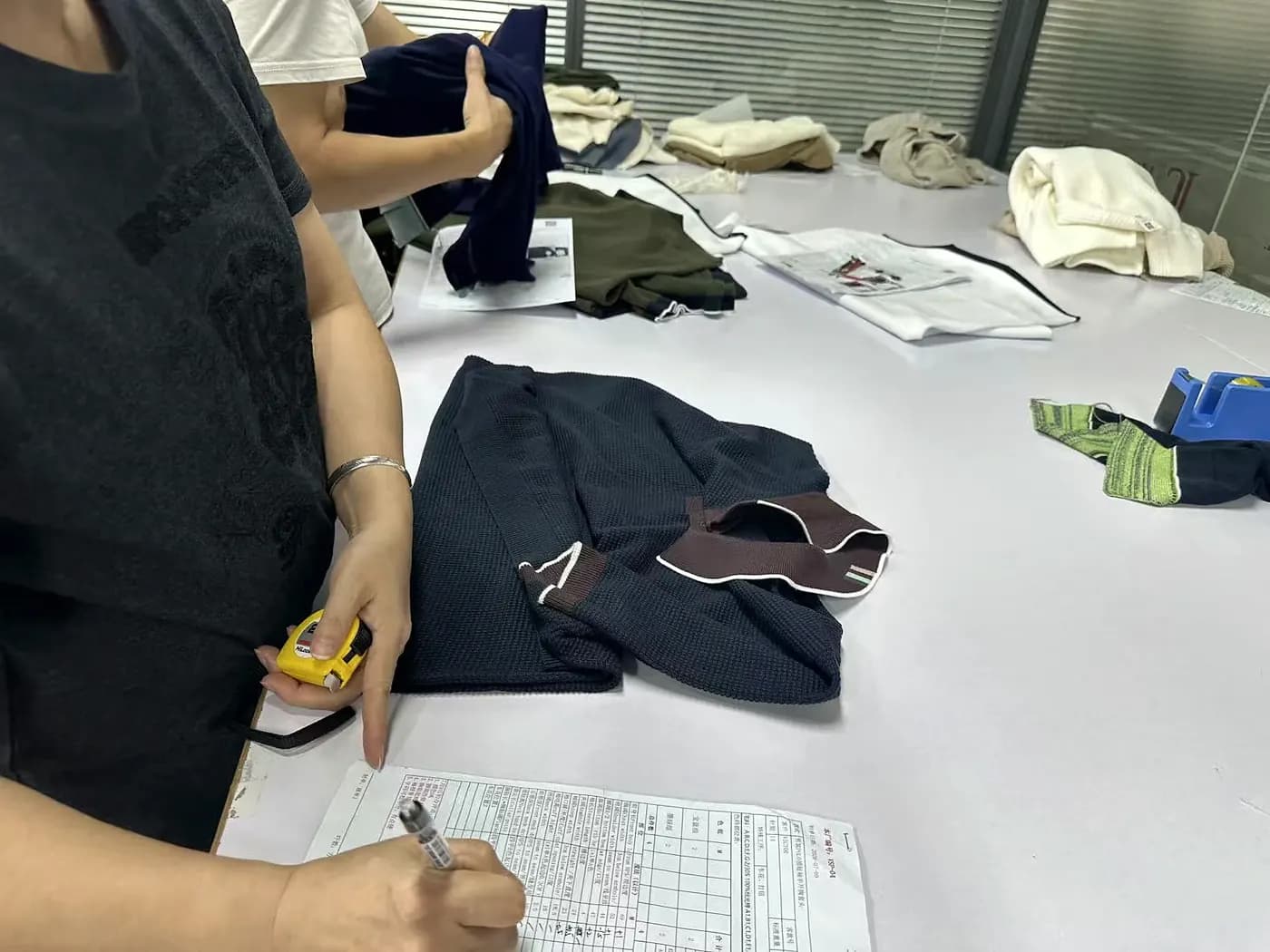
If your question depends on material, gauge, quantity or target price, submit an inquiry so the team can review it properly.
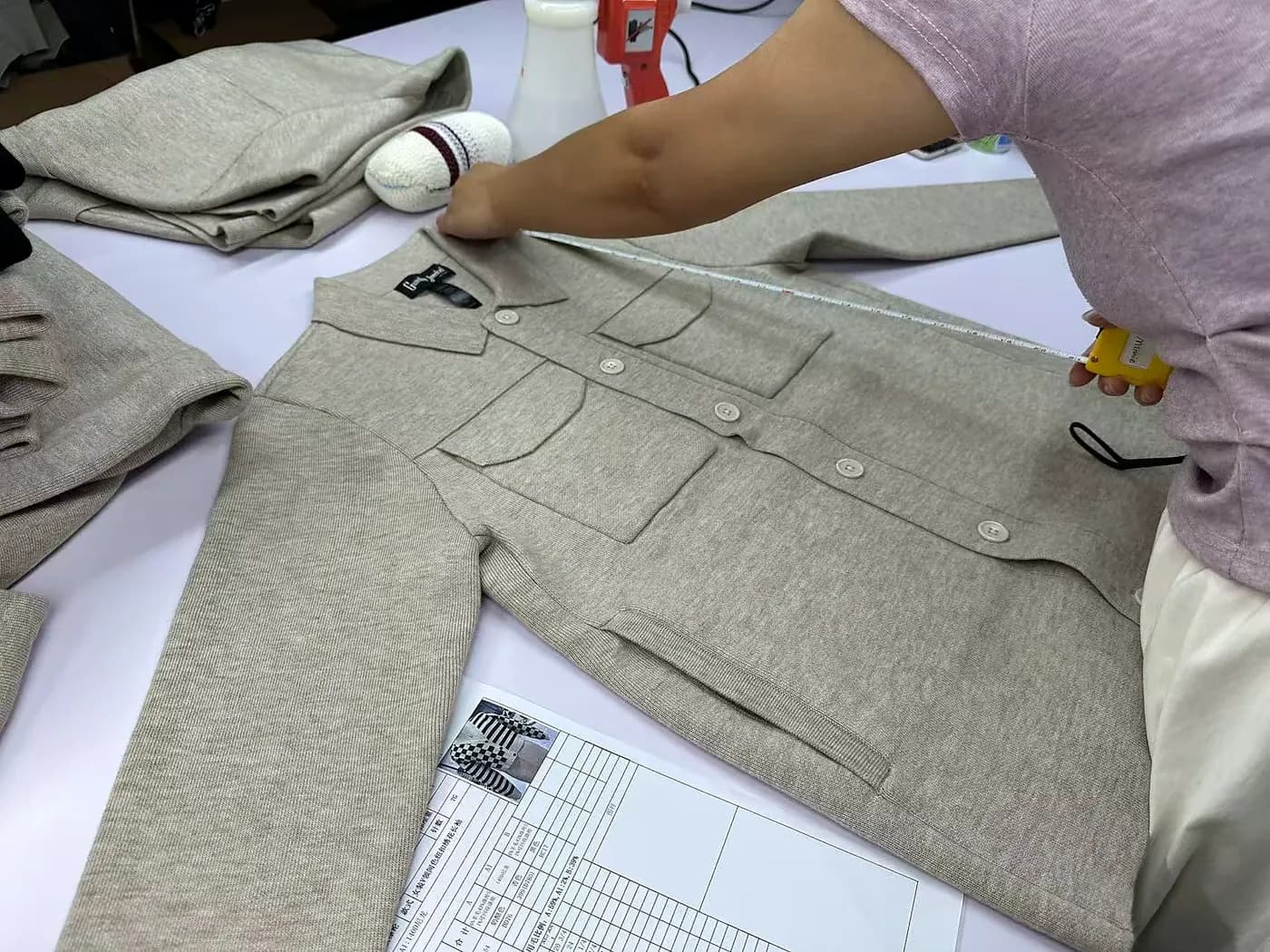
MOQ, lead time, cost ranges, gauge selection and QC checkpoints across typical OEM/ODM knitwear programs in NA + EU. Enter your email — we'll send you the report link in 30 seconds.
No spam. Unsubscribe with one reply. We use your email only to send you the report and follow up if you want a sourcing conversation.









Brand names shown are previously serviced OEM/ODM partners. Logos are decorative and do not imply current endorsement.
