If you are planning your first AW knit program, the single most useful thing you can put on the wall is a calendar. Not a trend board, not a tech pack template — a calendar with eight rows on it. We make AW knitwear in Dongguan year-round, and the buyers who hit retail dates are not the ones with the best designs. They are the ones who entered the calendar in January and respected each gate.
This is the AW26/27 knitwear buying calendar we share with new brand owners. The dates assume a typical North American or European retail window (store sets and DTC drops landing October–November 2026). The lead times are ours: sample 7–25 days, bulk 30–45 days, MOQ 30 pieces per color on catalog programs. If your supplier quotes meaningfully shorter, ask what they are skipping.
Why is the AW calendar tighter than the SS one?
Because AW knitwear is heavier, uses more yarn, and competes for the same yarn and machine capacity as everyone else's AW programme. The same styling decision made a month late costs more in AW than in SS.
When should yarn be booked for an AW26-27 programme?
Early in the calendar year, well ahead of prototype requests. Yarn booking is the step with an external lead time and an external minimum, which makes it the correct first action rather than a consequence of design sign-off.
What happens in each phase of the AW calendar?
Yarn booking first, then prototype requests, then pre-production samples and the purchase order, then bulk knitting and linking, then bulk QC and shipment. Each phase depends on the one before, which is why a single late approval propagates.
How much sampling time should be planned?
15-25 days per round from confirmed yarn and artwork, and plan for more than one round on new development. Reorders of settled styles move considerably faster.
What is the single most useful thing a buyer can do to protect an AW calendar?
Approve colour early. It is the decision with the longest external dependency and it is the one most often left until the styling feels finished.
💬 Sourcing this for an upcoming project? Request a free quote → · MOQ 30 pcs · Sample in 15–25 days · WhatsApp us
AW knitwear compresses badly. Cotton tees forgive a late PO because the fabric is greige-dyed and turned in days. AW knits do not. The yarn has to be dyed to your lab dip, knitted on the correct gauge, linked, washed, and pressed — and most AW programs combine multiple yarn counts, multiple gauges (3GG chunky to 14GG fine merino), and at least one yarn-dyed stripe or jacquard. Each of those decisions has its own clock.
The other reason AW is tight: yarn mills run their development calendar on a fixed cadence. They open AW yarn books — the physical hank cards showing the season's colors and qualities — in January and February. If you wait until April to look at yarns, you are not looking at AW26/27. You are looking at leftovers.
This is the only month most brand owners get wrong, because it does not feel urgent. There is no PO on the table. But this is when AW26/27 actually starts.
What happens in our office in January and February: yarn agents arrive with hank cards from the Italian, Chinese, and Mongolian mills. We pull the qualities that match the design directions we are seeing from buyers — extrafine merino, recycled wool blends, brushed alpaca, cotton-cashmere. We log minimums (most yarn mill MOQs sit at 50–100 kg per color for stock-service yarns and 300+ kg for dyed-to-order) and lead times (4–8 weeks for dyed-to-order yarn).
What you should do as a buyer: ask your manufacturer for swatches of three to five yarn qualities you want to develop in. Get the hank cards. Decide your hand-feel and your price ceiling now, because every later decision flows from this.
What slips if you skip this gate: by March, the yarns you wanted are reserved by other brands. You will be offered substitutes, and substitutes change hand-feel, drape, and price.
Now the tech packs land. This is your prototype window — first physical sample of each style, in any available yarn close to the target quality. Our sample lead time is 7–25 days depending on complexity (a plain crew on a single gauge is a week; an intarsia cardigan with bonded trim is the high end).
You should plan for two prototype rounds. Round one almost never lands perfectly. The body length is wrong, the rib tension is off, the neckline pulls. Round two corrects. Build six weeks into the plan for prototyping, not three.
What we need from you in this window: tech pack with measurements (every point of measure, not just chest and length), construction notes, target yarn quality and color direction, label and trim references. What we will send back: the sample, plus a sample report with construction notes, weight per piece, and any flags about cost or feasibility.
What slips if you enter prototyping in May instead of March: you compress your PP sample window, which is the gate that actually determines bulk quality. Compressed PP equals more risk in bulk.
May is the month the program becomes real. The pre-production (PP) sample is made in the actual bulk yarn, the actual bulk color (post lab-dip approval), and the actual bulk construction. It is the contract sample. Once approved, bulk runs to it.
Lab dips usually take two rounds. We send dip one; you approve, comment, or request a re-dip. Re-dips take another 7–10 days at the mill. Approve fast. Every day of lab-dip indecision is a day off the bulk knit window.
The PO drops at the end of this window — typically late June for an October ship. POs need to cover yarn deposit (yarn mills want 30–50% on order confirmation), bulk MOQ commitments (we work to 30 pieces per color on catalog programs; bespoke programs vary), and the agreed ex-factory date.
What slips: brands that approve PP in mid-July instead of late June lose two to three weeks of bulk knit time. That time has to come from somewhere. Usually it comes from QC, which is the worst place to take time from.
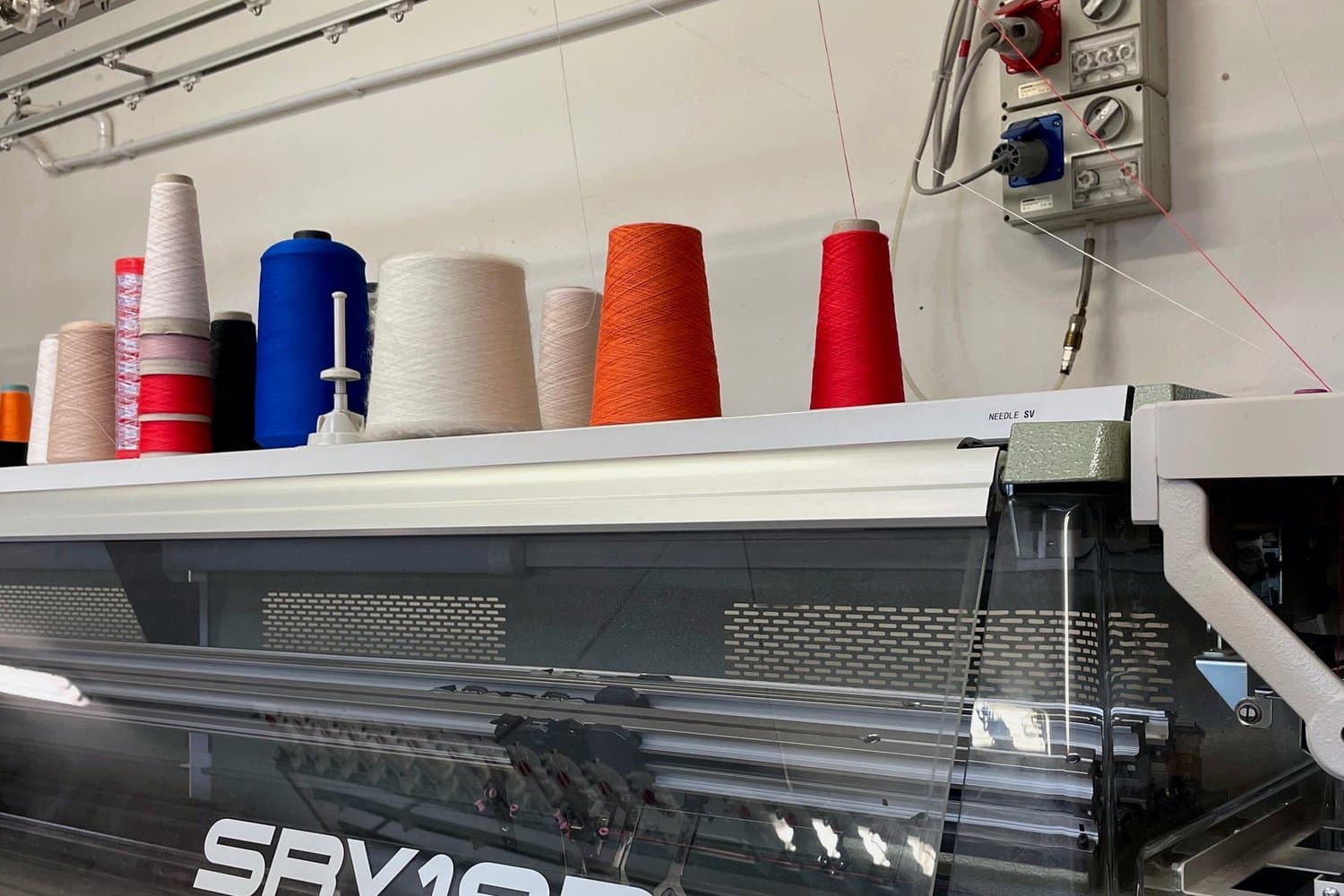
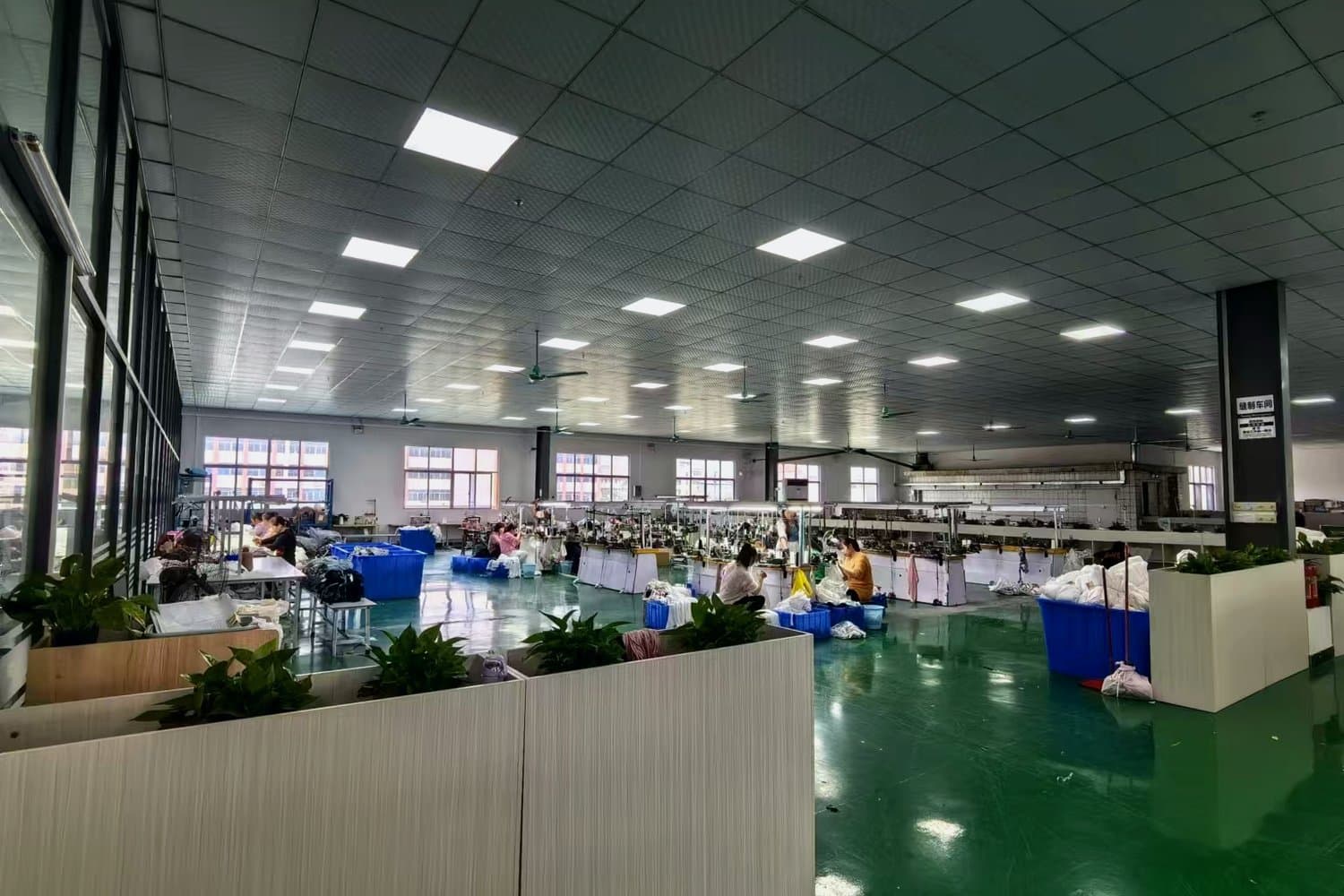
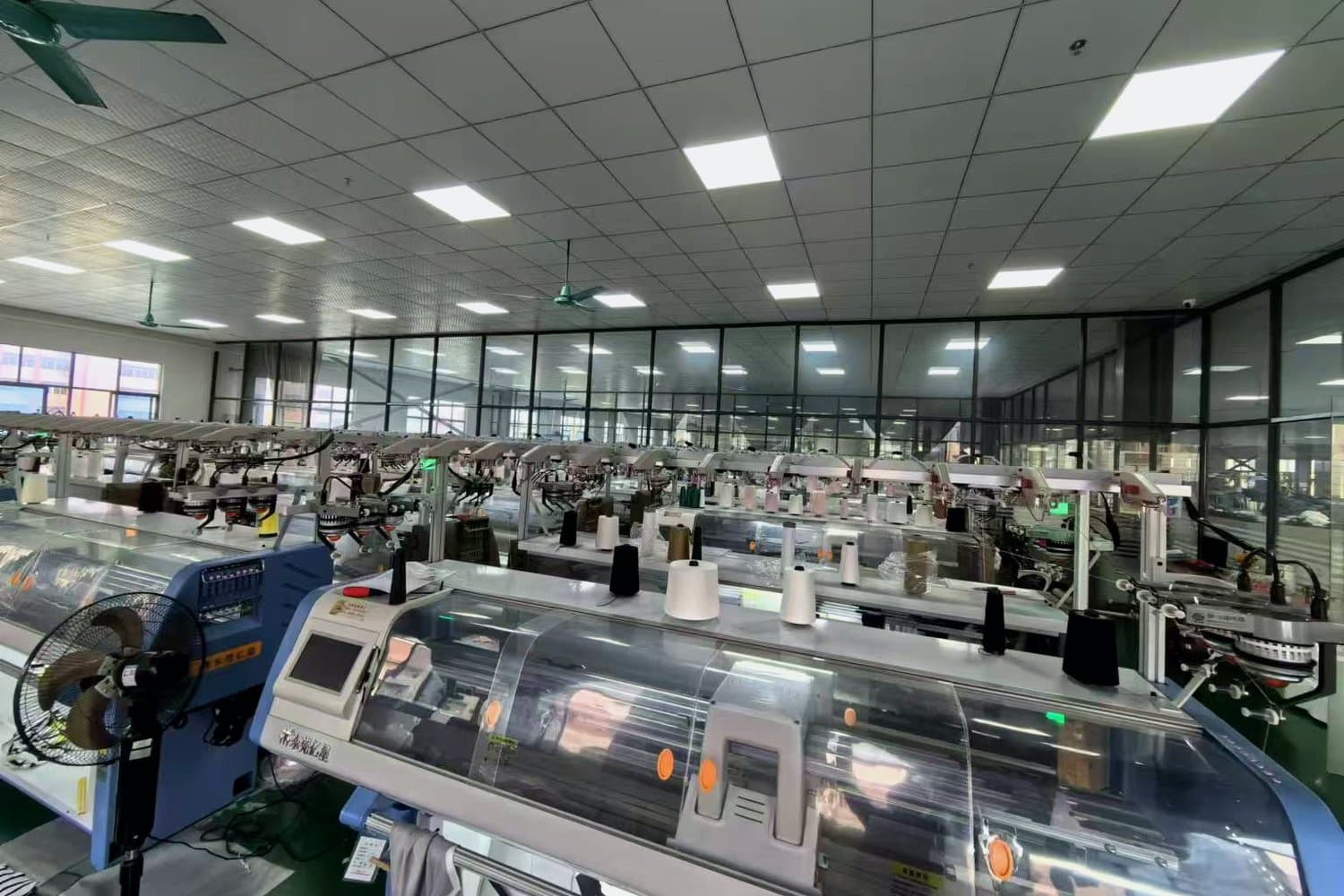
This is the loud, hot, busy phase. Bulk lead time on AW knitwear in our facility runs 30–45 days from yarn-in-house. The split is roughly: knit panels 10–14 days, linking 7–10 days, wash and press 5–7 days, finishing and trim 5–7 days, internal QC 3–5 days.
What the buyer should do in July and August: book freight. Confirm packing and labeling (carton labels, hangtags, polybags, size stickers — all of it needs to be approved before September, because they go into the cartons during finishing). Confirm Incoterms (we quote FOB China; if you want DDP a forwarder needs to be engaged now, not in September).
This is also when needle and metal detection happens on every finished piece. We run AQL inspection on the lot before it is packed.
September is QC and ship. Final AQL is conducted, third-party inspection is optional (most of our buyers self-inspect or use a third-party for the first program and skip it once trust is established). The lot is packed, photographed, and released.
Sea freight from South China to US West Coast is typically 18–28 days port-to-port, plus 5–10 days for customs and inland trucking. To Northern Europe (Hamburg, Rotterdam), plan 30–35 days port-to-port. If you are shipping to East Coast US, add a week.
If every prior gate held, you are landing inventory the first half of October. That gives you two to four weeks to receive, photograph, and merchandise before your launch window opens. Brands launching on Black Friday usually want product in the DC by November 1 at the latest — which means leaving the factory by mid-September.
|
| Jan–Feb 2026 | Review yarn books, lock qualities | Pull hank cards, log mill MOQs/LT | Yarn substitutions, hand-feel drift |
| Mar–Apr 2026 | Send tech packs, approve protos | Build prototypes (7–25 day LT) | Compressed PP window |
| May–Jun 2026 | Approve PP, issue PO | Run PP sample, secure yarn deposit | Lost bulk knit days |
| Jul–Aug 2026 | Confirm trims, book freight | Bulk knit 30–45 days, linking, wash | QC time stolen from bulk |
| Sep 2026 | Approve final QC, release | AQL + needle/metal detect, pack | Air-freight upgrade $$$$ |
| Oct–Nov 2026 | Receive, photograph, launch | Post-ship support, reorder readiness |
Three things, in order of cost.
Yarn substitution. This is the cheapest slip but the most invisible. The yarn you specified is no longer available in the quantity you need, so we propose the closest substitute. Hand-feel changes. Price may change. The customer who buys the sweater will not know what the original yarn was — but they will know the sweater feels different from the swatch you approved in February.
Air-freight upgrade. Sea to air on a 1,000-piece AW knit shipment can swing the landed cost by USD 4–8 per piece depending on weight and lane. If your sweater FOBs at USD 22, that is a 20–35% margin hit on the airline alone.
Missed retail window. This is the expensive one. A sweater that lands November 25 instead of October 25 does not just lose a month of full-price selling. It often misses the gift-buying window entirely and gets marked down on arrival. We have seen buyers eat 30–40% margin on a program because it landed three weeks late.
You can compress, but only in specific places. Catalog programs — styles already developed, already in production-tested constructions — can skip prototype rounds and jump from tech pack to PP in three to four weeks. That is the legitimate compression lever.
What you cannot compress: yarn dyeing (4–8 weeks at the mill, full stop), bulk knit (30–45 days for AW gauges, full stop), and sea freight. Anyone telling you otherwise is either using stock yarn (fine, but you accept the color palette), skipping QC (not fine), or planning to air-freight on their dime (they will not).
For first-time AW programs, we recommend buyers enter the calendar in January, approve PP by late June, and ship in September. That is the calendar. Everything else is recovery work.
---
If you're planning a real project around any of the points above, we'd be glad to take a quick look. Send a short brief and we'll come back within one business day with a practical direction, MOQ + lead time estimate, and a sample plan if it makes sense.
→ Request a free quote · Download the men's knitwear catalog · WhatsApp us · info@lcgarment.cn
Browse the full men's sweaters range →
Related: what the calendar looks like once it meets an actual range — men's AW2027 gauge, fibre and closure from 241 published styles.