UK Knitwear Sourcing 2026: MOQ, Lead Time and Commercial Terms
Updated 9/24/202612 min readBy Simon Liu · Licheng Knitwear
UK private-label brand owners planning autumn/winter knit collections in 2026 face a different commercial reality than they did pre-Brexit. Duty calculations, REACH compliance, port congestion at Felixstowe and the steady consolidation of UK independents have all reshaped how British buyers structure their knitwear programmes. This guide is written from our position as a Dongguan-based manufacturer that ships regularly into the UK market. It covers the MOQ, sample lead time, bulk lead time, yarn and gauge directions, quality control and logistics realities we see week to week when quoting and producing for UK brands. The intention is practical: by the end you should be able to walk into a quotation conversation with realistic expectations, ask the right questions on Incoterms and payment, and plan your AW26 calendar backwards with confidence.
The UK has always been a thoughtful market for knitwear. Heritage references run deep, weather drives genuine demand for AW knits across more than half the calendar, and British consumers respond to garments that feel considered rather than flashy. For a private-label brand planning an autumn/winter knit collection in 2026, the sourcing picture has settled after several years of post-Brexit adjustment, but the commercial fundamentals still need careful planning.
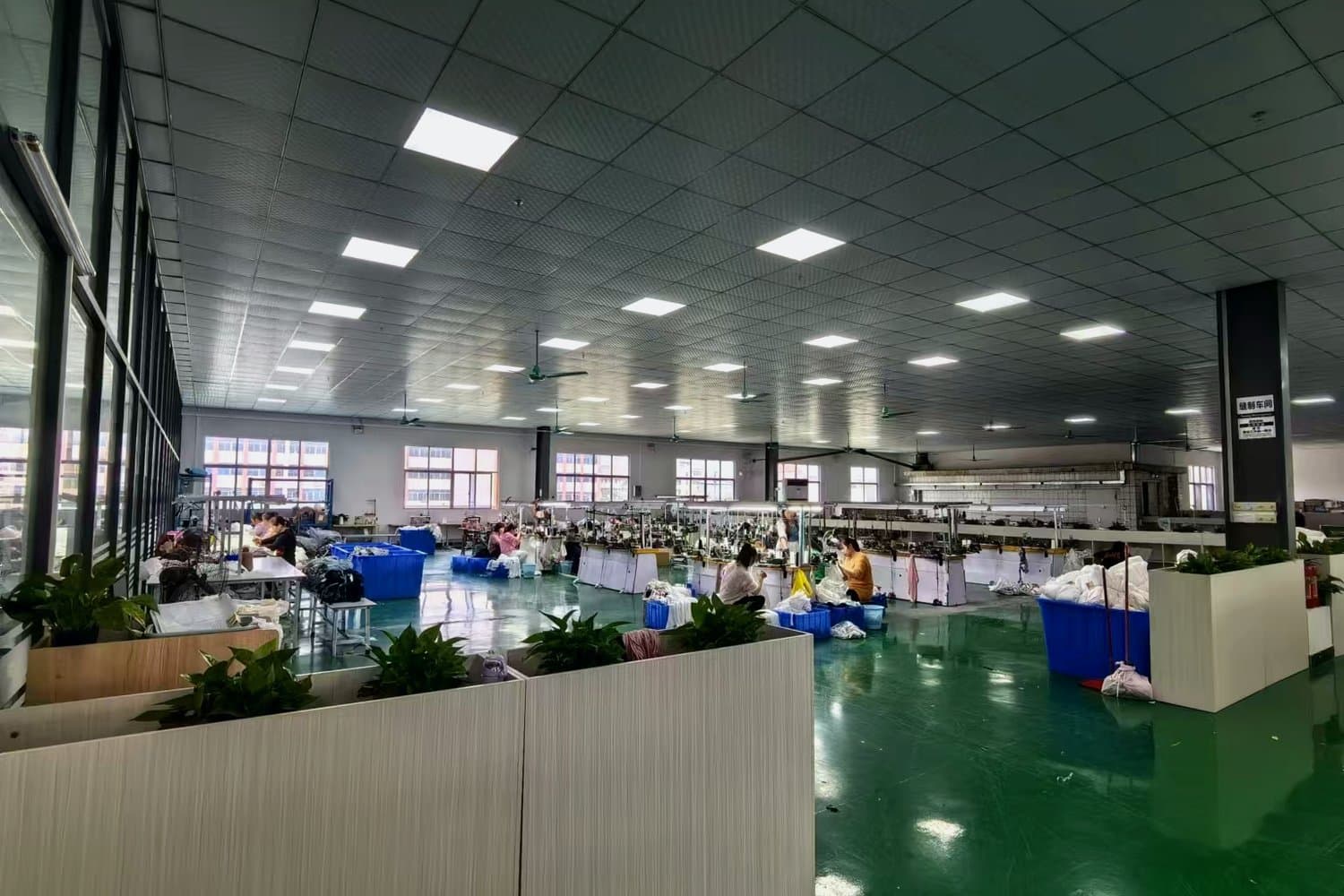
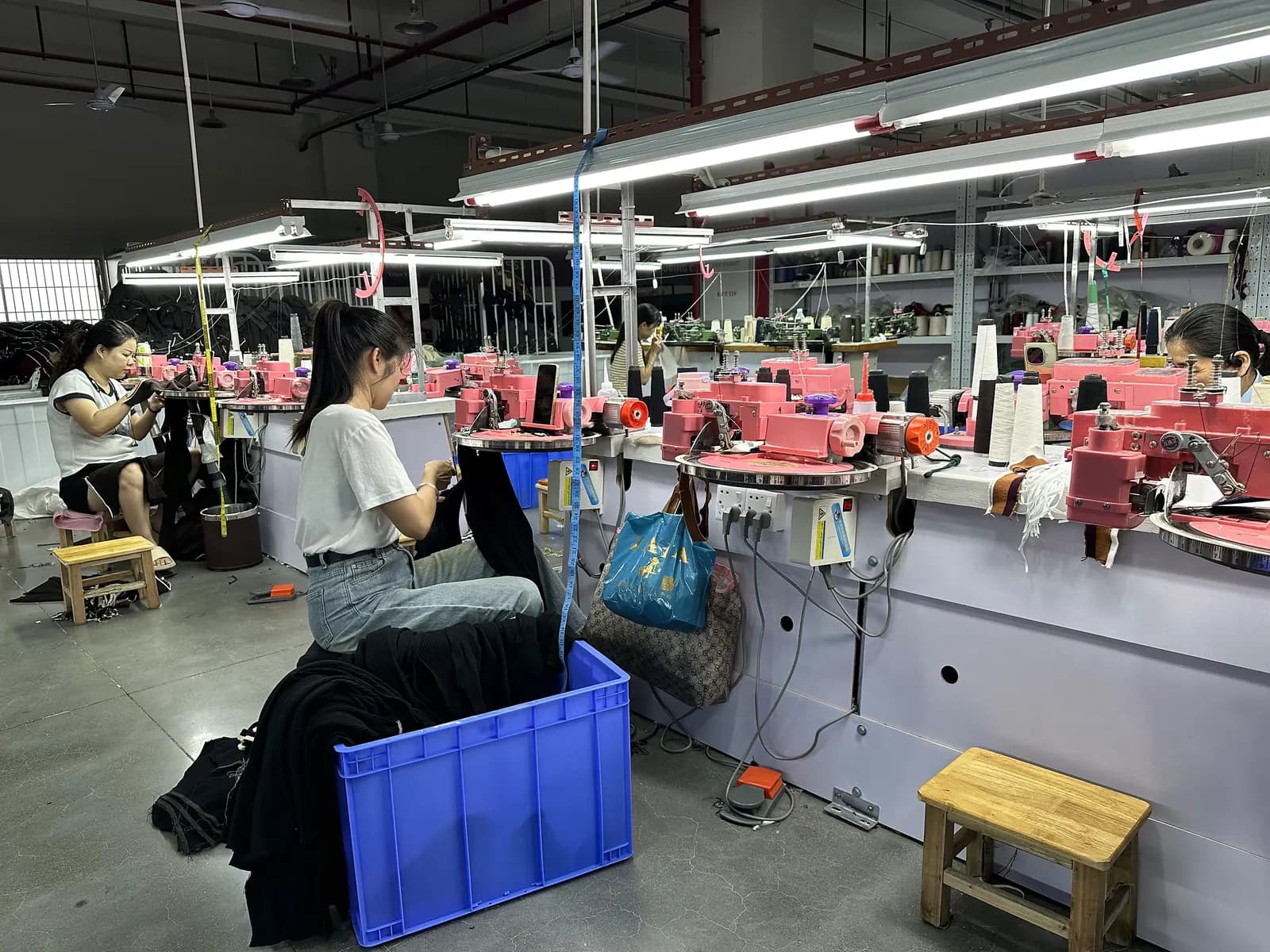
This guide is written from our position at Licheng, a Dongguan-based knitwear manufacturer founded in 2018 that supplies brands across the UK, EU and North America. We are not going to recite import statistics or quote unverifiable factory benchmarks. Instead we will walk through the realities our UK buyers actually negotiate with us: MOQ, sample lead time, bulk lead time, yarn and gauge direction, QC, payment and Incoterms.
Why the UK Market Matters for Knitwear Sourcing
Common Questions
Ready to Start Your Project?
Get a free catalog or submit an RFQ today. Our team will respond within 24 hours.
Does EU REACH still cover goods imported into the UK?
No. Since Brexit the UK operates its own REACH regime, and compliance under one does not automatically satisfy the other. A brand selling into both markets has two obligations to evidence, not one - which is worth settling at quotation stage rather than at customs.
What MOQ should a UK brand expect for custom knitwear?
Our published minimum is 30 pieces per colour, which suits the small-batch first orders most UK independents place. Note that minimums are per colour rather than per style: three colourways is three times the commitment.
How far ahead should a UK buyer book for an autumn/winter drop?
Work backwards from the floor-set date, not from the PO date. Sampling runs 15-25 days from confirmed yarn and artwork, bulk follows, and sea freight to UK ports is the long pole. The step that most often slips is colour approval, because a dyed-to-order shade carries the mill's own minimum and lead time.
Which yarns and gauges do UK buyers tend to favour?
British buying skews toward wool and wool blends in mid to chunky gauges for AW, with cotton and cotton blends in finer gauges for transitional pieces. Heritage constructions - cable, aran, fisherman - carry particular weight in this market.
What should a UK buyer put in the RFQ to get a usable first quote?
Quantity, gauge, yarn, size run, delivery date and the incoterm. Naming the incoterm matters more for UK buyers than it used to, because the duty and VAT treatment sits differently under FOB than under DDP.
The UK is a knitwear market in the structural sense. The climate gives a long selling window — UK retailers typically begin landing transitional knits from August and run core AW programmes through to February. Within our UK buyer base we see three recurring brand profiles: heritage and country brands building around lambswool and shetland references; modern menswear and womenswear independents leaning on merino, cotton blends and clean minimalist silhouettes; and DTC startups working to a tight margin who want one or two strong styles per drop rather than a sprawling range.
What this means practically: UK buyers tend to plan smaller initial buys per SKU than US buyers, but they care more about finish and hand-feel. They are also unusually attentive to care labelling, hangtag composition disclosure and packaging weight, partly driven by the Extended Producer Responsibility (EPR) packaging reforms that are now baked into UK retail. A good supplier for UK brands needs to be flexible at lower MOQs, fluent on fibre composition, and willing to engage on packaging detail rather than just garment cost.
Lead time is the conversation that derails most AW programmes. UK brands frequently arrive at sampling in March or April with an October landing target and assume the calendar is forgiving. It is not, but it is workable if the inputs are right.
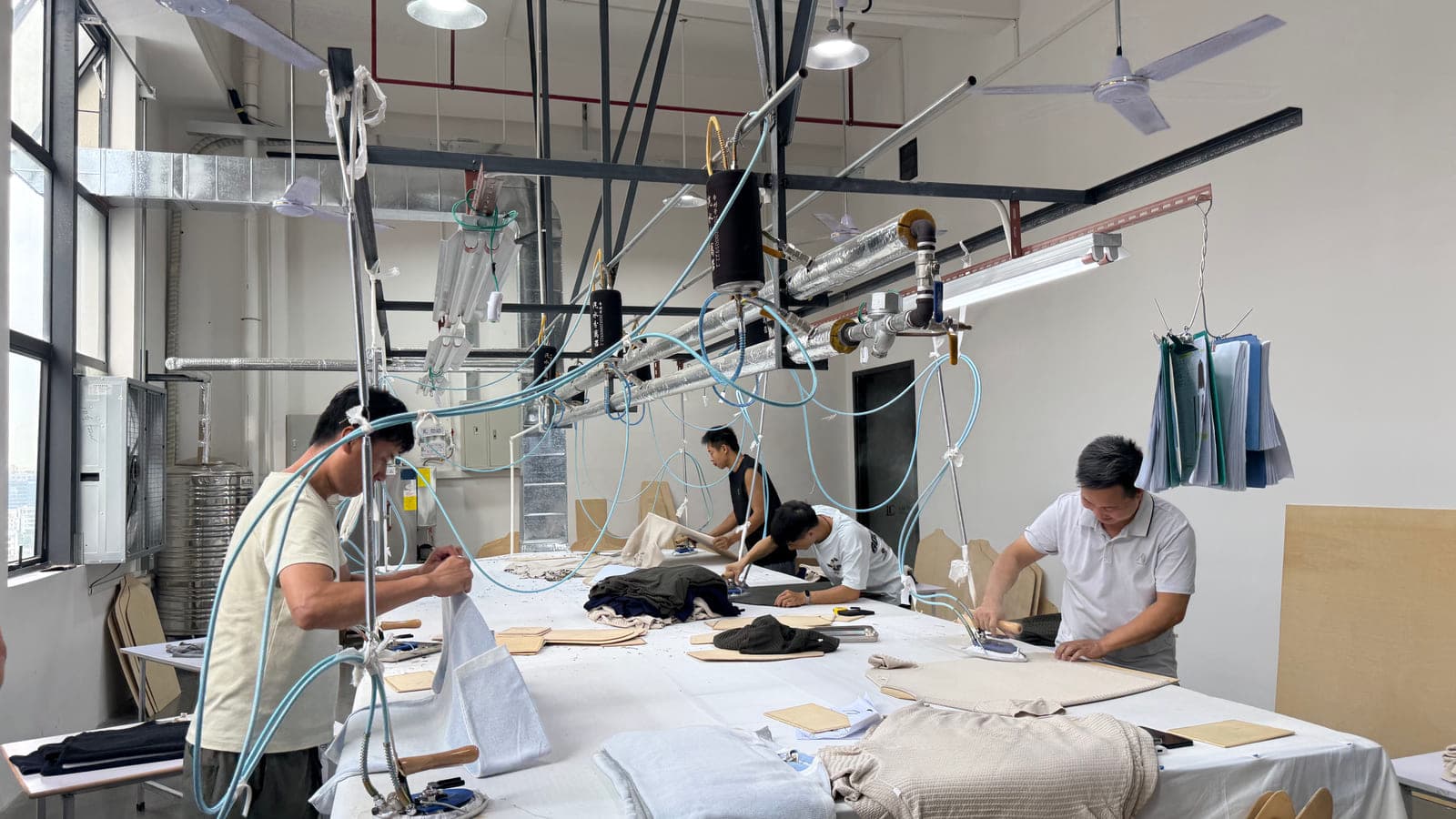
At Licheng our sample lead time is 7-25 days and our bulk lead time is 30-45 days. Those ranges are not marketing language — they reflect what the workflow actually allows. The lower end of sample lead time (7-12 days) is realistic when yarn is already in stock, the tech pack is complete and the construction is something we have produced before. The upper end (20-25 days) applies when yarn has to be sourced from a mill, a custom dye-lot is required, or the design includes intarsia, jacquard, or unusual finishing such as garment-wash or hand-tipping.
Bulk follows a similar logic. A 30-day bulk window assumes confirmed PP sample, yarn already booked, simple construction and a moderate order quantity per colour. The 45-day end is normal for chunky 3GG-5GG outerwear, complex multi-yarn jacquards, or orders that involve dye-house yarn production rather than stock yarn.
For a UK AW26 launch landing into warehouse in mid-September, a realistic working backwards calendar looks like this:
Milestone
Recommended completion
Notes
Brief and tech pack to factory
Early March 2026
Include yarn references, Pantone, measurements, fit benchmark
Proto sample approved
Late March – mid April
7-25 day sample window
Fit sample on size set
Late April
Allow time for one revision
PP (pre-production) sample signed
Mid May
Yarn, colour and trims all locked
Bulk PO confirmed and deposit
Late May
30-45 day bulk window begins
Bulk completed and inspected
Early-to-mid July
AQL inspection, metal detection
Sea freight from China
Mid July – late August
28-35 days port to UK port
UK warehouse landing
Early-to-mid September
Buffer for customs clearance
The single most common cause of slippage we see is delayed colour approval. A lab dip waiting a fortnight for buyer sign-off pushes the entire chain. Treat colour as a critical-path item, not an aesthetic afterthought — our knitwear color approval guide walks through the sequence.
MOQ and Commercial Terms for the Typical UK Brand
MOQ is where UK brands and Chinese factories most often misalign. UK independents frequently come in expecting low-MOQ flexibility on the same garment that a US wholesaler would order in 800-piece colourways. The honest answer is that MOQ has to be discussed at the colour level, not the order level.
Our catalogue MOQ is typically 30 pieces per colour. That is a working floor, not a marketing claim — it assumes a style and yarn already in our development library, with a size split that the factory floor can run efficiently. For fully custom styles using yarn we have to book from a mill, the practical economic MOQ is higher because the yarn supplier sets a minimum dye-lot.
For a typical UK private-label AW programme we see this breakdown:
Trial drop or capsule (one new brand, 2-3 styles): 30-50 pieces per colour, accepting that yarn options will skew toward stock-supported yarns.
Established small brand (annual AW range): 100-300 pieces per colour, which opens the door to custom yarn and bespoke colour development.
Wholesale-supported brand: 200+ pieces per colour, where the yarn book is wide open and price tiers come down meaningfully.
The deeper mechanics are covered in our custom sweater MOQ guide and the low MOQ knitwear playbook. One pattern worth flagging for UK buyers specifically: many of our UK customers run a 'core plus trend' model — they reorder a small, proven core (where MOQ becomes easier on the second round) and use new trend colours as smaller risk-managed drops. This works well and is something we are happy to plan around. For larger UK accounts that move into a regular reorder cadence with us, we typically settle into a working rhythm where MOQ becomes less of a friction point because yarn and trims carry over between seasons and development time compresses on repeat styles.
Yarn and Gauge Directions UK Buyers Favour
When we look across the AW programmes we run for UK brands, certain yarn and gauge combinations come up disproportionately often.
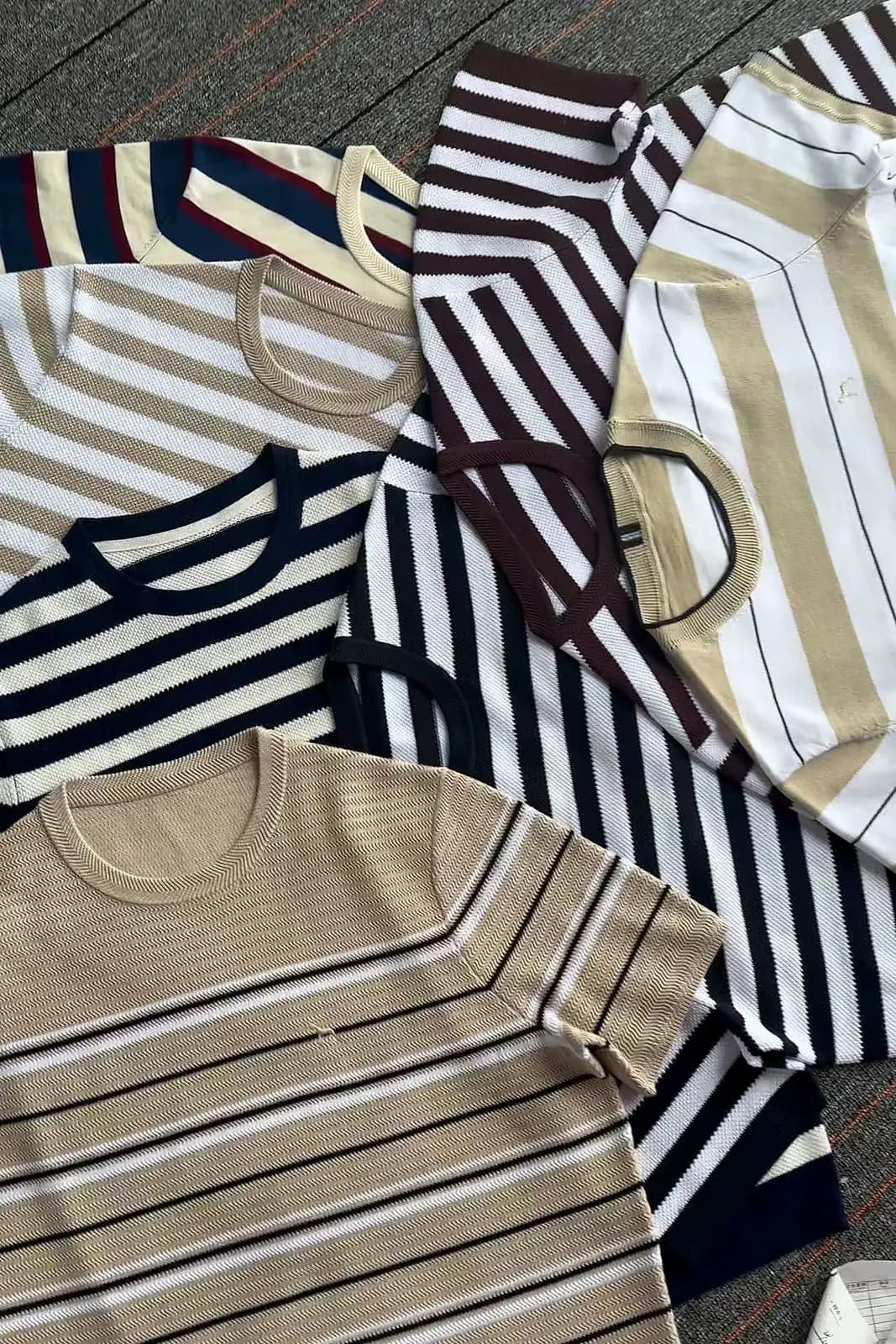
On yarn, lambswool and lambswool blends remain a cornerstone — they connect to the heritage references UK buyers grew up with, and they sit at a sensible price point compared with cashmere or pure merino. Merino itself is heavily used by the cleaner modern brands, particularly fine 30/2 and 28/2 counts for crisp 12GG knits. Cotton-rich blends do strong volume in late AW and transitional drops, often in 7GG to 12GG. Mohair and brushed yarns have been on a multi-season run with the streetwear-influenced UK independents.
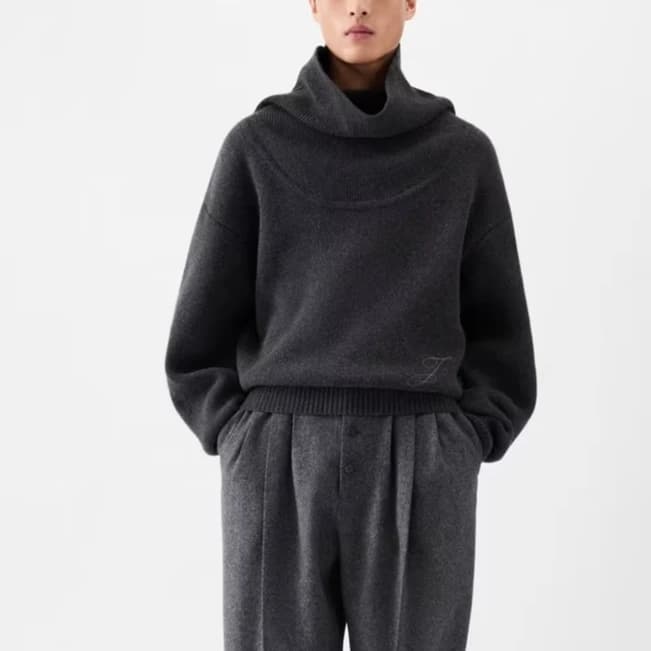
On gauge, our UK programmes cluster around 5GG, 7GG and 12GG, with 3GG seeing strong use for statement outerwear knits and chunky shawl-collar cardigans. The gauge fundamentals are covered in our knit gauge guide and the 5GG vs 7GG vs 12GG comparison.
A few practical pointers for UK buyers specifically:
Heathered and melange yarn effects move very well in the UK — they cover small knitting irregularities and feel intrinsically British.
Brushed and mohair styles need clear pilling and shedding expectations in the spec — our anti-pill knitwear guide explains how to specify this.
UK buyers generally want a clear, documented QC story. We work to AQL inspection at standard 2.5 levels for major defects with full needle and metal detection on every shipment — this matters for kids' lines and for high-street retailers who require it contractually. Documents such as material composition statements and inspection reports are available on request rather than displayed publicly on our website.
The compliance points UK brands ask about most often are:
REACH (Annex XVII): restrictions on substances such as azo dyes, nickel release and certain phthalates apply to garments sold in the UK. We can produce against agreed declarations on these.
Care labelling: the UK does not mandate care symbols but does require fibre composition labelling, and most UK retailers will spec ISO care symbols.
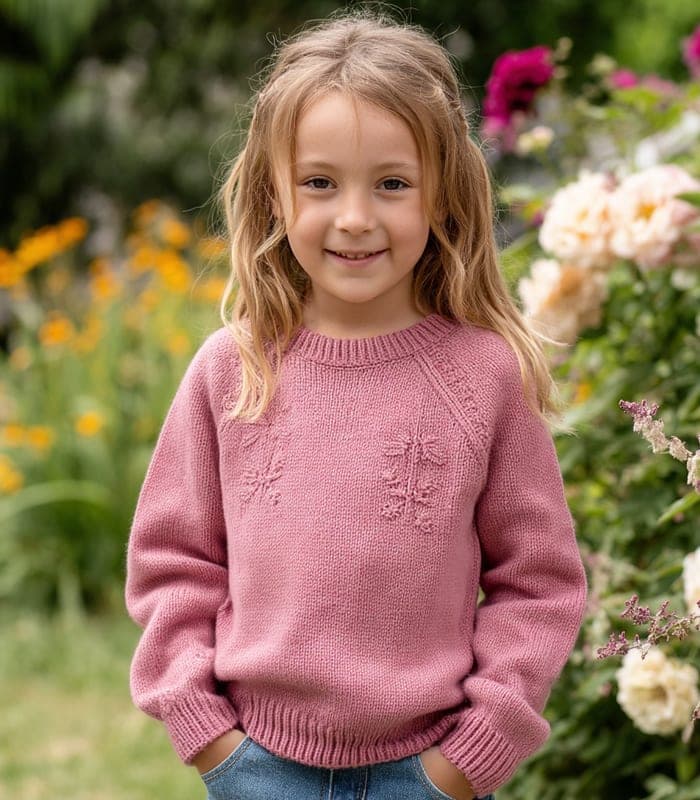
Children's knitwear: cord and drawstring restrictions (drawing on EN 14682) apply if you are selling kidswear into the UK market. Our children's knitwear manufacturing guide walks through the design constraints.
UK brands selling on Marketplace platforms or to major retailers should also expect to be asked about Modern Slavery Act statements as their volume grows. This is a brand-level disclosure rather than a factory document, but the underlying expectation — that you can show where your knitwear is made — is one we support with traceable production records.
Our broader QC checklist and the third-party inspection guide cover the day-to-day mechanics. If you intend to run an independent pre-shipment inspection (a common choice for UK brands above their first or second order), we accommodate this as standard.
Logistics, Payment and Incoterms
For UK destinations we most commonly quote FOB Shenzhen, FOB Yantian or FOB Shanghai, in USD. From these origin ports, container sea freight to Felixstowe or Southampton typically runs 28-35 days plus 3-7 days customs clearance and inland trucking to a UK warehouse. Air freight is 4-6 working days door-to-door but is rarely economic for knitwear except for late samples, replacement units, or very small high-margin drops.
On Incoterms, FOB remains the standard for buyers who already have a UK freight forwarder relationship — you keep control of carrier choice, can consolidate with other shipments and absorb the duty calculation cleanly. CIF can work for first-time buyers but you lose visibility on the freight margin. DDP is something we will arrange for brands that genuinely have no import infrastructure, but it transfers full duty and VAT prepayment to us and the all-in cost is usually higher than running it yourself once volume grows.
UK import duty on knitwear depends on the HS classification (the 6110 sub-headings cover most jumpers, cardigans and pullovers, with rates that vary by fibre). UK import VAT at 20% is recovered by VAT-registered businesses but still affects cashflow. Our knitwear landed cost guide walks through how to model duty, freight and VAT honestly before you commit.
On payment, the standard structure we use with UK brands is 30% deposit on PO confirmation and 70% balance against pre-shipment inspection report and B/L copy. T/T bank transfer in USD is the norm. We discuss alternative structures (L/C, escrow, 50/50) for larger orders or first-time engagements where confidence on both sides is being built — the trade-offs are laid out in our payment terms guide. For the shipping mechanics specifically, see our knitwear shipping and logistics guide.
The takeaway for any UK private-label brand planning AW26: the sourcing maths is workable, but it needs an honest calendar, an honest MOQ conversation and an honest position on Incoterms. Get those three right and the rest of the programme tends to fall into place.
---
Talk to our team about this
If you're planning a real project around any of the points above, we'd be glad to take a quick look. Send a short brief and we'll come back within one business day with a practical direction, MOQ + lead time estimate, and a sample plan if it makes sense.
Our catalogue MOQ is typically 30 pieces per colour for styles and yarns already in our development library. For fully custom yarn that has to be dyed for your order, the practical floor is higher because the yarn mill sets its own minimum dye-lot. UK independents most often land at 30-50 pieces per colour for a trial capsule and 100-300 pieces per colour for an established AW range, where custom-dyed yarn becomes workable.
Our sample lead time is 7-25 days. The lower end (7-12 days) is achievable when yarn is in stock and construction is straightforward; the upper end (20-25 days) is normal when yarn has to be sourced from a mill, custom colour is required, or the design includes intarsia, jacquard or special finishing. Plan for at least one round of revision in your overall calendar.
Brief and tech pack to the factory by early March 2026. Proto sample approved late March to mid April, fit sample on size set late April, PP sample signed mid May, bulk PO confirmed late May. Bulk runs 30-45 days, then 28-35 days sea freight to a UK port, plus customs clearance. This gets you a mid-September warehouse landing with a sensible buffer.
FOB is the most common choice once you have a UK freight forwarder relationship — you control the carrier and absorb duty and VAT cleanly. CIF works for first-time buyers but is less transparent on freight margin. DDP is available for brands without import infrastructure but typically costs more all-in once you grow.
Yes. We produce against agreed REACH declarations covering substances such as azo dyes, nickel release and phthalates. We can supply material composition statements and inspection reports on request. For children's knitwear we work to the cord and drawstring expectations UK retailers commonly specify. Compliance documents are shared with buyers directly rather than displayed publicly.
We focus on men's sweaters, cardigans, knit jackets, jacquard knitwear and private label knitwear. We support B2B buyers with OEM/ODM development, sampling and bulk production planning.
MOQ, lead time, cost ranges, gauge selection and QC checkpoints across typical OEM/ODM knitwear programs in NA + EU. Enter your email — we'll send you the report link in 30 seconds.
No spam. Unsubscribe with one reply. We use your email only to send you the report and follow up if you want a sourcing conversation.
Brand names shown are previously serviced OEM/ODM partners. Logos are decorative and do not imply current endorsement.