Knitwear Color Approval: Lab Dips, Pantone & Bulk Color Matching
Updated 9/19/202612 min readBy Simon Liu · Licheng Knitwear
Stop bulk arriving a shade off. A practical guide to knitwear color approval — from Pantone reference to lab dips to consistent bulk — covering metamerism, dye-lot tolerance, fastness and how to sign color off so delivered sweaters match.
Color is one of the most common reasons a knitwear order disappoints a buyer — the bulk arrives a shade off the sample, or two colours that should match don't. Almost all of it is avoidable with a proper color-approval process. This guide walks through how knitwear color works in practice, from a Pantone reference to approved lab dips to consistent bulk, so your delivered sweaters match what you signed off.
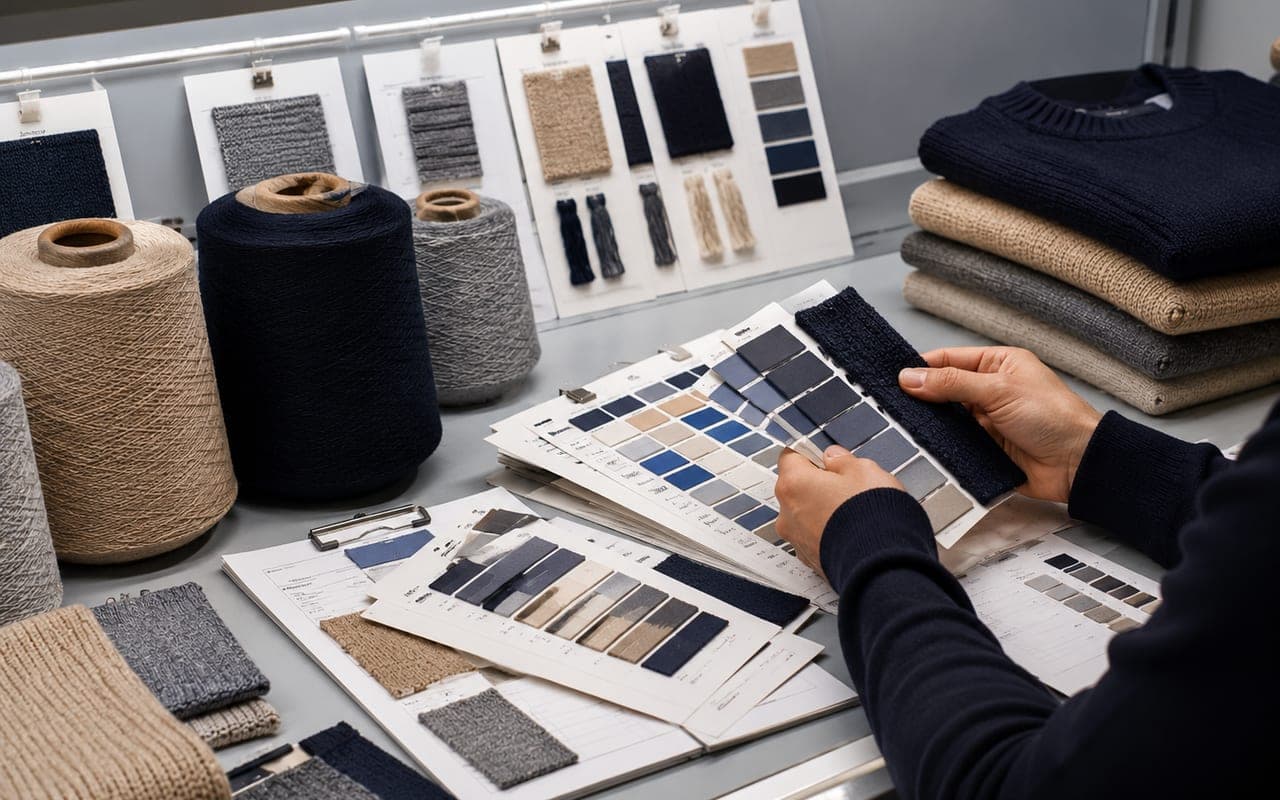
Approve color on the actual yarn, under agreed lighting, in writing. A color approved casually on a phone screen is the number-one source of "the bulk looks wrong" disputes.
Sign off color on dyed yarn under standard lighting — never on a screen.
The color approval workflow
Common Questions
What does the colour approval workflow look like end to end?
Colour reference, lab dip submission, lab dip approval, bulk dyeing, then bulk colour verification against the approved dip. Each stage is a gate, and skipping the bulk verification is where colour problems reach the customer.
How many lab dip rounds should a buyer expect?
More than one is normal, particularly for a difficult shade. Each round carries a fee and calendar time, which is why an unambiguous colour reference at the outset is the cheapest intervention available.
Why does bulk colour drift from the approved lab dip?
Because a bulk dye lot is a different scale of process from a laboratory dip - different volume, different liquor ratio, sometimes a different yarn lot. Some drift is inherent, which is why an agreed tolerance and a bulk verification step matter more than a perfect dip.
How should colour be written into the specification?
Name the Pantone reference with its suffix, the acceptable tolerance, and the light source conditions for assessment. Colour approved by eye without those three is approved against an unstated standard.
What are the most common colour mistakes buyers make?
Approving from a screen, approving under office lighting, changing the reference after lab dips have started, and treating one approved dip as covering every style in the range. Each adds rounds or produces goods that do not match across the collection.
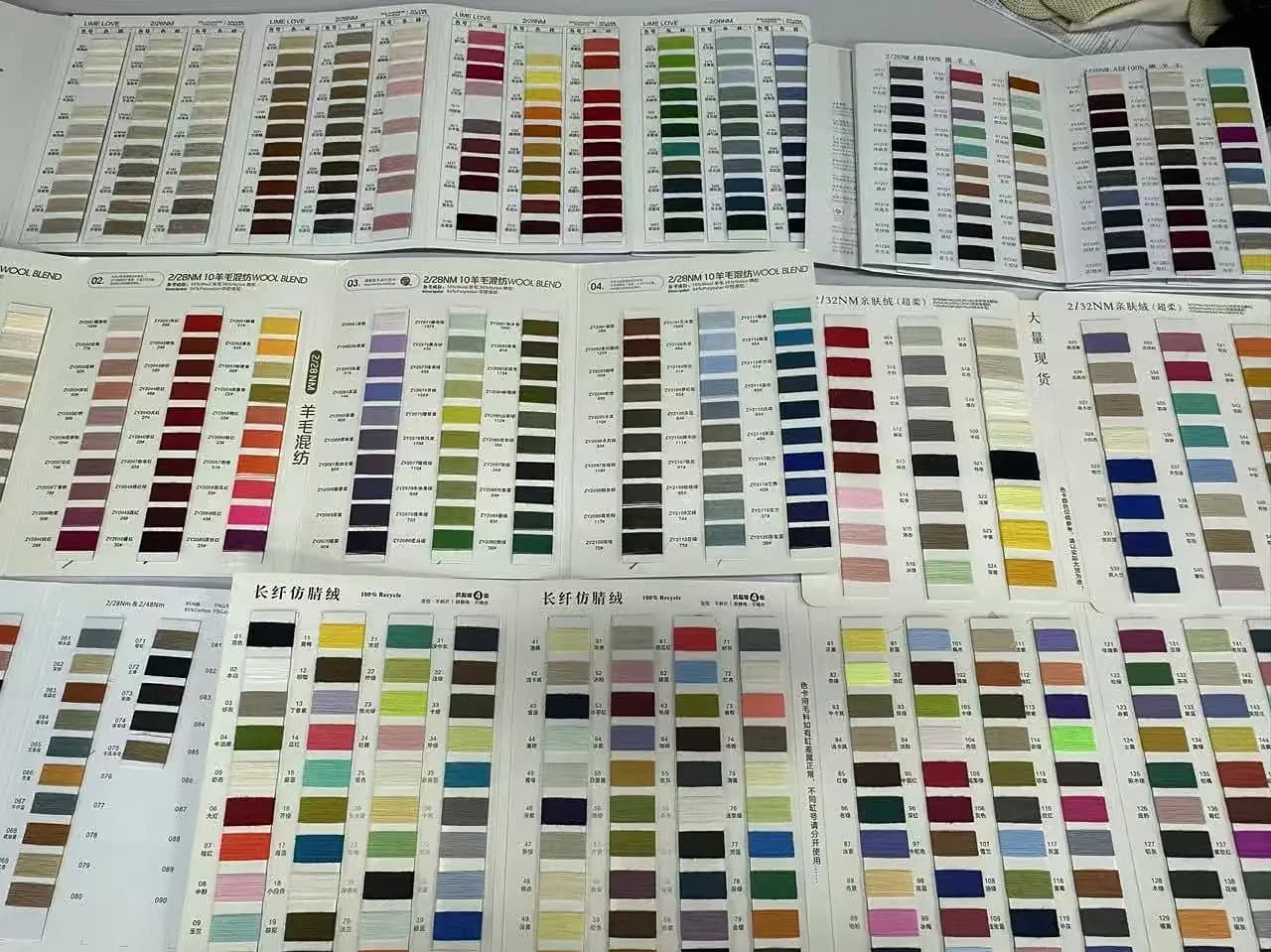
1. Reference — you provide a target: a Pantone TCX number, a physical swatch, or an existing garment. Pantone TCX (textile) references are more reliable for yarn than screen colors.
2. Lab dip — the factory dyes small yarn samples to match your reference and sends them for approval.
3. Approval (or revision) — you compare under agreed lighting and approve, or request a closer match. Expect one or two rounds.
4. Bulk dyeing — production yarn is dyed to the approved standard.
5. Bulk color check — confirm bulk matches the approved lab dip within tolerance.
Key terms buyers should know
Term
Meaning
Lab dip
A small dyed yarn sample submitted for color approval
Pantone TCX
Pantone's textile color system (cotton-based standards)
Strike-off
An approval sample for prints/patterns (vs solid color)
Metamerism
Colors that match under one light but not another
Lot / dye-lot variation
Slight color differences between separate dyeing batches
Gray scale rating
A 1–5 scale used to grade color difference and fastness
Why bulk can drift — and how to prevent it
Lighting matters. Approve under an agreed light source (e.g. D65 daylight). Metamerism means a match under store light can fail under daylight — check under more than one.
Dye-lots vary. Large orders may be dyed in multiple lots; specify an acceptable tolerance and that all lots match the approved standard.
Yarn substrate affects shade. The same dye reads differently on wool vs cotton vs acrylic, so always approve on your actual yarn — see the yarn material guide.
Color fastness. Ask about wash and rub fastness so the color holds; tie it into your care and labeling plan.
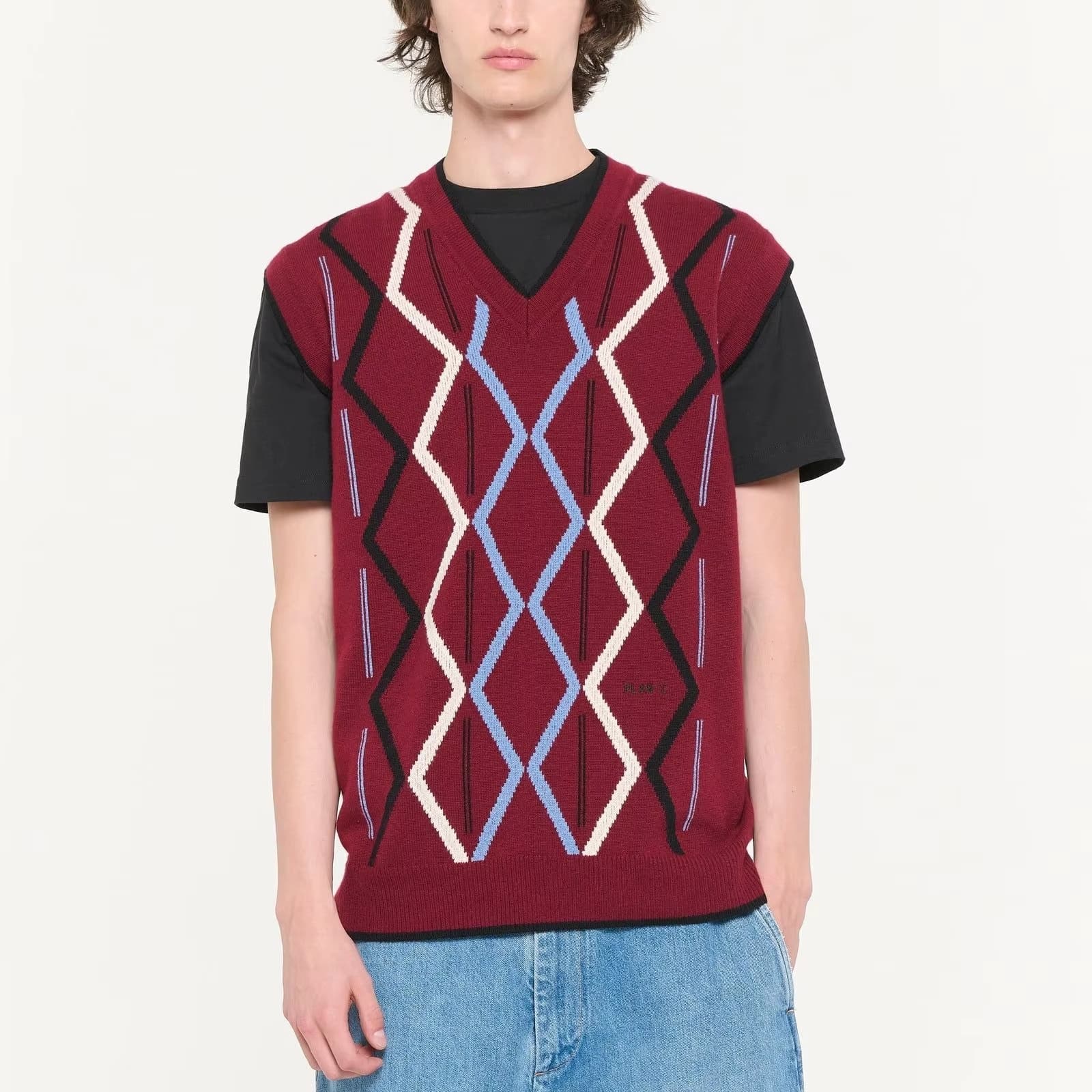
Multi-color knits need every shade approved and checked for cross-matching.
Build color into your spec and QC
Don't treat color as an afterthought. Put the reference, approved lab dip and tolerance into your spec, and check color at inspection. This fits inside the broader sampling approval process and sweater quality control checklist. For multi-color jacquards and patterns, confirm every shade and the cross-matching between them — see jacquard vs intarsia knitwear.
Common color mistakes
Approving color on a screen instead of dyed yarn
Checking under only one light source
Not specifying dye-lot tolerance on large orders
Forgetting color fastness, so the garment fades or crocks
Approving verbally with no written record
Get color right the first time
Licheng Knitwear runs lab-dip approval against your Pantone or physical reference, dyes bulk to the approved standard, and checks bulk color before shipment. Share your color targets and request a quote, or browse product directions to start from a style and palette you like.
---
Talk to our team about this
If you're planning a real project around any of the points above, we'd be glad to take a quick look. Send a short brief and we'll come back within one business day with a practical direction, MOQ + lead time estimate, and a sample plan if it makes sense.
You send a Pantone or physical standard; the mill dyes a lab dip; you approve it; then bulk yarn is dyed to the approved lab dip. Stock colours skip dyeing.
Often 1-2 rounds to hit the standard. Tight or unusual shades may need more. We send lab dips for sign-off before bulk dyeing.
Yes - a small-lot dyeing surcharge below 100-300 pieces per colour, and 7-15 extra days for the lab dip. The MOQ stays at 30 pieces per colour; in-stock colours keep cost and lead time lowest.
We focus on men's sweaters, cardigans, knit jackets, jacquard knitwear and private label knitwear. We support B2B buyers with OEM/ODM development, sampling and bulk production planning.
Ready sample styles and selected custom programs can support lower-risk trials before larger seasonal orders.
Yes. Brands, including new labels preparing a first collection, can pay for a sample and see it before placing a production order. Two routes: a ready sample of a published style at USD 60 per piece in about 7 days, or a development sample from your tech pack at USD 150 per style, covering yarn sourcing, knit programming, one prototype and one revision round, in 15-25 days. Cashmere and mohair styles are quoted individually and shipping is charged at cost. Production starts only after you approve the physical sample, at our minimum of 30 pieces per colour with sizes mixed inside the 30. A sample does not commit you to a production run; we do not make garments for personal use.
Ready to Start Your Project?
Get a free catalog or submit an RFQ today. Our team will respond within 24 hours.
MOQ, lead time, cost ranges, gauge selection and QC checkpoints across typical OEM/ODM knitwear programs in NA + EU. Enter your email — we'll send you the report link in 30 seconds.
No spam. Unsubscribe with one reply. We use your email only to send you the report and follow up if you want a sourcing conversation.
Brand names shown are previously serviced OEM/ODM partners. Logos are decorative and do not imply current endorsement.