Sweater Quality Control Checklist for B2B Buyers
Updated 8/18/202612 min readBy Simon Liu · Licheng Knitwear
A practical sweater quality control checklist covering measurements, workmanship, finishing, trims, labels and packing.
A practical sweater quality control checklist covering measurements, workmanship, finishing, trims, labels and packing.
Our team is ready to support your brand from concept to delivery.
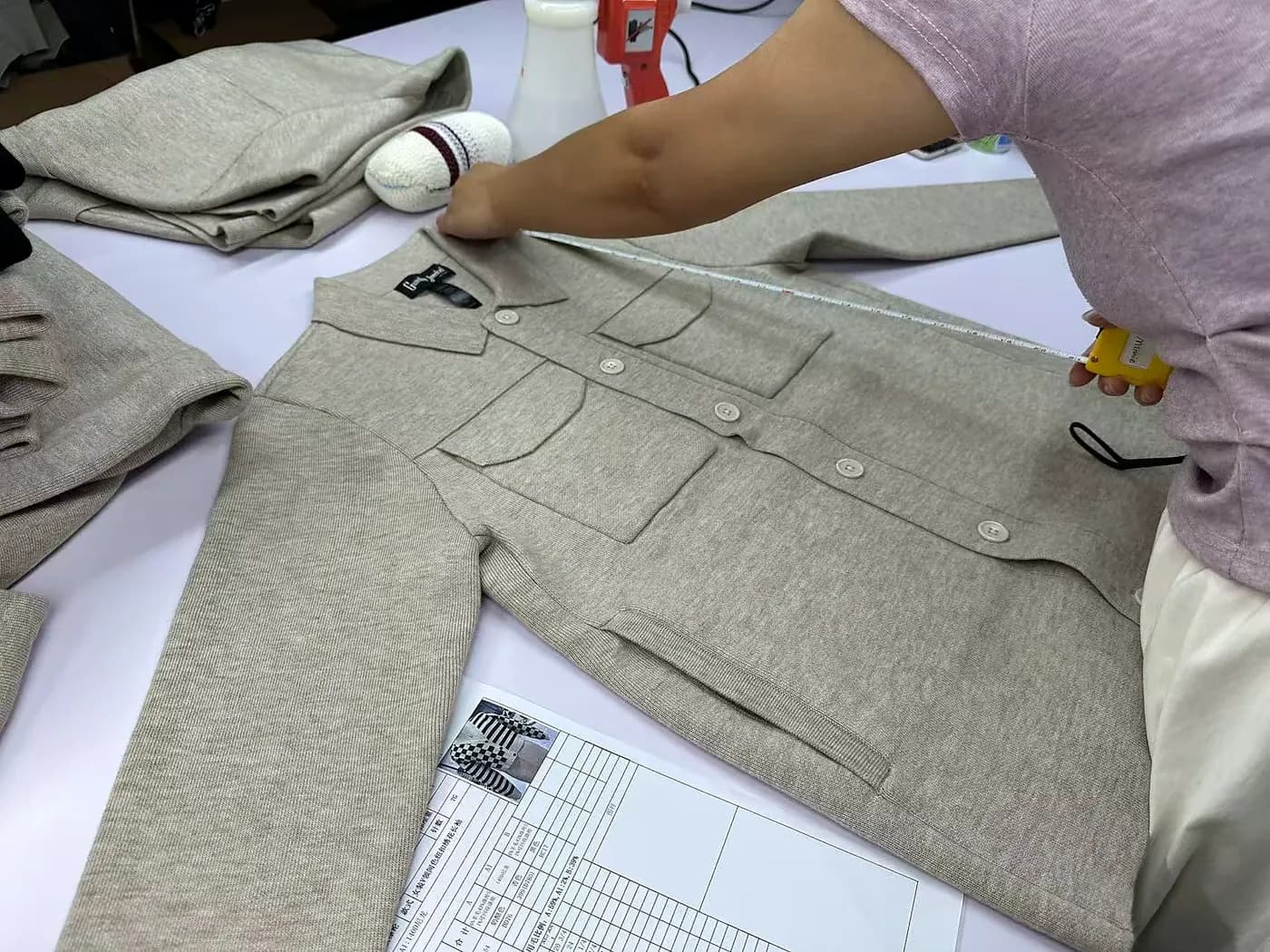
Discuss Your ProjectA great sample means nothing if the bulk order arrives with twisted seams, pilling or off-spec measurements. Quality control is what turns a good factory sample into a reliable shipment, season after season. This checklist gives B2B buyers a practical framework for what to inspect, when to inspect it, and how to hold a knitwear factory to a consistent standard.
Quality is not inspected in at the end. It is built in at every stage, and verified at the end. A factory that only checks finished goods is already too late.
💬 Sourcing this for an upcoming project? Request a free quote → · MOQ 30 pcs · Sample in 15–25 days · WhatsApp us
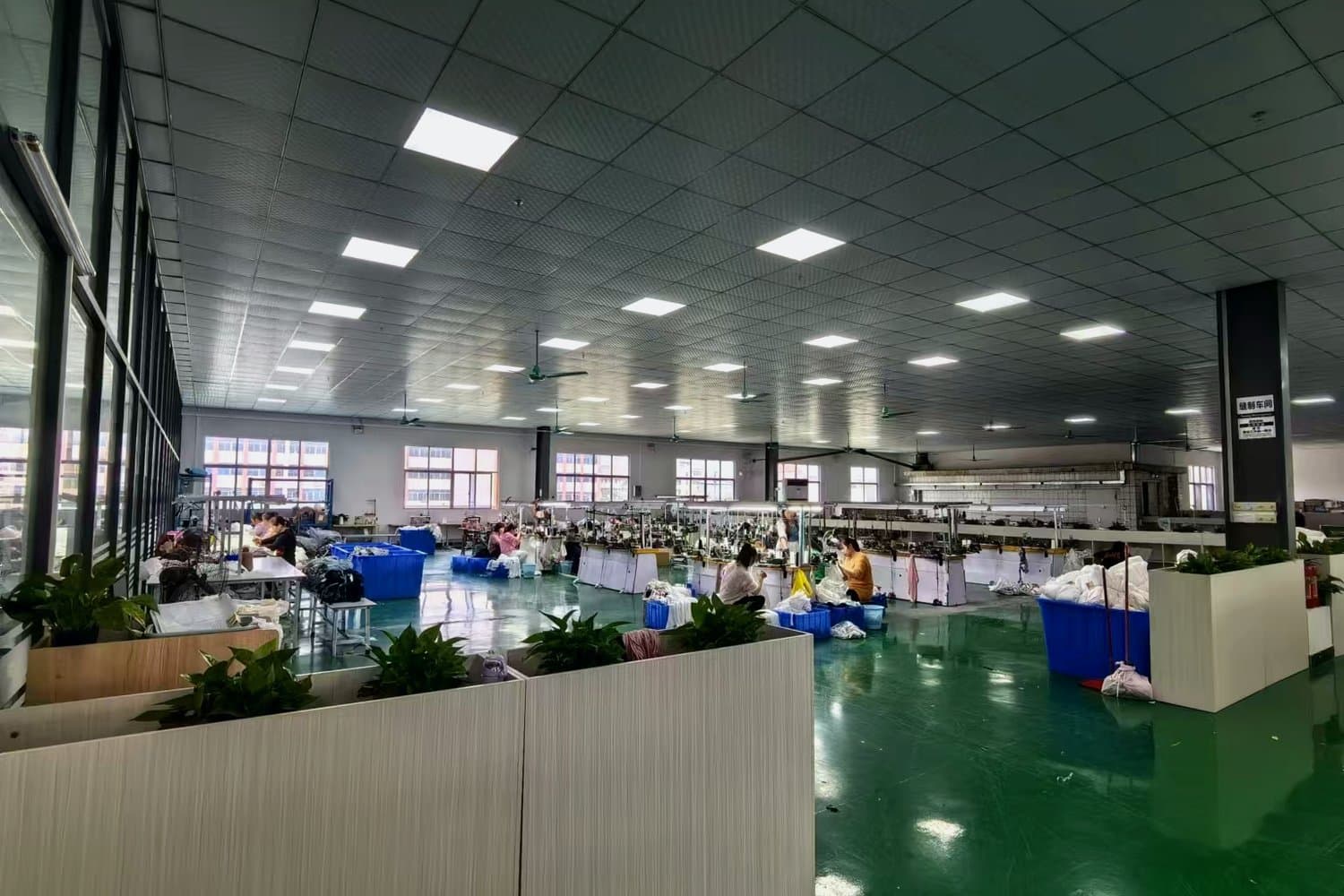
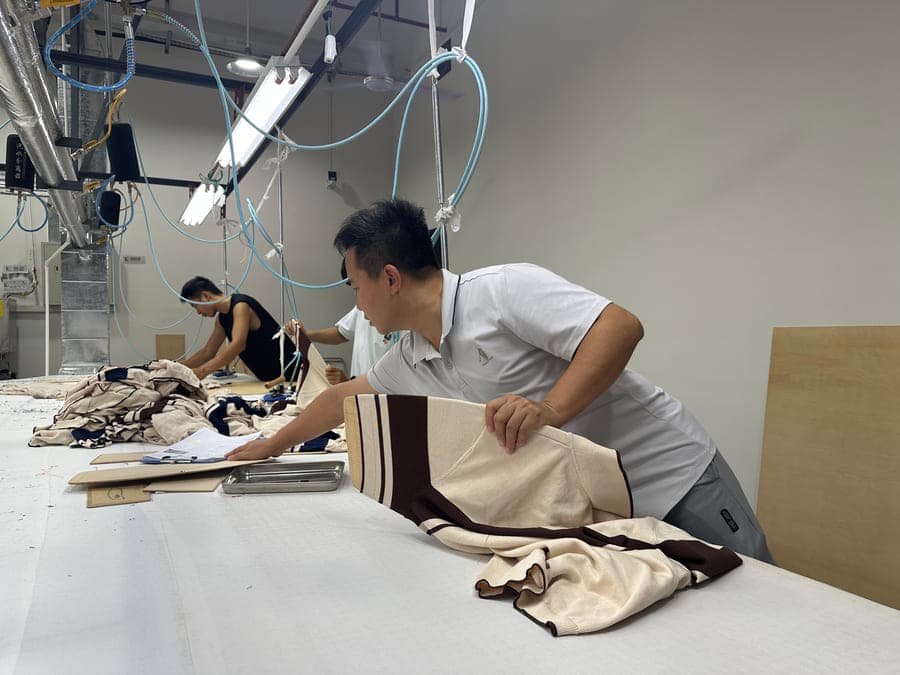
Reliable knitwear QC happens at three points. Confirm your factory does all three, not only the final one.
| Stage | What is checked | Why it matters |
|---|---|---|
| Incoming yarn | Composition, color, dye lot, defects | Catches problems before knitting wastes time |
| In-line (during production) | Knitting, linking, measurements | Stops a defect from repeating across the order |
| Final (pre-shipment) | Full garment, AQL sampling | Confirms the shipment meets spec |
Agree measurement tolerances (for example +/- 1cm on body length) and an AQL (Acceptance Quality Limit) standard before bulk starts. AQL 2.5 is common for apparel. Putting these in writing turns "looks fine" into an objective pass/fail, and protects both sides.
The most frequent knitwear issues are pilling, twisting (spirality), shade variation between pieces, and measurement drift across a large order. A good factory knows its own top defects and how it prevents them. Ask directly. For more, see our guide to common sweater quality problems.
AQL is easier to trust once you see it on a real lot. Say you place a 600-piece order of merino crewnecks. Under a single normal-level inspection at AQL 2.5, the inspector pulls a random sample of 80 pieces from the packed cartons, not the best ones on top. Defects are sorted into three buckets, each with its own limit.
| Order qty | Sample size | Critical (allowed) | Major (AQL 2.5) | Minor (AQL 4.0) |
|---|---|---|---|---|
| 600 pcs | 80 pcs | 0 | up to 5 | up to 7 |
A critical defect is anything unsafe or unsellable — a broken needle fragment caught by metal detection, for example — and even one fails the lot. Majors are faults a customer would reject on the shelf: a hole, badly twisted seam, or an out-of-tolerance measurement. Minors are small cosmetic issues like a loose thread. Find 6 majors in the 80-piece sample and the lot is rejected; the factory reworks and you re-inspect before it ships. Agreeing this math in your PO removes the argument over whether a shipment is "good enough."
A checklist only works if the target is written down. Before a quote is even confirmed, lock these into a one-page tech pack so every inspection has an objective reference.
Keep the signed-off PP sample, the tech pack and the dye lot reference together. That trio is the reference for any dispute and the baseline for repeat seasons.
At what order size should I pay for a third-party inspection? For first orders with a new factory and for any large run, a third-party inspection is worth the cost regardless of size. On repeat orders from a proven factory, in-house multi-stage QC plus your own goods-in check is usually enough.
What is the difference between AQL 2.5 and a "zero-defect" order? AQL 2.5 accepts a small, defined number of minor and major faults in a random sample, which is the realistic apparel standard. True zero-defect inspection means checking every piece, which raises cost and lead time and is normally reserved for high-value or safety-critical goods.
Can quality control fit within standard sampling and production timelines? Yes. Multi-stage QC is built into our normal schedule — sampling stays at 15–25 days and bulk production at 30–45 days — because in-line checks prevent the rework that would otherwise blow the timeline.
Licheng Knitwear runs multi-stage QC with metal detection and AQL inspection before shipment for B2B buyers in North America and Europe. Request a quote or learn how we vet quality end to end.
---
If you're planning a real project around any of the points above, we'd be glad to take a quick look. Send a short brief and we'll come back within one business day with a practical direction, MOQ + lead time estimate, and a sample plan if it makes sense.
→ Request a free quote · Download the men's knitwear catalog · WhatsApp us · info@lcgarment.cn
Yes. Measurement tolerance should be confirmed before bulk production so the factory and buyer use the same inspection standard.
We focus on men's sweaters, cardigans, knit jackets, jacquard knitwear and private label knitwear. We support B2B buyers with OEM/ODM development, sampling and bulk production planning.
Ready sample styles and selected custom programs can support lower-risk trials before larger seasonal orders.
Yes. Brands, including new labels preparing a first collection, can pay for a sample and see it before placing a production order. Two routes: a ready sample of a published style at USD 60 per piece in about 7 days, or a development sample from your tech pack at USD 150 per style, covering yarn sourcing, knit programming, one prototype and one revision round, in 15-25 days. Cashmere and mohair styles are quoted individually and shipping is charged at cost. Production starts only after you approve the physical sample, at our minimum of 30 pieces per colour with sizes mixed inside the 30. A sample does not commit you to a production run; we do not make garments for personal use.
Our sample fee is not refundable. Yarn sourcing, knit programming, machine setup and hand linking cost about the same whether one piece follows or five hundred, which is why the fee exists at all. It is credited against your first bulk order placed within six months of sample approval: 100% of a development sample fee, 50% of a ready sample fee.
Yes, for brands developing a style. One development piece is fine, with no commitment to bulk: a development sample is USD 150 per style and covers yarn sourcing, knit programming, one prototype and one revision round, in 15-25 days (cashmere and mohair are quoted individually). If you then go to production, the minimum is 30 pieces per colour with sizes mixed inside the 30, and the full USD 150 is credited against a first bulk order placed within six months of approving the sample. We do not make garments for personal wear.
Get a free catalog or submit an RFQ today. Our team will respond within 24 hours.
Men's Sweaters
MOQ, lead time, cost ranges, gauge selection and QC checkpoints across typical OEM/ODM knitwear programs in NA + EU. Enter your email — we'll send you the report link in 30 seconds.
No spam. Unsubscribe with one reply. We use your email only to send you the report and follow up if you want a sourcing conversation.


Brand names shown are previously serviced OEM/ODM partners. Logos are decorative and do not imply current endorsement.