Knit Gauge Compared: 5GG, 7GG, 12GG, 14GG and 18GG
Updated 9/19/202612 min readBy Simon Liu · Licheng Knitwear
A gauge guide explaining how 5GG, 7GG and 12GG affect sweater texture, weight, season, cost and buyer positioning.
A gauge guide explaining how 5GG, 7GG and 12GG affect sweater texture, weight, season, cost and buyer positioning.
Our team is ready to support your brand from concept to delivery.
Discuss Your ProjectQuick answer — 5GG vs 7GG vs 12GG sweaters: these three gauges cover most men's sweater programs, and you choose by weight and season. 5GG is the chunky, heavier autumn/winter gauge with bold stitches and a cosy hand. 7GG is the mid-weight all-rounder that works across most seasons. 12GG is the finer, lighter gauge for refined fine-knits and transitional or spring pieces. Lower gauge number = heavier and chunkier; higher number = finer and lighter.
If you already know what gauge means and just need to decide between the three most common sweater gauges, this is the focused comparison for you. 5GG, 7GG and 12GG cover the vast majority of men's sweater programs, and choosing between them comes down to weight, season and the look you want. For the full background on gauge, see our complete gauge guide; here we compare these three head to head.
5GG, 7GG and 12GG are the workhorses of sweater knitting. Pick by weight and season, and the rest of the design follows.
💬 Sourcing this for an upcoming project? Request a free quote → · MOQ 30 pcs · Sample in 15–25 days · WhatsApp us
| 5GG | 7GG | 12GG | 14GG | 18GG | |
|---|---|---|---|---|---|
| Weight | Medium-heavy | Medium | Light | Very light | Shirt-weight |
| Stitch look | Bold, defined | Clean, classic | Fine, smooth | Near-jersey | Reads almost woven |
| Season | Autumn/winter | Three-season | Spring/summer | Peak spring/summer | Peak SS, year-round layering |
| Warmth | High | Medium | Lower | Low | Lowest |
| Yarn used | More | Medium | Less | Least | Least |
| Relative cost | Higher |
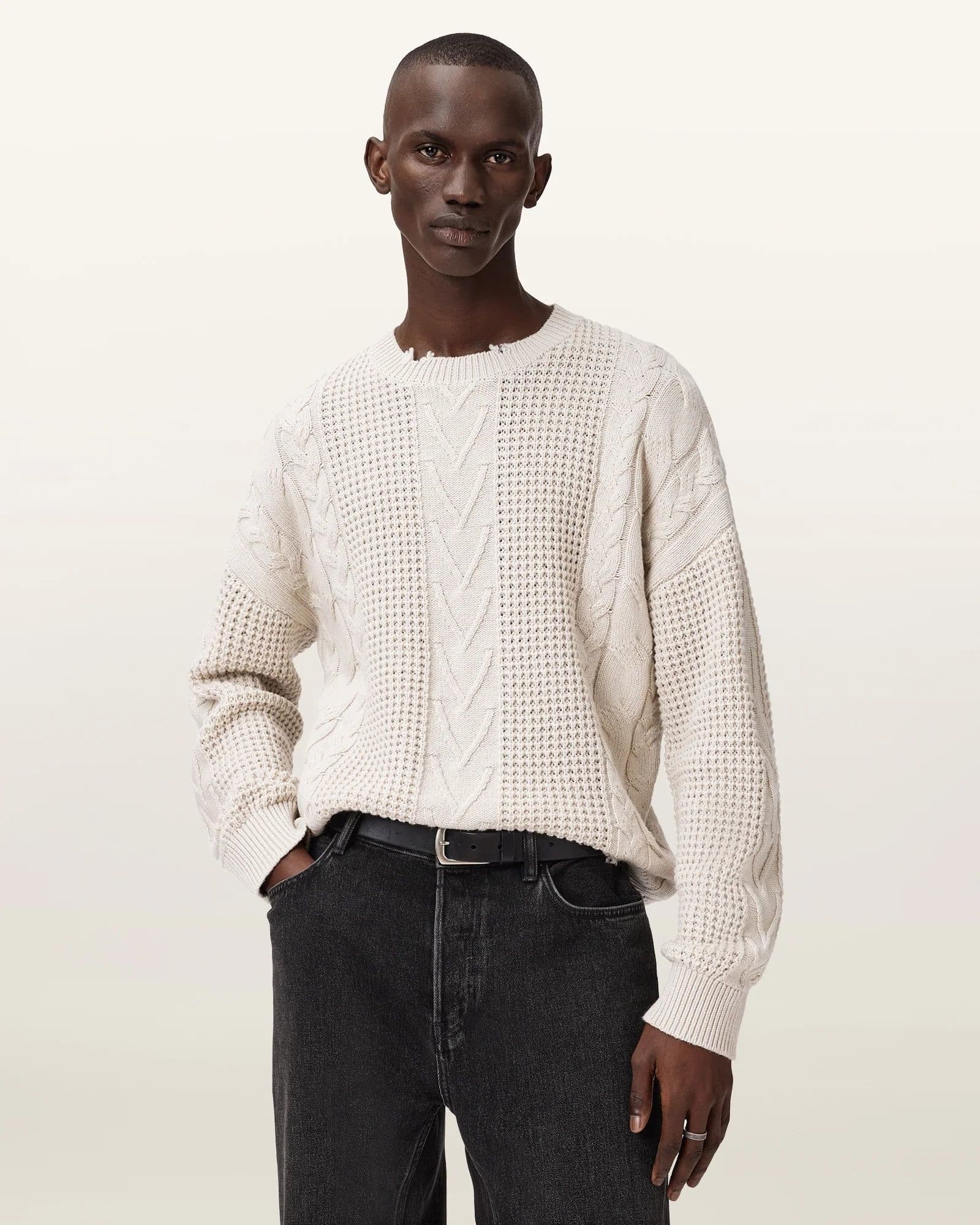
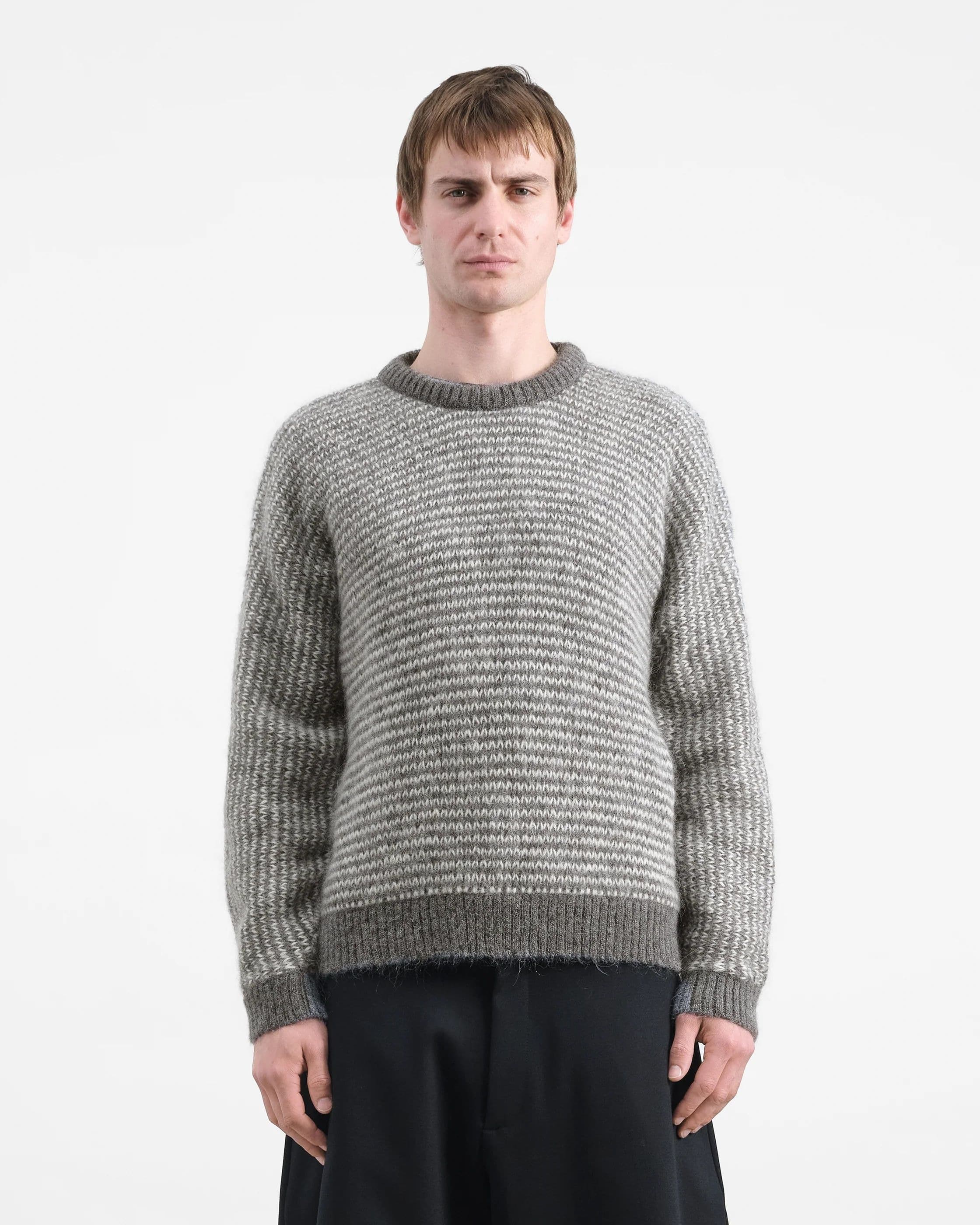
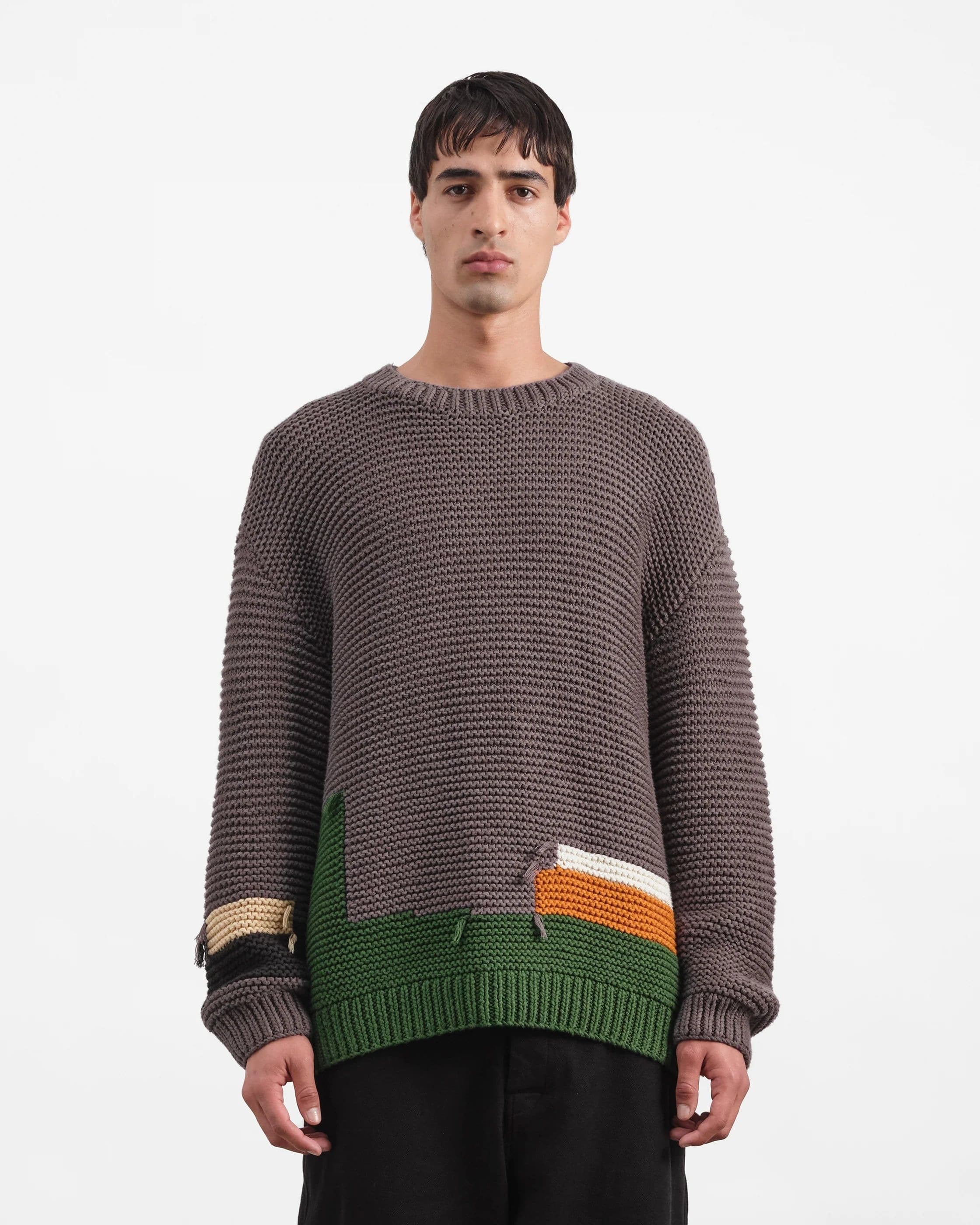
5GG produces a medium-heavy knit with clearly defined stitches. It is the sweet spot for cable knits, textured designs and substantial autumn/winter sweaters where you want the stitch to read clearly without the extreme bulk of 3GG. It uses more yarn than 7GG, so it costs a little more, but the premium, cozy handfeel justifies it for winter ranges.
Choose 5GG when: you want a warm, substantial sweater with bold stitch definition for autumn/winter.
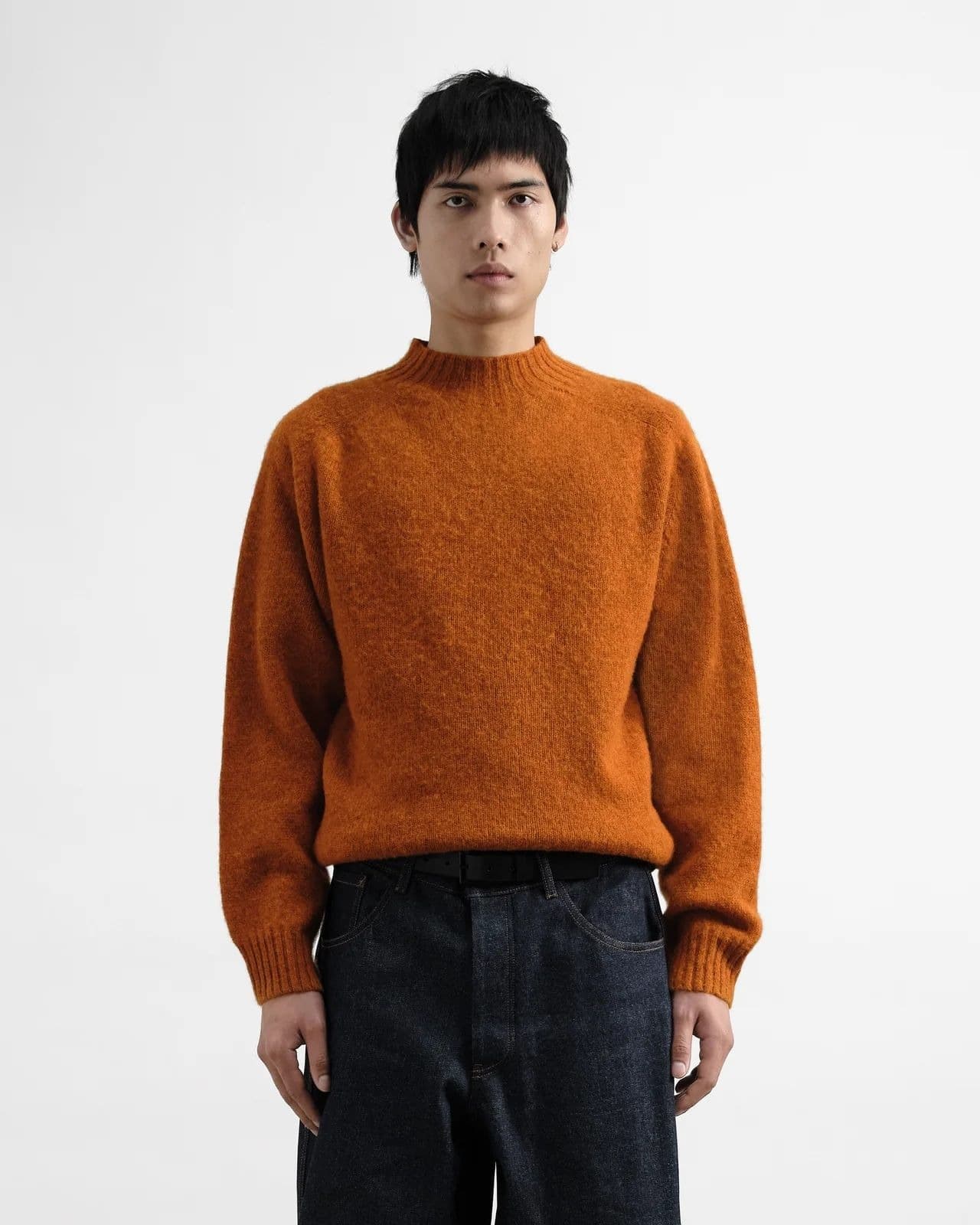
7GG is the most popular gauge for men's sweaters, and for good reason. It is mid-weight, clean-looking, and wearable across three seasons, making it the natural home for core sweater programs. It balances warmth, durability, handfeel and cost better than any other single gauge.
Choose 7GG when: you want a versatile, year-round core sweater that suits the widest customer base.
12GG is a fine gauge producing smooth, lightweight knits with a refined surface. It suits fine-gauge polos, lightweight crew necks, and pieces meant for layering or warmer climates. It uses the least yarn of the three, but the yarn is finer and costs more per kilogram and the panels take longer to knit, so in practice 12GG lands close to 7GG on unit cost - knit structure and fibre move the number more than the gauge does at this end of the range. It reads modern and dressy rather than chunky and casual.
Choose 12GG when: you want lightweight, refined knits for spring/summer or layering.
Remember gauge interacts with yarn and stitch: cables and texture read best at 5-7GG, while fine jacquard and smooth surfaces suit 12GG. Match gauge to both season and stitch, and confirm it in your tech pack. Gauge also affects cost, see our cost factors guide.
Gauge does not work in isolation — it sets the limits for which yarns and stitches will look right. The table below shows the combinations we run most often for each of the three workhorse gauges, with a typical fiber and a knit weight you can drop straight into a spec sheet.
| Gauge | Best-fit stitches | Typical yarn count | Common fibers | Garment weight (crew, M) |
|---|---|---|---|---|
| 5GG | Aran cables, ribs, chunky textures | 2/8s–3/8s | Wool, merino, acrylic, blends | 600–750 g |
| 7GG | Jersey, half-cardigan, mild cables | 2/15s–2/26s | Merino, cotton, cashmere, blends | 380–520 g |
| 12GG | Fine jacquard, plain jersey, links-links | 2/30s–2/48s | Cotton, merino, cashmere, recycled | 250–340 g |
| 14GG | Plain jersey, fine links-links, subtle texture | 2/48s–2/80s | Mercerised cotton, extra-fine merino, silk blends | 200–280 g |
| 18GG | Plain jersey, fine rib, minimal texture | 2/48s and finer | Mercerised long-staple cotton, cotton/silk, extra-fine merino |
A practical rule: the heavier the texture you want to "pop," the lower the gauge number you should pick. Forcing a deep cable onto 12GG flattens it; knitting a crisp fine-jacquard on 5GG loses the detail. When in doubt, knit a swatch at two adjacent gauges and compare in hand — we include this in the sampling stage.
Between 5GG and 12GG, gauge is a design decision. You pick the one that matches the weight and season you want, and any competent knitwear factory can build all three on the same machines.
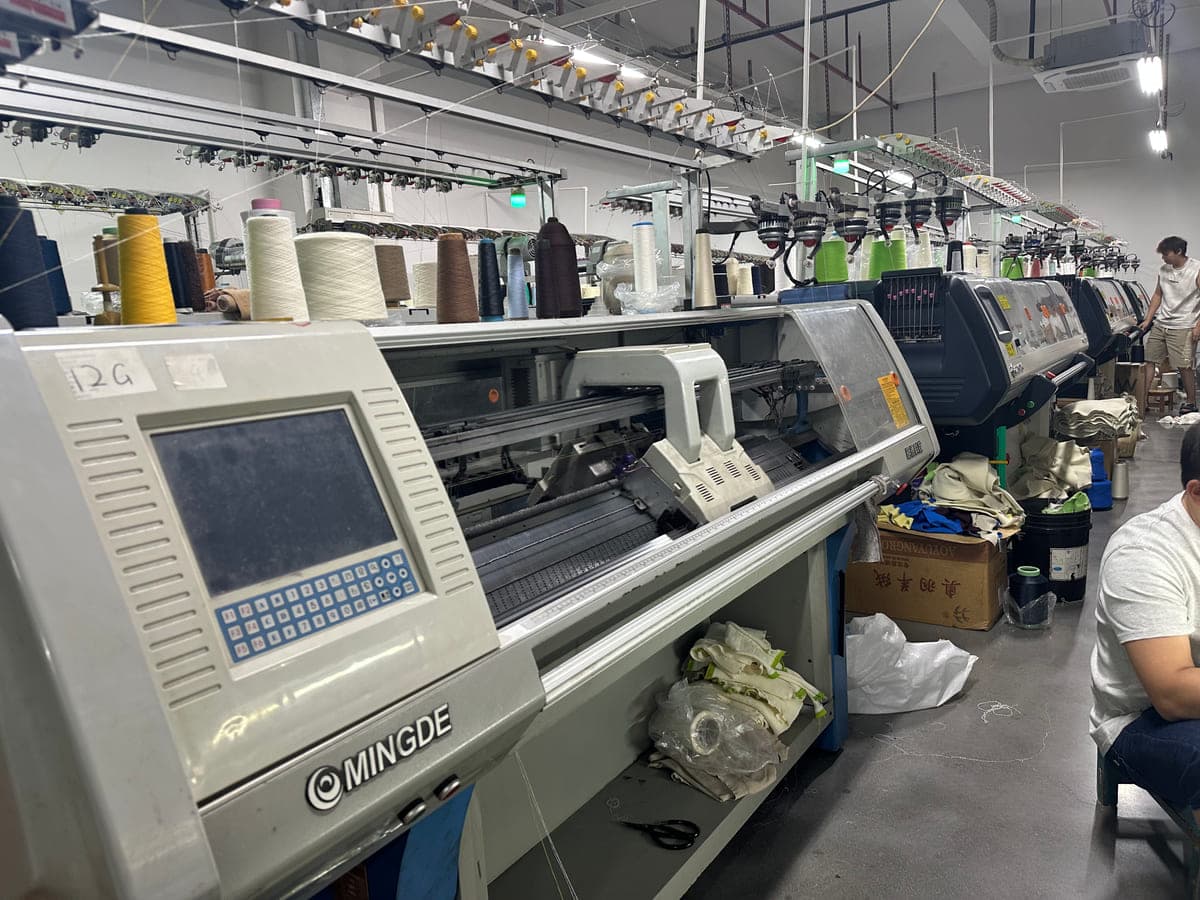
Above 12GG that changes. A fine gauge needs a fine needle bed, and a machine set for 12GG cannot simply be run finer — 14GG and 18GG are separate machines. So the question stops being "which gauge suits my product" and becomes "does this supplier actually own machines at this gauge, or are they subcontracting it?"
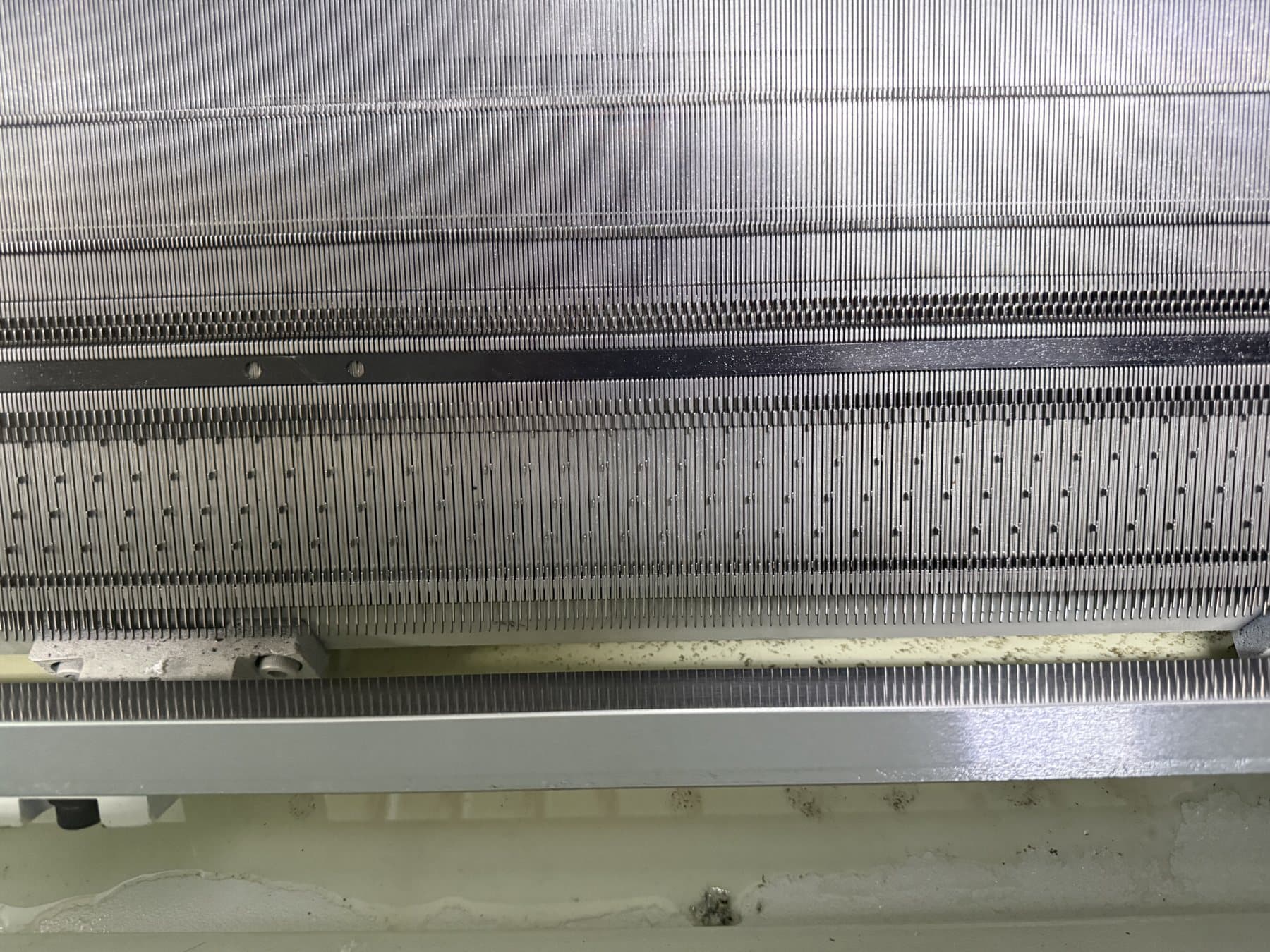
Two consequences follow, and both show up in your quotation rather than your tech pack.
Minimums tend to rise. Programming a fine-gauge style until the tension holds costs about the same whether you then knit 30 pieces or 3,000, so suppliers protect that set-up with a higher minimum. A factory's headline "low MOQ" is usually quoted against a basic mid-gauge crewneck in a standard yarn. Ask explicitly whether the same minimum applies at 18GG — the answer tells you who owns their fine-gauge machines. Ours does not change: 30 pieces per colour at 18GG, the same 30 we quote at 7GG.
Sampling takes longer. Finer yarns are more often dyed to order, knit time per panel is longer, and tolerances are tight enough that a second revision is more likely.
We run 3GG to 18GG in-house in Changping, Dongguan. If fine gauge is where your product sits, the full breakdown — yarn counts, what it does to unit cost, and why most factories decline the enquiry — is in 18GG fine-gauge knitwear: what it costs and the MOQ trap.
Say you are planning a men's crew-neck and are not sure which gauge fits your launch window.
Across all three, MOQ stays at 30 pcs per colorway, sampling runs 15–25 days, and bulk production is 30–45 days — so you can test a gauge on a small run before committing the season.
Can I mix gauges in one collection? Yes — many of our buyers run 7GG core styles alongside 5GG winter hero pieces and 12GG warm-weather layers. Each style keeps its own MOQ of 30 pcs, so a mixed range is no problem.
Which gauge is the most cost-effective? 7GG and 12GG come out close to each other. 12GG uses less yarn but the yarn is finer and dearer per kilogram and the panels take longer to knit, so the two roughly cancel - which of them is cheaper for your style depends more on the knit structure and the fibre than on the gauge. 5GG uses the most yarn and sits highest of the three. Above 12GG the picture changes: fine gauge genuinely costs more, and the gap widens with every needle.
Is 18GG better than 12GG? No — finer is not better, it is different. 18GG is lighter, smoother and drapes more, which suits polos, knit shirts and layering pieces that have to sit under a jacket without bulk. For a winter crewneck the loft of 5GG or 7GG is the right answer. Gauge should follow the product.
What is the finest gauge you can knit? 18GG, on our own fine-gauge machines. Our published range is 3GG–18GG and the minimum stays at 30 pieces per colour across all of it.
Does a lower gauge number always mean warmer? As a rule, yes — a lower number (like 5GG) means thicker yarn and a denser, warmer fabric, while 12GG is lighter and cooler. Fiber matters too, so a merino 7GG can feel warmer than a cotton 5GG; confirm with a sample.
Licheng Knitwear knits across 3GG to 18GG and helps B2B buyers pick the right gauge for each style. Browse our sweaters or request a quote.
---
If you're planning a real project around any of the points above, we'd be glad to take a quick look. Send a short brief and we'll come back within one business day with a practical direction, MOQ + lead time estimate, and a sample plan if it makes sense.
→ Request a free quote · Download the men's knitwear catalog · WhatsApp us · info@lcgarment.cn
5GG is often used for heavier texture, chunky stitches and cooler-season knitwear. Final suitability depends on yarn and design.
7GG is a balanced mid-gauge direction for many sweaters and cardigans. It can work for commercial seasonal programs.
12GG supports finer, smoother and lighter knitwear. It is often suitable for refined layering styles.
Gauge can affect yarn count, weight, machine planning and production time, so it may change cost direction.
We focus on men's sweaters, cardigans, knit jackets, jacquard knitwear and private label knitwear. We support B2B buyers with OEM/ODM development, sampling and bulk production planning.
Ready sample styles and selected custom programs can support lower-risk trials before larger seasonal orders.

Get a free catalog or submit an RFQ today. Our team will respond within 24 hours.
| Medium |
| Similar to 7GG |
| Rises again |
| Highest of all |
| Runs on a standard machine? | Yes | Yes | Yes | Dedicated fine-gauge bed | Dedicated fine-gauge bed |
| 160–240 g |
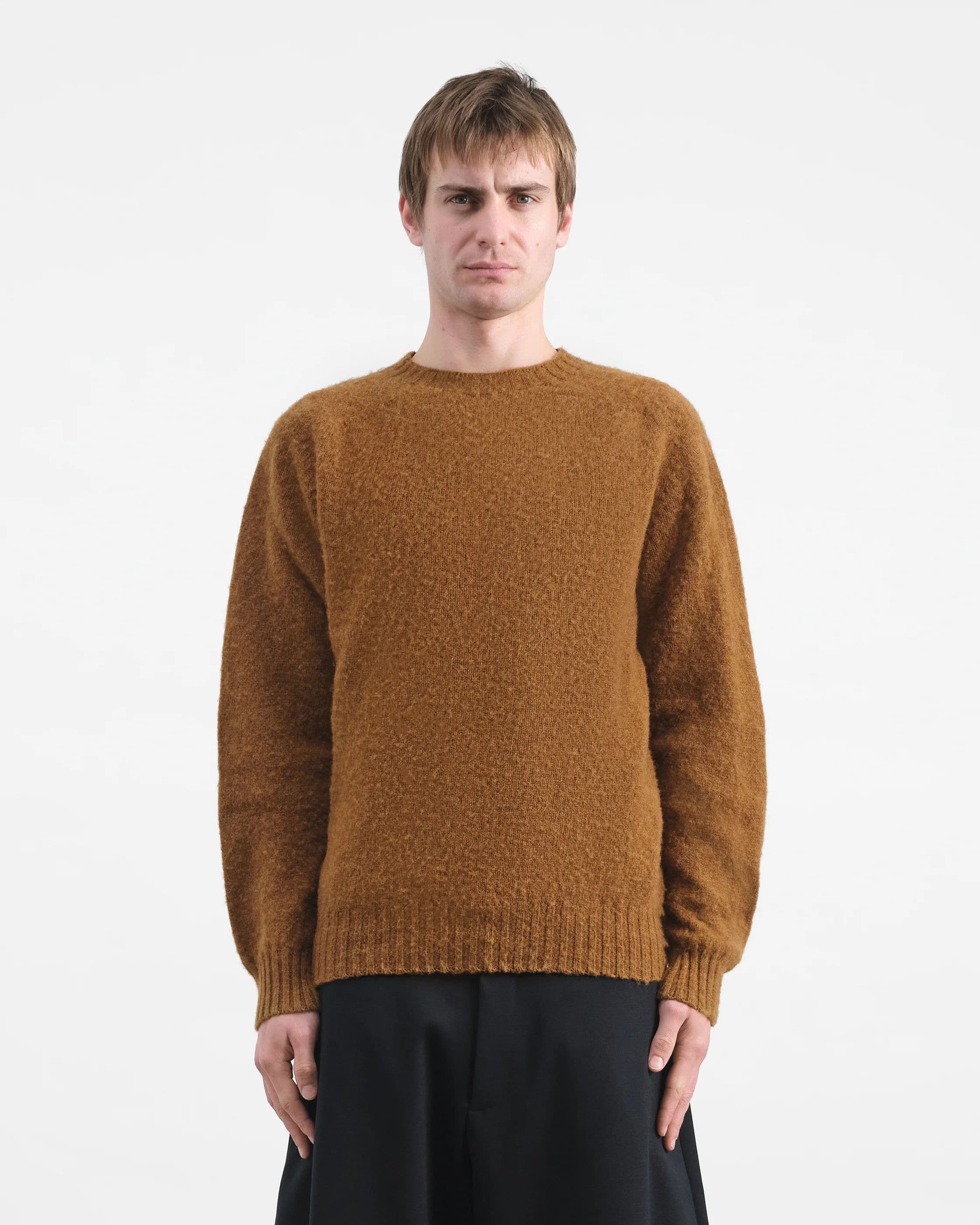
Men's Sweaters
 Yarn & Material GuideA B2B yarn and material guide for choosing cotton blends, wool blends and synthetic support fibers for custom knitwear.
 Women's Knitwear Manufacturing GuideA guide to women's knitwear manufacturing for B2B brands, covering silhouette variety, fit and sizing, yarn and trend responsiveness.
 Knitwear Sourcing Benchmark Report 2026: MOQ, Lead Time, Cost & QCReference benchmark ranges for B2B knitwear procurement in 2026 — MOQ, lead times, cost structure, gauge, quality control and commercial terms — to help buyers sanity-check quotes and plan with confidence.