Quick answer — North America vs Europe knitwear sourcing: the same sweater rarely wins in both markets. North American buyers tend to favour relaxed fits, mid-weight casual knits and value-led pricing; European buyers tend to expect slimmer fits, finer gauges, more refined detailing and stricter compliance and sustainability documentation (e.g. OEKO-TEX, REACH). Match the fit, weight, gauge and compliance to the destination market rather than shipping one identical spec to both.
North American and European apparel buyers both source knitwear from Asia, but their markets, expectations and requirements differ in ways that shape how you should develop and supply product. For a manufacturer or a brand operating across both, understanding these differences prevents missteps in fit, compliance and commercial terms. This guide compares the two markets for B2B knitwear sourcing.
The product that wins in North America is not automatically the product that wins in Europe. Fit, weight and compliance all shift across the Atlantic.
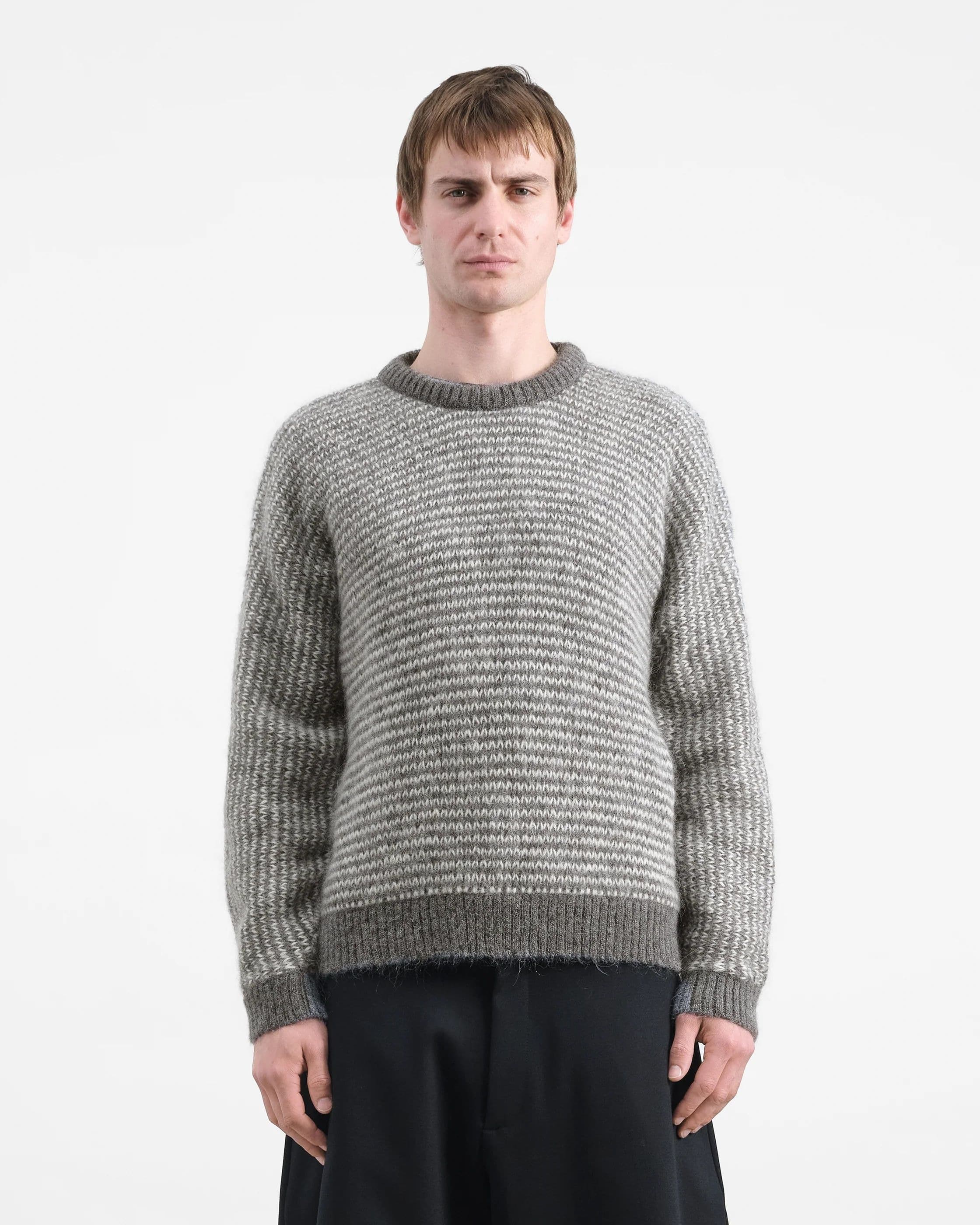
North American buyers tend to prefer relaxed, roomier fits, while European buyers lean slimmer and more tailored.
Fit and Sizing
North American customers generally prefer relaxed, roomier fits and larger size curves, while European customers lean toward slimmer, more tailored silhouettes. Sizing systems also differ, and within Europe, UK, German, French and Italian sizing vary. If you supply both, plan separate size specs and grading rather than forcing one curve to fit both, see our sizing and grading guide.
Climate and Product Weight
Europe's colder northern winters drive demand for heavier, warmer knits, chunky gauges, wool and wool blends, while North America's range of climates favors versatile, layerable weights. Match gauge and yarn to the destination climate, as covered in our gauge guide.
Compliance and Labeling
This is where many buyers stumble. The two markets have distinct requirements:
North America: FTC fiber-content and care labeling; CPSIA for children's items
Europe: EU textile labeling regulation, REACH chemical compliance, country-specific care symbols
Confirm your factory can provide the test reports and labeling each market requires before you ship. A factory experienced with both markets is a meaningful advantage.
Commercial Terms and Order Rhythm
North American buyers often place larger seasonal orders, while European buyers, especially smaller brands, may buy more frequently in smaller quantities. This affects the MOQ and pricing that suit each customer, and the payment terms they expect. Align your terms with the norm for each market.
Practical Advice for Supplying Both
Maintain separate size specs and fit blocks per market
Match product weight to destination climate
Confirm compliance and labeling per market before production
Expect different order sizes and rhythms
Choose a factory experienced in exporting to both regions
A Side-by-Side Spec Comparison
To make the differences concrete, here is how a single knit program might split into two market-tuned versions. The base garment is the same crew-neck silhouette, but the spec sheet diverges where it matters.
Spec point
North America version
Europe version
Gauge
7GG, lighter hand for layering
5GG, denser for warmth
Yarn
Cotton or cotton/acrylic blend
Merino or wool/cashmere blend
Body length
+2–3 cm, roomier through chest
Trimmer waist, shorter body
Size range
S–XXL, broader curve
XS–XL, tighter grade steps
Care label
FTC fiber-content + care wording
EU symbols + multilingual care
Certification cue
OEKO-TEX Standard 100 on request
OEKO-TEX + GRS for recycled lines
Both versions sit comfortably within our standard capability: gauges from 3GG to 18GG, fibers spanning cotton, wool, merino, cashmere and their blends, acrylic, and recycled yarns. The only certifications we hold are OEKO-TEX Standard 100, ISO 9001, GRS and GOTS — so if a buyer's tech pack calls for anything beyond those, confirm it early rather than assuming.
A Dual-Market Sampling Checklist
When you brief a factory for a program that will ship to both regions, work through this before sampling begins:
[ ] Two graded size specs supplied — one US curve, one EU/UK curve
[ ] Gauge and yarn chosen per climate (heavier for Northern Europe)
[ ] Care labels drafted for both FTC and EU textile-labeling rules
[ ] REACH-relevant chemical compliance confirmed for the EU lot
[ ] CPSIA covered if any children's styles are in the range
[ ] Recycled-content claims backed by GRS where applicable
[ ] One sample round budgeted at 15–25 days, then a fit review per market
Running this checklist up front means a single 30–45 day bulk run can serve both destinations without a last-minute re-spec. Starting at MOQ 30 pcs, you can even trial both market versions in one development cycle before committing to volume.
Common Questions
Do I need separate samples for North America and Europe, or can one approval cover both?
Plan on at least one sample per market version, because the fit blocks, body length and often the yarn weight differ. Each sample round runs 15–25 days, so build both into your timeline.
Can the same factory handle both FTC and EU labeling and compliance?
Yes — a factory experienced in both regions will prepare FTC fiber-content and care wording for North America and EU symbol-based, multilingual care labels and REACH-compliant materials for Europe. Confirm the required test reports before bulk.
What is the minimum order if I want to test both market versions?
Our MOQ is 30 pieces, which can be split to trial a North American and a European version in a single development cycle before scaling into a 30–45 day bulk production run.
Licheng Knitwear supplies B2B knitwear to both North America and Europe, with market-appropriate fit, compliance support and flexible terms. Request a quote or browse our products.
---
Talk to our team about this
If you're planning a real project around any of the points above, we'd be glad to take a quick look. Send a short brief and we'll come back within one business day with a practical direction, MOQ + lead time estimate, and a sample plan if it makes sense.
Europe needs specific compliance (GPSR, packaging EPR, EU fibre labelling); North America focuses on customs, duties and CPSIA for kids. We handle full NA and EU compliance and labelling.
Yes - we produce for both markets with the correct labelling, certifications and packaging for each, from one development process.
Samples 15-25 days, bulk 30-45 days, plus 25-35 days sea freight. Plan backwards from your in-store date.
We focus on men's sweaters, cardigans, knit jackets, jacquard knitwear and private label knitwear. We support B2B buyers with OEM/ODM development, sampling and bulk production planning.
Ready sample styles and selected custom programs can support lower-risk trials before larger seasonal orders.
Yes. Brands, including new labels preparing a first collection, can pay for a sample and see it before placing a production order. Two routes: a ready sample of a published style at USD 60 per piece in about 7 days, or a development sample from your tech pack at USD 150 per style, covering yarn sourcing, knit programming, one prototype and one revision round, in 15-25 days. Cashmere and mohair styles are quoted individually and shipping is charged at cost. Production starts only after you approve the physical sample, at our minimum of 30 pieces per colour with sizes mixed inside the 30. A sample does not commit you to a production run; we do not make garments for personal use.
Ready to Start Your Project?
Get a free catalog or submit an RFQ today. Our team will respond within 24 hours.
MOQ, lead time, cost ranges, gauge selection and QC checkpoints across typical OEM/ODM knitwear programs in NA + EU. Enter your email — we'll send you the report link in 30 seconds.
No spam. Unsubscribe with one reply. We use your email only to send you the report and follow up if you want a sourcing conversation.
Brand names shown are previously serviced OEM/ODM partners. Logos are decorative and do not imply current endorsement.