Low MOQ Knitwear: Options for Startups and Small Brands
Updated 5/30/202612 min readBy Licheng Knitwear Team
How startups and small brands can work with low MOQ knitwear, including realistic expectations, trade-offs and ways to lower risk on first orders.
1. Overview
How startups and small brands can work with low MOQ knitwear, including realistic expectations, trade-offs and ways to lower risk on first orders. This guide walks you through the manufacturing journey with Licheng Knitwear.
Buyer Guide Content
Ready to Start Your Project?
Get a free catalog or submit an RFQ today. Our team will respond within 24 hours.
For a startup or small brand, MOQ is often the wall between an idea and a real product. Most factories are built for large orders, and their minimums can be out of reach when you are testing a first collection. But low-MOQ knitwear is achievable if you understand what drives minimums and design your order to fit. This guide is for small brands sourcing knitwear without committing to thousands of pieces.
A high MOQ is not always a hard no. It is often a design problem, and design problems can be solved.
Why MOQs Exist
Minimums come from real costs: yarn is sold in minimum dye lots, machines need setup per style, and sampling is fixed cost. A factory spreads these across the order, so very small runs are simply uneconomic at standard terms. Understanding this, see our full MOQ guide, is the key to negotiating sensibly rather than just asking for "less."
Launching in one strong colorway is the fastest way to keep a first order within a workable MOQ.
How Small Brands Can Lower MOQ
Lever
Action
Effect
Color
Launch in 1-2 colors
Avoids multiple dye-lot minimums
Yarn
Use stock yarn
Removes custom dye minimum
Styles
Group on shared yarn
Spreads the yarn minimum
Complexity
Keep stitch simple
Lowers setup cost
Orders
Ask for trial/ready styles
Low-risk entry
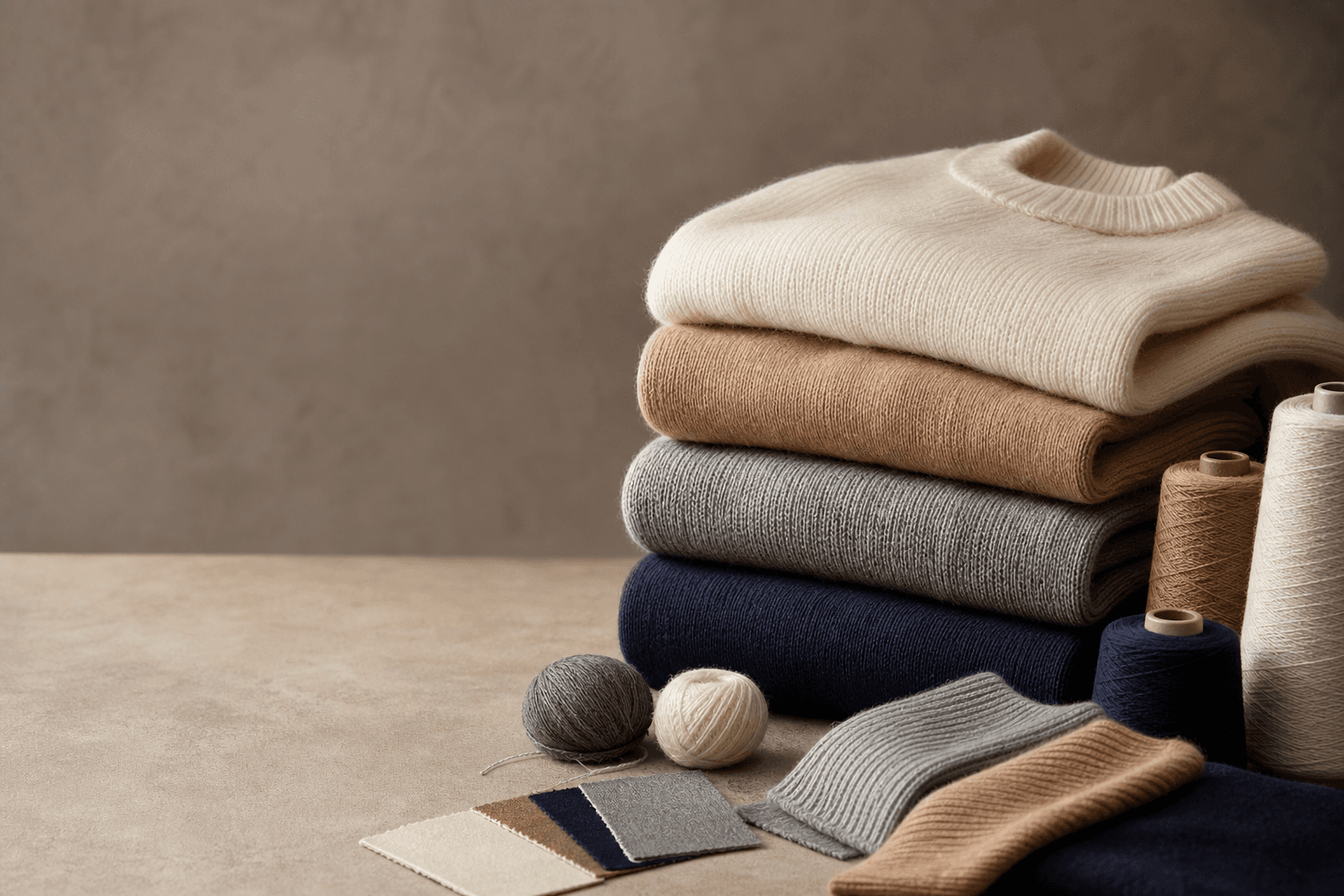
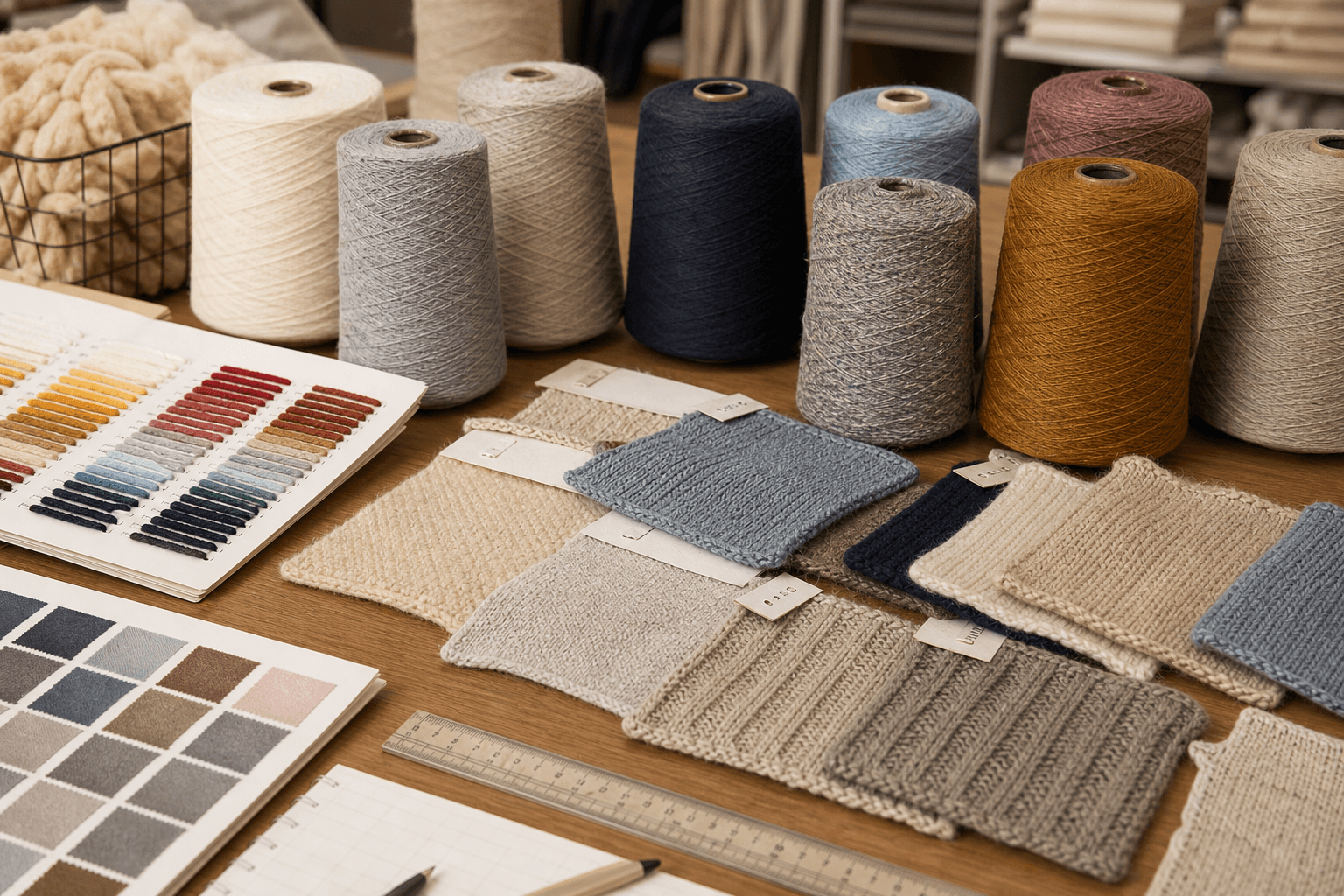
The single biggest lever is yarn. Custom-dyed colors force higher minimums to use the dye lot, so choosing a stock yarn color is the fastest route to a low MOQ. Launching in one or two colors instead of five multiplies that benefit.
Trial Orders and Ready Styles
Some factories offer small trial runs (for example 30-50 pieces) using stock yarn, absorbing setup cost to win a new customer, or ready-made styles you can brand with your label. These are ideal for validating a design and a supplier before committing to a full production MOQ. A factory willing to support a trial order is signaling confidence and a desire for a long-term relationship.
The Trade-Offs to Accept
Low-MOQ orders come with realities: higher unit price (setup spread over fewer pieces, see our cost guide), fewer custom options (stock yarn and colors), and less negotiating leverage. That is a fair trade for launching with low risk. As you grow and reorder, you unlock better pricing and full customization.
A Low-MOQ Launch Plan
Start with one or two strong colors, not a wide range
Use stock yarn for the first season
Keep the construction simple
Group any additional styles on the same yarn
Ask specifically about trial orders and ready styles
Plan to scale to custom yarn once demand is proven
Choosing a Small-Brand-Friendly Factory
Not every factory wants small orders, so find one that does. A partner experienced with emerging brands will propose ways to hit a workable minimum rather than just quoting a high one, see how to identify them in our manufacturer selection guide.
Licheng Knitwear supports flexible MOQs, trial orders and ready styles for startups and small brands in North America and Europe. Request a quote with your target quantity, or browse our products.
2. The Custom Knitwear Process
A clear development flow keeps samples, costing and bulk production aligned before your order moves forward.
1. Inquiry
Share your idea, tech packs and requirements.
2. Design & Yarn Selection
We recommend yarns and create an initial direction.
3. Sampling
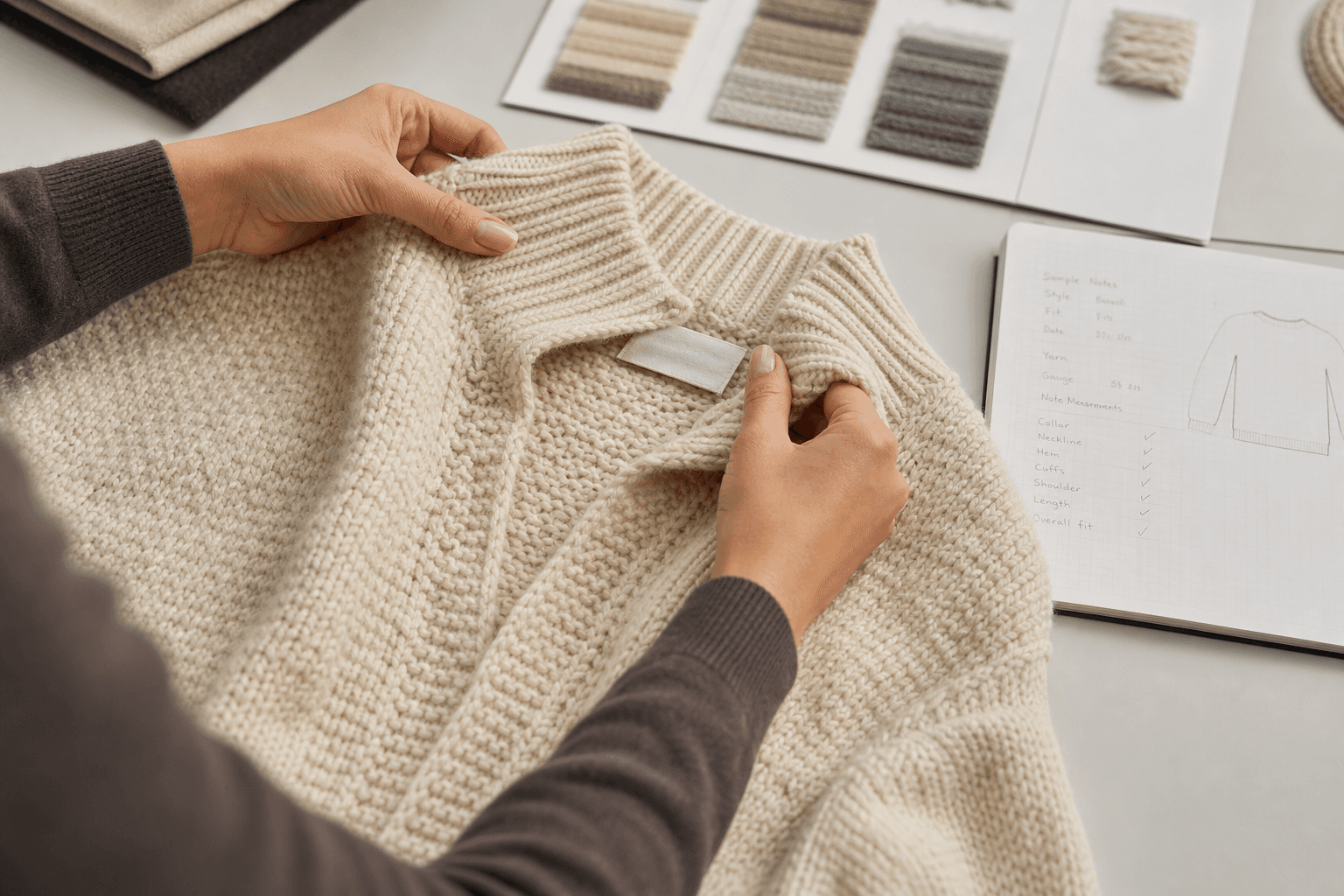
Develop samples for fit, look and function.
4. Production
Bulk production with stage-based quality control.
5. Quality Inspection
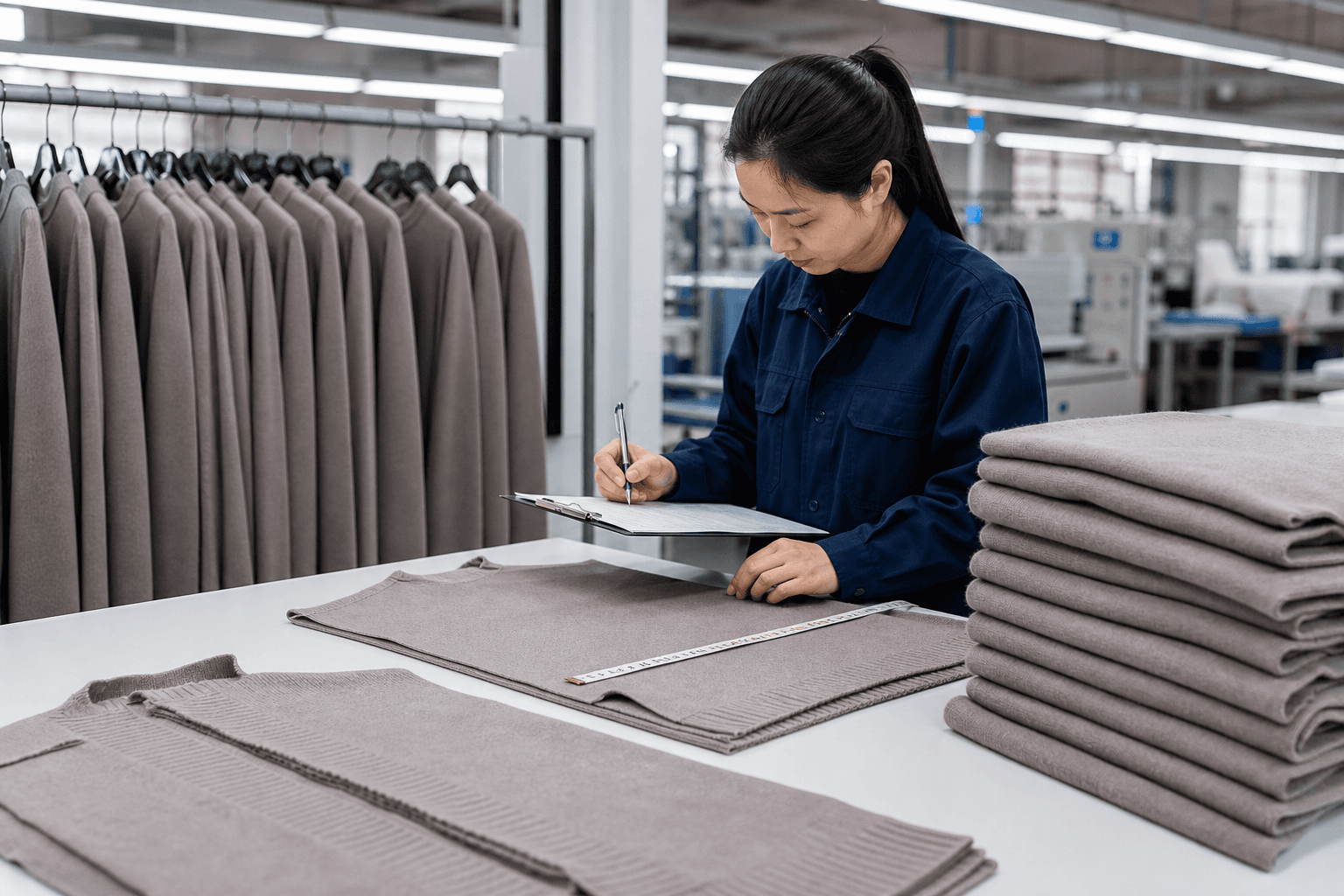
QC checks help confirm workmanship, measurements and packing.
6. Packaging & Delivery
Packing and delivery details are discussed by order.
3. Materials & Yarn Selection
The right yarn defines handfeel, performance and durability. Material choice can be adjusted by season, market and target price.
Natural Fibers
Wool, cotton, cashmere and silk directions
Blended Yarns
Wool blends, cotton blends and acrylic blends
Responsible Yarn Options
Organic cotton and recycled fiber discussions
Performance Yarns
Merino, anti-pilling and functional yarn directions
4. Design & Development
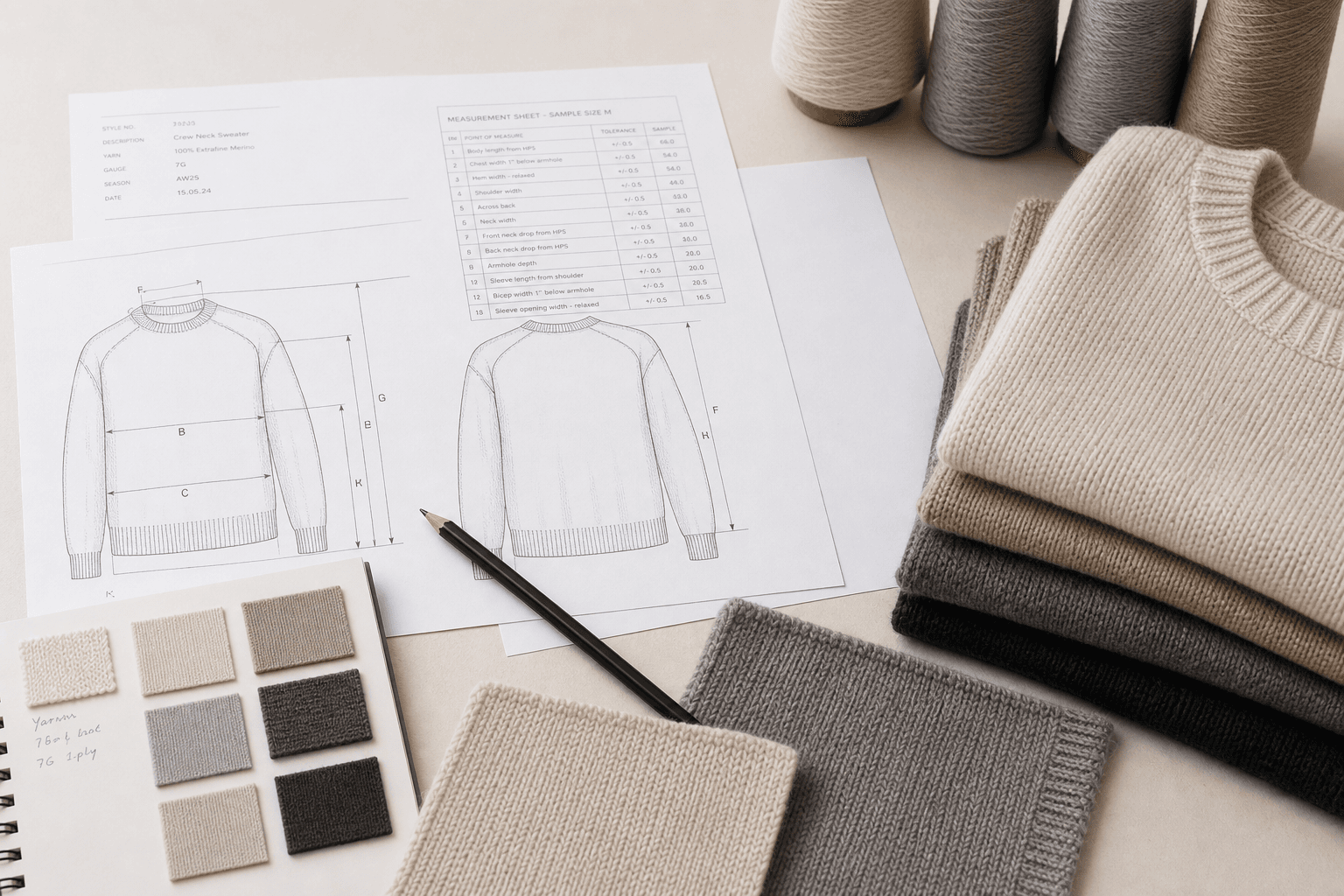
From reference photos to tech packs and pattern review, our team helps turn ideas into a manufacturable knitwear direction.
Design consultation
Tech pack and specification support
Pattern and structure review
Jacquard, intarsia and custom detailing
Quality is not only one step in the process. It is checked throughout development and production.
20+
Years Experience
500+
Global Clients
98%
On-time Delivery
5. Sampling & Approval
Plan each detail clearly before bulk production to reduce risk and improve buyer communication.
Proto sample
Fit sample
Pre-production sample
6. Production & Quality Control
Plan each detail clearly before bulk production to reduce risk and improve buyer communication.
Knitting, linking and finishing
In-line and final inspection
Stage-based QC process
7. Packaging & Delivery
Plan each detail clearly before bulk production to reduce risk and improve buyer communication.
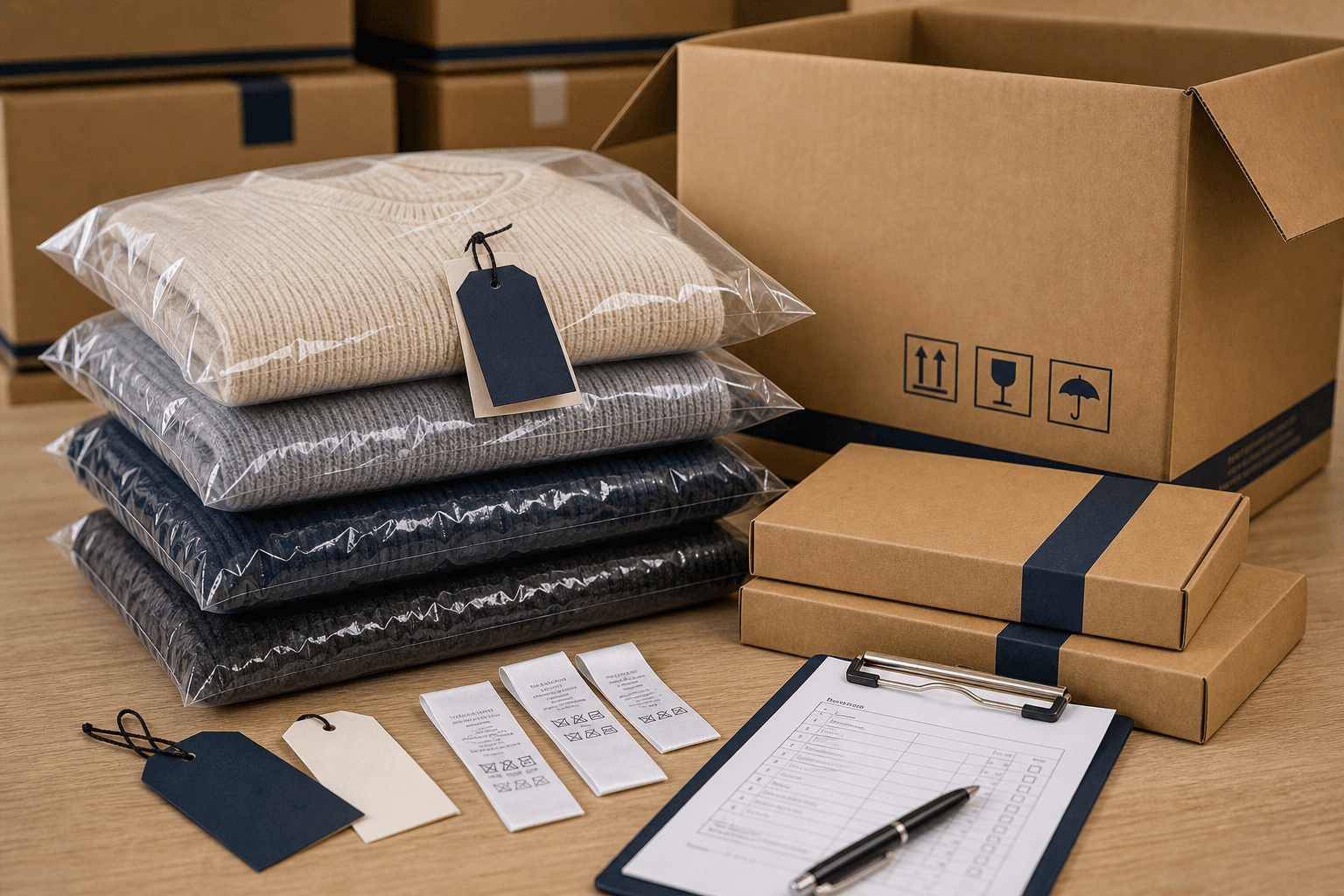
Custom labels and hangtags
Packaging discussions
Shipping support discussion
8. Costs & Lead Times
Cost and timeline depend on yarn, gauge, construction, color count, quantity and packaging requirements.
MOQ
Reviewed by style, yarn and project
Sample Lead Time
Confirmed after material and gauge review
Bulk Lead Time
Confirmed by quantity and production plan
9. Best Practices for Success
Use these practical points to make sampling and bulk production easier to manage.