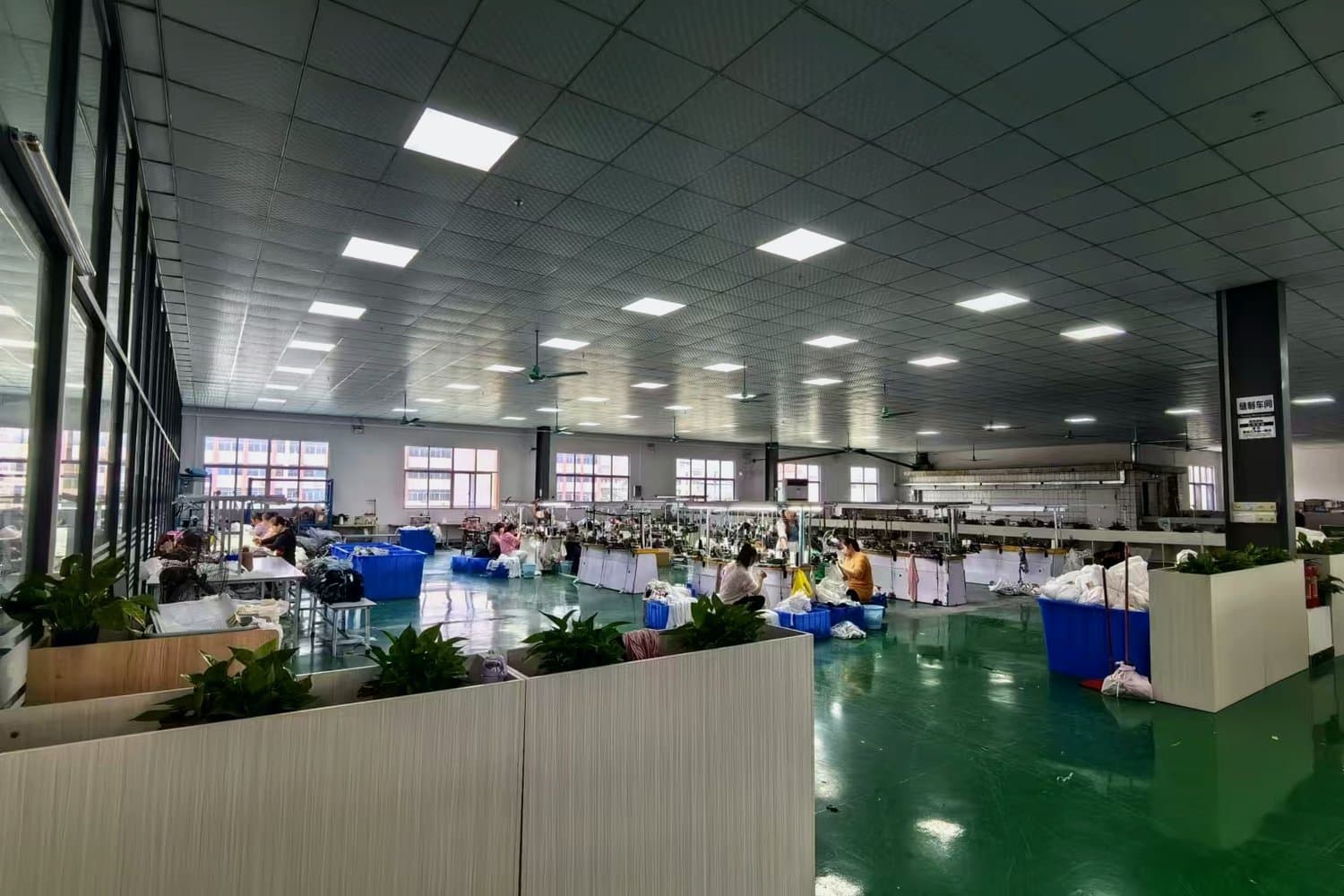
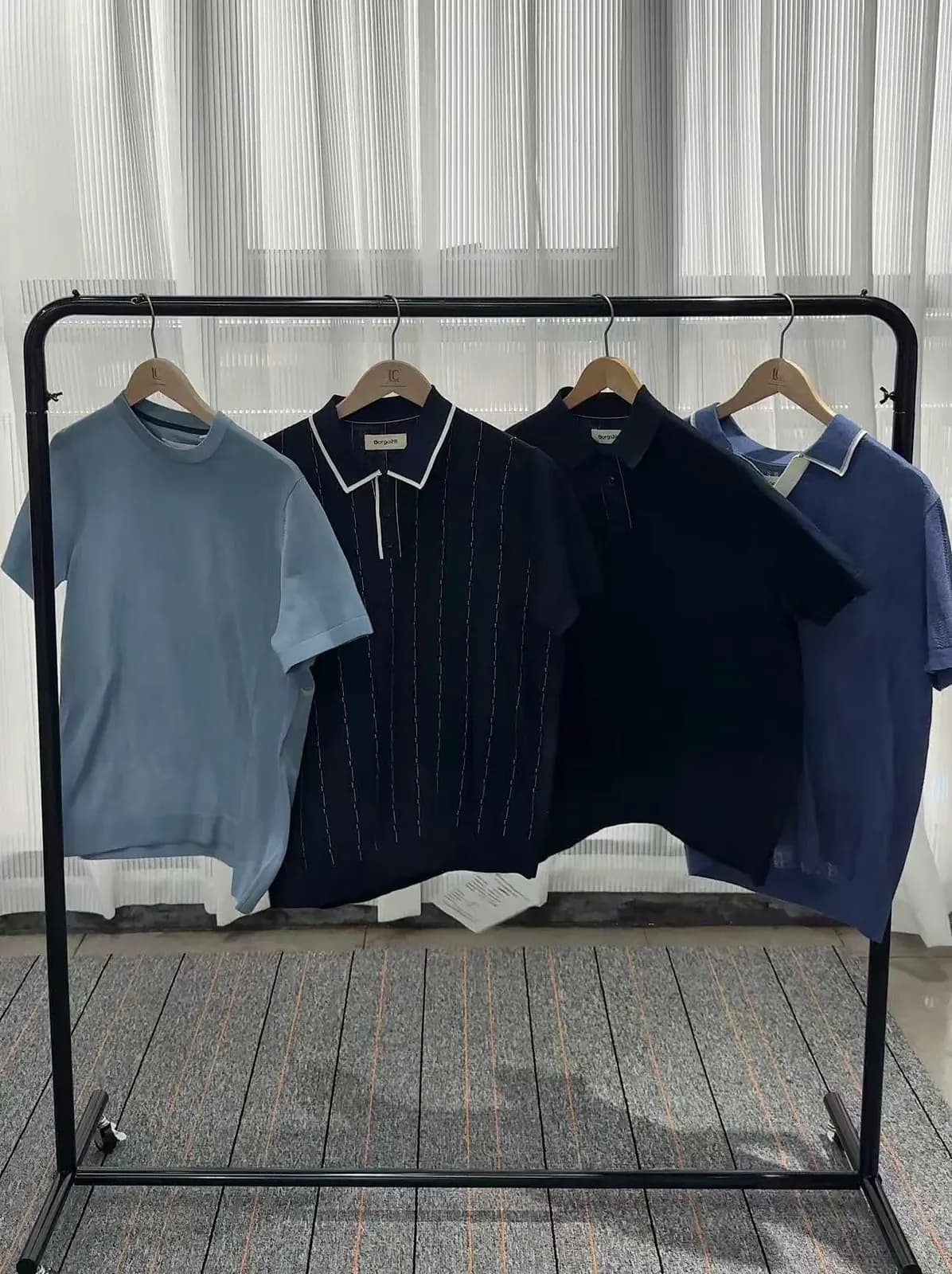
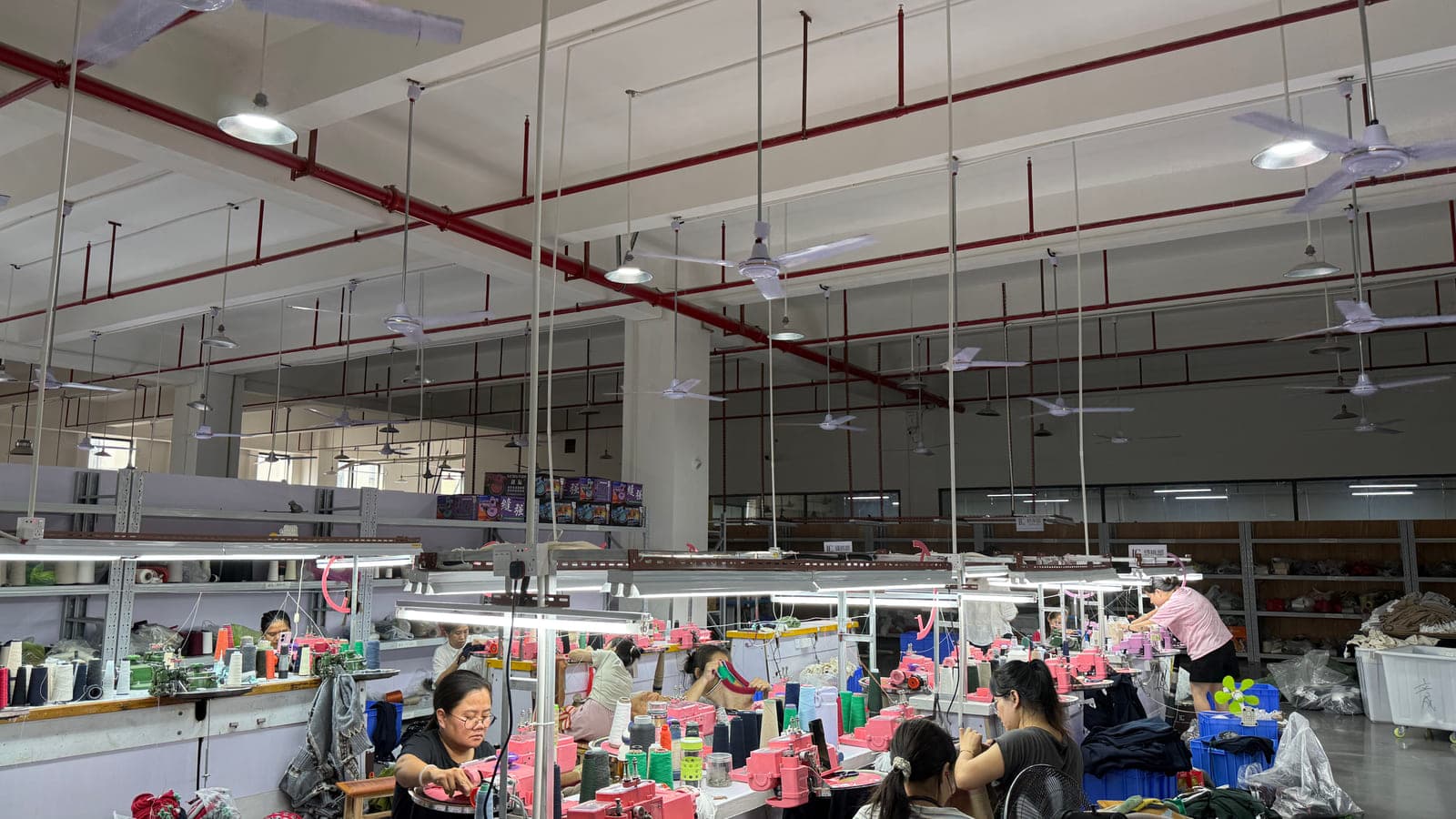
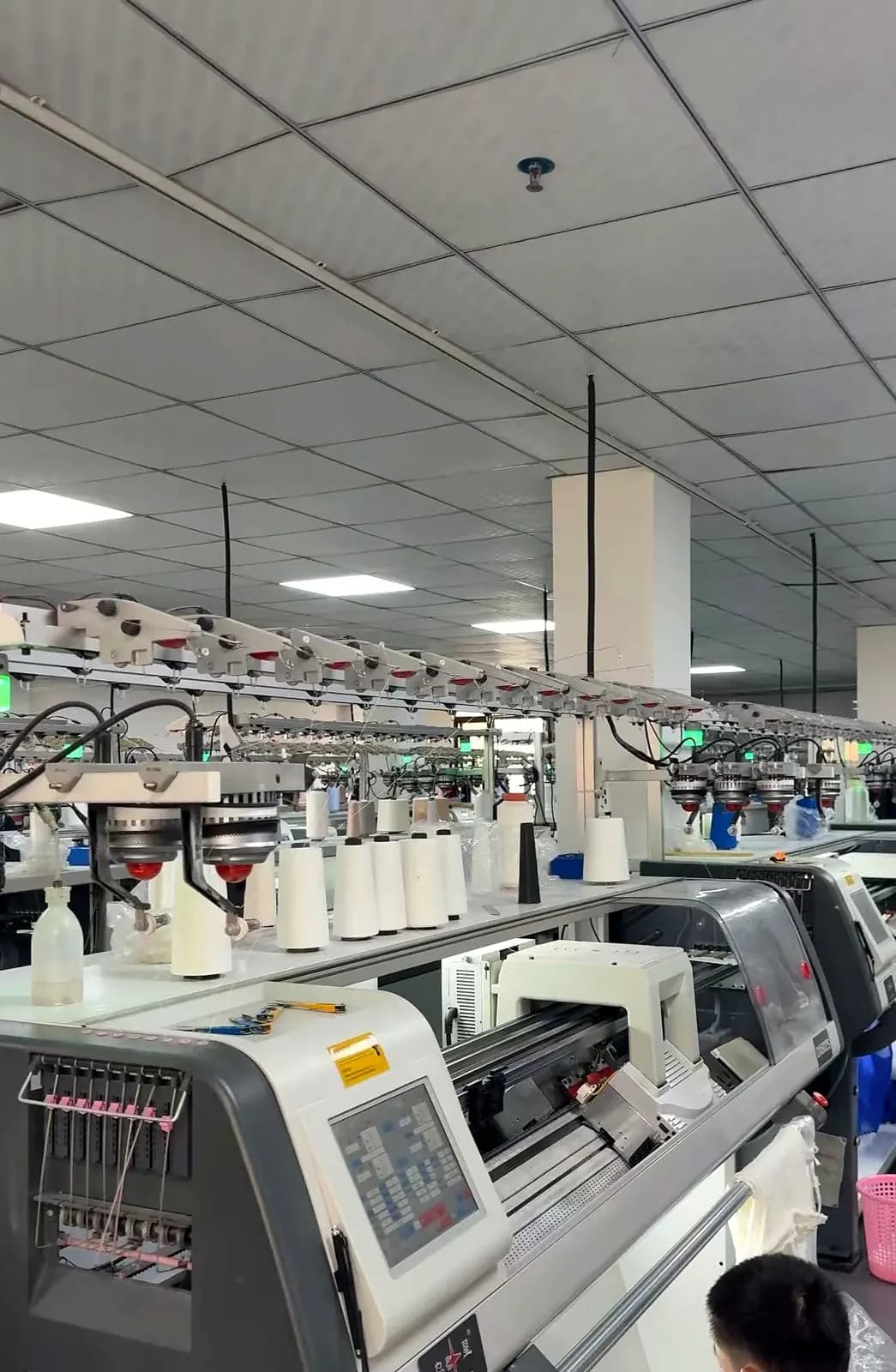
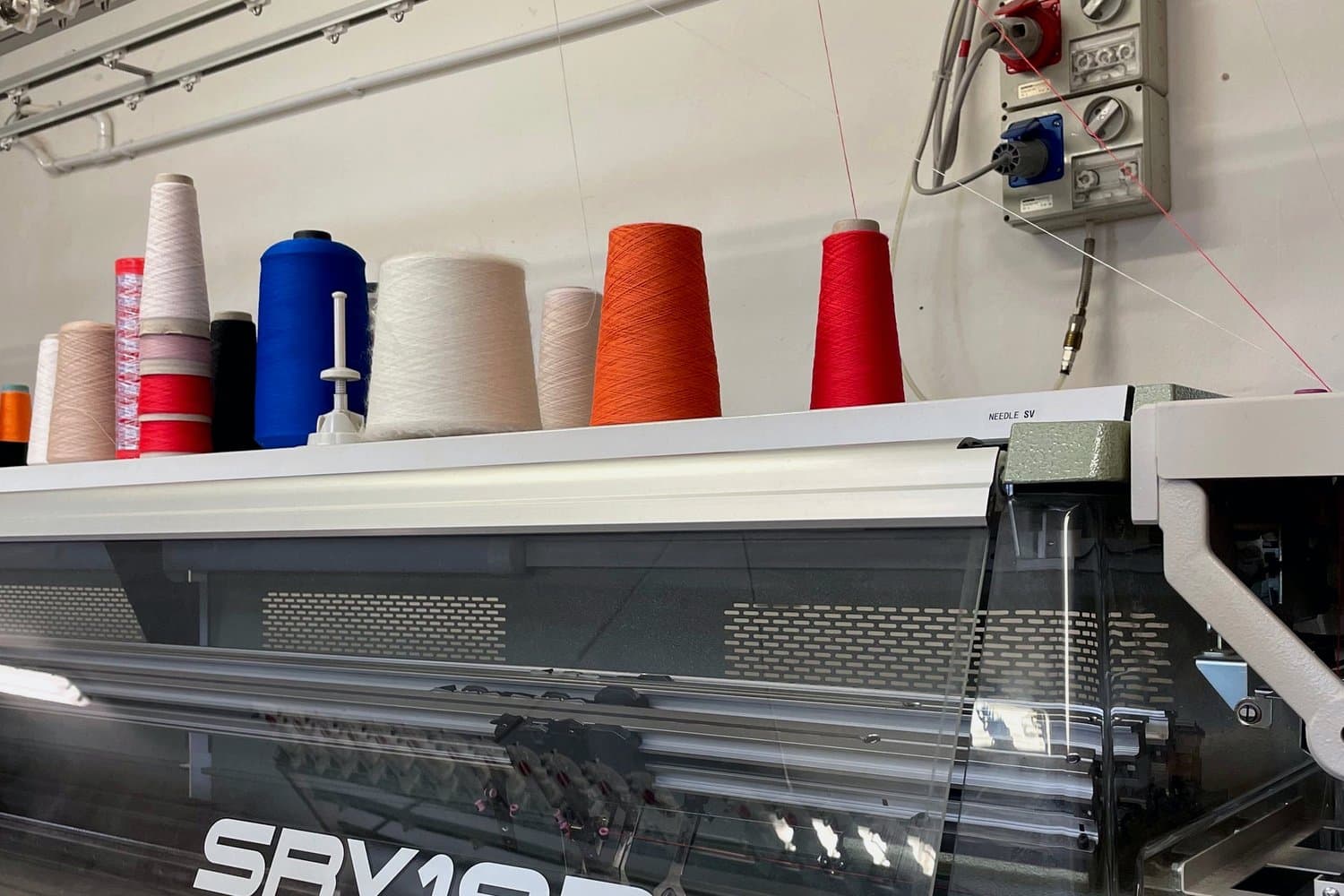
We focus on men's sweaters, cardigans, knit jackets, jacquard knitwear and private label knitwear. We support B2B buyers with OEM/ODM development, sampling and bulk production planning.
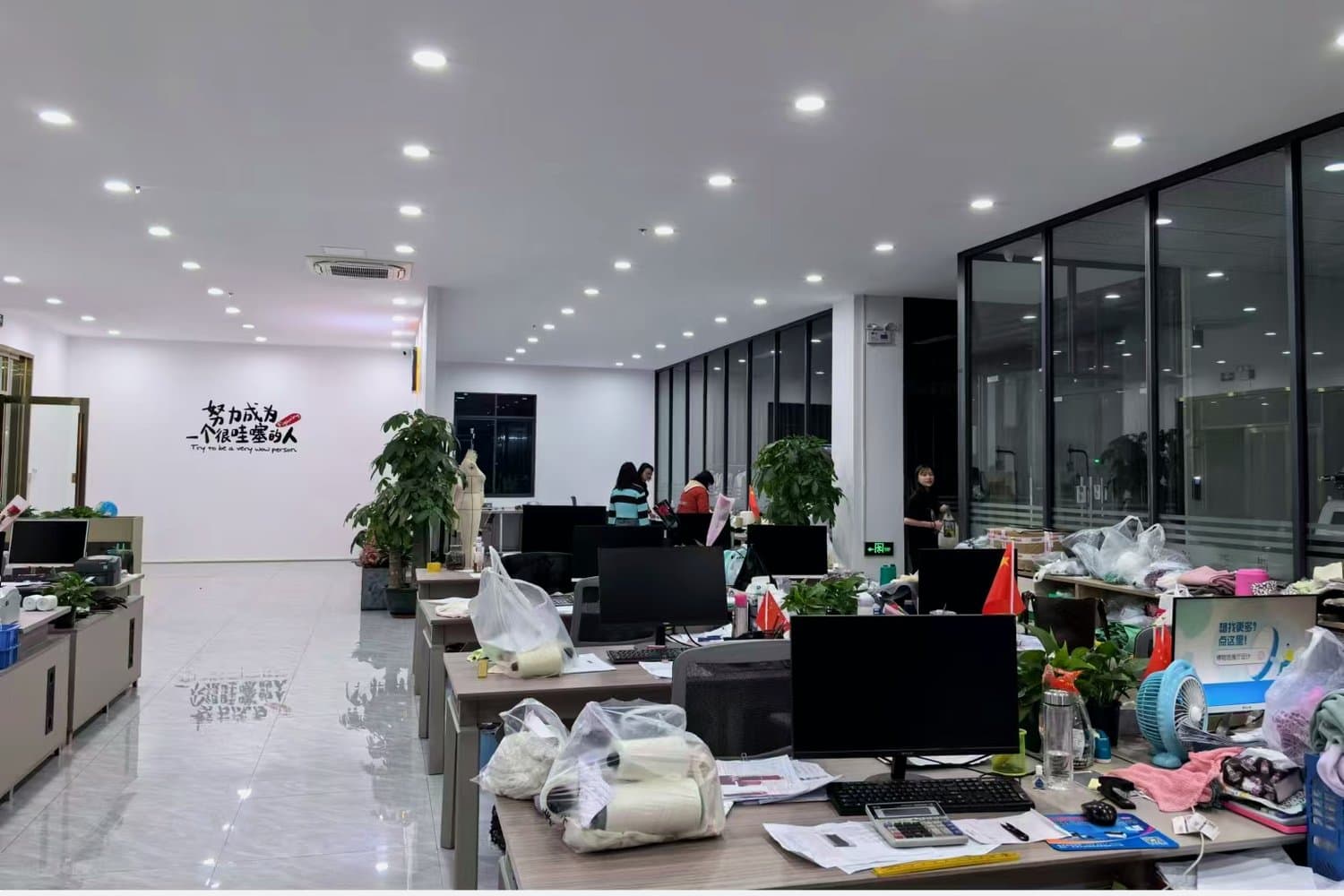
Guides for custom knitwear manufacturing, yarn selection, gauge options, quality control, cost planning and tech pack preparation.
Free interactive tool
Build your spec — yarn, gauge, colour, customisation — and instantly see the typical MOQ, sample & bulk timelines and what drives your cost.
Gauge
A gauge guide explaining how 5GG, 7GG and 12GG affect sweater texture, weight, season, cost and buyer positioning.
Read Guide ->Production Planning
How to plan knitwear production around Fall/Winter and Spring/Summer launch windows, working backward through lead times to hit your season on time.
Read Guide ->Manufacturing
An honest comparison of China, Vietnam and Bangladesh for sweater and cardigan production — gauge range, yarn access, MOQ, lead time, complexity and total cost — to match the right country to your product and volume.
Read Guide ->Materials
A buyer's guide to the certifications that matter in knitwear — OEKO-TEX, RWS, GRS, GOTS and BCI — what each one certifies, when you actually need it, and how chain-of-custody and transaction certificates prove a material claim.
Read Guide ->Quality
Stop bulk arriving a shade off. A practical guide to knitwear color approval — from Pantone reference to lab dips to consistent bulk — covering metamerism, dye-lot tolerance, fastness and how to sign color off so delivered sweaters match.
Read Guide ->Market
Germany remains one of Europe's most disciplined knitwear sourcing markets. Buyers here expect tight spec adherence, predictable lead times, clean documentation, and yarns that perform through long autumn-winter selling windows. This guide is written from our position as a Dongguan-based custom knitwear manufacturer working with German menswear and lifestyle brands. We cover what drives the procurement calendar, where sample and bulk timelines realistically land, what MOQ a mid-sized German label can plan against, which gauges and yarns we see specified most often for the DACH market, how quality control and compliance documentation are typically structured, and how logistics, payment, and Incoterms tend to be negotiated on FOB China terms. The aim is a working reference a sourcing manager can take into the next supplier review.
Read Guide ->The full EU compliance landscape for imported apparel and knitwear in one reference — GPSR Responsible Person, packaging EPR/LUCID, the PPWR (from 12 Aug 2026), REACH, fibre/care labelling and OEKO-TEX/GRS — with key dates, a master checklist and links to each detail guide.
7 min read - Guide
The ESPR Digital Product Passport will require a unique facility identifier. If you buy through an agent who hides the factory, that is the problem with the longest lead time.
6 min read - Guide
How B2B buyers should evaluate and approve knitwear samples, covering the proto-fit-PP sequence, what to check, and how to give effective feedback.
5 min read - Guide
Most sourcing scorecards still treat per-piece FOB as the headline KPI, and most brand directors quietly know it lies. In knitwear specifically — where every program runs through yarn development, lab dips, knit-down approval, wash trials, and a sampling room that has to learn your house fit — the cost of a garment is paid across eighteen months of friction, not in a single price line on a quotation. This article lays out a three-year total cost of ownership (TCO) model for knitwear supplier relationships aimed at brand directors and VPs of sourcing who keep getting pressured to chase a 40-cent FOB delta to a new factory. We walk through how sample cost actually declines as a supplier internalizes your spec (year 1 = 100, year 2 ≈ 70, year 3 ≈ 50), why reorders compress from week 7 to week 3 once a tech pack is genuinely owned by the other side, how yarn library carry-over kills new color development charges each season, and how production calendar priority — the unwritten advantage — only accrues to brands that stay. We also do the part most of these articles skip: the honest exit triggers. Communication breakdown, repeated first-bulk quality failure, no capability growth after eighteen months — these are real reasons to leave, and we name them. The argument is not loyalty for its own sake. It is that switching suppliers each season in knitwear almost always pays a 15-25% premium the FOB line does not show.
8 min read - Guide
How third-party inspection works for knitwear, including inspection types, AQL, what inspectors check, and when independent inspection is worth using.
6 min read - Guide
Most sweater quality issues are not random — they cluster around the same ten failure modes, each with a predictable point in the timeline where they can still be corrected at low cost. By the time a QC lead is reviewing a new sweater PO, the real question is not whether problems will appear, but whether the inspection plan and the sampling conversation are designed to catch them before they ship. This guide walks through the ten knitwear quality risks we see most often at Licheng — pilling, shrinkage, twisted side seams, mismatched dye lots, hangtag attachment errors, label drift, neckline stretching, linking inconsistency, mis-graded sizes, and packing damage — with what each looks like, the root cause, when in production it surfaces, the QC step that should catch it, and the specific question to ask your supplier during sampling.
5 min read - Guide
UK private-label brand owners planning autumn/winter knit collections in 2026 face a different commercial reality than they did pre-Brexit. Duty calculations, REACH compliance, port congestion at Felixstowe and the steady consolidation of UK independents have all reshaped how British buyers structure their knitwear programmes. This guide is written from our position as a Dongguan-based manufacturer that ships regularly into the UK market. It covers the MOQ, sample lead time, bulk lead time, yarn and gauge directions, quality control and logistics realities we see week to week when quoting and producing for UK brands. The intention is practical: by the end you should be able to walk into a quotation conversation with realistic expectations, ask the right questions on Incoterms and payment, and plan your AW26 calendar backwards with confidence.
7 min read - Guide
UK REACH registration rarely applies to brands importing finished knitwear. What binds you instead, and the Northern Ireland split that catches nationwide sellers.
6 min read - Guide
In September 2026, a Dongguan knitwear factory counted every first-contact enquiry by theme. About one in three buyers sent reference photos, while fewer than one in ten had a finished tech pack. Four in ten raised sampling in their first message. Roughly one in five asked for zip-front pieces, and the same share asked for motifs knitted in through jacquard or intarsia. Cotton was mentioned slightly more often than all animal fibres combined, and about one in five enquiries came from womenswear brands.
7 min read - Guide
We focus on men's sweaters, cardigans, knit jackets, jacquard knitwear and private label knitwear. We support B2B buyers with OEM/ODM development, sampling and bulk production planning.
Ready sample styles and selected custom programs can support lower-risk trials before larger seasonal orders.
Yes. Brands, including new labels preparing a first collection, can pay for a sample and see it before placing a production order. Two routes: a ready sample of a published style at USD 60 per piece in about 7 days, or a development sample from your tech pack at USD 150 per style, covering yarn sourcing, knit programming, one prototype and one revision round, in 15-25 days. Cashmere and mohair styles are quoted individually and shipping is charged at cost. Production starts only after you approve the physical sample, at our minimum of 50 pieces per colour with sizes mixed inside the 50. A sample does not commit you to a production run; we do not make garments for personal use.
Our sample fee is not refundable. Yarn sourcing, knit programming, machine setup and hand linking cost about the same whether one piece follows or five hundred, which is why the fee exists at all. It is credited against your first bulk order placed within six months of sample approval: 100% of a development sample fee, 50% of a ready sample fee.
Yes, for brands developing a style. One development piece is fine, with no commitment to bulk: a development sample is USD 150 per style and covers yarn sourcing, knit programming, one prototype and one revision round, in 15-25 days (cashmere and mohair are quoted individually). If you then go to production, the minimum is 50 pieces per colour with sizes mixed inside the 50, and the full USD 150 is credited against a first bulk order placed within six months of approving the sample. We do not make garments for personal wear.
Plain and striped styles using the same yarn and colour can be combined toward a minimum of 50 pieces, with mixed sizes. For example, four plain styles of 25 pieces each in the same yarn and colour total 100 pieces and meet that minimum. Different yarns or colours are counted separately. Jacquard and intarsia require 50 pieces per pattern; quantities from different patterns cannot be combined. Send us your styles, yarns, colours and quantities so we can confirm how the minimum applies to your project.
Get a free catalog or submit an RFQ today. Our team will respond within 24 hours.
Cannot find what you need? Our team can create a custom guide or template for your specific project.
Request Custom Resource ->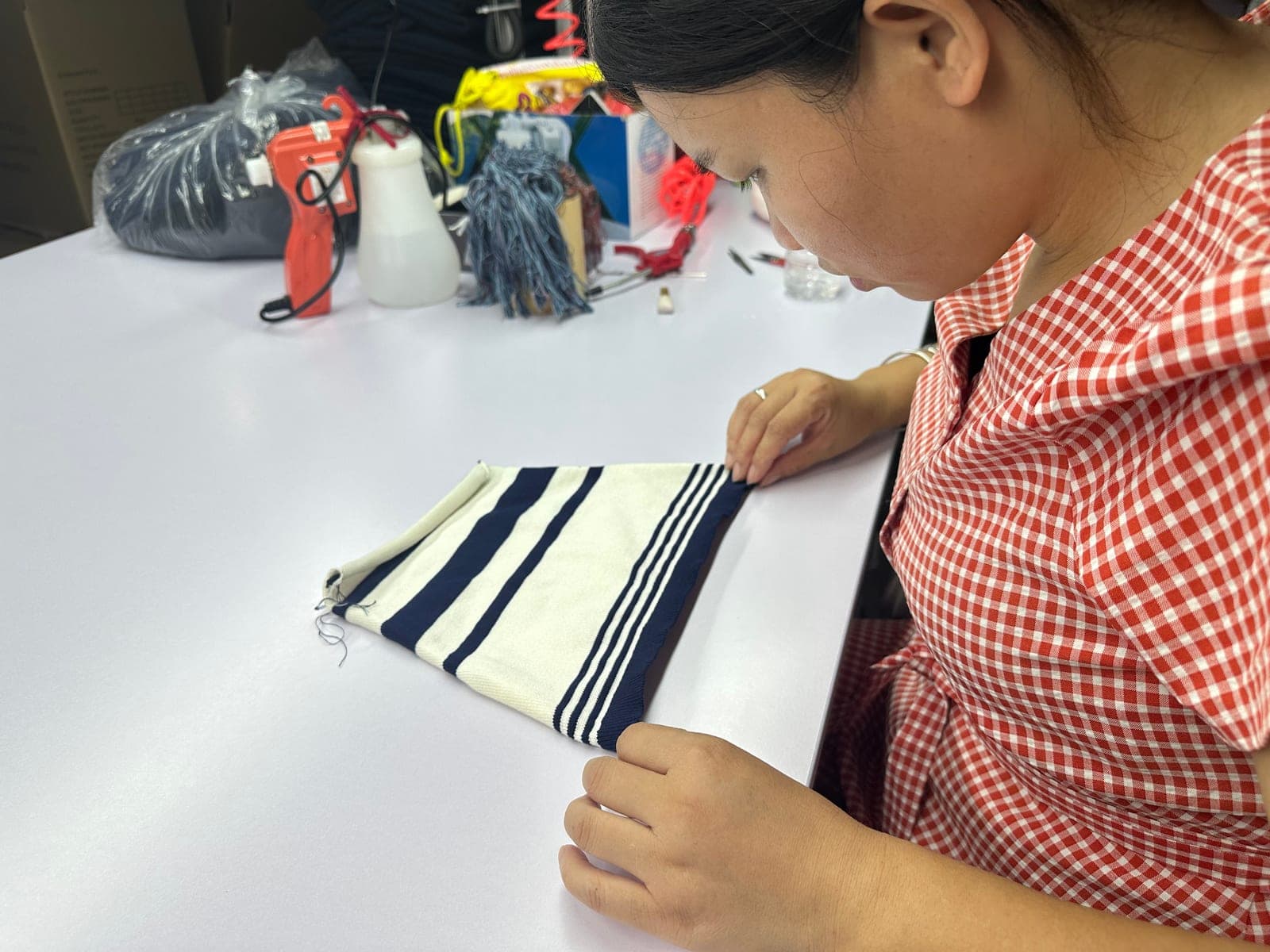
MOQ, lead time, cost ranges, gauge selection and QC checkpoints across typical OEM/ODM knitwear programs in NA + EU. Enter your email — we'll send you the report link in 30 seconds.
No spam. Unsubscribe with one reply. We use your email only to send you the report and follow up if you want a sourcing conversation.
Brand names shown are previously serviced OEM/ODM partners. Logos are decorative and do not imply current endorsement.