The Digital Product Passport for Knitwear: What Your Factory Must Be Ready to Supply
Updated 9/19/202612 min readBy Simon Liu · Licheng Knitwear
The ESPR Digital Product Passport will require a unique facility identifier. If you buy through an agent who hides the factory, that is the problem with the longest lead time.
**Short version: nothing binds your knitwear today, and probably will not until 2028 at the earliest. But one requirement in the regulation is worth acting on now — the passport has to identify the *facility* that made the garment. If you buy through an agent who will not name the factory, no software will fix that later.**
The Ecodesign for Sustainable Products Regulation — Regulation (EU) 2024/1781, usually shortened to ESPR — is the framework that introduces the Digital Product Passport. Textiles are explicitly in its sights: recital 49 directs the Commission to prioritise, in its first working plan, "iron, steel, aluminium, textiles, in particular garments and footwear, furniture".
⚠️ Practical sourcing reference, not legal advice — confirm your specific obligations with your compliance or legal advisor.
Three dates that keep getting flattened into one
Most coverage of the DPP quotes a single year. There are actually three separate things, and only the first is settled law.
What
Status
Timing
ESPR itself (Reg. 2024/1781)
In force — the framework is law
Already
The textiles delegated act — the thing that would actually bind knitwear
Not adopted. Indicative only, in the first working plan (COM(2025) 187, adopted 16 April 2025)
Expected around 2027
The compliance date — when products must comply
Does not exist yet. It is set inside the delegated act, conventionally 18–24 months after adoption
Realistically late 2028 into 2029
So a supplier or consultant telling you the DPP applies to your sweaters "from 2027" has compressed an indicative adoption date into a compliance date. Until the textiles delegated act is adopted and its own transition period runs, there is no DPP obligation on a knit garment.
That is not a reason to ignore it. It is a reason to spend the time on the part that takes years rather than the part that takes a purchase order.
The requirement worth acting on now
Articles 32 to 42 of the ESPR establish the passport. The mechanics are unremarkable: information reachable by scanning a data carrier, "such as a watermark or a quick response (QR) code" (recital 37). Any print supplier can add a QR code to a hangtag in a week.
The part that cannot be bought in a week is in recital 36. The passport is to be linked to:
a unique product identifier
a unique operator identifier
a unique facility identifier
The third one is the one that changes behaviour. A passport that identifies the facility means the brand must know — and be able to evidence — which factory actually made the garment.
For a brand buying direct, that is a data-entry problem. For a brand buying through an agent or trading company that treats the factory as confidential, it is a structural one. You cannot declare a facility you have never been told the name of, and the party withholding it has a commercial reason to keep withholding it.
If you do not know today which building your sweaters are knitted in, that is the item on this list with a multi-year lead time.
What the delegated act is expected to cover
Not yet law, and the detail will move, but the working plan and the ESPR's own scope point consistently at:
Durability — pilling, dimensional stability, seam and colour performance
Fibre composition disclosure at a level beyond the current label
Recycled content, likely with minimum thresholds
Microfibre release
End-of-life handling — repairability, recyclability, take-back (already being financed through textile EPR, which is live in four member states today)
Substances of concern, carried through the passport across the product's life
Read that list against what your supplier can already document. Most of it is data a factory either holds or does not; almost none of it can be reconstructed after the goods ship.
What to start asking your factory now
Not because it is required yet, but because the answers take time to become true:
"Can you name the facility where our styles are knitted, and would you put it in writing?" If the answer is evasive, the DPP is the least of your problems — it also means you cannot answer a due-diligence question from a retailer.
"Can you give fibre composition traced to the yarn lot, not just the finished garment?" Composition on a label is a claim; composition traced to a lot is evidence.
"For recycled content, can you provide transaction certificates rather than a statement?" GRS and RCS work on transaction certificates; a supplier who offers only a logo has not done the chain of custody.
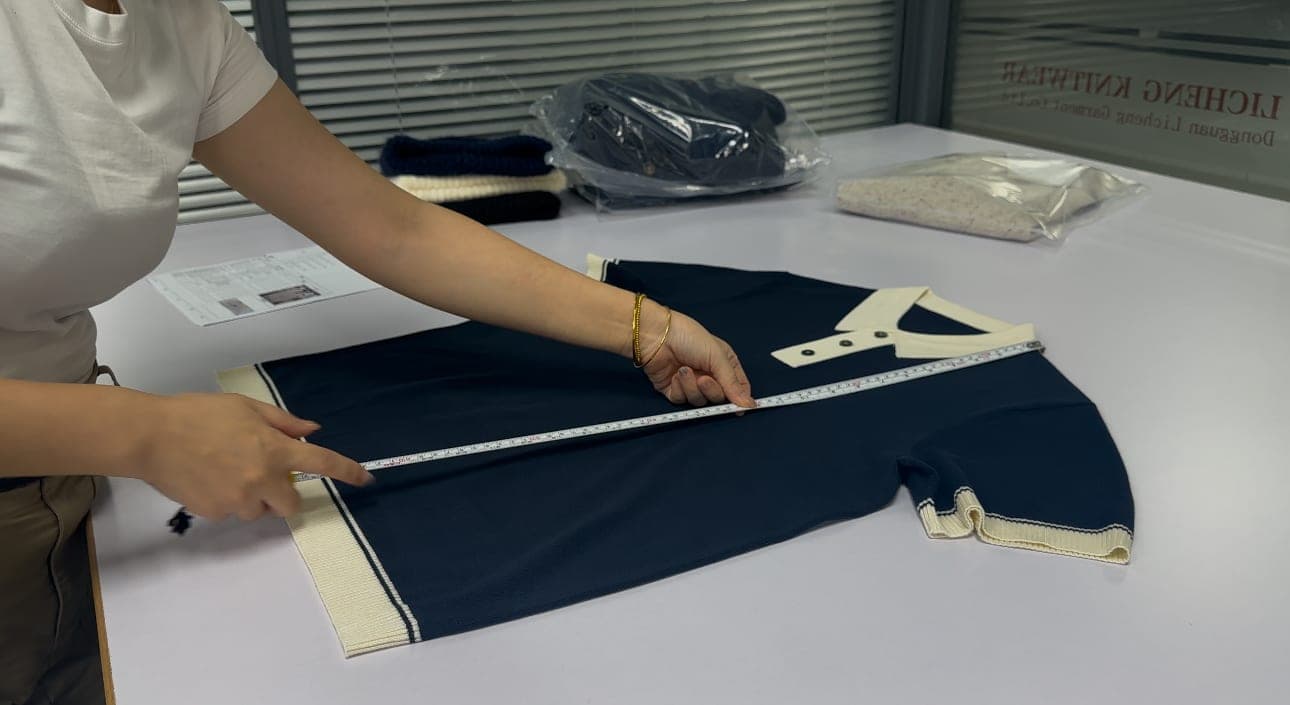
"What durability testing do you already run, and can we see the method?" Pilling and dimensional stability are the two the delegated act is most likely to formalise, and both are cheap to test now and expensive to retrofit.
Where we stand
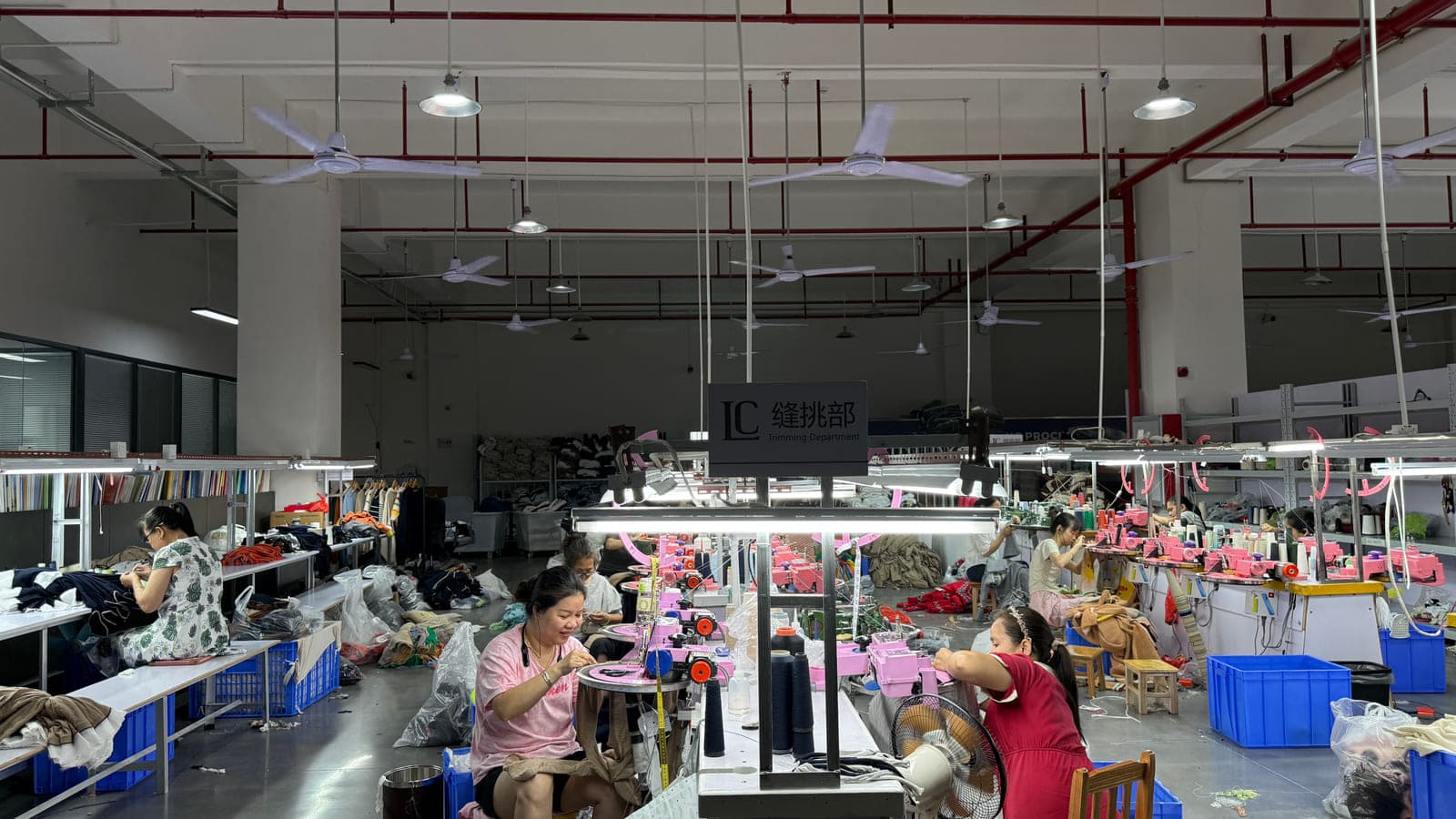
We are a knitwear factory in Dongguan, and on this topic the honest answer is that nobody's passport is ready, because the specification does not exist yet. What a factory can do is make the underlying data real:
We are the facility. There is no intermediary to name, and our registered entity is Dongguan Licheng Garment Co., Ltd. — checkable rather than asserted.
We hold an appointed EU Authorised Representative under the GPSR and German packaging registration LUCID DE4680505763138, both independently verifiable.
Fibre, yarn lot and finishing records exist per order, which is the raw material a passport will eventually draw on.
Does the Digital Product Passport apply to my knitwear now?
No. The ESPR framework is in force, but a product group is only bound once its delegated act applies. The textiles act has not been adopted; the working plan indicates around 2027, with a compliance date after that.
Is 2027 the deadline?
2027 is an indicative *adoption* date for the delegated act, not a compliance date. Compliance dates are set within the act, conventionally 18–24 months later.
What should I do first?
Establish that you know and can evidence which facility makes your product. That is the requirement with the longest lead time and the one a supplier relationship either supports or does not.
Will a QR code be enough?
The carrier is trivial. The data behind it is not — and it includes facility-level identification that has to come from your supply chain.
The Ecodesign for Sustainable Products Regulation, Regulation (EU) 2024/1781, known as ESPR. The framework is in force, and its recital 49 names textiles, in particular garments and footwear, as a priority for the first working plan.
Recital 36 of the ESPR links the passport to a unique product identifier, a unique operator identifier and a unique facility identifier. The facility identifier means a brand must know, and be able to evidence, which factory made the garment.
Not yet law, but the working plan points to durability such as pilling and dimensional stability, fibre composition disclosure, recycled content, microfibre release, end-of-life handling, and substances of concern carried through the passport.
Because the passport has to identify the facility that made the garment. A brand buying through an agent that keeps the factory confidential cannot declare a facility it has never been told, and that is the requirement with the longest lead time.
Whether it will name the facility in writing; whether fibre composition can be traced to the yarn lot; whether recycled content comes with transaction certificates rather than a statement; and what durability testing it already runs, and by which method.
We focus on men's sweaters, cardigans, knit jackets, jacquard knitwear and private label knitwear. We support B2B buyers with OEM/ODM development, sampling and bulk production planning.
Ready to Start Your Project?
Get a free catalog or submit an RFQ today. Our team will respond within 24 hours.
MOQ, lead time, cost ranges, gauge selection and QC checkpoints across typical OEM/ODM knitwear programs in NA + EU. Enter your email — we'll send you the report link in 30 seconds.
No spam. Unsubscribe with one reply. We use your email only to send you the report and follow up if you want a sourcing conversation.
Brands We've Worked With
Brand names shown are previously serviced OEM/ODM partners. Logos are decorative and do not imply current endorsement.