China vs Vietnam vs Bangladesh: Where to Manufacture Knitwear
Updated 9/19/202612 min readBy Simon Liu · Licheng Knitwear
An honest comparison of China, Vietnam and Bangladesh for sweater and cardigan production — gauge range, yarn access, MOQ, lead time, complexity and total cost — to match the right country to your product and volume.
Quick answer — China vs Vietnam vs Bangladesh for knitwear manufacturing: for complex, fashion-forward or low-MOQ sweaters and cardigans, China has the deepest knitwear ecosystem — the widest gauge range (3GG chunky to 14GG+ fine), the strongest local yarn supply, the fastest sampling (often 15–25 days) and the lowest MOQs. Vietnam suits simpler mid-to-large repeat programs and brands already running cut-and-sew there. Bangladesh is most competitive for very large, basic, price-led sweater runs. Knitwear is craft-heavy, so gauge range, yarn access and linking quality matter more than the headline labour rate — match the country to your product, not the trend.
Choosing where to manufacture your knitwear is one of the highest-leverage decisions a brand makes. China, Vietnam and Bangladesh dominate global apparel exports, but they are not interchangeable for sweaters and cardigans. Knitwear is a craft-heavy category — gauge range, yarn access, linking quality and pattern complexity matter far more than the headline labour rate. This guide compares the three honestly, so you can match the country to your product, volume and quality bar.
The cheapest country on paper is rarely the cheapest per *sellable* unit. For complex or low-MOQ knitwear, a slightly higher FOB with fewer reject rates, faster sampling and better gauge range almost always wins on landed cost.
Knitwear is craft-heavy — capability matters more than headline labour rate.
China — the deepest knitwear ecosystem: widest gauge range (3GG chunky to 14GG fine), strongest yarn supply, mature sample rooms, best for complex patterns (jacquard, intarsia, cables), lower MOQs and fast development.
Vietnam — strong, rising mid-market for simpler knit programs and large repeat orders; good for brands already running cut-and-sew there, with tariff advantages into some markets.
Bangladesh — most competitive on labour cost at high volume for basic sweaters; best fit for very large, simple programs where unit price dominates and lead time is flexible.
Capability comparison
Factor
China
Vietnam
Bangladesh
Gauge range
Widest (3–14GG)
Moderate
Narrower, basics-focused
Complex patterns (jacquard/intarsia/cable)
Strongest
Growing
Limited
Yarn availability (local)
Excellent
Moderate (some imported)
Improving, more imported
Typical MOQ flexibility
Low MOQs available
Medium–high
High
Sampling speed
Fast (often 15–25 days)
Medium
Slower
Best volume sweet spot
Small to large
Medium to large
Very large
Labour cost
Higher
Lower
Lowest
How to actually choose
Match the country to the product, not the trend. A 12GG fine-gauge merino sweater with a multi-colour jacquard yoke is a different sourcing problem than 50,000 plain 7GG crew necks.
Complex, fashion-forward, or small-batch? China's gauge range, yarn access and sample-room maturity are hard to beat. Low MOQs let new brands test before scaling.
Large, simple, price-led basics? Vietnam or Bangladesh can be very competitive once volume justifies the higher MOQ and longer development.
Tariffs and trade terms matter — check duty rates into your destination market before deciding; they can outweigh small FOB differences. If your shortlist is European rather than Asian, see China vs Portugal vs Türkiye. See our North America vs Europe sourcing guide for market-side considerations.
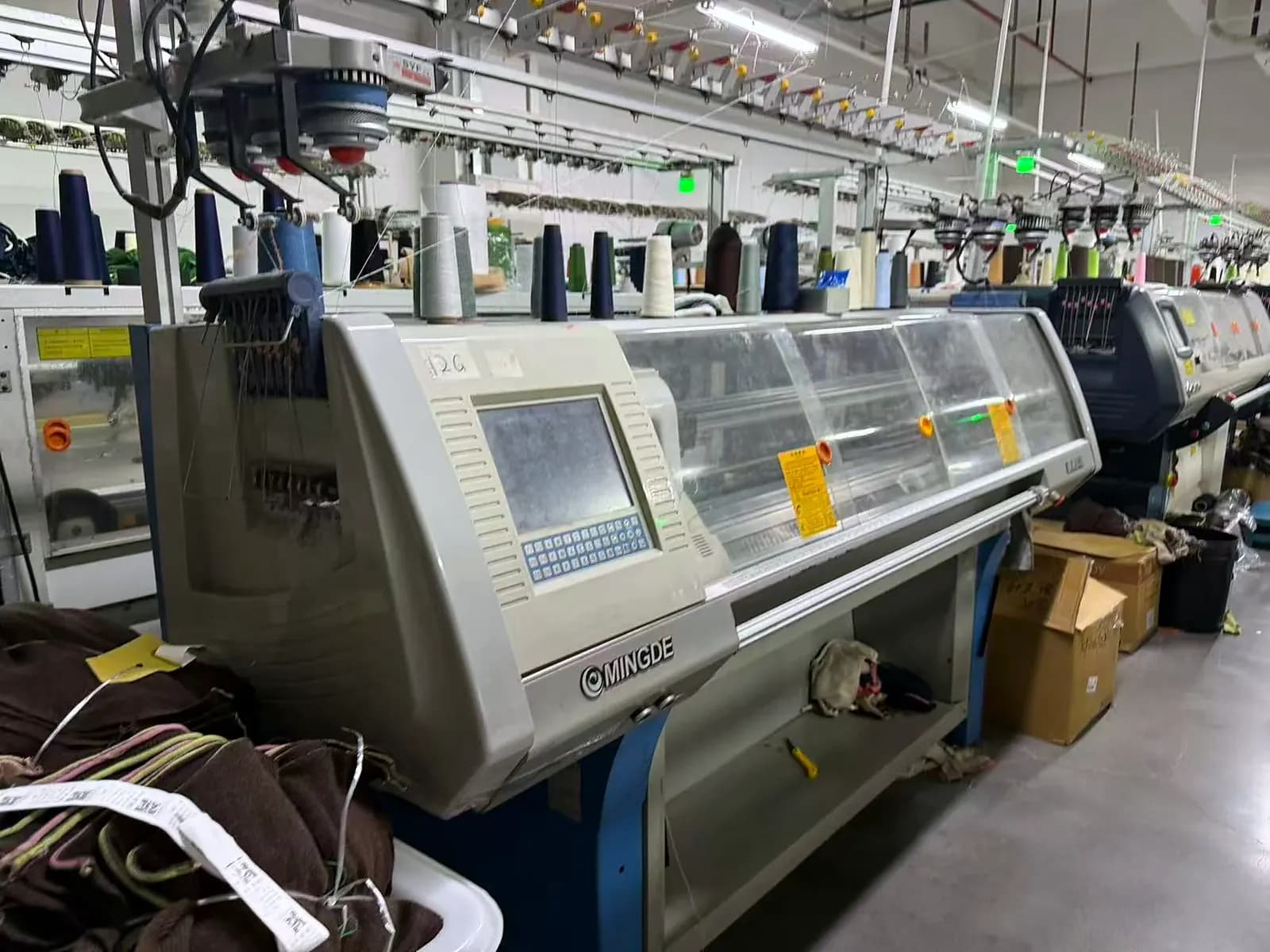
Yarn access and gauge range decide what a country can realistically produce.
Total cost, not unit cost
A low FOB quote can hide higher landed cost through reject rates, slow sampling that pushes you past a season, minimums you can't sell through, or rework. Before comparing countries, learn what actually drives a sweater's price in our custom knitwear cost factors guide, and sanity-check any quote against the 2026 knitwear sourcing benchmark report.
Where Licheng fits
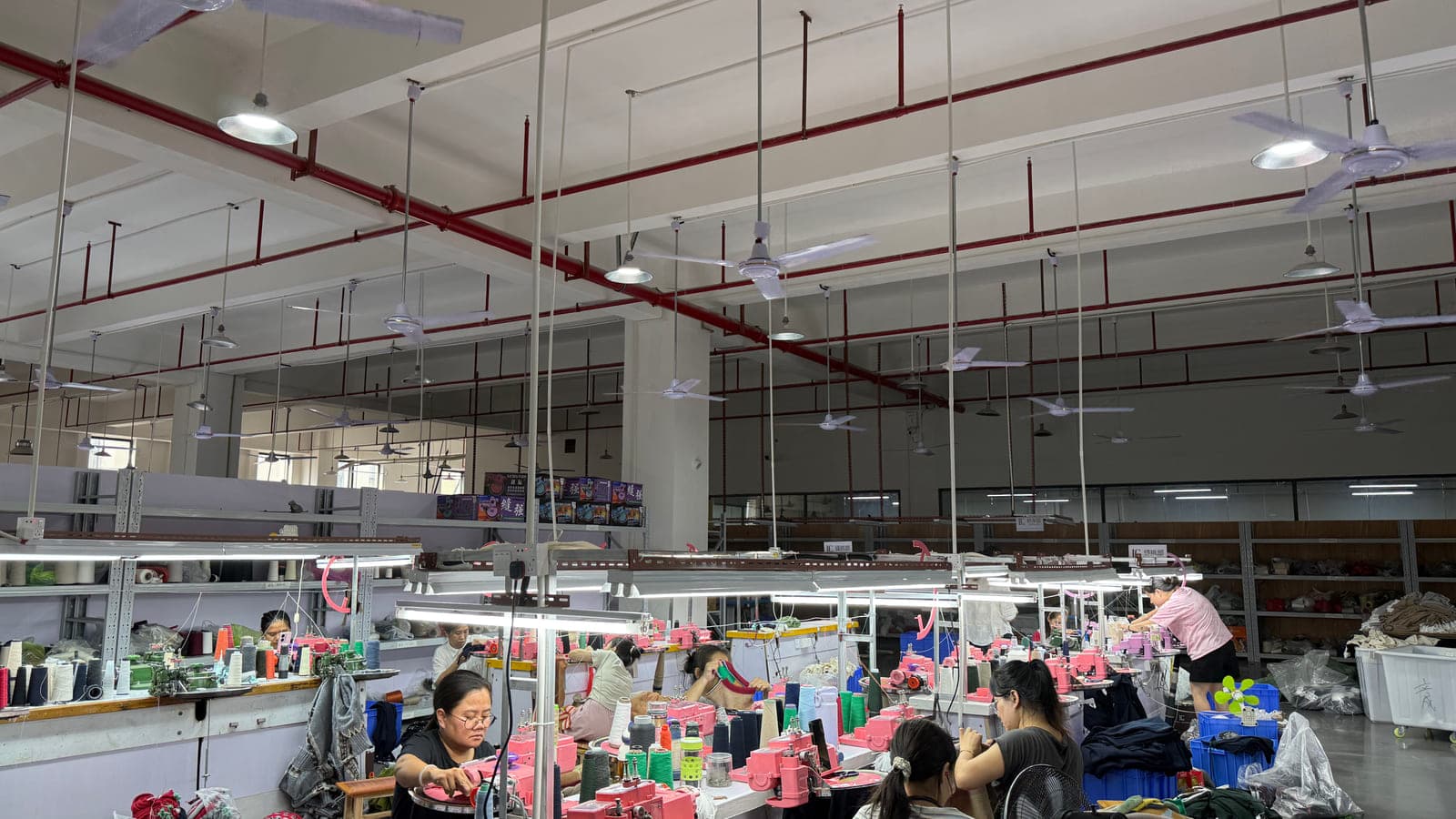
Licheng Knitwear is a Dongguan, China based manufacturer focused on men's sweaters, cardigans and knit jackets for B2B brands in North America and Europe. We work across 3GG-18GG, support low starting quantities for development, and handle complex patterns and private-label programs. If you are weighing countries, we are happy to give you an honest read on whether your specific product is a good fit for China — and what realistic MOQ, lead time and FOB would look like.
Which country is best for custom or low-MOQ knitwear?
China — its deep gauge range, local yarn access and mature sample rooms make it the strongest fit for complex, fashion-forward or small-batch sweaters, and low MOQs (often from ~30 pcs) let new brands test before scaling. Vietnam and Bangladesh are better suited to larger, simpler programs.
Is Vietnam or Bangladesh cheaper than China for sweaters?
On headline labour rate, yes — Bangladesh is usually lowest and Vietnam sits between. But knitwear is craft-heavy: for complex or low-volume sweaters, China's faster sampling, wider gauge range and lower reject rates often win on *total landed cost per sellable unit*, not just FOB.
Can Bangladesh or Vietnam make complex jacquard or intarsia sweaters?
Vietnam's capability is growing but still moderate; Bangladesh is largely basics-focused. For multi-colour jacquard, intarsia, cables or fine-gauge work, China currently has the strongest, most mature capability.
What MOQ should I expect in each country?
China offers the most flexibility (low MOQs available, often from ~30–100 pcs per colour). Vietnam typically runs medium-to-high MOQs, and Bangladesh is geared to very high volumes — so a small or test order is usually most economical in China.
Does the cheapest country always mean the lowest cost?
No. A low FOB can hide higher landed cost through reject rates, slow sampling that pushes you past a season, or minimums you can't sell through. Compare cost per *sellable* unit, factoring sampling speed, quality and tariffs into your destination market.
---
Talk to our team about this
If you're planning a real project around any of the points above, we'd be glad to take a quick look. Send a short brief and we'll come back within one business day with a practical direction, MOQ + lead time estimate, and a sample plan if it makes sense.
China for low-MOQ fashion knitwear and the widest yarn/gauge range; Vietnam for premium fine-gauge at scale; Bangladesh for low-cost high volume with large MOQs.
China specialists go lowest (from 30 per colour). Bangladesh typically needs 1,000-5,000+ pieces and long lead times.
China - low MOQ, fast samples (15-25 days), wide variety and EU/NA compliance suit small and growing brands.
We focus on men's sweaters, cardigans, knit jackets, jacquard knitwear and private label knitwear. We support B2B buyers with OEM/ODM development, sampling and bulk production planning.
Ready sample styles and selected custom programs can support lower-risk trials before larger seasonal orders.
Yes. Brands, including new labels preparing a first collection, can pay for a sample and see it before placing a production order. Two routes: a ready sample of a published style at USD 60 per piece in about 7 days, or a development sample from your tech pack at USD 150 per style, covering yarn sourcing, knit programming, one prototype and one revision round, in 15-25 days. Cashmere and mohair styles are quoted individually and shipping is charged at cost. Production starts only after you approve the physical sample, at our minimum of 30 pieces per colour with sizes mixed inside the 30. A sample does not commit you to a production run; we do not make garments for personal use.
Ready to Start Your Project?
Get a free catalog or submit an RFQ today. Our team will respond within 24 hours.
MOQ, lead time, cost ranges, gauge selection and QC checkpoints across typical OEM/ODM knitwear programs in NA + EU. Enter your email — we'll send you the report link in 30 seconds.
No spam. Unsubscribe with one reply. We use your email only to send you the report and follow up if you want a sourcing conversation.
Brand names shown are previously serviced OEM/ODM partners. Logos are decorative and do not imply current endorsement.