The short answer. Five directions define AW27 women's knitwear as we are being asked to sample it: fine-gauge merino layering at 12GG, cardigan-as-outerwear at 5GG, brushed mohair halo at 7GG-12GG, accessible cashmere blends built on a cotton base rather than a wool base, and knit dressing as two-piece sets. Booking order matters more than selection this season, because 3GG-5GG capacity tightens first and the cashmere base-yarn decision moves your FOB by roughly $20 a piece.
|
| Fine-gauge merino layering | 12GG | Medium | $44.27 (100% merino) |
| Cardigan as outerwear | 5GG | High — book 4-6 weeks early | $17.36 (wool blend) |
| Brushed mohair halo | 7GG-12GG | Medium-high | $26.48 (mohair / alpaca) |
| Accessible cashmere blend | 7GG-12GG | Medium | $45.77 cotton base / $66.05 wool base |
| Knit dressing as sets | 7GG | Low | $40.03 (sets) vs $21.73 (dress alone) |
FOB medians are from our own yarn cost index, all at MOQ 30 pieces per colour. They are one factory's published bands, not a market average — the ratios between them are the part that travels.
This is not a licensed trend forecast and there are no forecaster names in it. It is built from two things we can actually stand behind: the women's styles we are currently being asked to develop, and what yarn agents are quoting us for AW27 delivery.
Our women's book is 65 styles across 3GG to 12GG, weighted to 7GG. That weighting is the single most useful fact in this article, and it is worth saying plainly: 7GG is where most women's AW knitwear actually lands, not the chunky 3GG that dominates seasonal imagery. Chunky photographs well and sells in smaller numbers than the mood boards suggest.
The piece under the piece. Fine merino at 12GG — thin enough to sit under a jacket or a heavier knit without bulk at the armhole, warm enough to wear alone indoors.
This is the direction most often under-ordered, because it does not photograph as a statement. It is also the one with the cleanest repeat-order profile: a 12GG merino crew or roll-neck in a core colour reorders season after season while the statement pieces do not.
Cost reality: 100% merino runs a median of $44.27 FOB, against $17.36 for a wool blend. That is the highest-cost direction on this list, and it is worth knowing before you build the range rather than after. See our merino sourcing tiers guide for what actually separates the tiers.
The cardigan continues to move out of the layering slot and into the outerwear slot — heavier, longer, with a real closure rather than a decorative one. Our published women's cardigans sit mostly at 7GG-12GG, with one chunky 3GG-5GG style built for exactly this direction.
This is the direction with the booking problem. 5GG capacity tightens before anything else in our AW calendar, because the same machines take the chunky 3GG work. If a 5GG cardigan is in the range, the yarn needs booking 4-6 weeks earlier than the rest of the buy. This is not a sales tactic; it is the order in which our own machine time fills.
Our cardigan development guide covers the construction decisions — the collar and closure choices apply to women's the same way. The men's AW2027 read counts the same closure question across 241 styles, and finds zip ahead of button 57 to 33.
Mohair and mohair blends, brushed after knitting to raise the halo. Carried over from AW26 menswear rather than new, which for a buyer is good news: the yarn supply chain is already primed and the finishing is already proven.
Two things buyers routinely get wrong here:
- Brushing is a finishing pass, not a yarn choice. The same yarn gives a different hand depending on how many brushing passes it takes, and that is a specification you control.
- Mohair content varies enormously — typically 30% to 75% in what we are asked to make. The percentage drives both hand and price far more than the word "mohair" on the label does.
Median FOB for mohair and alpaca sits at $26.48, between wool blend and cashmere blend. Detail in our brushed mohair guide.
The commercial question in women's AW knitwear is almost never "cashmere or not". It is what the other 95% is.
From our own published index:
|
| Cashmere blend on a cotton base (95/5) | $45.77 |
| Cashmere blend on a wool base (95/5) | $66.05 |
Same cashmere content. About $20 apart. A brand that specifies "5% cashmere" without specifying the base is not specifying price at all — and the two blends behave differently in wear, not just in cost.
This single decision moves a women's AW range's landed cost more than most silhouette choices do.
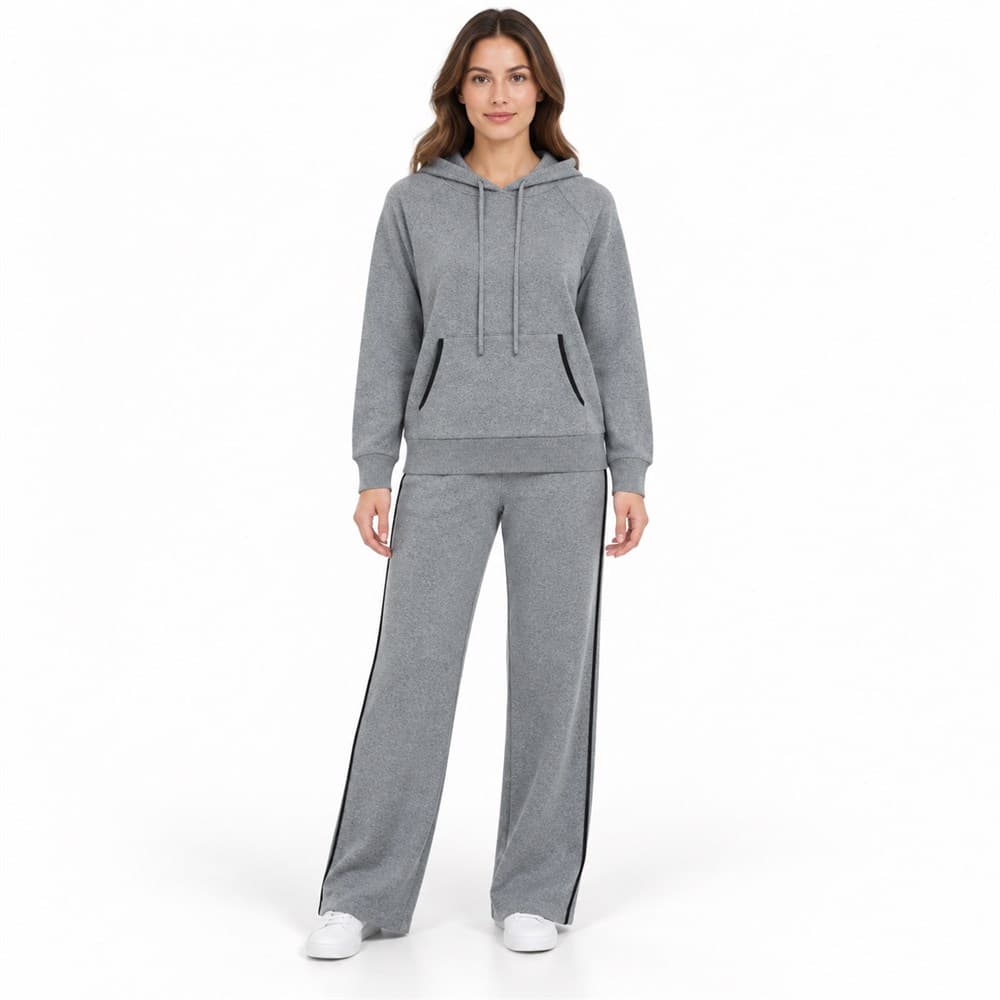
Knit dresses and knit sets keep appearing in what we are asked to sample. The planning warning is in the numbers:
- Knit dress or skirt alone: median $21.73
- Knit bottoms and two-piece sets: median $40.03
A set is two garments. It reads as one line on a range plan and costs like two on an invoice, and knit trousers need more linking and more finishing than a body does. Sets are worth doing — they just should not be budgeted as if they were a dress. All ten of our published knit dresses and bottoms sit at 7GG-12GG, the only band that holds a shape in a bottom.
|
| 3GG | Statement chunky, outerwear-weight | 4 of 65 |
| 5GG | Cardigan-as-outerwear, textured knits | 16 of 65 |
| 7GG | The AW workhorse — most sweaters and sets | 32 of 65 |
| 12GG | Fine layering, cashmere blends, dresses | 13 of 65 |
If you take one thing from this table: build the range around 7GG and treat 3GG as the accent, not the reverse.
Book now: 5GG cardigan yarn, and any 3GG chunky. These compete for the same machine time and the same yarn lots, and they are the first thing to go tight.
Hold: 12GG fine merino and cashmere blends. Finer-gauge yarn stays available later in the calendar, and holding gives you a real chance to react to early sell-through rather than committing blind.
Decide early, regardless of booking: the cashmere base yarn. It is a $20-per-piece decision and it is free to change at development, expensive to change afterwards. Our bulk vs sample pricing gap guide explains why late changes cost what they do.
Men's knitwear trends 2026-2027 covers the menswear directions this season sits alongside. Spring/Summer 2027 light-knit direction covers the season after. Women's knitwear manufacturing guide covers fit, grading and development specifics.
Is 7GG really the right default for women's AW?
In our book it is — 32 of 65 women's styles. Chunky gauges dominate seasonal imagery and a much smaller share of actual orders.
How much does mohair percentage change the price?
More than the word "mohair" suggests. We are asked for anything from 30% to 75%, and the hand and the cost both track the percentage closely. Specify it rather than leaving it to the factory.
Why is a knit set nearly double a knit dress?
Because it is two garments, and knit bottoms need more linking and finishing than a body. $40.03 against $21.73 in our own published bands.
Can we mix gauges within one AW range?
Yes, and most brands should — 7GG core, 5GG cardigans, 12GG layering. Just book the coarser gauges first, because that is the order machine time fills.
Do these numbers apply to my supplier?
The absolute figures are ours. The ratios — merino against wool blend, cotton-base against wool-base cashmere, set against dress — are set by yarn markets and construction time, so they travel.
💬 Sourcing this for an upcoming project? Request a free quote → · MOQ 30 pcs · Sample in 15–25 days · WhatsApp us
Related: our cardigan range broken down by gauge, closure and fibre — what 71 published cardigan styles show about AW27 cost.