Men's Knitwear Trends 2026-2027: Heritage, Texture and Color Directions
Updated 9/19/202612 min readBy Simon Liu · Licheng Knitwear
AW26 and SS27 men's knitwear is moving in a direction that rewards buyers who understand production, not just mood boards. Heritage cable and fisherman knits are returning at chunky gauges, brushed and bouclé textures are gaining floor space, the earth-tone palette is extending into a second strong season alongside accent reds, oversized silhouettes are maturing into more refined fits, and shawl-collar cardigans plus refined knit polos are taking commercial share. Each of these directions carries a different yarn book, a different gauge bias and a different lead-time profile. This forecast is written from the factory floor in Dongguan: what the trend looks like, what it costs to make properly, what to lock in early, and where the risk lives if you book late. The goal is not to repeat trend-board imagery — it is to help your AW26 and SS27 capsules ship on time and at the right margin.
The short answer. Seven directions define AW26-SS27 men's knitwear: heritage cable and fisherman at 3GG-5GG, brushed mohair at 7GG-12GG, boucle for SS27, earth tones with accent red, oversized refined into a tailored fit, shawl-collar cardigans at 3GG-7GG, and 12GG knit polos. Booking order matters as much as selection - chunky heritage and shawl collars need yarn booked 4-6 weeks early, because 3GG-5GG capacity tightens first.
Direction
Typical gauge
Ready to Start Your Project?
Get a free catalog or submit an RFQ today. Our team will respond within 24 hours.
Full production risk and yarn-bias detail for each direction is in the sourcing snapshot further down.
Trend forecasting for menswear knitwear is usually written from a mood board. This one is written from a factory. The directions below are the AW26 and SS27 calls we are seeing land in development requests across our menswear customers (the women's AW27 calls are in a separate direction piece) — what they are asking us to sample, what they are reordering at scale, and what we are advising them to book early. Each section pairs the trend with what it actually means in yarn, gauge, lead time and cost. If you are a merchandiser building an AW26 buy or an SS27 capsule, treat this as a sourcing briefing rather than a styling article.
Why The 2026-2027 Cycle Is Different
Common Questions
What are the main men's knitwear directions for AW26 and SS27?
Five run through the season: heritage cable and fisherman knits returning at genuine weight rather than as a light homage; brushed, mohair and boucle surfaces taking floor space from flat jersey; earth tones extending into a second strong year with reds rising alongside them; oversized settling into a refined rather than exaggerated fit; and shawl-collar cardigans and knit polos both gaining share.
Which gauge should I use for the heritage cable direction?
Cable and fisherman constructions need weight to read as heritage rather than as a print of one, which puts them at the chunky end - 3GG to 7GG in practice. A cable knitted too fine loses the shadow that makes the stitch legible from a distance. We knit 3GG-18GG in-house, so the gauge decision can follow the look rather than the machine list.
When should a buyer book yarn for an AW26 knitwear programme?
Earlier than most calendars assume, because the binding constraint is rarely knitting time - it is dyeing. A dyed-to-order colour carries a mill minimum measured in kilograms and its own lead time, and specialty yarns such as mohair and boucle book out first. Confirm colour direction before you finalise styling, not after.
Is the oversized silhouette finished?
No, but it has changed. The exaggerated drop-shoulder volume of the previous cycle is maturing into a fuller-but-controlled fit: still relaxed through the body, cleaner at the shoulder and cuff. For sourcing that matters because grading and linking tolerance tighten as the fit becomes more deliberate.
What is safe to book now and what should wait?
Book the constructions whose yarn has a long lead time or a dyeing minimum - heritage cables, brushed and mohair pieces, and any specific colour you have committed to. Hold the pieces whose appeal depends on a late read of the season, and hold second colourways until the first sells through, since minimums are per colour.
Two macro shifts shape the next 18 months of knitwear development. The first is that buyers are no longer chasing the post-pandemic comfort silhouette in its rawest form — the boxy, oversized, low-gauge shape is being refined into something more tailored, more wearable in a hybrid office-casual wardrobe, and more sellable beyond the streetwear-adjacent customer. The second is that the heritage and workwear vocabulary that drove menswear from 2023 onward has not peaked. Cable, fisherman, shetland, shawl collar and brushed surfaces are continuing into AW26 and stretching, in lighter weights, into SS27.
For a merchandiser, the practical takeaway is that core knitwear is doing more of the work in your assortment. The trend pieces are still important, but they are being asked to sit beside genuinely classic shapes that customers buy without thinking. That means your buy needs to be split more carefully — and the production calendar for each split is different. Chunky heritage pieces need yarn booked early. Brushed and bouclé textures need finishing capacity reserved. Polo knit needs a tighter SS27 calendar than wool buyers are used to. We go through each of these below.
Heritage Cable And Fisherman Knits Return — At Real Weight
The single strongest direction for AW26 is the return of properly heavy heritage knitwear. Cable, aran, fisherman and shetland-style sweaters were back in the conversation in 2024 and 2025, but often as 7GG or 12GG translations — visually heritage, but lightweight, and built for a customer who wanted the look without the bulk. For AW26 the heavy versions are returning to the buy.
That means real chunky construction, typically in the 3GG to 5GG range, on wool or wool-blend yarn with enough body to hold a cable. The cream and oatmeal fisherman shape is the anchor, but we are seeing denim-blue allover cable and dark-brown cable turtleneck variants land alongside the classic ivory. From a production standpoint, this trend has the longest lead time of anything in your AW26 buy. Chunky yarn in cream and natural tones gets booked out at mills first; if you wait until the season is half-confirmed, you will be paying a premium and competing with everyone else for the same dye lots. We recommend confirming yarn for chunky heritage programs at least four to six weeks before you would for a 12GG basic.
Brushed Surfaces, Mohair And Bouclé Texture
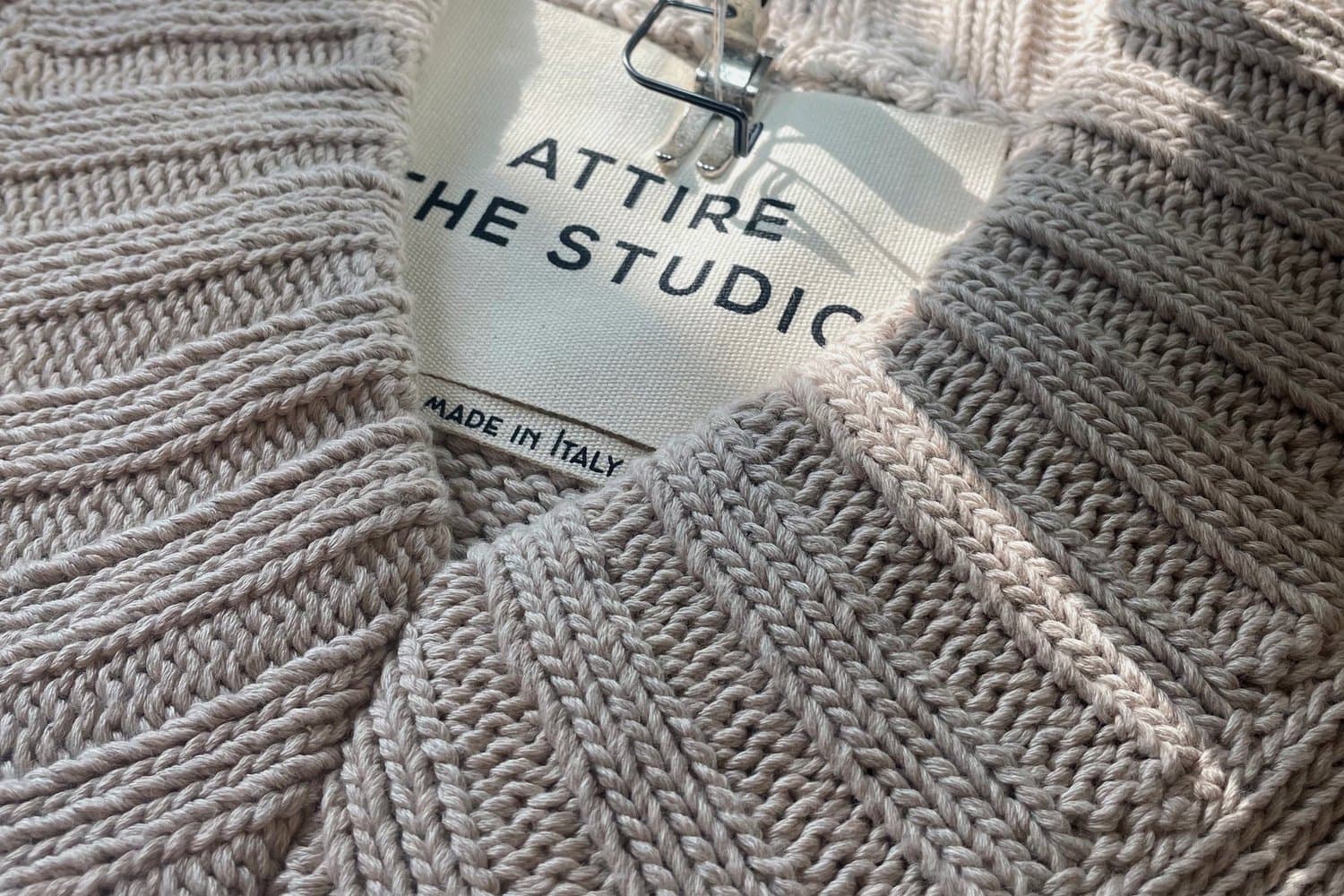
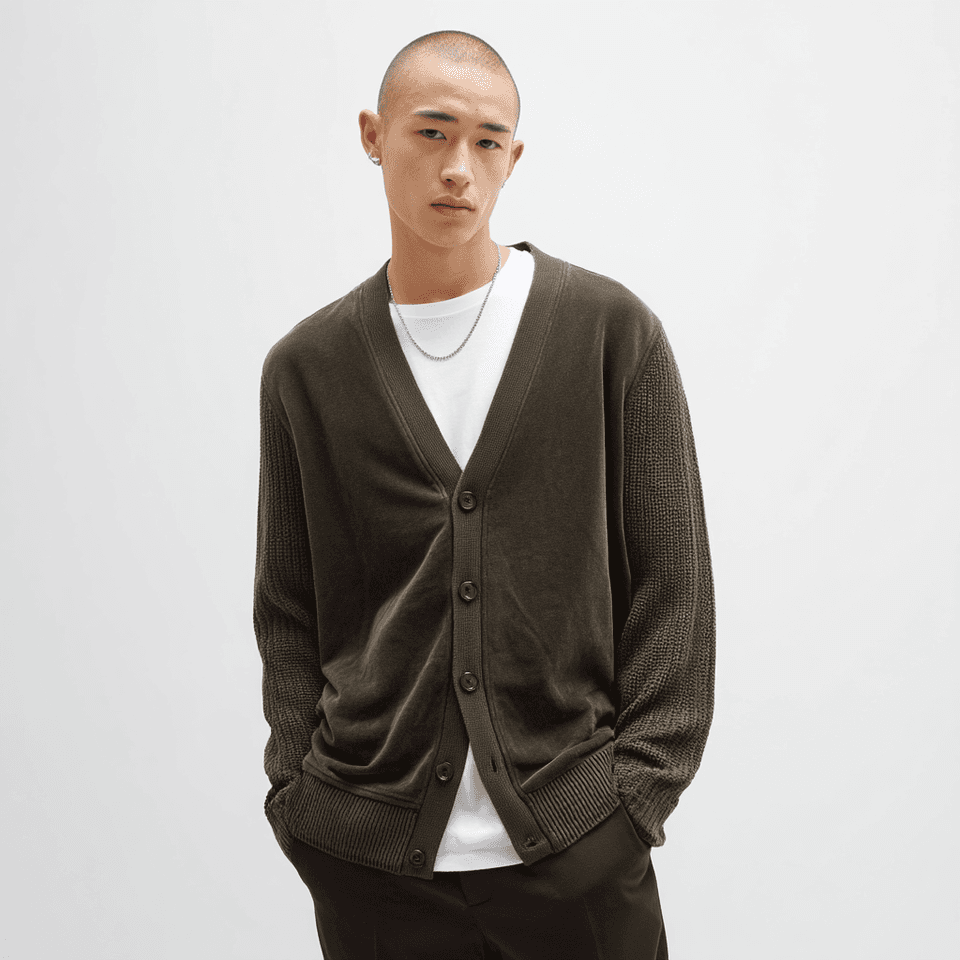
A real knitted panel on our finishing table — surface texture is what these trends come down to.
Texture is the second big direction, and it sits on the cusp between AW26 and SS27. Brushed surfaces — particularly mohair and mohair-blend — are continuing strong for AW26, with grunge-leaning monochrome stripes, abstract patterns and even animal motifs all running in brushed yarn. For SS27, we are seeing the same texture interest translate into bouclé and popcorn textures in cotton and cotton blends, which read tactile without overheating the wearer.
The sourcing reality on textured knit is that finishing matters as much as yarn. A brushed mohair sweater is a wool-blend body knit at a controlled gauge and then mechanically brushed — the brushing is a separate operation, with its own capacity constraints and its own quality risks (uneven nap, pilling, shedding in the early washes). Bouclé and popcorn are knit structures, not finishes, but they require careful tension and a knitter who has run the structure before. For both, we strongly recommend a salesman sample before bulk so the texture density and hand-feel are signed off in writing. If you are sourcing these textures for the first time, our brushed and mohair knitwear development guide walks through the production controls in more depth.
Color: Earth Tones Continue, Reds Rise
The earth-tone palette that has dominated menswear knitwear since 2024 is not done. Camel, oatmeal, cream, taupe, olive, dark brown and rust will all carry strong into AW26. What is changing is that buyers are layering a stronger red into the same palette — not the orange-leaning rust of 2025, but a deeper, more pigmented red. Maroon, burgundy, brick and grunge-leaning red argyle pieces are appearing in development requests.
For SS27, the earth-tone base softens into lighter naturals — periwinkle, washed denim blue, pale oatmeal and sun-bleached cream — with the red carrying through as an accent rather than a hero. The sourcing implication here is dye-lot management. Earth tones are notoriously hard to match across reorders because they sit in the part of the color space where small dye-batch variance reads as obvious shade difference under store lighting. If you are reordering camel or oatmeal across drops, lock the lab dip and Pantone reference at the start of the season and hold a master shade card. Our color approval guide covers how to spec this so bulk does not drift.
Silhouette: Oversized Matures Into Refined Fit
The oversized silhouette that drove menswear knitwear from 2022 to 2025 is not going away — but it is being tailored down. For AW26 and SS27, the shape we are sampling most is what merchandisers internally call a "refined relaxed" fit: still a touch wider than slim, still long enough in the body to layer, but with proportions corrected so the shoulder sits closer to the natural line, the sleeve is more controlled, and the body length is anchored rather than dropped.
This fit shift matters more than it sounds. A genuinely oversized sweater can be cut from a relatively simple block; a refined relaxed fit requires more careful grading because the proportions only work in a narrow tolerance band. If your tech pack still carries the 2023 oversized block, expect your AW26 samples to come back looking dated. We are advising menswear customers to re-grade their core blocks for AW26 and treat fit revision as part of the season's development cost. For background on how grading actually works across an international size range, see our sweater sizing and fit grading guide.
Shawl-Collar Cardigans And The Polo Knit Surge
Two product categories are taking visible share in AW26 and SS27 buys. The first is the chunky shawl-collar cardigan — a heritage shape that menswear keeps rediscovering, and which is back as a hero piece in many AW26 development requests. The second is the knit polo, which is moving from a niche SS sub-category into a full SS27 anchor.
The shawl-collar cardigan is a production piece that rewards an experienced factory. The collar needs to hold its shape over time, the button band has to sit flat without bunching, and on chunky gauges the seam construction at the shoulder is critical or the cardigan looks heavy and ill-finished. The knit polo, by contrast, is a fine-gauge piece — typically 12GG or finer — where placket construction, collar shape and yarn selection determine whether the customer perceives it as premium or as a polo shirt in knit form. SS27 polo development should start in late AW26 to leave room for placket and collar revisions.
Knitwear Sourcing Reference: Gauges, Yarns And Standards (2026-27)
To turn the directions above into a spec a factory can actually quote, here are the concrete parameters behind them — the gauges, yarn counts, certifications and customs codes buyers put into a tech pack.
Gauge (needles per inch), by trend weight:
3GG–5GG (roughly 3–5 needles per inch): chunky heritage cable, aran, fisherman and shawl-collar pieces — the heaviest AW26 constructions.
7GG: mid-weight brushed, mohair and textured knits.
12GG–14GG: fine-gauge SS27 knit polos, mock necks and refined-fit pullovers.
Those are the bands each direction wants. What our range actually carries is narrower: 63.1% of our 241 published men's styles sit at 7GG–12GG, and chunky 3GG–5GG is only 5.8% — counted in our men's AW2027 gauge, fibre and closure read.
Yarn specs worth writing into the tech pack:
Merino wool at 18.5–19.5 micron for next-to-skin softness; specify a superwash (Hercosett) or GRS-certified recycled merino if the buyer needs machine-washable.
Lambswool / Geelong lambswool (~18.5 micron): the value route to a heritage hand-feel on cable and shetland-style bodies.
Kid mohair blends, typically 30–75% mohair, for the brushed AW26 surfaces — brushing is a separate finishing pass, not a yarn choice.
Cashmere: grade-A fibre is ~15–16 micron with 34–36 mm staple length; 2/26Nm is the common sweater count.
Cotton, Supima and Pima for SS27 bouclé, popcorn and knit polos.
Standards to confirm before committing bulk:
OEKO-TEX Standard 100 (chemical safety), ISO 9001 (quality management system), and GRS / RWS (Global Recycled Standard / Responsible Wool Standard) for recycled and responsible-fibre claims.
Sweaters and pullovers clear customs under HS heading 6110 (HS Chapter 61, knitted apparel) — the tariff line your landed-cost math is built on.
EU regulatory duties now sit alongside the certifications above.Textile EPR is already charged in four member states and becomes mandatory EU-wide by 17 April 2028, and the Digital Product Passport arrives with the ESPR delegated act for textiles. Both are the brand's obligation, not the factory's - but both need data the factory supplies.
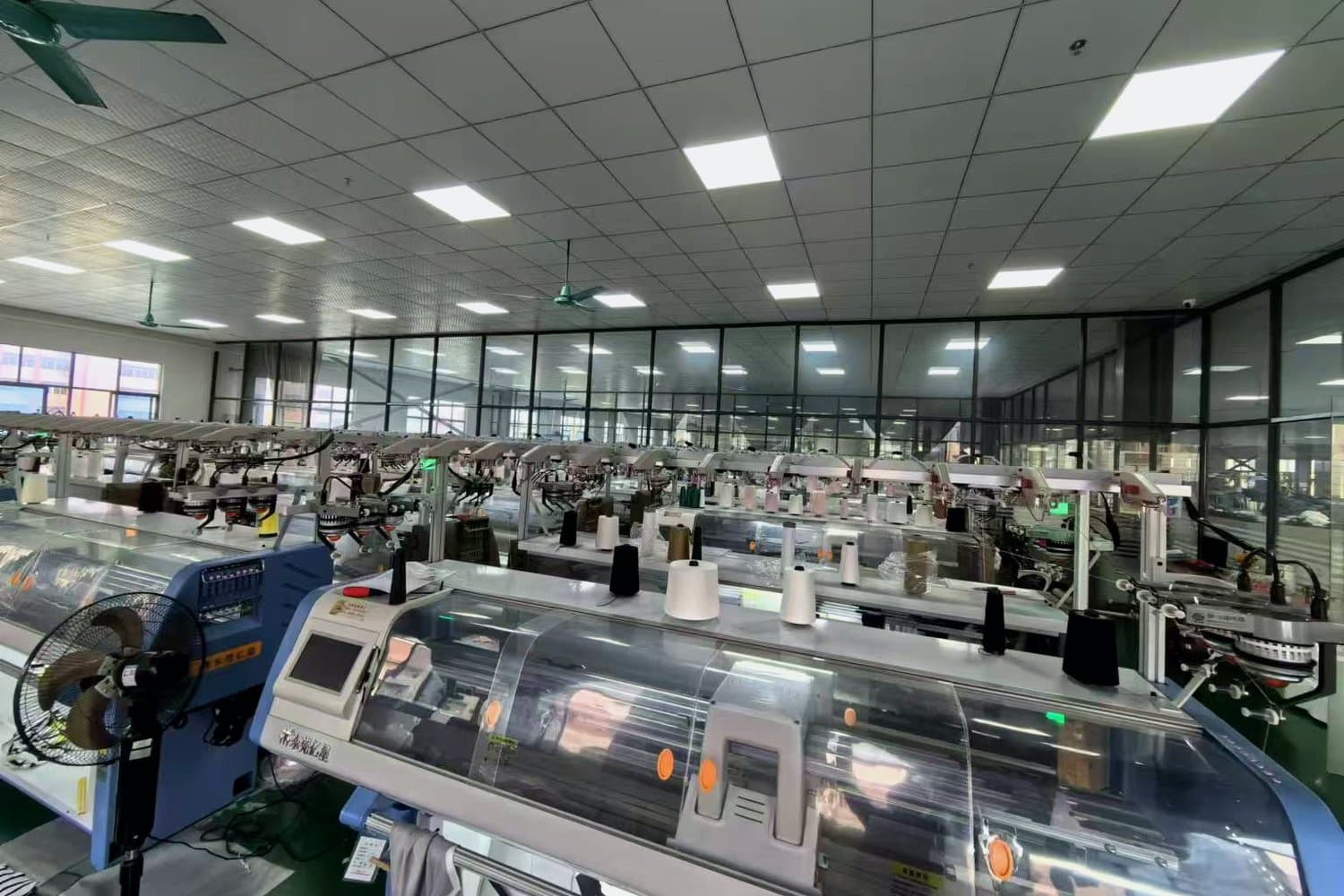
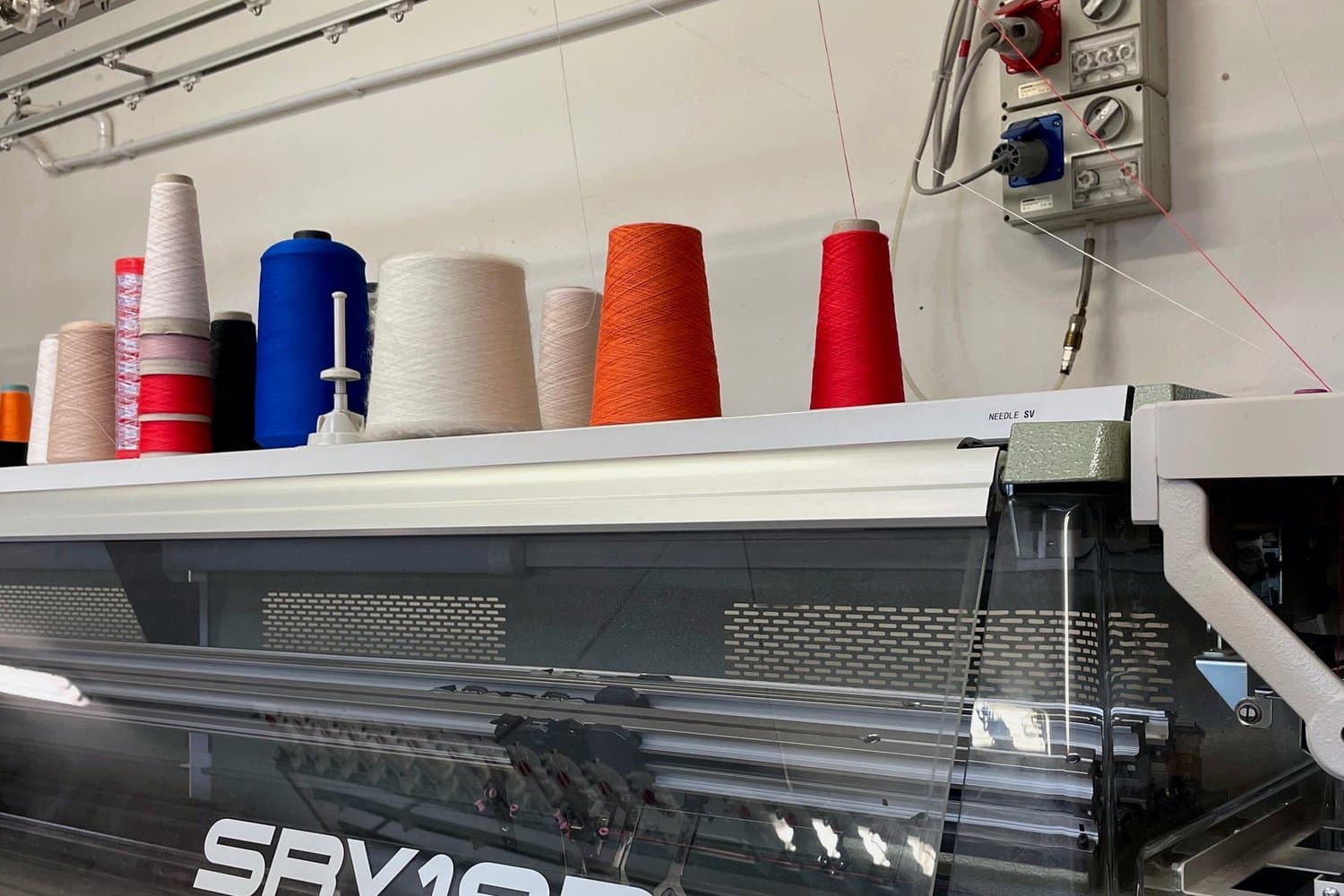
The production numbers behind a typical AW26/SS27 program at our Dongguan (Guangdong) flat-knit facility — computerized/electronic flat-knitting, the machine standard set by Stoll and Shima Seiki:
MOQ from 30–50 pcs on trial runs, 50–100 pcs/style at production scale.
Sampling 15–25 days from confirmed tech pack and yarn; bulk 30–45 days from an approved PP sample.
Capacity ~30,000–50,000 pcs/month across 3GG–18GG; >95% on-time delivery; 40%+ reorder rate; OEKO-TEX Standard 100, ISO 9001 and GRS certified.
📌 One number to plan around: chunky 3GG–5GG heritage yarn in cream and natural shades is the first thing mills allocate out — book it 4–6 weeks earlier than a 12GG basic, or expect to pay a dye-lot premium and chase leftover lots.
Trend-By-Trend Sourcing Snapshot
The table below summarises the production reality behind each direction. Lead times shown are indicative for a typical 500-1,000 piece order at our facility (sample 15-25 days from confirmed tech pack and yarn; bulk 30-45 days from approved PP sample); your own number will vary with complexity and yarn availability.
Trend
Typical Gauge
Yarn Bias
Yarn Booking Priority
Production Risk
Heritage cable / fisherman
3GG-5GG
Wool, wool-blend, natural shades
High — book 4-6 weeks early
Yarn allocation, cable consistency
Brushed / mohair texture
7GG-12GG
Mohair, mohair-blend
Medium — confirm brushing capacity
Nap evenness, shedding
Bouclé / popcorn (SS27)
7GG-12GG
Cotton, cotton-blend
Medium — texture-experienced knitter
Tension control, hand feel
Earth tones + accent red
All gauges
Standard yarn books
Low — but lock lab dips early
Dye-lot drift across reorders
Refined relaxed fit
All gauges
Standard
None (block work, not yarn)
Grading revision required
Shawl-collar cardigan
3GG-7GG
Wool-blend with body
Medium-high (chunky variants)
Collar shape, seam finishing
Knit polo (SS27)
12GG
Cotton, cotton-blend, merino
Medium — start late AW26
Placket and collar construction
What To Book Now, What To Hold
The planning takeaway for AW26 and SS27 is that booking order matters as much as trend selection. The pieces most exposed to late booking are the chunky heritage sweaters and shawl-collar cardigans, where yarn allocation and 3GG-5GG knitting capacity tighten first. Book these as soon as your fit block is confirmed.
Mid-priority booking covers brushed mohair, bouclé textures and SS27 knit polos. These need a finishing or knitting capability that not every factory carries, and reserving that capacity early protects your sample-to-bulk timeline. Finer-gauge 7GG to 12GG basics in standard yarn books — earth-tone crew necks, mock necks and refined-fit pullovers — can be booked later in the cycle without much penalty, which gives you flexibility to react if a trend piece in your range underperforms in pre-line.
For a complete view of how a season actually moves through development and production, our seasonal knitwear planning guide walks through the calendar in detail. And if you are pressure-testing your supplier mix for the new season, our vetting checklist covers the questions worth asking before you commit a trend-heavy buy to one mill.
None of the directions above are surprising in isolation. What is changing is that the production realities behind each — yarn allocation, finishing capacity, gauge availability, grading work — are tightening at the same time. Buyers who treat AW26 and SS27 as a single planning window, who book chunky and textured pieces early, and who hold flexibility on finer-gauge basics will be the ones whose capsules ship on time. The trends will reward the merchandisers who plan the production calendar around them, not the other way around.
---
Talk to our team about this
If you're planning a real project around any of the points above, we'd be glad to take a quick look. Send a short brief and we'll come back within one business day with a practical direction, MOQ + lead time estimate, and a sample plan if it makes sense.
The return of properly heavy heritage knitwear at 3GG-5GG gauge — cable, fisherman and shetland-style sweaters in real chunky weight, anchored by cream and oatmeal but extending into denim blue and dark brown. This is the trend with the longest lead-time exposure because chunky yarn in natural shades is the first category to get booked out at mills.
Not finished, but maturing. The raw oversized shape from 2022-2025 is being refined into a 'relaxed but tailored' fit with corrected shoulder line, controlled sleeve and anchored body length. Tech packs carrying the older oversized block will produce samples that look dated for AW26. Plan to re-grade your core blocks as part of the season's development cost.
Four to six weeks earlier than you would for a 12GG basic. Chunky 3GG-5GG yarn in cream, oatmeal, camel and natural shades has tight mill allocation and a long replenishment cycle. Confirming yarn early protects both your price and your delivery date — late booking on heritage programs is the most common reason chunky AW26 orders ship behind schedule.
Late in the AW26 development cycle — typically by early to mid AW26 sampling. Knit polos are fine-gauge (usually 12GG) pieces where placket construction, collar shape and yarn selection often need at least one round of revision. Starting in late AW26 leaves room for proto, fit and PP samples without compressing the SS27 bulk window.
Earth tones continue strong into AW26 — camel, oatmeal, cream, taupe, olive, dark brown and rust all carry through. The palette is extending rather than rotating out, with deeper reds (maroon, burgundy, brick) layering in as accents. For SS27 the earth-tone base softens into lighter naturals with red continuing as accent. Plan for dye-lot management on the natural shades as they are reorder-sensitive.
We focus on men's sweaters, cardigans, knit jackets, jacquard knitwear and private label knitwear. We support B2B buyers with OEM/ODM development, sampling and bulk production planning.
MOQ, lead time, cost ranges, gauge selection and QC checkpoints across typical OEM/ODM knitwear programs in NA + EU. Enter your email — we'll send you the report link in 30 seconds.
No spam. Unsubscribe with one reply. We use your email only to send you the report and follow up if you want a sourcing conversation.
Brands We've Worked With
Brand names shown are previously serviced OEM/ODM partners. Logos are decorative and do not imply current endorsement.