Find B2B knitwear products, buyer guides, market pages, factory capabilities and FAQ answers.
39 results found for "private label".
LC27-D12 | A dog knitwear development featuring a knitted-in brand motif on the back. The image uses an abstract placeholder rather than a finished customer logo. AI design reference for B2B custom development.
ProductGrey men's sweater in a textured wool / cotton blend knit, produced as OEM/ODM and private label for B2B apparel brands. MOQ 50 pcs, custom colours and branding.
ProductCustom men's knitted bottoms in cotton / cashmere blend (drawstring), produced as OEM/ODM and private label for B2B apparel brands. MOQ 50 pcs, custom colours and branding.
ProductWomen's Striped Zip-Up Knit Hoodie and Shorts Set — 80% viscose, 20% nylon. Produced as OEM/ODM and private label for B2B apparel brands. MOQ 50 pcs, custom colours and branding.
Productmen's knit polo in a striped cotton blend knit, produced as OEM/ODM and private label for B2B apparel brands. MOQ 50 pcs, custom colours and branding.
Productmen's cardigan in a textured cashmere knit, produced as OEM/ODM and private label for B2B apparel brands. MOQ 50 pcs, custom colours and branding.
Productmen's sweater in a striped wool / cotton blend knit, produced as OEM/ODM and private label for B2B apparel brands. MOQ 50 pcs, custom colours and branding.
Productmen's sweater in a striped, brushed fuzzy wool blend knit, produced as OEM/ODM and private label for B2B apparel brands. MOQ 50 pcs, custom colours and branding.
Productmen's cardigan in a ribbed cashmere knit, produced as OEM/ODM and private label for B2B apparel brands. MOQ 50 pcs, custom colours and branding.
ProductMatching Family Christmas Fair Isle Sweaters — Wool or wool-blend knit. Produced as OEM/ODM and private label for B2B apparel brands. MOQ 50 pcs, custom colours and branding. Development option LC27-X01 is available for sample review.
Few sourcing terms generate as much buyer-supplier confusion as OEM, ODM, private label and white label. They overlap, they are used interchangeably in supplier emails, and the wrong assumption can mean a brand pays for a custom development they never owned, or expects a custom design when the factory is preparing a generic catalog product. This guide separates the four models clearly: who designs, who owns the intellectual property, who picks the yarn and trims, what each implies for MOQ and lead time, how visible your brand actually is to the end consumer, and which brand stage typically uses each route. It is written from Licheng's perspective as a Dongguan knitwear manufacturer that operates OEM, ODM and private label programs every season, so emerging brand founders can decide which sourcing model fits where they are today.
ResourceA B2B guide to private label knitwear packaging, including woven labels, care labels, hangtags, polybags, size stickers, carton marks and buyer-specific packing discussion.
ResourceA practical roadmap for entrepreneurs and growing brands to launch a private-label knitwear line, from concept and partner selection to first order.
ResourceA guide to knitwear care, washing and care labeling for B2B brands, covering care by fiber, market labeling rules and reducing returns.
ResourceA B2B guide to developing men's cardigans, including full zip, button, shawl collar, yarn, gauge, trims and private label details.
ResourceIberian knitwear buyers face a compressed sourcing window: a long, warm autumn pushes AW knit launches later than in northern Europe, while a brief but intense winter peak in interior Spain and a mild Portuguese coast demand a layered product mix. At Licheng Knitwear, a Dongguan-based manufacturer founded in 2018, we work with wholesalers and private-label brands across Spain and Portugal who need a sourcing cadence built around those realities, not generic European calendars. This guide walks through how we time samples and bulk for the Iberian market, what MOQ and commercial terms suit the typical Spanish or Portuguese brand size, which yarns and gauges Iberian buyers favour, and the QC, logistics and Incoterms questions we hear most often. The goal is a practical reference you can use to plan an AW or SS knit program from Dongguan with confidence.
ResourceUK private-label brand owners planning autumn/winter knit collections in 2026 face a different commercial reality than they did pre-Brexit. Duty calculations, REACH compliance, port congestion at Felixstowe and the steady consolidation of UK independents have all reshaped how British buyers structure their knitwear programmes. This guide is written from our position as a Dongguan-based manufacturer that ships regularly into the UK market. It covers the MOQ, sample lead time, bulk lead time, yarn and gauge directions, quality control and logistics realities we see week to week when quoting and producing for UK brands. The intention is practical: by the end you should be able to walk into a quotation conversation with realistic expectations, ask the right questions on Incoterms and payment, and plan your AW26 calendar backwards with confidence.
ResourceEvery first knitwear order has two routes, and factories rarely publish the second one. From a tech pack a sample takes about 15-25 days; from a style that already exists, about 7. The minimum, the bulk lead time, the labelling and the QC route are identical either way. What changes is where the first physical garment comes from - and what you give up by not starting from a blank sheet.
ResourceIf you sell knitwear into the EU, US, or UK, sooner or later a retail buyer, a marketplace listing, or a children's-wear regulator will ask you for OEKO-TEX Standard 100 certification. The label is famous — the white hangtag with the trefoil logo and an ID number is on millions of garments — but most of the buyers asking for it cannot say exactly what it certifies, what the four product classes mean, or how to check whether a certificate is real. This guide is a clear, practical explainer written from our perspective as a Dongguan-based knitwear manufacturer. We work with yarn mills and dye houses that hold their own STeP and OEKO-TEX scope certificates on materials we routinely source, and we support buyers who structure documentation requests around their compliance teams. Here is what the standard actually does, what it does not do, and how to handle it in a real knitwear purchase order.
ResourceMost sweater quality issues are not random — they cluster around the same ten failure modes, each with a predictable point in the timeline where they can still be corrected at low cost. By the time a QC lead is reviewing a new sweater PO, the real question is not whether problems will appear, but whether the inspection plan and the sampling conversation are designed to catch them before they ship. This guide walks through the ten knitwear quality risks we see most often at Licheng — pilling, shrinkage, twisted side seams, mismatched dye lots, hangtag attachment errors, label drift, neckline stretching, linking inconsistency, mis-graded sizes, and packing damage — with what each looks like, the root cause, when in production it surfaces, the QC step that should catch it, and the specific question to ask your supplier during sampling.
UK knitwear buyers look for cardigan, textured sweater and heritage-inspired directions with private-label support. Licheng produces to OEKO-TEX Standard 100, GRS, GOTS and ISO 9001, and for UK brands also selling into the EU we are EU-ready — registered under the German Packaging Act via LUCID (DE4680505763138) with an appointed EU Authorized Representative under the GPSR. Compliance context for UK buyers (2026): knitwear from China enters the UK under the UK Global Tariff, classified in HS heading 6110 by fibre — 6110.11 for wool, 6110.12/6110.19 for fine animal hair, 6110.20 for cotton and 6110.30 for man-made fibres, so the yarn you choose changes the duty line. Fibre-content labelling follows the Textile Products (Labelling and Fibre Composition) Regulations 2012, and care symbols follow ISO 3758. If you also place goods on the EU market, two dates matter this year: the new OEKO-TEX Standard 100 limit values applied from 1 June 2026, and the REACH entry 77 restriction on formaldehyde emissions applies from 6 August 2026, though it does not add a limit for consumer knitwear: entry 77 excludes articles already covered by entry 72, under which formaldehyde in textiles, clothing and footwear stays capped at 75 mg/kg of content, in force since 1 November 2020. EU textile EPR is now binding on Member States following the Waste Framework Directive revision of 16 October 2025 — transposition is due by mid-2027 and the national schemes must be operational by April 2028.
MarketNorth America buyers often need clear product direction, stable communication and practical sampling plans for seasonal men's knitwear. Sweaters, cardigans and zip knit jackets are useful directions for casual menswear and e-commerce assortments. Compliance context for US importers (2026): knitwear is classified in the HTSUS under heading 6110 by fibre — 6110.11 wool, 6110.12/6110.19 fine animal hair, 6110.20 cotton, 6110.30 man-made — and China origin goods may additionally carry Section 301 duties, so fibre choice and origin both move landed cost. Fibre content, country of origin and RN identification follow the Textile Fiber Products Identification Act (16 CFR Part 303); wool content additionally follows the Wool Products Labeling Act. Children's styles fall under the CPSIA. For cotton programmes, CBP enforcement under the Uyghur Forced Labor Prevention Act expects importers to be able to map the chain from fibre through ginning, spinning, knitting, dyeing and finishing to garment assembly and export, with commercial documents for each transaction — the rebuttal standard is clear and convincing evidence, so this documentation is assembled before shipment, not after a detention.
MarketSourcing knitwear into the Nordics is not one route but two. Norway is an EEA member but sits outside the EU customs union and outside the EU VAT area, while Sweden, Denmark and Finland are EU member states. For a buyer that difference is operational, not academic: goods entering Norway must be declared separately to Tolletaten with HS code, customs value, origin and importer details, and import VAT of 25% applies even where duty does not. Goods moving from an EEA country into Norway are free of import duty; goods shipped directly from China are dutiable at the applicable clothing rate. A Stockholm buyer and an Oslo buyer receiving the same carton therefore face different paperwork, different landed cost and different timing. For the three EU members, the framework is the one that governs any EU knitwear import: TARIC classification under HS heading 6110 by fibre (6110.11 wool, 6110.12/6110.19 fine animal hair, 6110.20 cotton, 6110.30 man-made), fibre-content labelling under Regulation (EU) No 1007/2011, and care symbols to ISO 3758. The three EU members are not interchangeable on landed cost. Import VAT is 25% in Denmark and Sweden but 25.5% in Finland, raised on 1 September 2024 and now the second-highest standard rate in the EU. Declarations go to Toldstyrelsen in Denmark and Tulli in Finland; both sit inside the EU customs union, so unlike the Norwegian route no separate customs clearance arises once goods are in free circulation. On a 50-piece first order the difference is small in absolute terms, but it carries through every repeat. The region also has its own environmental gatekeeper. The Nordic Swan Ecolabel - Svanen in Sweden, Svanemerket in Norway, Svanemærket in Denmark, Joutsenmerkki in Finland - covers clothing including sweaters, and its material thresholds are stricter than most buyers expect: cotton must be 100% organic or recycled, synthetic fibre must be recycled or bio-based, and carcinogenic, mutagenic and reprotoxic substances, halogenated flame retardants and antibacterial nanoparticle additives are prohibited outright. Brands planning a Swan application should fix yarn sourcing at development stage, not at bulk, because the certificate trail has to follow the fibre. Looking forward, the Ecodesign for Sustainable Products Regulation is expected to adopt textile requirements in 2026 for application from around 2027, and the textile Digital Product Passport follows from the same framework. Programmes specified against Swan-level material rules today are the ones least disrupted by that transition. The pattern tradition the region is known for - the two-colour yoke and body patterning of a Norwegian lusekofte or a Setesdal jacket, the snowflake and eight-petal rose motifs, the Icelandic lopapeysa yoke - is Fair Isle and two-colour jacquard work, and it is the same technique we already run on 15 published Fair Isle styles, five of which carry a full zip front. Merino is on 32 published styles. Colour count per course is the binding constraint rather than pattern complexity: two to four colours per row keeps the reverse clean, and a lining or birdseye backing is the answer once floats get long. Send the pattern you have in mind, in any form - a photograph of a garment is enough to start - and we will come back with what is knittable, what needs redrawing, and which route gives the handfeel you want. On the product side the same is true of the two lines Nordic buyers ask for most: 72 published cardigans and 37 published knit jackets sit on the shelf as references you can cost against, and 85 styles carry a zip front.
MarketCanada-focused knitwear manufacturing programs usually need warm yarn direction, stable sizing and practical winter layering. This page is positioned for buyers looking for a manufacturing partner for sweaters, cardigans and knit jackets rather than only a general supplier list.
Our private label knitwear support capability helps buyers building own-brand sweater, cardigan and knit jacket programs with labels, packaging and repeatable sourcing details. The work focuses on practical B2B development decisions rather than retail-style visuals, connecting product direction, material choices, sample review, production feasibility and export-ready quality control. Buyers can use this page to understand what information should be prepared, which technical decisions affect cost and lead time, and how Licheng Knitwear turns an initial sourcing request into a sample-ready or production-ready plan.
CapabilityChoosing a knitwear factory is four decisions, not one: which construction you want, which yarn supports it, how many pieces you can commit to per colour, and how long you can wait. This page answers those four with figures we publish rather than adjectives. Licheng Knitwear runs OEM, ODM and private label knitwear from Dongguan, China. Minimum order is 50 pieces per colour, with sizes mixable inside the 50. Samples run 15 to 25 days from a confirmed tech pack and yarn; bulk runs 30 to 45 days. If those three numbers do not fit your project, the rest of this page will not change that, and it is better that you know now.
CapabilityHand-finished colour blocks, jacquard panels, embroidery, appliqué, woven labels and hangtag support for branded knitwear. Our branding capability helps buyers adding subtle brand details, woven labels, hangtags and decorative finishing — for private-label and own-brand programs where the buyer cares about the small details that telegraph quality.
CapabilityA blank is a finished garment with no logo, no graphic and no jacquard on it — a body you put your own label into. Of the 410 styles published on this site, 278 are undecorated and can be produced as blanks, including 108 zip-through and cardigan bodies, across 14 product categories and a 3GG–18GG in-house gauge range. This page is for buyers who already know what they want to make: a designer working from a sketch, a brand replacing a discontinued body, a club or label producing its own run. What you need from a factory in that position is not styling — it is a clean garment, in your colour, with your label in it, at a quantity that makes sense. One thing worth saying plainly, because it is the most common misreading of our catalogue: the colour you see in a product photo is the sample colourway, not the range. Every published style is made to order, and colour is a specification you give us, not a shelf we pick from. If a body works for you in grey, you can have it in black.
CapabilityKnitwear for a club, a school, a team or a company is a different order from a fashion programme, and the difference is the date. A homecoming, a season opener, a centenary, an annual dinner - the day is fixed long before anyone chooses a garment, and the only question that really decides the order is whether the pieces arrive before it. Our club and school knitwear references include cardigans and sweater styles with options for knitted-in graphics and applied decoration. Share the garment reference, artwork placement and quantity by design and colour so we can assess the development route. Final construction and decoration are approved on the project sample. MOQ is 50 pieces per colour. Tell us the date you need them in hand and we plan backwards from it rather than forwards from the order.
Yes. We offer full OEM/ODM private-label production — custom colours, sizing (XS–3XL), yarn and gauge, plus woven main labels, care labels, hangtags and custom packaging for your own brand.
FAQYes. We run full OEM/ODM private-label production - custom colours, sizing (XS–3XL), yarn and gauge, plus woven main labels, care labels, hangtags and custom packaging under your own brand. Dongguan Licheng Garment holds OEKO-TEX STANDARD 100, ISO 9001, GRS and GOTS.
FAQYes. We run full OEM/ODM private-label production - custom colours, sizing (XS–3XL), yarn and gauge, plus woven main labels, care labels, hangtags and custom packaging under your own brand. Dongguan Licheng Garment holds OEKO-TEX STANDARD 100, ISO 9001, GRS and GOTS.
FAQYes. We run full OEM/ODM private-label production - custom colours, sizing (XS–3XL), yarn and gauge, plus woven main labels, care labels, hangtags and custom packaging under your own brand. Dongguan Licheng Garment holds OEKO-TEX STANDARD 100, ISO 9001, GRS and GOTS.
FAQYes. We run full OEM/ODM private-label production - custom colours, sizing (One size (custom sizing on request)), yarn and gauge, plus woven main labels, care labels, hangtags and custom packaging under your own brand. Dongguan Licheng Garment holds OEKO-TEX STANDARD 100, ISO 9001, GRS and GOTS.
FAQYes. We run full OEM/ODM private-label production - custom colours, sizing (Adult S/M/L), yarn and gauge, plus woven main labels, care labels, hangtags and custom packaging under your own brand. Dongguan Licheng Garment holds OEKO-TEX STANDARD 100, ISO 9001, GRS and GOTS.
FAQYes. We run full OEM/ODM private-label production - custom colours, sizing (Adult S/M/L), yarn and gauge, plus woven main labels, care labels, hangtags and custom packaging under your own brand. Dongguan Licheng Garment holds OEKO-TEX STANDARD 100, ISO 9001, GRS and GOTS.
FAQYes. We run full OEM/ODM private-label production - custom colours, sizing (Standard 120×150 cm (custom on request)), yarn and gauge, plus woven main labels, care labels, hangtags and custom packaging under your own brand. Dongguan Licheng Garment holds OEKO-TEX STANDARD 100, ISO 9001, GRS and GOTS.
FAQYes. We run full OEM/ODM private-label production - custom colours, sizing (0–24m), yarn and gauge, plus woven main labels, care labels, hangtags and custom packaging under your own brand. Dongguan Licheng Garment holds OEKO-TEX STANDARD 100, ISO 9001, GRS and GOTS.
FAQYes. We run full OEM/ODM private-label production - custom colours, sizing (0–24m), yarn and gauge, plus woven main labels, care labels, hangtags and custom packaging under your own brand. Dongguan Licheng Garment holds OEKO-TEX STANDARD 100, ISO 9001, GRS and GOTS.
Share design ideas, tech packs, product photos, target prices, material preferences or quantity plans. We will review the details and suggest the next development path.
Send Inquiry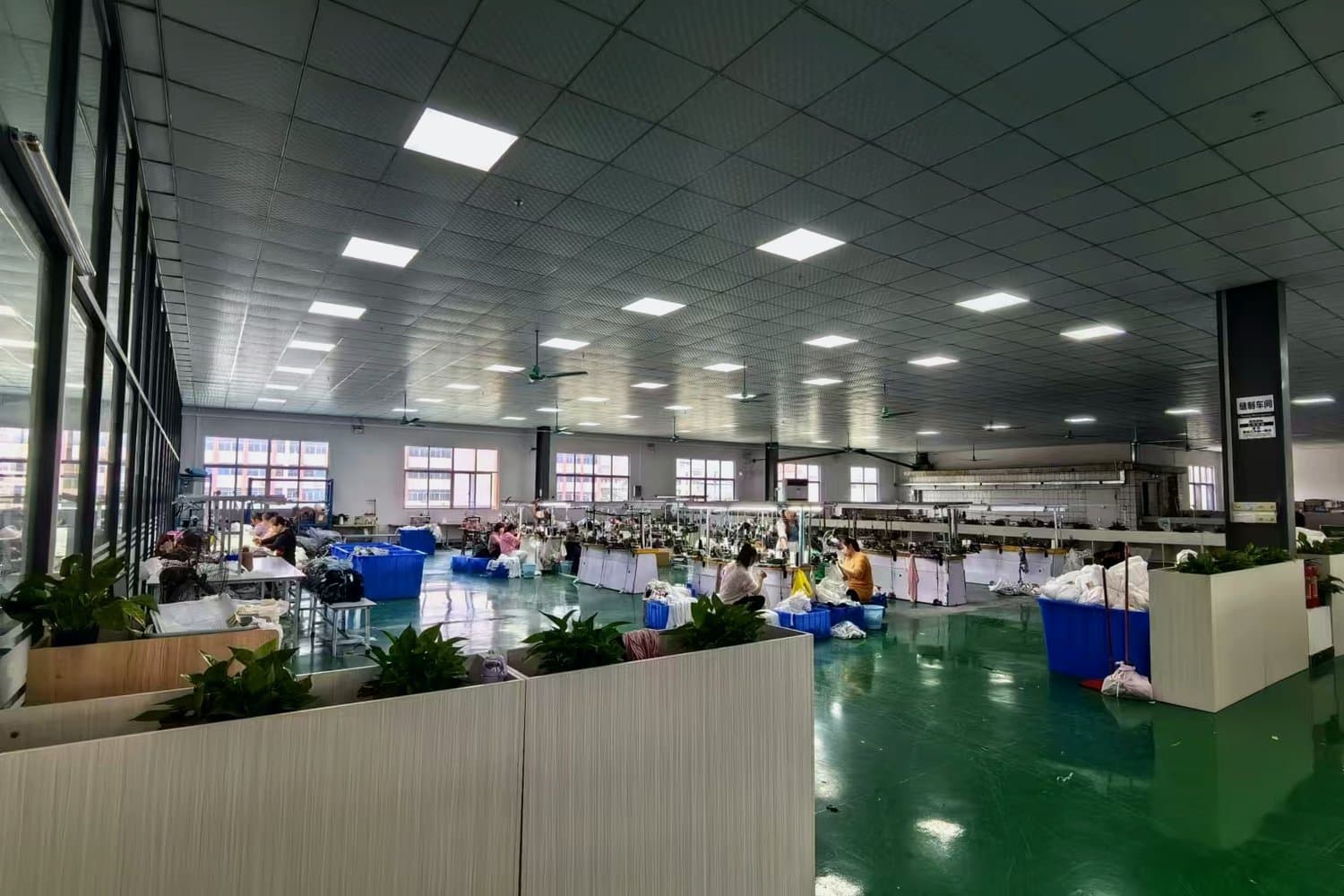
MOQ, lead time, cost ranges, gauge selection and QC checkpoints across typical OEM/ODM knitwear programs in NA + EU. Enter your email — we'll send you the report link in 30 seconds.
No spam. Unsubscribe with one reply. We use your email only to send you the report and follow up if you want a sourcing conversation.
Brand names shown are previously serviced OEM/ODM partners. Logos are decorative and do not imply current endorsement.