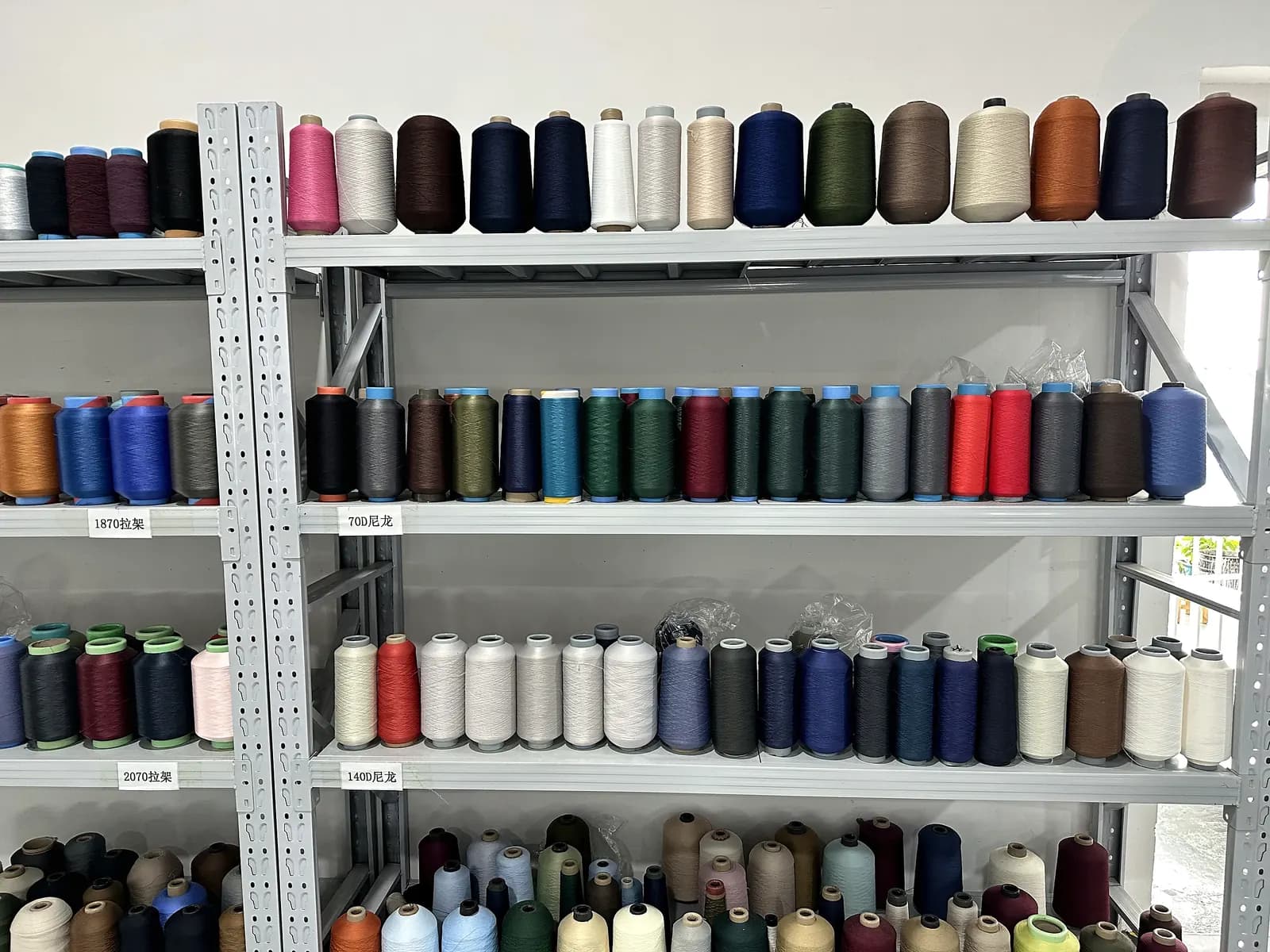
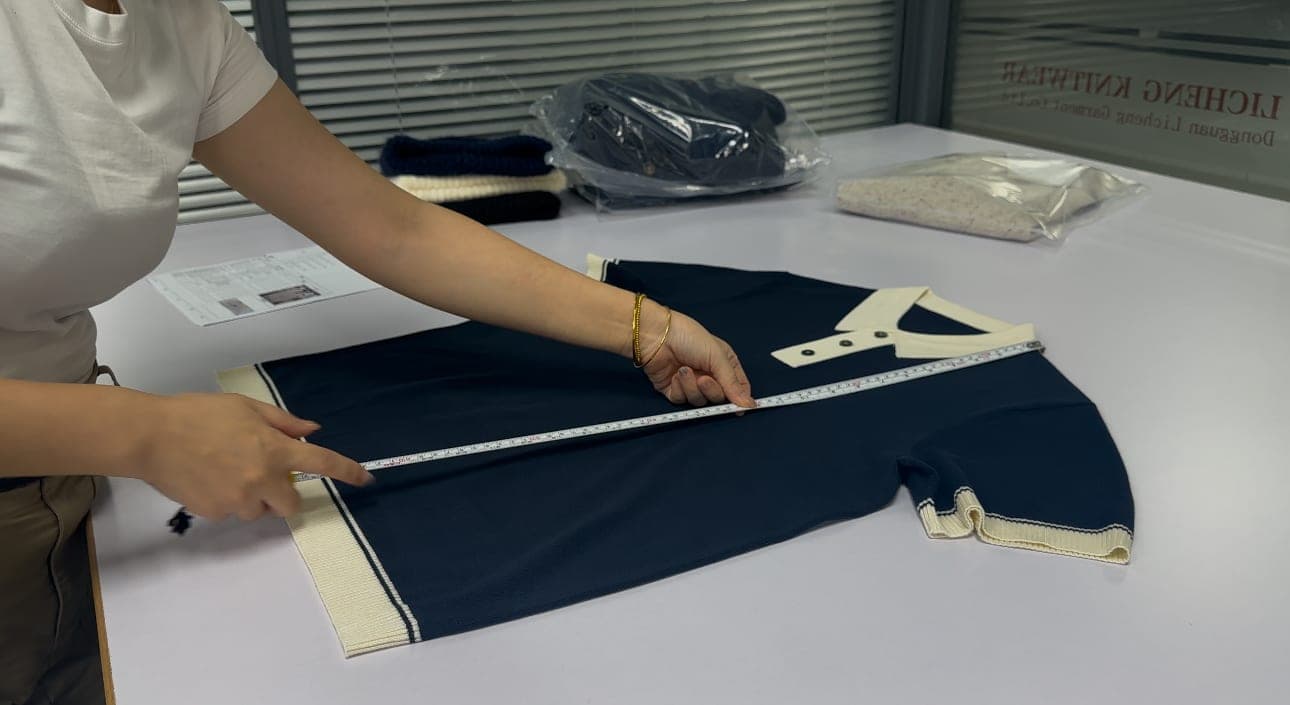
If you sell knitwear into Europe — and increasingly into the US, UK, and Canada — there is a moment in almost every B2B conversation where a buyer, a retail partner, or a marketplace says: *we need OEKO-TEX*. The request usually arrives with no detail. No product class. No mention of which component must be certified. No clarity on whether they want the yarn, the finished garment, or the dye house covered.
This guide is for that buyer, and for the sourcing manager who has to respond. We are a Dongguan-based knitwear manufacturer founded in 2018, producing OEM and ODM sweaters, cardigans, knit polos, vests and knit jackets from 3GG through 18GG. We work with yarn mills and dye houses that hold their own scope certificates on materials we source, and we support documentation requests on a per-project basis. We are not the issuing body and we are not selling you a certificate — we are explaining the one you have been asked for, in plain B2B language, so you can quote, order, and verify with confidence.
What does OEKO-TEX Standard 100 actually certify?
That the tested article has been checked for harmful substances against a defined limit list. It is a product-level chemical safety certification. It is not a statement about organic content, about environmental impact, or about labour conditions - those are different schemes answering different questions.
What are the four OEKO-TEX product classes?
They correspond to how much contact the article has with skin, with the strictest class applying to articles for babies and small children and progressively less strict classes for articles with direct skin contact, without direct skin contact, and for decoration material. A certificate is only meaningful together with the class it was issued under.
How do I verify an OEKO-TEX certificate before trusting it?
Check the certificate number against the issuing institute's public register rather than accepting a PDF. Confirm the validity dates, the class, and that the scope covers the article you are buying. A PDF alone proves very little; the register lookup takes a minute.
What does OEKO-TEX Standard 100 not cover?
Organic fibre content, carbon footprint, water use, recycled content and social compliance. Buyers sometimes present it as a general sustainability credential; it is a chemical safety one. If your claim is about organic content you need GOTS or OCS, and if it is about recycled content you need GRS or RCS.
Does requesting OEKO-TEX certification change cost or lead time?
It can, depending on whether the yarn and the trims already sit inside a certified chain. Raise it at quotation stage: sourcing certified yarn after a colour is approved is where the calendar and the cost usually move.
💬 Sourcing this for an upcoming project? Request a free quote → · MOQ 30 pcs · Sample in 15–25 days · WhatsApp us
OEKO-TEX Standard 100 is a product-level certification. That phrase matters. It does not certify a factory, a brand, a country of origin, or a company. It certifies a specific textile article — a yarn, a fabric, a trim, an accessory, or a finished garment — against a defined list of substance limits that are tested at an accredited laboratory.
The certifying body is the International OEKO-TEX Association, a consortium of independent testing institutes headquartered in Zurich. When a product is certified, the test lab issues a numbered certificate that names the certified item, the product class, the issuing institute, the holder, and an expiry date (one year from issue). The product can then carry the familiar "Confidence in Textiles" hangtag with that certificate number printed on it.
The testing scope is broad. It covers regulated substances such as azo dyes that release carcinogenic arylamines, formaldehyde, pentachlorophenol, certain phthalates, heavy metals (lead, cadmium, mercury, arsenic, chromium VI), pesticide residues, chlorinated phenols, organotin compounds, certain PFAS, allergenic disperse dyes, and free pH and color-fastness parameters relevant to skin contact. The substance list is updated annually and is publicly published.
In practical terms for a knitwear buyer: a sweater certified to Standard 100 has been tested and found to meet substance limits across the yarn, the dye, the sewing thread, the labels, the buttons, the zips and any prints. If any component on the finished garment fails, the whole article fails. That is why the standard is sometimes described as an article-level certificate rather than a fiber-level one.
OEKO-TEX divides certified products into four classes based on how much skin contact the article has. The substance limits get stricter as the article gets closer to the skin and the wearer gets younger.
|
| Class I | Babies and toddlers up to 3 years | Strictest (e.g. lowest formaldehyde, no detectable arylamines) | Baby cardigans, infant booties, children's sweaters under 36 months |
| Class II | Articles with direct, prolonged skin contact | Strict | Crew necks, polos, mock necks, base layers, fine-gauge sweaters worn against skin |
| Class III | Articles with no or limited direct skin contact | Moderate | Outer cardigans, knit jackets, vests worn over shirts, shacket hybrids |
| Class IV | Decoration, furnishing, upholstery | Least strict | Throws, decorative knits, home textile blankets |
The most common mistake we see in incoming buyer briefs is a request for "OEKO-TEX certified knitwear" with no class specified. For a typical men's pullover that will be worn directly against skin, Class II is the correct ask. For an outer knit jacket that will sit over a shirt, Class III is enough. For a children's piece, Class I is mandatory in many EU retail tenders. If you do not specify the class, you may pay for over-certification, or worse, accept a Class III certificate on a product that should have been Class II and learn the difference at customs.
A legitimate Standard 100 certificate is a one-page document on official letterhead from one of the named OEKO-TEX testing institutes (TESTEX, Hohenstein, Centexbel, Centro Tessile Cotoniero, and others). Every certificate has six elements that you can check against the public registry:
1. Certificate number — typically formatted with the institute code (e.g. 21.HCN.12345, 25.0.34567) and the year.
2. Tested in accordance with OEKO-TEX Standard 100 — explicit reference, with the year of the current edition.
3. Certificate holder — the company name and address. This is the entity that paid for and owns the certification. It may be a yarn mill, a dye house, a finishing plant, a garment manufacturer, or a brand.
4. Product class — Class I, II, III or IV.
5. Article description — the specific product or product range covered (e.g. "Knitted fabrics, made of 100% cotton, dyed and printed" or "Sewing threads made of 100% polyester").
6. Validity — issue date and expiry date. Certificates are valid for one year and must be renewed.
The certificate may also list the materials, processing stages, and any auxiliaries covered. The more specific the article description, the more useful the certificate is to you as a buyer.
Forged OEKO-TEX certificates are common. A scanned PDF in an email proves nothing on its own. The verification process is straightforward and free.
Go to oeko-tex.com, find the "Label Check" or "Certificate Validity Check" tool, and enter the certificate number and the holder name. The system returns the current status — valid, expired, or not found — along with the article description on file. If the description on the live record does not match the document the supplier sent you, the certificate is either out of date, has been issued for a different article, or has been altered.
Three practical verification steps we recommend to buyers:
- Check the holder name matches the actual supplier of the certified component. A yarn-mill certificate held by Mill A is not transferable to Mill B, even if both mills sell the same yarn count.
- Check the product class matches your intended end use. A Class III certificate does not cover a Class II garment.
- Check the article description covers the form you are buying. A certificate for "dyed knitted fabric" covers fabric. It does not automatically extend to a finished sewn garment unless the garment maker also holds a Standard 100 certificate covering finished apparel.
This last point trips up many buyers. If your yarn mill is certified and your knitter is not, your finished sweater is not Standard 100 certified — it contains a certified yarn, which is a different and weaker claim.
This is the section we wish more buyers read before quoting. Standard 100 is a chemical-safety standard. It is not a sustainability standard, a social-compliance standard, or a labor-rights standard.
It does not certify:
- Working conditions or labor practices. That is the scope of audits like BSCI, SEDEX/SMETA, SA8000, or WRAP.
- Environmental impact of manufacturing. Water use, energy, wastewater treatment, and chemical management at the facility level are covered by OEKO-TEX's separate STeP certification (Sustainable Textile and Leather Production), not Standard 100.
- Organic or recycled content claims. Those need GOTS, OCS, GRS, or RCS — separate transaction-certificate systems with chain-of-custody requirements.
- Animal welfare. Responsible Wool Standard (RWS) and Responsible Down Standard (RDS) cover those.
- The presence of fibers you specified. Standard 100 does not verify that your sweater is actually 70% wool 30% cotton — fiber content is a separate composition test and a labeling-law obligation.
If a buyer or retail partner has asked you for a broader compliance package, Standard 100 alone will probably not be enough. We see EU brand requests that bundle OEKO-TEX Standard 100 (substance safety) with an audited social standard (BSCI or SEDEX) and, for products marketed as sustainable, a content claim (GRS or GOTS). Each of these is a separate document with its own scope and verification path.
When a buyer briefs an order with an OEKO-TEX requirement, our standard response is to clarify three things before we quote:
First, the class. Class I, II, or III. This determines yarn sourcing, dye-house selection, and trim sourcing. Class I projects narrow the supplier pool considerably and add cost.
Second, the certification level. Is the buyer asking that the finished garment be certified — meaning we need to certify the article ourselves or source from a finished-goods holder — or are they asking that all material components be sourced from certified suppliers, with mill certificates forwarded to the brand? These are very different commercial paths.
Third, what documentation the buyer will accept. Many EU compliance teams accept a documentation package — mill certificates for the yarn, dye-house certificate for the color application, trim certificates for sewing thread, labels, buttons and zips — without requiring a single finished-garment certificate. This is often the most practical path for a small-MOQ private-label order.
We forward supplier certificates as part of the production file when buyers structure POs around them. We do not issue OEKO-TEX certificates ourselves, and we are explicit about that distinction. Certification fraud — claiming you hold a certificate you do not — is a fast way to lose a buyer relationship and, in the EU, to attract regulatory attention.
There is no published surcharge for OEKO-TEX compliance, because the cost depends entirely on whether the materials you wanted to use already come from certified sources or whether they need to be substituted.
A few practical patterns:
- Mainstream cotton, wool, and acrylic yarns from established mills are often already Standard 100 certified at Class I or II. Sourcing these adds little to no yarn premium. Confirm the mill certificate is current before you quote.
- Specialty yarns — boucle, novelty blends, unusual recycled blends, small-mill cashmere — are less likely to be certified. Either substitute to a certified alternative or budget time for a one-off article certification at a test lab (figure 4–8 weeks and several hundred USD per test, paid by whoever holds the certificate).
- Trims matter. Sewing thread, woven labels, care labels, buttons, zips, hangtag attachments and even polybags can be tested under Standard 100. The cheapest unbranded trims are often not certified. Specify certified trim suppliers in your tech pack.
- Dye recipes. Some pigment and dye combinations require substitution. Black and very deep navy with high color-fastness requirements occasionally drive recipe changes. Allow a lab-dip cycle for verification.
For a typical bulk order at 30 pieces per color MOQ on our catalog, with materials sourced from already-certified mills, Standard 100 compliance does not extend our 30–45 day bulk lead time. Where new yarn qualification is required, add 2–4 weeks for sampling and verification at the front of the schedule.
The cleanest way to handle OEKO-TEX in a B2B knitwear order is to make it specific in the tech pack and the purchase order. Vague requests produce vague compliance.
In the tech pack, name the class, the components in scope, and the documentation you require at shipment. "All yarn components to be sourced from OEKO-TEX Standard 100 Class II certified mills; sewing thread and labels to be Standard 100 Class II; certificates to be supplied as a single PDF package with the PI and pre-shipment inspection report" is the kind of clarity we can quote, source against, and verify on our end.
In the PO, restate the requirement and tie payment terms to documentation delivery. We have buyers who hold final balance against receipt of the compliance package — that is a reasonable structure when the documents are commercially material to the buyer.
OEKO-TEX Standard 100 is not the only compliance standard EU buyers will ask about, and it is not the broadest one. But it is the most commonly requested and the most commonly misunderstood. If you know what it certifies, what it does not, and how to verify it, you will spend a lot less time arguing with retail compliance teams and a lot more time shipping product.
---
If you're planning a real project around any of the points above, we'd be glad to take a quick look. Send a short brief and we'll come back within one business day with a practical direction, MOQ + lead time estimate, and a sample plan if it makes sense.
→ Request a free quote · Download the men's knitwear catalog · WhatsApp us · info@lcgarment.cn
Browse the full men's sweaters range →