Knitwear Care, Washing and Labeling Guide
Updated 8/18/202612 min readBy Simon Liu · Licheng Knitwear
A guide to knitwear care, washing and care labeling for B2B brands, covering care by fiber, market labeling rules and reducing returns.
A guide to knitwear care, washing and care labeling for B2B brands, covering care by fiber, market labeling rules and reducing returns.
Our team is ready to support your brand from concept to delivery.
Discuss Your ProjectHow a sweater is cared for determines how long it looks good, and care labeling is both a legal requirement and a driver of customer satisfaction. For brands, getting care and labeling right reduces returns and protects your reputation. This guide covers knitwear care, washing and labeling for B2B buyers.
A sweater's life is decided after it leaves the store. Clear care guidance is the difference between a loyal customer and a shrunken-sweater complaint.
💬 Sourcing this for an upcoming project? Request a free quote → · MOQ 30 pcs · Sample in 15–25 days · WhatsApp us
Care labels are legally required in most markets and must accurately state fiber content and care instructions. Beyond compliance, clear care guidance prevents the customer mistakes, hot washing, tumble drying, that cause shrinkage, felting and pilling, the top sources of knitwear complaints and returns.
| Fiber | Typical care | Main risk |
|---|---|---|
| Wool / merino | Hand wash or wool cycle, flat dry | Shrinkage, felting |
| Superwash wool | Machine washable, gentle | Less risk |
| Cotton | Machine wash cool | Stretching |
| Cashmere | Hand wash, flat dry | Shrinkage, pilling |
| Acrylic / blends | Machine wash, easy-care | Pilling (low quality) |
The biggest care divide is between standard wool (needs gentle care to avoid felting) and superwash or blended wool (machine-washable). If your customer expects machine-washability, specify a treated or blended yarn, see our yarn guide.
Care and content labeling rules differ by market:
Get this right per market, see our North America vs Europe sourcing guide, and confirm your factory provides compliant labels.
Care labeling is also a branding opportunity. A branded care label, a hangtag with friendly care tips, or a note on sustainable washing (cooler washes, less frequent) all reinforce a considered brand. This pairs naturally with private-label packaging.
Most markets that use symbols follow the same five-icon system (wash tub, triangle, square, iron, circle). Specifying the right combination at the tech-pack stage avoids label reprints and customs holds later. Use the table below as a starting point and always confirm the exact wording against the production yarn:
| Symbol group | Knitwear default | When to upgrade or restrict |
|---|---|---|
| Wash tub | 30°C gentle / hand wash | Superwash wool or cotton-acrylic blends can move to 40°C machine |
| Bleach (triangle) | Do not bleach | Keep restricted for all dyed and natural fibers |
| Dry (square) | Flat dry / do not tumble | Cotton and acrylic blends may allow low tumble |
| Iron | Cool iron, low dots | Cashmere and merino: cool only, or "do not iron" |
| Dry clean (circle) | "P" or "do not dry clean" | Structured pieces and delicate blends often need "P" |
A reliable rule: label to the most delicate fiber in a blend. A merino-acrylic sweater is labeled like merino, not acrylic, because the customer cannot wash only one component.
Suppose a brand orders 500 units of a 12GG merino crewneck for both the US and German markets. The labeling spec should read:
1. Fiber content in both English and the destination language, e.g. "100% Merino Wool / 100% Merinowolle" — required under FTC and EU rules. 2. Country of origin: "Made in China" on the US run; EU run relies on care symbols plus composition. 3. Care method: hand wash 30°C, do not bleach, flat dry, cool iron, do not tumble — matching the worked symbol logic above. 4. Pre-bulk validation: wash-test 2–3 samples during the 15–25 day sampling window and confirm shrinkage stays within tolerance before the 30–45 day bulk run begins.
This sequence catches a mislabeled care method while it is still a sample, not a 500-piece liability. For recycled-content programs, GRS-certified yarns carry their own content-claim wording that must appear accurately on the label.
Can you machine-wash a merino or cashmere sweater? Standard merino and cashmere should be hand washed or run on a wool cycle and dried flat to avoid felting and shrinkage. If machine-washability is a selling point, specify a superwash-treated or blended yarn at the tech-pack stage instead.
Who is legally responsible for the care label content? The brand owner of record is responsible for accuracy in their market, but Licheng Knitwear supplies compliant FTC and EU labels and validates fiber content so the stated information matches the actual yarn used.
How do you confirm a care instruction is realistic before bulk? We wash-test production-yarn samples for shrinkage and colorfastness during the 15–25 day sampling window, then lock the care wording before the 30–45 day bulk run, so the label reflects how the garment actually behaves.
Licheng Knitwear provides compliant care labeling for North America and Europe, and tests shrinkage and colorfastness before bulk. Request a quote or browse our products.
---
If you're planning a real project around any of the points above, we'd be glad to take a quick look. Send a short brief and we'll come back within one business day with a practical direction, MOQ + lead time estimate, and a sample plan if it makes sense.
→ Request a free quote · Download the men's knitwear catalog · WhatsApp us · info@lcgarment.cn
Fibre composition and care symbols are required, and many markets need country of origin. The EU also requires specific fibre-content labelling. We apply compliant care labels to your spec.
Usually hand-wash or gentle cold machine wash and dry flat to avoid stretching and shrinkage. We set the care instructions based on the yarn and any treatments.
Yes - washes and treatments are tested on the approved sample for shrinkage, hand and colourfastness before bulk production.
We focus on men's sweaters, cardigans, knit jackets, jacquard knitwear and private label knitwear. We support B2B buyers with OEM/ODM development, sampling and bulk production planning.
Ready sample styles and selected custom programs can support lower-risk trials before larger seasonal orders.
Yes. Brands, including new labels preparing a first collection, can pay for a sample and see it before placing a production order. Two routes: a ready sample of a published style at USD 60 per piece in about 7 days, or a development sample from your tech pack at USD 150 per style, covering yarn sourcing, knit programming, one prototype and one revision round, in 15-25 days. Cashmere and mohair styles are quoted individually and shipping is charged at cost. Production starts only after you approve the physical sample, at our minimum of 30 pieces per colour with sizes mixed inside the 30. A sample does not commit you to a production run; we do not make garments for personal use.

Get a free catalog or submit an RFQ today. Our team will respond within 24 hours.
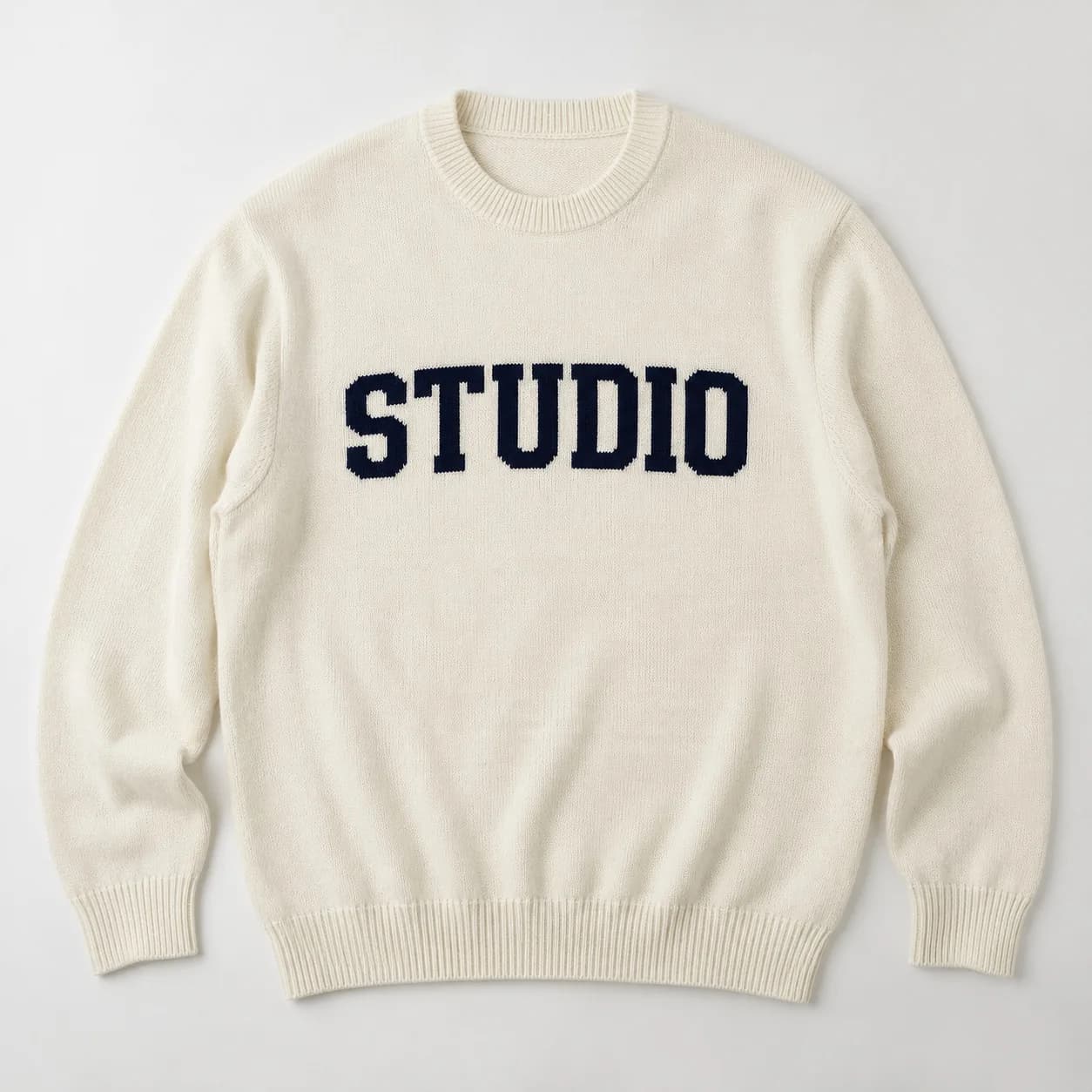
Men's Sweaters
MOQ, lead time, cost ranges, gauge selection and QC checkpoints across typical OEM/ODM knitwear programs in NA + EU. Enter your email — we'll send you the report link in 30 seconds.
No spam. Unsubscribe with one reply. We use your email only to send you the report and follow up if you want a sourcing conversation.









Brand names shown are previously serviced OEM/ODM partners. Logos are decorative and do not imply current endorsement.