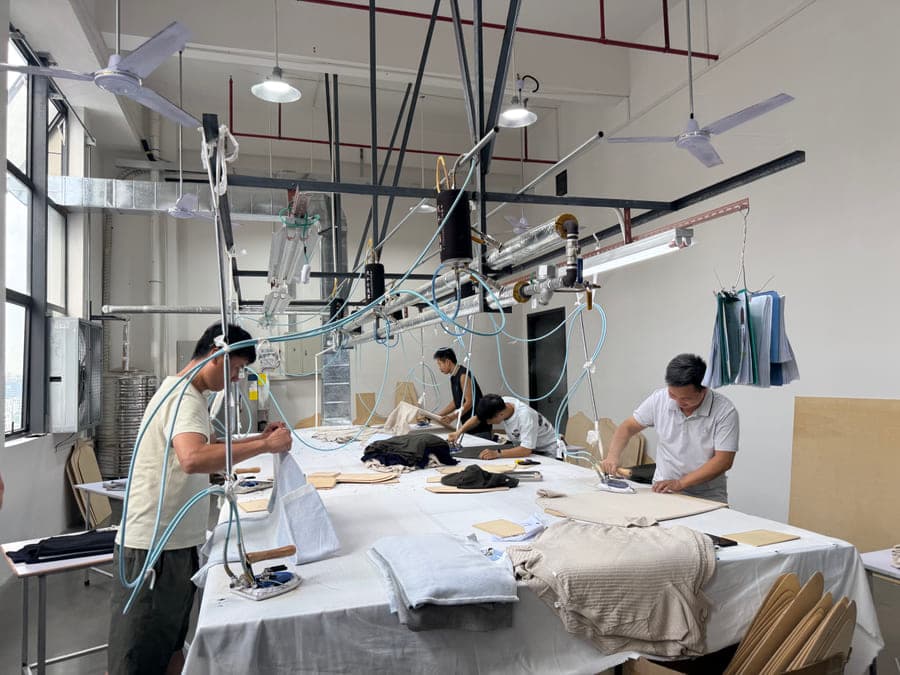
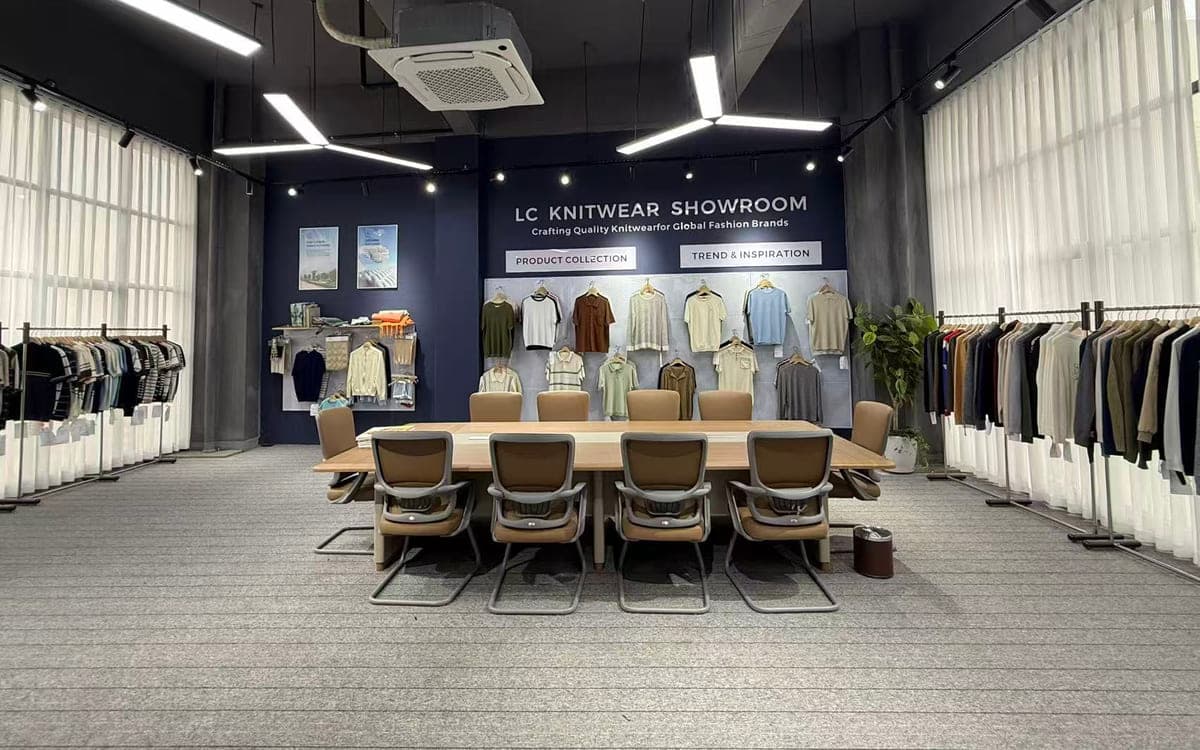
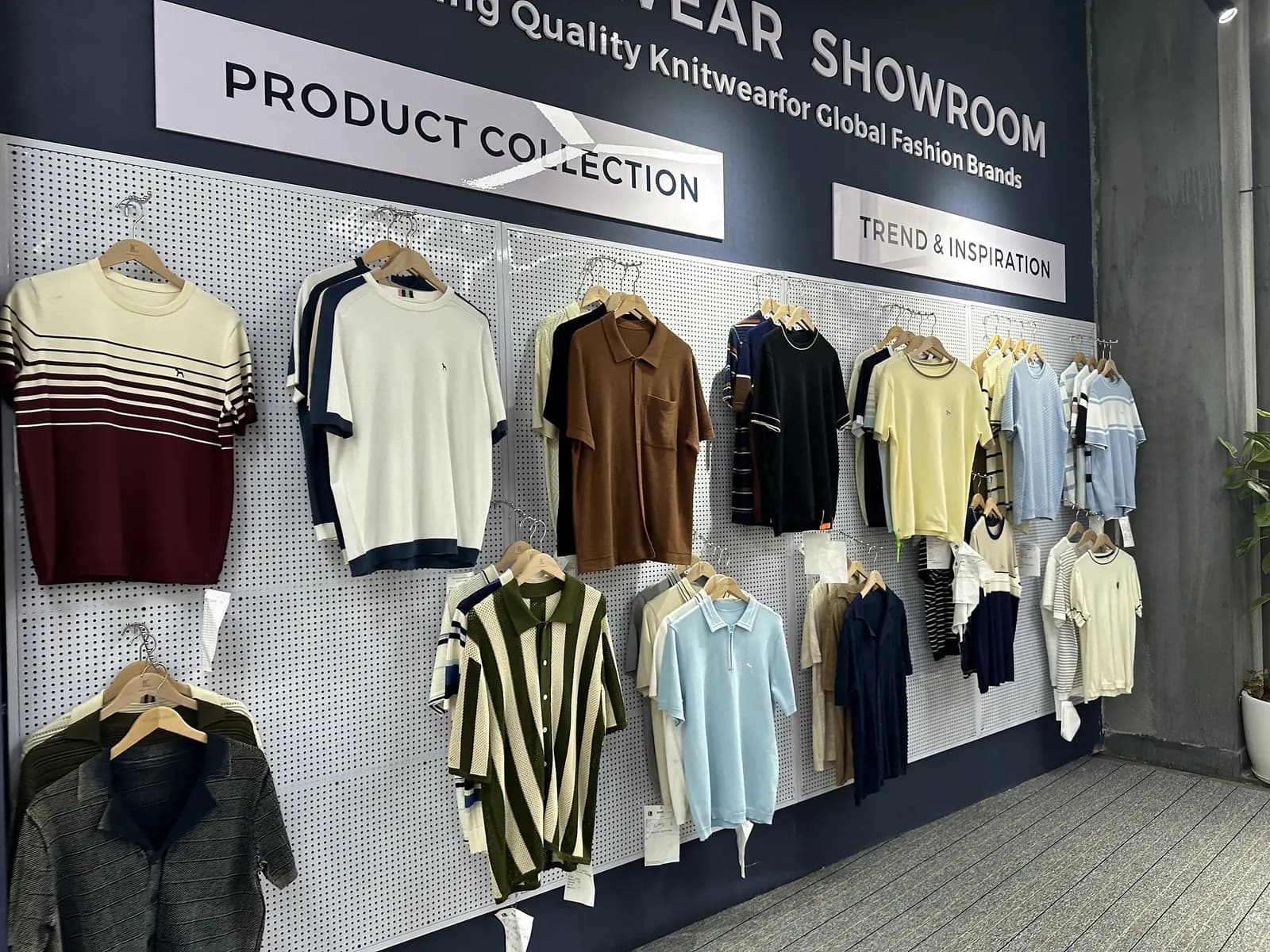
Launching a private-label knitwear line is one of the most achievable ways for an entrepreneur or growing brand to enter apparel, but the path from idea to first delivery has predictable steps and pitfalls. This guide is a practical roadmap for starting a private-label knitwear line, written for first-time and early-stage brands.
You do not need a factory, a design degree or a huge budget to start a knitwear line. You need a clear concept, the right partner, and a realistic first order.
Private label means a factory produces the knitwear and you sell it under your brand, with your labels, tags and packaging, see our private-label packaging guide. You do not need to own machines or be a technical designer. You need a concept, a manufacturing partner, and branding. The factory can even help with design through ODM, see our OEM vs ODM guide.
Private label lets you launch a branded knitwear line without owning a factory, your labels and packaging make it yours.
The Step-by-Step Roadmap
Step
What you do
1. Define concept
Style, customer, season, price point
2. Choose products
A focused first range, not everything
3. Find a partner
A factory that supports small brands
4. Sample
Develop or adapt styles, approve quality
5. Brand it
Labels, hangtags, packaging
6. First order
A realistic, low-risk quantity
Step 1-2: Concept and a Focused Range
Start narrow. Define your customer, season and price point, then choose a tight first range, perhaps two or three styles in one or two colors, rather than a sprawling collection. A focused launch keeps costs and MOQ manageable and lets you learn what sells before scaling.
Step 3: Find the Right Partner
Not every factory wants small first orders. Look for one experienced with emerging brands that offers flexible MOQ and clear communication. Vet capability, sampling and quality systems before committing, see our how to vet a factory guide.
Step 4-5: Sample and Brand
Develop or adapt your styles through sampling, approving a pre-production sample as your quality benchmark. Then apply your branding, labels, hangtags and packaging, which is what turns a factory product into your brand. Keep first-order branding simple but distinctive.
Step 6: A Realistic First Order
Keep your first order low-risk: stock yarn, few colors, a quantity you can sell. This protects cash flow and lets you test demand, see our low-MOQ guide. Build the timeline backwards from your launch date, accounting for sampling, production and shipping, see our seasonal planning guide.
Common First-Timer Mistakes to Avoid
Too broad a first range, spreading budget and MOQ thin
Custom yarn colors too early, raising minimums unnecessarily
Skipping the PP sample, then being surprised by bulk quality
Ignoring labeling compliance for your market
Underestimating the timeline, especially yarn and shipping
A Worked Example: First Order Timeline and Spec
To make the roadmap concrete, here is how a typical first drop comes together. Imagine a new brand launching three styles for autumn: a 12GG merino crewneck, a 7GG chunky cotton cardigan, and a 14GG acrylic beanie, all in stock yarn, two colorways each, for an early-September launch.
Milestone
Lead time
Running total
Tech pack and yarn selection
3–5 days
Week 1
Pre-production sampling
15–25 days
Weeks 2–3
Sample approval (your review)
2–4 days
Week 3
Bulk production (30 pcs MOQ each)
30–45 days
Weeks 4–9
Branding, QC and packing
included
Week 9
Sea freight to North America/Europe
25–40 days
Weeks 10–15
Working backwards from a September launch, this brand should approve samples by mid-June and confirm bulk by early July. The same sequence works whether you order 30 pieces or 3,000; the difference is mainly price per unit and freight mode. Air freight compresses shipping but raises landed cost, so most first-timers plan around sea freight and a comfortable buffer.
Choosing Yarn and Gauge for Your Concept
Yarn and gauge define how a knit looks, feels and prices out, so decide these alongside your concept. Gauge runs from chunky 3GG to ultra-fine 18GG; lower numbers read heavier and casual, higher numbers finer and more premium.
Concept
Suggested fiber
Typical gauge
Notes
Everyday casual
Cotton or acrylic
7GG–12GG
Affordable, easy care, broad sizing
Premium core
Merino or wool
12GG–14GG
Soft, breathable, strong margins
Luxury statement
Cashmere or blends
14GG–18GG
Highest cost, smallest first range
Sustainability story
Recycled / GRS yarns
7GG–14GG
Pairs with our GRS certification
Chunky seasonal
Wool or cotton
3GG–7GG
Bold texture, fewer pieces per kg
If sustainability is part of your story, recycled yarns let you make a credible claim backed by our GRS (Global Recycled Standard) certification, while OEKO-TEX Standard 100 and ISO 9001 cover skin-contact safety and quality assurance. Start with one or two fibers in stock colors; custom-dyed yarn is best introduced once your first range has proven demand.
Common Questions
How much money do I need to start a private-label knitwear line?
Because MOQ starts at 30 pieces per style, a focused first range of two or three styles in stock yarn keeps your initial outlay modest, you mainly budget for samples, the first production run, branding and freight.
How long does it take from first contact to receiving stock?
Plan for roughly two to three months of production lead time: 15–25 days for sampling and 30–45 days for bulk, plus shipping. Building the timeline backwards from your launch date is the safest way to avoid missing a season.
Can the factory help me design if I do not have tech packs?
Yes. Through ODM, we can develop or adapt styles from a reference, sketch or simple brief, then turn them into production-ready specs, so you do not need a technical designer to start.
Licheng Knitwear helps first-time and growing brands launch private-label knitwear lines with flexible MOQ, ODM design support and full branding. Request a quote or browse our products.
---
Talk to our team about this
If you're planning a real project around any of the points above, we'd be glad to take a quick look. Send a short brief and we'll come back within one business day with a practical direction, MOQ + lead time estimate, and a sample plan if it makes sense.
Pick your styles and yarns, set colours and trims, add your woven labels and hangtags, approve a sample, then run bulk. We support OEM, ODM and full private label from 30 pieces per colour.
Woven main and care labels, embroidery, jacquard logos, leather patches, hangtags and custom packaging.
From 30 pieces per colour, samples in 15-25 days and bulk in 30-45 days - roughly 3-4 months from first sample to in-store.
We focus on men's sweaters, cardigans, knit jackets, jacquard knitwear and private label knitwear. We support B2B buyers with OEM/ODM development, sampling and bulk production planning.
Ready sample styles and selected custom programs can support lower-risk trials before larger seasonal orders.
Yes. Brands, including new labels preparing a first collection, can pay for a sample and see it before placing a production order. Two routes: a ready sample of a published style at USD 60 per piece in about 7 days, or a development sample from your tech pack at USD 150 per style, covering yarn sourcing, knit programming, one prototype and one revision round, in 15-25 days. Cashmere and mohair styles are quoted individually and shipping is charged at cost. Production starts only after you approve the physical sample, at our minimum of 30 pieces per colour with sizes mixed inside the 30. A sample does not commit you to a production run; we do not make garments for personal use.
Ready to Start Your Project?
Get a free catalog or submit an RFQ today. Our team will respond within 24 hours.