Start From an Existing Style, or Develop From Scratch? The Two Routes Into a First Knitwear Order
Updated 9/19/202612 min readBy Simon Liu · Licheng Knitwear
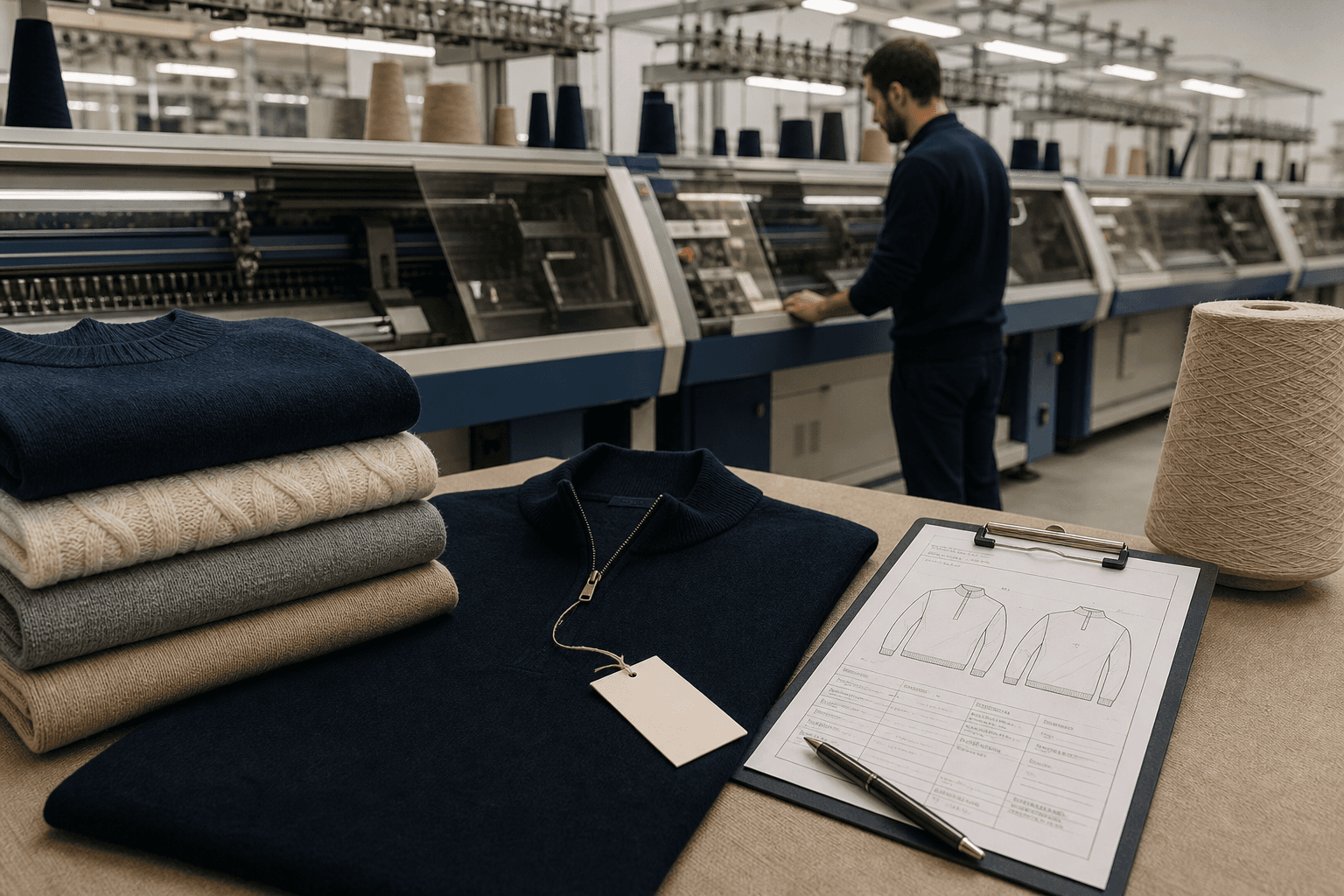
Every first knitwear order has two routes, and factories rarely publish the second one. From a tech pack a sample takes about 15-25 days; from a style that already exists, about 7. The minimum, the bulk lead time, the labelling and the QC route are identical either way. What changes is where the first physical garment comes from - and what you give up by not starting from a blank sheet.
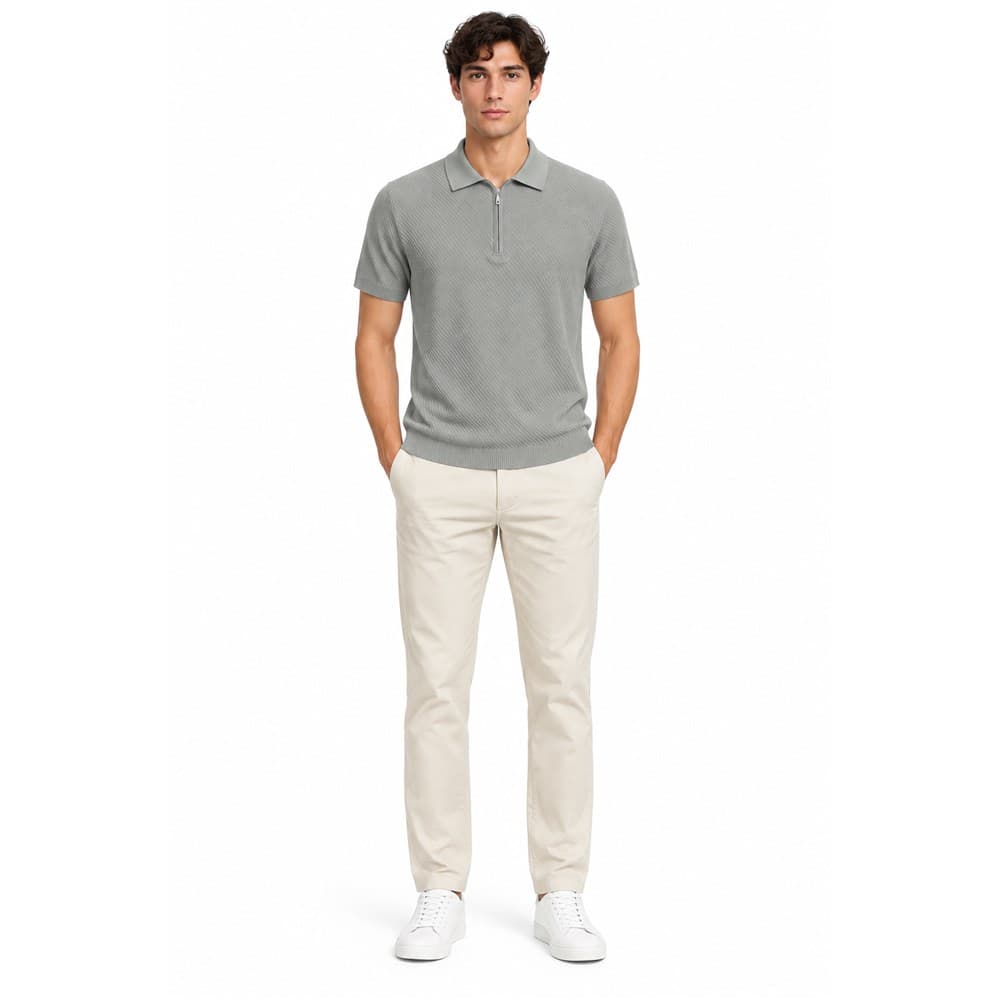
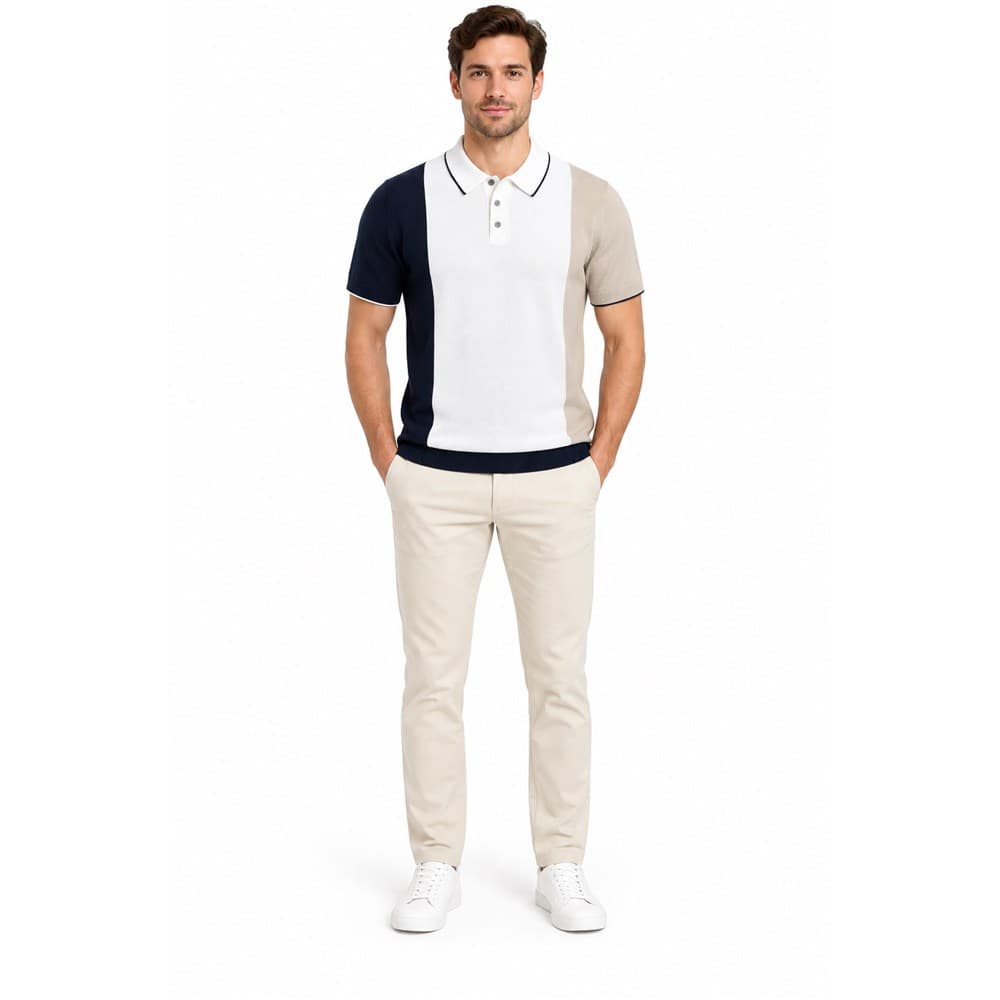
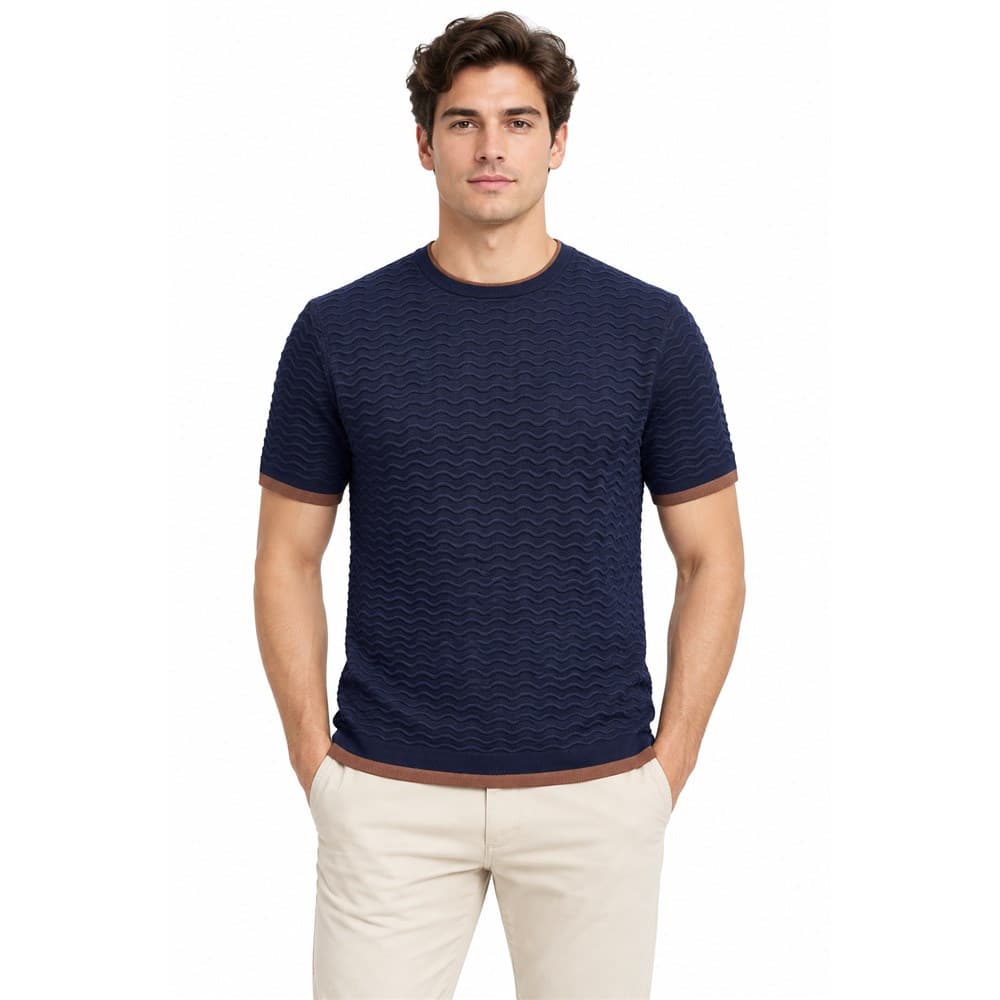
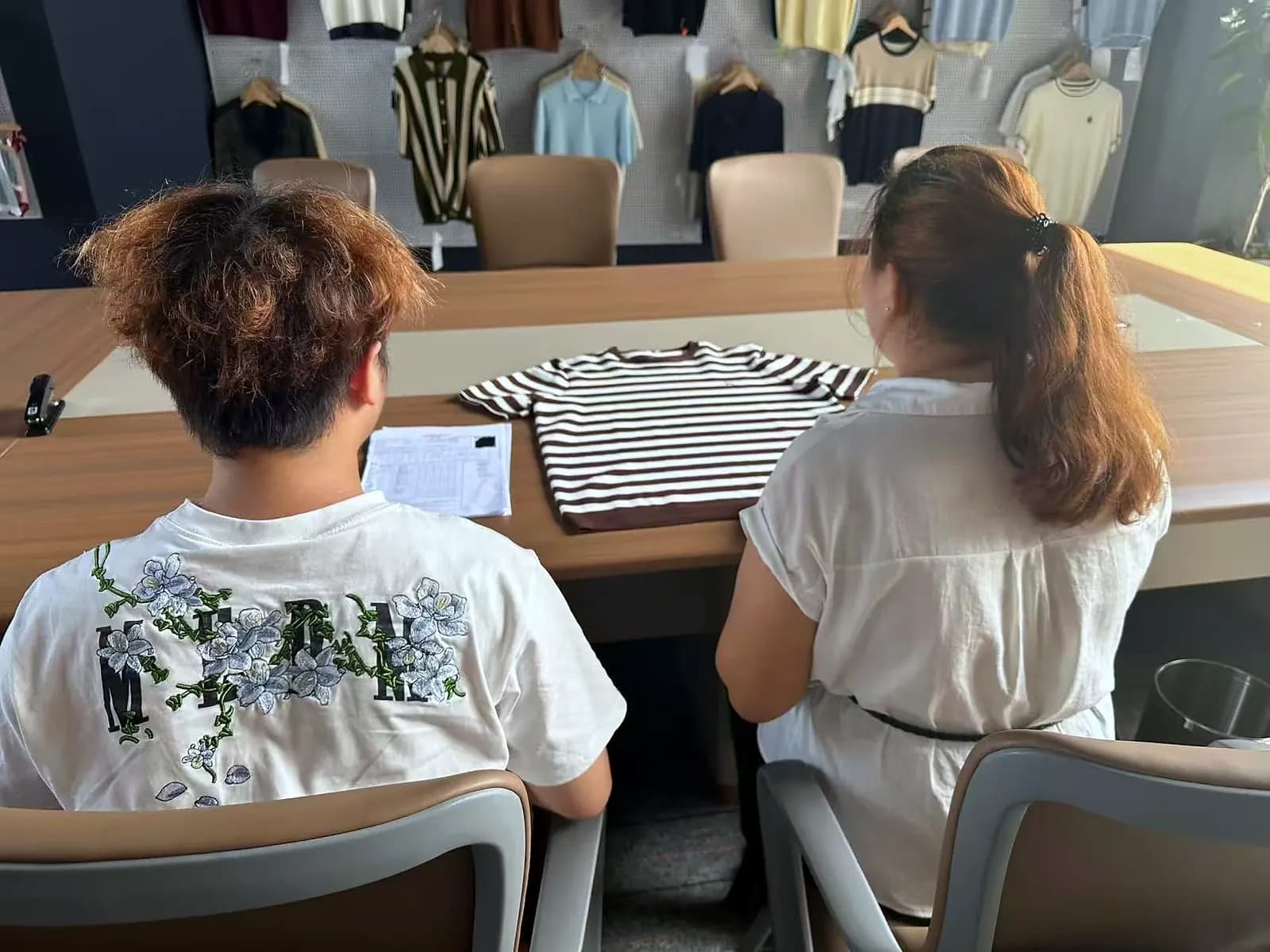
A ready sample: the style already exists, so the first thing a buyer holds arrives in about a week rather than a month.
Almost every conversation about a first knitwear order starts in the same place: the buyer has a reference image, a rough spec and a delivery date, and the question on the table is how long a sample will take. The answer most factories give — two to four weeks, then again if it needs changing — is accurate, and it is also only true of one of the two routes available.
The other route is to start from a style that already exists and change it. It is faster by roughly three weeks, it costs less to find out you were wrong, and it gives up less than most buyers expect. It is also the route almost nobody asks about, because factories rarely publish what they already have.
We publish both. On our shelf today there are 411 styles developed to a customer's specification and 51 that exist as ready samples — knitted, photographed and costed before anyone asked for them. This is a guide to choosing between the two, written from the factory side of the table.
What actually differs, and what does not
The single difference is where the first physical garment comes from.
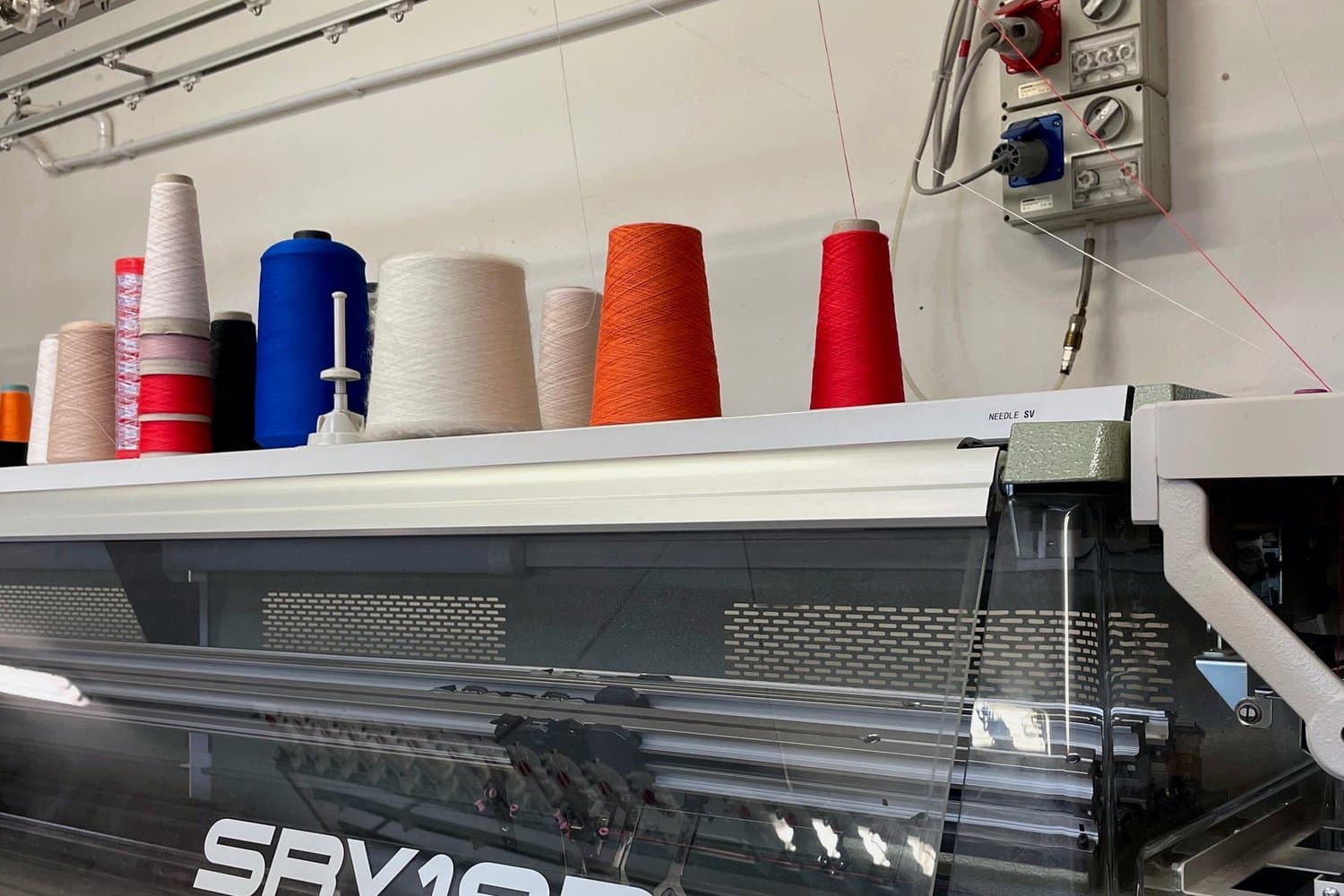
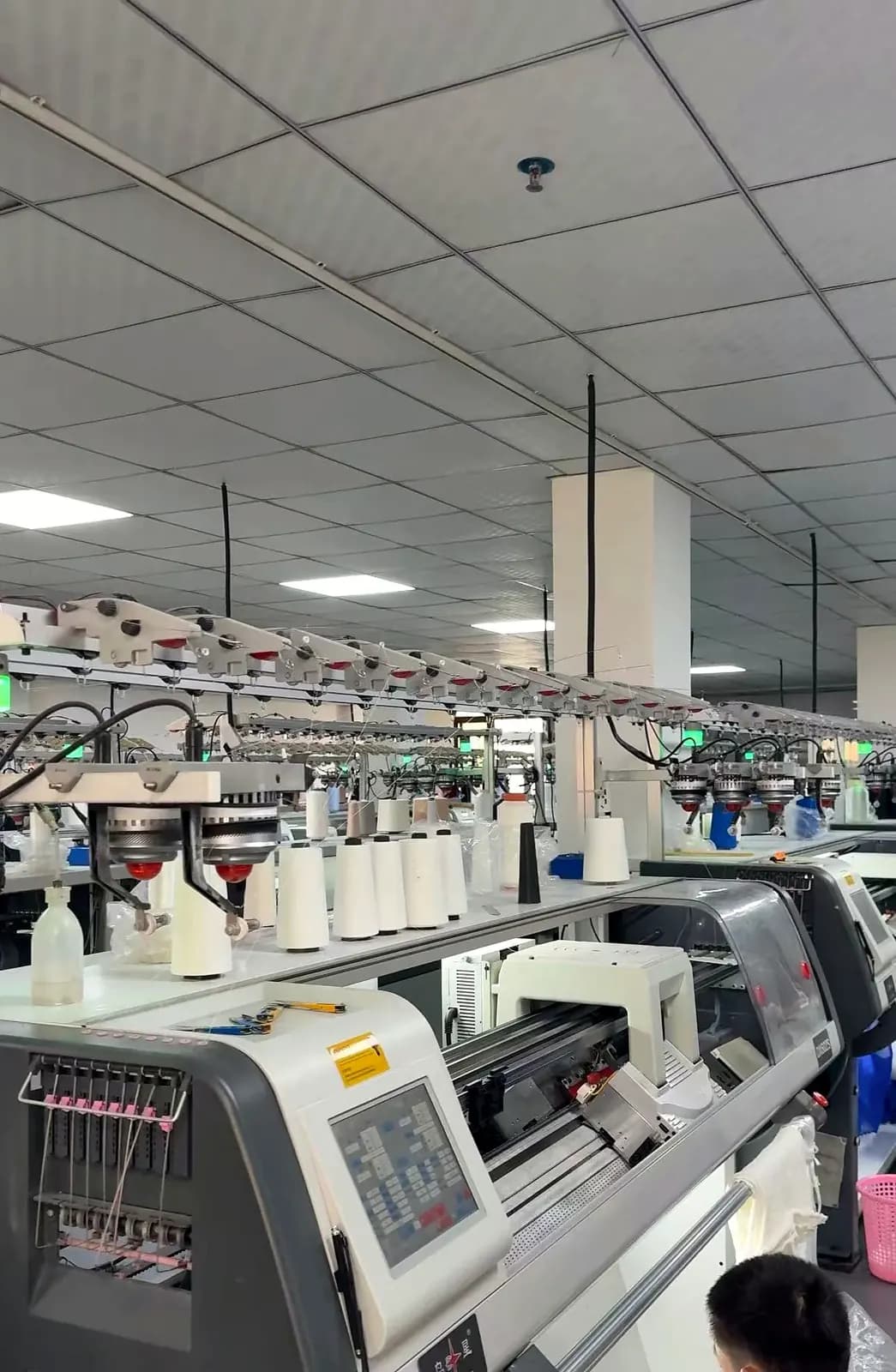
From a tech pack, we programme the machine, knit a swatch, agree the density, then knit and link a graded sample. About 15–25 days from a confirmed tech pack and confirmed yarn.
From a ready sample, the programme exists and the yarn is in house. About 7 days.
What does *not* differ is almost everything else, and this is the part buyers most often get wrong:
The minimum is the same. 30 pieces per colour per style, sizes mixable inside the 30, either way.
Bulk lead time is the same. 30–45 days depending on quantity.
Private label is the same. Woven main label, care label, hangtag and custom packaging on both routes.
The quality route is the same. Needle detection on finished garments and AQL inspection before shipment.
A ready sample is not a stock garment you buy as-is. It is a starting point that happens to already be knitted.
What you give up, stated plainly
Three things, and they are worth knowing before you choose:
The measurements are ours until you change them. These styles were developed to our own size chart. If you have one, send it with the enquiry and we grade to it — but that grading is a development step, and it moves the timeline back toward the normal range.
Changing gauge or fibre puts it back in the queue. A colour change or a label change does not touch the programme. A gauge change does: it is a different machine setting, a different yarn consumption and a different fabric. If your reference wants 7GG and the ready sample is 12GG, you are developing, and you should plan for 15–25 days.
You are choosing from what exists. Our 51 currently run from USD 6.50 to USD 66.00 per piece by quantity, 34 of them at 12GG fine gauge, 14 in the 7GG band and 3 at 3GG–5GG. By season: 20 spring/summer, 17 all-season, 14 autumn/winter. If the shape you want is not in there, the route is not available to you — and that is a perfectly normal answer.
When the ready-sample route is the right one
The delivery date is fixed and the design is not precious. Three weeks is the difference between making a season and missing it. If the garment is a supporting piece in a range rather than the hero, buying three weeks is usually the better trade.
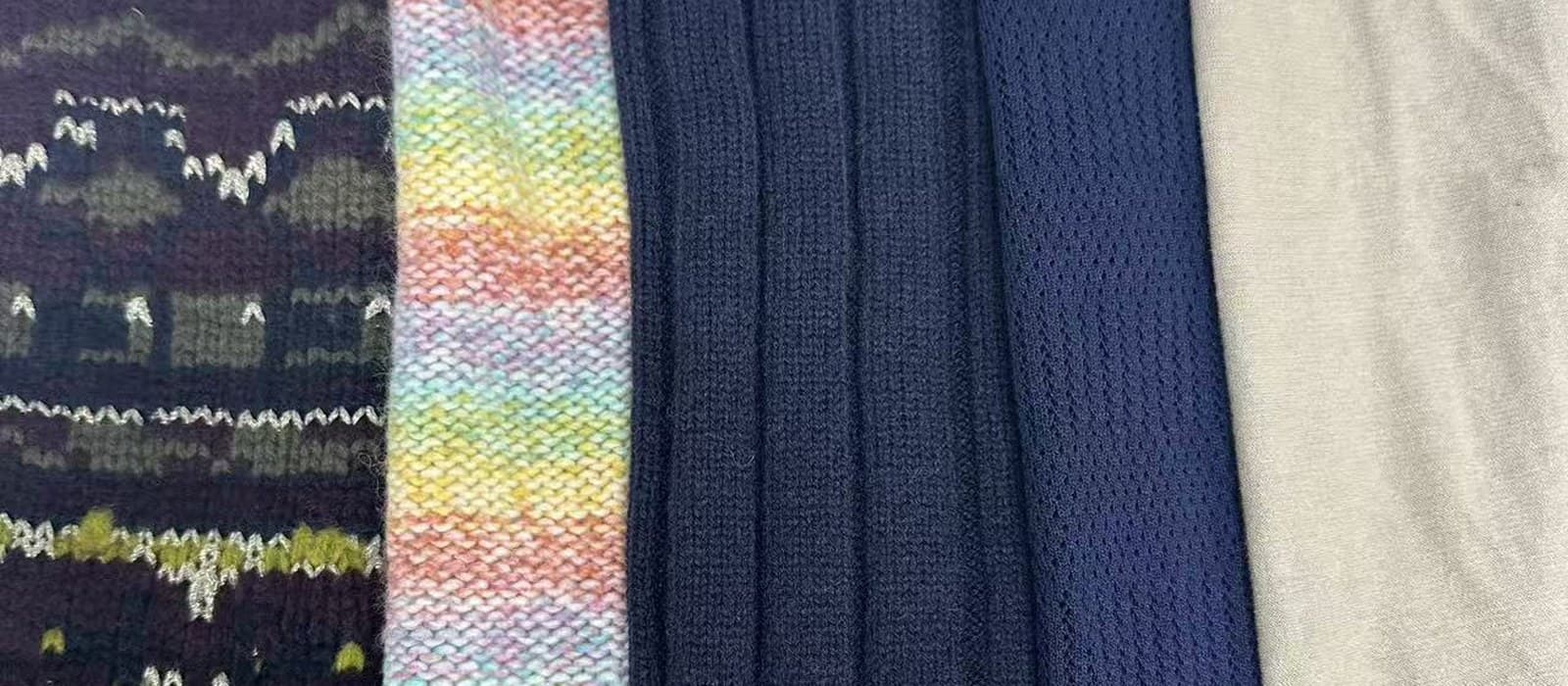
You want to hold the fabric before committing. A ready sample is the cheapest way to answer "is this the right weight" — which is a question a specification sheet cannot answer and a photograph cannot either.
You are writing a tech pack and want a reference garment. This is the use most buyers do not think of and the one that saves the most time. Ordering an existing style, marking it up by hand and sending it back is a faster and far less ambiguous brief than writing a tech pack from a drawing. Most second sample rounds exist because a written spec left something open that a physical garment would have settled.
You are replenishing or extending. A colour added to a style that already sells does not need a development cycle.
When it is the wrong one
The garment is the reason the collection exists. If a buyer will pick it up because of a specific construction, develop it. Starting from something close and pushing it toward your idea usually costs more rounds than starting from your idea.
You have a size chart you cannot move. Grading to an external chart is development work either way, so the seven-day advantage largely disappears.
You need a fibre we have not run on that style. Same reasoning as gauge: new yarn, new consumption, new swatch.
The question to ask a factory
Not "how fast can you sample?" — every factory answers that the same way. Ask instead:
*"Which of these do you already have knitted, and what would it cost to change the colour?"*
A factory that can answer immediately has a shelf. One that cannot is going to develop everything from scratch whether or not that is what you needed, and the difference will show up in your calendar rather than in the quotation.
What we would need from you
For a ready sample: the style, the colour you want, and your size chart if you have one. That is enough to quote and to ship a sample.
For a development: a tech pack or a reference garment, the yarn direction, the gauge if you know it, and the target garment weight — that last one being the single most useful number a buyer can give, because it settles arguments that words cannot.
Either way the minimum is 30 pieces per colour per style, sizes mixable inside the 30, and bulk runs 30–45 days depending on quantity.
MOQ, lead time, cost ranges, gauge selection and QC checkpoints across typical OEM/ODM knitwear programs in NA + EU. Enter your email — we'll send you the report link in 30 seconds.
No spam. Unsubscribe with one reply. We use your email only to send you the report and follow up if you want a sourcing conversation.
Brand names shown are previously serviced OEM/ODM partners. Logos are decorative and do not imply current endorsement.