
We focus on men's sweaters, cardigans, knit jackets, jacquard knitwear and private label knitwear. We support B2B buyers with OEM/ODM development, sampling and bulk production planning.
Guides for custom knitwear manufacturing, yarn selection, gauge options, quality control, cost planning and tech pack preparation.
Materials
A B2B yarn and material guide for choosing cotton blends, wool blends and synthetic support fibers for custom knitwear.
Read Guide ->Manufacturing
A manufacturing guide comparing fully fashioned knitwear and cut-and-sew knitwear for B2B sweater, cardigan and knit jacket development.
Read Guide ->Craftsmanship
A craftsmanship guide comparing jacquard and intarsia knitwear for brands developing graphic sweaters, pattern cardigans and custom artwork.
Read Guide ->Gauge
A gauge guide explaining how 5GG, 7GG and 12GG affect sweater texture, weight, season, cost and buyer positioning.
Read Guide ->Comparison
Few sourcing terms generate as much buyer-supplier confusion as OEM, ODM, private label and white label. They overlap, they are used interchangeably in supplier emails, and the wrong assumption can mean a brand pays for a custom development they never owned, or expects a custom design when the factory is preparing a generic catalog product. This guide separates the four models clearly: who designs, who owns the intellectual property, who picks the yarn and trims, what each implies for MOQ and lead time, how visible your brand actually is to the end consumer, and which brand stage typically uses each route. It is written from Licheng's perspective as a Dongguan knitwear manufacturer that operates OEM, ODM and private label programs every season, so emerging brand founders can decide which sourcing model fits where they are today.
Read Guide ->Trend
A holiday novelty knit capsule on US or EU shelves for a November 1 launch must leave a Chinese factory by mid-September. That single line is what most brand merchandisers underestimate when they start a fair-isle, gift sweater, or Christmas novelty program in late summer. Holiday knitwear is a calendar problem before it is a design problem: the gauge is usually denser, the colorways are higher, and the patterning takes more development time than a basic crew neck, so sample approval has to land by early July and the bulk PO has to be issued by mid-July to keep August knitting on track. This article walks through the reverse calendar Licheng uses with brands planning a 2027 holiday drop, the failure modes we see most often when POs slip into late August or September, and the honest cost reality of recovering a missed shipment by air. No hype, just the math.
Read Guide ->FOB is not your real cost. Learn what landed cost includes for imported knitwear — freight, import duty, customs fees and inland delivery — how to estimate it before ordering, and why per-unit cost falls with volume.
7 min read - Guide
A complete RFQ gets accurate, comparable knitwear quotes the first time. Learn exactly what to include — gauge, yarn, quantity, colours, Incoterm, dates — how an RFQ differs from a tech pack, plus a copy-ready template.
6 min read - Guide
Stop bulk arriving a shade off. A practical guide to knitwear color approval — from Pantone reference to lab dips to consistent bulk — covering metamerism, dye-lot tolerance, fastness and how to sign color off so delivered sweaters match.
5 min read - Guide
Germany remains one of Europe's most disciplined knitwear sourcing markets. Buyers here expect tight spec adherence, predictable lead times, clean documentation, and yarns that perform through long autumn-winter selling windows. This guide is written from our position as a Dongguan-based custom knitwear manufacturer working with German menswear and lifestyle brands. We cover what drives the procurement calendar, where sample and bulk timelines realistically land, what MOQ a mid-sized German label can plan against, which gauges and yarns we see specified most often for the DACH market, how quality control and compliance documentation are typically structured, and how logistics, payment, and Incoterms tend to be negotiated on FOB China terms. The aim is a working reference a sourcing manager can take into the next supplier review.
8 min read - Guide
FOB unit price is the headline number on every sweater quotation, but it is rarely the number a finance partner ends up writing into the cost-of-goods column. By the time the cartons leave the factory and clear the destination port, a small brand placing its first knit order has usually paid for a dozen line items that were never broken out at quotation stage — lab dips, sample charges, dye-house minimums, trim development, freight surcharges, demurrage, FX drift. This guide walks through twelve of the most common hidden costs we see buyers absorb during a custom sweater program, with typical USD impact ranges, which party usually pays, and the negotiation language that locks the number down before purchase order release. It is written for the finance partner at a small brand budgeting a first knit program, but the same checklist works for buying teams renegotiating an existing supplier.
6 min read - Guide
If you lead sustainability or compliance for an apparel brand vetting suppliers in China, Vietnam or Bangladesh, three acronyms come up over and over: BSCI, SEDEX and SA8000. Procurement teams often treat them as interchangeable badges, but they are very different instruments. One is an audit programme, one is an information-sharing platform around an audit framework, and one is a full management-system certification. Demanding the wrong one — or accepting whichever a supplier happens to have — leaves real social-compliance risk unaddressed and frustrates factories who are asked for documents that do not fit how their business is structured. This guide, written from a Dongguan-based custom knitwear manufacturer's seat across the table from European and North American buyers, explains what each scheme actually is, what a passed audit really tells you, where the gaps sit, and how to write supplier requirements that will be answered honestly rather than ticked off cosmetically.
5 min read - Guide
Brands with public sustainability targets need knitwear suppliers who can act on those targets at the PO level — not just nod along in a deck. The problem is that most of the carbon-reduction conversation in apparel sits at a glossy marketing altitude, where claims outrun data. This guide steps down to the buyer's actual tool kit: six concrete levers — yarn choice, gauge, dye method, packaging, freight mode, and durability — where the decision sits on a line in your tech pack or purchase order. For each lever, we give a realistic impact range drawn from published industry datasets, the certification or measurement that makes the claim defensible, and the exact language to put on the PO. Where the data is thin, we say so. The goal is a program your sustainability team can defend internally and externally, not a press release.
7 min read - Guide
Pilling is the single most common consumer complaint a QC lead hears about knitwear, and most of the root causes are locked in long before bulk knitting starts. This guide breaks down what pilling actually is — short fibres migrating to the garment surface and tangling under friction — and walks through the levers that decide whether a sweater shrugs off abrasion or balls up after three wears. We cover fibre length and yarn twist at the spinning stage, mill processes such as combing and gas singeing, finishing options including anti-pill chemistry and brushing direction, and the practical Martindale and ICI pillbox tests buyers can specify at the sample stage. Written for QC leads tired of post-sale returns, it is a buying and approval guide, not a marketing pitch.
6 min read - Guide
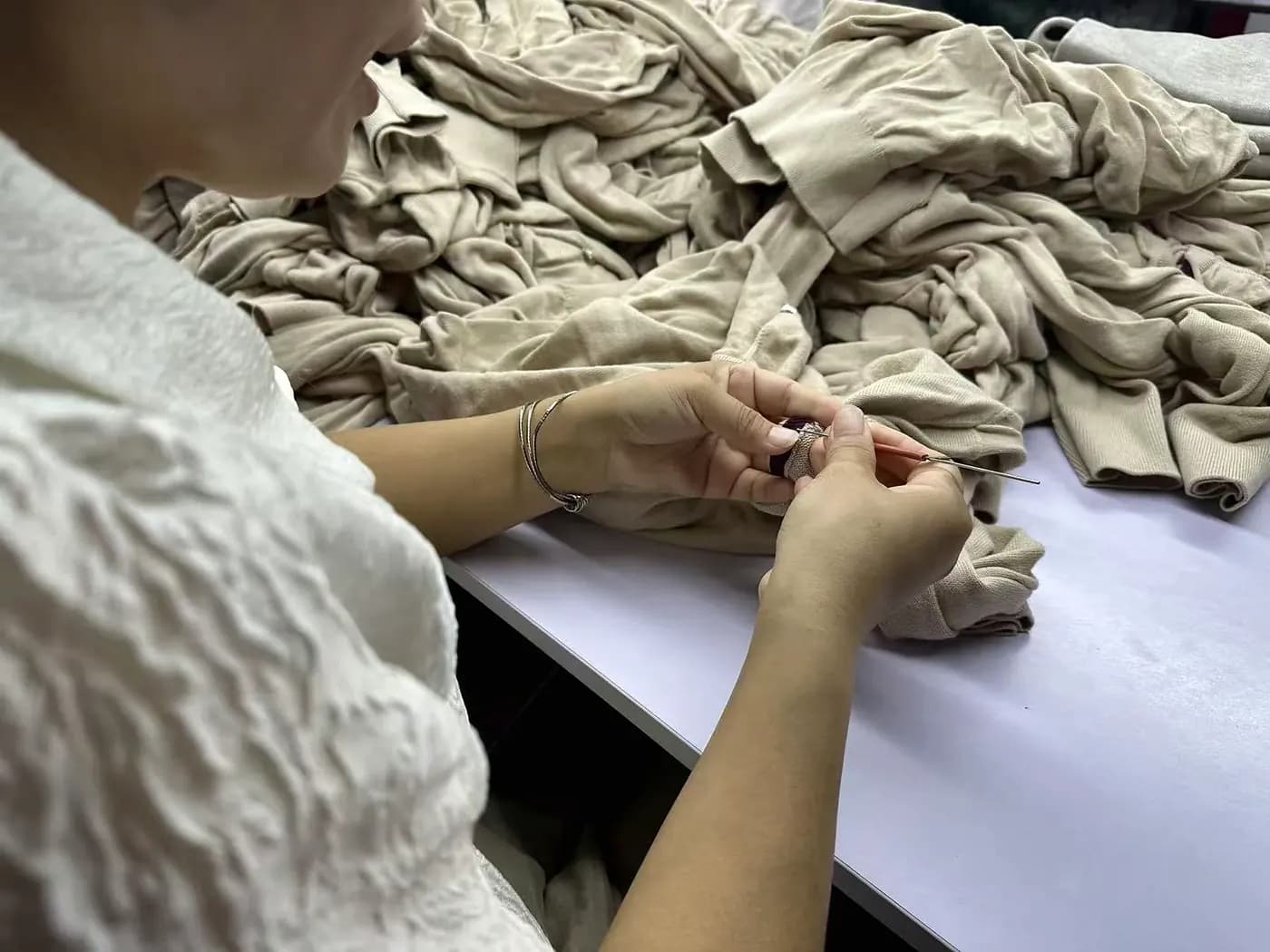
Between the linking machine and the polybag, a knitted garment goes through five to seven distinct finishing operations. Each one changes the garment in a different way: dimensions, hand, surface, pilling resistance, recovery. When a product developer pulls a sample from the carton and says it 'doesn't feel right,' the fault almost always sits in finishing — not in yarn, not in knitting. This article walks through the finishing line as we run it in Dongguan: what steaming, pressing, brushing, anti-pill treatment, and softener application each do, what they cost, where they go wrong, and what you should and should not specify on a tech pack. The goal is to give a product developer enough vocabulary to look at a sample and point to the step that needs to change, rather than asking the factory to 'make it softer' and hoping.
7 min read - Guide
We focus on men's sweaters, cardigans, knit jackets, jacquard knitwear and private label knitwear. We support B2B buyers with OEM/ODM development, sampling and bulk production planning.
Ready sample styles and selected custom programs can support lower-risk trials before larger seasonal orders.
Yes. Brands, including new labels preparing a first collection, can pay for a sample and see it before placing a production order. Two routes: a ready sample of a published style at USD 60 per piece in about 7 days, or a development sample from your tech pack at USD 150 per style, covering yarn sourcing, knit programming, one prototype and one revision round, in 15-25 days. Cashmere and mohair styles are quoted individually and shipping is charged at cost. Production starts only after you approve the physical sample, at our minimum of 30 pieces per colour with sizes mixed inside the 30. A sample does not commit you to a production run; we do not make garments for personal use.
Our sample fee is not refundable. Yarn sourcing, knit programming, machine setup and hand linking cost about the same whether one piece follows or five hundred, which is why the fee exists at all. It is credited against your first bulk order placed within six months of sample approval: 100% of a development sample fee, 50% of a ready sample fee.
Yes, for brands developing a style. One development piece is fine, with no commitment to bulk: a development sample is USD 150 per style and covers yarn sourcing, knit programming, one prototype and one revision round, in 15-25 days (cashmere and mohair are quoted individually). If you then go to production, the minimum is 30 pieces per colour with sizes mixed inside the 30, and the full USD 150 is credited against a first bulk order placed within six months of approving the sample. We do not make garments for personal wear.
Plain and striped styles using the same yarn and colour can be combined toward a minimum of 30 pieces, with mixed sizes. For example, four plain styles of 25 pieces each in the same yarn and colour total 100 pieces and meet that minimum. Different yarns or colours are counted separately. Jacquard and intarsia require 30 pieces per pattern; quantities from different patterns cannot be combined. Send us your styles, yarns, colours and quantities so we can confirm how the minimum applies to your project.
Get a free catalog or submit an RFQ today. Our team will respond within 24 hours.
Cannot find what you need? Our team can create a custom guide or template for your specific project.
Request Custom Resource ->
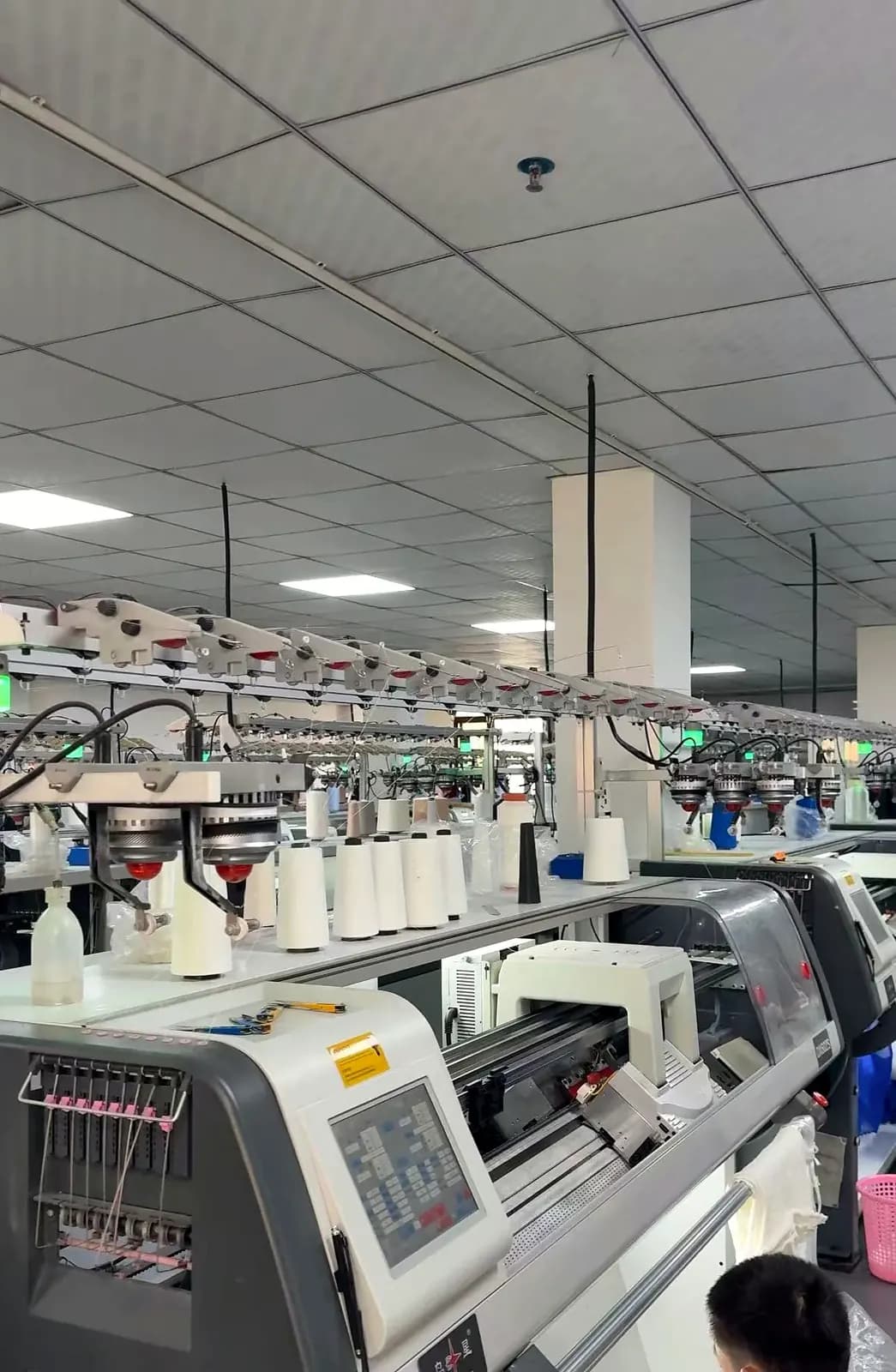
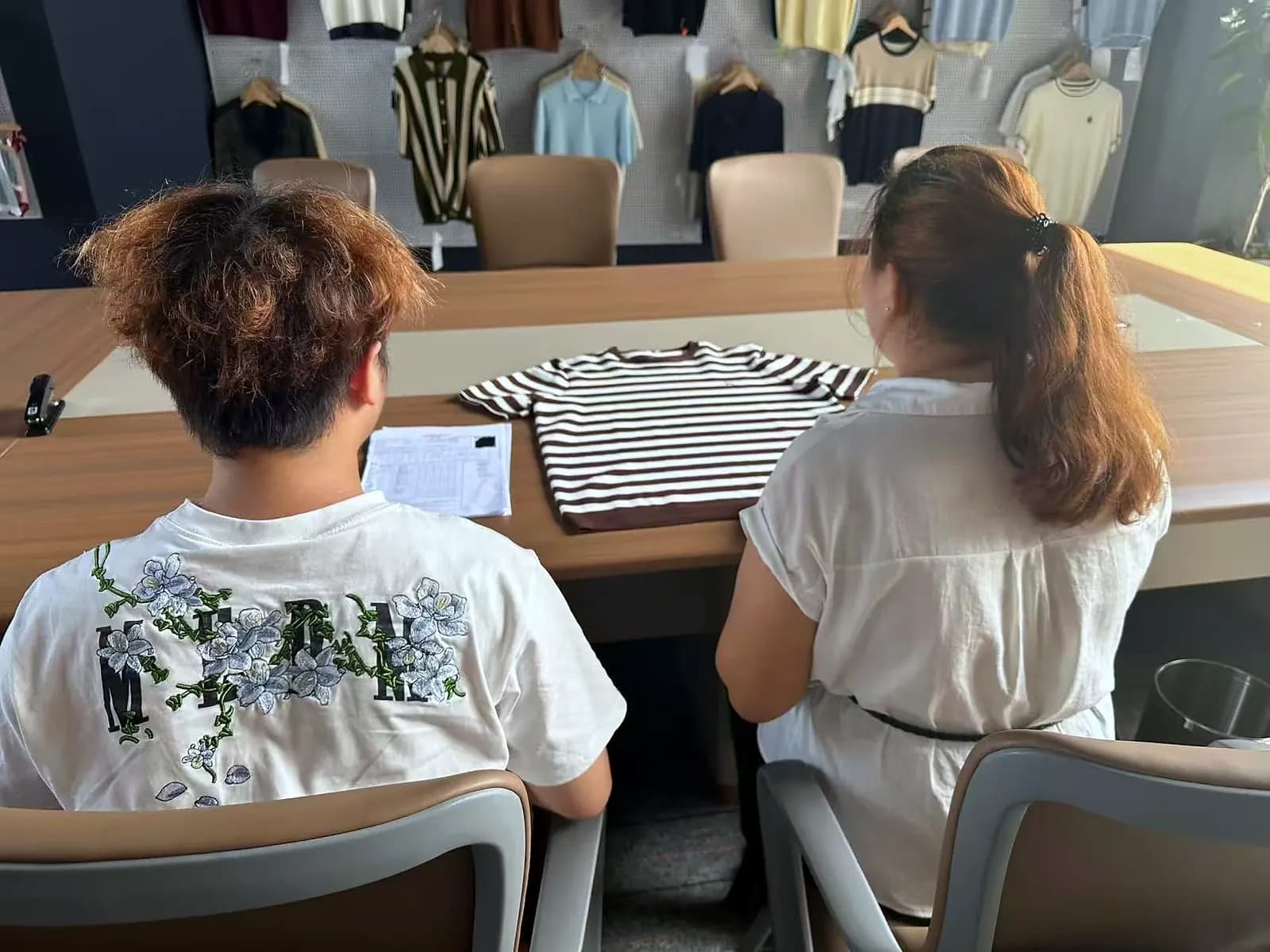
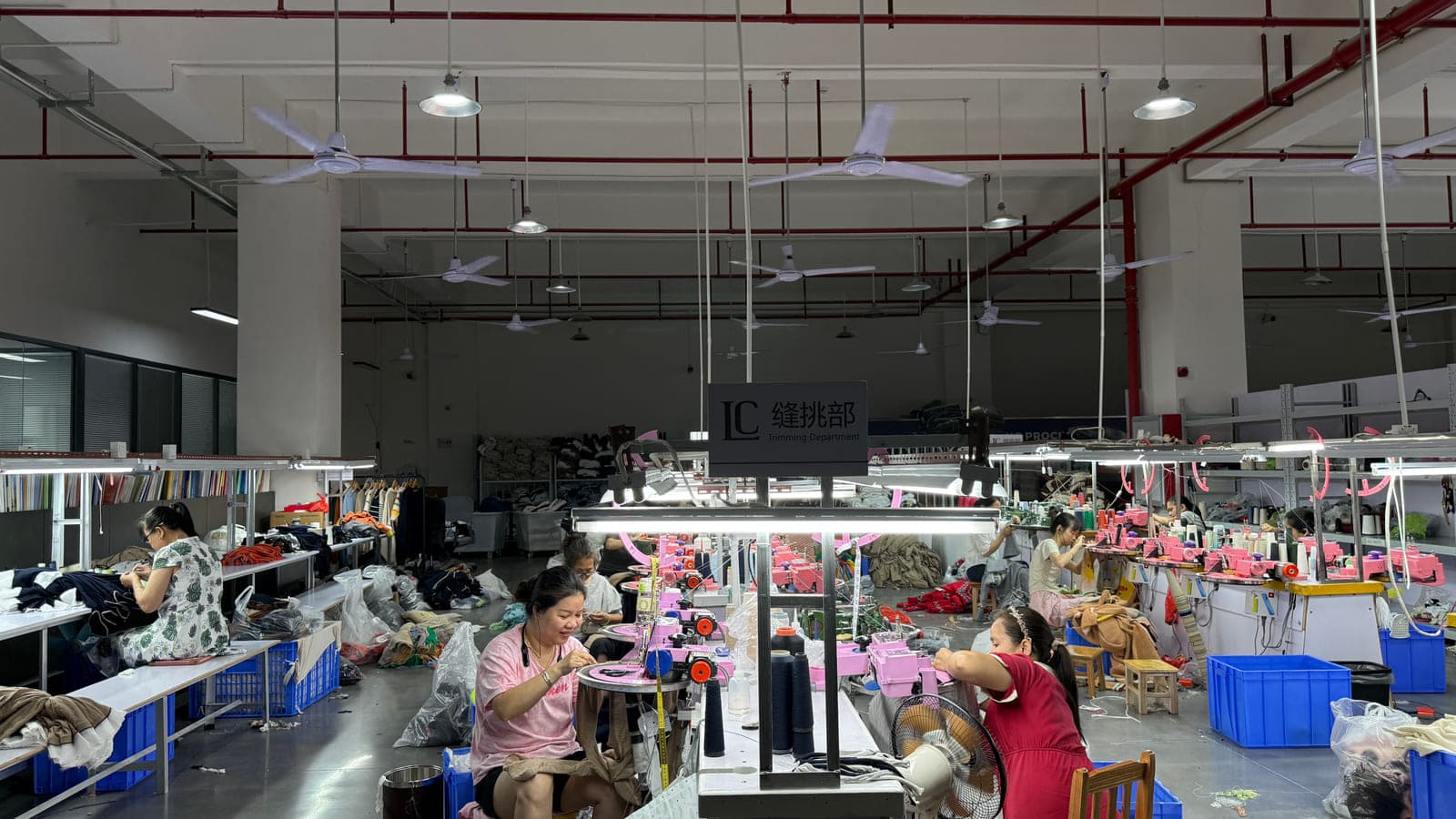
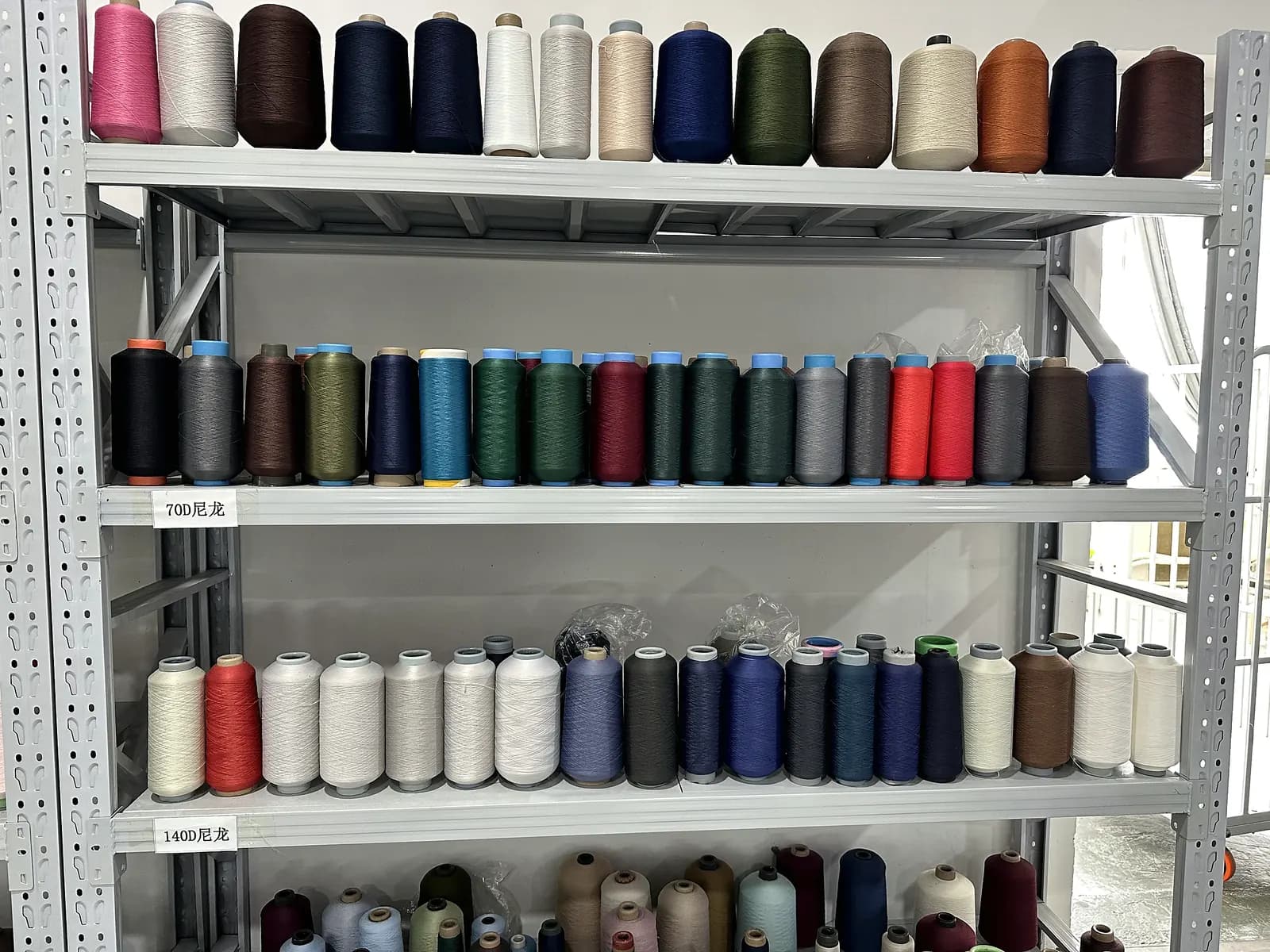


MOQ, lead time, cost ranges, gauge selection and QC checkpoints across typical OEM/ODM knitwear programs in NA + EU. Enter your email — we'll send you the report link in 30 seconds.
No spam. Unsubscribe with one reply. We use your email only to send you the report and follow up if you want a sourcing conversation.









Brand names shown are previously serviced OEM/ODM partners. Logos are decorative and do not imply current endorsement.