Jacquard vs Intarsia Knitwear
Updated 9/11/202612 min readBy Simon Liu · Licheng Knitwear
A craftsmanship guide comparing jacquard and intarsia knitwear for brands developing graphic sweaters, pattern cardigans and custom artwork.
A craftsmanship guide comparing jacquard and intarsia knitwear for brands developing graphic sweaters, pattern cardigans and custom artwork.
Our team is ready to support your brand from concept to delivery.
Discuss Your ProjectQuick answer — jacquard vs intarsia knitwear: both knit the pattern into the fabric rather than printing it on top, and the choice comes down to how the colours meet. Jacquard carries multiple colours across the full width of the knit, with the unused colours floating on the back — best for all-over repeating patterns like fair isle, geometric motifs and small repeats. Intarsia uses a separate yarn for each colour block with no floats behind — best for large, distinct colour blocks and graphics like argyle, logos and single motifs. Intarsia is generally more labour-intensive and costly for the same area.
When a brand wants pattern, color or graphics knitted into a sweater rather than printed on top, two techniques dominate: jacquard and intarsia. They look similar to the untrained eye but differ in how they are made, what they cost, and what designs they suit. Understanding the difference helps B2B buyers brief patterned knitwear accurately and budget correctly.
Jacquard and intarsia both build the pattern into the knit itself. Choosing between them is about how many colors meet, and where.
💬 Sourcing this for an upcoming project? Request a free quote → · MOQ 30 pcs · Sample in 15–25 days · WhatsApp us
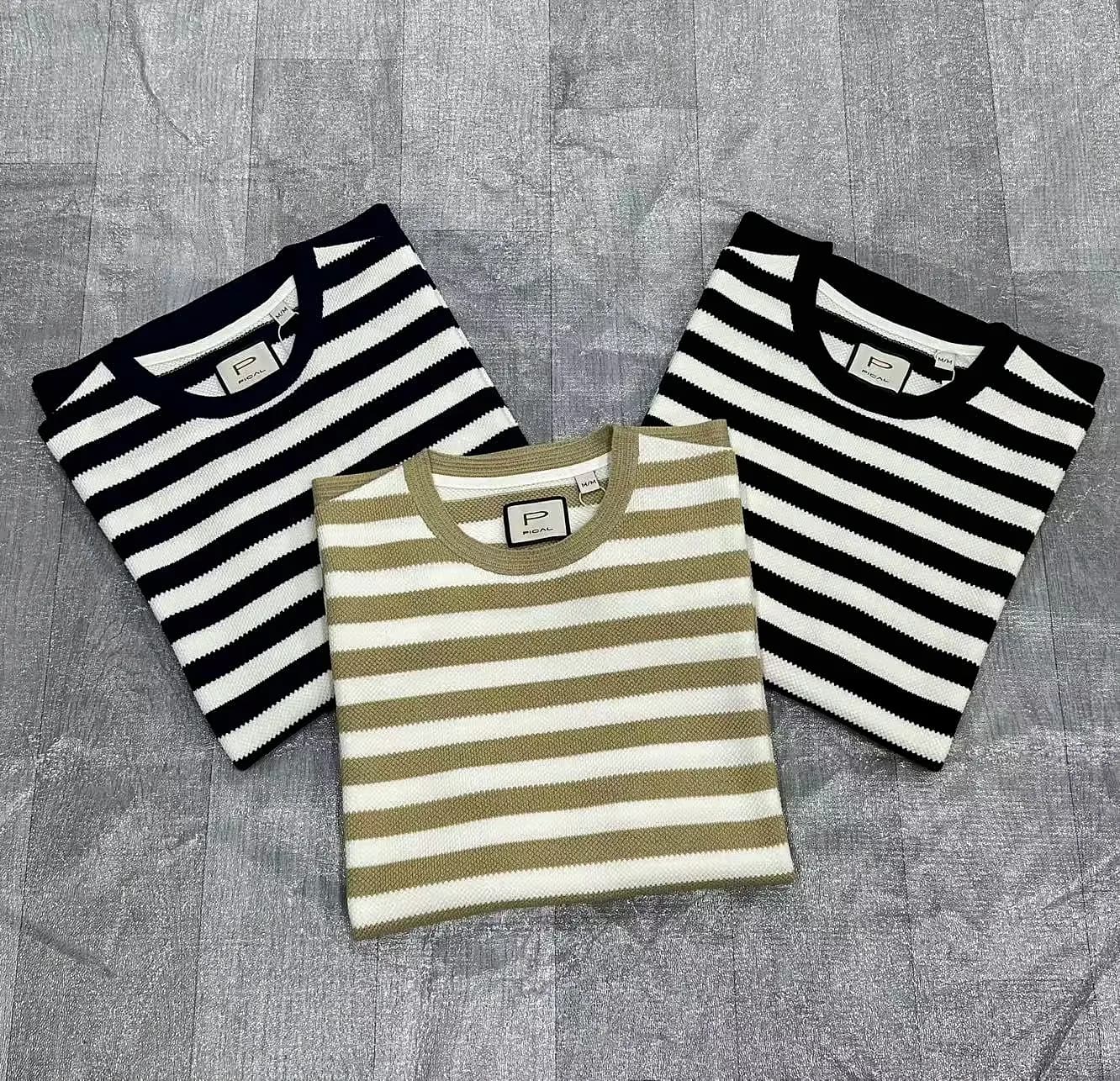
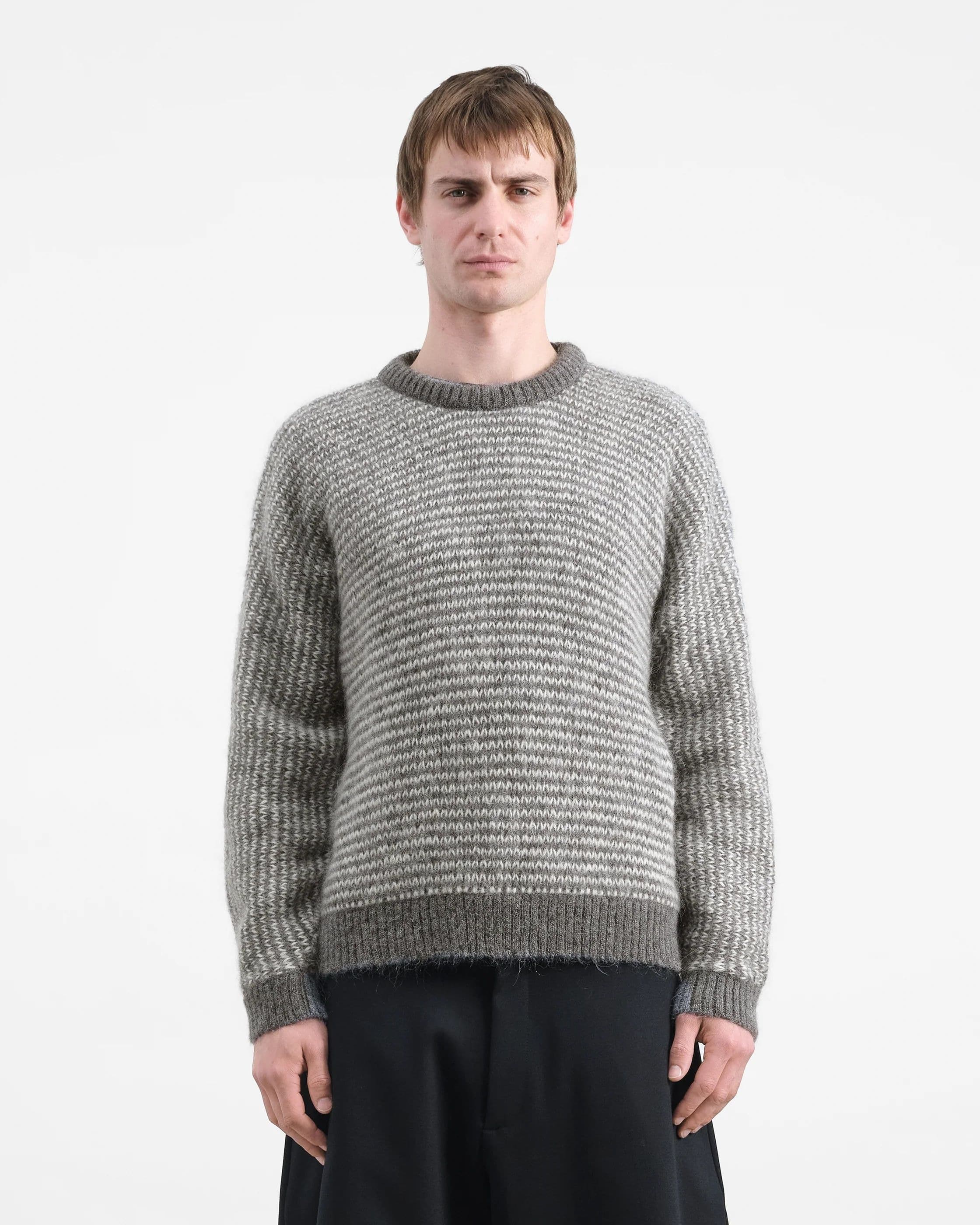
Jacquard carries multiple colors across the full width of the knit, with the unused colors floating along the back. It suits all-over, repeating patterns like fair isle, geometric motifs and small repeats. Intarsia uses separate yarn for each color block with no floats behind, so it suits large, distinct color blocks and graphics like argyle, logos or single motifs.
| Feature | Jacquard | Intarsia |
|---|---|---|
| Pattern type | All-over, repeating | Large blocks, motifs |
| Back of fabric | Floats (carried yarns) | Clean, no floats |
| Color count | Many, repeating | Fewer, distinct blocks |
| Fabric weight | Heavier (double yarn) | Same as base |
| Best for | Fair isle, geometric repeats | Argyle, logos, graphics |
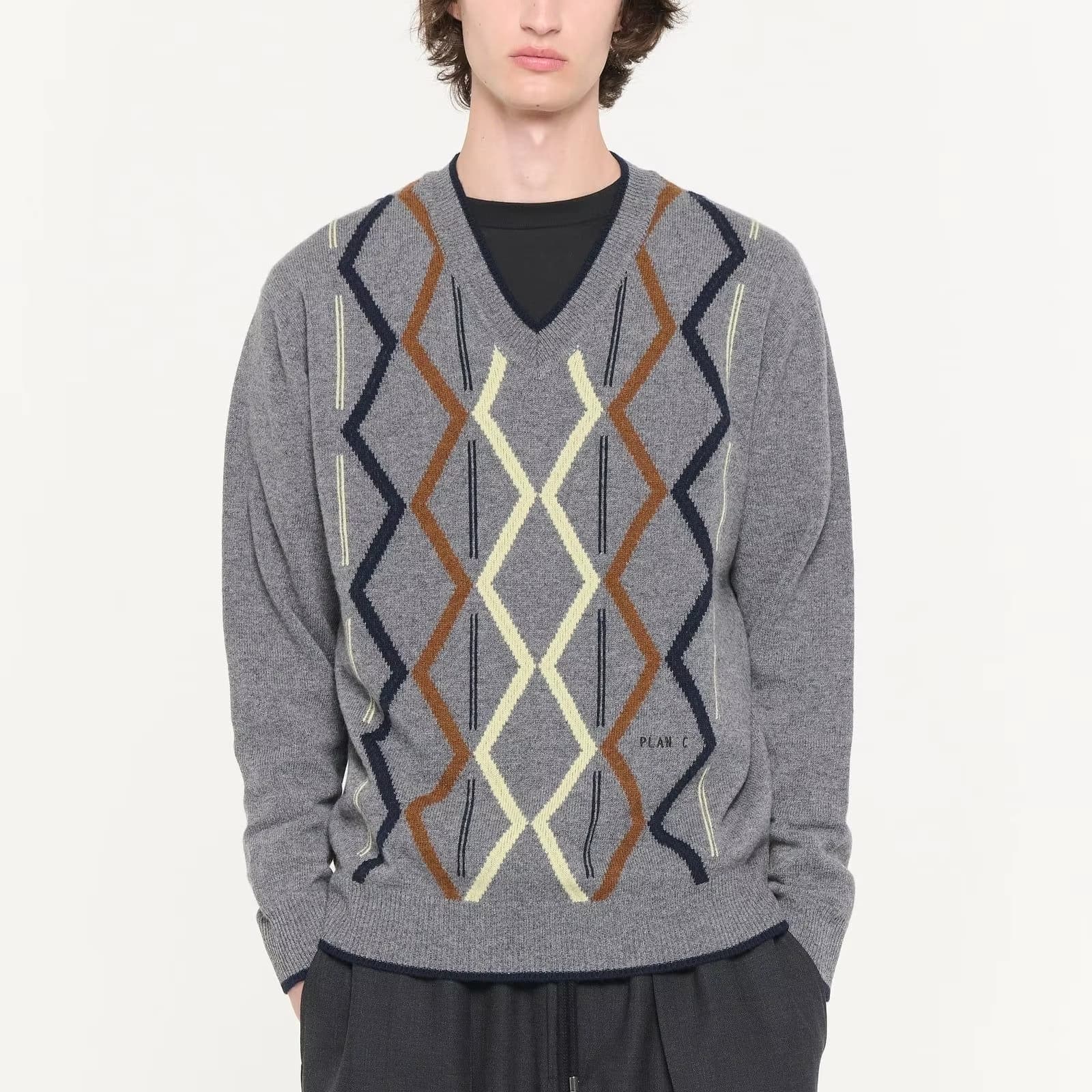
Choose jacquard for all-over patterns where colors repeat across the garment: fair isle yokes, nordic motifs, small geometric repeats, camo and textured two-color designs. Because unused colors float behind the fabric, jacquard knits are warmer and heavier, which suits winter pieces. The floats are why jacquard is not ideal for very large single-color areas, the floats would be too long and snag.
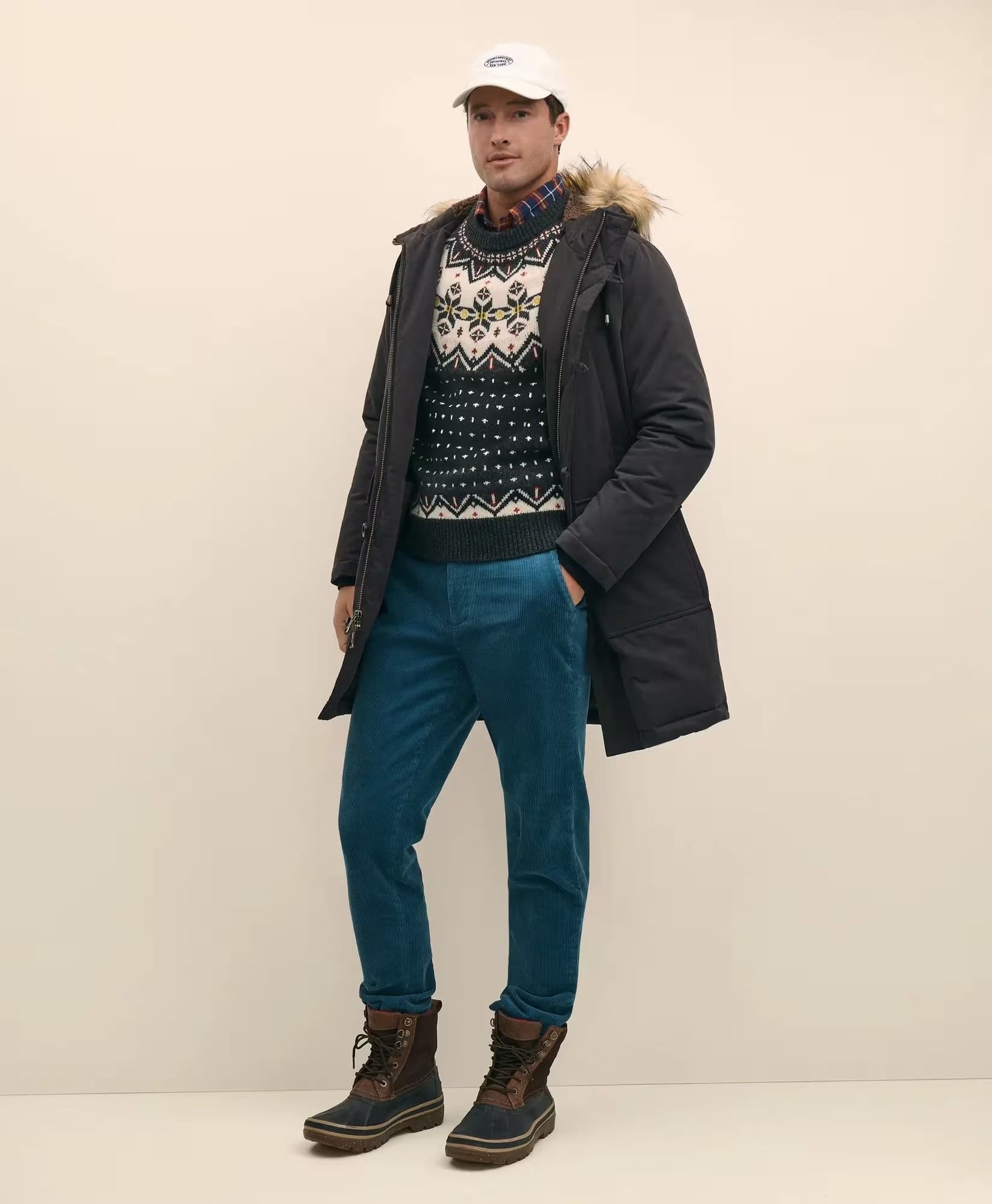
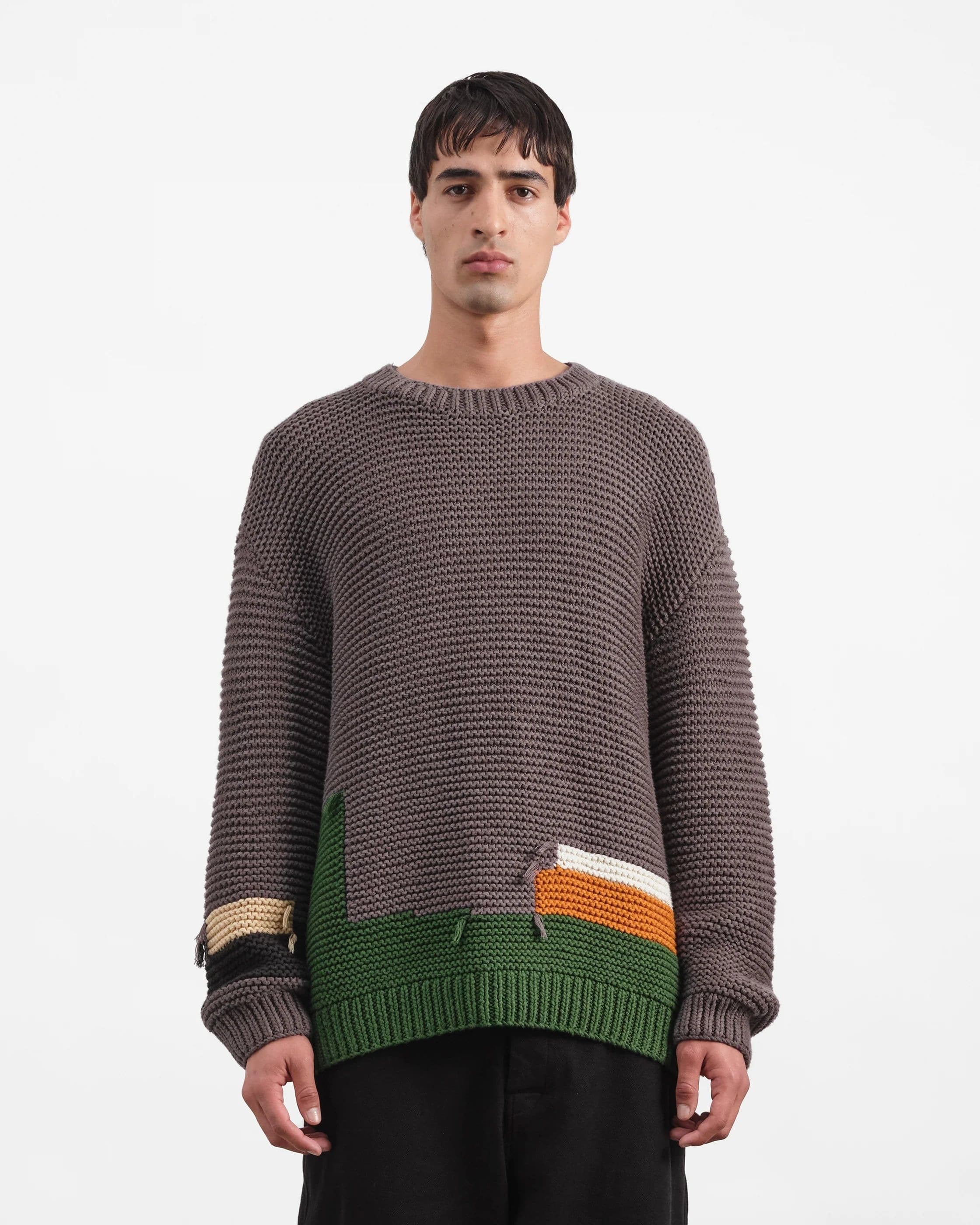
Choose intarsia for bold, distinct color blocks and graphics: argyle diamonds, a large logo, a single placed motif, or color-blocked panels. Because each area uses its own yarn with no floats, the back stays clean and the fabric is not thicker. Intarsia is more labor-intensive to set up, so it can cost more for complex designs, but it is the only way to get crisp, large color blocks.
Provide a clear artwork or reference, specify colors with Pantone or swatches, and indicate scale. Tell the factory whether the pattern repeats (likely jacquard) or uses distinct blocks (likely intarsia), and a capable maker will confirm the best technique. Include this in your tech pack.
Imagine a brand wants its 12 cm circular logo placed once on the chest of a crew neck, plus a small repeating snowflake border around the hem. That single brief splits across both techniques.
The practical lesson: technique is decided per design area, not per garment. A good factory will often combine both in one sweater — what drives cost is the number of distinct intarsia blocks and total color count, not mixing the two methods.
Patterned samples come back closest to intent when the brief is locked up front. Confirm these with your maker before sampling:
Lock these and a single sampling round of 15–25 days is usually enough to confirm hand-feel and color before the 30–45 day bulk run. Skip them and you risk a second sample cycle — the most common cause of slipped launch dates on patterned programs.
Licheng Knitwear produces both jacquard and intarsia knitwear, from fair isle to argyle to custom graphics, for B2B brands. Browse our products or request a quote.
Can jacquard and intarsia be combined in the same sweater? Yes — it is common to use jacquard for small repeating borders and intarsia for a large chest logo or motif on the same garment. Technique is chosen per design area, so combining them does not by itself raise cost.
Which technique is cheaper for a simple two-color logo? For one large, distinct logo block, intarsia is usually the better choice and avoids long jacquard floats; cost is driven mainly by the number of intarsia blocks and total colors, not the method alone.
Will a patterned knit change my MOQ or lead time? No — our MOQ stays at 30 pcs. Patterned designs add a little setup, so allow the standard 15–25 day sampling and 30–45 day bulk window, and lock colors and scale early to avoid a second sample round.
---
If you're planning a real project around any of the points above, we'd be glad to take a quick look. Send a short brief and we'll come back within one business day with a practical direction, MOQ + lead time estimate, and a sample plan if it makes sense.
→ Request a free quote · Download the men's knitwear catalog · WhatsApp us · info@lcgarment.cn
Jacquard knits multiple colours across a row carrying yarns on the back (good for repeating patterns); intarsia uses separate yarn blocks per colour with no floats (good for large, clean colour blocks and logos).
Intarsia for large solid colour-block graphics; jacquard for detailed repeating motifs. We advise based on your artwork and gauge.
Yes - both add complexity and time versus a plain knit; intarsia is usually more labour-intensive. We quote per design.
We focus on men's sweaters, cardigans, knit jackets, jacquard knitwear and private label knitwear. We support B2B buyers with OEM/ODM development, sampling and bulk production planning.
Ready sample styles and selected custom programs can support lower-risk trials before larger seasonal orders.
Yes. Brands, including new labels preparing a first collection, can pay for a sample and see it before placing a production order. Two routes: a ready sample of a published style at USD 60 per piece in about 7 days, or a development sample from your tech pack at USD 150 per style, covering yarn sourcing, knit programming, one prototype and one revision round, in 15-25 days. Cashmere and mohair styles are quoted individually and shipping is charged at cost. Production starts only after you approve the physical sample, at our minimum of 30 pieces per colour with sizes mixed inside the 30. A sample does not commit you to a production run; we do not make garments for personal use.
Get a free catalog or submit an RFQ today. Our team will respond within 24 hours.
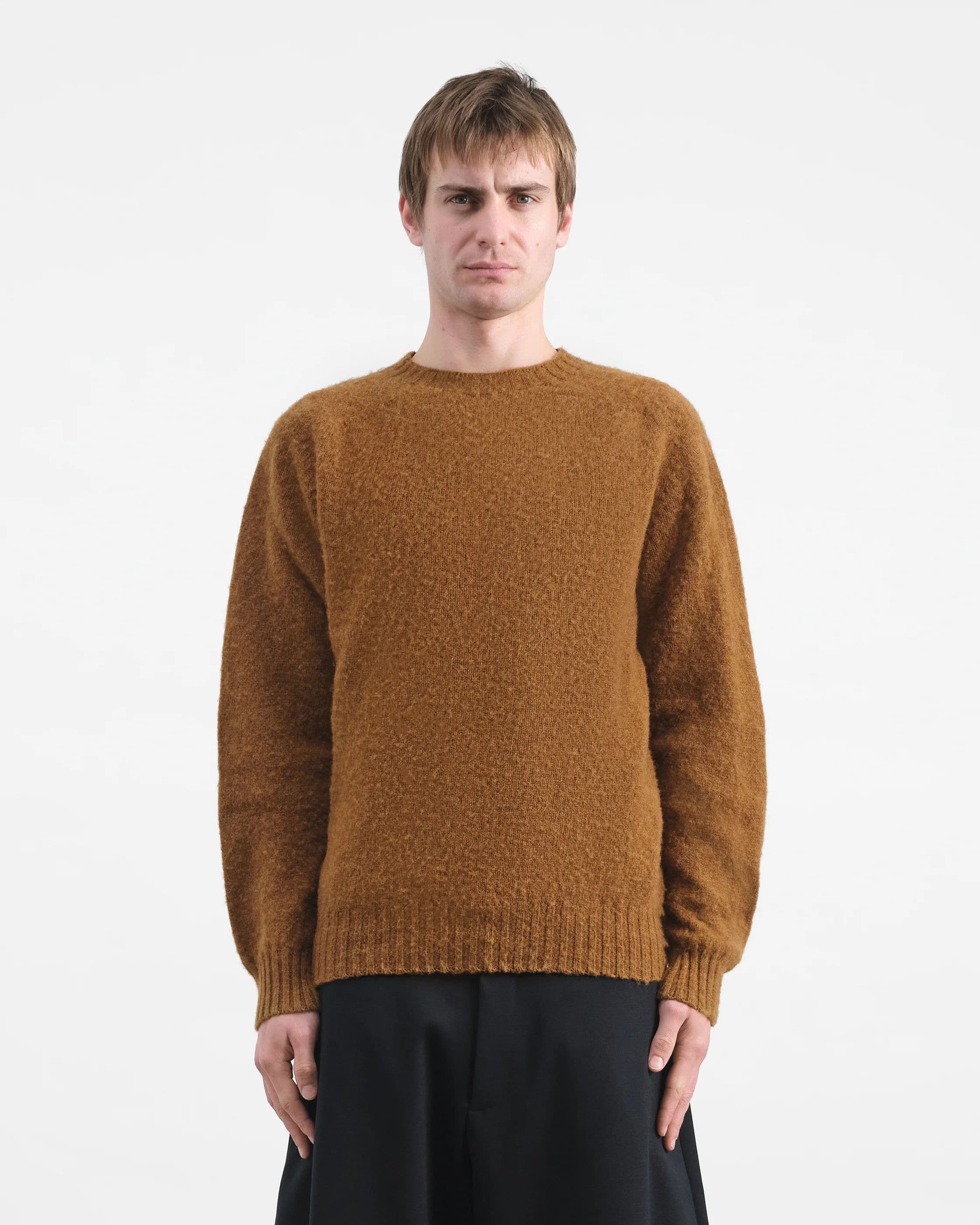
Men's Sweaters

MOQ, lead time, cost ranges, gauge selection and QC checkpoints across typical OEM/ODM knitwear programs in NA + EU. Enter your email — we'll send you the report link in 30 seconds.
No spam. Unsubscribe with one reply. We use your email only to send you the report and follow up if you want a sourcing conversation.









Brand names shown are previously serviced OEM/ODM partners. Logos are decorative and do not imply current endorsement.