BSCI, SEDEX and SA8000 for Apparel Sourcing: What Buyers Actually Need
Updated 9/19/202612 min readBy Simon Liu · Licheng Knitwear
If you lead sustainability or compliance for an apparel brand vetting suppliers in China, Vietnam or Bangladesh, three acronyms come up over and over: BSCI, SEDEX and SA8000. Procurement teams often treat them as interchangeable badges, but they are very different instruments. One is an audit programme, one is an information-sharing platform around an audit framework, and one is a full management-system certification. Demanding the wrong one — or accepting whichever a supplier happens to have — leaves real social-compliance risk unaddressed and frustrates factories who are asked for documents that do not fit how their business is structured. This guide, written from a Dongguan-based custom knitwear manufacturer's seat across the table from European and North American buyers, explains what each scheme actually is, what a passed audit really tells you, where the gaps sit, and how to write supplier requirements that will be answered honestly rather than ticked off cosmetically.
Quick answer — BSCI vs SEDEX/SMETA vs SA8000 for apparel sourcing: all three cover social compliance, but they are different instruments. amfori BSCI is an industry audit programme (not a certification) that produces an audit report with an A–E rating, valid 1–2 years. SEDEX/SMETA is a shared data platform plus a third-party audit framework (2-pillar = labour + health & safety; 4-pillar adds environment + business ethics) — also an audit, not a certificate. SA8000 is the only true *certification* of the three: a full management-system certification (operated like ISO 9001), valid 3 years with annual surveillance, more expensive and uncommon among SME factories. In short — BSCI and SMETA prove site conditions on the audit day; SA8000 proves an ongoing management system. Ask for the specific scheme your programme actually needs, and verify the current document rather than accept a logo.
Walk into a knitwear vendor day in Dongguan with a generic sustainability questionnaire and you will see the same scene play out at every booth: the buyer asks for "BSCI or SEDEX or SA8000, whichever you have," and the sales manager nods, pulls out a folder, and hands over whatever the office has on file. Sometimes it is a current BSCI audit report; sometimes a SEDEX login screenshot; sometimes a one-page summary of an audit done at a sister factory two years ago; sometimes nothing at all. The buyer takes the document, files it, and moves on.
Ready to Start Your Project?
Get a free catalog or submit an RFQ today. Our team will respond within 24 hours.
This is the everyday reality of social-compliance vetting in apparel, and it is broken in both directions. Buyers treat three very different schemes as interchangeable. Factories present whatever they have because they cannot tell which one the buyer actually cares about. Real risk gets neither identified nor managed.
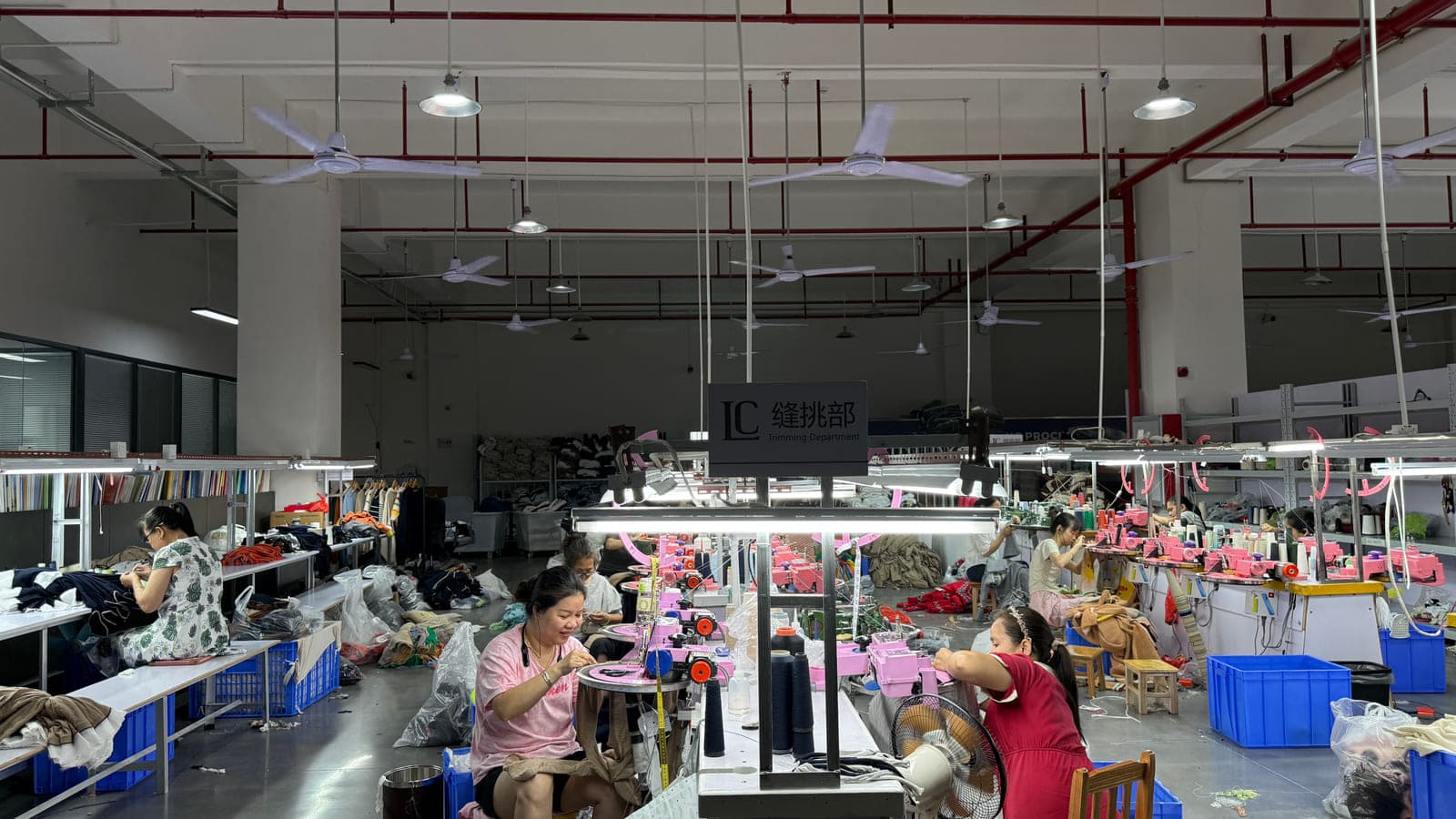
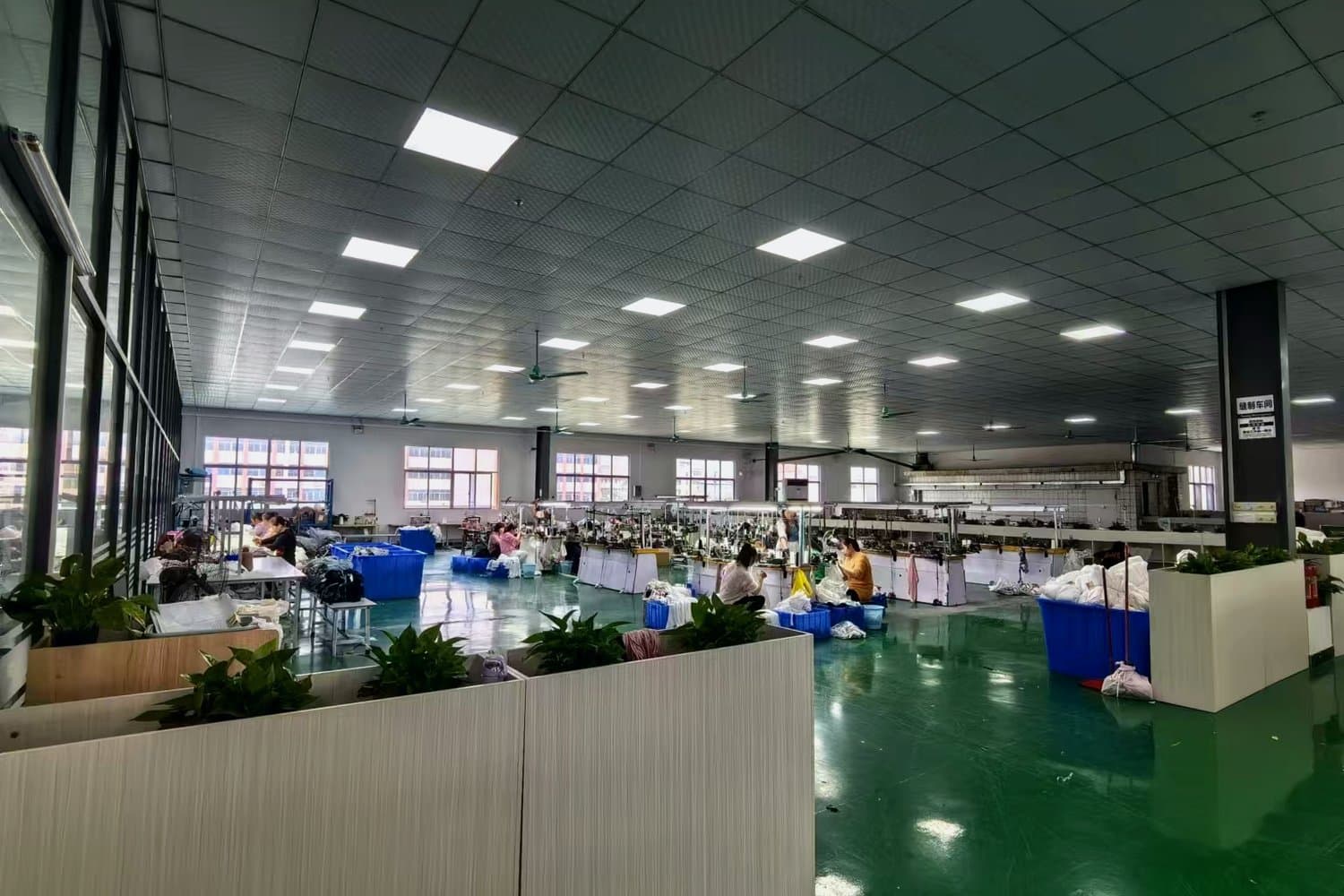
We are Licheng Knitwear, a custom knitwear manufacturer founded in 2018 in Dongguan, Guangdong. We work with brands in the US, Canada, Germany, the UK, France, Spain, the Netherlands and Sweden, and we sit across the table from compliance teams every quarter. This guide is the conversation we wish more buyers would start with. It walks through amfori BSCI, SEDEX SMETA and SA8000 — what each one is, what it audits, what the buyer actually gets, and what factories like us can and cannot say about them — so you can write requirements that mean something.
A critical note on Licheng before we go further: this article is educational. For the record: Licheng's Dongguan factory holds a current amfori BSCI audit and WRAP certification; we do not currently hold SEDEX (SMETA) or SA8000. When a buyer structures a programme around a specific certification, we discuss what is realistically available per project, what timelines are involved, and which scope certificates our yarn mills and trim partners already hold. We do not publish unverified compliance claims about ourselves, and you should be cautious of any supplier who waves a logo without showing you the underlying current document.
The confusion is understandable. All three sit under the umbrella of "social compliance," all three reference ILO conventions and national labour law, and all three produce a document that procurement can attach to a vendor file. From a distance they look like flavours of the same thing.
They are not. The differences sit at three levels: what the scheme actually is (audit, platform or certification), who owns the resulting document, and what claim it lets you make about the supplier. Get those three layers right and the rest of the conversation becomes easy.
A second confusion: factories may legitimately have been audited under one scheme and not another, not because they are hiding anything, but because their other customers happened to require a different one. A Vietnamese sock factory selling to Aldi will have BSCI because amfori is heavily used by European discounters; a Bangladeshi knitter selling to Tesco will have SEDEX because British retail anchors on it; a small Italian-owned plant in Guangdong might have SA8000 because the parent company runs to management-system standards. None of these tell you the factory is "better" — they tell you which buyers shaped its document trail.
amfori BSCI: An Audit Programme, Not A Certification
The Business Social Compliance Initiative, now branded amfori BSCI, is an industry-driven audit programme run by amfori, a Brussels-based association. Member brands and retailers commit to the amfori BSCI Code of Conduct and ask their suppliers to be audited against it.
The key technical fact, and the one most often misunderstood: BSCI is not a certification. There is no "BSCI certificate." What a factory receives is an audit report with a rating (commonly A through E, with A and B considered acceptable and C and below requiring a corrective action plan). The report is valid for a period — typically one or two years depending on the rating — and is hosted on the amfori sustainability platform.
What BSCI audits: thirteen performance areas covering management practices, workers' involvement and protection, freedom of association, no discrimination, fair remuneration, decent working hours, occupational health and safety, no child labour, special protection for young workers, no precarious employment, no bonded labour, environmental protection, and ethical business behaviour.
What the buyer gets: read-only access (via an amfori member account, which costs money) to the supplier's audit report on the platform, including the rating, the findings, and the corrective action plan if any.
What to ask a supplier for: the current audit report (PDF), the platform link, the rating, the date of the next audit, and a clear answer on which legal entity and address were audited — many groups have multiple sites and only one is in the platform.
Common buyer confusion: assuming a BSCI-audited supplier is "BSCI certified" and stopping due diligence there. The audit is a snapshot of one site on one day; it does not certify management systems, it does not cover subcontractors automatically, and a low rating does not bar a factory from selling — it triggers a follow-up audit.
SEDEX And SMETA: A Platform Plus An Audit Framework
SEDEX (Supplier Ethical Data Exchange) is best understood as two things: a membership platform on which suppliers self-report data and host audit reports, and a sponsored audit methodology called SMETA (Sedex Members Ethical Trade Audit) that factories commission from approved third-party audit bodies.
SMETA itself comes in two versions: 2-pillar (labour standards and health and safety) and 4-pillar (adds environment and business ethics). Most serious buyers ask for 4-pillar. The audit is conducted against the ETI Base Code, local law, and a set of SMETA-specific requirements.
The distinction from BSCI is mainly governance and platform: amfori owns BSCI end to end, including the code and the platform; SEDEX is more of a data-exchange utility, and SMETA is an audit standard that any participating audit firm can deliver. In practice, what an apparel buyer reads — a third-party social audit report against a multi-pillar code — looks similar in scope and depth.
What the buyer gets: access to the supplier's SEDEX profile (via a paying SEDEX membership) and the SMETA audit report and corrective action plan attached to it.
What to ask a supplier for: the SEDEX site number (the unique identifier for the audited site), confirmation of 2-pillar vs 4-pillar, the audit body, the audit date, the corrective action status, and access through the platform rather than just a PDF — PDFs can be edited, the platform record cannot.
Common buyer confusion: thinking "SEDEX" by itself means anything. A supplier can be SEDEX-registered without ever having been audited; the registration is a self-declaration. The substantive document is the SMETA audit report. "We're on SEDEX" is not the same statement as "We passed a 4-pillar SMETA audit nine months ago and these were the findings."
SA8000: A Full Management-System Certification
SA8000 is in a different category from the other two. It is a certification standard published by Social Accountability International (SAI), audited by accredited certification bodies, and operated like ISO 9001 — meaning the factory has to demonstrate not just compliant conditions on the day of the audit, but a documented management system that maintains compliance over time.
This is the technical answer to "is this a real certification?" — for SA8000, yes. For BSCI and SEDEX-SMETA, no, those are audits.
SA8000 covers child labour, forced or compulsory labour, health and safety, freedom of association and collective bargaining, discrimination, disciplinary practices, working hours, remuneration, and management systems. The management-systems requirement is the heavy lift: documented policies, internal audits, management review, worker representation, supplier and subcontractor management, grievance mechanisms, training, and corrective and preventive action.
Factories that pursue SA8000 typically do so because a major customer requires it, because they want to differentiate at the upper end of the contract-manufacturing market, or because their ownership group has a corporate policy. It is materially more expensive and slower to obtain than a BSCI or SMETA audit, and it is far less common among small-and-medium Asian apparel factories.
What the buyer gets: a third-party certificate with a clear validity period (three-year cycle with annual surveillance), issued by a named certification body, listed on the SAI public database.
Common buyer confusion: assuming SA8000 is just "BSCI with a logo." It is not. It is a management-system certification, which means asking for it from every supplier in a portfolio is a significant cost decision that excludes most of the SME factory base.
How The Three Schemes Compare At A Glance
This is the table to keep beside any RFI. It is opinionated about what each scheme does and does not give you, written from the supplier side of the table.
Dimension
amfori BSCI
SEDEX SMETA
SA8000
What it is
Industry audit programme
Audit framework on a shared platform
Third-party certification
Result document
Audit report, rating A–E
SMETA audit report (2 or 4 pillar)
Certificate + audit report
Validity
1–2 years by rating
Re-audit cycle set by buyer/supplier
3 years + annual surveillance
Code basis
amfori BSCI Code of Conduct
ETI Base Code + local law
SA8000 standard + ILO
Management system audited
Lightly
Lightly
Yes, deeply
Buyer access
amfori member login
SEDEX member login
Public SAI database
Typical cost to factory
Low–medium
Low–medium
High
Common in Asian apparel SMEs
Very common
Common
Uncommon
Best at proving
Site-level conditions on audit day
Site-level conditions on audit day
Ongoing management system
What it does NOT prove
Subcontractor compliance, traceability of materials, environmental performance at depth
Same caveats as BSCI
Material claims, factory-of-origin for sub-assembled goods
What Buyers Should Actually Ask For
A practical compliance request to a knitwear supplier in 2026 should read roughly like this. First, name the scheme you require and the variant (BSCI rating threshold, SMETA 2 vs 4 pillar, SA8000). Second, ask for the current audit or certificate document, the platform identifier (BSCI audit ID, SEDEX site number, or SAI certificate number) and confirm the audited site address matches the production site for your order. Third, ask about subcontracting policy — particularly for knitwear, where dyeing, embroidery, and washing are often outsourced — and whether subcontractor audits are required.
For higher-risk markets or higher-profile programmes, layer in your own code of conduct and an unannounced or semi-announced visit by your QA or by a third-party auditor of your choosing. Audits commissioned by the supplier are not the same instrument as audits commissioned by you, and a buyer-led audit will surface issues a supplier-led audit politely overlooks.
Finally, be realistic about what you are buying. A custom knitwear factory in Dongguan running orders from 30 pieces per colour up to several thousand cannot economically maintain SA8000 unless several customers require it. Asking for SA8000 from every potential vendor on your shortlist will narrow the list dramatically — and not necessarily toward the best partners for your product.
How Licheng Handles These Requests
We state this plainly: we do not publish certifications we do not currently hold, and we will not send a logo to a buyer's questionnaire without the supporting current document. Some of our buyers structure programmes that do not require third-party social audits at all; some require BSCI or SMETA; some have built their own audit instrument and visit personally.
When a buyer's project requires a specific audit or certification, we work through the practicalities together: what timeline the audit body needs, which legal entity and which production site will be audited, what the cost loading on the unit price looks like, and whether the project size justifies it. When buyers structure POs around scope certificates — for instance recycled-content claims through a Transaction Certificate at the mill level — we forward the supplier certificates and link them to the order documentation in a verifiable chain.
What we do not do is hand over an out-of-scope audit and let the buyer assume it covers the order. That is how greenwashing happens in apparel, and our position is that buyers and factories are both better served by honest paperwork than tidy paperwork.
The goal of any social-compliance scheme is not the document; it is the conditions inside the building. Treat BSCI, SEDEX and SA8000 as the different tools they are, ask for what your programme actually needs, and verify rather than file.
Common Questions
What is the difference between BSCI and SA8000?
BSCI (amfori) is an industry audit programme — it gives you an audit report with an A–E rating, valid 1–2 years, not a certificate. SA8000 is a full third-party management-system certification (run like ISO 9001), valid three years with annual surveillance. BSCI proves conditions on the audit day; SA8000 proves an ongoing system, costs more, and is much less common among small and mid-size factories.
Is BSCI a certification?
No. There is no "BSCI certificate" — a factory receives an amfori BSCI audit report with a rating (A–E), hosted on the amfori platform. Treating a BSCI-audited supplier as "BSCI certified" and stopping due diligence there is the most common buyer mistake.
What is the difference between SMETA 2-pillar and 4-pillar?
A 2-pillar SMETA audit covers labour standards and health & safety. A 4-pillar audit adds environment and business ethics. Most serious apparel buyers ask for 4-pillar. Note that being "on SEDEX" only means a supplier is registered — the substantive document is the SMETA audit report itself.
Which social-compliance standard should I require from a knitwear factory?
Match it to your programme and risk. BSCI or 4-pillar SMETA is the realistic, widely available baseline for SME knitwear factories. Requiring SA8000 from every vendor will narrow your shortlist dramatically and isn't necessarily toward the best partners for your product. Always confirm the audited legal entity and site address match your production site, and ask about subcontractor (dyeing, embroidery, washing) policy.
Does Licheng hold BSCI, SEDEX or SA8000?
Yes for BSCI: our Dongguan factory holds a current amfori BSCI audit and WRAP certification. We do not currently hold SEDEX (SMETA) or SA8000. Audit reports are shared with buyers on request — we do not publish certifications or audits we do not hold, and we won't send a logo without the supporting current document. When a project requires a specific scheme we discuss what's realistically available per project, the timeline and cost, and which scope certificates our yarn and trim partners already hold.
---
Talk to our team about this
If you're planning a real project around any of the points above, we'd be glad to take a quick look. Send a short brief and we'll come back within one business day with a practical direction, MOQ + lead time estimate, and a sample plan if it makes sense.
No. amfori BSCI is an audit programme. A factory receives an audit report with a rating (typically A through E), not a certificate. Buyers who say a supplier is "BSCI certified" are using shorthand for "has a current amfori BSCI audit on the platform." The audit is valid for one or two years depending on the rating and is hosted on the amfori sustainability platform.
SEDEX is the membership platform on which suppliers and buyers exchange ethical data. SMETA (Sedex Members Ethical Trade Audit) is the audit methodology — available as 2-pillar (labour and health and safety) or 4-pillar (adds environment and business ethics) — that produces the actual audit report stored on the SEDEX platform. "We're on SEDEX" alone does not mean a factory has been audited; ask for the SMETA report and the SEDEX site number.
SA8000 is a full management-system certification — comparable in rigour to ISO 9001 — and it requires documented policies, internal audits, management review, training and corrective-action systems maintained over a three-year certification cycle with annual surveillance. The cost and ongoing effort are significantly higher than a one-off BSCI or SMETA audit, so factories generally only pursue it when a major customer or corporate group requires it.
Yes for BSCI: our Dongguan factory holds a current amfori BSCI audit, and it is also WRAP certified. We do not currently hold SEDEX (SMETA) or SA8000. Audit reports are shared with buyers on request; we do not publish audit numbers on the website. For material-level claims such as recycled content, we forward the supplier (mill) certificates and link them to the order in a verifiable chain rather than re-issuing claims under our own name.
For most emerging apparel brands sourcing from China, Vietnam or Bangladesh, a current 4-pillar SMETA audit or a current amfori BSCI audit at rating B or above is a sensible baseline — it gives third-party visibility into labour, health and safety, environment and business ethics without excluding most of the SME factory base. Reserve SA8000 as a requirement for higher-volume programmes or specific brand commitments, and always pair any audit with your own factory visits or a buyer-led audit.
We focus on men's sweaters, cardigans, knit jackets, jacquard knitwear and private label knitwear. We support B2B buyers with OEM/ODM development, sampling and bulk production planning.
MOQ, lead time, cost ranges, gauge selection and QC checkpoints across typical OEM/ODM knitwear programs in NA + EU. Enter your email — we'll send you the report link in 30 seconds.
No spam. Unsubscribe with one reply. We use your email only to send you the report and follow up if you want a sourcing conversation.
Brands We've Worked With
Brand names shown are previously serviced OEM/ODM partners. Logos are decorative and do not imply current endorsement.