Knitwear Finishing: Brushing, Steaming, Pressing, Anti-Pill — What Each Step Does
Updated 9/19/202612 min readBy Simon Liu · Licheng Knitwear
Between the linking machine and the polybag, a knitted garment goes through five to seven distinct finishing operations. Each one changes the garment in a different way: dimensions, hand, surface, pilling resistance, recovery. When a product developer pulls a sample from the carton and says it 'doesn't feel right,' the fault almost always sits in finishing — not in yarn, not in knitting. This article walks through the finishing line as we run it in Dongguan: what steaming, pressing, brushing, anti-pill treatment, and softener application each do, what they cost, where they go wrong, and what you should and should not specify on a tech pack. The goal is to give a product developer enough vocabulary to look at a sample and point to the step that needs to change, rather than asking the factory to 'make it softer' and hoping.
Most product developers know what a yarn is, what a gauge is, and what linking is. Finishing is the part of the process that stays opaque — partly because it happens late, partly because factories describe it in inconsistent vocabulary, and partly because the operations themselves are sensory rather than measurable. A sweater that 'feels wrong' off the boat usually has nothing wrong with its yarn or its knit structure. It has been over-steamed, under-pressed, brushed on the wrong setting, or treated with the wrong softener. This piece is the cheat sheet we wish more buyers had when they wrote a tech pack.
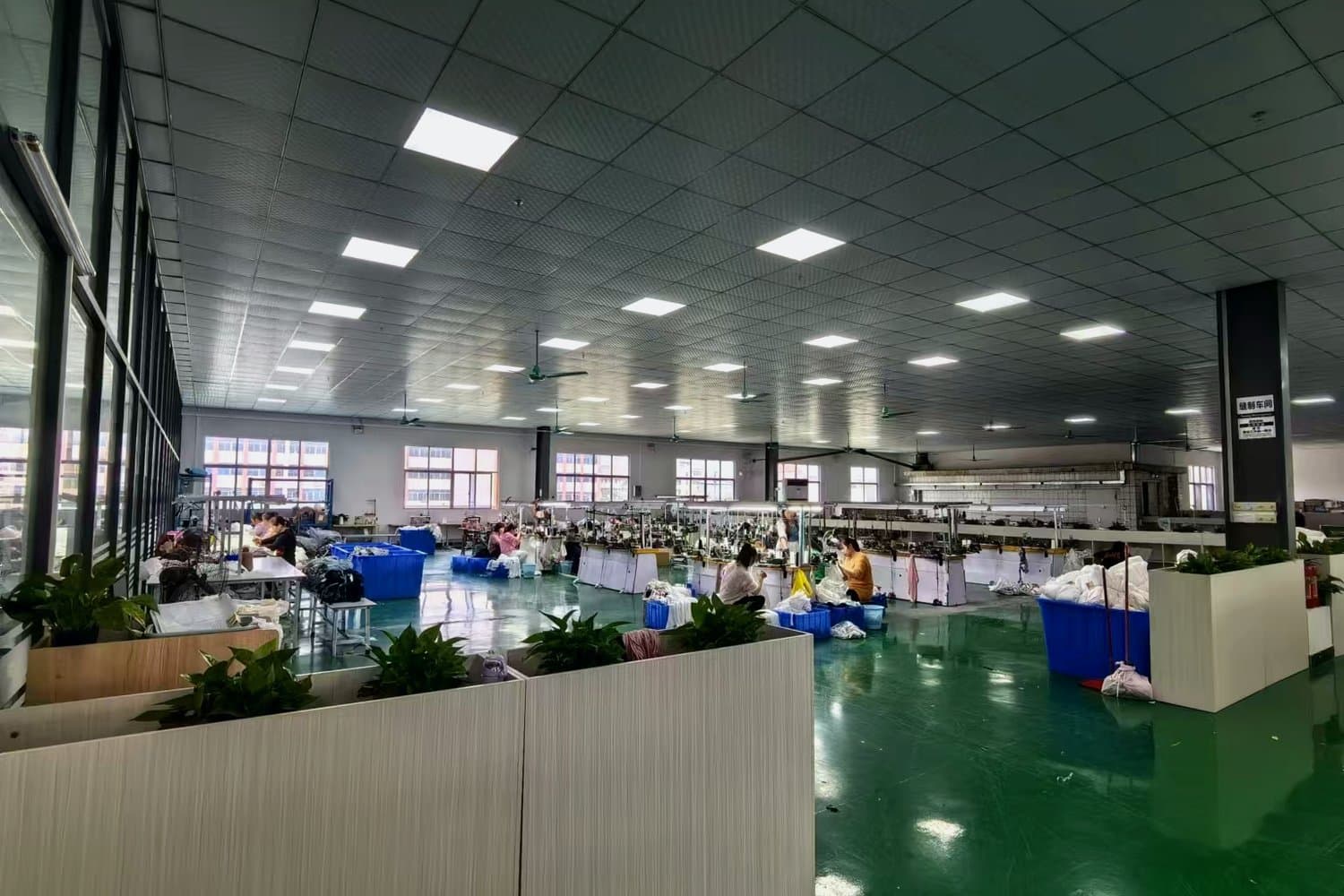
We are a Dongguan-based custom knitwear manufacturer running 3GG to 18GG production, sample lead times of 7 to 25 days and bulk of 30 to 45 days. The finishing line described below is the one we operate in-house plus the dedicated sub-processes (brushing drums, enzyme bath) we run with partner mills when a program calls for them.
What 'Finishing' Actually Means On A Knitwear Floor
Ready to Start Your Project?
Get a free catalog or submit an RFQ today. Our team will respond within 24 hours.
What does finishing actually do to a knitted garment?
It turns a knitted object into a finished one. Steaming relaxes the fabric memory built up during knitting, pressing sets final dimensions, brushing raises surface fibres for softness or halo, and anti-pill treatment removes surface fibres before wear does. Measurements taken before finishing are not the measurements the customer receives.
Why does a garment measure differently before and after finishing?
Because knitting leaves tension in the fabric that steaming releases. That is why the pre-production sample has to be measured after full finishing, and why a measurement taken off the machine tells you almost nothing about the finished garment.
What does brushing do, and what does it cost?
It raises fibres to produce softness or a visible halo - the effect behind brushed mohair and similar surfaces. It costs yarn strength and it adds a finishing step, so it is a deliberate aesthetic decision rather than a free upgrade.
Is softener a good idea?
In moderation. Softener is the last lever available on hand, and it flatters a sample. If the hand you approved depends on softener rather than on the yarn, the garment will feel different after the customer washes it - which is a returns problem rather than a production one.
How should finishing be specified in a tech pack?
State the finishing route you expect and the tests the finished garment must pass - dimensional stability to ISO 6330 and pilling to ISO 12945-2 - measured after full finishing. Finishing is where a quality target becomes checkable.
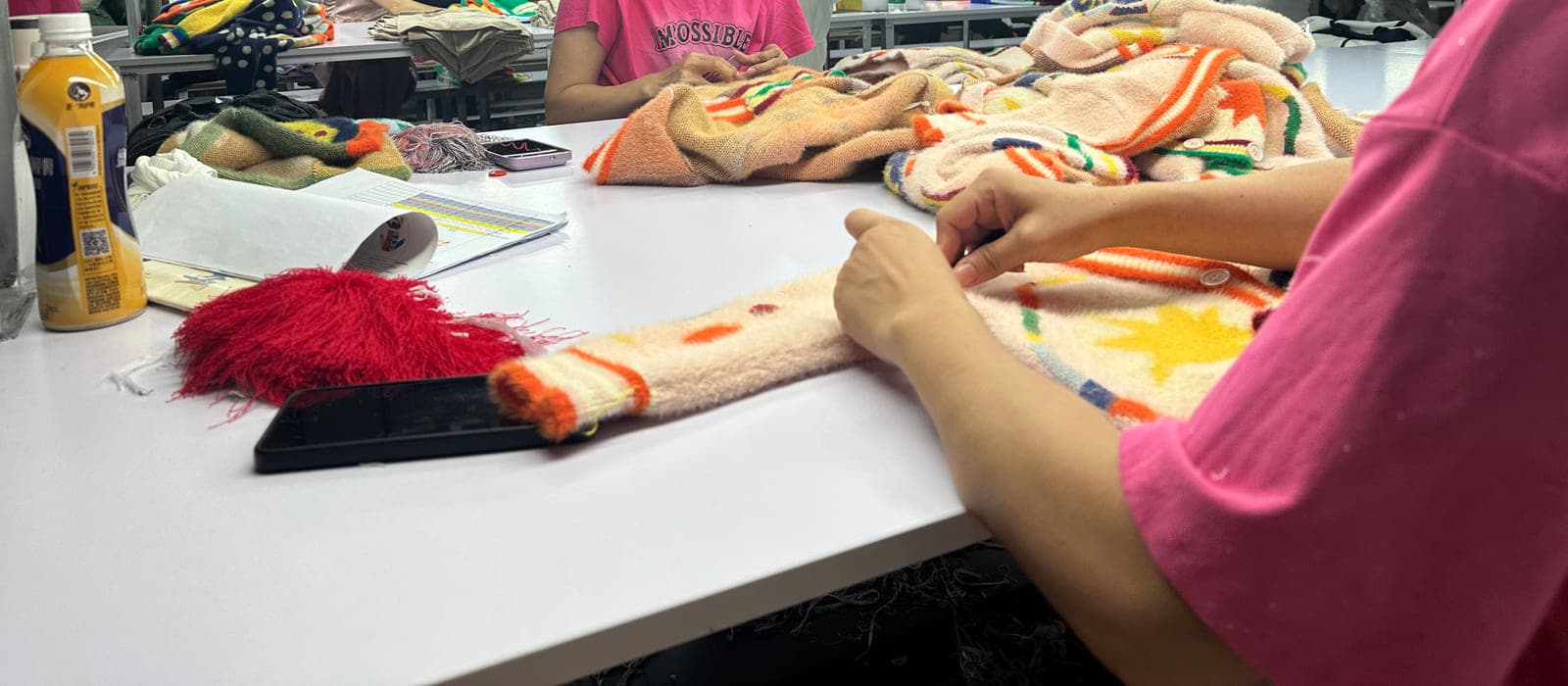
Finishing is every operation between the moment a garment leaves linking and the moment it goes into a polybag. On a knitwear floor that means, in approximate order: mending and inspection, wet processing (wash, enzyme, softener), drying, steaming, pressing/blocking, brushing or napping if specified, second inspection, label and trim attach, final press, fold, polybag. Not every garment goes through every step — a plain 7GG cotton crewneck might skip brushing entirely; a lambswool 5GG with a 'milled' hand goes through wet finishing, brushing, and a finishing steam.
The two things finishing controls that nothing else can fix later: dimensions and hand. Knitted fabric has memory. It comes off the machine with locked-in tension from yarn feed, take-down, and the seamer. Finishing is where that memory gets relaxed and the garment is set to its real dimensions. Hand — the tactile feel — is set primarily by yarn but moved up or down a noticeable amount by softener and brushing. Once a carton leaves the factory, neither of these properties can be meaningfully adjusted.
Steaming: Relaxing The Fabric Memory
Steaming is the cheapest finishing step and the one that does the most. A steaming tunnel or vacuum board hits the garment with high-humidity, low-pressure steam for a few seconds. The yarn fibers absorb moisture, the elastic memory in the loop structure releases, and the garment settles to its 'true' relaxed dimensions. Without steaming, a sweater measured at the linking table can be two centimeters wider across the chest than the same sweater measured after a wash at home — because the fabric has not yet been allowed to relax.
Where steaming goes wrong: too long, too hot, or both. Wool and cashmere are forgiving; cotton and acrylic less so. Over-steamed acrylic loses loft permanently and develops a slightly 'pressed' surface that no amount of laundering will restore. Cotton over-steamed in tension can shrink unpredictably in the consumer's first wash because the relaxation was forced, not natural. The right specification is duration and steam pressure by yarn type; the wrong specification is 'steam more' as a corrective for a garment that is actually off-spec from knitting.
Cost impact: negligible per piece. Lead time impact: a few hours per lot. There is almost no reason to skip steaming, and almost every quality problem in finished knitwear has a steam-related contributor somewhere.
Pressing: Setting Final Dimensions
Pressing happens after steaming and is the step that locks the garment to its tech-pack measurements. The garment is placed on a heated board cut to the size's measurement chart, lightly pinned at neck, hem, and cuffs, and either steam-pressed or hot-pressed. Recovery — the property that lets a sweater snap back after stretching — is partly a function of yarn and structure, but pressing is where the recovery is calibrated. Press too hard and you flatten the loop, kill the loft, and reduce recovery. Press too gently and the garment ships with dimensions slightly off chart.
This is where most 'doesn't feel right' samples actually have their problem. A heavily-pressed cashmere sweater feels thin and lifeless even if the yarn is good. An under-pressed cotton crew ships at +1cm chest, fails the QC audit, and the buyer's QC team blames knitting when the operator simply rushed the board. We do every program with a pressed-and-measured first piece per size per color before the run continues.
Brushing: Raising Surface Fibers For Soft Hand
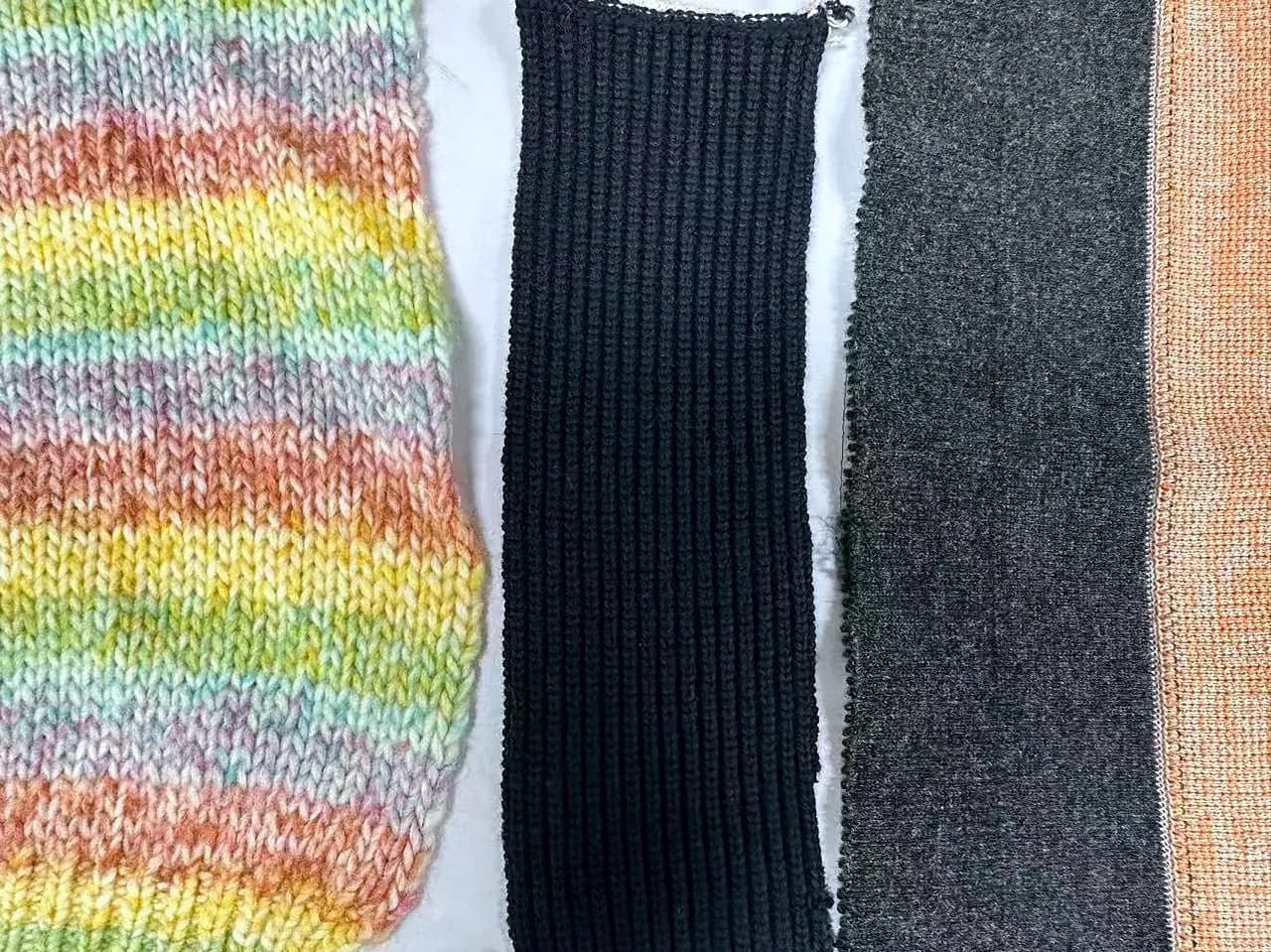
Brushing — also called napping or raising — is a mechanical operation. The garment runs against rotating cylinders covered in fine wire brushes that lift the loose fiber ends out of the yarn structure to form a soft surface layer. Done right, a 5GG lambswool turns from a clean knit into a 'milled' or 'mohair-like' surface with visible loft. Done wrong, it looks fuzzy in a cheap way and the garment loses durability — those raised fibers are the same fibers that will pill in week three.
The critical buyer-side rule: do not brush fine gauges unless you understand the trade. 12GG and 14GG yarns are thin and the fiber length per loop is short. Brushing aggressively at fine gauge breaks fibers, weakens the fabric, and produces a halo that will shed and pill heavily. We have turned down 'brushed 12GG' briefs before and proposed either a 7GG brushed version or a 12GG with a softener-only finish. If a buyer insists, we run a brush sample and a control side-by-side so the trade is visible before bulk.
The other critical rule: brushing only goes one direction in time. You can always brush more in a re-finish; you cannot un-brush. Specify a conservative brush on the first sample and step up if needed.
Anti-Pill Treatment: Enzyme, Mechanical, Or Both
Pilling is the formation of tangled fiber balls on the garment surface during wear. It is caused by short, loose fibers in the yarn structure migrating under abrasion. Anti-pill treatment attacks the problem at its root by removing those short fibers before the garment ships.
There are three approaches:
Enzyme (cellulase) bath. Used on cotton and cotton-blend knits. The enzyme selectively digests short cellulose fibers on the surface. Cleanest result, predictable, costs roughly USD 0.20 to 0.50 per piece depending on bath size and chemistry. Adds 1 day to lead time.
Mechanical anti-pill. The garment runs against an abrasive surface that wears off loose fibers physically. Works on wool, acrylic, and blends where enzymes don't apply. More variable than enzyme — operator skill matters — and can soften the surface noticeably as a side effect.
Combined enzyme plus mechanical. Used for the highest-spec programs. Roughly doubles the per-piece cost but produces the most durable surface against pilling.
What buyers should not specify: 'no pilling.' No knitted garment from natural fiber is pill-free, and that promise on a tech pack will produce a defensive sample and a hostile QC negotiation. What to specify instead: an ICI or Martindale pill test method and a minimum grade (e.g. ICI 5000 cycles, grade 3.5 or better). This gives both sides a measurable target.
Softener: The Last Lever On Hand
Softener is a chemical bath — typically silicone-based for synthetics, fatty-acid quaternary or amino-silicone for naturals — that coats the fiber and changes the hand. A correctly-softened garment feels smooth, slightly slippery, and recovers a 'finished' look after the first wash. An over-softened garment feels waxy, sometimes greasy, and can lose absorbency.
The trap with softener is that it is the cheapest lever to move and therefore the one factories reach for when a sample has been criticized for hand. If a buyer rejects a sample as 'too dry,' an inexperienced merchandiser will add softener rather than diagnose whether the real problem is under-steaming, wrong yarn count, or rushed pressing. Softener masks problems on the first wear and reveals them on the third wash, when the coating starts to come off and the underlying hand of the garment surfaces.
What to specify: softener type by fiber, and ideally a wash-cycle hand retention spec ("hand at zero wash and at three home washes within 0.5 grade on a five-grade tactile scale"). Don't specify softener brand unless your QA chemist has tested it on this exact yarn.
Finishing Operations At A Glance
Operation
What It Changes
Typical Cost Impact (USD FOB)
Lead Time Impact
Most Common Failure Mode
Steaming
Relaxes loop memory, sets true dimensions
<0.05 / pc
A few hours per lot
Over-steamed acrylic loses loft; cotton forced-relaxed shrinks at home
Pressing / blocking
Locks final tech-pack measurements, calibrates recovery
Brushed on 12GG+ fine gauge → halo, shedding, pilling
Anti-pill (enzyme)
Removes short cellulose fibers on cotton
0.20–0.50 / pc
1 day
Wrong enzyme dosage thins fabric body
Anti-pill (mechanical)
Wears off loose fibers on wool/acrylic
0.15–0.40 / pc
0.5–1 day
Operator-variable, can over-soften surface
Softener
Coats fiber, smooths hand
0.05–0.20 / pc
<0.5 day
Used to mask other defects; washes out by cycle 3
How To Diagnose A Sample That Doesn't Feel Right
When a sample lands on a product developer's desk and the verdict is 'something is off,' the diagnosis order should be: dimensions first, then surface, then hand, then recovery. Dimensions off = pressing or steaming. Surface wrong (too fuzzy, too flat, halo) = brushing or absence of it. Hand wrong but surface correct = softener mismatch. Garment looks fine off the hanger but loses shape after a stretch = pressing was too aggressive and killed recovery.
Write the feedback in that vocabulary back to the factory. 'Make it softer' produces an extra softener pass and a worse problem two months later. 'The hand feels coated rather than dry-soft; please reduce softener and add one mechanical anti-pill cycle' produces a corrected sample on the next round. The whole point of learning finishing is to give the factory the right lever to pull.
What Buyers Should And Should Not Specify
Specify: gauge, yarn composition and count, hand target (with reference garment if possible), pill test method and minimum grade, dimensional tolerance per measurement, and a steaming/pressing photo of the approved first piece. Specify softener category by fiber and a hand-retention target across home wash cycles.
Do not specify: 'extra soft,' 'no pilling,' 'machine washable' without test method, specific softener brand without chemist validation, brushing on fine gauges without seeing a side-by-side sample, or 'matte finish' on natural fibers without defining what matte means against a swatch. Vague qualitative language on a tech pack is the single most common cause of finishing disputes.
Finishing is the last 5 percent of cost and the last 50 percent of perceived quality. Get the vocabulary right and the back-and-forth on samples shrinks from four rounds to two.
---
Talk to our team about this
If you're planning a real project around any of the points above, we'd be glad to take a quick look. Send a short brief and we'll come back within one business day with a practical direction, MOQ + lead time estimate, and a sample plan if it makes sense.
Usually yes, but not always. Stiffness can come from yarn (low-twist failure, hard hand on the cone), from knit structure (loop length too tight), or from finishing (under-steamed, under-softened, or no enzyme on a cotton that needs it). Diagnose in that order: ask the factory for a swatch of raw yarn and a swatch of pre-finish fabric. If both feel stiff, the problem is upstream of finishing and softener won't fix it. If only the finished garment feels stiff, it's a finishing issue and steaming/softener parameters are the lever.
Related but not identical. Brushing is mechanical — wire-brush cylinders raise fibers on a dry or damp garment. Milling/fulling is a wet process where wool fibers are agitated in warm water to felt slightly and bulk up. Both produce a softer surface but the structure is different: brushed knits keep their loop definition; milled knits look denser and less defined. A 5GG lambswool can be brushed, milled, or both. Specify which one against a physical reference.
Use a published test method and a numerical grade. Common ones are ICI pilling box (typically 5000 cycles) and Martindale (typically 2000 to 7000 rubs depending on garment category). Specify the cycle count and a minimum grade on the 1–5 visual scale (3.5 is a sensible mass-market target; 4 or better is premium). Don't write 'no pilling' — that is unachievable on natural-fiber knits and produces defensive responses rather than measurable commitments.
Almost always, yes. Fine-gauge yarns have shorter fibers in their structure and less loft to work with. Aggressive brushing breaks fibers, produces a halo on the surface, and causes heavy shedding and pilling in early wear. If a buyer wants a soft surface on 12GG, the better levers are a higher-quality fiber input (combed cotton, longer-staple wool) and a softener-led finish, not mechanical brushing. We will produce a side-by-side sample if a buyer insists, so the trade is visible before bulk commits.
Most commonly: heavy softener that masked an underlying hand problem. Silicone and fatty-acid softeners coat the fiber and feel excellent on day one. By the third home wash they begin to come off and the garment's real hand surfaces. The fix is to test samples after three accelerated wash cycles before approving the program, and to spec softener category and hand-retention rather than a one-time tactile approval. The other common cause is bulk steaming run faster than sample steaming — same operation, different parameters, different result.
We focus on men's sweaters, cardigans, knit jackets, jacquard knitwear and private label knitwear. We support B2B buyers with OEM/ODM development, sampling and bulk production planning.
MOQ, lead time, cost ranges, gauge selection and QC checkpoints across typical OEM/ODM knitwear programs in NA + EU. Enter your email — we'll send you the report link in 30 seconds.
No spam. Unsubscribe with one reply. We use your email only to send you the report and follow up if you want a sourcing conversation.
Brand names shown are previously serviced OEM/ODM partners. Logos are decorative and do not imply current endorsement.