Updated 9/19/202612 min readBy Simon Liu · Licheng Knitwear
Brands with public sustainability targets need knitwear suppliers who can act on those targets at the PO level — not just nod along in a deck. The problem is that most of the carbon-reduction conversation in apparel sits at a glossy marketing altitude, where claims outrun data. This guide steps down to the buyer's actual tool kit: six concrete levers — yarn choice, gauge, dye method, packaging, freight mode, and durability — where the decision sits on a line in your tech pack or purchase order. For each lever, we give a realistic impact range drawn from published industry datasets, the certification or measurement that makes the claim defensible, and the exact language to put on the PO. Where the data is thin, we say so. The goal is a program your sustainability team can defend internally and externally, not a press release.
Brands with carbon targets — Science Based Targets, CDP commitments, retailer scorecards — need their knitwear program to contribute real reductions, not narrative ones. Sweaters and cardigans are a meaningful slice of an apparel footprint: yarn alone often drives 50-70% of cradle-to-gate emissions for a finished knit garment, with the remainder split between dye/finishing, manufacturing energy, and inbound/outbound logistics. The good news is that most of the reduction levers sit in places a buyer already controls — yarn spec, gauge, dye method, packaging, freight Incoterm, and quality acceptance. The bad news is that many published reduction numbers are vendor marketing rather than primary LCA data, so the work is partly about choosing levers and partly about choosing claims you can defend.
We are Licheng, a Dongguan custom knitwear manufacturer working in 3GG-18GG across men's, women's and children's programs. We do not hold our own GRS/RCS/GOTS scope certificate as a factory, and any article that pretends a CMT workshop is what gets certified is selling you something. What we do is route POs to mills that hold the scope certificates the claim needs, pass transaction certificates through to the buyer, and document the chain of custody so your sustainability team has paperwork that survives audit. This guide is written from that operator's seat.
Ready to Start Your Project?
Get a free catalog or submit an RFQ today. Our team will respond within 24 hours.
Where does most of a sweater's carbon footprint actually sit?
In the yarn. Fibre production and processing dominate the number for a knitted garment, which is why yarn choice moves the footprint far more than anything a factory does downstream. Buyers who focus their effort on factory-level energy are optimising the smaller share.
Does a finer gauge reduce the footprint?
It can, because a finer gauge uses less yarn per garment - and yarn is the dominant term. But the effect is partly offset by longer machine time, and it changes the product, so gauge is a footprint lever only where the finer garment is one you actually want to sell.
Is yarn-dye or piece-dye lower energy?
They differ in where the energy is spent rather than simply in how much. The bigger practical lever is avoiding rework: every extra lab dip and every re-dyed lot is energy spent twice. A clear colour brief is a carbon lever as well as a cost one.
How much difference does sea versus air freight make?
Enough that it outweighs most packaging decisions. Air freight is ordered when a calendar has already slipped, which makes realistic lead-time planning one of the more effective carbon levers available to a buyer - it is a booking decision, not a materials decision.
Does durability count as a carbon lever?
Yes, and it is the one most often left out. A garment that pills in one season is replaced; specifying anti-pill performance and testing to ISO 12945-2 keeps a piece in use longer, which spreads its footprint across more wears.
If you only have time to pull one lever, pull yarn. Multiple peer-reviewed and industry LCAs converge on the same finding: for a knit garment, fibre production plus yarn spinning typically accounts for the largest single share of cradle-to-gate CO2e, well ahead of garment assembly. The dominant drivers are virgin fibre extraction (especially conventional cotton water and fertiliser, or virgin polyester crude oil), spinning energy, and — for animal fibres — methane from livestock.
This means three things for the buyer. First, a switch from virgin to recycled feedstock on a meaningful share of the bill of materials produces a bigger absolute reduction than almost any operational tweak downstream. Second, the same switch is the easiest to evidence on paper — recycled polyester ships with GRS or RCS transaction certificates, recycled wool with GRS, organic cotton with GOTS or OCS, and so on. Third, because the lever is so large, it is also the one that draws the most greenwashing — "eco-yarn" with no scope certificate behind it is a marketing claim, not a verified material. For the rest of this guide we treat "verified" as "there is a transaction certificate or accredited test result a third party can audit." Without that, we treat the saving as a directional estimate, not a number you can put in an annual report.
Lever One: Yarn Choice (Recycled, Regenerative, Locally Spun)
Recycled wool from pre- or post-consumer feedstock can cut fibre-stage CO2e versus virgin wool by roughly 40-60% depending on the source data and the share that is mechanically vs chemically recycled. Recycled polyester from PET bottles typically lands 30-50% below virgin polyester at the fibre stage. Recycled cotton from spinning waste sits in a similar band but with a meaningful caveat: short-staple recycled fibre is usually blended at 20-30% with virgin or long-staple recycled cotton to hit a knittable yarn, so the realised garment-level saving is proportionally smaller than the headline.
Regenerative wool and ZQRX-style programs claim further reductions on top of conventional-wool baselines through soil carbon and grazing practice. The honest read for a 2026 buyer: the methodologies are maturing but not fully standardised, the supply is constrained, the price premium is real (often 30-60% over conventional wool), and the carbon claim is harder to audit than a recycled-content claim. Use regenerative where the brand story justifies the spend, but do not lean on it as the load-bearing piece of your reduction maths.
Local spinning — yarn spun close to the knitting factory — reduces yarn inbound freight emissions, but the absolute saving is usually small (low single-digit percentage of the garment footprint) because spinning energy and fibre origin dominate. It is a credibility detail, not a hero number.
What to specify on the PO: "Yarn: X% recycled wool (GRS-certified, scope certificate provided by spinner, transaction certificate to accompany shipment). Country of spinning to be confirmed. Lab dip and hand-feel approval required against control sample [reference number]."
Lever Two: Gauge Optimization And Yarn Weight
This is the lever buyers most often miss. A chunky 3GG cardigan can weigh 700-900g; a fine 12GG crew can weigh 280-380g. The yarn is the single biggest carbon line, so the heavier garment carries a roughly proportional larger footprint on the yarn side alone — before you count the extra knitting time. A program-level shift from over-specifying chunky styles to right-sizing gauge by use case can move the average garment footprint by 20-35% with no change in yarn type and no premium to pay.
This does not mean ban chunky knits — they sell, they are a category for a reason. It means audit the range. Where a 5GG would do the job a 3GG was specified for, the lighter spec usually wins on cost and carbon together. See our guides on knit gauge — 3GG, 5GG, 7GG and 12GG and 5GG vs 7GG vs 12GG sweaters for the trade-offs.
What to specify on the PO: target garment weight in grams per size (e.g. "Size M finished weight 360g ±5%") rather than only gauge, so the factory cannot hit the gauge with a heavier-than-needed yarn count.
Lever Three: Yarn-Dye Vs Piece-Dye Energy Delta
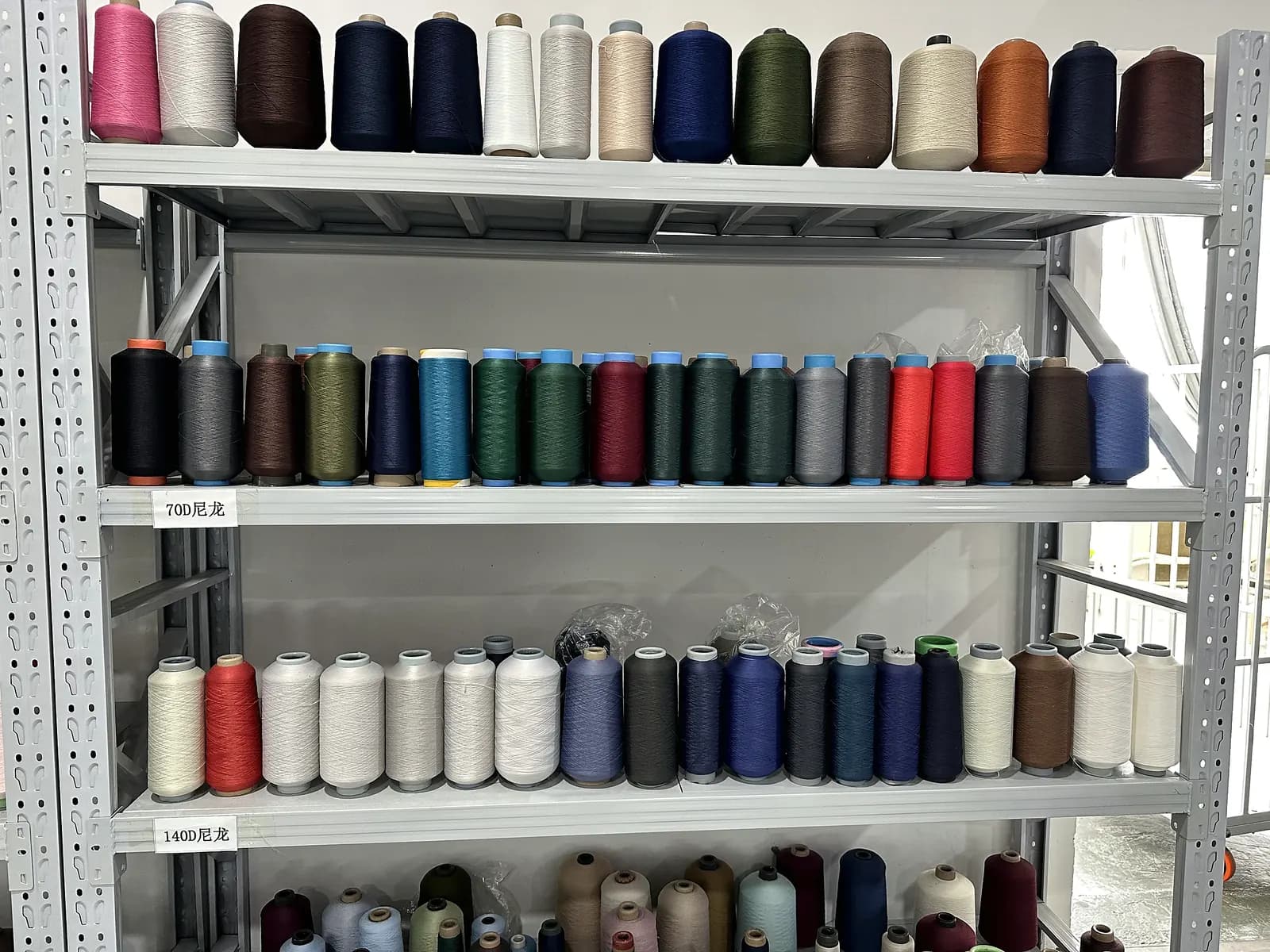
Knitwear is dyed in one of three windows: at the fibre stage (top-dye, common for melange), at the yarn stage in cones before knitting (yarn-dye, common for solids and stripes), or as a finished garment (piece-dye / garment-dye). Each has a different energy and water profile.
For most knit programs the realistic lever is choosing between yarn-dye and garment-dye for a given style. Yarn-dye typically gives better colour consistency between dye lots, and for multi-colour patterns it is the only viable route. Garment-dye uses less water and energy per unit when batch size is matched to dye-house capacity, and gives a softer hand, but carries higher rejection risk and shade variance. The published energy/water deltas are narrower than internet folklore suggests — single-digit-to-low-double-digit percentage differences are typical, not 40-50% — and they depend heavily on the specific dye-house, dye class, and batch size.
The more impactful lever inside dyeing is the dye-house itself: low-liquor-ratio machines, heat recovery, and effluent treatment dominate the footprint of this stage. Ask your supplier which dye-house the order routes to, and ask for their ZDHC MRSL conformance level and ZDHC InCheck wastewater report. These are auditable; a generic "low-impact dye" line on a hangtag is not.
Lever Four: Packaging — Bulk Vs Polybag-Per-Piece
Individual polybagging of every piece is the apparel industry default, driven by retail DC sortation and moisture control. It is also the easiest place to cut plastic with a measurable result on the PO line. Options ranked by ambition:
Eliminate the inner polybag where the retailer allows it (some pure-play DTC programs do).
Switch to recycled-content LDPE polybags (30-100% PCR available; FTC Green Guides and EU PPWR favour PCR over "oxo-bio" or generic "eco" claims).
Move to multi-piece bulk polybags (one bag per carton or per inner pack of 5-10 pieces).
Use compostable bags only where the destination market has industrial composting infrastructure; otherwise this is greenwashing.
For hangtags and inserts, FSC-certified paper at recycled content is straightforward to source. The packaging line on the PO is also the easiest to specify and inspect — it shows up in the AQL pack-out check.
What to specify on the PO: "Polybag: 100% PCR LDPE, minimum 30% PCR content certified, [recycle symbol] printed; no oxo-degradable additives. Hangtag: FSC-certified recycled paper, single string attachment, no plastic seal. Inner pack: 5 pieces per outer polybag where retail spec permits." Pair this with our private label knitwear packaging guide.
Lever Five: Sea Freight Vs Air Freight
This is the lever with the biggest swing for the smallest spec change. Air freight a knitwear shipment from China to Europe or North America, and the freight leg can rival or exceed the entire manufacturing footprint of the garments. Move the same shipment by sea, and the freight leg typically falls to a low single-digit share of the total. Published figures vary, but the ratio is consistent: per tonne-km, air freight emits in the order of 30-100× the CO2e of ocean container freight. For a 0.5kg sweater, the difference between air and sea on a transpacific or transatlantic lane is on the order of 5-15 kg CO2e per unit — often larger than the entire fibre stage.
The operational implication is unromantic: hit your seasonal lead times. Most air-freight in knitwear is a recovery move after a calendar slipped — a sample re-approval that ran two weeks long, a colour rejection in pre-production, a delayed PO release. Brands that publish carbon targets and then air-freight half their fall season are not reducing emissions; they are paying penalties. Our seasonal knitwear planning guide and knitwear shipping and logistics overview walk through the lead-time arithmetic.
What to specify on the PO: Incoterm and mode (e.g. "FOB Yantian, ocean freight"), with a written escalation rule (e.g. "air freight requires written brand approval; cost and carbon variance reported on shipment manifest").
Lever Six: Durability And Anti-Pill — Extending Garment Life
Doubling the use phase of a garment roughly halves its annualised carbon footprint, since the cradle-to-gate emissions amortise over more wears. For knitwear the dominant durability failure is pilling, and the dominant return driver after fit is pilling and shape loss. This is a spec issue, not a marketing issue.
Pill resistance is testable: Martindale (ISO 12945-2) or random tumble (ASTM D3512), with a 4-5 scale rating. Fibre choice, yarn twist, gauge, and finishing all affect the outcome. Specifying a minimum pilling grade — and testing for it before bulk — converts "we make quality knitwear" into a number a QA team can sign off. Our deeper guide is why sweaters pill and how to specify anti-pill knitwear.
What to specify on the PO: "Pilling resistance: Martindale ISO 12945-2, minimum grade 4 after 2,000 rubs. Third-party test report required before bulk shipment."
The Six Levers At A Glance
The table below summarises realistic ranges, evidence sources, and the PO mechanism for each lever. Ranges are program-level estimates drawn from public LCA literature and industry datasets; they vary by yarn, season, dye-house and lane. Treat as planning ranges, not guarantees.
Lever
Realistic CO2e Impact (Garment-Level)
Evidence / Audit Method
What Goes On The PO
Recycled / regenerative yarn
-15% to -35% on full garment when applied to >50% of BoM
GRS / RCS / GOTS / OCS transaction certificate per shipment; ZQRX or equivalent for regenerative
Yarn % recycled, certification name, scope cert from spinner, TC with shipment
Gauge & weight optimisation
-10% to -30% when finer gauge replaces over-spec'd chunky
Garment weight in grams; yarn count (Nm) on tech pack
Target finished weight per size ±5%
Yarn-dye vs garment-dye choice
-5% to -15% in some pairings; dye-house dominates
ZDHC MRSL conformance + InCheck wastewater report
Dye method, dye-house name, ZDHC level
Packaging (PCR polybag + bulk pack)
Small CO2 share but high-visibility plastic cut
PCR content certificate; FSC paper certificate
% PCR, bulk pack ratio, no oxo-bio
Sea vs air freight
-5 to -15 kg CO2e per garment on long-haul lanes
Bill of lading, freight forwarder carbon report
Incoterm, mode, air-freight escalation rule
Durability / anti-pill
-20% to -50% annualised if garment life doubles
Martindale ISO 12945-2 or ASTM D3512 lab report
Minimum pill grade + pre-bulk test
Building A Defensible Program
The pattern across all six levers is the same. The reduction itself is real but bounded; the credibility comes from the audit trail. A buyer who specifies 50% GRS recycled wool, target garment weight, ZDHC dye-house, PCR polybag, sea freight only, and a Martindale grade-4 floor — and who collects the transaction certificates, the test reports, and the bill of lading for each PO — has a program that survives an external audit. A buyer who writes "sustainable" on a hangtag and lets the rest float has a program that survives until the first journalist asks for evidence.
We support both kinds of POs at Licheng, but we are honest about which kind we are running. When a buyer structures the order around certified mills and explicit specs, we forward the paperwork, route the yarn through scope-certified spinners, and document the chain. When a buyer asks for a generic "eco" sweater with no spec changes, we deliver a competent garment but we do not pretend the carbon has moved. The difference is the PO, not the marketing.
For buyers building their first such program, the practical sequence is: (1) audit current range for gauge over-specification; (2) identify two or three styles where recycled yarn substitution is technically viable; (3) lock packaging and freight specs at the program level rather than per style; (4) set a Martindale floor and enforce it; (5) collect the paperwork from day one rather than retrofitting it before an audit. Combined with realistic sample and bulk lead times — 7-25 days for sample, 30-45 days for bulk in our shop, with sea freight on top — this is a program a sustainability team can defend without footnotes.
If you want to discuss a specific style or program against these levers, send us a tech pack with your current spec and your target reductions, and we will come back with what we can verify, what we cannot, and what the PO needs to say.
---
Talk to our team about this
If you're planning a real project around any of the points above, we'd be glad to take a quick look. Send a short brief and we'll come back within one business day with a practical direction, MOQ + lead time estimate, and a sample plan if it makes sense.
We do not hold our own scope certificate as a CMT factory, and we are direct about this — claiming otherwise would be inaccurate. What we do is route POs to spinners and mills that hold the relevant scope certificates (GRS, RCS, GOTS, OCS, OEKO-TEX STANDARD 100) and forward the transaction certificates that accompany the shipment to the buyer. Documentation requests are handled per project; structure the PO around a certified mill and we will pass the paperwork through.
Yarn choice, by a wide margin. Fibre and spinning typically dominate the cradle-to-gate footprint of a knit garment. A meaningful share of the bill of materials moved from virgin to certified-recycled feedstock will outperform any operational change downstream. Gauge optimisation is the strongest free lever — it cuts both carbon and yarn cost when applied to over-specified chunky styles.
They can be, if the yarn ships with a GRS or RCS transaction certificate tied to a scope-certified spinner, and if you keep the document chain from spinner to garment. They are not defensible from a hangtag claim alone or from an unverified mill statement. The minimum audit trail is: spinner scope certificate, transaction certificate per shipment, and matched lot numbers on the PO.
On long-haul lanes from China to Europe or North America, air freight typically adds roughly 5-15 kg CO2e per garment versus sea, depending on lane and garment weight. That is often larger than the entire fibre stage. Most air freight in knitwear is a recovery move for a missed calendar — the cheapest carbon reduction in the program is usually planning the season properly so sea freight is feasible.
At a minimum: (1) yarn percentage and certification name with scope certificate reference, (2) target finished garment weight in grams per size with tolerance, (3) dye-house name and ZDHC conformance level, (4) polybag PCR content and FSC paper for trims, (5) Incoterm and freight mode with an air-freight escalation rule, (6) Martindale or ASTM pill-resistance grade with pre-bulk test required. Anything less leaves the carbon claim unsupported.
We can assemble the inputs a carbon report needs — yarn transaction certificates, dye-house ZDHC level, packaging PCR certificate, bill of lading with mode and lane — but we do not run a proprietary LCA model and we do not issue a branded CO2e number we cannot defend. If your sustainability team uses a tool like Higg MSI, Made2Flow or a retailer-mandated calculator, we provide the line-level evidence those tools require. Treat us as the data source, not the modeller.
MOQ, lead time, cost ranges, gauge selection and QC checkpoints across typical OEM/ODM knitwear programs in NA + EU. Enter your email — we'll send you the report link in 30 seconds.
No spam. Unsubscribe with one reply. We use your email only to send you the report and follow up if you want a sourcing conversation.