
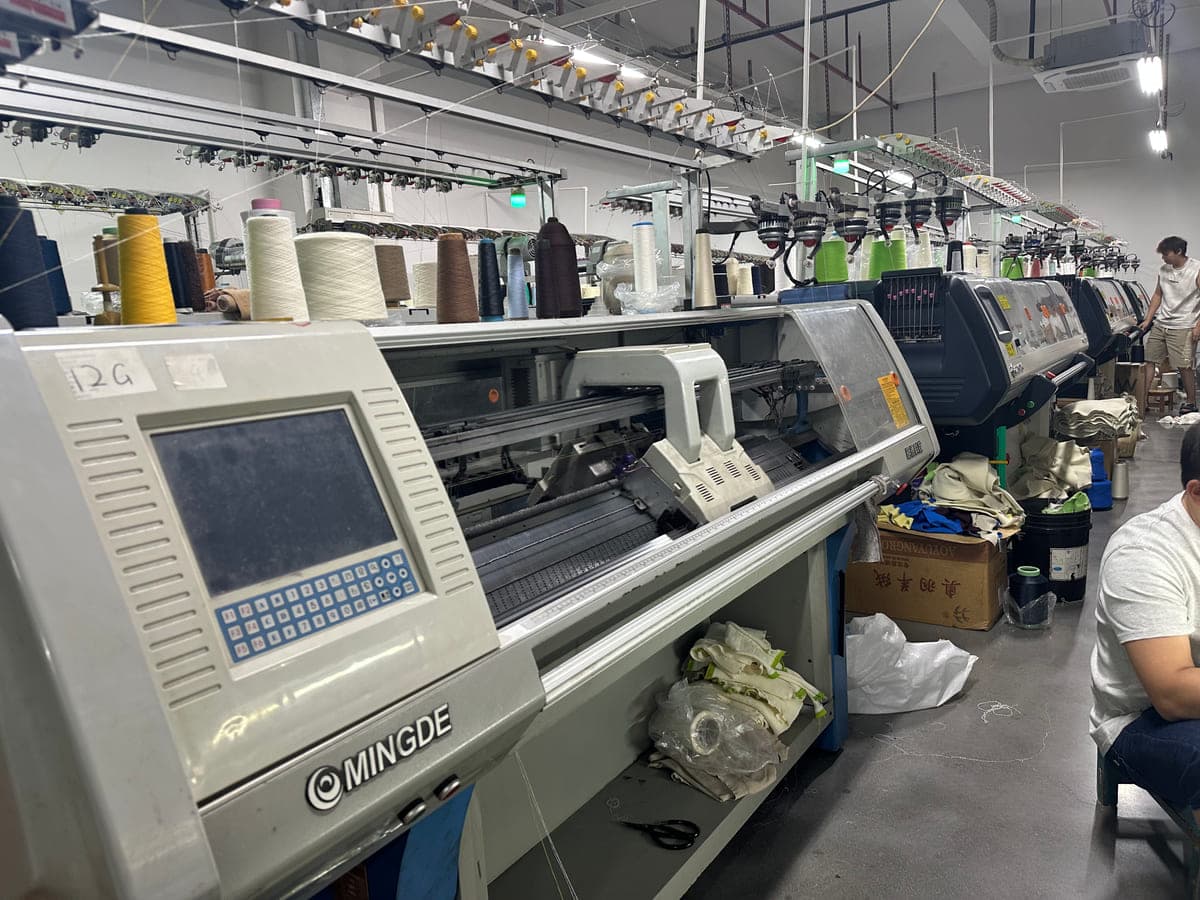
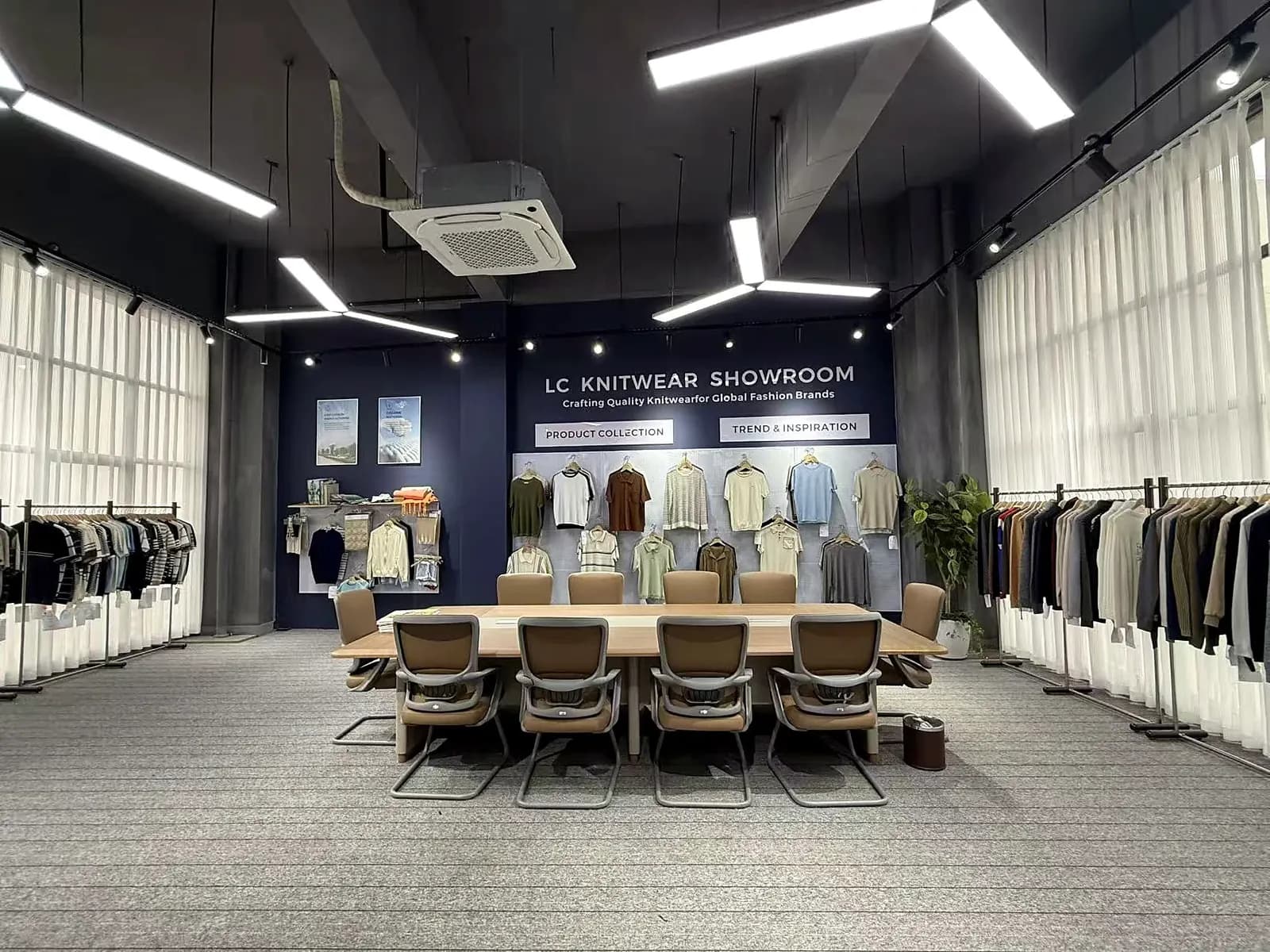
We focus on men's sweaters, cardigans, knit jackets, jacquard knitwear and private label knitwear. We support B2B buyers with OEM/ODM development, sampling and bulk production planning.
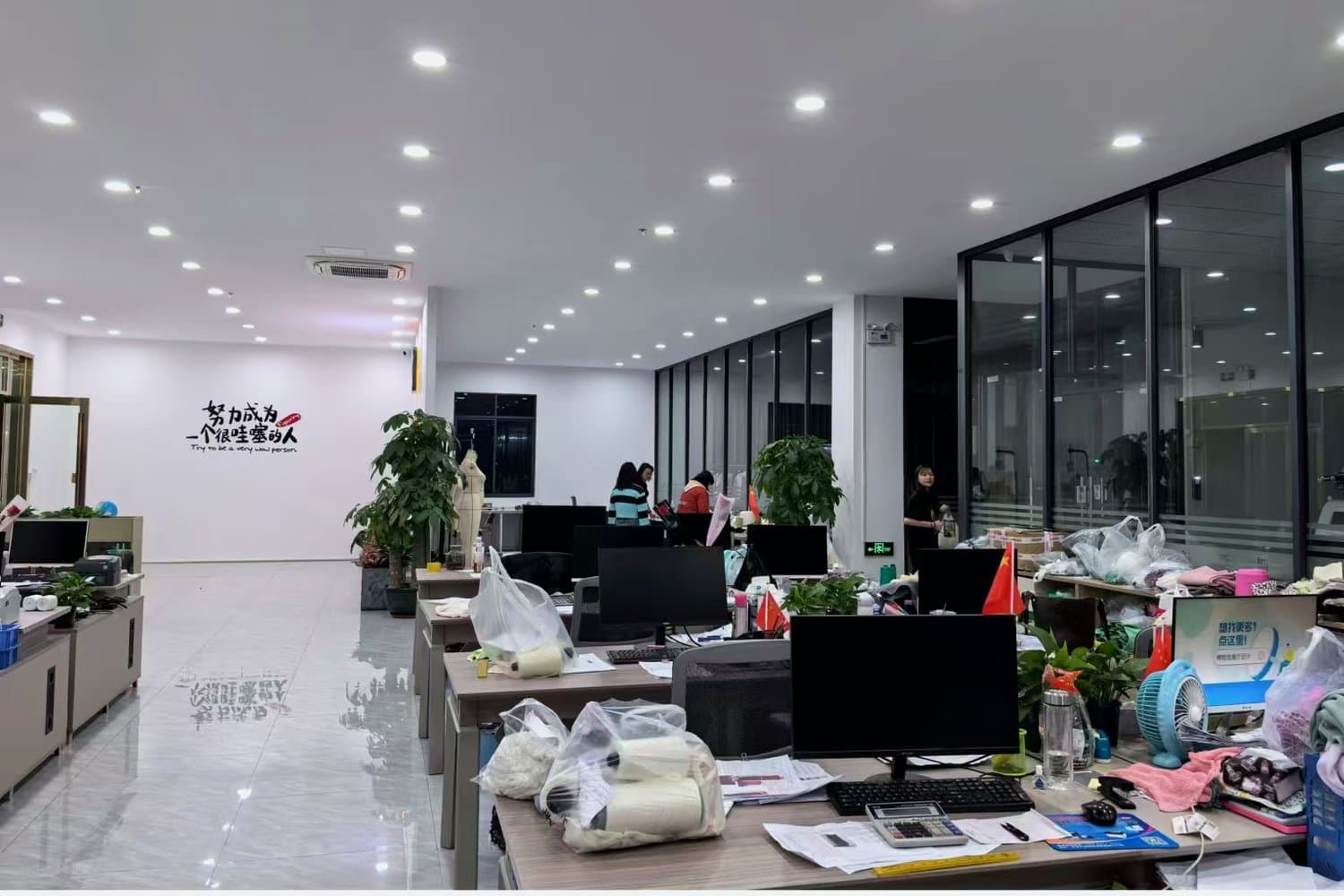
Guides for custom knitwear manufacturing, yarn selection, gauge options, quality control, cost planning and tech pack preparation.
Free interactive tool
Build your spec — yarn, gauge, colour, customisation — and instantly see the typical MOQ, sample & bulk timelines and what drives your cost.
Materials
A B2B yarn and material guide for choosing cotton blends, wool blends and synthetic support fibers for custom knitwear.
Read Guide ->Manufacturing
A manufacturing guide comparing fully fashioned knitwear and cut-and-sew knitwear for B2B sweater, cardigan and knit jacket development.
Read Guide ->Craftsmanship
A craftsmanship guide comparing jacquard and intarsia knitwear for brands developing graphic sweaters, pattern cardigans and custom artwork.
Read Guide ->Gauge
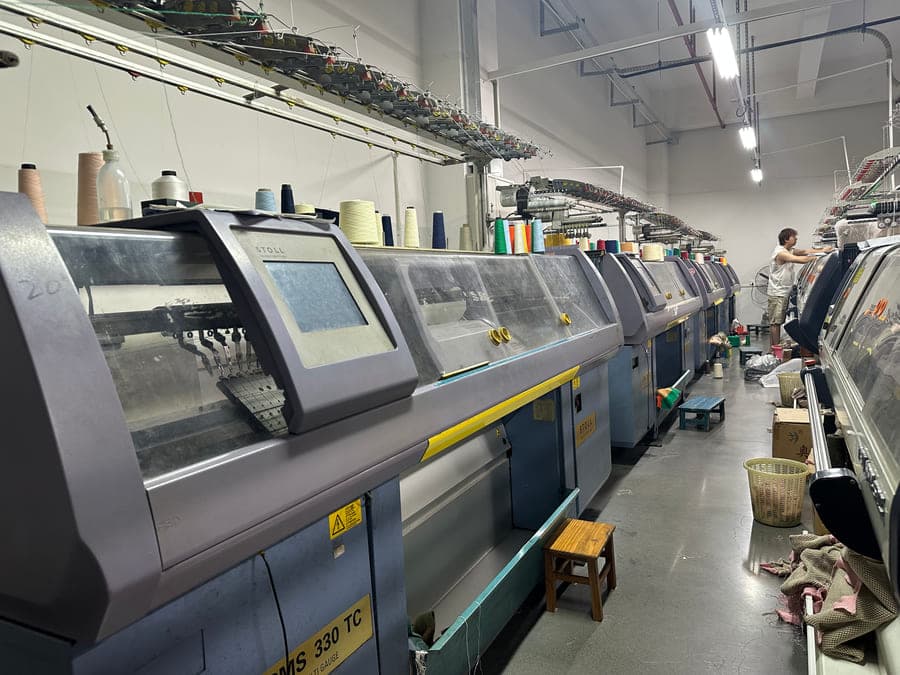
A gauge guide explaining how 5GG, 7GG and 12GG affect sweater texture, weight, season, cost and buyer positioning.
Read Guide ->Comparison
Few sourcing terms generate as much buyer-supplier confusion as OEM, ODM, private label and white label. They overlap, they are used interchangeably in supplier emails, and the wrong assumption can mean a brand pays for a custom development they never owned, or expects a custom design when the factory is preparing a generic catalog product. This guide separates the four models clearly: who designs, who owns the intellectual property, who picks the yarn and trims, what each implies for MOQ and lead time, how visible your brand actually is to the end consumer, and which brand stage typically uses each route. It is written from Licheng's perspective as a Dongguan knitwear manufacturer that operates OEM, ODM and private label programs every season, so emerging brand founders can decide which sourcing model fits where they are today.
Read Guide ->Trend
A holiday novelty knit capsule on US or EU shelves for a November 1 launch must leave a Chinese factory by mid-September. That single line is what most brand merchandisers underestimate when they start a fair-isle, gift sweater, or Christmas novelty program in late summer. Holiday knitwear is a calendar problem before it is a design problem: the gauge is usually denser, the colorways are higher, and the patterning takes more development time than a basic crew neck, so sample approval has to land by early July and the bulk PO has to be issued by mid-July to keep August knitting on track. This article walks through the reverse calendar Licheng uses with brands planning a 2027 holiday drop, the failure modes we see most often when POs slip into late August or September, and the honest cost reality of recovering a missed shipment by air. No hype, just the math.
Read Guide ->Sourcing organic cotton knitwear is not a single decision — it is a documentation chain that has to survive seven or eight handoffs without losing integrity. A first-time GOTS or OCS knit program lives or dies on whether a transaction certificate (TC) exists at every transfer: farm to ginner, ginner to spinner, spinner to dyer, dyer to knitter, knitter to finisher, finisher to garment factory. This guide walks brand sourcing managers through how the organic cotton chain of custody actually works in knitwear, what a scope certificate is versus a TC, where most programs quietly break, and the exact documents to request before your first organic claim hits a hangtag. We write this from the perspective of a Dongguan-based knit garment factory that works with mills holding their own scope certificates and forwards TCs when buyers structure the PO around it — not as a GOTS-licensed entity ourselves.
7 min read - Guide
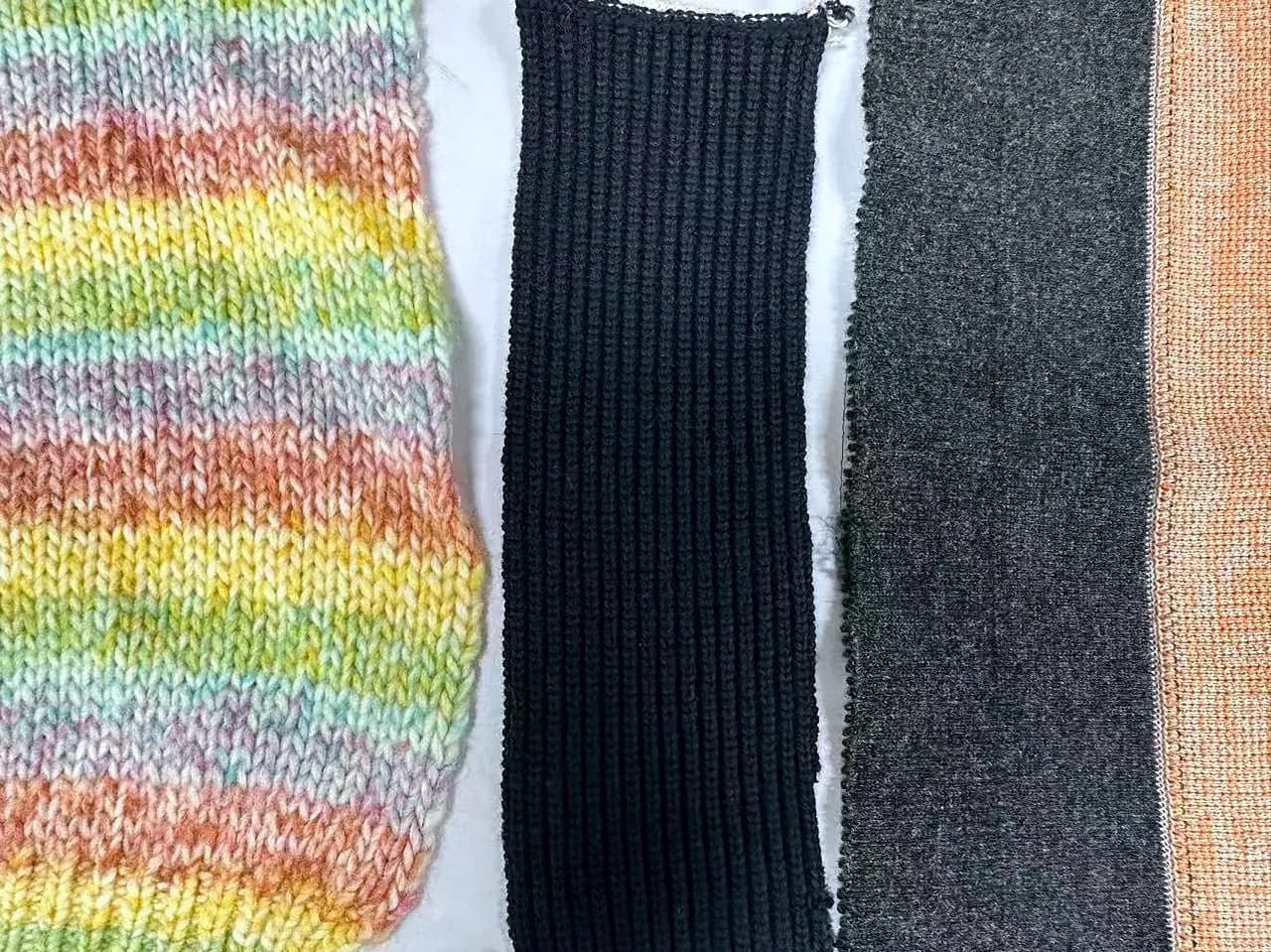
Stitch structure is the single biggest lever a product developer can pull after yarn and gauge. It decides how a sweater drapes, what it weighs, how long it takes a flat-bed machine to produce, and how forgiving the body is on a fit range. This guide walks through the four stitch families that account for the vast majority of men's knitwear we produce in Dongguan — jersey/plain, rib, cable, and jacquard — and explains what each one costs you in yarn and knit time, where it works on the gauge ladder, the failure modes that surface in fit sessions and inspection, and the buyer scenarios where one beats the others. The goal is to help you spec a knit collection on commercial reality, not on mood-board photography.
6 min read - Guide
Cashmere is the most mislabeled premium fiber in knitwear. Two sweaters both stamped '100% cashmere' on the care label can differ in raw-material cost by 3-4x, and the difference is invisible to most buyers until the customer complaint emails start arriving in week six. This guide breaks down the A/B/C grading framework used across Inner Mongolian and Chinese cashmere supply, explains how fiber length and micron drive both hand-feel and pilling behavior, and decodes single-ply vs 2-ply vs cabled 4-ply yarn construction so you know what you're actually buying. It also covers the legal-but-misleading practices that let sub-grade or shorts-blended cashmere reach finished garments under a clean label, and the specific questions you should write into your tech pack and PO to lock the quality you priced for.
5 min read - Guide
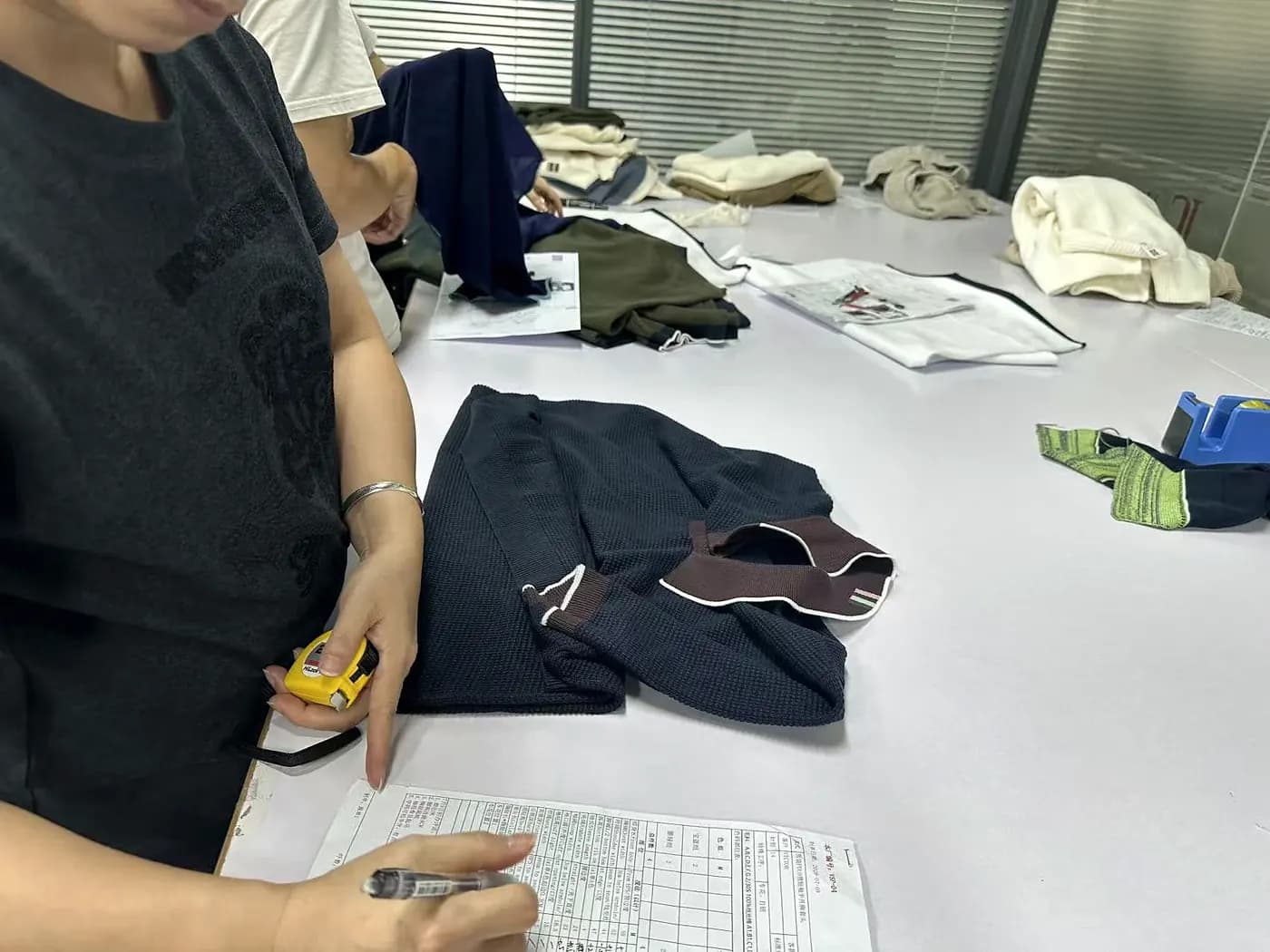
Most sweater quality issues are not random — they cluster around the same ten failure modes, each with a predictable point in the timeline where they can still be corrected at low cost. By the time a QC lead is reviewing a new sweater PO, the real question is not whether problems will appear, but whether the inspection plan and the sampling conversation are designed to catch them before they ship. This guide walks through the ten knitwear quality risks we see most often at Licheng — pilling, shrinkage, twisted side seams, mismatched dye lots, hangtag attachment errors, label drift, neckline stretching, linking inconsistency, mis-graded sizes, and packing damage — with what each looks like, the root cause, when in production it surfaces, the QC step that should catch it, and the specific question to ask your supplier during sampling.
8 min read - Guide
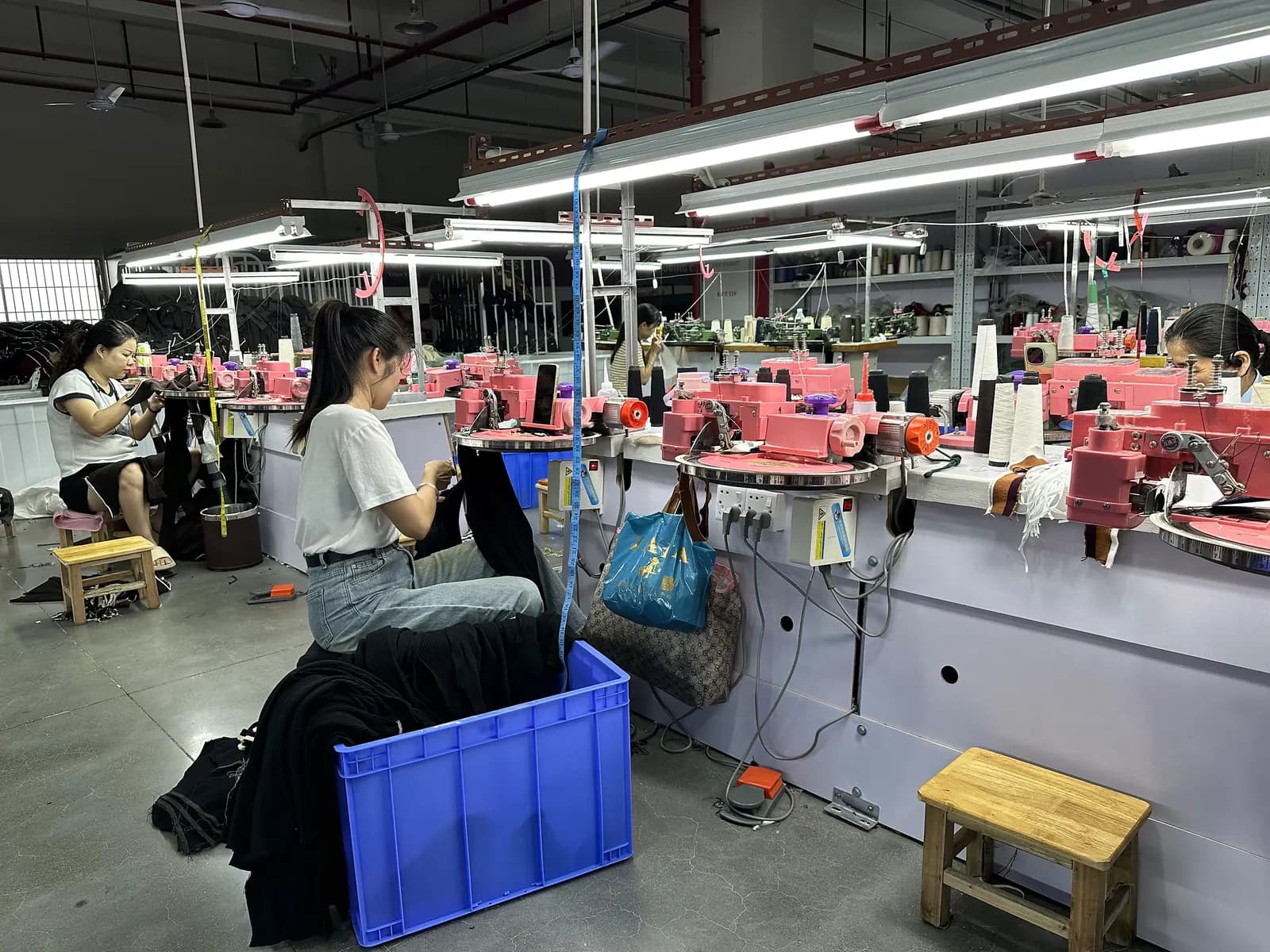
On a knitwear tech pack, the line that reads "linking" decides whether the seam disappears into the fabric or sits as a visible ridge on the inside of the garment. For a premium menswear designer, that one specification separates a sweater that feels properly made from one that flags itself as mid-tier the first time a buyer turns the cuff inside out. This guide breaks down the three linking methods Licheng uses in production — full-needle hand linking, machine linking on a dedicated linker, and overlock stitching on a standard sewing machine — covering visible seam signal, cost impact in USD FOB China, gauge compatibility from 3GG to 18GG, and which method to specify on which part of the garment. The intent is to give buyers a clear rule for writing the linking spec, not a sales pitch for one method.
6 min read - Guide
An RFQ that lands in our inbox missing a target quantity, a gauge, or a delivery date is not a quote request — it's a follow-up email waiting to happen. From our seat as a Dongguan knitwear manufacturer reading dozens of inquiries a week, the same 15 gaps explain most of the back-and-forth before a real number can be issued. This guide walks through each red flag, what it signals about the buyer's brief, why it forces us to either guess or stall, and the single-line fix that closes the gap. The goal is not to grade buyers — many of these gaps are normal, especially for first-time knitwear projects — but to give you a checklist that turns a five-day quote cycle into a same-week one.
5 min read - Guide
UK REACH registration rarely applies to brands importing finished knitwear. What binds you instead, and the Northern Ireland split that catches nationwide sellers.
7 min read - Guide
Portugal and Turkey enter the EU duty-free; China pays 12%. On a wool-blend sweater that is about $2 a piece - here is what actually decides the choice.
6 min read - Guide
Cut-and-sew, fully-fashioned and whole-garment compared on cost, waste, MOQ and setup - and the machine class most factories do not own.
7 min read - Guide
We focus on men's sweaters, cardigans, knit jackets, jacquard knitwear and private label knitwear. We support B2B buyers with OEM/ODM development, sampling and bulk production planning.
Ready sample styles and selected custom programs can support lower-risk trials before larger seasonal orders.
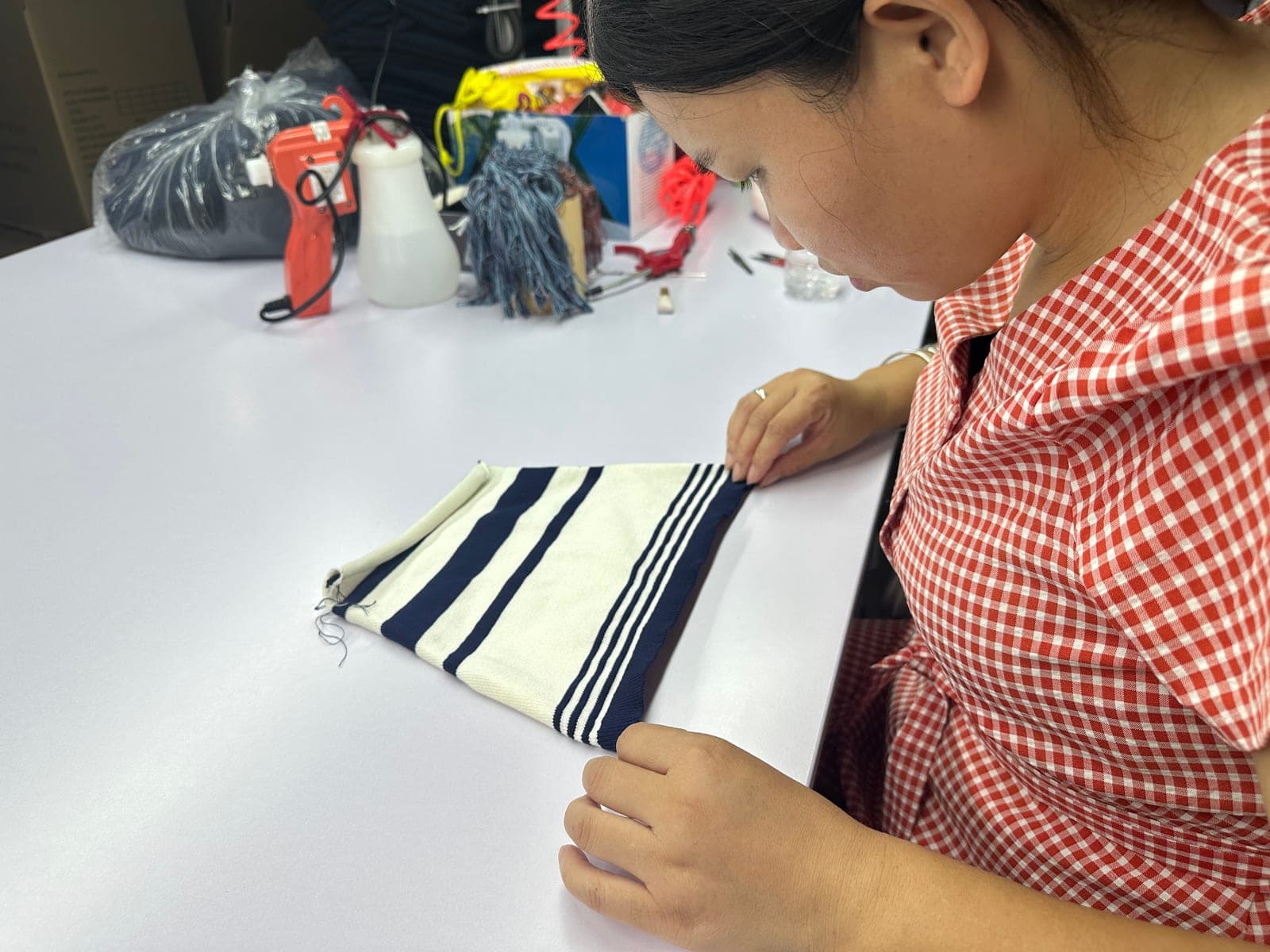
Yes. Brands, including new labels preparing a first collection, can pay for a sample and see it before placing a production order. Two routes: a ready sample of a published style at USD 60 per piece in about 7 days, or a development sample from your tech pack at USD 150 per style, covering yarn sourcing, knit programming, one prototype and one revision round, in 15-25 days. Cashmere and mohair styles are quoted individually and shipping is charged at cost. Production starts only after you approve the physical sample, at our minimum of 30 pieces per colour with sizes mixed inside the 30. A sample does not commit you to a production run; we do not make garments for personal use.
Our sample fee is not refundable. Yarn sourcing, knit programming, machine setup and hand linking cost about the same whether one piece follows or five hundred, which is why the fee exists at all. It is credited against your first bulk order placed within six months of sample approval: 100% of a development sample fee, 50% of a ready sample fee.
Yes, for brands developing a style. One development piece is fine, with no commitment to bulk: a development sample is USD 150 per style and covers yarn sourcing, knit programming, one prototype and one revision round, in 15-25 days (cashmere and mohair are quoted individually). If you then go to production, the minimum is 30 pieces per colour with sizes mixed inside the 30, and the full USD 150 is credited against a first bulk order placed within six months of approving the sample. We do not make garments for personal wear.
Plain and striped styles using the same yarn and colour can be combined toward a minimum of 30 pieces, with mixed sizes. For example, four plain styles of 25 pieces each in the same yarn and colour total 100 pieces and meet that minimum. Different yarns or colours are counted separately. Jacquard and intarsia require 30 pieces per pattern; quantities from different patterns cannot be combined. Send us your styles, yarns, colours and quantities so we can confirm how the minimum applies to your project.
Get a free catalog or submit an RFQ today. Our team will respond within 24 hours.
Cannot find what you need? Our team can create a custom guide or template for your specific project.
Request Custom Resource ->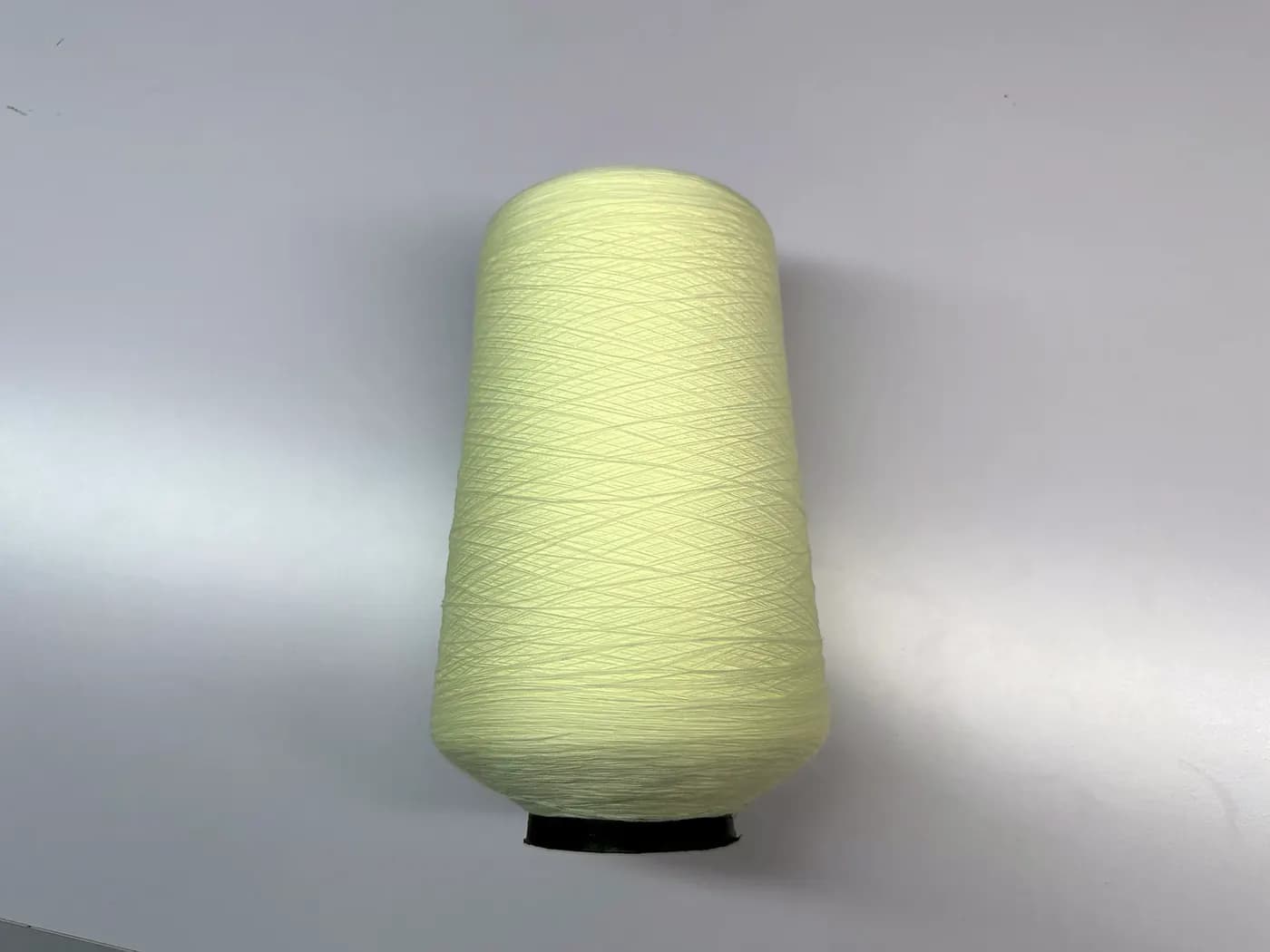


MOQ, lead time, cost ranges, gauge selection and QC checkpoints across typical OEM/ODM knitwear programs in NA + EU. Enter your email — we'll send you the report link in 30 seconds.
No spam. Unsubscribe with one reply. We use your email only to send you the report and follow up if you want a sourcing conversation.









Brand names shown are previously serviced OEM/ODM partners. Logos are decorative and do not imply current endorsement.