Short version: cut-and-sew is cheapest and wastes the most yarn. Fully-fashioned knits each panel to shape, costs roughly 30–50% more, and is what most quality knitwear is. Whole-garment knits the entire sweater in one piece with no cutting and no linking at all — and is made on a machine class most factories, including many that quote for it, do not actually own.
These three are often discussed as a quality ladder. They are not. They are three different ways of turning yarn into a garment, each with a distinct cost structure, and the right answer depends on your order size and where your money is best spent.
How each one is actually built
Cut-and-sew. The factory knits fabric by the metre, lays a pattern over it, cuts the pieces and sews them together with overlock or coverstitch seams. It is the garment-industry default applied to knit fabric.
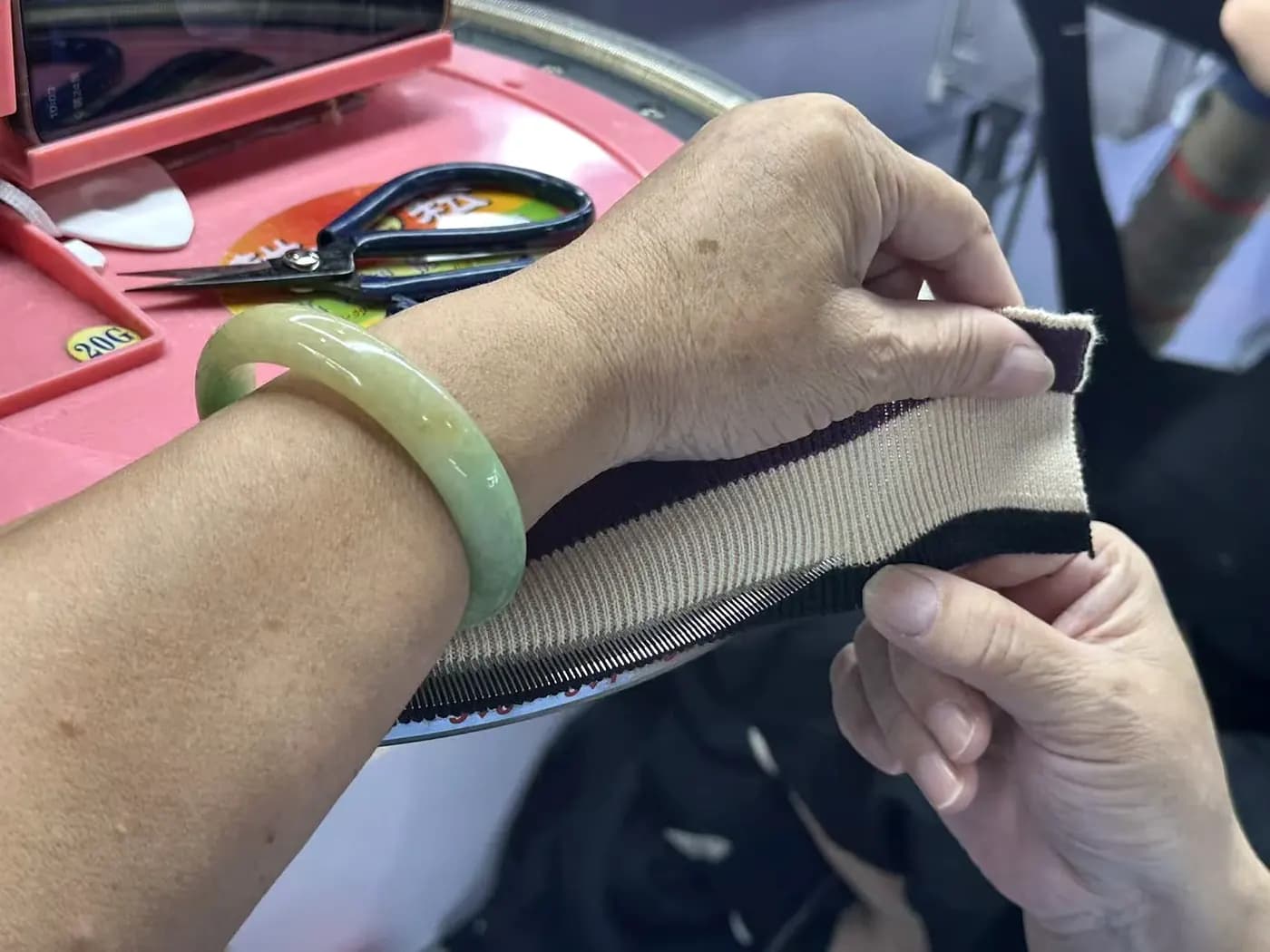
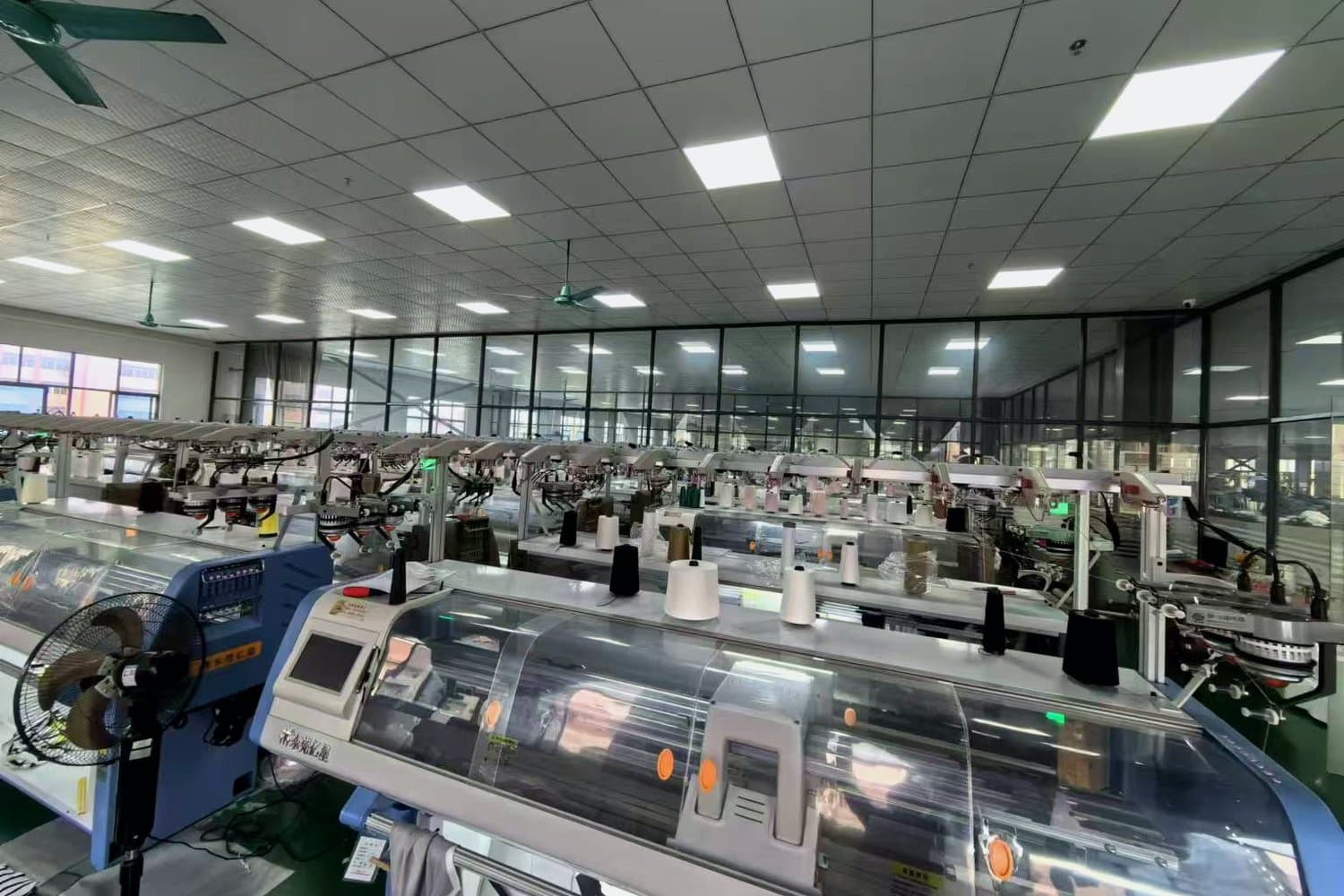
Fully-fashioned. Each panel — front, back, sleeves — is knitted to its finished shape on a flat knitting machine, with stitches added and dropped to form the armhole and shoulder line. No cutting. The panels are then joined, usually by linking, stitch through stitch.
Whole-garment. The machine knits body and sleeves as tubes and shapes them simultaneously on multiple needle beds, so a three-dimensional garment comes off the machine in one continuous piece. Both the cutting step and the linking step disappear.
The comparison that matters commercially
**Cut-and-sew**
**Fully-fashioned**
**Whole-garment**
Cutting waste
Highest — pattern loss plus seam allowance
None
None
Seams
Sewn, bulkier
Linked, flat
None
Relative unit cost
Baseline
30–50% higher
Highest at low volume
Knitting time per piece
Fastest
Medium
Slowest
Post-knit labour
Cutting + sewing
Linking
Almost none
Programming setup
Lowest
Medium
Highest
Where it wins
Volume basics, jersey-weight pieces
Most quality knitwear
Fine-gauge, next-to-skin, no-seam styles
Two things this table hides that decide real quotations.
Whole-garment moves cost from labour to setup. The machine is slower per piece and the programming is more demanding, but linking labour disappears. That trade is good at volume and bad at 30 pieces, because the programming hours land on however many garments you order. Our bulk vs sample pricing gap guide covers why setup cost behaves this way.
Yarn waste is a cost line, not just a sustainability line. Cut-and-sew loses yarn to pattern nesting and seam allowance. On a $44 merino the waste is worth arguing about; on a $14 cotton it usually is not.
Which to specify, by situation
Choose cut-and-sew when the piece is jersey-weight, the volume is high, and the silhouette is simple. Forcing fully-fashioned onto a basic tee-weight knit adds cost the customer cannot see.
Choose fully-fashioned when you are selling the knitwear as knitwear — a proper sweater, cardigan or knit jacket where the shoulder line, the armhole and the flat linked seam are visible quality. This is the default for most of what buyers mean by "sweater", and it is what our own fully-fashioned vs cut-and-sew guide goes into in more depth.
Consider whole-garment when the style genuinely needs no seams — fine-gauge next-to-skin pieces, some technical or performance knits, tubular silhouettes — and your volume is large enough to absorb the programming. If you are ordering 50 pieces, the setup will dominate the quote.
The supplier question worth asking
Whole-garment is a specific machine class, not a technique any flat-knitting factory can perform. A factory running standard computerised flat machines can produce excellent fully-fashioned knitwear and cannot produce whole-garment, regardless of how the quote is worded.
So the useful question is not "do you do seamless?" — it is:
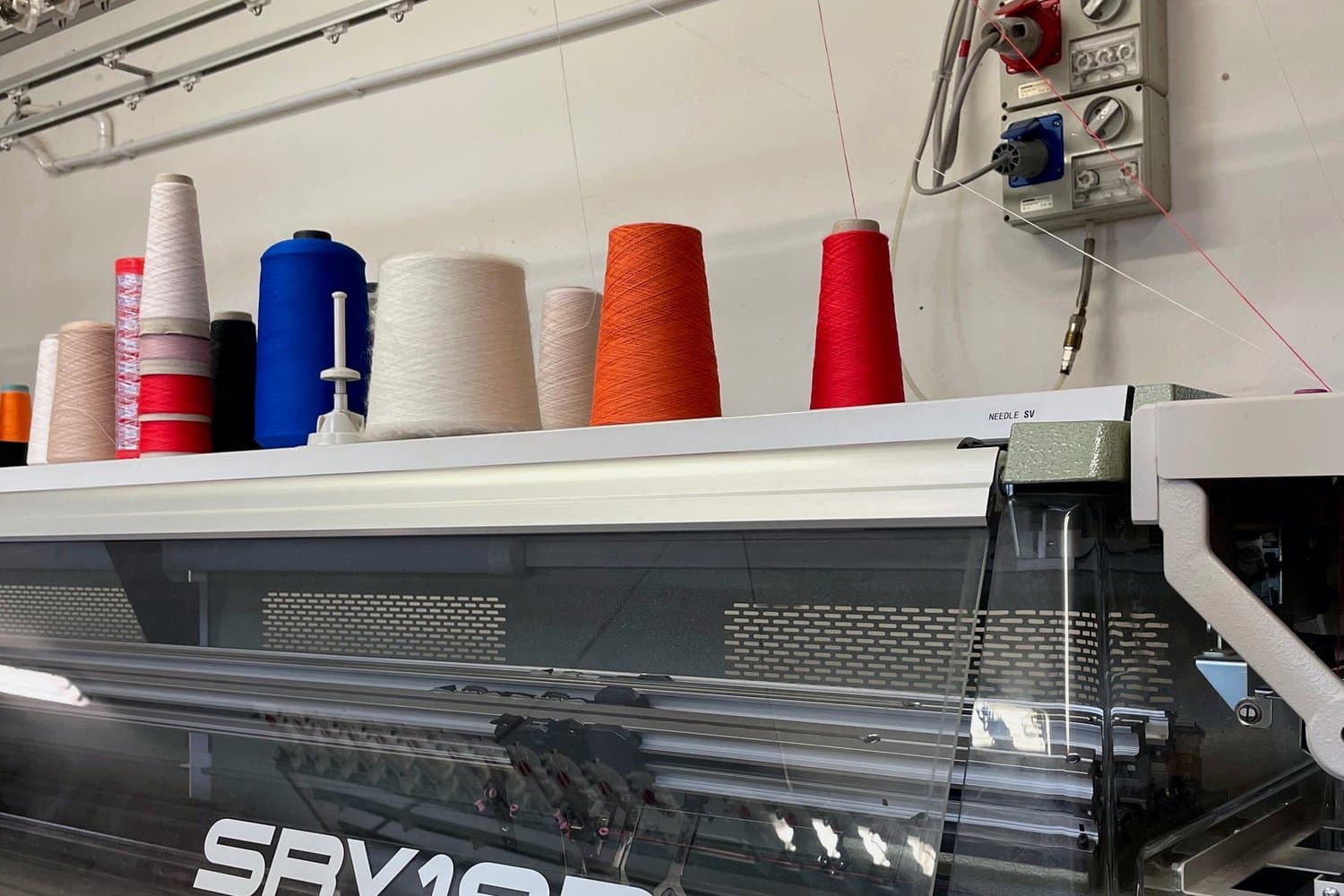
"Which machines would knit this, how many of them do you have, and can you send video of one running a whole-garment style?"
Where we stand, stated plainly: we run computerised flat-knitting from 3GG to 18GG and build fully-fashioned and cut-and-sew knitwear. If your style genuinely requires whole-garment construction, ask us and we will tell you straight whether it is something we can knit or whether you are better served elsewhere. A factory that answers "yes" to every construction question is telling you something about its sales process, not its machines.
Is whole-garment better quality than fully-fashioned?
Not automatically. It removes seams, which suits some styles and is irrelevant to others. A well-linked fully-fashioned shoulder is not a defect being solved.
Why is fully-fashioned 30–50% more than cut-and-sew?
Slower knitting, more skilled machine setup, and linking labour that cut-and-sew replaces with faster sewing. You are paying for shape knitted in rather than cut out.
Does whole-garment have a higher MOQ?
In practice yes, because the programming setup is heavier and needs more units to spread across. The machine does not care; the quotation does.
Can I mix constructions across one range?
Yes, and most brands do — fully-fashioned on the statement knits, cut-and-sew on the lighter basics. Just hold the fibre and colour standards constant across both, or the range will not read as one collection.
The machine knits body and sleeves as tubes and shapes them at the same time on multiple needle beds, so a three-dimensional garment comes off the machine in one piece. Both cutting and linking disappear.
Cut-and-sew, which loses yarn to pattern nesting and seam allowance. Fully-fashioned and whole-garment knit to shape and have no cutting waste. On a USD 44 merino that waste is worth arguing about; on a USD 14 cotton it usually is not.
We run computerised flat knitting from 3GG to 18GG and build fully-fashioned and cut-and-sew knitwear. Whole-garment needs a specific machine class; if your style genuinely requires it, ask and we will say plainly whether we can knit it or you are better served elsewhere.
When the piece is jersey-weight, the volume is high and the silhouette is simple. Forcing fully-fashioned onto a basic tee-weight knit adds cost the customer cannot see.
Ask which machines would knit the style, how many of them the factory has, and for video of one running a whole-garment style. A factory on standard flat machines can make excellent fully-fashioned knitwear but cannot make whole-garment.
We focus on men's sweaters, cardigans, knit jackets, jacquard knitwear and private label knitwear. We support B2B buyers with OEM/ODM development, sampling and bulk production planning.
Ready to Start Your Project?
Get a free catalog or submit an RFQ today. Our team will respond within 24 hours.
MOQ, lead time, cost ranges, gauge selection and QC checkpoints across typical OEM/ODM knitwear programs in NA + EU. Enter your email — we'll send you the report link in 30 seconds.
No spam. Unsubscribe with one reply. We use your email only to send you the report and follow up if you want a sourcing conversation.
Brand names shown are previously serviced OEM/ODM partners. Logos are decorative and do not imply current endorsement.