15 RFQ Red Flags Knitwear Buyers Send (and How to Fix Each)
Updated 8/24/202612 min readBy Simon Liu · Licheng Knitwear
An RFQ that lands in our inbox missing a target quantity, a gauge, or a delivery date is not a quote request — it's a follow-up email waiting to happen. From our seat as a Dongguan knitwear manufacturer reading dozens of inquiries a week, the same 15 gaps explain most of the back-and-forth before a real number can be issued. This guide walks through each red flag, what it signals about the buyer's brief, why it forces us to either guess or stall, and the single-line fix that closes the gap. The goal is not to grade buyers — many of these gaps are normal, especially for first-time knitwear projects — but to give you a checklist that turns a five-day quote cycle into a same-week one.
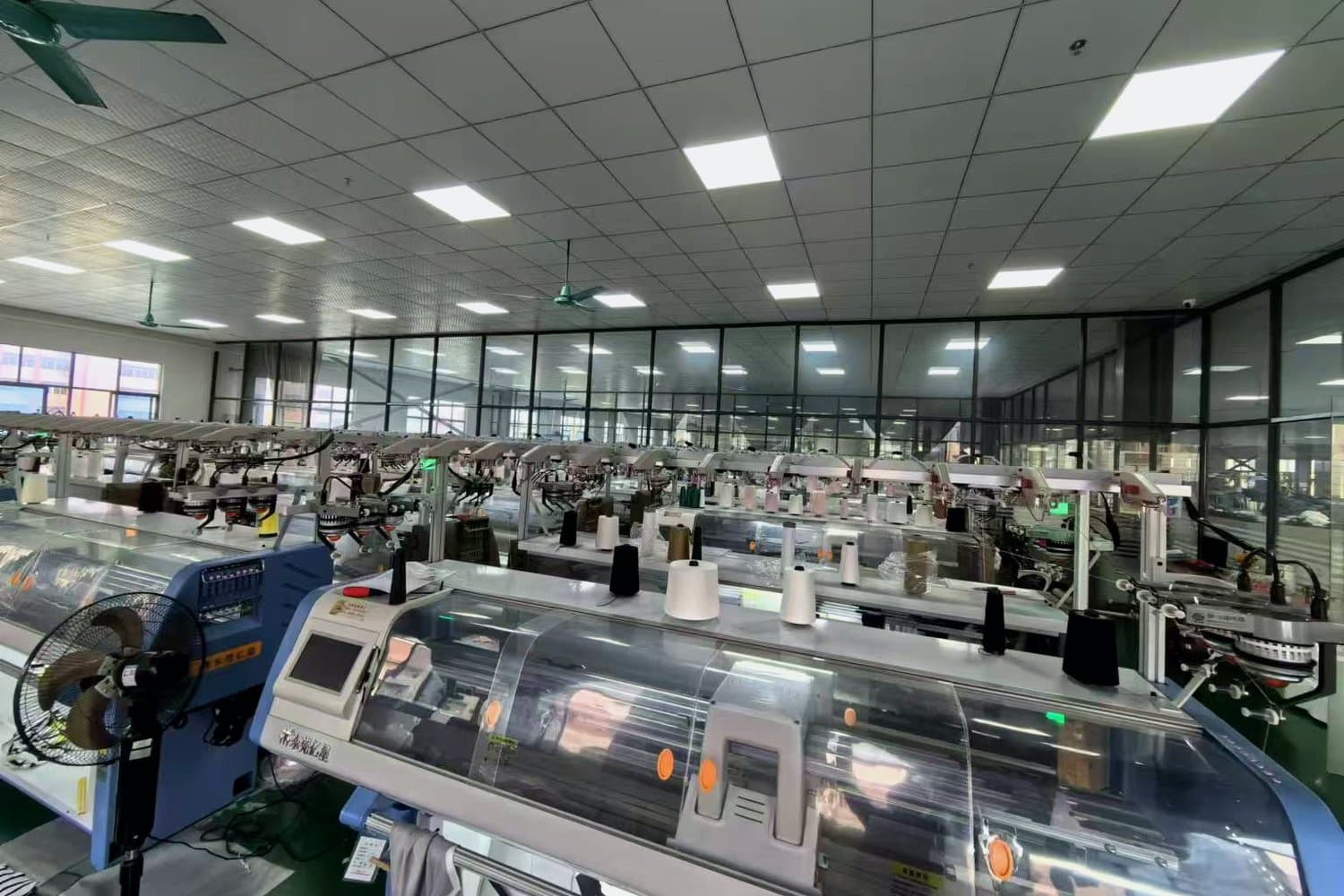
An RFQ is the first signal a factory gets about a buyer. Before we read a single specification, the *shape* of the inquiry already tells us whether this is a brief we can price in 48 hours or a thread that will take a week of clarification emails. From our seat at Licheng — a Dongguan custom knitwear manufacturer founded in 2018, working with international brands across English, German and Spanish-speaking markets — most quote delays are not caused by complicated products. They are caused by the same fifteen gaps that show up again and again in otherwise serious inquiries.
None of these gaps make a buyer unprofessional. Knitwear has a lot of fields, and the fields a buyer omits often reflect the assumption that "the factory will fill that in." In practice, when we fill it in for you, we either guess (and the price moves later) or we email back asking (and your quote is delayed by a day or two per round). This guide is the manufacturer's honest list of what we look for, what each missing field signals, and the one line of text that closes the gap.
This is not a critique of buyers. Generic OEMs across South China, Vietnam and Bangladesh all manage these gaps reasonably well — most factories will ask clarifying questions rather than ghost a sloppy RFQ. The point is that the *speed and accuracy* of your quotes are mostly in your control before the factory ever sees the inquiry.
Ready to Start Your Project?
Get a free catalog or submit an RFQ today. Our team will respond within 24 hours.
What must a knitwear RFQ contain to get an accurate quote?
Target quantity, gauge, yarn count or composition, size run, logo or branding position, incoterm, proposed payment terms, delivery date, measurement tolerance and a packing plan. A tech pack covers most of them at once. Without those, any number a factory sends is a guess against its own baseline style, and the second number you hear will be different.
Why does a factory need the gauge before quoting?
Gauge sets stitch density, which drives yarn count, garment weight, machine time and finishing complexity - so it moves the price more than almost any other single line on a tech pack. The same silhouette at 5GG and at 14GG is two different products with two different costs.
Can I send a mood image instead of a tech pack?
You can, and it is a useful starting point, but a mood image communicates intent rather than specification. Pair it with the few numbers that pin it down - target quantity, gauge or a reference garment, size run and delivery date - and a first quotation becomes possible in one round instead of three.
Which incoterm should I specify in a knitwear RFQ?
Specify one, whichever it is. FOB, CIF, DAP and DDP move very different amounts of cost and risk onto your side of the transaction, and a quote without an incoterm cannot be compared with another quote. Stating it up front is what makes two quotations comparable.
How long should a knitwear quotation take?
With a complete RFQ, a working quotation is quick. Sampling from confirmed yarn and artwork runs 15-25 days at our MOQ of 30 pieces per colour. Most of the delay buyers experience is not factory speed - it is the round trips caused by the gaps above.
A knitwear quote is not a single number. It is a stack of assumptions: yarn count and composition drive raw material cost, gauge drives machine time, garment weight drives both, color count drives setup, quantity drives amortization of trims and labels, and Incoterm decides whether freight is in or out. When even one of those inputs is missing, the merchandiser has to pick a default — usually the safer, slightly higher one — and footnote it. Three or four defaults stacked on top of each other produce a number that is either too high to be competitive or too low to honor in bulk.
The other reason RFQ gaps slow quotes is sequencing. A factory merchandiser typically batches inquiries. If yours arrives complete, it goes into the costing pile and gets a number within 2–3 working days. If yours needs questions back, it goes into the clarification pile, which is worked between the costing batches. That alone explains most of the difference between a buyer who gets quotes in 3 days and one who gets them in 10.
The 15 Red Flags, Item By Item
Below is the list in the order they typically appear in an inquiry. For each, we describe what we see, what it signals about the buyer's assumptions, why it slows the quote, and the one-line fix you can paste into your RFQ.
1. No Target Quantity
What we see: "Please quote your best price."
What it signals: The buyer either has not decided volume or is hoping the factory will quote at a forecast they cannot commit to.
Why it slows the quote: Knitwear pricing is highly volume-sensitive. At our catalog MOQ of 30 pcs/color, per-unit cost is fundamentally different from a 500-pcs/color run because trims, labels, yarn dyeing and machine setup amortize across the order. Without a number, we either quote MOQ (and the buyer thinks we are expensive) or quote at a guessed volume (and the price changes later).
Fix: State a target per style, per color: "target 200 pcs per color, 3 colors, first order."
2. No Gauge Specified
What we see: A photo of a fine-gauge merino sweater attached to an RFQ asking for "chunky cardigan, similar to image."
What it signals: The buyer is using gauge and weight interchangeably, or has not been briefed on how gauge changes price.
Why it slows the quote: Gauge (3GG, 5GG, 7GG, 12GG, up to 18GG) determines machine time per garment more than almost any other variable. A 3GG chunky takes a fraction of the knitting hours of a 12GG fine knit, but uses far more yarn per garment.
Fix: Specify gauge directly, e.g. "5GG chunky cardigan" or "12GG fine knit crew." If unsure, attach a swatch photo with a ruler.
3. No Yarn Count Or Composition
What we see: "100% wool, soft hand."
What it signals: The buyer knows the fiber but not the construction.
Why it slows the quote: "Wool" can mean 2/26Nm lambswool, 2/48Nm extra-fine merino, or a recycled wool blend — the price range across those is wide. Yarn count is to knitwear what fabric weight is to wovens.
Fix: Include count and ply, e.g. "2/26Nm 100% lambswool" or "2/30Nm 70% merino / 30% nylon."
4. Mood Image Without Spec
What we see: A Pinterest screenshot and the line "please quote."
What it signals: The buyer expects the factory to interpret the inspiration into a tech pack.
Why it slows the quote: We can develop a tech pack from a reference image — that is ODM work — but it is a separate step from costing. Quoting from a mood image alone is guessing.
Fix: Either attach a tech pack (or our blank tech-pack template filled in), or write "please propose spec" so we know to ODM rather than quote.
5. Wrong Season For The Yarn
What we see: A 3GG chunky cardigan brief with a US East Coast July delivery, or a fine cotton crew brief asking for January in-store.
What it signals: Calendar slip, or the brief was reused from a previous season without revising the yarn.
Why it slows the quote: We will flag this rather than quote blindly, because a bulk lead time of 30–45 days plus shipping means the buyer's window is already tight, and the yarn-season mismatch suggests a retail logic that has not been pressure-tested.
Fix: State the in-store/retail launch date and the destination market, so we can sanity-check yarn + lead time + freight together.
6. No Incoterm
What we see: "Price per piece please."
What it signals: The buyer may be new to international trade, or assumes the factory "knows what they need."
Why it slows the quote: A FOB China price is different from an EXW factory price, which is different from a CIF destination port price. Without an Incoterm, two different factories will quote on two different bases, and the buyer cannot compare.
Fix: State "FOB Shenzhen" or "FOB Yantian" (or EXW Dongguan, or CIF Hamburg) in the RFQ.
7. No Payment Terms Proposed
What we see: No mention of deposit, balance, or method.
What it signals: The buyer is waiting for the factory to propose, or has not budgeted cash flow.
Why it slows the quote: Payment terms affect risk pricing. A factory quoting 30% deposit / 70% before shipment will price slightly differently from one expected to carry the order on open account.
Fix: Propose terms upfront, e.g. "30% T/T deposit, 70% against B/L copy" — even if you are open to negotiation.
8. No Logo Position
What we see: "Embroidered logo, 8cm wide."
What it signals: The buyer has the artwork but has not decided where it sits.
Why it slows the quote: Position changes whether we add a backing, what color thread we run, and whether the logo lands on a body panel (clean) or a seam (more complex). A chest logo on a jacquard pattern is different from a chest logo on a plain body.
Fix: Mark the position on the tech pack sketch with a measurement from a reference point: "embroidery, left chest, 10cm down from HPS."
9. No Size Run
What we see: A request for 200 pieces, no size breakdown.
What it signals: The buyer is treating the size run as a downstream detail.
Why it slows the quote: Size run affects yarn consumption (3XL uses more yarn than XS), grading work in the tech pack, and the number of yarn lots we need to manage. A run heavily skewed to large sizes prices differently from a balanced curve.
Fix: Provide the size breakdown, e.g. "S 30, M 60, L 70, XL 30, XXL 10" — within our XS–3XL range.
10. No Tech Pack Attached
What we see: A long email describing the product in prose.
What it signals: The buyer is at an early development stage, or expects the factory to build the tech pack.
Why it slows the quote: Prose descriptions are interpretable; a tech pack is not. A line drawing with point-of-measure callouts removes 80% of the back-and-forth.
Fix: Send a tech pack with sketch, points of measure, yarn, gauge, trims, labels and packing — or ask the factory for a blank template to fill in.
11. No Tolerance Specified
What we see: Measurements without a +/- value.
What it signals: The buyer assumes industry default applies.
Why it slows the quote: Industry default for knitwear is roughly +/- 1.0 cm on most points of measure, tighter on critical ones like neck opening. If the buyer needs +/- 0.5 cm — which is doable but adds QC time and yields a higher reject rate — we need to know before pricing.
Fix: State the tolerance in the tech pack: "+/- 1.0 cm body, +/- 0.5 cm neck opening."
12. No Carton Plan Or Packing Method
What we see: No mention of polybag, carton size, or carton marking.
What it signals: Packing is being deferred.
Why it slows the quote: Packing materials are a real cost line (typically 2–5% of FOB on simple sweater packing, more for retail-ready), and carton plan affects shipping volume. Buyers shipping to LCL via consolidator have very different needs from buyers shipping FCL to a 3PL.
Fix: Specify polybag (with or without size sticker), carton size or pcs/carton, and any carton marking requirement.
13. No Delivery Date
What we see: "ASAP" or no date at all.
What it signals: Either no firm target, or the buyer is hoping to compress.
Why it slows the quote: Sample lead time at Licheng is typically 7–25 days depending on complexity, and bulk lead time is typically 30–45 days. "ASAP" forces us to assume the buyer's date is achievable when it may not be.
Fix: State the required ex-factory date, and the in-store date, so we can work backwards through sample, approval, bulk and shipping.
14. No QC Standard Or Inspection Plan
What we see: No mention of AQL level, third-party inspection, or in-line vs. final inspection.
What it signals: The buyer either trusts factory QC or has not formalized a standard.
Why it slows the quote: Our in-house QC uses AQL inspection plus needle and metal detection. If the buyer needs a third-party (SGS, Intertek, Bureau Veritas, QIMA) inspection at a stricter AQL, that is a different conversation, and the buyer typically pays the inspection fee — but we need to plan dates and access.
Fix: State the inspection plan: "final random inspection AQL 2.5 major / 4.0 minor, [name of third party or in-house]."
15. No Contact Lead Time Or Decision-Maker Identified
What we see: An RFQ from a generic email with no signature, time zone, or follow-up commitment.
What it signals: Uncertain whether the buyer is decision-maker, agent, or designer doing exploratory pricing.
Why it slows the quote: We will respond regardless, but we batch differently. If the buyer is the decision-maker and ready to confirm within two weeks, we will prioritize. If it is exploratory, that is fine — but knowing changes our pace.
Fix: Sign off with role and timeline: "Brand owner, ready to confirm sample within 2 weeks, in-store target W42 2026."
The 15 Red Flags At A Glance
#
Field Missing
What It Signals
One-Line Buyer Fix
1
Target quantity
Volume not committed
"Target 200 pcs/color, 3 colors"
2
Gauge
Confusing weight with gauge
"5GG chunky" or "12GG fine"
3
Yarn count / composition
Fiber-only thinking
"2/26Nm 100% lambswool"
4
Mood image without spec
Expects ODM but didn't say so
Attach tech pack or write "please propose spec"
5
Wrong season for yarn
Calendar slip or reused brief
State in-store date + market
6
Incoterm
New to international trade
"FOB Shenzhen" or "CIF Hamburg"
7
Payment terms
Waiting on factory to propose
"30% T/T deposit, 70% against B/L copy"
8
Logo position
Has artwork, not placement
"Embroidery, left chest, 10cm from HPS"
9
Size run
Defers detail
"S 30 / M 60 / L 70 / XL 30 / XXL 10"
10
Tech pack attached
Early development
Send tech pack with POM, yarn, gauge, trims
11
Tolerance
Assumes default
"+/- 1.0 cm body, +/- 0.5 cm neck"
12
Carton plan / packing
Deferred packing
"Polybag + size sticker, 20 pcs/carton"
13
Delivery date
"ASAP" or no date
State ex-factory date + in-store date
14
QC standard
Trusts factory or no standard
"AQL 2.5 major / 4.0 minor, third-party final"
15
Contact / lead time
Generic sender
Sign-off with role + timeline
How A Clean RFQ Changes The Quote Cycle
An RFQ that closes all fifteen of these gaps lands in our costing pile, not our clarification pile. In practice, that compresses the quote turnaround from roughly 7–10 working days (with three rounds of back-and-forth) to 2–3 working days. It also changes the *type* of number we send back. A clean brief gets a firm quote with itemized assumptions; a thin brief gets a range with footnotes. When buyers compare quotes from multiple factories, ranges and firm quotes look identical in a spreadsheet but behave very differently in production.
There is one caveat worth naming. Not every buyer should send a complete RFQ on day one. If you are still in concept and exploring whether a sweater program is feasible at your price point, a half-formed brief is honest — and a good factory will recognize that and respond with a development quote rather than a bulk quote. The red flags above apply specifically when the buyer believes they are sending a real quote request. The fix in that case is not to bluff a complete brief, but to label the stage: "early development, please quote with assumed defaults and call out the cost-sensitive levers."
What We Do When An RFQ Has Gaps
We do not reject incomplete RFQs. Most inquiries we receive have two or three of these gaps, and we respond to them all. What changes is the sequence: a complete RFQ gets a quote first and questions second (if any), while an incomplete RFQ gets questions first and a quote after the answers come back. Buyers who want to move fast can simply pre-empt the questions.
The other thing we try to do is be transparent about which gap is moving the price. If a buyer's quantity is below MOQ for their requested yarn count, we will say so and propose alternatives — a different yarn count that hits the same hand feel at a lower setup cost, or a small-run program with a clearly disclosed premium. Generic OEMs across the region do this well too; the practice is not unique to Licheng. The point is that the conversation only happens if the buyer's RFQ is specific enough to push back against.
A Short Note On Quote Comparison
If you are sending the same RFQ to three or four factories — which you should, especially on a first order — make sure the RFQ is identical across recipients. The most common reason buyers see wildly different quotes is not that one factory is cheap and another is expensive. It is that one factory was told the quantity and the other was not, or one was given an Incoterm and the other quoted EXW. Standardizing your RFQ removes that noise and lets the real factory differences — capability, gauge range, yarn access, communication speed — show through.
The checklist above is the version of an RFQ we wish landed in our inbox more often. It is not a high bar. It is fifteen short fields that, taken together, turn a slow quote cycle into a fast one and a fuzzy price into a firm one.
---
Talk to our team about this
If you're planning a real project around any of the points above, we'd be glad to take a quick look. Send a short brief and we'll come back within one business day with a practical direction, MOQ + lead time estimate, and a sample plan if it makes sense.
Missing target quantity. Knitwear pricing is highly volume-sensitive — yarn dyeing, trims, labels and machine setup all amortize differently at 30 pieces vs 500 pieces per color — so without a quantity the factory has to either quote at MOQ or guess. A simple line like 'target 200 pcs/color, 3 colors' closes this gap in seconds.
Not always. If you are in concept stage, it is honest to say so and ask the factory to ODM a spec — that is a development quote, not a bulk quote, and a serious factory will handle it. The red flag is sending a mood image and *expecting* a firm bulk price, because that requires assumptions the factory has not been authorized to make.
Because FOB China, EXW factory, CIF destination port and DDP all produce very different numbers — the difference can be 10–25% of the unit price depending on volume and destination. Without an Incoterm, two factories will quote on two different bases and the buyer cannot compare. Stating 'FOB Shenzhen' or 'CIF Hamburg' in the RFQ removes that noise.
From our experience at Licheng, a complete RFQ — one that covers all 15 fields in this article — typically gets a firm quote in 2–3 working days. An incomplete RFQ usually takes 7–10 working days because of clarification rounds. The bottleneck is rarely the costing itself; it is the back-and-forth on missing information.
Yes, and we recommend it for first orders. The important thing is that the RFQ is identical across recipients — same quantity, same gauge, same Incoterm, same delivery date. The most common reason buyers see wildly different quotes is not factory pricing strategy but inconsistent RFQ inputs that make the quotes incomparable.
We focus on men's sweaters, cardigans, knit jackets, jacquard knitwear and private label knitwear. We support B2B buyers with OEM/ODM development, sampling and bulk production planning.