Updated 8/24/202612 min readBy Simon Liu · Licheng Knitwear
Stitch structure is the single biggest lever a product developer can pull after yarn and gauge. It decides how a sweater drapes, what it weighs, how long it takes a flat-bed machine to produce, and how forgiving the body is on a fit range. This guide walks through the four stitch families that account for the vast majority of men's knitwear we produce in Dongguan — jersey/plain, rib, cable, and jacquard — and explains what each one costs you in yarn and knit time, where it works on the gauge ladder, the failure modes that surface in fit sessions and inspection, and the buyer scenarios where one beats the others. The goal is to help you spec a knit collection on commercial reality, not on mood-board photography.
Stitch structure is the part of a knit spec that buyers either over-think or under-think — rarely in between. We see tech packs that nominate a Pantone, a yarn count, a fit block and a gauge, but leave the stitch as a screenshot of someone else's sweater. By the time we are quoting, that single image has to be translated into machine time, yarn consumption, panel shaping and finishing — and the four big stitch families behave very differently across all of those dimensions.
This guide is the reference we wish every product developer had on the desk when they sit down to build a new collection. It covers the four stitch structures that dominate our men's knitwear output: plain (jersey), rib in its main variants, cable in its mock-to-aran progression, and jacquard in its single-bed and double-bed forms. For each, we cover the visual signature, what it costs in yarn and knit time, the gauges that suit it, where it fails, and when it is the right call to specify.
Why Stitch Structure Drives Cost And Calendar
Ready to Start Your Project?
Get a free catalog or submit an RFQ today. Our team will respond within 24 hours.
Which knit stitch structures should a buyer know?
Four families cover most commercial knitwear: plain jersey, the rib family (1x1, 2x2, broken rib, fisherman), the cable family (mock, classic, aran), and the jacquard family (single-bed and double-bed). Each carries a different yarn consumption, machine time and finishing requirement, which is why structure moves cost as much as gauge does.
Why does stitch structure change the price?
Because it changes both how much yarn a garment eats and how long the machine takes. A cable or a rib pulls in, so it consumes more yarn for the same finished width; a jacquard carries floats or a second bed. Two garments with the same measurements and gauge can differ substantially in cost purely on structure.
What is the difference between single-bed and double-bed jacquard?
Single-bed jacquard carries floats on the reverse, which limits how many colours can run in one course and how long a float can be. Double-bed jacquard backs the pattern, giving a cleaner reverse and more colour freedom at the cost of weight and yarn. The choice is usually driven by colour count and by whether the inside of the garment is seen.
Which structure suits a first knitwear programme?
Plain jersey and simple ribs are the most forgiving: fewer variables at sampling, more predictable measurements after washing, and the shortest route to a repeatable result. Cable and jacquard are worth doing once the fit and the yarn are settled.
How does structure interact with gauge?
Coarse gauges show structure clearly and are the natural home for cable and aran; fine gauges flatten it, which is why a cable knitted too fine reads as a texture rather than a cable. Choose the structure and the gauge together, not one after the other.
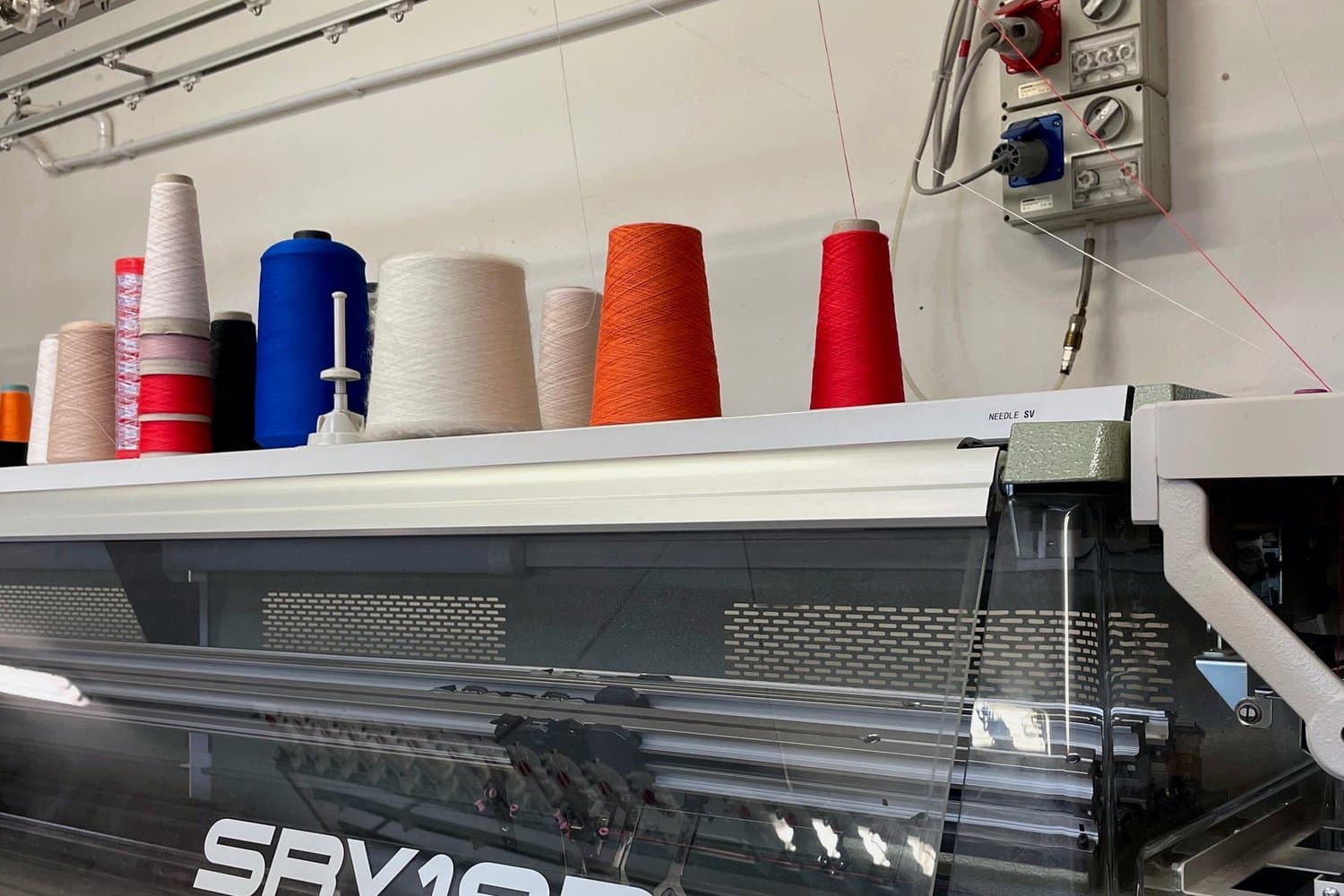
Flat-bed knitting machines build a sweater stitch by stitch, row by row, by moving needles. Every needle action takes time, and every loop pulled takes yarn. Plain jersey is the cheapest baseline because it is essentially the machine running flat-out with the minimum needle movement per row. The moment you introduce ribs, cables or jacquard, you are asking the machine to do additional work per row — racking the bed, transferring stitches, carrying multiple yarns, holding floats. Each of those operations adds seconds per row, which adds minutes per panel, which compounds across a 30-piece-per-color MOQ.
Yarn behaves the same way. A texture that pulls loops tighter (rib, cable) holds more yarn per square centimeter than flat jersey. A pattern that carries a second color across the back of the work (jacquard) doubles yarn consumption in the patterned zones. Buyers who treat stitch as a free decorative choice end up surprised by quote variance of 20-40% across what looks like "the same sweater". The variance is real, and it is mostly stitch.
We operate gauges from 3GG to 18GG in Dongguan. Where a stitch sits on that gauge ladder also matters: a cable that sings at 5GG looks anemic at 12GG, and a jacquard that reads cleanly at 7GG turns into pixel noise at 3GG. Stitch and gauge have to be specified together.
Plain Jersey: The Workhorse
Plain jersey — also called stockinette or single jersey — is the V-on-front, bump-on-back fabric that most basic crew necks, polos and mock necks ride on. It is what a single-bed flat machine produces when no transfer or tuck instructions are loaded. From a buyer's perspective, plain is the cheapest, the fastest to knit, and the most forgiving on yarn substitutions, but it is also the structure most likely to look generic and the most prone to curling at the edges.
Visual signature. Smooth, slightly diagonal stitch column on the face; soft horizontal ridges on the back. Reads as "clean" or "minimal" in finished garments.
Yarn consumption. Lowest of the four families. A plain crew neck in 7GG cotton-wool blend typically uses 350-450g per medium body, depending on fit.
Knit time. Fastest. A plain panel runs at the machine's natural speed, with no transfer cycles. On a heavy-volume program, this is where you see the biggest unit-cost wins.
Recommended gauges. Excellent across the range, but best where buyers want yarn or color to lead — 7GG and 12GG for refined everyday product, 3GG-5GG when the yarn itself is the hero (chunky melanges, brushed mohair, bouclé).
Where it goes wrong. Edge curl is the classic problem — plain jersey will roll toward the back at the hem and cuffs unless you add a rib band, a tubular hem or a rolled finish. Pilling is more visible on smooth jersey than on textured fabrics. And in 100% cotton at fine gauge, plain can read as "t-shirt fabric" rather than "sweater," which is a positioning issue more than a technical one.
When to specify it. Volume basics, color-driven product, yarn-driven product, anything where the brand wants the material to do the talking. Also the right baseline when you are testing a new factory — a plain panel reveals tension and gauge consistency more cleanly than a textured one.
Rib Family: 1x1, 2x2, Broken Rib, Fisherman
Rib is the most useful single category in the men's knitwear toolkit. It compresses the fabric into vertical columns of knit and purl, which gives it stretch, elastic recovery, and a much heavier, more structured hand than plain. The variants run from tight and dressy to bold and chunky.
1x1 rib alternates one knit column with one purl column. Tightest, finest-looking rib. Used for trims (cuffs, hems, neckbands) across almost every category. Also works as a full-body texture on slim fits and turtlenecks where you want a sleek, body-skimming silhouette.
2x2 rib alternates two knit with two purl. Broader visual texture, slightly less elastic than 1x1, more relaxed look. Works well as full-body texture on shawl-collar cardigans and chunky turtlenecks where you want presence without going to cable.
Broken rib (also called half-cardigan or tuck-rib variants) breaks the regular knit-purl rhythm with tucks or skipped stitches, giving a denser, more matte surface. Useful when you want rib structure but a flatter visual.
Fisherman rib (also called full-cardigan or English rib) tucks stitches into the row below on alternating rows, creating a thick, pillowy fabric that is essentially double the weight of plain at the same gauge. Heavy, lofty, premium feeling. Eats yarn.
Yarn consumption. 1x1 rib uses about 15-25% more yarn than plain at the same body size. Fisherman rib roughly doubles plain consumption. 2x2 sits in between.
Knit time. Slower than plain because the rib needs both beds engaged. Fisherman is the slowest of the rib family because of the tuck cycles.
Recommended gauges. 1x1 rib works across 3GG-18GG. Fisherman rib is most striking at 5GG-7GG, where the loft really shows; at 12GG it looks merely dense.
Where it goes wrong. Rib stretches and recovers — but only within limits. A full-body 1x1 rib on a relaxed-fit block will bag out in the body. A 2x2 rib hem that is knit too loosely will flare. Fisherman rib in a slick yarn (mercerized cotton) often looks flat instead of lofty; it needs a yarn with some hairiness or twist character to bloom.
When to specify it. Full-body 1x1 for slim turtlenecks and minimal mock necks. 2x2 for relaxed cardigans and statement chunky pieces. Fisherman when you want a heavy, premium hand without going to a 3GG yarn — a 7GG fisherman often reads more luxurious than a 3GG plain.
Cable Family: Mock, Classic, Aran
Cables are the stitches that say "sweater" most loudly. They are produced by transferring groups of stitches across each other on the bed, which physically crosses one column over another. The category runs from "hint of cable" to "every panel is patterned."
Mock cable is the cheapest entry to the look — it uses tuck stitches and yarn-overs to suggest a cable twist without actually transferring stitches. Reads acceptably from a distance, costs about 10% more than plain.
Classic cable runs one or two true cables down the front and sometimes the sleeves of an otherwise plain or mildly textured ground. The investment piece of a smart-casual range.
Aran (or full-aran, or fisherman-cable) covers the entire body in interlocking cable, diamond and bobble panels — the cream Irish-fisherman archetype. Heavy yarn use, heavy machine time, but visually unmistakable.
Yarn consumption. Classic cable adds 10-15% over plain. Full aran adds 25-40% — the cable crossings pull yarn tighter into the structure and add density.
Knit time. Significantly slower. Each cable crossing requires a transfer cycle. A full aran can take 2-3x the machine time of a plain equivalent at the same gauge.
Recommended gauges. Cable is a chunky-to-mid-gauge story. 3GG-5GG for full aran and chunky cable cardigans. 5GG-7GG for classic cable on cleaner-line product. At 12GG cables flatten visually and lose their reason to exist; use mock cable or rib instead at fine gauge.
Where it goes wrong. Inconsistent cable tension is the most common defect — if the transfer cycle is not dialed in, individual cable crossings look loose or skipped. Yarn choice matters: a slick yarn flattens the cable; a yarn with body and twist (worsted wool, wool blend) makes the cable pop. Body length and chest measurements can vary more on heavy cable than on plain because the pulled-in cable structure shortens the panel slightly.
When to specify it. Fall/winter hero pieces, premium price positioning, traditional craft narratives. Avoid for spring/summer programs and for anything where slim, body-skimming fit is the goal.
Jacquard Family: Single-Bed Vs Double-Bed
Jacquard is the family that lets you knit a pattern in two or more colors. It is the technique behind Fair Isle, Nordic, argyle, geometric and graphic knitwear. There are two structural variants, and the difference matters a lot to cost.
Single-bed (float) jacquard carries the non-active color as a float across the back of the work. Light, flexible, less yarn-heavy — but with floats visible on the inside and a limited usable float length (typically 5-7 stitches before you trap it). This is the technique behind traditional Fair Isle.
Double-bed (bird's-eye, jacquard back) jacquard uses the second bed to knit the back of the work as well, locking the non-active color into the back fabric. Result: a clean inside, longer pattern repeats possible, but roughly double the yarn weight and significantly slower knitting.
Yarn consumption. Single-bed jacquard uses roughly 20-30% more yarn than plain in patterned zones. Double-bed jacquard nearly doubles plain consumption — you are essentially knitting two layers.
Knit time. Significantly slower than plain, especially double-bed. Color-change cycles add time per row, and the more colors per row, the slower the machine runs.
Recommended gauges. 5GG-12GG. At 3GG the pattern pixels are too large to read as detailed motifs (though chunky Nordic still works). At 14GG the pattern can become too dense and yarn carriers crowd each other.
Where it goes wrong. Float length on single-bed is the classic problem — a Fair Isle that was designed in software with 12-stitch floats will catch on fingers and snag the wearer's watch unless you trap the floats. Color count drives cost more than most buyers expect: 2 colors per row is the comfortable default; 3-4 colors per row is achievable but slows the machine; 5+ colors per row should usually be solved with intarsia instead. Tension differences between colors of the same yarn count cause patterning lines.
When to specify it. Single-bed for traditional Fair Isle, Nordic and lightweight pattern work where weight and flexibility matter. Double-bed for graphic, scenic, jacquard-led statement product where a clean inside and large pattern freedom justify the cost. We covered this trade-off in more depth in our jacquard vs intarsia guide.
The Stitch Family Comparison At A Glance
Stitch family
Visual signature
Yarn vs plain
Knit time vs plain
Best gauge range
Primary failure mode
Plain jersey
Smooth, V-column face
1.0x (baseline)
1.0x (baseline)
3GG-18GG
Edge curl, generic read
1x1 rib
Fine vertical columns
1.15-1.25x
1.3-1.5x
3GG-18GG
Bagging on relaxed fits
2x2 rib
Broader vertical bars
1.2-1.3x
1.4-1.6x
5GG-12GG
Loose hem flare
Fisherman rib
Thick, lofty, pillowy
1.8-2.0x
1.8-2.2x
5GG-7GG
Flat in slick yarns
Mock cable
Cable-suggestive texture
1.1x
1.2x
5GG-12GG
Reads thin up close
Classic cable
One or two true cables
1.1-1.15x
1.5-2.0x
5GG-7GG
Inconsistent cable tension
Full aran
All-over cable / bobble
1.25-1.4x
2.5-3.0x
3GG-5GG
Length variance, slow LT
Single-bed jacquard
2-color pattern, floats inside
1.2-1.3x in patterned zones
1.5-2.0x
5GG-12GG
Long floats snag
Double-bed jacquard
2-color pattern, clean inside
1.8-2.0x
2.0-2.5x
5GG-12GG
Heavy, long LT, color tension
How To Apply This To A New Collection
When we sit down with a product developer on a new range, the conversation we want to have early is not "what stitch?" but "what is the price point and what is the story?" Stitch follows from that.
For a volume basics program at a competitive price point, lean on plain jersey with rib trims, then differentiate with yarn (melange, slub, recycled cotton) rather than with stitch complexity. For a smart-casual range where you need three or four hero pieces, classic cable, fisherman rib and a tightly art-directed 2-color jacquard each give you a distinctive read without blowing the cost budget. For a premium fall/winter capsule, full aran, double-bed scenic jacquard and chunky 2x2 rib are where the craft narrative lives — and where buyers expect to pay accordingly.
A pragmatic rule: spec no more than one heavy stitch story per garment. A full aran with a fisherman-rib trim is correct. A full aran with a double-bed jacquard yoke is a fit and cost nightmare. Layer textures lightly — a plain body with a 2x2 rib collar, or a 1x1 rib body with a single mock-cable down the sleeve — and the wardrobe reads coherent without the price points exploding.
We recommend reading our knit gauge guide alongside this one before locking the tech pack, because stitch and gauge decisions interact constantly. The 5GG vs 7GG vs 12GG positioning conversation, in particular, changes the moment you swap plain for cable or single-bed jacquard for double-bed. If you are building the full spec from scratch, our tech pack guide covers how to document stitch, gauge, yarn and finish together in a way the factory can quote without follow-up.
Whatever stitch direction you land on, the next questions are yarn and weight per square meter, color count, and finishing. Those decisions sit on top of the stitch choice — they cannot replace it. Get the stitch family right first, then build the rest of the spec around it.
---
Talk to our team about this
If you're planning a real project around any of the points above, we'd be glad to take a quick look. Send a short brief and we'll come back within one business day with a practical direction, MOQ + lead time estimate, and a sample plan if it makes sense.
Plain jersey, by a clear margin. It runs at the machine's natural speed with no transfer cycles, uses the least yarn, and is the most forgiving on yarn substitution. For a volume basics range, plain body with rib trims is almost always the right baseline. Differentiate with yarn character (melange, slub, recycled, brushed) rather than stitch complexity to keep unit cost competitive.
Yes, but with discipline. A plain body with a 2x2 rib collar and 1x1 rib hem is a very common, well-behaved combination. A classic cable down the front of an otherwise plain body works cleanly. Stacking two heavy stitches in one garment — for example, a full aran body with a double-bed jacquard yoke — creates real fit, weight and cost problems. Our practical rule is one heavy stitch story per garment, with light supporting textures on trims.
We knit 3GG through 18GG in Dongguan. Each stitch family has a gauge sweet spot. Cable and fisherman rib look best at 3GG-7GG; finer than 7GG and the texture flattens out. Jacquard reads cleanly at 5GG-12GG. Plain works across the full range. We confirm gauge and stitch together at sample brief stage, because changing one usually changes the other.
Significantly. A plain sweater sample sits at the fast end of our 7-25 day sample window; a full aran or double-bed jacquard sits at the slow end. In bulk, plain runs at the machine's natural rate; full aran can take 2-3x the machine time per piece. We quote stitch-heavy programs at the longer end of our 30-45 day bulk lead time so the schedule is realistic. If a launch date is tight, lighter stitch choices are usually the better path.
When the design has large blocks of solid color with hard edges and no float-back, intarsia is usually the right answer — no floats on the inside, full color saturation, no float length limits. Jacquard wins when the pattern is repeating, distributed across the panel, and uses 2-3 colors per row. Above 4-5 colors per row, intarsia almost always beats jacquard on both quality and cost. We cover this trade-off in detail in our jacquard vs intarsia guide.
We focus on men's sweaters, cardigans, knit jackets, jacquard knitwear and private label knitwear. We support B2B buyers with OEM/ODM development, sampling and bulk production planning.
MOQ, lead time, cost ranges, gauge selection and QC checkpoints across typical OEM/ODM knitwear programs in NA + EU. Enter your email — we'll send you the report link in 30 seconds.
No spam. Unsubscribe with one reply. We use your email only to send you the report and follow up if you want a sourcing conversation.
Brand names shown are previously serviced OEM/ODM partners. Logos are decorative and do not imply current endorsement.