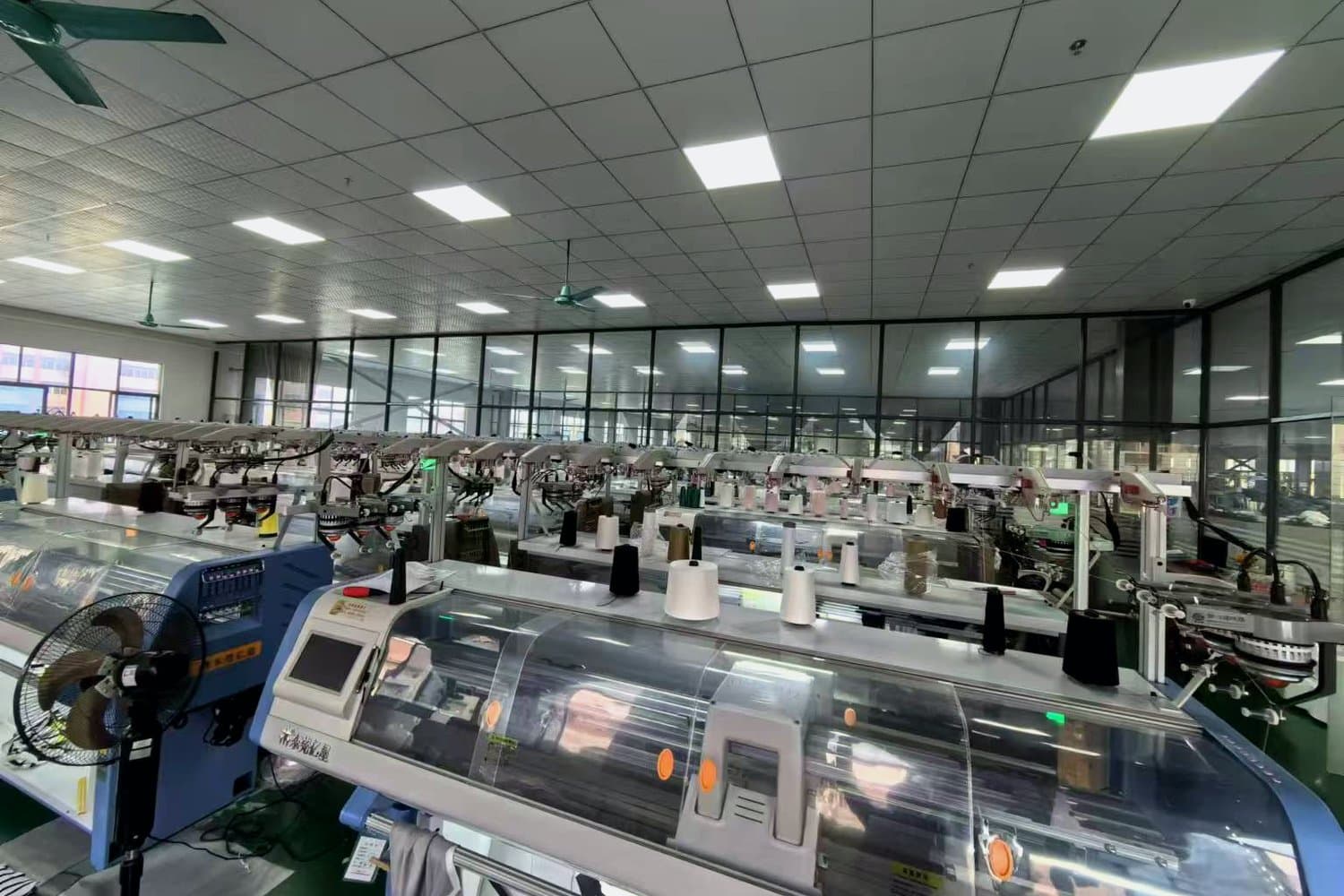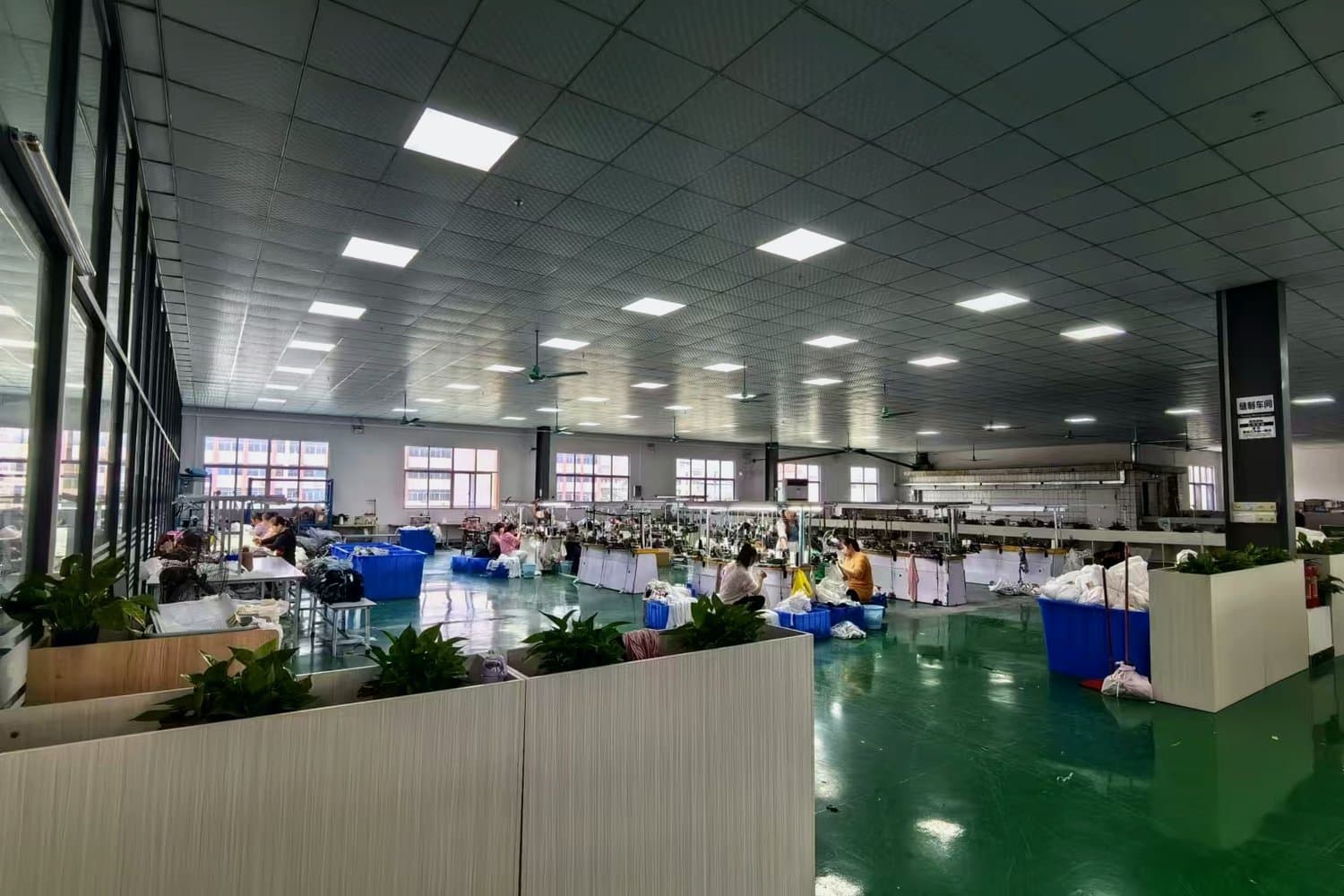
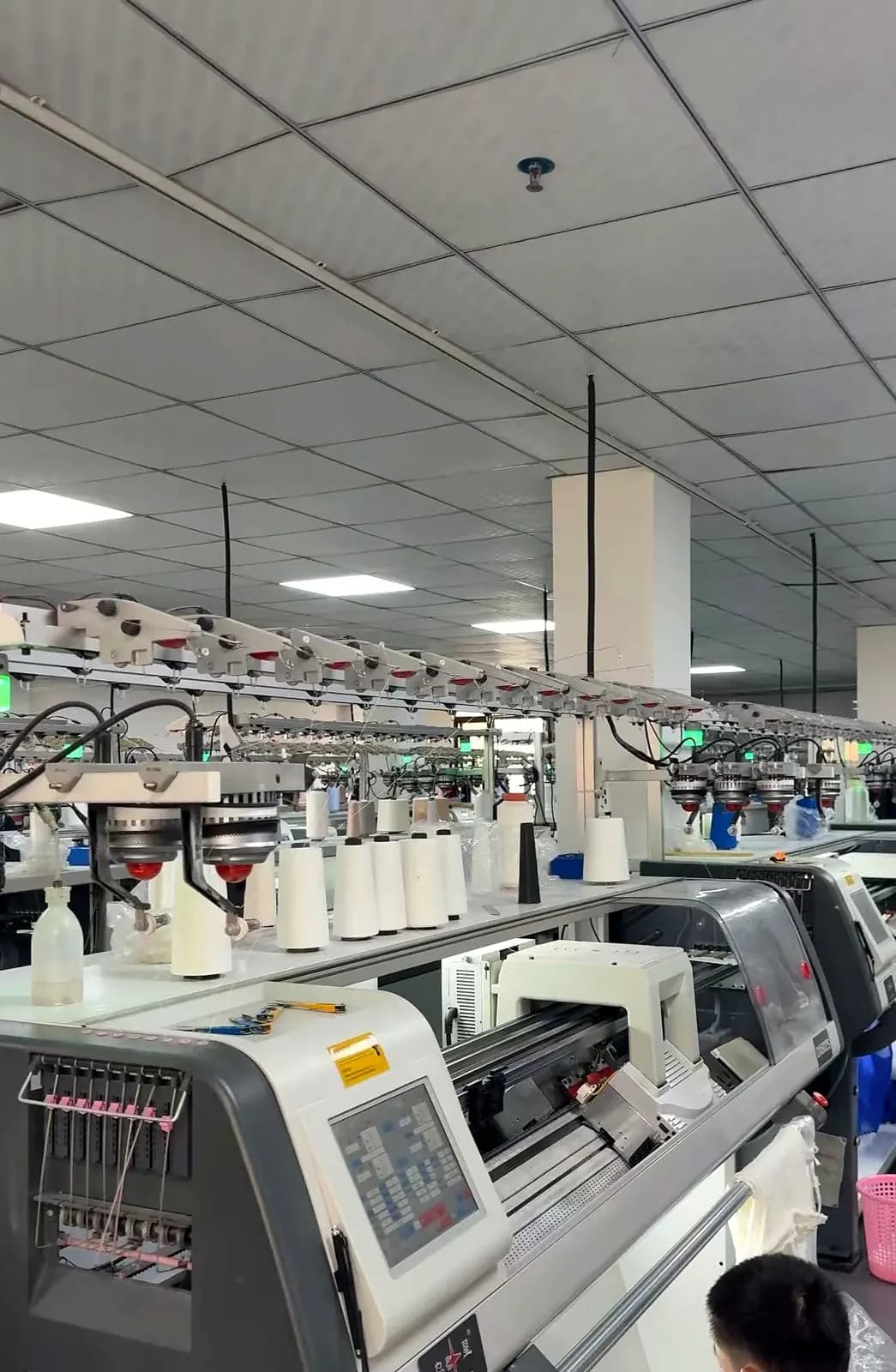
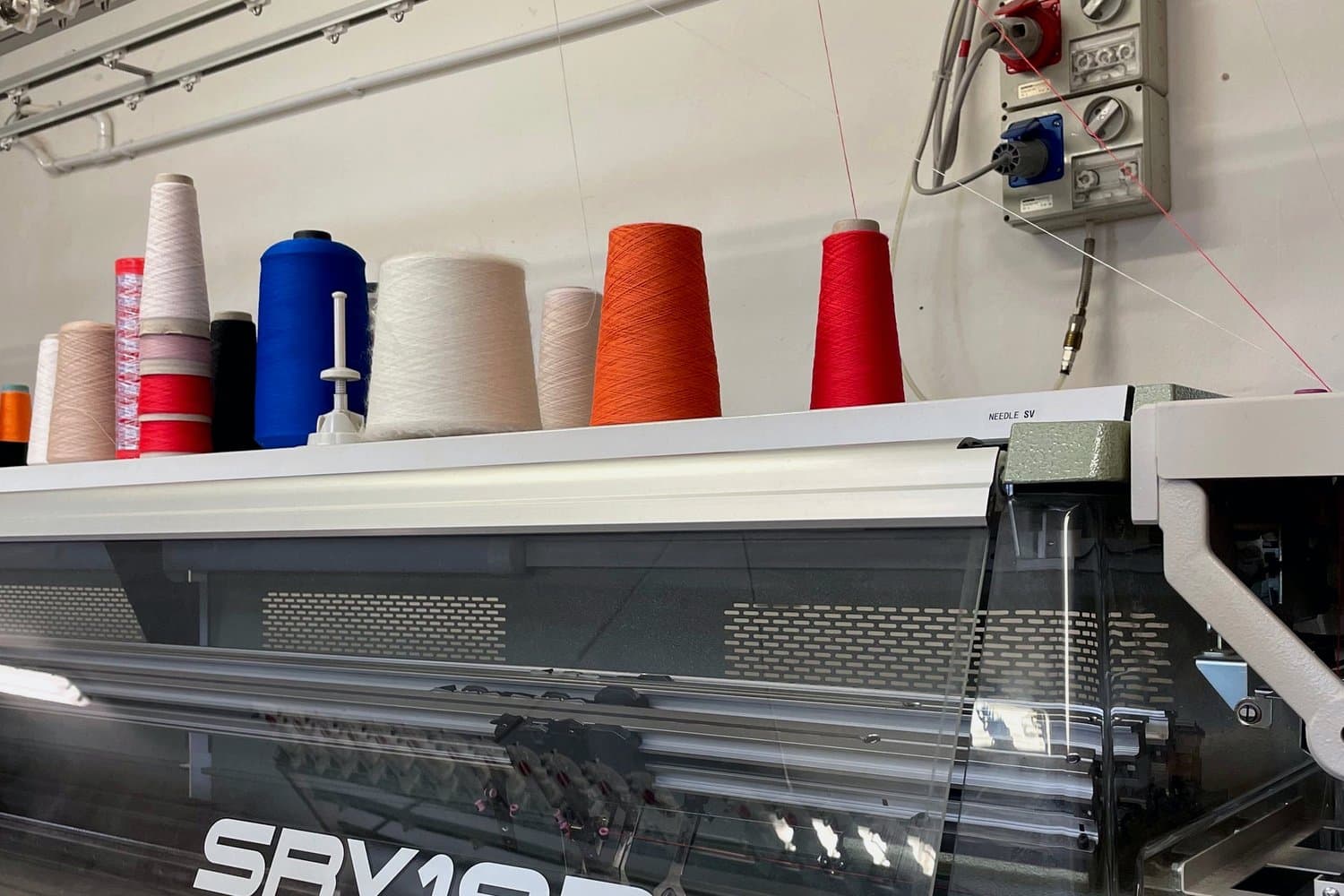
We focus on men's sweaters, cardigans, knit jackets, jacquard knitwear and private label knitwear. We support B2B buyers with OEM/ODM development, sampling and bulk production planning.
Guides for custom knitwear manufacturing, yarn selection, gauge options, quality control, cost planning and tech pack preparation.
Gauge
A gauge guide explaining how 5GG, 7GG and 12GG affect sweater texture, weight, season, cost and buyer positioning.
Read Guide ->Production Planning
How to plan knitwear production around Fall/Winter and Spring/Summer launch windows, working backward through lead times to hit your season on time.
Read Guide ->Manufacturing
An honest comparison of China, Vietnam and Bangladesh for sweater and cardigan production — gauge range, yarn access, MOQ, lead time, complexity and total cost — to match the right country to your product and volume.
Read Guide ->Materials
A buyer's guide to the certifications that matter in knitwear — OEKO-TEX, RWS, GRS, GOTS and BCI — what each one certifies, when you actually need it, and how chain-of-custody and transaction certificates prove a material claim.
Read Guide ->Quality
Stop bulk arriving a shade off. A practical guide to knitwear color approval — from Pantone reference to lab dips to consistent bulk — covering metamerism, dye-lot tolerance, fastness and how to sign color off so delivered sweaters match.
Read Guide ->Market
Germany remains one of Europe's most disciplined knitwear sourcing markets. Buyers here expect tight spec adherence, predictable lead times, clean documentation, and yarns that perform through long autumn-winter selling windows. This guide is written from our position as a Dongguan-based custom knitwear manufacturer working with German menswear and lifestyle brands. We cover what drives the procurement calendar, where sample and bulk timelines realistically land, what MOQ a mid-sized German label can plan against, which gauges and yarns we see specified most often for the DACH market, how quality control and compliance documentation are typically structured, and how logistics, payment, and Incoterms tend to be negotiated on FOB China terms. The aim is a working reference a sourcing manager can take into the next supplier review.
Read Guide ->"Oversized" describes an outcome, not a route. On our own shelf the 54 published volume styles split cleanly in two - 26 at 3GG-5GG where yarn weight does the work, 21 at 7GG where opened stitch tension does. They cost different amounts, fail in different ways, and only one of them matches any given reference image.
7 min read - Guide
How Pantone color matching actually works in custom knitwear: lab dip rounds, Solid Coated codes, Delta-E tolerances, light booths and bulk approval.
6 min read - Guide
Pilling is the single most common consumer complaint a QC lead hears about knitwear, and most of the root causes are locked in long before bulk knitting starts. This guide breaks down what pilling actually is — short fibres migrating to the garment surface and tangling under friction — and walks through the levers that decide whether a sweater shrugs off abrasion or balls up after three wears. We cover fibre length and yarn twist at the spinning stage, mill processes such as combing and gas singeing, finishing options including anti-pill chemistry and brushing direction, and the practical Martindale and ICI pillbox tests buyers can specify at the sample stage. Written for QC leads tired of post-sale returns, it is a buying and approval guide, not a marketing pitch.
5 min read - Guide
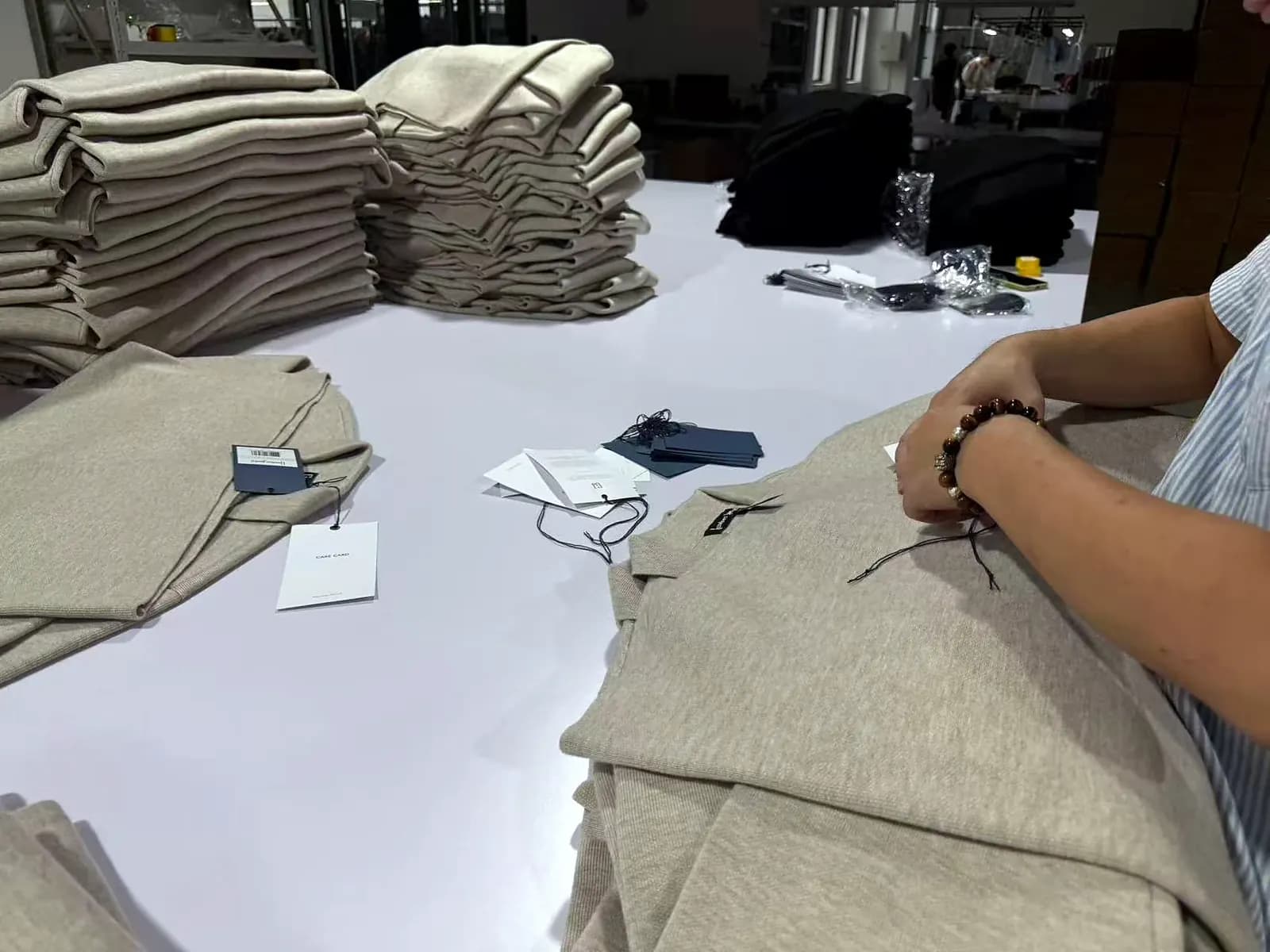
A B2B guide to private label knitwear packaging, including woven labels, care labels, hangtags, polybags, size stickers, carton marks and buyer-specific packing discussion.
8 min read - Guide
What REACH (Reg. 1907/2006) restricts in knitwear — azo dyes/aromatic amines, CMR/disperse dyes/phthalates, nickel on trims, formaldehyde — plus SVHC/SCIP duties, how OEKO-TEX covers most of it, and a buyer test-report checklist.
6 min read - Guide
A comparison of ready-made and custom knitwear sourcing to help B2B brands choose the right path for their stage, budget and goals.
5 min read - Guide
Recycled-content knitwear sounds simple on a hangtag, but the fiber choice, blend ratio, and chain-of-custody paperwork decide whether the program actually scales. This briefing walks through rPET, rPA, and recycled wool — what they each bring to a knit, the blend percentages that hold a clean hand, and where the trade-offs start to bite. It also separates GRS from RCS, addresses the microfiber-shed conversation honestly, and gives a buyer-side checklist for AW and year-round recycled programs. Written for sourcing managers who need answers their tech team and their compliance team will both accept.
7 min read - Guide
Most sourcing managers learn LCL versus FCL the expensive way: by booking the wrong one on a borderline PO and watching destination charges eat the saving. Knitwear makes the decision trickier than it looks because sweaters cube heavy on volume but weigh almost nothing, so the standard freight-forwarder advice ("under 15 CBM go LCL") needs translating into pieces, cartons, and lead-time tolerance before it means anything on your sheet. This briefing walks through the real math for a typical knitwear PO leaving Yantian or Shenzhen for the US East Coast or Northern Europe. We cover how many sweaters fit per cubic meter in retail-folded poly bags, where the LCL/FCL break-even actually lands once you load destination fees in, what the 5-10 day LCL transit penalty does to your on-shelf date, and the line items forwarders quietly leave off the initial quote. We also look at the secondary costs that don't show up in CBM math: extra handling damage on LCL, demurrage exposure when customs holds your container, and the difference in customs-broker workload between a clean BL and a CFS deconsolidation. By the end you should be able to glance at a quote and a packing list and know within 30 seconds whether you are about to pay too much.
6 min read - Guide
How to plan knitwear production around Fall/Winter and Spring/Summer launch windows, working backward through lead times to hit your season on time.
7 min read - Guide
We focus on men's sweaters, cardigans, knit jackets, jacquard knitwear and private label knitwear. We support B2B buyers with OEM/ODM development, sampling and bulk production planning.
Ready sample styles and selected custom programs can support lower-risk trials before larger seasonal orders.
Yes. Brands, including new labels preparing a first collection, can pay for a sample and see it before placing a production order. Two routes: a ready sample of a published style at USD 60 per piece in about 7 days, or a development sample from your tech pack at USD 150 per style, covering yarn sourcing, knit programming, one prototype and one revision round, in 15-25 days. Cashmere and mohair styles are quoted individually and shipping is charged at cost. Production starts only after you approve the physical sample, at our minimum of 50 pieces per colour with sizes mixed inside the 50. A sample does not commit you to a production run; we do not make garments for personal use.
Our sample fee is not refundable. Yarn sourcing, knit programming, machine setup and hand linking cost about the same whether one piece follows or five hundred, which is why the fee exists at all. It is credited against your first bulk order placed within six months of sample approval: 100% of a development sample fee, 50% of a ready sample fee.
Yes, for brands developing a style. One development piece is fine, with no commitment to bulk: a development sample is USD 150 per style and covers yarn sourcing, knit programming, one prototype and one revision round, in 15-25 days (cashmere and mohair are quoted individually). If you then go to production, the minimum is 50 pieces per colour with sizes mixed inside the 50, and the full USD 150 is credited against a first bulk order placed within six months of approving the sample. We do not make garments for personal wear.
Plain and striped styles using the same yarn and colour can be combined toward a minimum of 50 pieces, with mixed sizes. For example, four plain styles of 25 pieces each in the same yarn and colour total 100 pieces and meet that minimum. Different yarns or colours are counted separately. Jacquard and intarsia require 50 pieces per pattern; quantities from different patterns cannot be combined. Send us your styles, yarns, colours and quantities so we can confirm how the minimum applies to your project.
Get a free catalog or submit an RFQ today. Our team will respond within 24 hours.
Cannot find what you need? Our team can create a custom guide or template for your specific project.
Request Custom Resource ->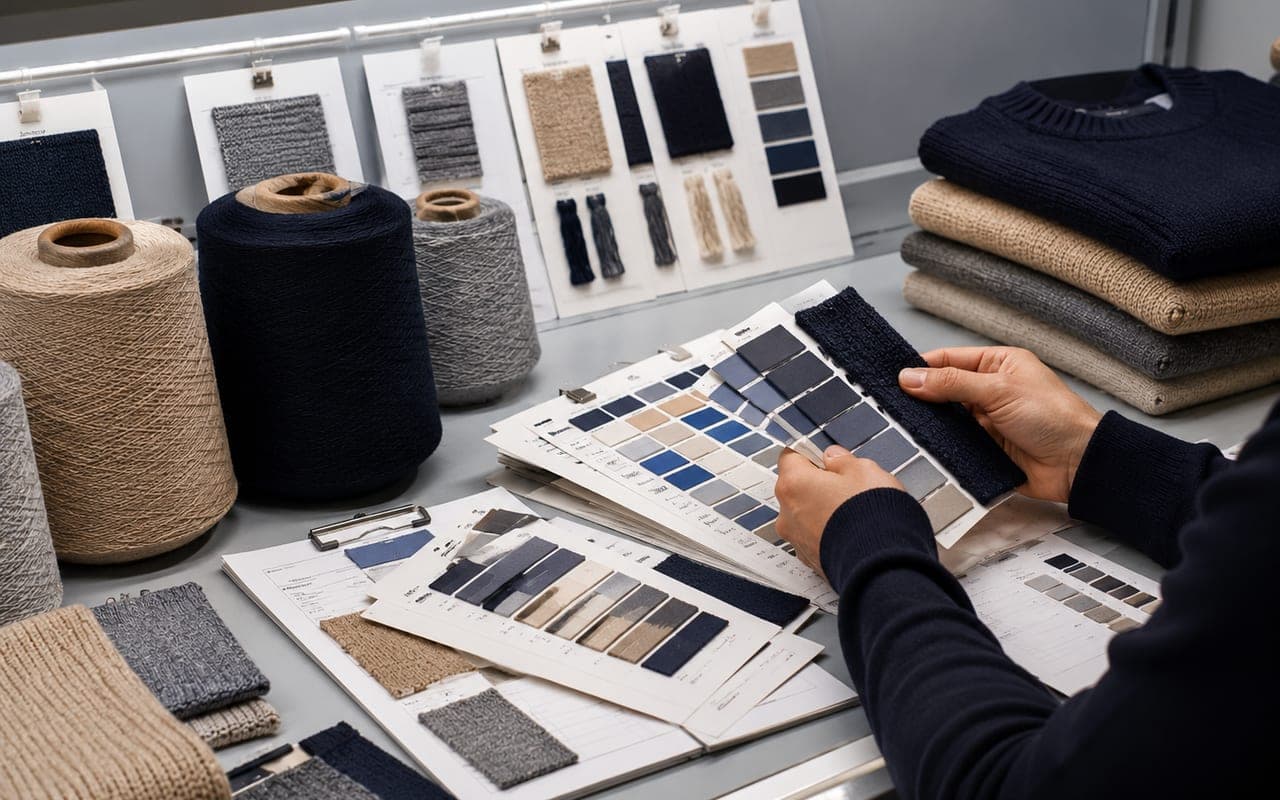
MOQ, lead time, cost ranges, gauge selection and QC checkpoints across typical OEM/ODM knitwear programs in NA + EU. Enter your email — we'll send you the report link in 30 seconds.
No spam. Unsubscribe with one reply. We use your email only to send you the report and follow up if you want a sourcing conversation.
Brand names shown are previously serviced OEM/ODM partners. Logos are decorative and do not imply current endorsement.