Oversized, Relaxed or Voluminous? The Two Routes to Volume in Knitwear - and What Each One Costs
Updated 9/18/202612 min readBy Simon Liu · Licheng Knitwear
"Oversized" describes an outcome, not a route. On our own shelf the 54 published volume styles split cleanly in two - 26 at 3GG-5GG where yarn weight does the work, 21 at 7GG where opened stitch tension does. They cost different amounts, fail in different ways, and only one of them matches any given reference image.
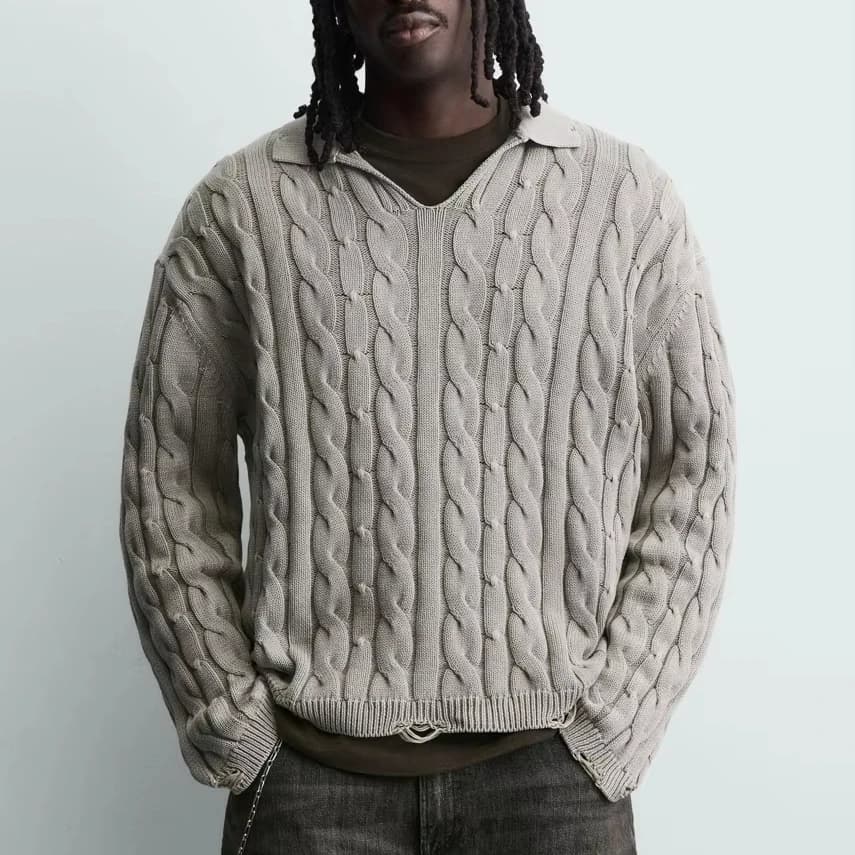
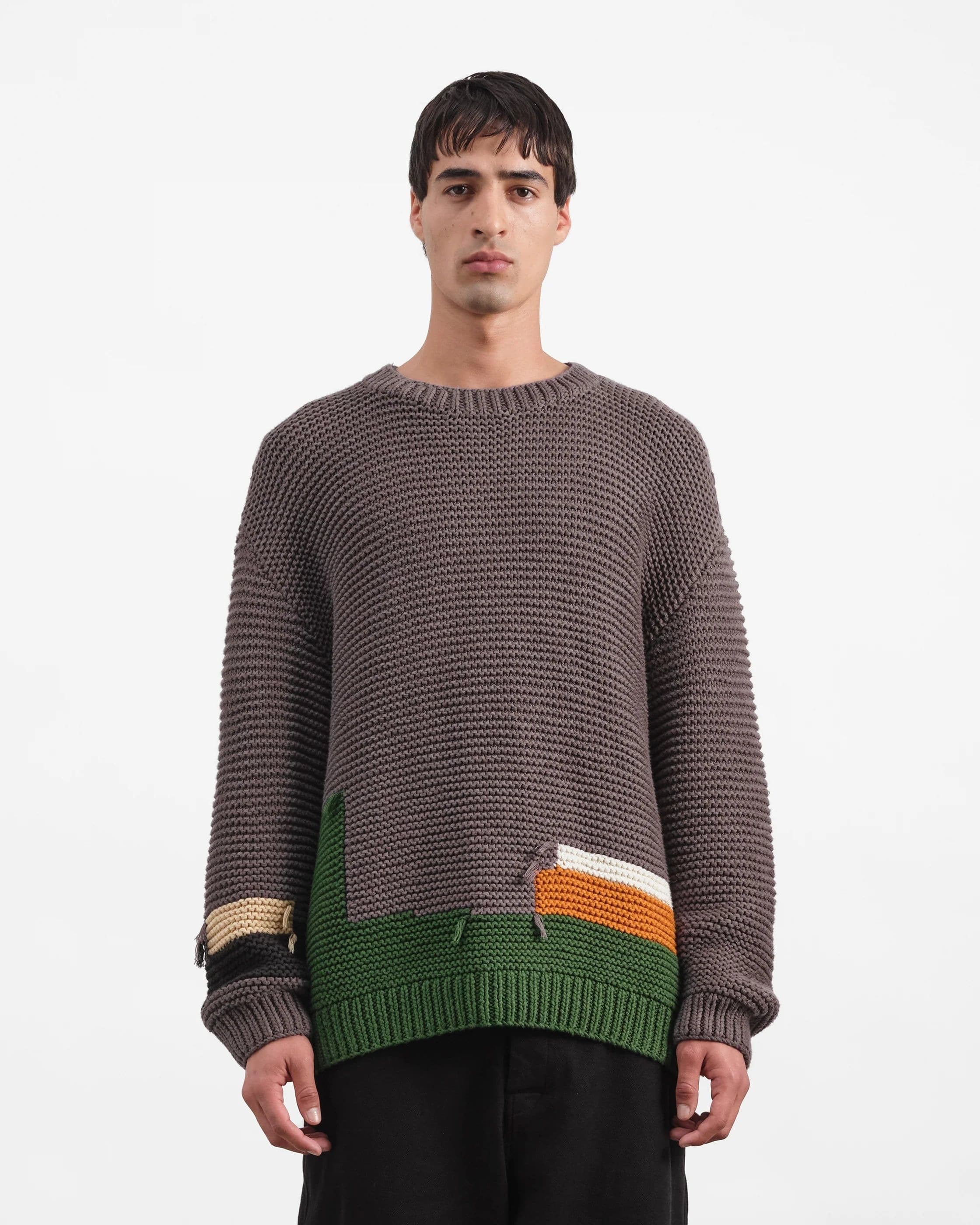
Volume built by yarn weight: a 3GG–5GG cable knit, cut to an oversized block. The other route to the same brief looks nothing like this.
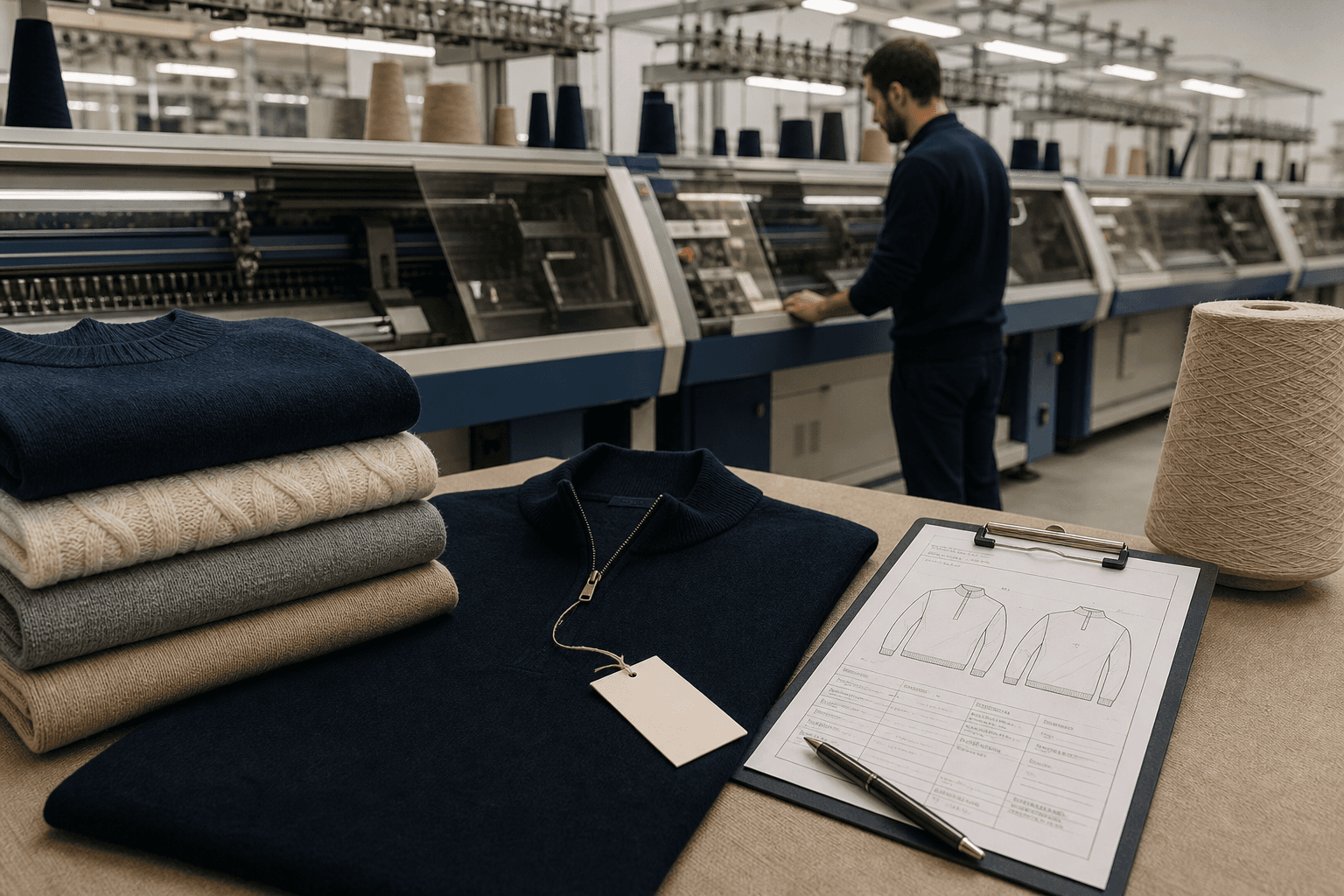
"Oversized" is the most common word in a knitwear brief and one of the least specific. It describes how a garment looks on a body. It says nothing about how the volume was made — and on the factory floor there are two different ways to make it, with different yarn bills, different failure modes and different sampling risk.
We went through our own published shelf to see how the split actually falls. Searching the three words buyers use — oversized, chunky, relaxed — returns 54 published styles. Sorted by the gauge they are knitted at: 26 sit at 3GG–5GG, 21 at 7GG, and 7 elsewhere or confirmed per design. Those two clusters are not variations on a theme. They are two different products that answer the same brief.
This is a guide to telling the two apart before you commission a sample, not after - whether the word in your brief is oversized, relaxed, voluminous or sculptural.
The brief that causes the most re-sampling
In the last month three separate brands briefed us with the same vocabulary — oversized, relaxed, voluminous — and meant three different garments. One wanted weight and a visible halo. One wanted a garment that held a wide shape without hanging heavy. One wanted the shape to read as sculpture - a sculptural line where the fabric does the drama rather than the pattern.
All three briefs are buildable. None of them is buildable from the word alone, because the word describes an outcome and the factory needs a route.
The route is decided by one question: is the volume coming from the yarn, or from the tension?
Route A — volume from yarn weight (3GG–5GG)
Twenty-six of our 54 volume styles are knitted at 3GG or 5GG. On these, a thicker yarn on a coarser machine does the work. The stitch is large, the fabric is dense and heavy, and the silhouette is held up by the fabric's own body.
What this buys you: presence. A 3GG cable reads across a room. Texture — cables, waffle, wide rib, shawl collars — has room to be legible at that scale, which is why most of our heavyweight cardigans and fisherman-style pullovers live here.
What it costs you, and these are the trade-offs buyers most often discover late:
Yarn, by weight. A coarse-gauge garment simply contains more fibre than a fine one of the same size. Fibre is usually the largest single line in a knitwear cost, so the gauge decision moves the price before anything else does. Our yarn cost index covers what each fibre family adds.
Shipping weight. Heavier garments cost more to move, per piece and per carton. On a small first order this is rarely material; on a repeat programme it is.
Drape, or the lack of it. Coarse fabric holds a shape rather than falling into one. If your reference image shows fabric pooling or flowing, you are not looking at a 3GG garment.
Sizing behaviour. A large stitch means fewer stitches across a body width, so each stitch carries more of the grading. Small adjustments land in bigger increments than they would at a finer gauge.
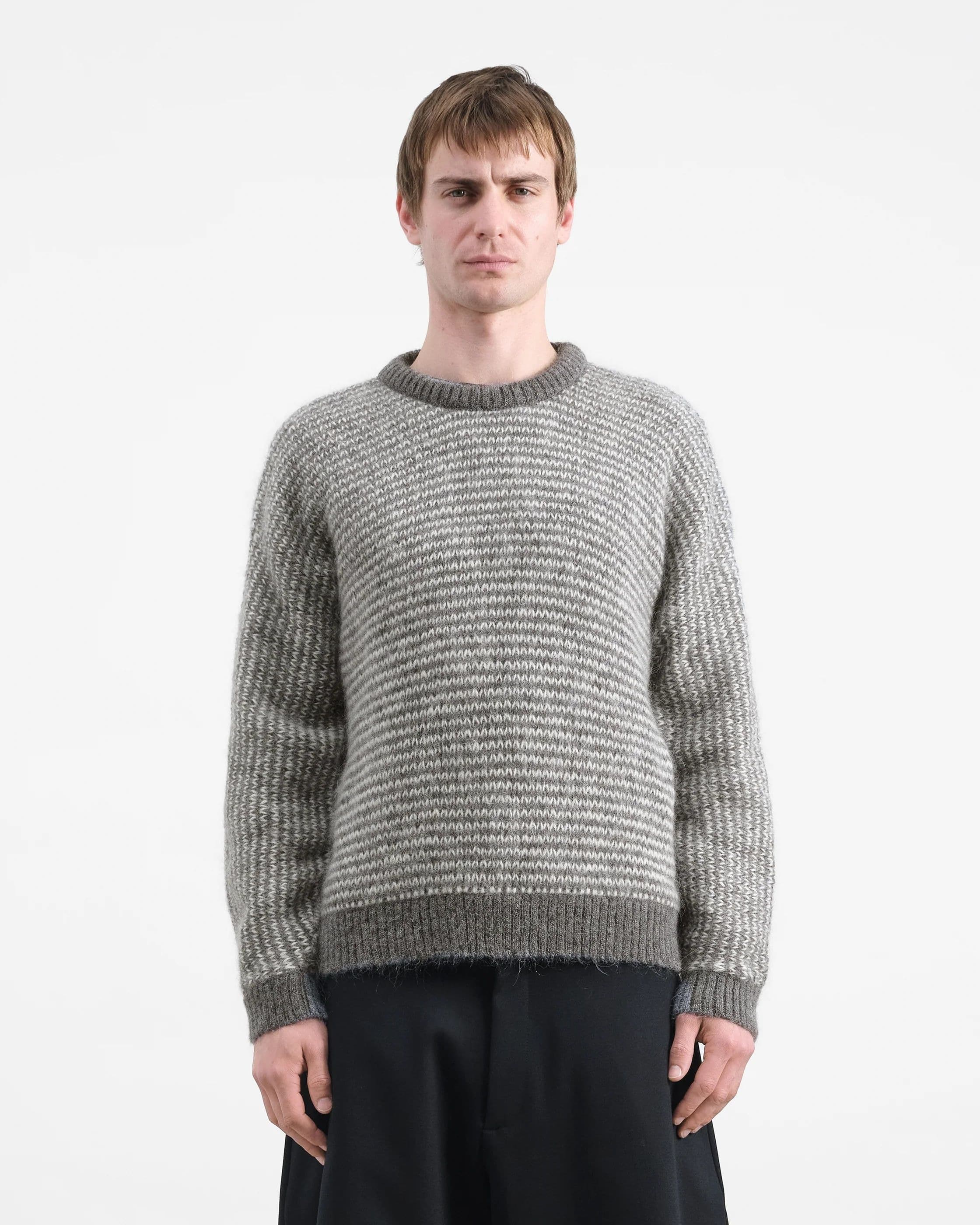
Twenty-one of the 54 sit at 7GG, and this is the route that gets built wrong most often.
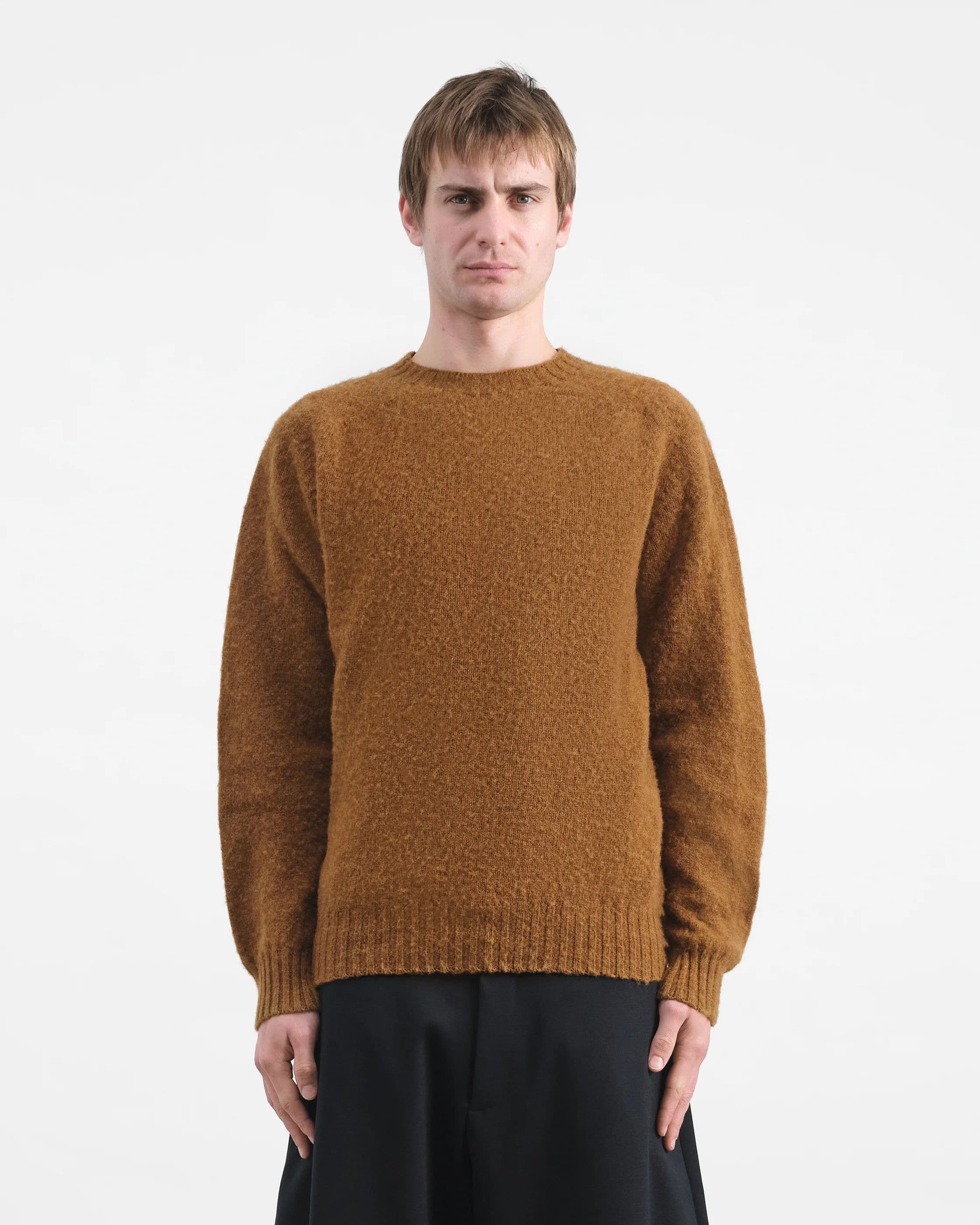
Voluminous knitwear that works is almost always built here rather than at 3GG, and the reason is counter-intuitive: the yarn is not especially heavy. The volume comes from stitch density being opened deliberately — the knit is programmed looser than a standard 7GG fabric would be, so the same yarn occupies more space, and the fabric gains air and movement instead of mass.
The failure mode is specific and worth naming, because it is the single most common cause of a rejected first sample in this category: grading the pattern up instead of opening the tension. A standard-density fabric cut to a bigger block produces a garment that is larger but not fuller. It hangs off the shoulder without body, the hem collapses, and it photographs flat. Buyers describe the result as "it just looks too big", which is exactly right — it is bigger, and nothing else about it changed.
Opening the tension is a programming decision made before the graded sample, and it is why we knit a swatch at the intended density first rather than settling it from a specification sheet. A swatch answers in days what a wrong sample answers in weeks.
Neither route delivers a silhouette on its own. Volume is placed by construction, and three levers do most of it:
Drop shoulder — the shoulder seam sits down the arm rather than at the joint. This is what makes a garment read as relaxed from across a room, before anyone sees the fabric.
Extended armhole — a deeper armhole gives movement and lets the body hang wider without the sleeve binding.
Proportionally shortened body length — a wider body at unchanged length reads as oversized in the wrong way. Shortening the length relative to the width is what turns width into a considered boxy, sculptural line rather than an accident.
These are pattern and programming decisions, not size decisions. Ask for them by name in the tech pack. A garment graded two sizes up has none of them.
Yarn character: three routes to a soft, hairy handle
A large share of volume briefs arrive with a reference image showing a visible halo — the soft fuzz that sits above the fabric surface. Three yarn routes produce it, and they are not interchangeable:
Mohair blends give the longest and most visible halo. Strongest effect, highest yarn cost of the three, and the most prickle-sensitive on skin.
Wool–alpaca blends give a softer, shorter halo with noticeably less prickle, and alpaca brings drape that wool alone does not.
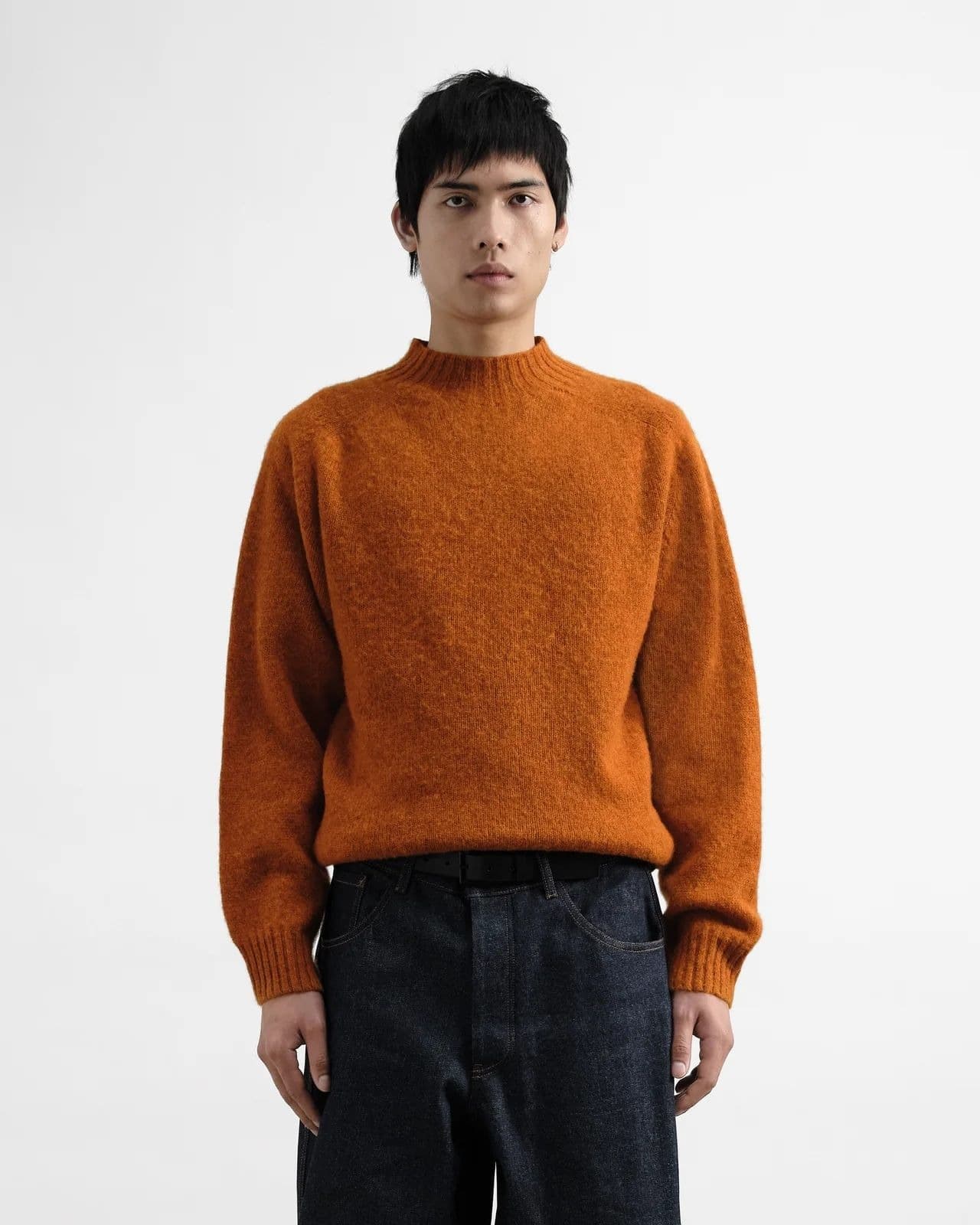
Brushed lambswool is the most economical way to reach a similar look, produced by a finishing process rather than by the fibre itself.
Across the 54 volume styles, the fibre split is wool 27 and cotton 27, then polyester 9, recycled 6, merino 5, acrylic 5, cashmere 5, alpaca 2. Cotton sitting level with wool is worth noting: volume is not only a cold-weather proposition, and a 7GG cotton at opened tension is a spring-summer garment.
One point that saves a round of confusion: melange, marl and multi-colour effects in this category are knitted in the yarn, not printed. If your reference shows a heathered or two-tone surface, that is a yarn specification, not a print, and it is settled at yarn confirmation.
Structures that add volume without adding weight
Beyond tension, the stitch structure itself can carry air. Half-cardigan rib — also called half-brioche or fisherman rib — produces a thick, lofted fabric from a relatively light yarn, because the structure traps air between the faces. Full-cardigan rib does the same more strongly. Pointelle and open-work add volume while removing material.
These are machine capabilities on our flat-bed machines rather than things we currently hold as published stock styles, so treat them as development options to specify in a tech pack, not as shelf references to pull from. If you want one of them, say so early — the structure changes the programme, the fabric width and the yarn consumption, and those cascade into price.
Five things to settle at tech pack
Most re-sampling in this category traces back to one of these being left open:
1. Which route. Weight (3–5GG) or opened tension (7GG). Say which, or send a reference garment we can weigh.
2. Target garment weight, or a reference garment. This is the single most useful number a buyer can give, and it resolves the route question by itself.
3. Where the shoulder sits. Drop shoulder yes or no, and how far.
4. Body width against body length. Give both, as measurements, not as a size name.
5. Halo or no halo, and how much. Mohair, wool–alpaca and brushed lambswool are three different answers and three different prices.
What it costs to find out
Minimum order quantity is 30 pieces per colour per style, and sizes can be mixed within those 30 — which matters more in this category than in most, because an oversized block often sells across fewer sizes than a regular fit.
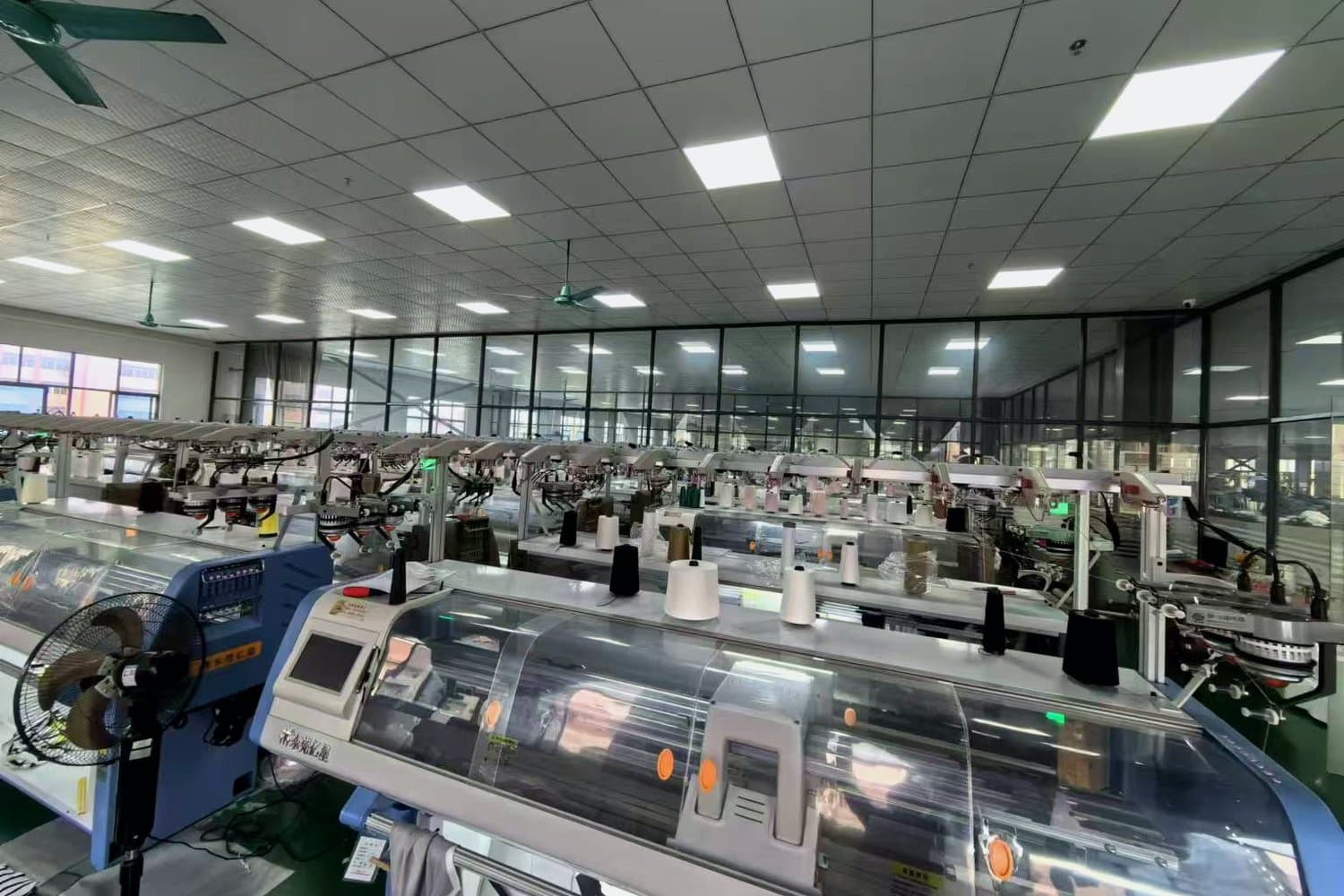
Sampling runs about 15–25 days from a confirmed tech pack and yarn, or about 7 days if we are starting from a style already in our range or from yarn already in house. Bulk production runs 30–45 days depending on quantity and customisation. The full 3GG–18GG gauge range is available at 30 pieces: machine access does not change with order size.
If you are weighing the two routes, the fastest way through is usually a swatch at each, knitted at the density we would actually run. It costs days, not weeks, and it answers the question that a specification sheet cannot.
MOQ, lead time, cost ranges, gauge selection and QC checkpoints across typical OEM/ODM knitwear programs in NA + EU. Enter your email — we'll send you the report link in 30 seconds.
No spam. Unsubscribe with one reply. We use your email only to send you the report and follow up if you want a sourcing conversation.
Brand names shown are previously serviced OEM/ODM partners. Logos are decorative and do not imply current endorsement.