How to Prepare a Sweater Tech Pack
Updated 8/18/202612 min readBy Simon Liu · Licheng Knitwear
A guide to preparing a sweater tech pack with product sketch, measurements, yarn, gauge, trims, labels and packing information.
A guide to preparing a sweater tech pack with product sketch, measurements, yarn, gauge, trims, labels and packing information.
Our team is ready to support your brand from concept to delivery.
Discuss Your ProjectA tech pack is the single document that turns your idea into a manufacturable sweater. A clear one gets you an accurate sample on the first try; a vague one creates rounds of costly back-and-forth and a product that drifts from your vision. This guide shows B2B buyers exactly what to include in a knitwear tech pack so a factory can quote and sample with confidence.
A tech pack is not paperwork. It is the contract between your idea and the factory's machines. The clearer it is, the closer your first sample lands.
💬 Sourcing this for an upcoming project? Request a free quote → · MOQ 30 pcs · Samples in 15–25 days · WhatsApp us
Factories do not guess; they build to spec. Every detail you leave out becomes an assumption the factory makes for you, and those assumptions are why first samples disappoint. A complete tech pack also lets a factory quote accurately, because they can see the yarn, gauge and complexity before committing to a price.
| Section | What to specify |
|---|---|
| Style overview | Sketch or reference image, front and back |
| Yarn | Fiber, composition, weight, supplier if known |
| Gauge | Target gauge (e.g. 7GG) |
| Stitch & structure | Jersey, rib, cable, jacquard, etc. |
| Measurements | Full spec sheet with tolerances, by size |
| Color | Pantone or physical swatch, per colorway |
| Trims | Buttons, zippers, labels, hangtags |
| Packaging | Folding, polybag, carton requirements |
Start with a clear sketch or a reference garment, front and back. A physical reference is the fastest way to communicate handfeel and construction. State clearly what to copy and what to change.
Specify fiber composition (for example 100% cotton, or 50% wool / 50% acrylic), yarn weight, and target gauge. If you do not know the exact yarn, describe the handfeel and let the factory propose options. See our yarn selection guide and gauge guide.
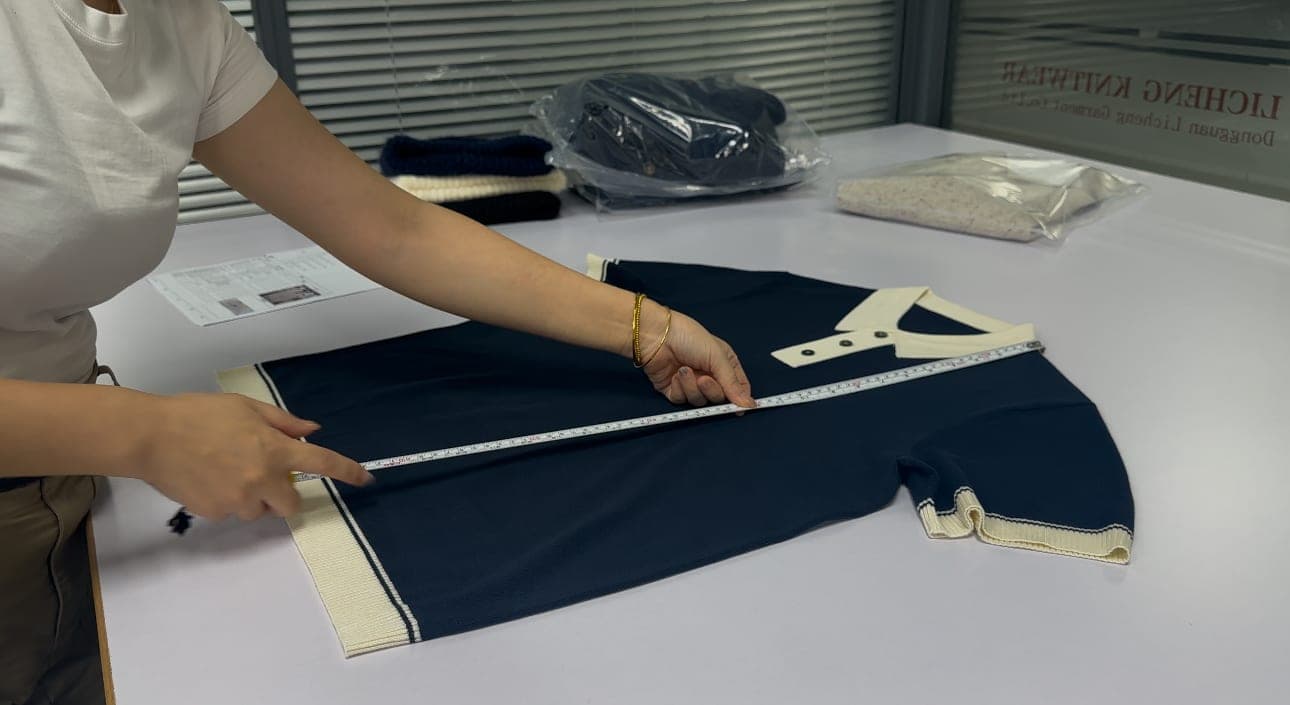
This is where most tech packs fall short. Provide a full measurement spec, by size, with tolerances (for example body length 70cm +/- 1cm). Include how each point is measured to avoid ambiguity.
Give Pantone references or physical swatches for each colorway. List every trim with placement, and state your folding, polybag and carton requirements so the factory can quote finishing accurately.
Before you send a tech pack, confirm:
Many emerging brands do not have a complete tech pack, and that is fine. A capable ODM factory can develop the spec with you from a reference garment and a brief. See how OEM and ODM differ in our OEM vs ODM guide. The clearer your input, the faster and cheaper the development.
To see why precision matters, take a single point of measure (POM) on a crewneck pullover and write it the way a factory needs it. A vague line like "body length about 70cm" forces an assumption; a complete line removes it:
| Element | Vague version | Production-ready version |
|---|---|---|
| POM name | Body length | CB (center back) length, neck seam to hem |
| Method | (none) | Measured flat, from base of back neck rib to bottom edge |
| Size M value | ~70cm | 70.0 cm |
| Graded sizes | (none) | S 68 / M 70 / L 72 / XL 74 cm |
| Tolerance | (none) | +/- 1.0 cm |
The right-hand column tells the factory exactly where to place the tape, what number to hit per size, and how much variance passes QC. Apply that discipline to every POM — chest width, sleeve length, armhole, rib depth, neck width — and your first sample lands close enough to approve with minor comments rather than a full remake. Pair the spec sheet with a stitch and gauge note (anywhere from a chunky 3GG hand-feel to a fine 18GG) so graded measurements and knit density are read together, not in isolation.
A tech pack reads faster — and comes back as a tighter quote — when it uses the conventions and standards a factory already works to. The ones worth naming explicitly:
📌 The one line that saves a sample round: every point of measure needs three things beside it — a value per size, a how-to-measure method, and a tolerance. Miss any one and the factory has to assume — and assumptions are exactly what make first samples miss.
How much detail you need depends on where you are. Use this to calibrate before sending:
| Buyer scenario | Minimum to start | What the factory adds |
|---|---|---|
| Established brand, repeat program | Full tech pack with graded POMs, Pantone, approved yarn | Costing, knit-down confirmation |
| New brand, has a reference garment | Reference sample + target sizes + 1–2 colorways | Spec digitized from the reference, yarn proposal |
| Concept only, sketch in hand | Sketch front/back + fiber direction + price target | Full ODM development of spec and trims |
Across all three, our flow stays the same: a confirmed tech pack moves to sampling in 15–25 days from confirmed tech pack and yarn, and approved samples move to bulk in 30–45 days at MOQ from 30 pcs. The more you lock before sampling, the fewer paid sample rounds you spend. If you want a recycled-content program, flag it in the tech pack so we quote GRS-certified yarn (cotton, wool, merino, cashmere, blends, acrylic and recycled are all in scope), and note any OEKO-TEX Standard 100 requirement for the finished garment up front.
Do I need a finished tech pack before a factory will quote? No. We can quote from a reference garment plus your target sizes and colorways, then develop the full spec with you during ODM development. A complete tech pack simply makes the quote tighter and faster.
What is the single most common mistake in sweater tech packs? Incomplete measurement sheets — missing tolerances, missing how-to-measure notes, or only one size. Without graded POMs and tolerances the factory has to assume, and assumptions are what make first samples miss.
Can you match a yarn if I only know the look and feel, not the composition? Yes. Describe the handfeel, weight and target gauge and we will propose yarn options from cotton, wool, merino, cashmere, blends, acrylic or recycled fibers, including GRS-certified recycled yarn if sustainability is part of the brief.
Licheng Knitwear helps B2B buyers turn sketches, references or briefs into production-ready tech packs and accurate first samples. Request a sample or request a quote to begin.
---
If you're planning a real project around any of the points above, we'd be glad to take a quick look. Send a short brief and we'll come back within one business day with a practical direction, MOQ + lead time estimate, and a sample plan if it makes sense.
→ Request a free quote · Download the men's knitwear catalog · WhatsApp us · info@lcgarment.cn
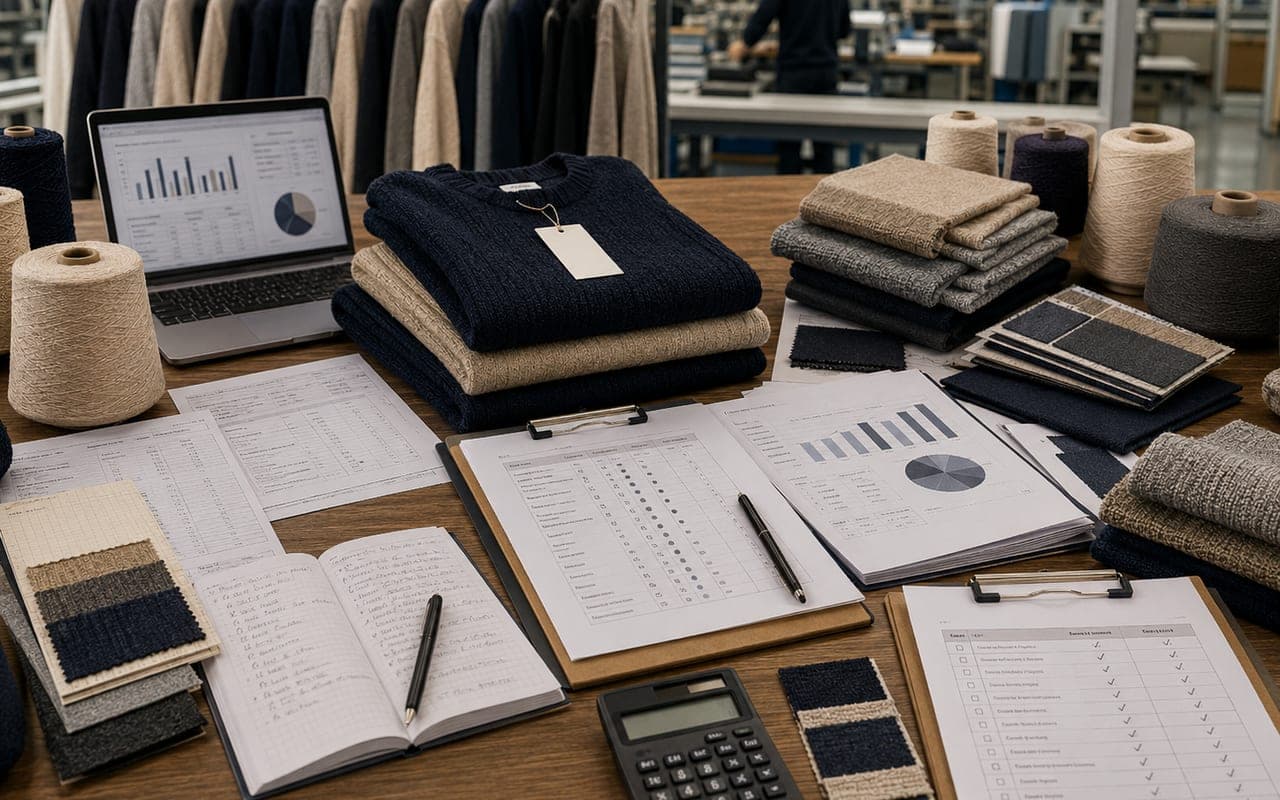
A tech pack gives clear measurements, construction notes, material direction and trim requirements. This makes sample comments and bulk inspection more objective.
Sketch or flats, measurements and size run, yarn and gauge, stitch and structure, colours (Pantone), trims and labels, and packaging.
No. A reference photo and basic specs are enough to start; a tech pack improves accuracy but we can develop from a clear description.
Enough to remove ambiguity on yarn, gauge, measurements, colour and trims; our sampling masters fill practical gaps during development.
We focus on men's sweaters, cardigans, knit jackets, jacquard knitwear and private label knitwear. We support B2B buyers with OEM/ODM development, sampling and bulk production planning.
Ready sample styles and selected custom programs can support lower-risk trials before larger seasonal orders.
Get a free catalog or submit an RFQ today. Our team will respond within 24 hours.
Men's Sweaters
MOQ, lead time, cost ranges, gauge selection and QC checkpoints across typical OEM/ODM knitwear programs in NA + EU. Enter your email — we'll send you the report link in 30 seconds.
No spam. Unsubscribe with one reply. We use your email only to send you the report and follow up if you want a sourcing conversation.
Brand names shown are previously serviced OEM/ODM partners. Logos are decorative and do not imply current endorsement.