Notas B2B sobre abastecimiento de prendas de punto en Países Bajos y Bélgica
Actualizado 24/8/202612 min readPor Simon Liu · Licheng Knitwear
Los compradores de moda neerlandeses y belgas operan en uno de los entornos de abastecimiento más exigentes de Europa: mercados nacionales pequeños, comercio electrónico maduro, clientes multilingües y un fuerte enfoque cultural en la documentación y la transparencia. En Licheng Knitwear fabricamos suéteres, cárdigans, polos de punto y chaquetas de punto personalizados en Dongguan, China, y los compradores del Benelux son una parte habitual de nuestra cartera de pedidos europea. Estas notas reúnen lo que hemos aprendido trabajando con compradores del Benelux: cómo presentan sus briefs, qué galgas y direcciones de hilo prefieren, dónde suelen quedar las negociaciones de MOQ, qué documentos de cumplimiento piden primero y cómo las realidades logísticas —elección de puerto, aranceles, Incoterms— determinan el coste desembarcado final. El objetivo es ofrecer a los compradores con sede en los Países Bajos y Bélgica una referencia práctica antes de enviar el próximo RFQ a un proveedor asiático de prendas de punto.
Los Países Bajos y Bélgica conforman juntos un mercado de punto compacto pero comercialmente serio. Ambos países combinan un comercio minorista multimarca maduro, una penetración avanzada del comercio electrónico y acceso directo a dos de los puertos de contenedores más activos de Europa: Róterdam y Amberes. Para Licheng Knitwear, esto significa que nuestros compradores del Benelux suelen presentar sus briefs de forma diferente a los compradores de otras partes de Europa: preguntan antes por la documentación, les importa más el coste desembarcado por unidad que el precio FOB nominal, y casi siempre planifican pensando tanto en la entrega al consumidor como a las tiendas. Estas notas describen los patrones que observamos cuando clientes neerlandeses y belgas nos evalúan como proveedor asiático de prendas de punto, y dónde suelen recaer las decisiones prácticas.
Por qué el mercado del Benelux importa en el abastecimiento de prendas de punto
Los compradores neerlandeses y belgas tienen un peso superior al esperado en el abastecimiento de prendas de punto por varias razones estructurales. La población combinada es modesta según los estándares europeos, pero el gasto en moda online per cápita es alto, la comunicación comercial en inglés es la norma y la región cuenta con una infraestructura de importación consolidada desde hace mucho tiempo. Vemos repetidamente tres perfiles de comprador:
Marcas DTC y nativas del comercio electrónico con sede en Ámsterdam, Utrecht, Róterdam, Gante o Bruselas, que a menudo lanzan una cápsula de punto masculina o unisex muy enfocada y crecen a través de publicidad en redes sociales y marketplaces.
Ready to Start Your Project?
Get a free catalog or submit an RFQ today. Our team will respond within 24 hours.
Minoristas independientes multimarca y concept stores que compran drops estacionales más pequeños y quieren un componente de marca propia junto a su mix de marcas.
Marcas de moda consolidadas de gama media con distribución mayorista en toda la UE, que utilizan los Países Bajos o Bélgica como hub logístico.
Lo que une a estos perfiles es una alta disposición a plantear al proveedor preguntas difíciles desde el principio —sobre materiales, flexibilidad de MOQ, documentación de calidad y plazos— y la expectativa de que las respuestas sean específicas. Las respuestas vagas hacen perder la consulta. Fundada en 2018, Licheng Knitwear ha trabajado con compradores europeos de todos estos perfiles, y el brief del Benelux es reconocible como un patrón propio: breve y directo, centrado en la documentación y casi siempre atento al coste hasta el nivel de aranceles y despacho de aduanas. Para conocer el contexto de cómo se compara esta región con los compradores norteamericanos, nuestra nota sobre abastecimiento de prendas de punto: Norteamérica vs Europa cubre las diferencias más generales.
Plazos de muestra y realidades de la producción en serie
Plazos de muestra y realidades de la producción en serie
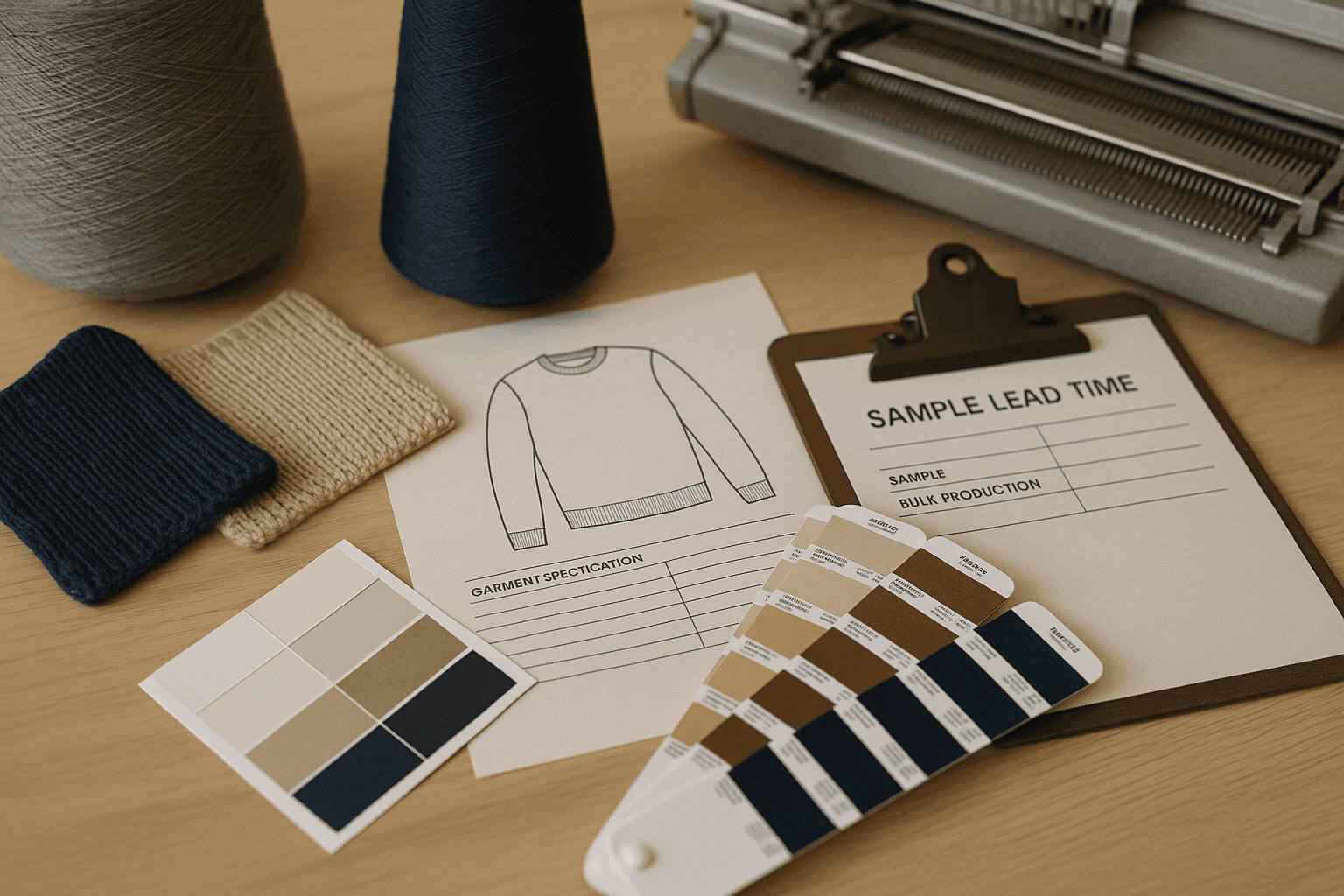
La pregunta más habitual del Benelux en una primera llamada no es el precio, sino los plazos. Los compradores neerlandeses y belgas suelen tener una fecha de lanzamiento ya fijada (a menudo vinculada a una campaña, un showroom mayorista o una ventana estacional de marketplace), y necesitan planificar el calendario hacia atrás.
En Licheng, nuestros plazos estándar son:
Plazo de muestra: 7-25 días, dependiendo de si el hilo está en nuestra biblioteca existente o hay que adquirirlo. Un cuello redondo sencillo en mezcla de algodón con un hilo en stock está en el extremo rápido. Una mezcla de lana/cachemir a medida, un gráfico en intarsia o una muestra que requiera igualación de color con lab dips se acerca al extremo más largo.
Plazo de producción: 30-45 días desde la muestra PP aprobada y el PO confirmado, contados desde que el hilo llega a nuestra fábrica en Dongguan.
Para los compradores del Benelux que planifican la temporada retail de otoño/invierno 2026, esto suele significar tech pack y discusión del hilo en marzo-abril, muestras durante mayo-junio, PO y compra de hilo en julio, y finalización de la producción en agosto-septiembre para una fecha de puesta en tienda o en línea en octubre. La planificación de producción estacional de prendas de punto y la guía de plazos de muestrario de suéteres explican la planificación inversa con más detalle.
Dos realidades de calendario que los compradores neerlandeses y belgas deben tener en cuenta: el flete marítimo desde Yantian o Shenzhen hasta Róterdam o Amberes suele tardar 30-38 días de puerto a puerto, más el despacho de aduanas, y el Año Nuevo Chino (finales de enero / principios de febrero) cierra en la práctica las fábricas chinas durante dos o tres semanas cada año. Hablamos de ambos puntos con cada cliente del Benelux antes de cotizar una fecha lista para el lanzamiento, y recomendamos a los compradores dejar un margen de una a dos semanas a cada lado de la ETA marítima para absorber la congestión portuaria habitual o los retrasos del transporte interior.
MOQ y condiciones comerciales para el tamaño de marca típico de la región
Las marcas del Benelux tienden a ser más pequeñas que, por ejemplo, las cadenas nacionales alemanas o francesas. Un primer PO típico de una marca DTC neerlandesa o de una concept store belga es de uno a tres estilos, de dos a cuatro colores por estilo y un rango de tallas completo XS-3XL (o un S-XL más acotado para DTC).
Nuestro MOQ de catálogo es de 30 piezas por color para desarrollos basados en catálogo. Para desarrollos OEM totalmente a medida con hilo personalizado, artwork personalizado o fornituras únicas, el mínimo práctico es más alto, porque entran en juego los mínimos de compra de hilo y de lote de tintura. Lo gestionamos caso por caso en lugar de cotizar una cifra rígida.
Lo que vemos que los compradores del Benelux hacen bien: confirman pronto la curva de tallas (las curvas de tallas del norte de Europa tienden a inclinarse hacia L y XL más que las del sur de Europa), consolidan colores donde pueden y utilizan estilos de catálogo o cercanos al catálogo en su primera temporada para mantener el MOQ manejable, y luego pasan a un ODM y OEM más completos en la segunda temporada. La guía de MOQ para suéteres personalizados y prendas de punto con MOQ bajo para marcas pequeñas cubren estas disyuntivas con más profundidad. Una táctica útil para una marca neerlandesa o belga en su primera temporada es tratar el PO inicial como una prueba controlada: elegir uno o dos estilos estrella en dos colores, demostrar la rotación de ventas y, después, plantear un programa ODM u OEM más profundo en la siguiente temporada, una vez que la curva de tallas y las preferencias de colorways estén validadas con datos reales de ventas en lugar de conjeturas.
Direcciones de hilo y galga que prefieren los compradores del Benelux
El clima del Benelux es fresco, húmedo y ventoso de octubre a abril, y templado más que caluroso en verano. Por ello, el calendario retail se apoya fuertemente en el punto de otoño-invierno, con una ventana más pequeña de punto fino para primavera-verano. Patrones que vemos en los briefs neerlandeses y belgas:
Caso de uso
Galga típica
Dirección de hilo habitual
Notas
Pulóver y hoodie DTC de otoño-invierno
5GG-7GG
Mezcla de algodón y lana, mezcla de lana reciclada
A menudo oversize; se prefiere claramente un tacto suave
Cárdigan y chaqueta de punto premium AW
3GG-5GG
Mezcla de lana más pesada, mezcla de alpaca
Trenzas gruesas, cuellos esmoquin, cruce hacia prendas exteriores con cremallera completa
Punto smart-casual para el trabajo
7GG-12GG
Mezcla de merino, mezcla de lana
Siluetas de media cremallera, cuello mock y polo
Punto fino de primavera-verano
12GG
Mezcla de algodón, algodón-cachemir
Polos, cuellos redondos finos, cárdigans ligeros
Cápsula de diseñador / streetwear
5GG-7GG
Mohair, mezclas cepilladas
Centrada en el patrón y el color, a menudo con MOQ más pequeño
El hilo sostenible es una petición más frecuente en los briefs del Benelux que en muchos otros mercados. La lana reciclada, el algodón reciclado y el merino con cadena trazable aparecen con regularidad en los briefs neerlandeses y belgas que recibimos. Nuestra nota sobre prendas de punto con hilo sostenible y reciclado explica las opciones y las preguntas prácticas que conviene confirmar con cualquier proveedor. Cuando una afirmación de sostenibilidad va a aparecer en la etiqueta colgante o en la página de producto, recomendamos confirmar la fuente específica del hilo y la documentación asociada antes del muestrario, no después: sustituir un hilo comparable no trazable en la fase de producción es el tipo de sorpresa tardía que los compradores del Benelux no aceptarán, y con razón.
Consideraciones de control de calidad y cumplimiento normativo
Consideraciones de control de calidad y cumplimiento normativo
Los compradores neerlandeses y belgas esperan más documentación por adelantado que los compradores de otros mercados, en parte por el mix mayorista-minorista, en parte por la base regulatoria de la UE y en parte porque los consumidores del Benelux hacen preguntas informadas sobre el origen y la composición.
Lo que tratamos con cada cliente del Benelux:
Exactitud de la composición de fibras. La legislación de etiquetado de la UE exige desgloses de fibra precisos. Declaramos las mezclas con exactitud (por ejemplo, 70% algodón / 30% lana) y alineamos los resultados de laboratorio antes de la producción.
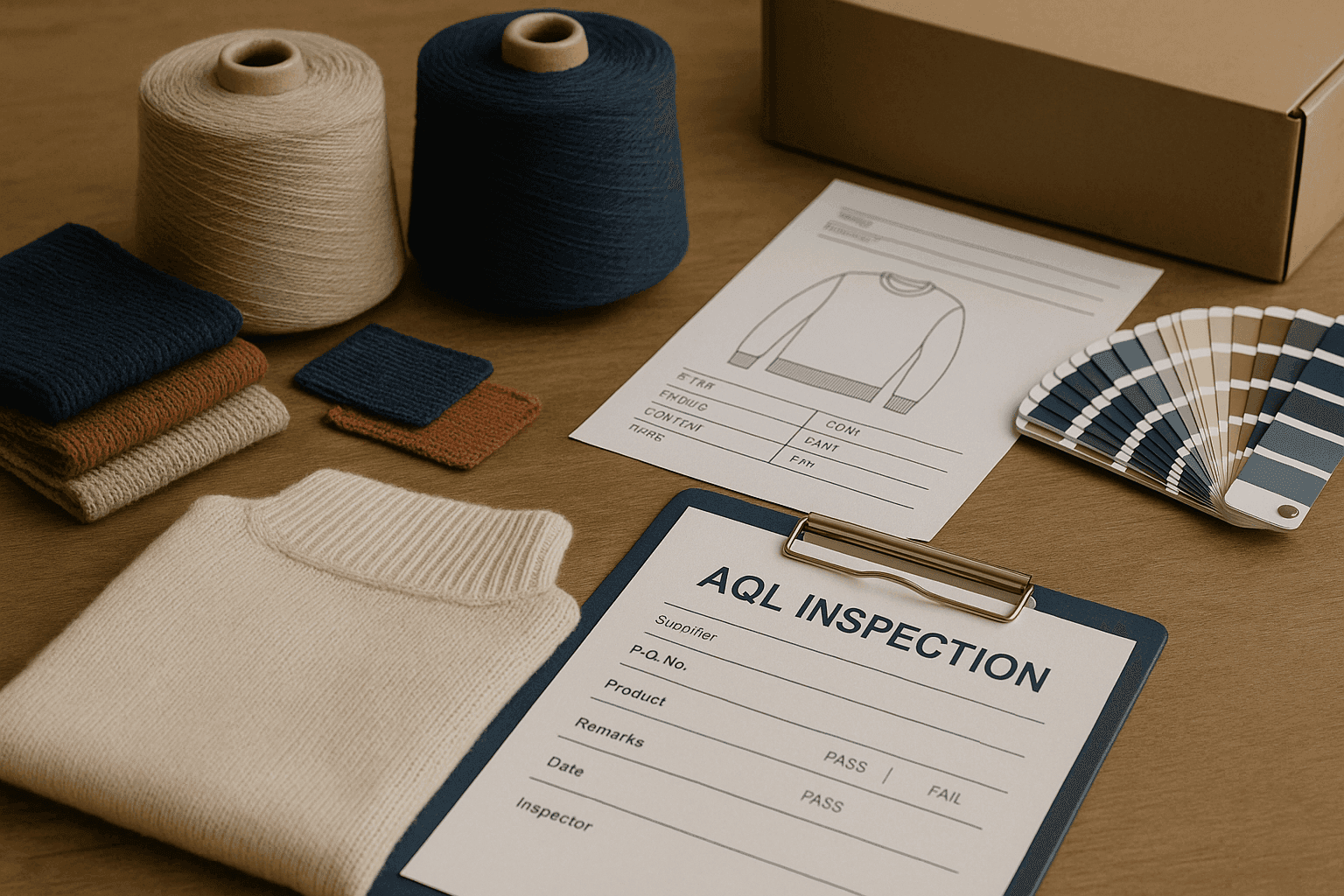
Inspección AQL. Utilizamos internamente la inspección de producto terminado basada en AQL y aceptamos de buen grado inspecciones de terceros por SGS, Intertek, Bureau Veritas o inspectores designados por el comprador. La guía de inspección de terceros para prendas de punto detalla qué especificar.
Detección de agujas y metales. Cada prenda pasa por detección de metales antes del empaquetado, algo especialmente relevante para compradores cuya distribución incluye categorías infantiles o familiares.
Etiquetado de cuidado. Símbolos de cuidado, composición de fibras y etiquetado de país de origen para los mercados de la UE, en los idiomas exigidos por el destino. Nuestra guía de cuidado, lavado y etiquetado de prendas de punto cubre las normas en detalle.
Documentación bajo petición. Podemos proporcionar informes de ensayo y documentación de materiales alineados con los requisitos habituales de los minoristas europeos; los documentos de respaldo se comparten bajo petición en lugar de mostrarse públicamente. Nuestro artículo certificaciones de prendas de punto explicadas explica qué significa realmente cada certificación.
No incluimos lenguaje de cumplimiento vago en nuestras ofertas. Si un comprador del Benelux pide algo específico (un ensayo concreto, un esquema determinado, una declaración particular), la respuesta correcta es o bien un sí con evidencia, o bien un no claro, no una afirmación genérica. Para un programa mayorista en el que el minorista final mantiene su propia lista de proveedores aprobados, pedimos al comprador que comparta la lista de ensayos y documentos requeridos en la fase de RFQ, de modo que los plazos y cualquier coste adicional se coticen por adelantado en lugar de descubrirse en la aprobación de la muestra PP.
Notas sobre logística, pagos e Incoterms
Los Países Bajos y Bélgica son mercados favorables a la importación gracias a Róterdam y Amberes, pero las decisiones prácticas siguen afectando al coste desembarcado.
Puerto de entrada. Róterdam es el puerto de contenedores dominante para los compradores neerlandeses; Amberes es la opción natural para los compradores belgas y también es muy utilizado por los importadores neerlandeses del sur. El tiempo de tránsito desde Yantian / Shenzhen suele ser de 30-38 días de puerto a puerto para FCL marítimo. El LCL añade tiempo de consolidación.
Incoterms. La mayoría de los compradores del Benelux con los que trabajamos hacen sus pedidos en FOB Yantian/Shenzhen y organizan el flete a través de su propio transitario, lo que les da control sobre la ruta, el seguro y el agente de aduanas. Para los primeros pedidos más pequeños también cotizamos CIF Róterdam o CIF Amberes como opción más sencilla, y ocasionalmente DAP a un almacén en el Benelux para compradores que quieren un precio totalmente entregado. El flete aéreo vía Schiphol o Lieja está disponible para muestras urgentes o pequeños drops iniciales; normalmente solo lo aconsejamos cuando los plazos realmente lo exigen. Nuestra guía de envío y logística de prendas de punto cubre las disyuntivas de los Incoterms en detalle.
Aranceles y coste desembarcado. El arancel de importación de la UE sobre suéteres de punto suele situarse en el rango del 10-12% según la clasificación HS, más el IVA, más las tasas portuarias y de despacho. FOB no es coste desembarcado. Nuestra guía de coste desembarcado de prendas de punto explica los cálculos paso a paso.
Condiciones de pago. Nuestro estándar es 30% de depósito a la confirmación del PO, 70% de saldo antes del embarque contra copia del conocimiento de embarque. Aceptamos T/T a nuestra cuenta bancaria en China en USD. No exigimos cartas de crédito en pedidos estándar. Para pedidos más grandes o recurrentes podemos discutir hitos ajustados caso por caso. Consulte condiciones de pago y términos comerciales de prendas de punto para ver cómo se comparan estas condiciones en el sector.
Divisa. Nuestras cotizaciones son en USD FOB China. Para los compradores del Benelux que planifican presupuestos en euros, recomendamos calcular precios con un tipo de cambio USD/EUR conservador y confirmar el tipo en el momento del depósito; no cotizamos en euros.
Para un comprador neerlandés o belga que nos evalúe frente a otros proveedores asiáticos de prendas de punto, la solicitud práctica es sencilla: envíenos un tech pack (o una foto de referencia clara más medidas y objetivo de hilo), indíquenos la fecha de lanzamiento, el puerto de destino, la curva de tallas y la documentación que necesitará. Le responderemos con un calendario de muestras, una propuesta de MOQ, un precio FOB y un plan de entrega claro. Las guías cómo elegir un fabricante de prendas de punto en China y cómo redactar un RFQ de prendas de punto explican qué incluir en ese primer mensaje.
---
Hable con nuestro equipo sobre este tema
Si está planificando un proyecto real en torno a cualquiera de los puntos anteriores, estaremos encantados de echarle un vistazo. Envíenos un brief breve y le responderemos en el plazo de un día hábil con una orientación práctica, una estimación de MOQ + plazos, y un plan de muestras si tiene sentido.
Nuestro MOQ de catálogo en Licheng es de 30 piezas por color para desarrollos basados en catálogo. Para OEM totalmente a medida con hilado personalizado, el mínimo práctico es mayor porque se aplican los mínimos de compra de hilado y de partida de tintura. La mayoría de los primeros pedidos DTC del Benelux se sitúan entre 30 y 100 piezas por color repartidos en uno a tres modelos.
El FCL marítimo desde Yantian o Shenzhen suele tardar 30-38 días de puerto a puerto hasta Róterdam o Amberes, más el despacho de aduanas y la entrega interior. El LCL añade tiempo de consolidación. El flete aéreo a Schiphol o Lieja es más rápido, pero rara vez es rentable salvo para muestras o reposiciones urgentes.
Para otoño-invierno, los briefs neerlandeses y belgas se inclinan por pullovers de peso medio 5GG-7GG y cárdigans y chaquetas de punto gruesos 3GG-5GG. Para el punto de workwear smart-casual vemos muchas medias cremalleras y cuellos mock en 7GG-12GG. Los briefs de primavera-verano son habitualmente polos, cuellos redondos finos y cárdigans ligeros en punto fino 12GG.
El plazo de muestra en Licheng es de 7-25 días según la disponibilidad de hilado y la complejidad. La producción en serie es de 30-45 días desde la muestra PP aprobada y la PO confirmada, contados desde la llegada del hilado a nuestra fábrica de Dongguan. Añada 30-38 días de flete marítimo encima para estimar la llegada a puerta en el Benelux.
Realizamos internamente inspección AQL y detección de agujas y metales y damos la bienvenida a inspecciones externas por parte de SGS, Intertek, Bureau Veritas o una agencia designada por el comprador. Los informes de ensayo de materiales y la documentación justificativa alineada con los requisitos habituales de los minoristas europeos están disponibles a petición y no se exponen públicamente. Las necesidades específicas de certificación se confirman por adelantado durante el muestreo.
Nos especializamos en suéteres de hombre, cárdigans, chaquetas de punto, prendas de punto jacquard y prendas de punto de marca privada. Apoyamos a compradores B2B con desarrollo OEM/ODM, desarrollo de muestras y planificación de producción en serie.
Gratis: Informe comparativo de sourcing de punto 2026
MOQ, plazos, rangos de coste, elección de galga y puntos de control de calidad en los programas OEM/ODM habituales para Norteamérica y Europa. Deje su correo y le enviamos el enlace en 30 segundos.
Sin spam. Cancele la suscripción con una sola respuesta. Usamos su correo únicamente para enviarle el informe y, si lo desea, continuar la conversación de sourcing.
Las marcas mostradas son socios OEM/ODM a los que hemos prestado servicio anteriormente. Los logotipos son decorativos y no implican ningún respaldo actual.