Guides for custom knitwear manufacturing, yarn selection, gauge options, quality control, cost planning and tech pack preparation.
Manufacturing
逐项解读毛衣报价单——纱线、织片、缝合、辅料、管理费与利润——以及 Incoterms 贸易术语、报价未涵盖的项目和那些用来抢单的虚假报价的危险信号。
阅读指南->Development
为 DTC 和初创品牌首次下单毛衣量身打造的端到端实操手册——产品定义、合理的起订量与预算、工厂尽调、打样、时间节点,以及新手买家最常踩的坑。
阅读指南->Materials
针织买家认证指南——OEKO-TEX、RWS、GRS、GOTS、BCI——逐项解析认证内容、何时真正需要它,以及监管链证书和交易证书如何为材料声称提供背书。
阅读指南->Manufacturing
FOB 并不是你的真实成本。本文讲清进口针织品的到岸成本构成——海运费、进口关税、清关费、内陆派送——如何在下单前估算,以及为什么单件成本随订单量下降。
阅读指南->Development
一份完整的询价单(RFQ)能让你一次拿到准确、可对比的针织报价。明确该写什么——针型、纱线、数量、颜色、贸易术语、关键日期——RFQ 与技术包的差异,并附即取即用模板。
阅读指南->Quality
起球是针织品最常见的投诉。了解毛衣为何起球、你可以控制的纤维、纱线捻度、针型和后整理变量,以及如何在大货生产前规范并测试抗起球性能。
阅读指南->
Pilling is the single most common consumer complaint a QC lead hears about knitwear, and most of the root causes are locked in long before bulk knitting starts. This guide breaks down what pilling actually is — short fibres migrating to the garment surface and tangling under friction — and walks through the levers that decide whether a sweater shrugs off abrasion or balls up after three wears. We cover fibre length and yarn twist at the spinning stage, mill processes such as combing and gas singeing, finishing options including anti-pill chemistry and brushing direction, and the practical Martindale and ICI pillbox tests buyers can specify at the sample stage. Written for QC leads tired of post-sale returns, it is a buying and approval guide, not a marketing pitch.
7 min read - Guide

Three different dye stages produce three very different sweaters, even when the colorway on your moodboard is identical. Yarn-dye, piece-dye, and garment-dye each lock color into the garment at a different point in production — before knitting, after knitting, or after make-up — and each one carries a distinct cost, lead time, MOQ implication, and risk profile. For a designer trying to nail a single brand shade across a six-style collection, picking the right method matters more than picking the right Pantone. This guide walks B2B buyers through how each dyeing method works, where each one shines, where each one goes wrong, and how Licheng plans dye routes for buyers developing custom knitwear in our Dongguan facility.
6 min read - Guide
Shrinkage is the single most common reason a measurement-spec sweater fails inspection at final QC — and the failure almost always traces back to the sample stage, not the bulk run. Wool felts when scales lock together under moisture, heat, and agitation. Cotton swells in water and contracts as it dries, especially in heavier gauges where yarn tension is high. Both behaviors are predictable, both are controllable in production, and both need to be written into the purchase order before bulk knitting starts. This guide walks a QC lead through the physics of shrinkage in wool and cotton knit structures, the production controls Licheng applies at yarn, panel, and finished-garment stages, the tolerance ranges buyers typically write into POs (commonly 1-3%), and the language to use on the PP sample approval form so bulk shrinkage liability is unambiguous.
5 min read - Guide
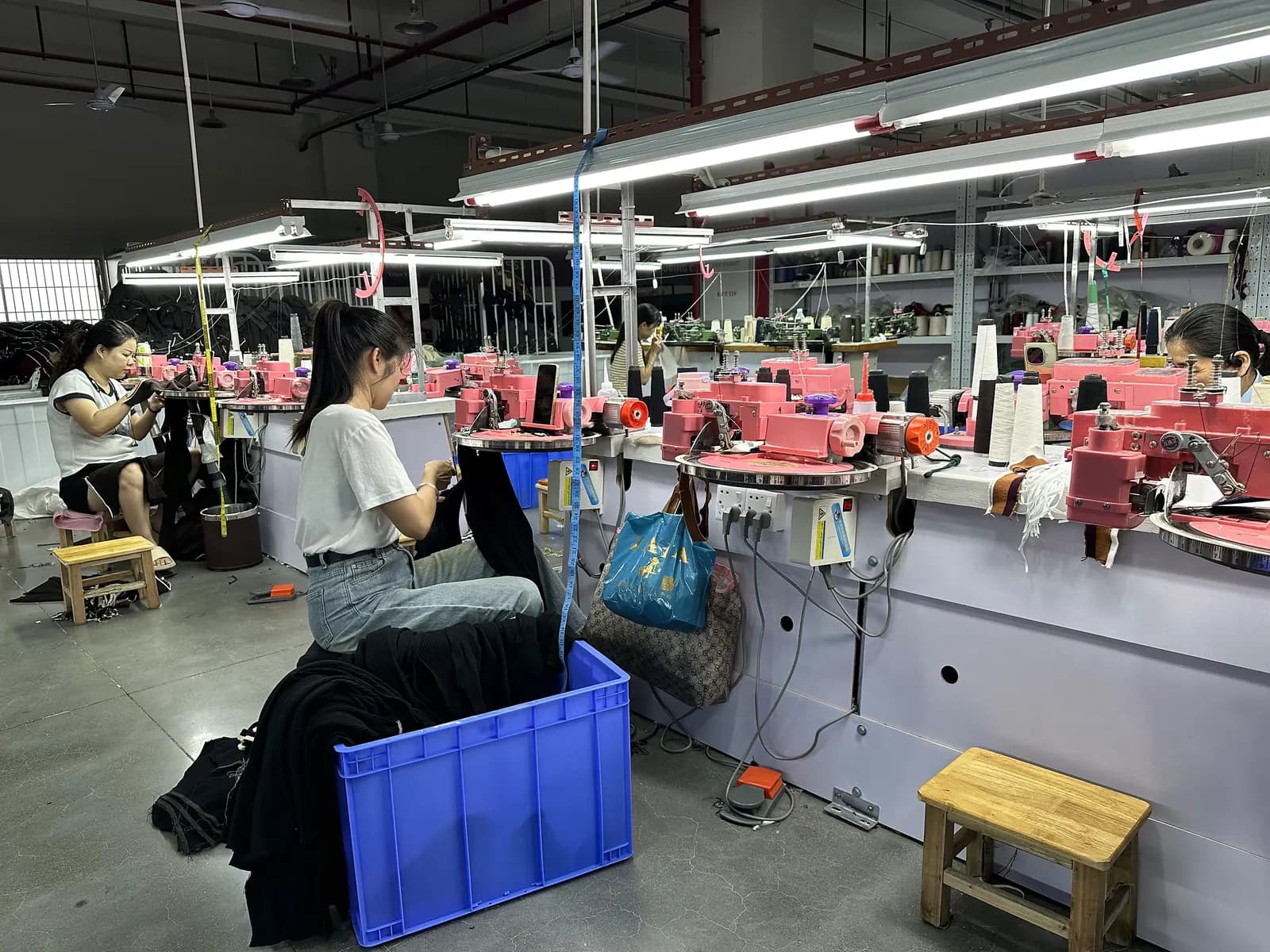
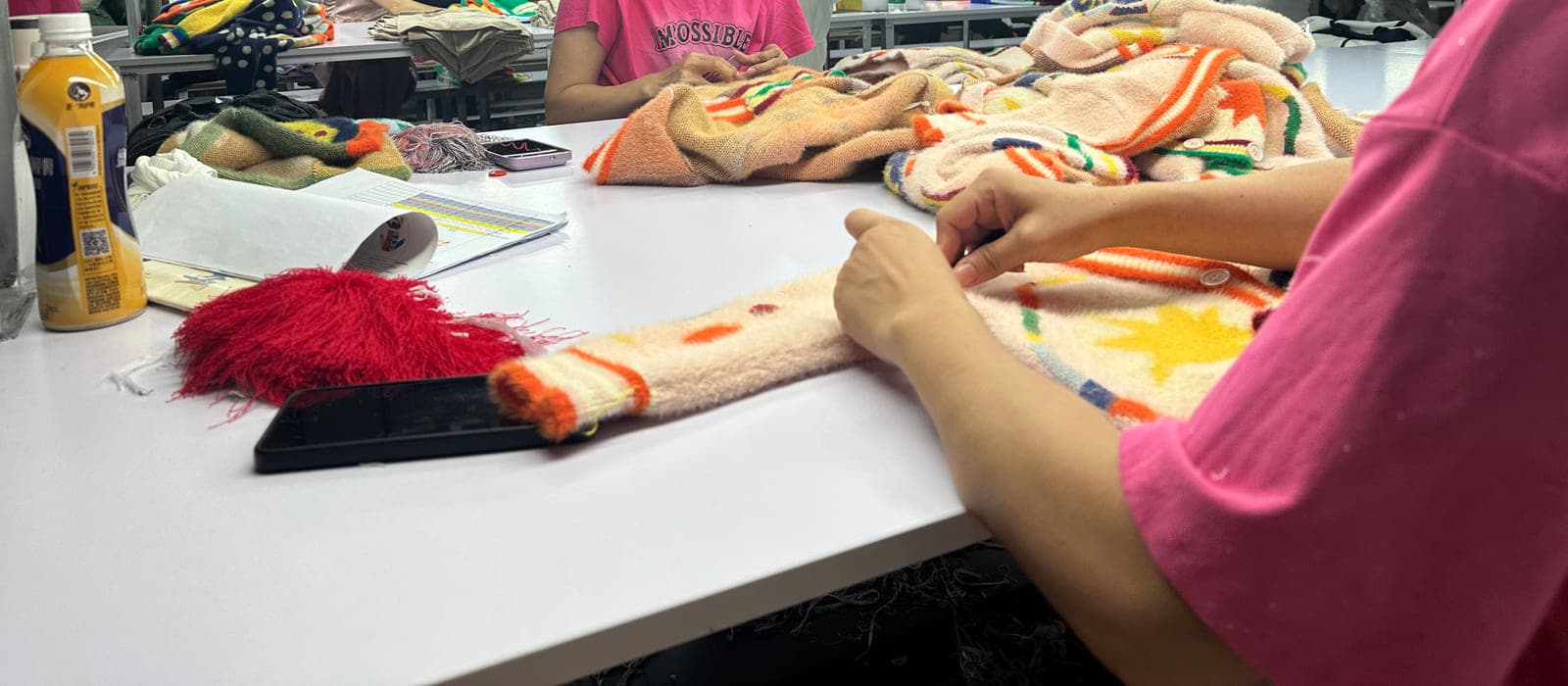
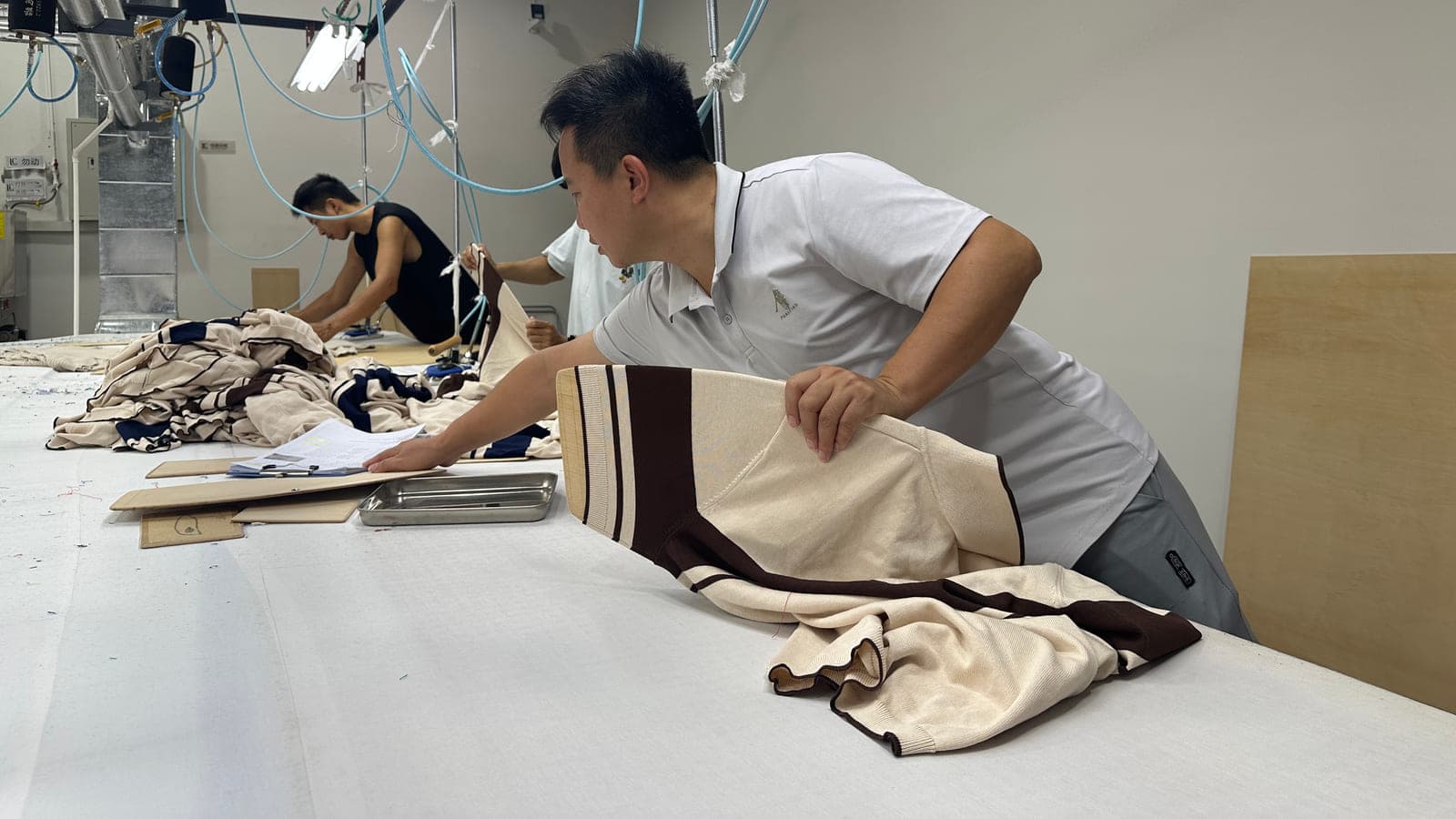
Between the linking machine and the polybag, a knitted garment goes through five to seven distinct finishing operations. Each one changes the garment in a different way: dimensions, hand, surface, pilling resistance, recovery. When a product developer pulls a sample from the carton and says it 'doesn't feel right,' the fault almost always sits in finishing — not in yarn, not in knitting. This article walks through the finishing line as we run it in Dongguan: what steaming, pressing, brushing, anti-pill treatment, and softener application each do, what they cost, where they go wrong, and what you should and should not specify on a tech pack. The goal is to give a product developer enough vocabulary to look at a sample and point to the step that needs to change, rather than asking the factory to 'make it softer' and hoping.
8 min read - Guide
AW26 and SS27 men's knitwear is moving in a direction that rewards buyers who understand production, not just mood boards. Heritage cable and fisherman knits are returning at chunky gauges, brushed and bouclé textures are gaining floor space, the earth-tone palette is extending into a second strong season alongside accent reds, oversized silhouettes are maturing into more refined fits, and shawl-collar cardigans plus refined knit polos are taking commercial share. Each of these directions carries a different yarn book, a different gauge bias and a different lead-time profile. This forecast is written from the factory floor in Dongguan: what the trend looks like, what it costs to make properly, what to lock in early, and where the risk lives if you book late. The goal is not to repeat trend-board imagery — it is to help your AW26 and SS27 capsules ship on time and at the right margin.
6 min read - Guide
Most missed retail dates in AW knitwear do not come from a factory missing a deadline. They come from a buyer entering the calendar two or three months late and then trying to compress what a manufacturer cannot compress: yarn dyeing, PP approval, and bulk knit time. This guide walks small-to-mid brand owners through the AW26/27 knitwear buying calendar month by month, from yarn books opening in January 2026 to DTC and store launches in October–November 2026. It is written from the manufacturer side of the table, using only verifiable lead times (sample 7–25 days, bulk 30–45 days), and it shows exactly what slips — air-freight upgrades, yarn substitutions, missed window dates — when each gate is hit late.
5 min read - Guide
Menswear brands that built their reputation on autumn-winter knits are pushing harder into spring-summer because the cotton tee category has plateaued and buyers are looking for an upgrade tier their customers will actually pay for. From where we sit on the Dongguan factory floor, the SS27 light-knit direction is already legible in the yarn quotes we are receiving for delivery windows in late 2026. This forecast is written for buyers expanding their SS knit offer beyond AW core — what stitches and yarns to specify, what colors mills are pre-dyeing, and the lead-time math you need to lock in now so the program lands in store March to April 2027 rather than missing the season.
7 min read - Guide
A holiday novelty knit capsule on US or EU shelves for a November 1 launch must leave a Chinese factory by mid-September. That single line is what most brand merchandisers underestimate when they start a fair-isle, gift sweater, or Christmas novelty program in late summer. Holiday knitwear is a calendar problem before it is a design problem: the gauge is usually denser, the colorways are higher, and the patterning takes more development time than a basic crew neck, so sample approval has to land by early July and the bulk PO has to be issued by mid-July to keep August knitting on track. This article walks through the reverse calendar Licheng uses with brands planning a 2027 holiday drop, the failure modes we see most often when POs slip into late August or September, and the honest cost reality of recovering a missed shipment by air. No hype, just the math.
6 min read - Guide
Recycled-content knitwear sounds simple on a hangtag, but the fiber choice, blend ratio, and chain-of-custody paperwork decide whether the program actually scales. This briefing walks through rPET, rPA, and recycled wool — what they each bring to a knit, the blend percentages that hold a clean hand, and where the trade-offs start to bite. It also separates GRS from RCS, addresses the microfiber-shed conversation honestly, and gives a buyer-side checklist for AW and year-round recycled programs. Written for sourcing managers who need answers their tech team and their compliance team will both accept.
7 min read - Guide

Cannot find what you need? Our team can create a custom guide or template for your specific project.
Request Custom Resource ->


MOQ, lead time, cost ranges, gauge selection and QC checkpoints across typical OEM/ODM knitwear programs in NA + EU. Enter your email — we'll send you the report link in 30 seconds.
No spam. Unsubscribe with one reply. We use your email only to send you the report and follow up if you want a sourcing conversation.


Brand names shown are previously serviced OEM/ODM partners. Logos are decorative and do not imply current endorsement.