概览
马海毛与羊驼毛方向适合开发质感丰富、保暖且具高端视觉效果的针织。打样前需谨慎评估掉毛、手感、纱线供应与目标价位。
材料指南
质感高级的纱线方向,适合毛绒、保暖且视觉辨识度高的针织。
快速摘要
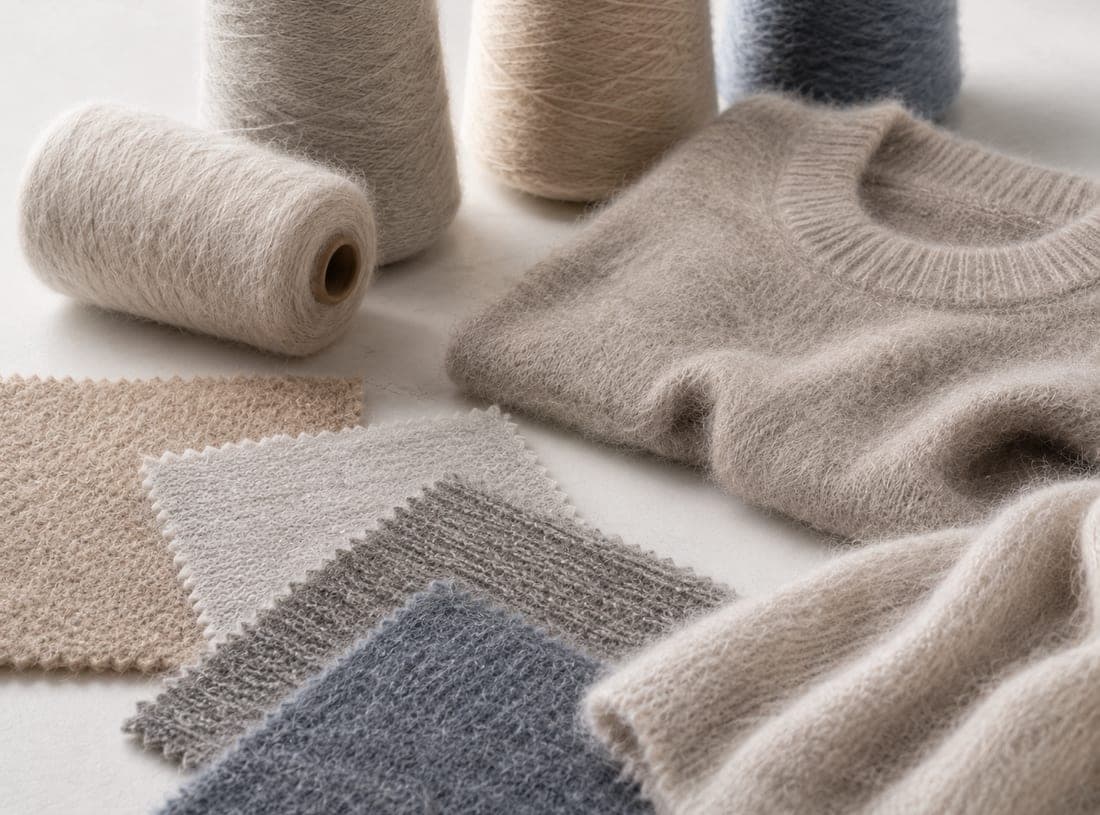
Mohair and alpaca knitwear at Licheng Knitwear: yarn directions for premium textured sweaters, fuzzy cardigans, winter pullovers and premium knit jackets, where a buyer wants a warm, airy, distinctive fuzzy surface rather than a smooth one. Available as mohair blend, alpaca blend, wool mohair blend or a buyer-specified textured yarn, knitted at 3GG, 5GG, 7GG or 9GG. Autumn and winter positioning, premium to luxury cost level, recommended for boutique labels and premium brands developing seasonal statement knitwear, and most requested by Nordic, European, UK, North American and boutique buyers. Strengths are strong visual texture, premium seasonal positioning and statement sweaters and cardigans. Honest limitations: shedding and pilling risk, not suitable where a smooth handfeel is required, and yarn availability and MOQ that must be reviewed before sampling. Softness varies by blend and finishing. MOQ can be affected by yarn source, special colour requirements and blend composition, and lead time can increase when a special textured yarn has to be sourced or confirmed. Shedding, pilling, colour variation and surface consistency are evaluated during sample review, together with care expectations and any brushing or finishing effect. Wool blend, brushed acrylic blend or cashmere blend are the usual alternatives depending on budget and handfeel.
概览
马海毛与羊驼毛方向适合开发质感丰富、保暖且具高端视觉效果的针织。打样前需谨慎评估掉毛、手感、纱线供应与目标价位。
纤维成分
Mohair blend, alpaca blend, wool mohair blend or buyer-specified textured yarn.
适合产品
Textured sweaters, fuzzy cardigans, winter pullovers and premium knit jackets
适合针型
3GG, 5GG, 7GG, 9GG
适合市场
Nordic, Europe, UK, North America, boutique markets
季节与成本定位
Autumn and winter Premium to Luxury Boutique labels and premium brands developing seasonal statement knitwear.
Warm, airy, fuzzy and distinctive; softness varies by blend and finishing.
3GG, 5GG, 7GG, 9GG
Textured sweaters, fuzzy cardigans, winter pullovers and premium knit jackets
Nordic, Europe, UK, North America, boutique markets
色卡选项
打开每个色卡选项并在线翻页查看。色卡由后台媒体库和材料编辑页维护。
Backend managed
This area shows published catalogue covers and pages uploaded through the material media editor. Add more colour-card catalogues in the backend and they will appear here automatically.
MOQ may be influenced by yarn source, special color requirements and blend composition. Lead time can increase when special textured yarns need sourcing or confirmation.
Shedding, pilling, color variation and surface consistency need careful evaluation. Care expectations and brushing or finishing effects should be confirmed during sample review.
Wool blend, brushed acrylic blend or cashmere blend can be discussed depending on budget and handfeel.
产品关联
暂未找到精确材料匹配的产品。可通过 RFQ 或样品页面申请该材料方向的建议。
Warm, airy, fuzzy and distinctive; softness varies by blend and finishing.
Mohair or alpaca directions can create a distinctive fuzzy handfeel, but shedding, care and cost implications should be discussed before confirmation.
For brands making animal-welfare or traceability claims to consumers or retailers, yes — RWS is currently the most defensible third-party chain-of-custody standard, and the Transaction Certificate trail is what lets you back up a claim if challenged. For brands that are quietly buying non-mulesed wool without making the claim publicly, a clean National Wool Declaration or grower attestation may be enough. The premium for RWS over comparable non-certified merino is typically modest at yarn level (often 10-20 percent), and most of the cost lives in the documentation work rather than the fiber itself. Buy the certification you intend to use commercially.
Require two documents on every shipment: a mill spec sheet from the spinner stating fiber origin, average fiber length, and average fiber diameter; and an independent third-party test report from Intertek, SGS, Bureau Veritas or equivalent covering fiber content and average fiber diameter (micron). Tests should reference your PO number. Pull retention samples at incoming QC and weigh them against tech-pack target weight. For ongoing programs, occasionally send a retention sample to a different lab than the supplier uses. The cost of testing per shipment is small compared to the cost of a returns wave from sub-grade goods reaching customers.
Only if the traceability story matters to your customer. Supima is a licensed trademark with a documented chain from US grower to finished garment, which is genuinely useful for brands making a Made-in-USA-fiber or full-traceability claim. The fiber itself is excellent but not categorically superior to top-grade Peruvian Pima or genuine Giza Egyptian, both of which usually quote 15-25% cheaper at the yarn level. If you don't need the trademark on the hangtag, ask your mill to quote combed Peruvian Pima as a value alternative for the same hand and luster.
On direct landed cost, yes — acrylic yarn at $4-6/kg FOB versus wool at $9-14/kg drives a real $3-7 FOB delta per sweater that is hard to erase with finishing. The harder question is total lifetime cost. If you sell acrylic into a premium channel where the consumer expects wool, return rates and review scores can eat the savings within one season. If you sell it into a value channel where the consumer expects price and washability, acrylic is straightforwardly cheaper end-to-end. The decision is channel-driven, not just cost-driven.
Decide on pure vs cashmere-blend, set quality grade and ply, request lab dips and a sample, and verify fibre content. We offer cashmere-blend programmes.