Custom Christmas Sweater Manufacturing: The Production Window, and the 30-Piece Exception
更新 2026/10/3约 12 分钟阅读作者:Simon Liu · Licheng Knitwear
A holiday novelty knit capsule on US or EU shelves for a November 1 launch must leave a Chinese factory by mid-September. That single line is what most brand merchandisers underestimate when they start a fair-isle, gift sweater, or Christmas novelty program in late summer. Holiday knitwear is a calendar problem before it is a design problem: the gauge is usually denser, the colorways are higher, and the patterning takes more development time than a basic crew neck, so sample approval has to land by early July and the bulk PO has to be issued by mid-July to keep August knitting on track. This article walks through the reverse calendar Licheng uses with brands planning a 2027 holiday drop, the failure modes we see most often when POs slip into late August or September, and the honest cost reality of recovering a missed shipment by air. No hype, just the math.
A holiday novelty knit drop is the most calendar-sensitive program a knitwear merchandiser will run all year. It is also the program most often miscalibrated, because the cultural conversation about "Christmas sweaters" happens in November, while the production conversation has to happen in May. By the time a buyer is photographing competitor windows in October, Licheng's holiday bulk has been off the boat for two weeks and is sitting in a North American or European DC. This guide walks the reverse calendar honestly — what it actually takes to land fair-isle, jacquard, and novelty gift sweaters on shelves by November 1, where most programs derail, and what your real options are when the PO slips.
We write this from the manufacturing side. Licheng has been making knitwear in Dongguan since 2018, and the pattern we see every year is the same: brands who run their first holiday capsule almost always start two months late. Brands who have run three or four learn to start in May.
Why Holiday Knitwear Breaks Standard Lead Time Math
Common Questions
Why do holiday knitwear programmes break standard lead times?
Because the whole industry wants the same weeks. Yarn, machine time and freight capacity all tighten into the same window, so the buffer that exists in a normal season is not there - and the on-floor date does not move.
How should a holiday calendar be built?
Backwards from the date the product must be on the floor, not forwards from when the PO is ready. Working backwards makes visible how early yarn and colour actually have to be locked.
Where do holiday programmes usually die?
At colour approval and at freight. A dyed-to-order colour approved late has a mill lead time attached that no one can compress, and by the time it clears, the ocean booking that would have worked is gone.
What happens if the PO lands late?
The options narrow to air freight, a reduced range, or a later drop. Each has a cost, and the arithmetic is usually clear enough that the decision should be made early rather than discovered.
Ready to Start Your Project?
Get a free catalog or submit an RFQ today. Our team will respond within 24 hours.
What should be locked first for a holiday drop?
Yarn and colour. Styling can be finalised later than most brands assume; the components with an external minimum and an external lead time cannot.
A standard men's crew-neck sweater in a 7GG to 12GG wool-cotton blend runs roughly 7–25 days for sampling and 30–45 days for bulk on a confirmed PO. Most buyer-side planning tools take those numbers and work backward from a retail launch, and for a basic program — single color, plain stitch — that math works.
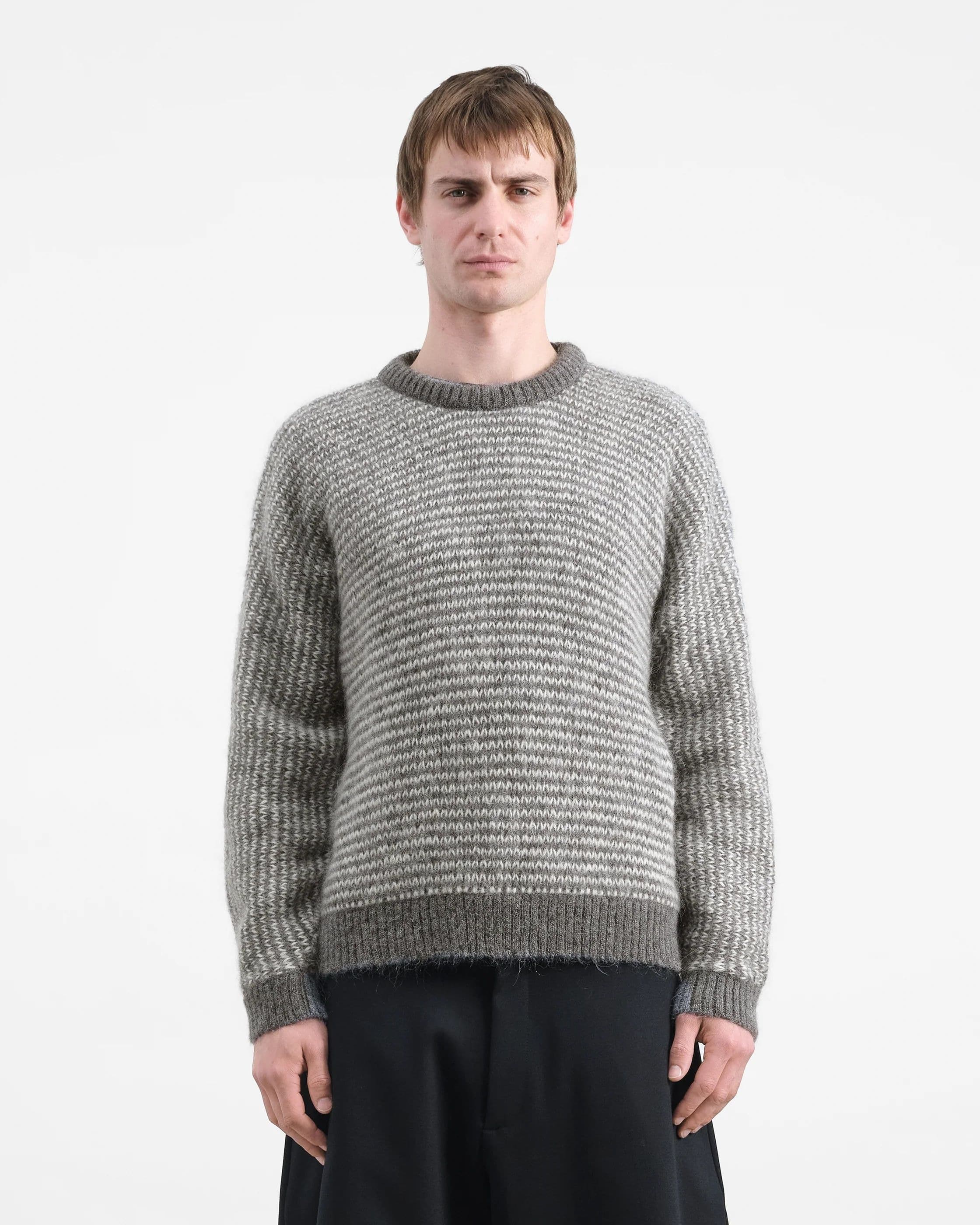
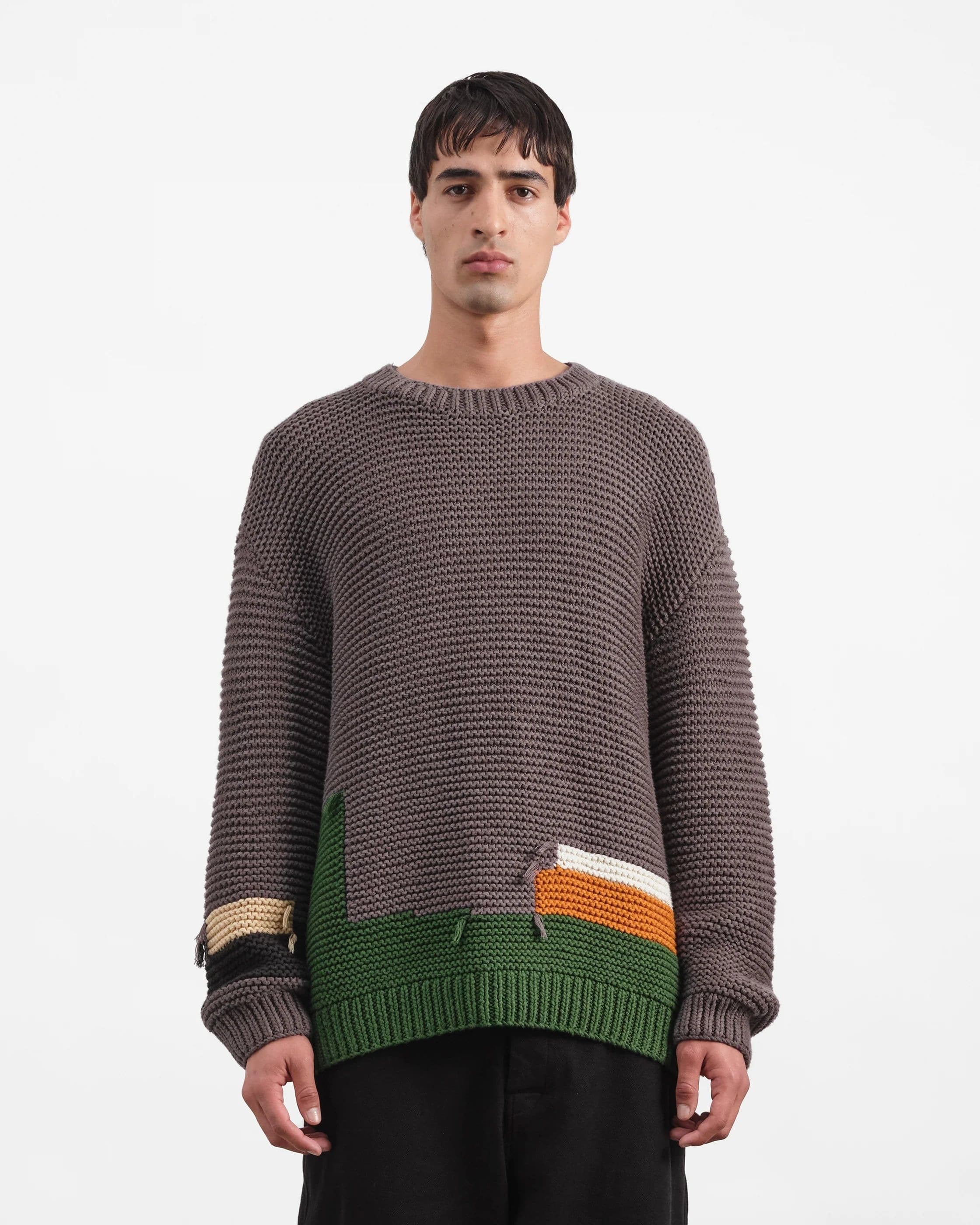
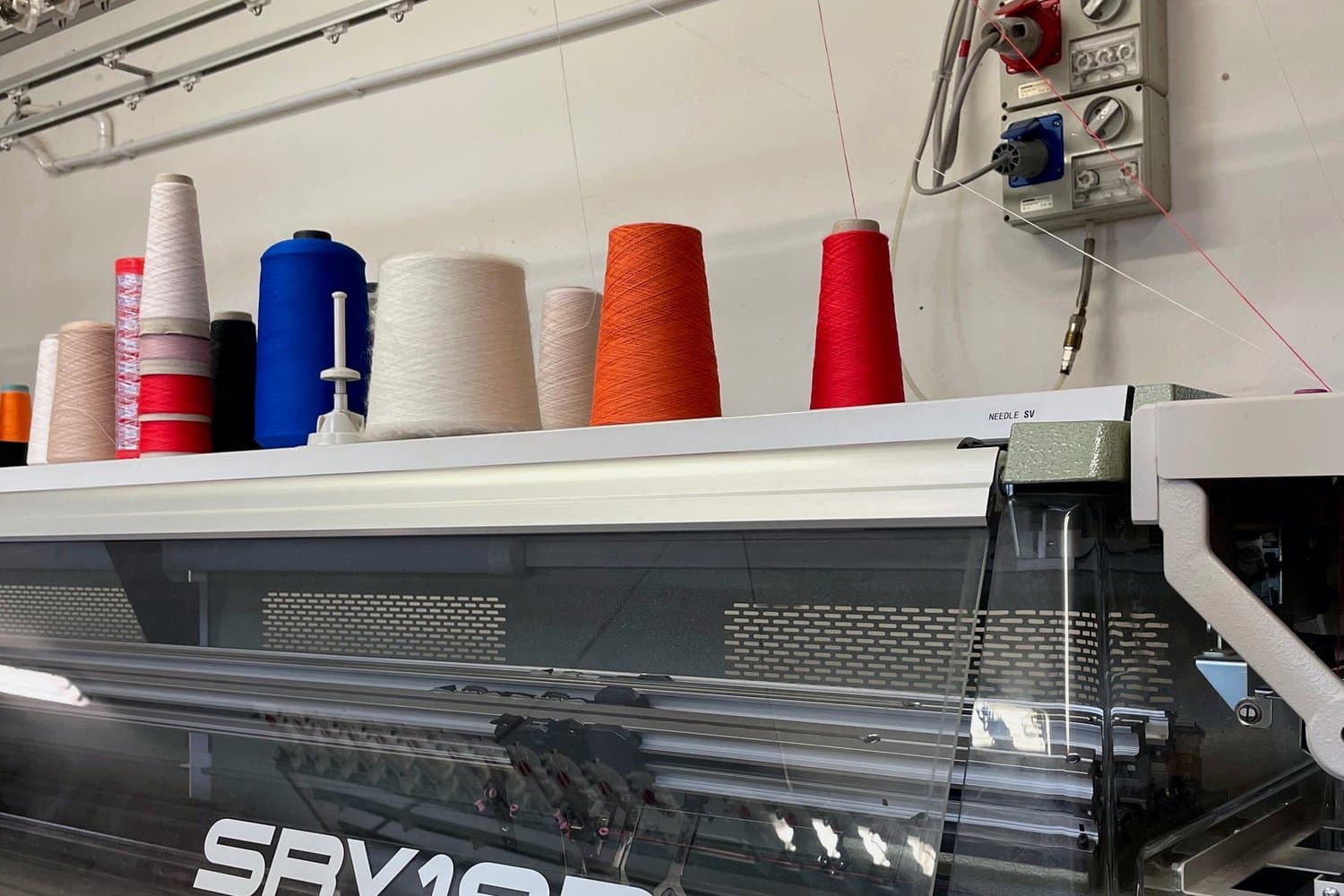
Holiday capsules break the math for four reasons. First, fair-isle, Nordic patterning, intarsia gift motifs, and novelty jacquards are slower to knit. A patterned panel can run 30–50% slower on the machine than a plain panel of the same weight, because the carriers and the program have more work to do per row. Second, holiday programs almost always carry more colorways and more colors per garment. A four-color fair-isle yoke means four yarn lots to qualify, four lab dips to approve, and four chances for a color hold. Third, the yarn is often heavier — 3GG to 5GG chunky for a gift-sweater silhouette — which means more grams per piece, longer dye lots, and a slower knitting rate per hour. Fourth, holiday capsules are by definition seasonal: there is no "ship it in week 38 instead of week 36" option, because the retail door for novelty knit closes on December 24.
This is why a holiday program that looks identical on paper to an everyday crew needs a longer runway. Not because the factory is slower, but because the product itself is harder.
The Reverse Calendar From November 1 Backwards
Here is the calendar Licheng uses with brands planning a holiday drop for a November 1 in-store date. Adjust by region — EU programs often need a week or two more buffer because of port congestion at Rotterdam and Hamburg in Q4 — but the shape is the same.
Milestone
Date for Nov 1 Launch
What Has to Be Done
Who Owns It
Retail in-store
Nov 1
Stock on the floor, on the PDP
Brand
DC receipt + processing
Oct 14–21
Inbound check, ticketing, allocation
Brand 3PL
Port arrival (US West Coast / Rotterdam)
Sep 28 – Oct 12
Ocean transit complete
Freight forwarder
Bulk ex-factory (FOB China)
Sep 12–18
Final inspection passed, container loaded
Licheng
Bulk production complete
Sep 5–10
Off-machine, washed, finished, packed
Licheng
Bulk knitting starts
Aug 1–5
Yarn in-house, PP sample signed
Licheng
PP (pre-production) sample approved
Jul 18–25
Buyer signs bulk-condition sample
Brand + Licheng
Bulk PO issued + deposit
Jul 10–15
Quantity, colors, sizes, ship date locked
Brand
Fit / size-set sample approved
Jul 1–10
Measurements signed across size range
Brand
Proto / development sample approved
Jun 15–25
Design intent, yarn, gauge, handle confirmed
Brand
Tech pack + yarn direction sent
May 15–25
Sketch, gauge, target weight, colors, mock label
Brand
The number that most buyers underestimate is the gap between PO issue (mid-July) and ex-factory (mid-September) — only about eight weeks for a program that includes yarn dyeing, knitting, linking, washing, finishing, QC, and final inspection. That eight weeks is not negotiable downward without changing the product. We will quote shorter for a simple style, but holiday novelty in a patterned construction needs every day of it.
Where Holiday Programs Actually Die
In our experience the failure point is rarely the factory missing a date once production starts. It is upstream, in the approval chain. The three patterns we see every year:
Sample feedback gaps. A proto goes out in late June, the merchandiser passes it to the design team for review, design loops in the creative director, the creative director is on holiday for two weeks, and the feedback comes back in mid-July when the PO should already be cut. By that point August is already crowded, and the only way to keep the November date is to skip the PP sample step — which we strongly discourage on patterned holiday product, because a fair-isle yoke off-spec in bulk is a five-figure problem.
Yarn requalification. Buyers sometimes change a yarn after the proto — say, swap a regular wool blend for a recycled wool blend, or shift to a softer hand. That swap looks like a one-line PO change, but for the factory it is a new lab-dip cycle, a new shrinkage test, and potentially a new gauge swatch. Two weeks gone. On a normal program two weeks is recoverable. In a holiday window it is not.
Color count creep. A capsule that started as three colors in May becomes five colors in July because a buyer added two "easy" extensions. Each color is a separate dye lot to qualify, a separate lab dip to approve, and a separate split in the production lot. We have seen programs add 10–14 days of effective lead time from late color additions alone.
The pattern across all three is the same: the brand assumes the factory is the long pole, when in reality the long pole is the approval cycle inside the brand. Holiday programs need a tighter feedback SLA than a core program — ideally 48 hours from sample receipt to written comments — and that has to be agreed before the proto ships, not negotiated in July.
The 30-50 piece exception: a small run can still make Christmas 2026
Everything above is written for a container programme with a November 1 shelf date. If that is your project, the 2026 window closed in July and this article will not tell you otherwise.
A 30 to 50 piece run is a different calculation, and it is still open as this is written in September.
The maths, from our published figures. Samples run about 15-25 days from a confirmed tech pack and yarn. Bulk runs 30-45 days depending on quantity. A tech pack confirmed at the end of September puts a 40-piece run ex-factory in the first half of November.
Why the freight argument reverses at this size. On a container programme, air freight is roughly five times sea and it destroys the margin - which is why the reverse calendar above is unforgiving. On forty sweaters it is a courier shipment. The freight difference on a 40-piece order is a small fraction of the garment cost, not a multiple of it. The constraint that closes the door for a retail programme does not close it for a first drop.
What has to be true to hold the date:
Condition
Why it matters
Artwork is final when you confirm
Every artwork revision restarts the sample clock, not pauses it
A stock yarn colour, not a lab dip
Colour development adds 7-15 days before knitting can start
MOQ 30 per colour and style
Sizes may be mixed within the 30, so one colour can cover a full size run
One pattern technique, not three
Jacquard, intarsia and embroidery each carry their own sampling round
What we publish to knit it with. Across our catalogue there are 18 jacquard styles, 15 Fair Isle, 9 intarsia, 8 argyle and 7 Nordic-pattern styles already published - which is the shelf a holiday motif is actually built from. Browse them by construction: jacquard, Fair Isle, argyle.
If you are past it, say so early. If your artwork is not final and you need a lab dip, December delivery is not real and we will tell you that at the quotation rather than at the shipping mark. A January delivery for next year's drop, developed without the rush, produces a better garment and a lower price.
When The PO Is Late — What The Math Actually Says
Let's say the PO slips. The buyer issues bulk in early August instead of mid-July. Knitting now starts in late August. Bulk is ex-factory in early October instead of mid-September. The ocean transit to LA or Rotterdam is roughly 18–28 days depending on routing, plus a few days at the port and inland transit to the DC. That puts the goods in the warehouse in early November at the earliest — too late for a Nov 1 launch and uncomfortable even for a Thanksgiving / Black Friday refresh.
At that point there are exactly two options, and we want to be honest about both.
Option A: Air freight. Air from Shenzhen or Guangzhou to LAX, JFK, or FRA cuts transit to roughly 3–7 days, plus customs. The cost is roughly five times ocean per kilogram, sometimes more in peak Q4 when air capacity tightens. On a sweater program that is 350–500 grams a piece in retail packaging, the freight delta alone can wipe out the margin on the order. We quote air honestly when buyers ask, but we do not promise air will save every program — capacity in mid-October can be locked up at the freight-forwarder level.
Option B: Store-date slip. Push the in-store date to mid or late November. This is often the better commercial decision than burning margin on air, especially for a gift program where the buying window runs all the way to December 22. We have had brands take this option, accept the shorter sell-through window, and still hit their season because the SKU mix was right. But it is a decision that has to be made consciously, not discovered when the air quote comes back.
There is no third option. "Just expedite the factory" is not a real lever — the knitting machines run at the speed they run, and the bottleneck on a holiday program is usually the knitting hours, not the cutting or linking. Adding a weekend shift on a fair-isle program saves days, not weeks.
How Licheng Handles Holiday-Rush Bookings
We take holiday bookings selectively and we will tell a brand if we cannot guarantee the date. A few things we ask up front:
Capacity hold by May. If a buyer wants a confirmed bulk slot in August, we want a non-binding capacity hold by mid-May with a tech pack attached. We do not hold slots for projects that have not started development.
One PP sample, signed. We will not skip the PP sample on patterned holiday product. If the calendar is too tight to fit a PP, the calendar is too tight to take the order honestly.
Approved yarn before PO. Yarn has to be qualified before the PO is cut, not after. A late yarn swap is the single most common reason holiday programs miss.
Realistic AQL. Standard AQL 2.5 major / 4.0 minor with needle and metal detection. We do not pretend we can ship a tighter AQL in a rushed program — that conversation belongs in a normal-lead-time program.
Honest freight conversation. We quote FOB China in USD and we are happy to introduce the buyer's forwarder early. We do not quote air as a routine option; we quote air only when the buyer asks, and we tell them what we are seeing on Q4 capacity.
The brands who do well with us on holiday are the ones who treat it as a calendar problem first and a product problem second. The brands who struggle are the ones who fall in love with a fair-isle motif in late June and assume the factory can absorb the timeline. We can absorb some of it. We cannot absorb a July PO on a five-color jacquard with a November 1 store date.
What To Lock In For A 2027 Holiday Drop
If you are reading this in 2026 and planning for 2027, the practical takeaways are:
Decide your holiday capsule scope by April 2027 — silhouettes, gauge, approximate color count.
Send tech packs to your factory in May 2027, with a target proto delivery in late June.
Build your internal feedback SLA into the project plan, in writing — 48 hours per sample round, named approver.
Treat the mid-July PO as a hard gate. If the PP is not signable by mid-July, accept that the program is now a Q1 2028 carryover or a late-November shelf set, and price the program accordingly.
Have a freight conversation in June 2027, not October. Get your forwarder to indicate Q4 capacity and rates so air-vs-sea is a known number, not a panic.
None of this is glamorous. It is calendar math. But the brands that ship holiday novelty on time every year are the brands that have made peace with the math, and the brands that miss every year are the ones still hoping the factory will absorb the slip. We would rather have the honest conversation in May than the expensive one in September.
---
Talk to our team about this
If you're planning a real project around any of the points above, we'd be glad to take a quick look. Send a short brief and we'll come back within one business day with a practical direction, MOQ + lead time estimate, and a sample plan if it makes sense.
For most patterned holiday knitwear out of China, the practical cutoff is mid-July. That assumes the proto and fit samples are already approved, the yarn is qualified, and the PP sample can be signed in late July. A PO issued in August forces the brand into either air freight or a store-date slip — there is no realistic way to compress eight weeks of patterned bulk knitting and ocean transit further than that.
Air freight from South China to the US or EU runs roughly five times ocean cost per kilogram, and the multiple widens in peak Q4 when air capacity tightens. On a 400-gram sweater in retail packaging, the freight delta alone can erase the order's margin. Air can save a launch date, but it should be modeled as a margin decision, not a default fallback.
Patterned construction is slower on the machine — a multi-color fair-isle panel can knit 30–50% slower than a plain panel of the same weight — and each additional color adds a yarn lot to qualify, a lab dip to approve, and a dye-lot risk. Heavier holiday gauges (3GG–5GG chunky) also use more grams per piece, which lengthens dye and knitting time. The cumulative effect is two to four extra weeks versus a basic crew on the same calendar.
Sometimes, and we will tell you honestly whether we can. We assess capacity, the product complexity, and whether the approval chain can hit a tighter SLA. We will not skip the PP sample on patterned holiday product, and we will not promise an ex-factory date we do not believe in. If the math does not work, we will say so before the deposit, not after.
It is a legitimate option and worth modeling. A late-November in-store date moves the bulk ex-factory deadline to early October, which gives roughly three extra weeks across the calendar — enough to absorb a slow proto round or a late yarn swap. The trade-off is a shorter sell-through window and less time at full price. For brands running their first holiday capsule, the longer calendar usually pays for itself in reduced air-freight risk.
We focus on men's sweaters, cardigans, knit jackets, jacquard knitwear and private label knitwear. We support B2B buyers with OEM/ODM development, sampling and bulk production planning.