Knitwear Dyeing Methods: Piece-Dye vs Yarn-Dye vs Garment-Dye Compared
更新 2026/6/5约 12 分钟阅读Licheng Knitwear 团队
Three different dye stages produce three very different sweaters, even when the colorway on your moodboard is identical. Yarn-dye, piece-dye, and garment-dye each lock color into the garment at a different point in production — before knitting, after knitting, or after make-up — and each one carries a distinct cost, lead time, MOQ implication, and risk profile. For a designer trying to nail a single brand shade across a six-style collection, picking the right method matters more than picking the right Pantone. This guide walks B2B buyers through how each dyeing method works, where each one shines, where each one goes wrong, and how Licheng plans dye routes for buyers developing custom knitwear in our Dongguan facility.
1. 概览
Three different dye stages produce three very different sweaters, even when the colorway on your moodboard is identical. Yarn-dye, piece-dye, and garment-dye each lock color into the garment at a different point in production — before knitting, after knitting, or after make-up — and each one carries a distinct cost, lead time, MOQ implication, and risk profile. For a designer trying to nail a single brand shade across a six-style collection, picking the right method matters more than picking the right Pantone. This guide walks B2B buyers through how each dyeing method works, where each one shines, where each one goes wrong, and how Licheng plans dye routes for buyers developing custom knitwear in our Dongguan facility. 本指南介绍与 Licheng Knitwear 合作时的主要制造流程。
买家指南内容
If you are developing a six-style capsule and you want all six pieces to read as the same brand color on the rack, the conversation that decides whether you succeed is not the Pantone selection — it is the dyeing method conversation. A sweater can be colored at three points in production: at the yarn stage (yarn-dye), after knitting but before make-up (piece-dye), or after the garment is fully assembled (garment-dye). Each stage produces a visually different result, sits at a different price point, and carries a different lead-time and MOQ commitment.
At Licheng, our factory in Dongguan handles all three routes across gauges 3GG to 18GG, and a meaningful share of color complaints we see from new buyers comes down to picking the wrong route for the product. This guide is the briefing we wish every designer received before signing off on a tech pack.
Yarn-dye means cones of yarn are dyed at the spinning mill, then shipped to the knitter as colored yarn. The knitter loads the colored cones onto the machine and knits the panel or fully-fashioned piece. Because color is locked into the fiber before any knitting happens, yarn-dye is the only method that supports stripes, intarsia, jacquard, and any multi-color construction. Linking and finishing happen on already-colored fabric.
Ready to Start Your Project?
Get a free catalog or submit an RFQ today. Our team will respond within 24 hours.
Piece-dye means the knitter knits the panels in greige (undyed natural) yarn, then dyes the knitted panels in a piece-dye machine before linking. This works because the panels are flat, soaked uniformly, and the dye liquor circulates evenly. Once dyed, the panels are dried, pressed, and sent to linking like normal.
Garment-dye means the full sweater is constructed in greige yarn — knitted, linked, washed, finished — and then the finished garment is loaded into a paddle or rotary dye machine and colored as a complete piece. It is the oldest of the three methods, and it produces the lived-in character associated with heritage knitwear, washed cashmere, and certain Italian and Japanese aesthetics.
The physical chemistry across all three is similar — reactive dyes for cellulosic fibers like cotton, acid dyes for protein fibers like wool, dispersed dyes for synthetics — but the timing changes everything downstream.
Why The Timing Of Dyeing Changes The Final Product
A color is not a number. The same Pantone reference dyed at three different stages on the same yarn produces three visibly different sweaters, and this is the most underestimated fact in knitwear development.
Yarn-dye produces the deepest, cleanest, most saturated color because the dye penetrates each individual fiber before it is twisted into yarn and bound into a knit structure. Color sits everywhere. Piece-dye is shallower — the dye reaches the surface of the knitted loops but penetrates the yarn core less completely, especially in heavier gauges and tightly twisted yarns. Garment-dye is shallowest of all, and uneven by design — seams, linking points, and panel intersections absorb dye at slightly different rates, producing the gentle tonal variation that makes a garment-dyed sweater look broken-in straight off the loom.
This also means crocking and wash-down behave differently. Yarn-dye is the most colorfast over many launderings. Piece-dye is intermediate. Garment-dye, by virtue of being shallower, tends to fade more visibly with wear, which is sometimes a feature buyers actively want and sometimes a returns problem they did not see coming.
The Six-Style Collection Problem
The Six-Style Collection Problem
The brief in our title — a designer nailing one shade across six styles — is a more delicate problem than it sounds. If all six styles use the same yarn and the same dye route, you have a good chance of matching. If any of them is on a different fiber, a different gauge, or a different dye route, you are almost guaranteed to see variation under daylight.
The rule we give buyers: pick one dye route per color story. Mixing routes inside a single color across the same collection is the surest way to end up with three sweaters that look brand-color and three that look slightly off.
Within yarn-dye, the next rule is dye-lot. A single dye lot is one batch of yarn dyed together. Even with perfect lab dip approval, lot-to-lot variation is real — typically a Grade 4 to 4-5 on the gray scale, which most eyes can pick up if pieces are laid side by side. For collections, we either reserve enough yarn from a single mega-lot to cover all six styles, or we work with the mill to dye a combined lot up front. This is one of the few sourcing decisions that has to be made before any knitting begins.
Cost, Lead Time, And MOQ Impact Compared
The commercial picture below reflects what we see across typical orders in our Dongguan facility, in USD FOB China. These are planning ranges, not quotes — actual numbers depend on fiber, gauge, body weight, color count, and order size.
Factor
Yarn-Dye
Piece-Dye
Garment-Dye
Color depth
Deepest, most saturated
Medium, surface-led
Shallowest, character finish
Pattern capability
Yes — stripes, intarsia, jacquard
Solids only
Solids only
Color consistency unit-to-unit
Highest (within a lot)
High
Lowest, deliberate variation
Colorfastness over washing
Best
Good
Lower, fades with wear
Sample lead time
15-25 days
7-15 days
10-20 days
Bulk lead time
35-45 days
30-35 days
30-40 days
MOQ per color
30 pcs+ catalog, 100-300 pcs typical for custom dye
Lower — can pool greige across colors
30 pcs+ workable, but dye bath economics push higher
A few notes on reading this table. The MOQ entries refer to MOQ per color, not order MOQ — our catalog MOQ remains 30 pieces per color, but the dye mill or dye house often imposes its own minimum once you go outside stock colors. Sample lead times assume lab dip approval is already complete; add another 7-14 days for lab dipping if you are starting from scratch on a custom color.
When To Pick Yarn-Dye
Yarn-dye is the default route for any sweater that has a pattern, period. Stripes, jacquard, Fair Isle, intarsia, color blocks, and contrast trims all require yarn that is already colored before it hits the knitting machine. There is no other way.
Beyond patterns, yarn-dye is the right pick for any program where deep, saturated, washfast color is part of the product story — brand-color carryover programs, wardrobe staples that need to look correct across multiple reorders, and any product where the buyer expects the color to hold through dozens of washes. The longer lead time and higher per-kilo yarn cost are paid back in consistency and longevity.
Where yarn-dye goes wrong is reorders. If you order 500 pieces this season and 500 more next season, the second batch will be dyed in a different lot at the mill, and lot variation can produce a visible shift. The mitigation is to reserve enough yarn from the first dye lot to cover anticipated reorders, or to dye a larger lot up front and warehouse the surplus. Both have inventory cost. Both are cheaper than the customer-service cost of mismatched reorders.
When To Pick Piece-Dye
Piece-dye is the route for buyers who want a custom solid color on a tight calendar and a smaller commitment. Because you knit in greige first, you can hold off the color decision until later in production, which is useful if marketing is still finalizing the palette or if you want to split one greige batch into two or three custom colors after the fact. It also pools MOQ — one greige knit run can feed multiple dye colors, lowering the effective per-color minimum.
The trade-off is gauge and fiber. Piece-dye works best on finer gauges (7GG to 14GG) where the knitted panel is dense and dye penetrates uniformly. On chunky 3GG-5GG knits, dye penetration to the core of thick yarn is uneven, and the inside of the loop can read lighter than the surface, producing a slightly heathered look that may or may not be wanted. Wool and cotton both piece-dye well; some synthetic blends require dispersed dyes and elevated temperatures that the knitted structure does not always tolerate.
Piece-dye also limits you to solids. The moment you need a stripe, a jacquard, or any pattern, you have to switch to yarn-dye.
When To Pick Garment-Dye
When To Pick Garment-Dye
Garment-dye is the route for buyers who want character, not consistency. The signature look — slightly worn-in tone, gentle variation across seams, occasional uneven shading at high-friction areas — is exactly what makes a heritage knit, a washed cashmere, or a Japanese-aesthetic capsule feel different from a clean-edge corporate sweater.
Garment-dye is also useful when sizing is decided late. You can construct a run of greige sweaters across the full size range, then dye only the sizes that orders are coming in for, which can help capsule brands and direct-to-consumer launches.
Where garment-dye goes wrong is when the buyer wants the look but did not budget for the variation. We have had buyers approve a beautiful garment-dyed first sample, then reject bulk because the 200th piece has a slightly different tone than the 1st. The variation is intrinsic to the method, not a defect. Communicating this to internal stakeholders and quality teams before bulk production starts is essential. We document acceptable tone range on the approval garment and apply it as the AQL color reference, rather than holding bulk to the single first-sample tone.
Garment-dye also affects sizing — protein fibers shrink noticeably under the heat and agitation of garment dyeing, often 3-6% on length and 2-4% on width depending on yarn and machine. We pattern the greige sweater oversized accordingly, but a buyer switching from yarn-dye to garment-dye mid-development needs to expect re-patterning, not just a route swap.
How Licheng Plans Dye Routes For Buyers
For any new program, we walk the buyer through the dye route decision at the same time as yarn and gauge, before sampling starts. We ask three questions. First, is there any pattern or multi-color element in the collection — if yes, yarn-dye is mandatory for those pieces. Second, what is the color consistency expectation across pieces and across reorders — high consistency points to yarn-dye, lived-in character points to garment-dye, and a clean solid on a tight calendar points to piece-dye. Third, what is the lead-time and MOQ envelope — yarn-dye needs the most calendar and the most upfront yarn commitment, while piece-dye is the most flexible if you can live with solid-only.
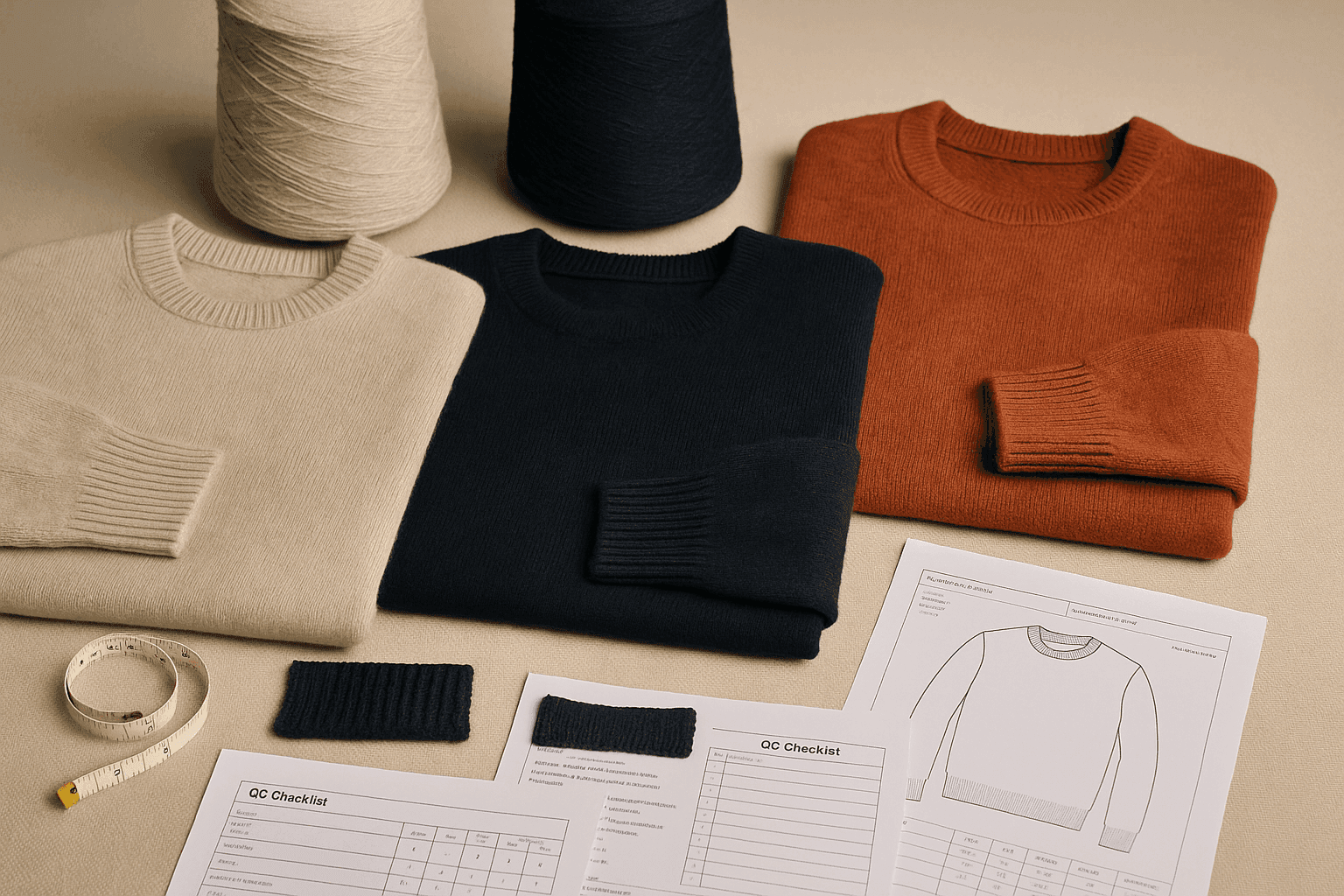
We issue lab dips before sampling. For yarn-dye, lab dips are yarn skeins. For piece-dye and garment-dye, lab dips are small knitted swatches dyed in the actual production route. Approving a yarn skein for a piece-dye program is one of the most common avoidable mistakes — the swatch on the finished garment will not match the skein. Always lab dip in the same route you are going to bulk in.
Once a route is locked, we hold it for the season. Mid-stream route changes break color matching and reset the sample clock. If a buyer needs a faster turnaround on style three of six, we will discuss switching that style to a stock color rather than switching the dye route, because the latter creates more cost than it saves.
Getting the dye route right is one of the highest-leverage decisions in a knitwear program. It costs nothing to discuss in week one. It costs a re-make to discover in week ten.
---
Talk to our team about this
If you're planning a real project around any of the points above, we'd be glad to take a quick look. Send a short brief and we'll come back within one business day with a practical direction, MOQ + lead time estimate, and a sample plan if it makes sense.
→ [Request a free quote](/request-quote) · [WhatsApp us](https://wa.me/8615170244792) · info@lcgarment.cn
MOQ, lead time, cost ranges, gauge selection and QC checkpoints across typical OEM/ODM knitwear programs in NA + EU. Enter your email — we'll send you the report link in 30 seconds.
No spam. Unsubscribe with one reply. We use your email only to send you the report and follow up if you want a sourcing conversation.
Brand names shown are previously serviced OEM/ODM partners. Logos are decorative and do not imply current endorsement.