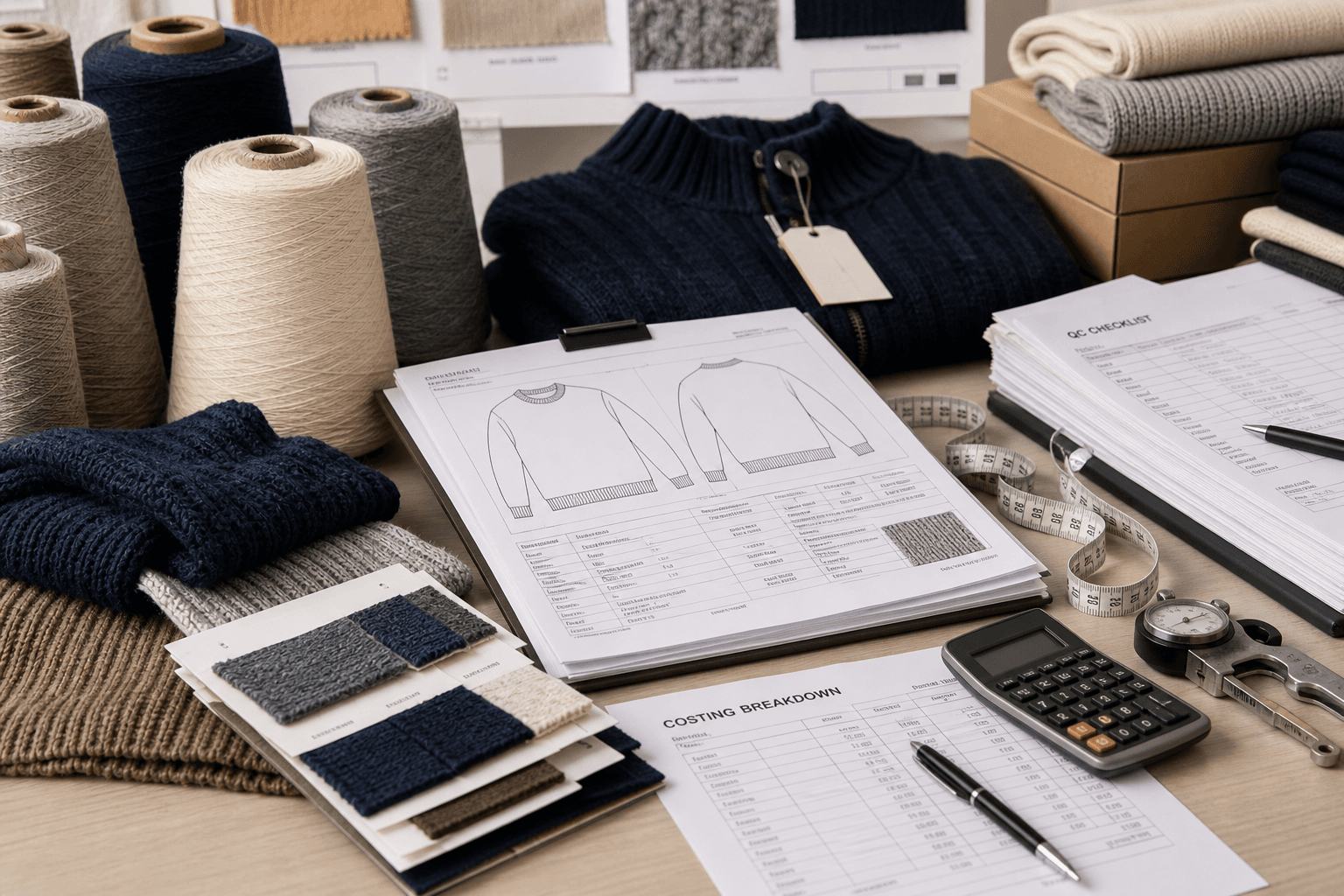
2026 针织采购基准报告:MOQ、交期、成本与品质管控
更新 2026/6/5约 12 分钟阅读Licheng Knitwear 团队
2026 年 B2B 针织采购参考基准:起订量、交期、成本结构、针型、品质管控与商务条款,帮助买家核对报价、自信制定采购计划。
2026 年 B2B 针织采购参考基准:起订量、交期、成本结构、针型、品质管控与商务条款,帮助买家核对报价、自信制定采购计划。
2026 年 B2B 针织采购参考基准:起订量、交期、成本结构、针型、品质管控与商务条款,帮助买家核对报价、自信制定采购计划。 本指南介绍与 Licheng Knitwear 合作时的主要制造流程。
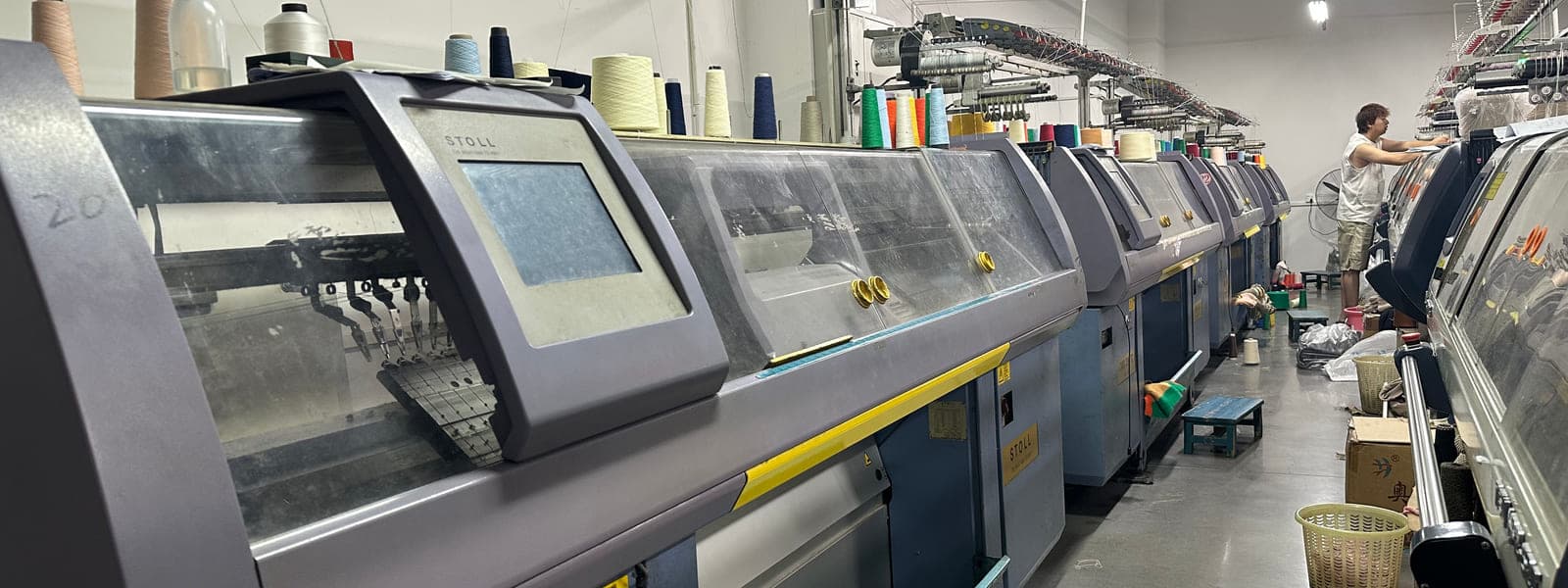
Sourcing custom knitwear means making decisions on MOQ, pricing, lead time and quality with surprisingly little public data to anchor them. Most buyers rely on scattered quotes and gut feel. This benchmark report compiles realistic reference ranges for B2B knitwear procurement in 2026, drawn from common industry practice and our own production experience as a Guangdong knitwear manufacturer, so you can sanity-check quotes, plan timelines, and negotiate from a position of knowledge.
These are reference ranges, not fixed prices. Every program varies with yarn, complexity and quantity. Use them to spot outliers and ask better questions, not as a substitute for a real quote.
💬 Sourcing this for an upcoming project? Request a free quote → · MOQ 30 pcs · Sample in 7–15 days · WhatsApp us
The figures below reflect typical ranges for custom men's and women's knitwear produced in China for North American and European brands. They assume standard commercial quality, FOB terms, and conventional construction unless noted. Premium fibers, complex patterns and very low volumes push every number toward the high end.
MOQ is quoted per color, per style — not as a single total. The biggest driver is yarn: custom-dyed colors force higher minimums to consume a dye lot, while stock yarn keeps them low.
| Scenario | Typical MOQ (per color/style) |
|---|---|
| Stock yarn, simple style | 100–300 pcs |
| Trial / ready-style order | 30–50 pcs |
| Custom-dyed or blended yarn | 300–500 pcs |
| Complex jacquard / specialty yarn | 500+ pcs |
Our own floor for custom development is around 30 pcs per color/style on stock yarn for trial orders — deliberately low to let emerging brands test the market. See our MOQ guide and low-MOQ guide.
Lead time is the most common cause of missed launches — usually because development started too late, not because production was slow. Plan backwards from your in-store date.
| Stage | Typical duration |
|---|---|
| Development sample (per round) | 7–15 days |
| Sample rounds before bulk | 2–3 rounds |
| Yarn sourcing (stock) | 1–7 days |
| Yarn sourcing (custom-dyed) | 1–3 weeks |
| Bulk production | 30–45 days |
| Sea freight (to NA/EU) | 20–40 days |
Our standard sampling runs about 7–15 days per round and bulk 30–45 days depending on quantity and complexity. See our sampling lead time guide and seasonal planning guide.
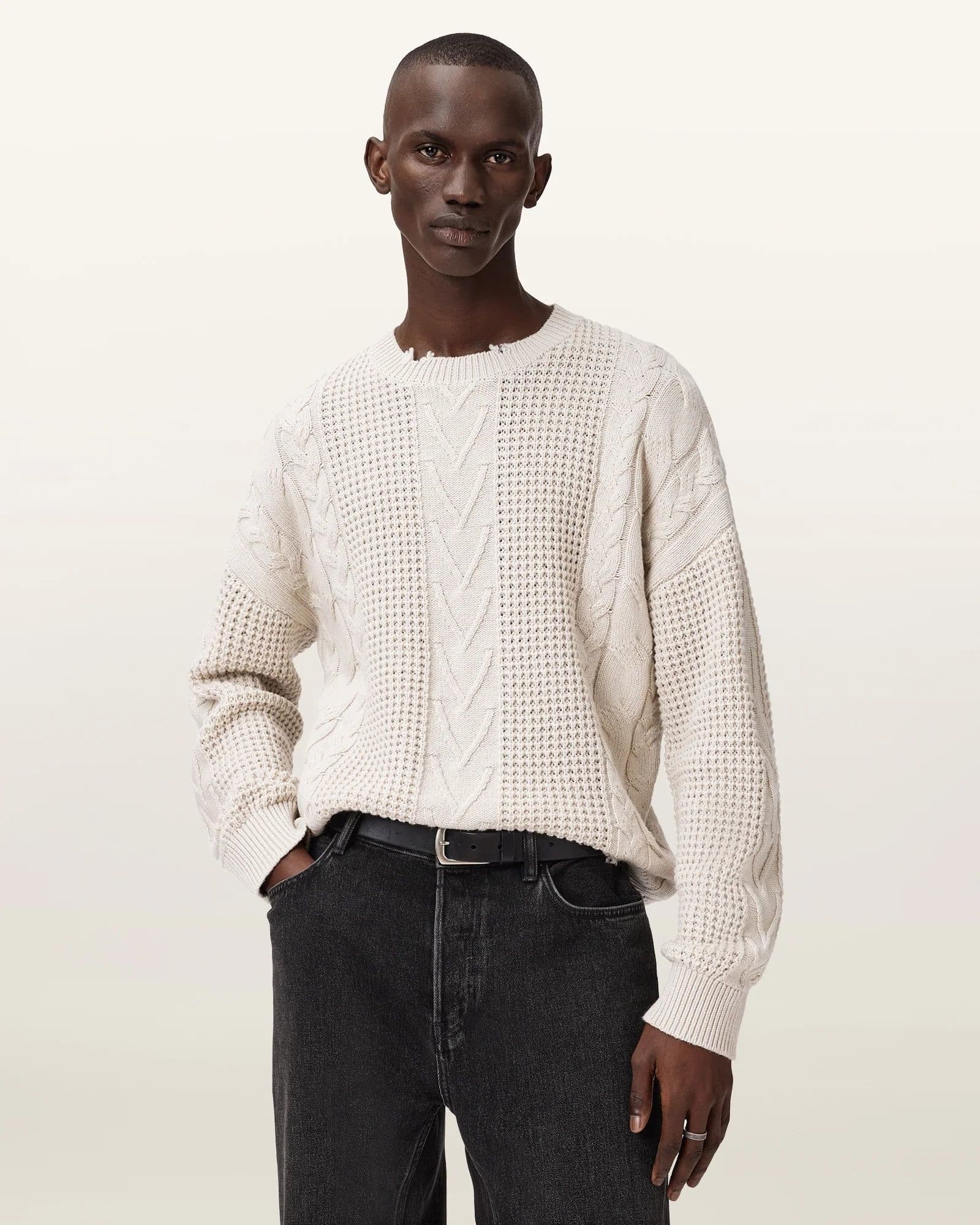
Yarn dominates the cost stack — typically 40–60% of the unit price. The same style can vary several-fold across fibers. These are relative cost bands, not absolute prices, which depend on yarn, gauge, complexity and quantity.
| Fiber | Relative cost band |
|---|---|
| Acrylic / acrylic blend | Lowest |
| Cotton / cotton blend | Low–medium |
| Lambswool / wool blend | Medium |
| Merino | Medium–high |
| Cashmere & cashmere blend | Highest |
Unit price also falls as quantity rises, because setup and dye-lot costs spread across more pieces: small runs (100–200 pcs) carry the highest unit cost, mid runs (300–500) see a meaningful drop, and large runs (1,000+) reach the best pricing. See our cost factors guide.
Gauge sets weight, stitch definition and season. Most men's sweater programs live at 5–7GG, with finer 12GG for lightweight/layering and chunky 3–5GG for winter statements.
| Gauge | Character | Typical season |
|---|---|---|
| 3GG | Chunky, bold | Deep winter |
| 5GG | Substantial, defined | Autumn/winter |
| 7GG | Classic mid-weight | Three-season core |
| 12GG | Fine, lightweight | Spring/summer, layering |
We knit across 3GG-18GG. See our gauge guide and the focused 5GG vs 7GG vs 12GG comparison.
Reliable knitwear suppliers inspect at multiple stages and to a defined statistical standard.
| QC element | Common standard |
|---|---|
| Inspection stages | Incoming yarn, in-line, final |
| Sampling standard | AQL 2.5 (apparel typical) |
| Measurement tolerance | ±1 cm (typical) |
| Key tests | Pilling, shrinkage, color fastness |
We run multi-stage QC with metal detection and AQL 2.5 final inspection. See our QC checklist and common quality problems guide.
| Term | Common practice |
|---|---|
| Payment | 30% deposit, 70% before shipment |
| Incoterm | FOB (most common for knitwear) |
| Sampling fee | Often charged, sometimes credited on bulk order |
| First order | Trial/ready styles to reduce risk |
See our payment terms guide and shipping logistics guide.
These benchmarks reflect typical practice; your actual numbers depend on your specific program. For figures tailored to your design, yarn and quantity, request a quote — we provide transparent, itemized quotes for B2B buyers in North America and Europe.
---
If you're planning a real project around any of the points above, we'd be glad to take a quick look. Send a short brief and we'll come back within one business day with a practical direction, MOQ + lead time estimate, and a sample plan if it makes sense.
→ [Request a free quote](/request-quote) · [WhatsApp us](https://wa.me/8615170244792) · info@lcgarment.cn
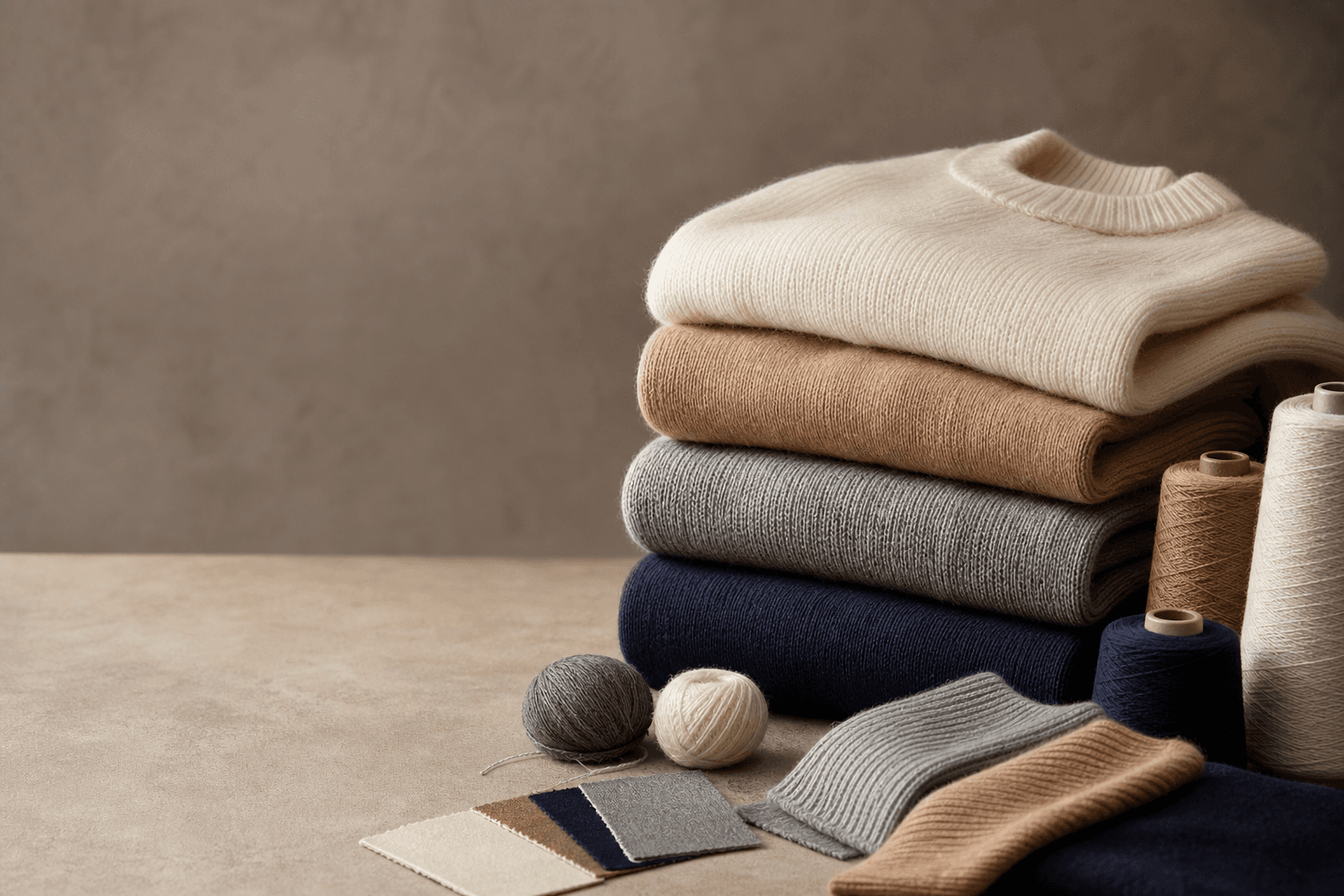
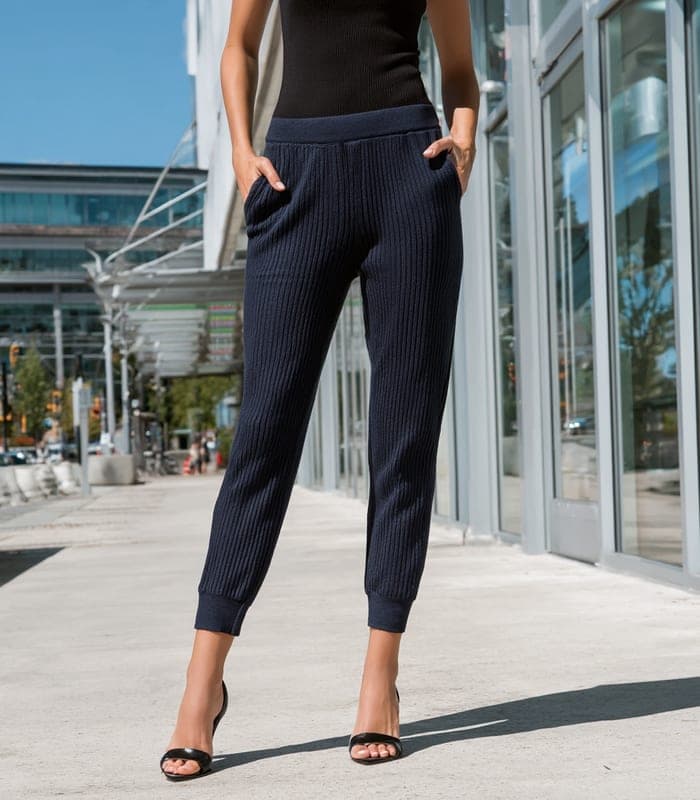
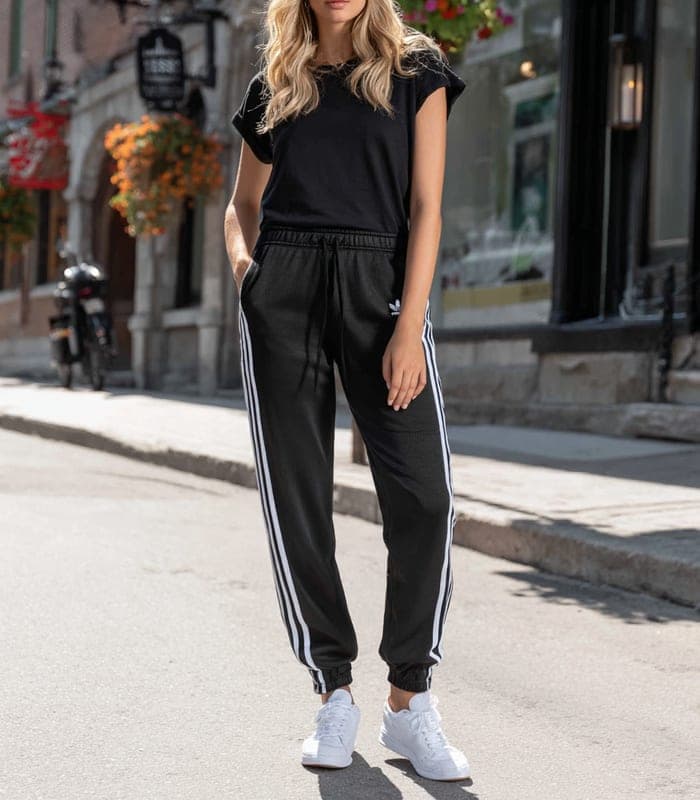
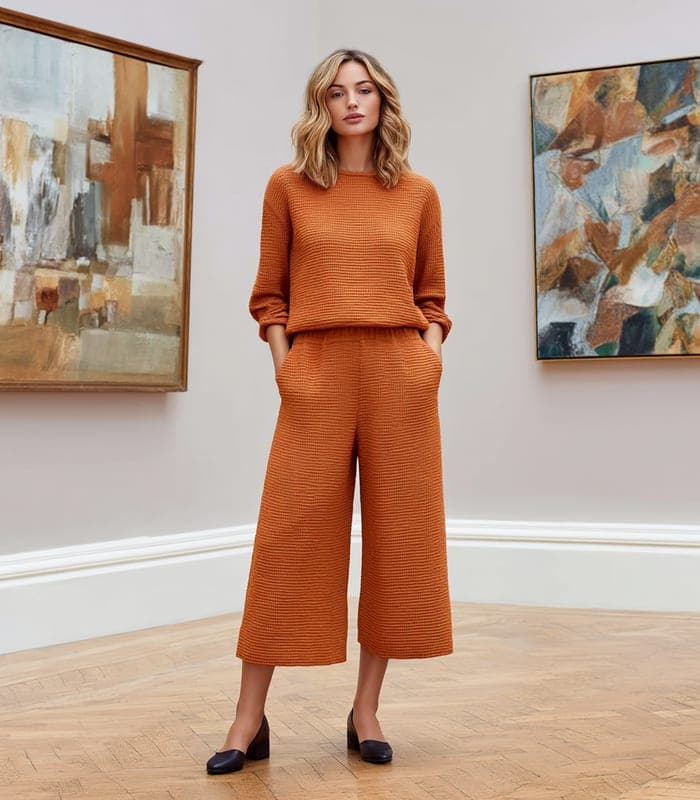
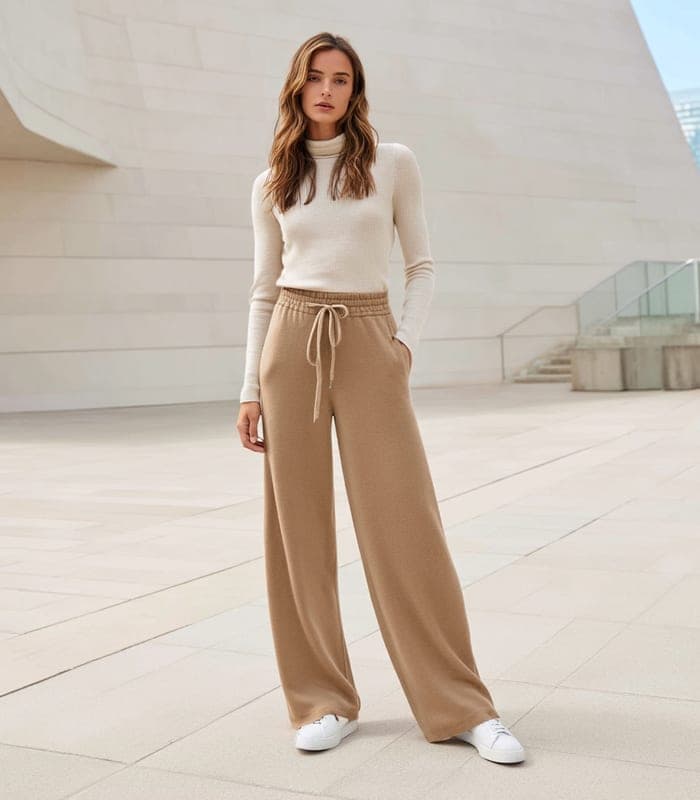
Women's Knit Bottoms
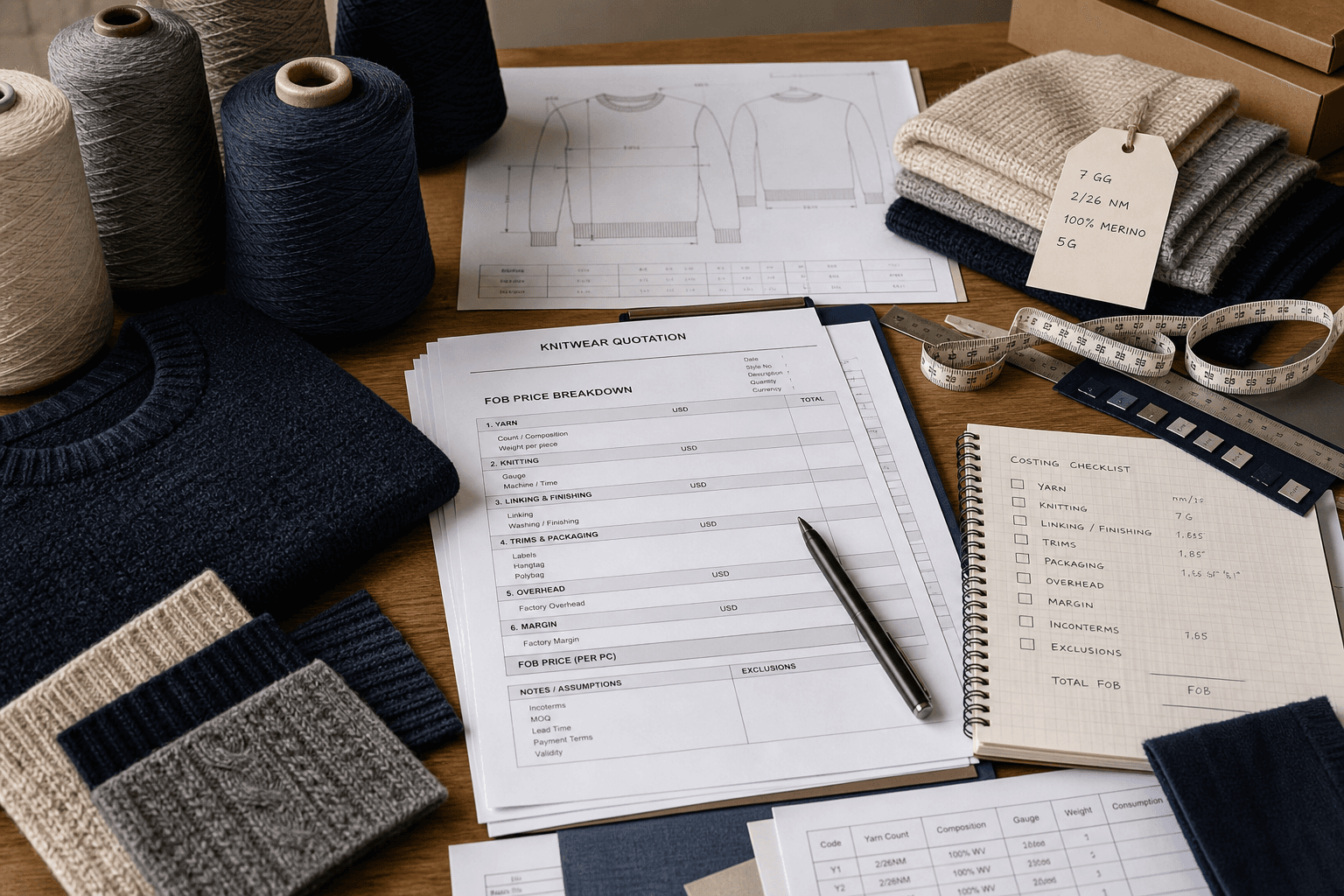
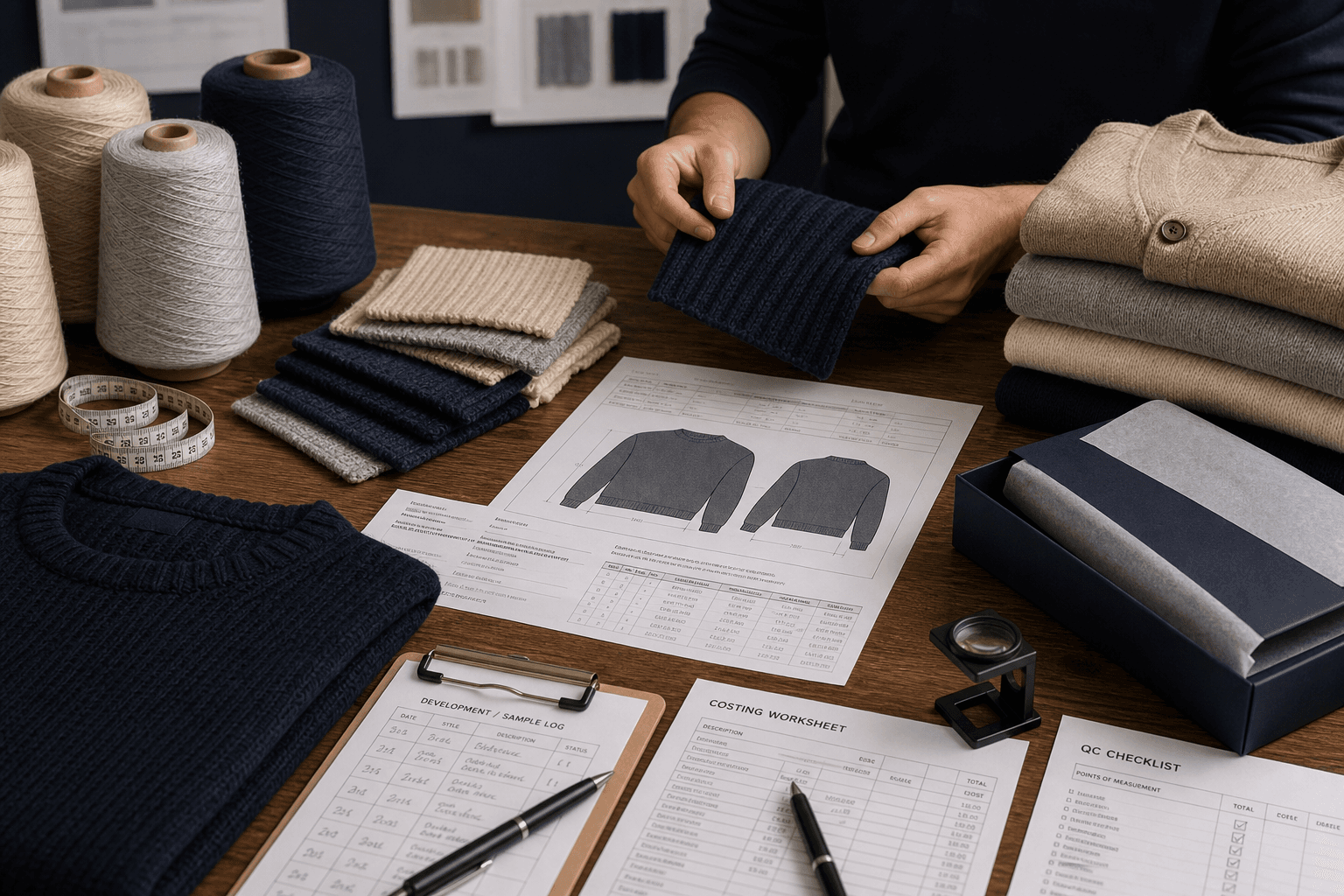
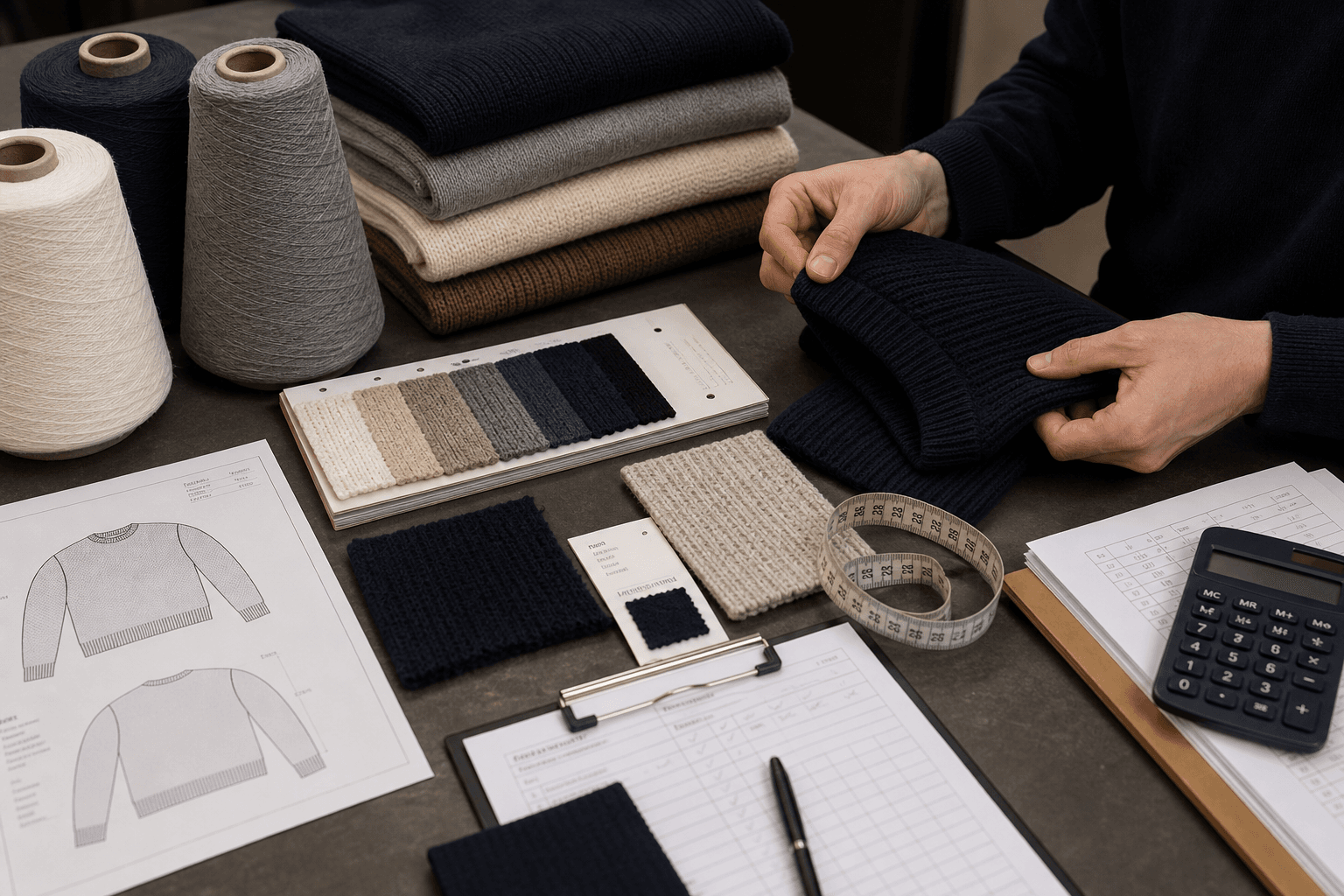
MOQ, lead time, cost ranges, gauge selection and QC checkpoints across typical OEM/ODM knitwear programs in NA + EU. Enter your email — we'll send you the report link in 30 seconds.
No spam. Unsubscribe with one reply. We use your email only to send you the report and follow up if you want a sourcing conversation.


Brand names shown are previously serviced OEM/ODM partners. Logos are decorative and do not imply current endorsement.