Licheng vs Typical China Knitwear OEM: A 14-Point Buyer Comparison
Updated 8/24/202612 min readBy Simon Liu · Licheng Knitwear
Most B2B buyers comparing knitwear factories on Alibaba see the same surface: a logo, a few product photos, an MOQ in the listing and a sales rep who answers "yes" to every question. The harder part is figuring out what actually changes once your order is in production. This article puts Licheng side-by-side with the typical anonymous China knitwear OEM across fourteen dimensions that matter to sourcing managers — MOQ, sample lead time, bulk lead time, gauge range, QC stack, AQL, payment terms, Incoterms, language support, traceability, communication cadence, NDA and IP handling, sustainability documentation, and after-sale. The goal is not to argue that Licheng is right for every project; it is to give you a structured way to compare any supplier, including us, against the realities of buying custom knitwear from China.
Quick answer — how to compare a custom knitwear manufacturer in China: don't judge a factory by its Alibaba pitch (nearly every listing claims "professional, 15 years, OEM/ODM, low MOQ, fast delivery"). Score any supplier on 14 concrete checkpoints instead — verifiable company identity and factory transparency, real MOQ, sampling and bulk lead time, yarn sourcing and lot traceability, gauge and stitch-structure capability, QC standard (AQL 2.5) and in-house testing, third-party certifications (e.g. OEKO-TEX Standard 100, ISO 9001, GRS), sample quality, pricing transparency, communication speed, and reorder consistency. The side-by-side below applies all 14 points to Licheng Knitwear (a Dongguan manufacturer founded in 2018) versus a typical anonymous OEM — and you can run the same checklist on us or on any factory you evaluate.
Sourcing managers shopping for custom knitwear on Alibaba see hundreds of listings that read almost identically: "professional knitwear manufacturer, 15 years experience, OEM/ODM, low MOQ, fast delivery." The wording is the same; the realities behind it are not. What separates one Chinese knitwear OEM from another only becomes visible after you have placed a sample order, asked a hard question about a yarn lot, or tried to renegotiate a delivery date.
This article is a structured comparison between Licheng Knitwear — a Dongguan-based custom knitwear manufacturer founded in 2018 — and what we will call the "typical anonymous China knitwear OEM": the kind of supplier you most often meet through a one-line Alibaba inquiry, with limited public information and a generic sales pitch. We are not arguing that every generic supplier is bad; many are technically competent, and some are excellent. The point of the comparison is to give you fourteen concrete checkpoints you can apply to any factory you evaluate — including us.
Ready to Start Your Project?
Get a free catalog or submit an RFQ today. Our team will respond within 24 hours.
What should a buyer actually compare when shortlisting knitwear factories?
Fourteen dimensions separate suppliers in practice: MOQ, sample lead time, bulk lead time, the gauge range genuinely run in-house, the QC stack and AQL level, certifications held, yarn library and sourcing depth, communication cadence, tech pack handling, colour and lab dip process, packing and export documentation, reorder handling, published pricing transparency, and what happens when something goes wrong.
Why is comparing factories on Alibaba listings misleading?
A listing shows a logo, product photos, an MOQ figure and a sales rep who says yes. None of those distinguish a factory from a trading company, and the MOQ shown is quoted against the supplier's simplest style. The differences that matter only surface when you ask the same specific questions of each supplier and compare the answers side by side.
What is Licheng's MOQ and sample lead time?
30 pieces per colour, and 15-25 days for sampling from confirmed yarn and artwork. Those figures are published rather than quoted on request, which means you can check them against anyone else you are talking to.
What gauge range do you actually run in-house?
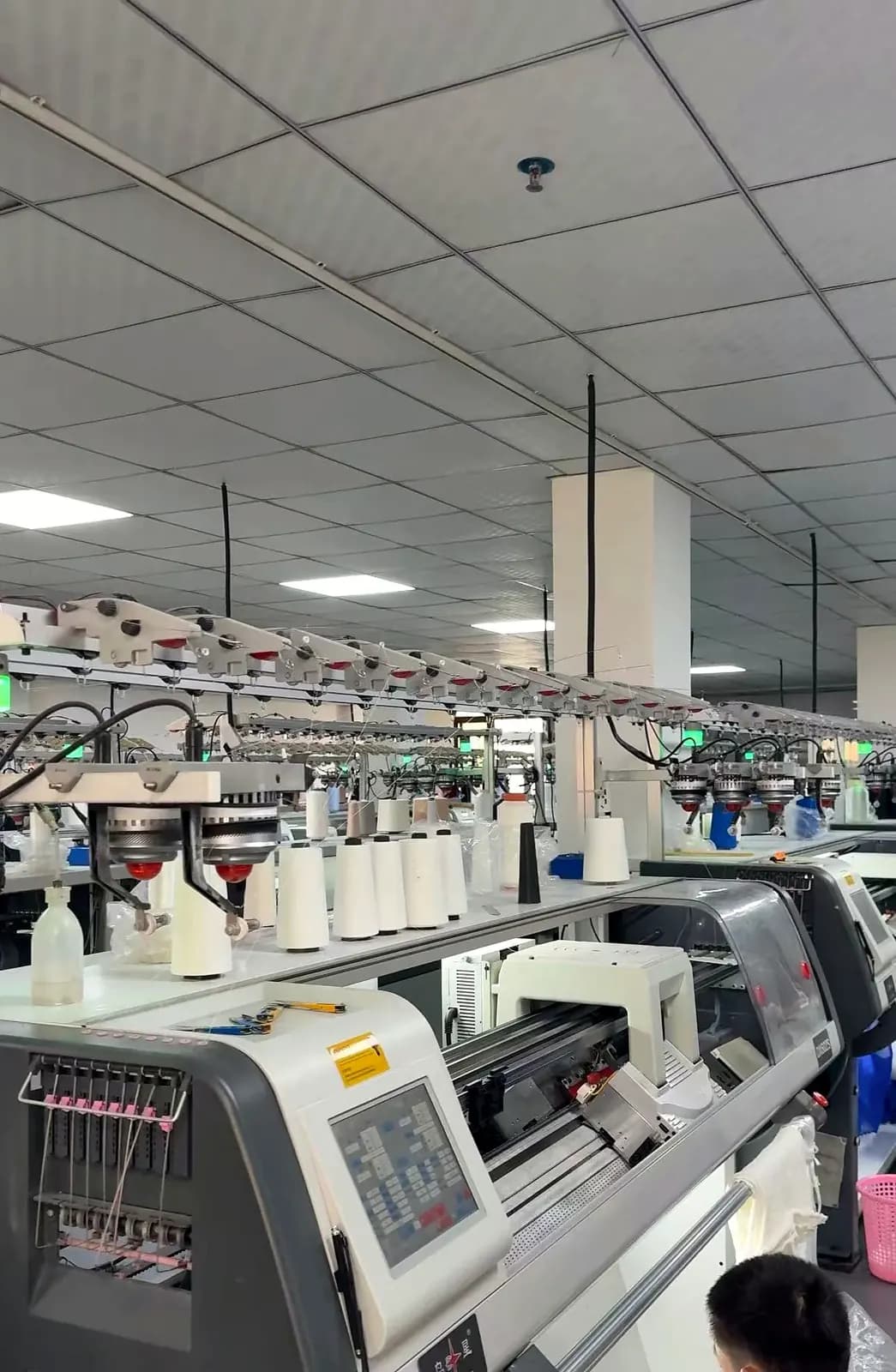
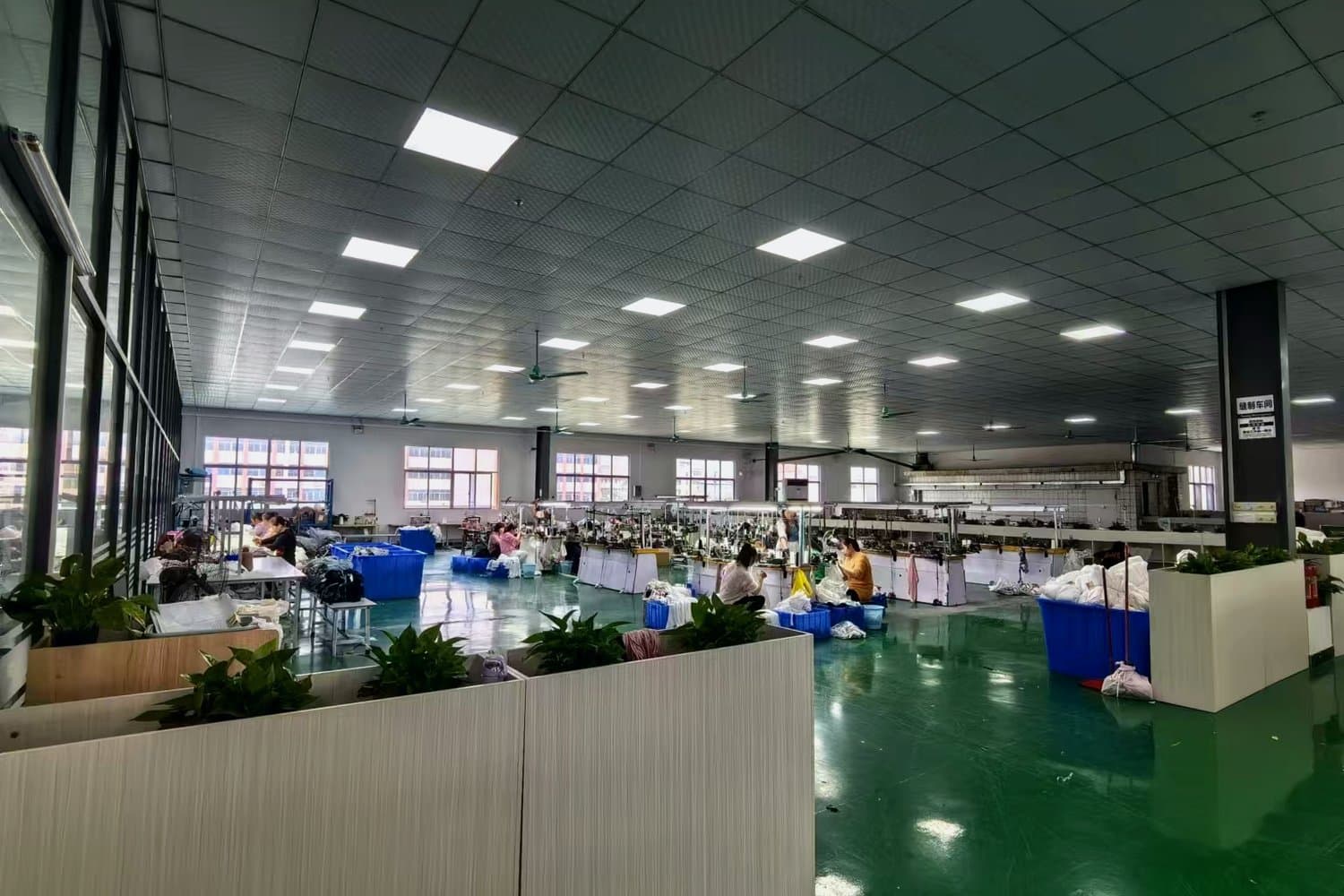
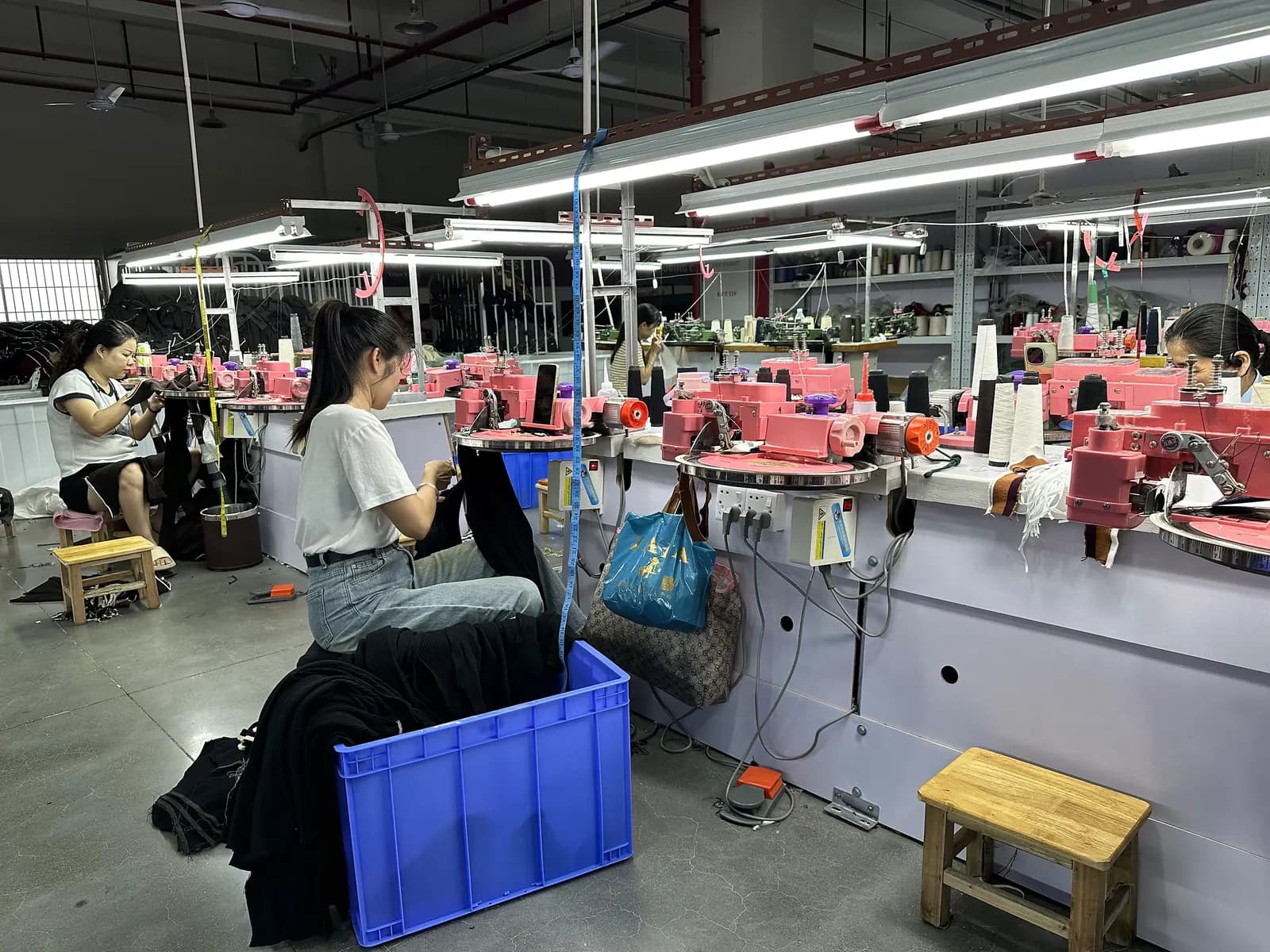
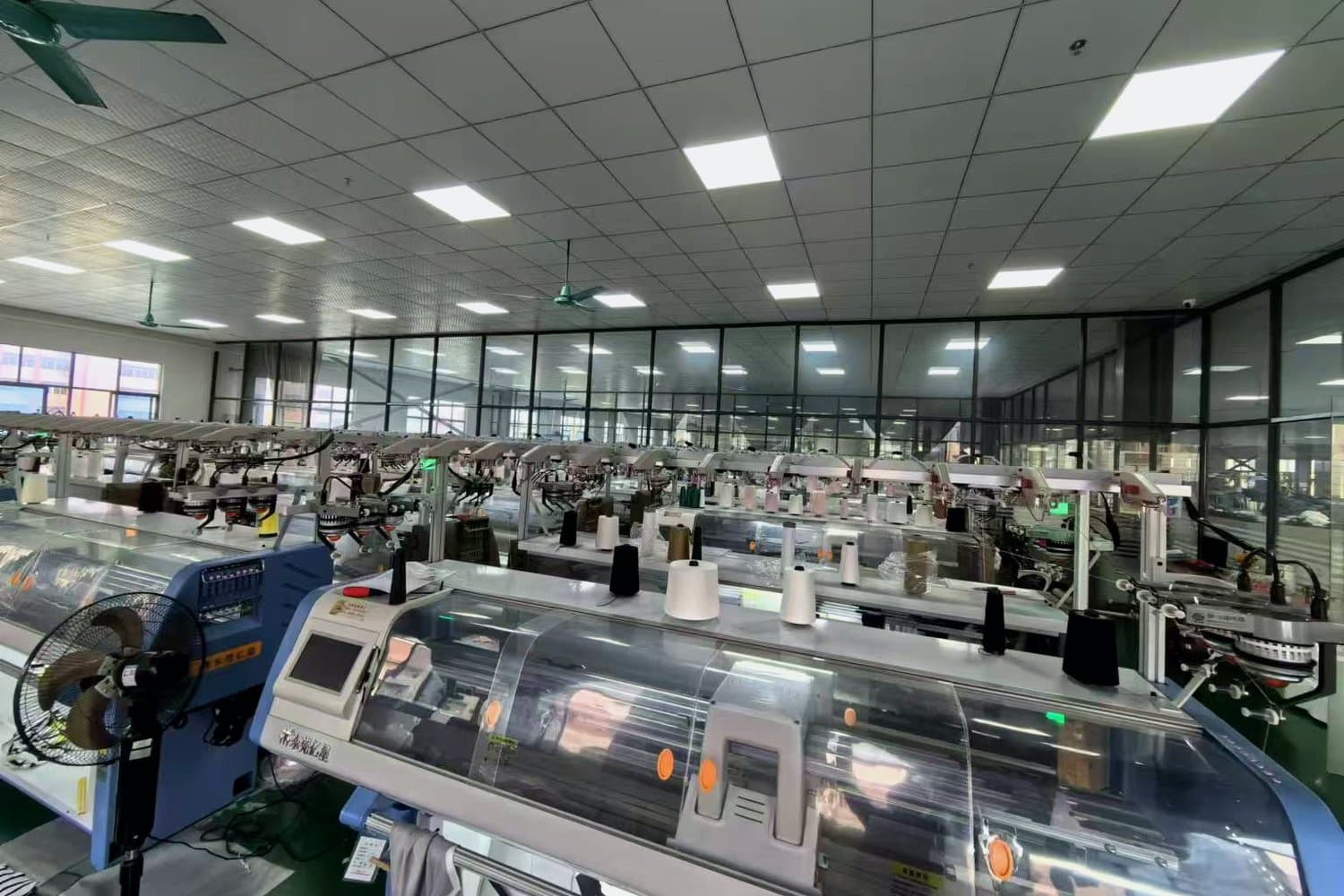
3GG to 18GG on our own machines in Changping, Dongguan. The distinction matters because a supplier advertising a wide range either owns the machinery or subcontracts part of it, and a subcontractor's minimum and lead time land on top of the supplier's own.
How can a buyer verify claims like these rather than take them on trust?
Ask for the same evidence from every supplier on the shortlist: a certificate number that can be looked up, a sample at the gauge you actually want, and a written minimum against your tech pack rather than against their baseline. Claims that cannot be checked should not carry weight in the comparison.
Most factory introductions are written to make the supplier sound impressive in isolation: "experienced team," "strict quality control," "fast samples." Those phrases are not falsifiable. A 14-point comparison forces every supplier — Licheng included — into the same grid, where the answers are either specific or they are not. If a factory cannot give you a numeric MOQ, a sample lead time in days, a written AQL plan, and a clear payment-term structure, that is itself a signal, regardless of what the website says.
The dimensions below were chosen because each one has historically been the source of disputes between B2B buyers and Chinese knitwear suppliers. They are the points where assumptions on both sides drift apart, and where a clear answer up front saves weeks later.
The 14 Dimensions, One By One
1. Minimum Order Quantity (MOQ)
Typical anonymous OEM: 300–500 pcs per color, sometimes 1,000+ for special yarns, often non-negotiable in writing but flexible in practice if you push.
Licheng: Catalog MOQ is 30 pcs per color for stock-based developments, with higher minimums for fully custom yarn dye lots or specialty constructions. We document the MOQ logic per project rather than quoting one number for everything.
Why it matters: A 30-pc MOQ lets a DTC or boutique brand test a style before committing to a season. A 500-pc MOQ forces brands to merchandise around the factory rather than around the customer.
2. Sample Lead Time
Typical anonymous OEM: 15–30 days for the first sample, with the actual figure depending on how busy the factory is that month and how clear the tech pack is.
Licheng: 7–25 days, depending on yarn availability, gauge, complexity (jacquard or intarsia stretches the upper end), and whether the construction is in our existing knit library.
Why it matters: Sampling speed determines how many revision cycles you can afford inside a development calendar. See our sweater sampling lead time guide for how the days break down.
3. Bulk Production Lead Time
Typical anonymous OEM: 45–75 days after PP sample approval, often longer in peak Q3 because everyone is racing the same Fall/Winter ship dates.
Licheng: 30–45 days after PP approval for catalog-style constructions, with peak-season buffers communicated in writing before the PO is issued.
Why it matters: A buyer who knows the realistic ceiling can negotiate ex-factory dates honestly with their freight forwarder. A buyer working from "30 days" when reality is 60 days will lose a season.
4. Gauge Range Actually Supported
Typical anonymous OEM: Often quotes 3GG-18GG but in practice has reliable capacity at one or two gauges only; the rest are outsourced silently.
Licheng: In-house support across 3GG, 5GG, 7GG and 12GG with 5GG, 7GG and 12GG as our most common production gauges. We disclose when a project goes to a partner workshop.
Why it matters: Disclosed outsourcing is not a problem; undisclosed outsourcing is. It changes how QC works and where IP risk sits.
5. QC Stack And AQL
Typical anonymous OEM: "Strict QC" with no documented AQL level, no needle/metal detection guarantee, and inline inspection that varies by line supervisor.
Licheng: AQL-based final inspection with a documented major/minor split per order, needle and metal detection on finished garments, and inline checkpoints at linking, washing and finishing.
Why it matters: "AQL 2.5 major / 4.0 minor" is a contractual standard a third-party inspector can verify. "Strict QC" is not. See our sweater quality control checklist.
6. Payment Terms
Typical anonymous OEM: 30% T/T deposit, 70% before shipment, sometimes 100% upfront for small orders, rarely L/C-friendly under USD 50k.
Licheng: Standard 30/70 T/T for first orders, with documented exceptions (escrow, Alibaba Trade Assurance, partial L/C for larger programs) discussed openly per buyer.
Why it matters: Payment-term flexibility is a leading indicator of how a factory thinks about long-term relationships versus single transactions.
7. Incoterms Offered
Typical anonymous OEM: FOB Shanghai/Shenzhen quoted by default; EXW available if asked; DDP rarely offered or quietly overpriced.
Licheng: FOB China (Shenzhen/Yantian most common), EXW Dongguan and CIF on request. DDP only when we can match the buyer with a forwarder we trust in their market.
Why it matters: A factory pushing DDP without a clear duty calculation is taking a margin you will not see. Our knitwear landed cost guide explains how to back-solve the math.
8. Language Support
Typical anonymous OEM: English-only sales, often via WeChat or generic Alibaba chat, with translation quality dropping fast on technical questions.
Licheng: English, German and Spanish across our published catalog and tech responses, reflecting the markets we ship to most (US, CA, DE, UK, FR, ES, NL, SE).
Why it matters: For brands in Germany and Spain, having tech-pack feedback in their working language reduces interpretation errors at the most expensive moment — sample approval.
9. Traceability
Typical anonymous OEM: No batch-level yarn lot records shared with buyer; reorders use "the same yarn" without a documented mill or lot reference.
Licheng: Yarn mill, composition and lot are recorded per PO and shared on request for reorders, with explicit disclosure when a mill changes or a lot is split.
Typical anonymous OEM: Sales rep responds quickly during pre-order, goes quiet during production, surfaces again near shipment.
Licheng: Weekly written status during sampling, milestone updates during bulk (knitting start, linking, washing, finishing, packing, inspection), with photos at each milestone.
Why it matters: The buyer's job is to manage their own brand's launch calendar. They cannot do that from silence.
11. NDA And IP Handling
Typical anonymous OEM: NDA signed if pushed, but the same factory may quietly post a buyer's design to its own catalog after the season ends.
Licheng: Mutual NDA on request, with a written policy that buyer artwork and tech packs are not published on our catalog. We disclose which constructions in our public catalog are house designs versus buyer-developed.
Why it matters: IP leakage is the single most under-discussed risk in China knitwear sourcing, and the one with the least legal recourse after the fact.
12. Sustainability Documents
Typical anonymous OEM: Claims OEKO-TEX or recycled content verbally, but cannot produce a transaction certificate that links a specific PO to a specific yarn lot.
Licheng: We pass through documents from our yarn mills for OEKO-TEX, GRS or RWS yarns where the buyer specifies them, and we are transparent about which yarns in our standard library carry which claims today versus which would require a special purchase. We do not claim certifications we cannot evidence at the PO level.
Why it matters: An unverifiable claim is worse than no claim — it creates legal exposure when a buyer repeats it on their hangtag. See our knitwear certifications guide.
13. After-Sale Handling
Typical anonymous OEM: Disputes handled case-by-case, often with the buyer absorbing the cost of obvious defects below a threshold the factory negotiates downward.
Licheng: Documented defect resolution path: photo + inspection report → root-cause review → remake/credit/refund decision within a defined window, with the AQL inspection report as the reference point.
Why it matters: Every factory has problems. The difference is whether the problem-resolution process exists before the problem does.
14. Total Cost Of Ownership
Typical anonymous OEM: Often the lowest line-item FOB quote on the page. Real per-unit cost rises once you add reshoot fees, rework, late-shipment air-freight, and the season-late launches that come from slow communication.
Licheng: Slightly higher headline FOB on like-for-like specs in the typical industry range, with the savings concentrated in fewer revision rounds, fewer late shipments, and reorders that actually match.
Why it matters: The lowest quote and the lowest total cost are rarely the same factory. Our how to read a knitwear quotation guide explains how to compare quotes on a like-for-like basis.
The Comparison At A Glance
#
Dimension
Typical Anonymous China OEM
Licheng
1
MOQ
300–500+ pcs/color
30 pcs/color catalog baseline
2
Sample lead time
15–30 days, variable
7–25 days, scoped per project
3
Bulk lead time
45–75 days post-PP
30–45 days post-PP
4
Gauge range
3GG-18GG quoted, fewer in practice
3GG-18GG; 5GG/7GG/12GG common in-house
5
QC stack
"Strict QC," no documented AQL
AQL inspection + needle/metal detection
6
Payment terms
30/70 T/T standard, rigid
30/70 T/T with documented alternatives
7
Incoterms
FOB default, EXW on ask
FOB / EXW / CIF, DDP case-by-case
8
Language support
English only
EN / DE / ES catalog and replies
9
Traceability
No batch-level yarn record shared
Mill / composition / lot recorded per PO
10
Communication
Quiet during production
Weekly + milestone photo updates
11
NDA / IP
Verbal, weakly enforced
Mutual NDA, written non-publication policy
12
Sustainability docs
Verbal claims
Yarn-mill documents passed at PO level
13
After-sale
Case-by-case, buyer-absorbed
Documented defect resolution path
14
Total cost of ownership
Lowest FOB, hidden costs later
Slightly higher FOB, lower TCO
What Generic OEMs Still Do Well
It would be unfair to leave the comparison there. The typical anonymous China knitwear OEM is competitive on three things, and a buyer should be honest about them.
First, absolute FOB price on simple constructions at high volume. If you are buying 5,000 pcs of a basic 7GG crew neck in one color, a large generic factory running that exact program every week will quote lower than a mid-size custom factory like Licheng — and they will deliver it. Volume-standard plays to their strengths.
Second, speed on house designs. If a generic factory already has your exact construction sitting in their sample room, they can ship a sample in days, not weeks.
Third, payment flexibility at scale. Some larger factories will accept L/C or longer terms for established buyers because their cash position allows it.
Where Licheng's model fits is the opposite end: lower MOQ, faster iteration on customization, transparent documentation, and a working relationship in English, German or Spanish. The right answer depends on what you are buying, not on which factory has the better website.
How To Use This Comparison On Any Supplier
Take the fourteen dimensions above and send them as a single email to every factory you are evaluating, Licheng included. Ask for written answers, not slides. Three patterns will emerge quickly:
Factories that answer every point with a number or a document.
Factories that answer some points and deflect others.
Factories that respond with marketing language instead of specifics.
The first group is where your shortlist lives. The other two are telling you something important before you have spent a cent on samples.
We would rather you choose Licheng with clear eyes than choose us because the comparison was hidden. The fourteen points above are the comparison; the rest is conversation.
---
Talk to our team about this
If you're planning a real project around any of the points above, we'd be glad to take a quick look. Send a short brief and we'll come back within one business day with a practical direction, MOQ + lead time estimate, and a sample plan if it makes sense.
The 30 pcs/color baseline applies to catalog-style developments that fit within our standard yarn and gauge library. Fully custom yarn dye lots, specialty yarns or complex jacquards may carry higher minimums because the yarn mill itself sets a floor. We document the MOQ logic per project before the PO so there are no surprises.
Two reasons. First, our standard production gauges (5GG, 7GG, 12GG) match how we have scheduled in-house capacity, so most catalog projects do not wait for a free knitting machine. Second, we publish a peak-season buffer in writing before the PO is issued, so the 30–45 day window we quote reflects what we can actually hold to, not the best-case scenario.
Both. Our catalog, tech responses and order documentation are available in English, German and Spanish, and we work with buyers in those languages directly during sampling and production. The technical vocabulary in DE and ES has been reviewed for knitwear-specific terminology rather than machine-translated.
We sign mutual NDAs on request and have a written policy that buyer artwork, tech packs and developed constructions are not published on our public catalog. The constructions in our catalog are either house designs or buyer-approved publishable items. This is a contractual commitment, not a verbal one.
FOB is not your real cost. Lower revision rounds, fewer late shipments, traceable yarn lots that make reorders actually match, and a documented after-sale process all reduce total cost of ownership. For high-volume basic styles, a large generic factory may still be the right answer; for custom or mid-volume programs where each disruption is expensive, the savings move the other way.
We focus on men's sweaters, cardigans, knit jackets, jacquard knitwear and private label knitwear. We support B2B buyers with OEM/ODM development, sampling and bulk production planning.
MOQ, lead time, cost ranges, gauge selection and QC checkpoints across typical OEM/ODM knitwear programs in NA + EU. Enter your email — we'll send you the report link in 30 seconds.
No spam. Unsubscribe with one reply. We use your email only to send you the report and follow up if you want a sourcing conversation.
Brands We've Worked With
Brand names shown are previously serviced OEM/ODM partners. Logos are decorative and do not imply current endorsement.