Most trend reporting tells you what men's knitwear will look like next autumn. Very little of it tells you what each of those looks costs to actually make, or which ones will add a week to your sampling calendar. We knit these garments, so this is the other half of the conversation: six detail directions we see coming through for AW27, and what each one does to cost, to the approval schedule, and to your minimum.
The figures below come from our own published range — 410 styles, each with its gauge, yarn, minimum and lead time on the page. Where we say "41 of our styles carry cable", that is a count you can verify by browsing the catalogue, not an estimate.
One framing point before the six. Detail is where a knitwear budget quietly goes. The yarn and the gauge set the floor price, and most buyers negotiate hard there. But a second material at the collar, a zip pocket, or an embroidered crest each add a process step, an approval round, or a piece of engineering that the knitting machine cannot do by itself. None of them are expensive in isolation. Three of them on the same style is a different garment commercially.
Everything below divides into two families, and choosing the wrong one is the most common and most expensive mistake we see.
Knitted-in means the machine builds the motif while it makes the panel. Jacquard for repeating all-over patterns (19 of our styles), intarsia for blocks of solid colour with no float behind them (9), argyle as the classic diamond-and-overcheck case (8). It adds nothing to the production schedule — the machine is already knitting; it is simply knitting something more complex. It washes exactly as the ground fabric does, because it *is* the ground fabric. It is the right route for anything covering a large area.
Applied means embroidery, appliqué or a patch stitched onto the finished flat panel before linking. It is the right route for a logo, a crest, a small placed motif, or artwork with detail finer than a knit stitch can resolve. It adds a step outside the knitting floor, and therefore adds calendar rather than machine time.
The practical rule: if the artwork covers more than roughly a hand's width, knit it in. If it is smaller than that, or if it has fine internal detail, apply it. A large motif done as embroidery gets heavy, stiffens the panel and distorts the drape; a small crest knitted in at 7GG turns into an unreadable blur.
Gauge decides what is even possible. A 3GG–5GG chunky ground cannot hold fine detail — you need a simplified, bolder version of the same artwork. A 12GG–18GG fabric will carry a detailed crest. We knit across 3GG–18GG, and 276 of our published styles sit at 7GG, 234 at 12GG.
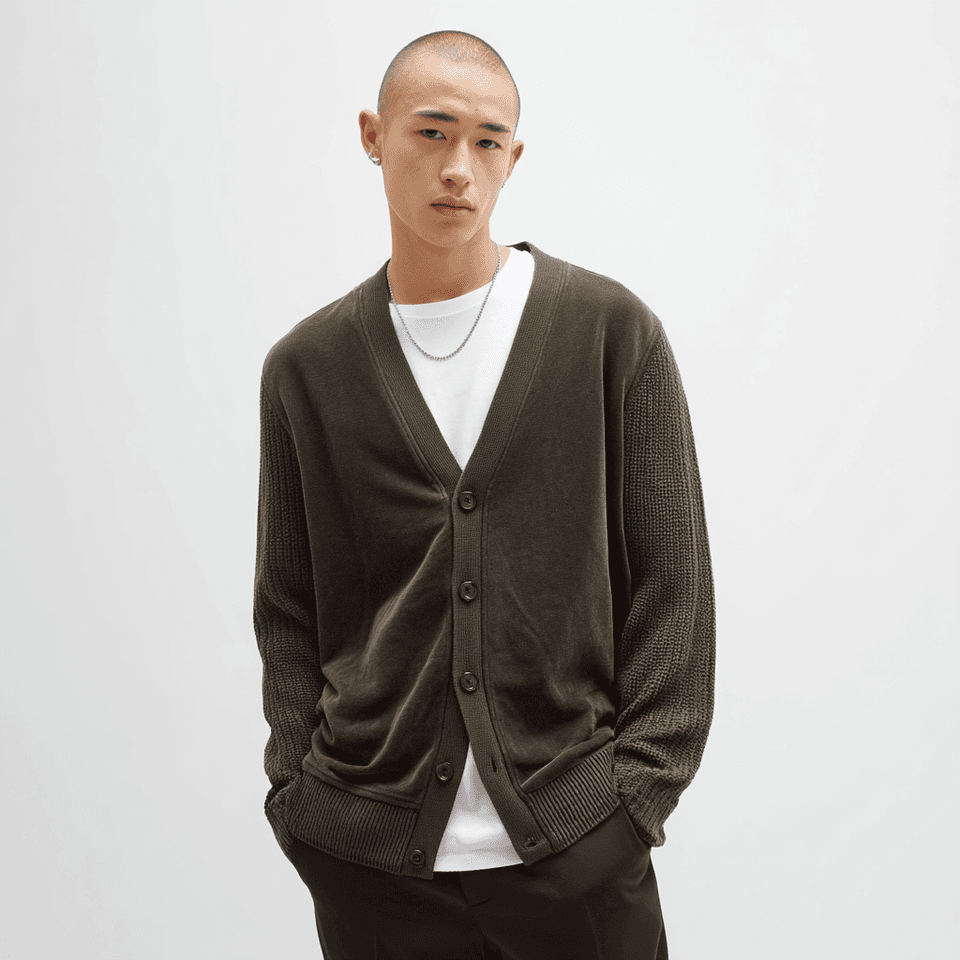
The single strongest visual lever in men's knitwear right now, and the one most often underestimated on the engineering side. 46 of our published styles carry some form of contrast or hybrid construction: suede fronts and suede sleeve panels, shearling and faux-fur collars, nylon contrast panels and pockets, ribbed knit trims against a woven or suede shell, applied varsity-style patches.
What it does. It reads as designed rather than basic, immediately and from a distance. It also lets one knit body support several very different commercial positions — the same 7GG rib body reads collegiate with a woven shirt collar and outdoor with a nylon yoke.
What it costs you. Not much in materials. The cost is in the join, and the join is the whole problem: knit stretches and suede, nylon and shearling do not. If the seam allowance, the stabiliser and the rib depth around the join are not set correctly, the knit grows against the fixed panel and the garment twists after a few wears. We set all three at sample stage and re-check them on the first bulk panel. Budget one extra sample round the first time you combine a new material with a new gauge; after that the parameters carry over.
What to send us. The contrast material itself, or its exact specification. We can source suede-look and nylon, but a hand-feel decision made from a photograph is a decision you will revisit.
27 of our published styles carry pockets: patch, chest, kangaroo, zip, flap, and nylon-contrast.
What it does. A pocket is the cheapest way to turn a plain sweater into a designed piece without adding any artwork at all. It also carries a functional story — outdoor, workwear, commuter — that a plain body cannot.
What it costs you. On a woven garment a pocket is a styling decision. On a knitted ground it is a structural one, because an unsupported pocket mouth will grow with wear and will not come back. We stabilise the opening. For zip pockets the tape has to be set so the zip does not ripple the fabric around it — knit has give, zip tape has none, and that mismatch is visible on the first wash if it is not handled at sampling. 86 of our styles already carry a zip somewhere, so this is well-trodden ground for us.
Adds: one approval on the pocket placement and mouth finish. No extra bulk time once approved.
20 of our styles carry embroidery; 9 carry appliqué. Both are commissioned through a partner workshop rather than run on our own floor, which matters for your schedule.
What it costs you. Three things drive the number, in this order:
1. Colour count in the artwork — more than size. A large one-colour crest is cheaper than a small four-colour one.
2. Backing. Embroidery on a knit needs a stabiliser so the stitching does not pull the ground fabric. The backing is chosen against your gauge and fibre and confirmed on a swatch before the sample. Skipping this is the most common cause of a puckered chest logo.
3. Placement. It is applied to the flat panel before the garment is linked, so placement is limited to areas that lie flat in production — left chest, centre front, upper back, sleeve. A motif that crosses a seam or sits on a shaped shoulder is a different, more expensive proposition.
Adds: a few extra days inside the normal 15–25 day sampling window for the first artwork approval. It does not change the minimum.
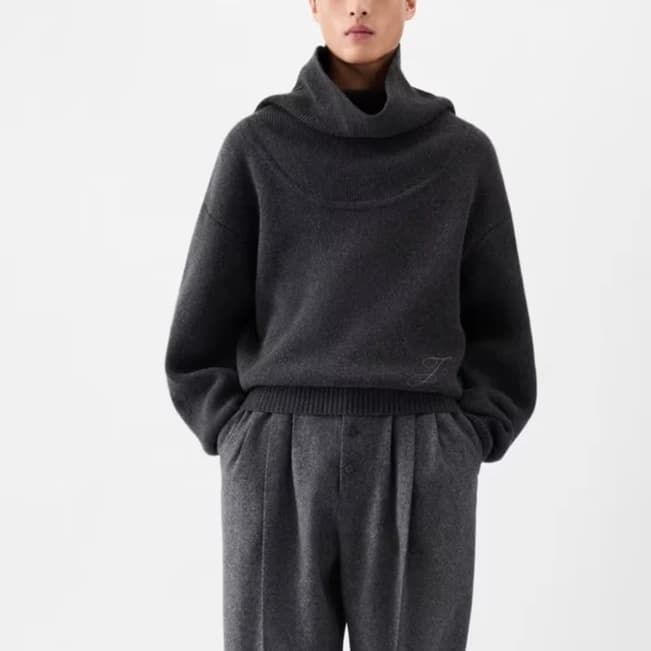
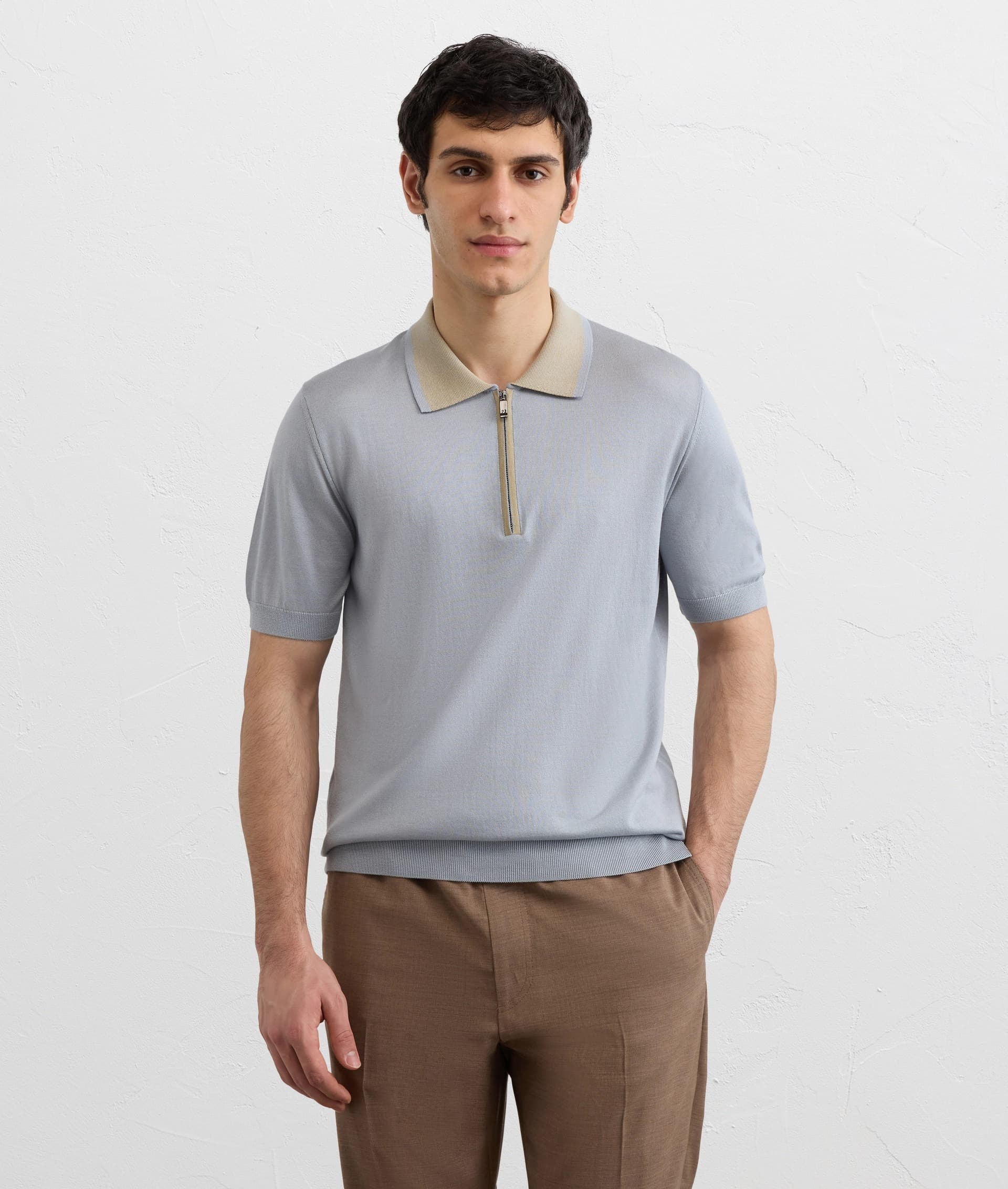
The quietest of the six and the one that most reliably moves a garment up a price tier. Our range currently carries 8 shawl collars, 19 funnel or mock necks, and 3 shirt-collar knits — the last is deliberately small and is the one we are expanding for AW27.
What it does. The collar is the first thing seen and the last thing photographed. A shirt collar or a half-placket reads more formal than a crew neck without changing anything else about the garment; a funnel neck reads technical; a shawl collar reads heritage.
What it costs you. A knitted collar variation costs nothing extra — it is knitting. A contrast-material collar takes you back into section 2 and its join problem. A faux two-piece (knit body with a woven shirt collar and cuffs showing) is the most demanding of the group, because two fabrics with different shrinkage have to still line up after wash: it needs its own wash test, not just a fit sample.
The direction we have had the most direct buyer demand for this season, from two separate enquiries in the same week.
What it is. Half-cardigan (also called half-brioche or fisherman rib) is a rib variant where alternate rows tuck, giving a fuller, softer, more three-dimensional fabric than a plain rib. Paired with a deliberately opened stitch tension it produces the relaxed, airy, slightly under-knitted handle currently driving oversized menswear.
What it costs you. Two things people miss. First, half-cardigan eats yarn — the tuck stitch holds more yarn per centimetre than a plain rib, so the same garment weighs more and costs more in material even at an identical gauge. Second, loose tension changes the measurements, so you cannot simply grade a fitted block up and open the tension; the panel has to be re-calculated. We confirm both on a knitted swatch before the graded sample rather than discovering them at fit.
Best gauge for it is 5GG–7GG, where the stitch has room to bloom. In hairy yarns — wool/alpaca blends, mohair blends, or a brushed lambswool — the effect compounds. Alpaca gives drape and a soft halo with less prickle than mohair; mohair gives a longer, more visible halo; brushed lambswool is the most economical of the three and the easiest to repeat in bulk.
Adds: one swatch round before sampling. Adds material cost. Adds nothing to bulk time.
If you are building an AW27 men's knit range, the order of decisions that avoids the most rework is:
1. Gauge and yarn first. They set the floor price and they decide what detail is physically possible.
2. Then structure — cable, rib, half-cardigan, jacquard. Knitted-in detail is nearly free at this stage and very expensive to add later.
3. Then colour, with the structure in front of you. Mid-tone warm neutrals let a cable or a jacquard read; very dark grounds flatten it. Our own range is built accordingly: oatmeal/beige/cream is our largest colour family at 56 styles, then grey/charcoal at 53 and navy/blue at 43.
4. Then applied detail — embroidery, appliqué, patches. This is the layer to cut first if the costing comes back high, because it is the only one that can be removed without re-engineering the garment.
5. Then mixed materials and pockets, which need their own sample round.
- Minimum order: 30 pieces per colour, with sizes mixed inside that 30. None of the six directions above changes it.
- Sampling: about 15–25 days from a confirmed tech pack and yarn. Embroidery, appliqué, contrast materials and loose-tension grounds each add an approval, not a re-start.
- Bulk: 30–45 days, depending on quantity and how much of the above the style carries.
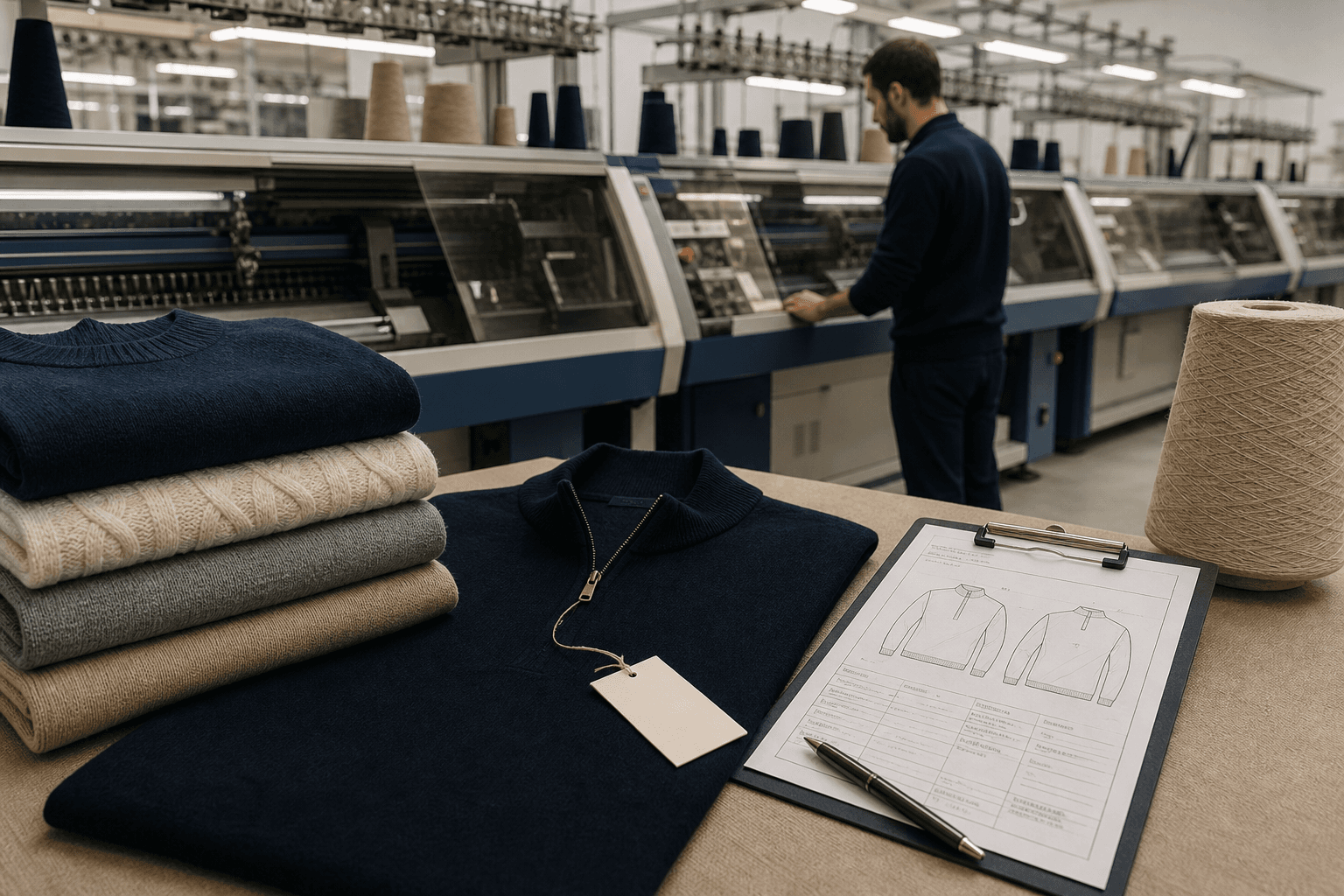
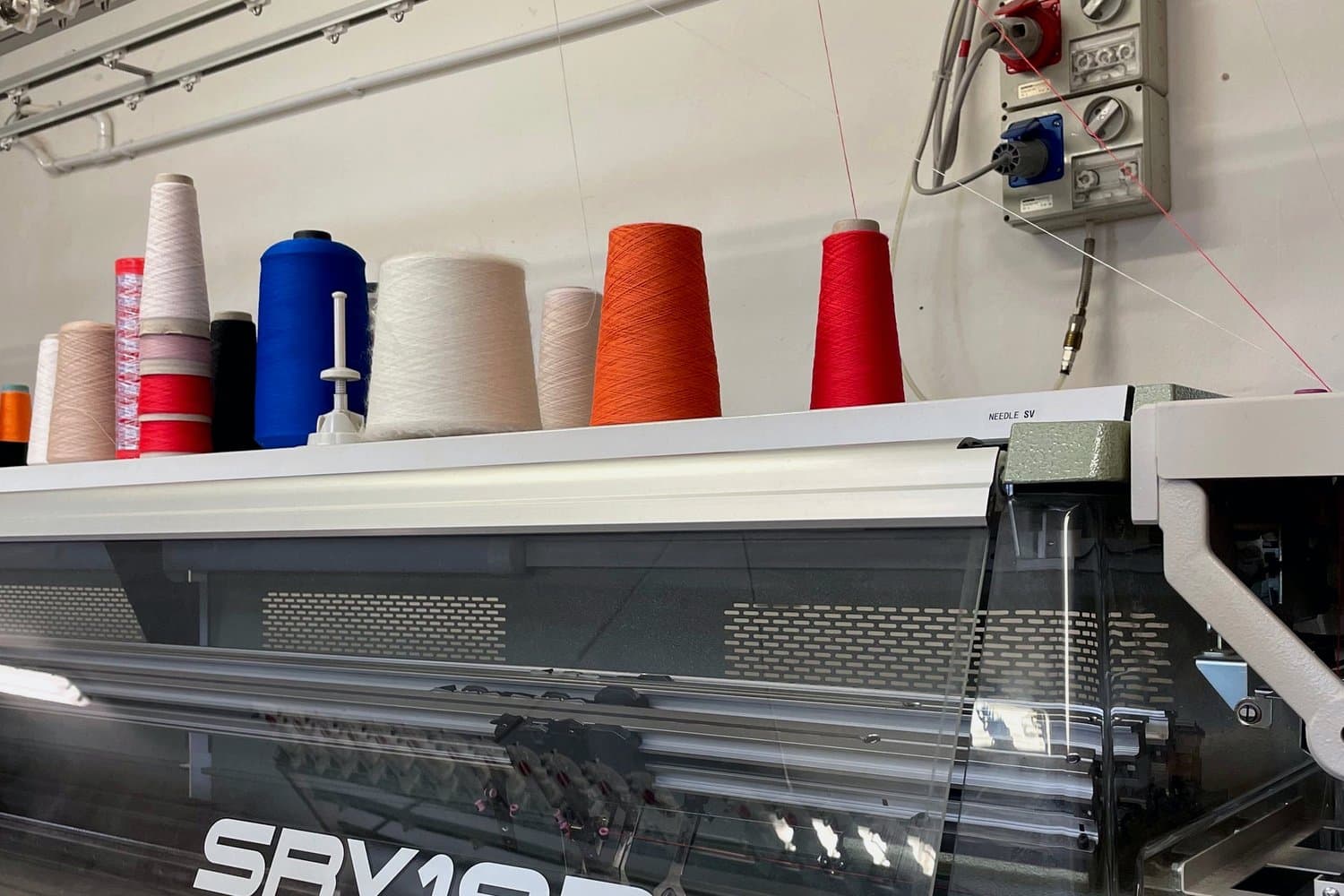
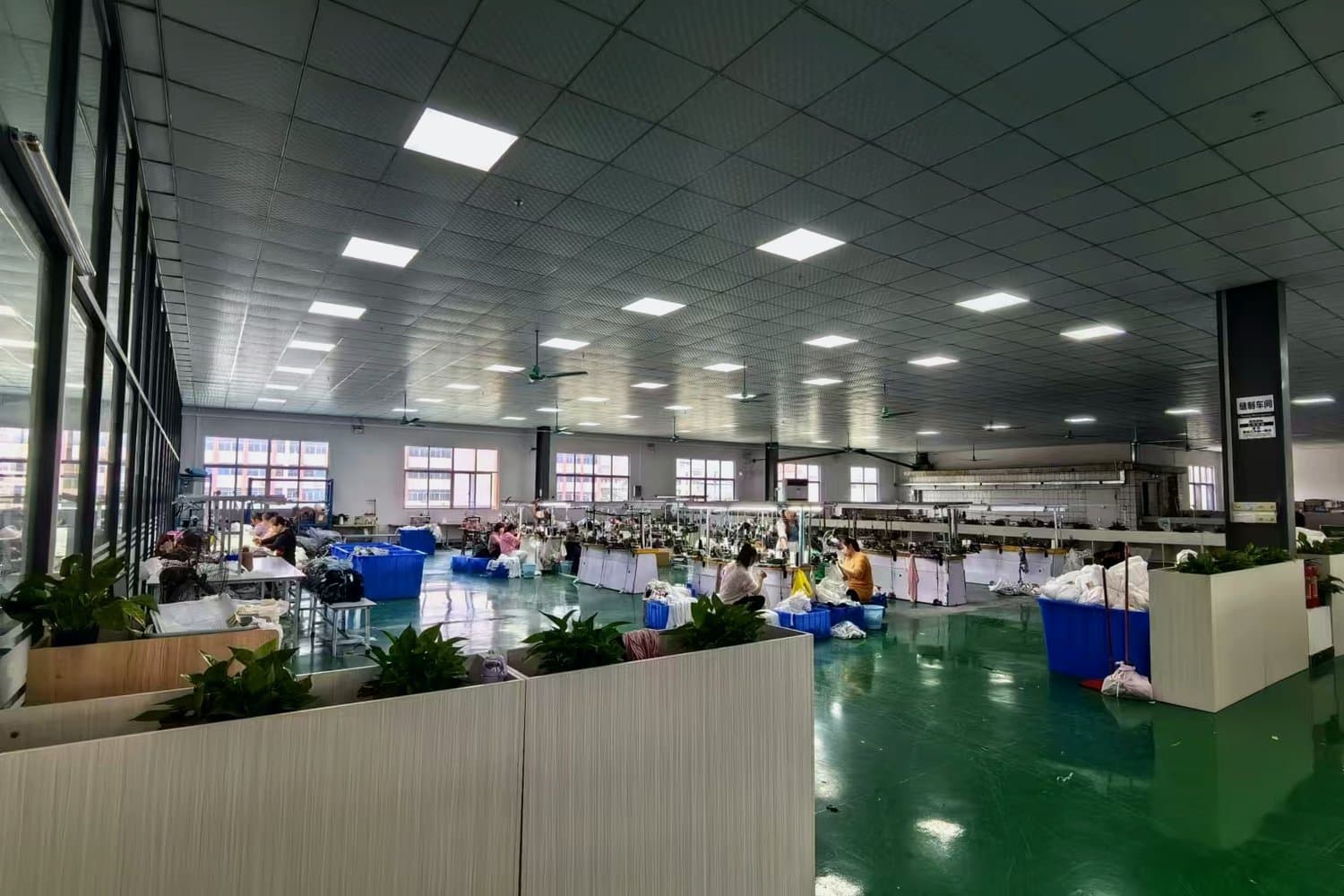
- Gauge range 3GG–18GG in house, on 30+ flat-bed machines.
- 85 of our published styles carry an explicit FOB band on the page; the rest carry an indicative median from our own yarn cost index, or are quoted on request.
If you have an AW27 direction already and want it costed rather than admired, send the reference and the target quantity and we will tell you which parts of it are free and which parts are not. Request a quote or browse the men's range.
Related reading: what gauge actually changes · men's knitwear direction 2026–2027 · cardigan sourcing for AW27 · oversized & relaxed knit development · colour matching and lab dip