Linking-Verfahren bei Strickwaren: Abwägungen zwischen Hand- und Maschinen-Linking
Aktualisiert 24.8.202612 min readVon Simon Liu · Licheng Knitwear
Auf einem Strickwaren-Techpack entscheidet die Zeile, in der "Linking" steht, darüber, ob die Naht im Stoff verschwindet oder als sichtbarer Grat auf der Innenseite des Kleidungsstücks sitzt. Für einen Premium-Menswear-Designer trennt diese eine Spezifikation einen Pullover, der sich fachgerecht verarbeitet anfühlt, von einem, der sich beim ersten Umkrempeln des Bündchens als Mittelklasse zu erkennen gibt. Dieser Leitfaden schlüsselt die drei Linking-Verfahren auf, die Licheng in der Produktion einsetzt – Voll-Nadel-Hand-Linking, Maschinen-Linking auf einer speziellen Linking-Maschine und Overlock-Nähen auf einer Standard-Nähmaschine – und behandelt das sichtbare Naht-Signal, die Kostenauswirkung in USD FOB China, die Feinheits-Kompatibilität von 3GG bis 18GG und welches Verfahren an welchem Teil des Kleidungsstücks zu spezifizieren ist. Ziel ist es, Einkäufern eine klare Regel für das Formulieren der Linking-Spezifikation an die Hand zu geben, kein Verkaufsargument für ein einzelnes Verfahren.
Auf einem Strickwaren-Techpack sieht die mit "Linking" markierte Zeile wie eine Spezifikation aus einem einzigen Wort aus – und bekommt routinemäßig auch nur eines. Doch dieses eine Wort entscheidet darüber, ob die Innenseite einer Pulloverschulter wie eine saubere, Masche-für-Masche verlaufende Kette aussieht, die dem Rippmuster folgt, oder wie ein gefalteter Grat aus abgeschnittenem Garn, der mit Nähgarn zugeflaggt wurde. Für einen Premium-Menswear-Designer ist die Naht eine der ersten Stellen, an denen ein Einkäufer die Verarbeitung beurteilt – besonders an Bündchen, Halsausschnitten und Schultern, die umgeschlagen, hochgeschoben oder im Flatlay fotografiert werden. Dieser Leitfaden schlüsselt die drei Linking-Verfahren auf, die wir bei Licheng einsetzen, wie jede Naht im Querschnitt tatsächlich aussieht, was jedes Verfahren in einem Angebot in USD FOB China kostet und an welcher Stelle des Kleidungsstücks welches Verfahren zu spezifizieren ist.
Ein kurzer Hinweis zur Terminologie vorab: "Linking" im Sinne der Strickwarenfabrik bedeutet, zwei fertige Strickpaneele Masche für Masche auf einer speziellen Linking-Maschine zu verbinden. "Overlock-Nähen" ist die Cut-and-Sew-Naht, wie sie bei Jersey und T-Shirts verwendet wird. Viele Techpacks vermischen diese Begriffe, und viele Fabriken setzen stillschweigend die günstigere Option ein, wenn die Spezifikation unklar ist. Die Zeile klar zu formulieren, ist Aufgabe des Einkäufers.
Warum das Linking die wichtigste Naht-Spezifikation ist
Ein Pullover ist ein Stapel von Paneelen – Vorderteil, Rückenteil, Ärmel und bei manchen Modellen ein separater Halsbund, eine Knopfleiste, ein Taschenbeutel oder eine Schulterpasse. Diese Paneele können in Form gestrickt (fully fashioned) oder aus größeren Stücken geschnitten (Cut-and-Sew) werden, aber in beiden Fällen müssen sie zusammengefügt werden. Das Zusammenfügen kann auf drei Arten erfolgen, und die Wahl zeigt sich auf der Innenseite des Kleidungsstücks auf eine Weise, die sich kaum verbergen lässt.
Bereit, Ihr Projekt zu starten?
Fordern Sie einen Katalog an oder senden Sie heute eine Anfrage. Unser Team antwortet innerhalb von 24 Stunden.
Das Auge eines Premium-Einkäufers wandert bei der Beurteilung von Strickwaren zu vier Stellen: dem Griff des Garns, der Regelmäßigkeit der Masche, der Schulternaht und der Innenseite des Halsbunds. Zwei dieser vier Punkte sind Linking-Entscheidungen. Eine saubere Masche-zu-Masche-Naht am Halsbund signalisiert "fachgerecht gemacht", noch bevor irgendeine Überlegung zu Garn oder Feinheit einsetzt. Ein voluminöser, overlock-genähter Halsbund signalisiert "Value-Klasse" in dem Moment, in dem der Träger den Pullover über den Kopf zieht.
Dies ist außerdem die Naht, die einen erheblichen Teil der FOB-Kosten bestimmt. Linking ist einer der arbeitsintensivsten Schritte in der Pulloverproduktion und wird pro Kleidungsstück, nicht pro Kilogramm berechnet. Deshalb kann ein 12GG-Crew aus feiner Baumwolle mit vollständig handgelinktem Halsbund 2 USD Linking-Lohn bei einem FOB von 14 USD tragen, während ein 5GG-Grobstrick-Cardigan mit overlock-genähten Schultern eher bei 0,20 USD liegt.
Wie eine Linking-Maschine zwei Strickpaneele tatsächlich verbindet
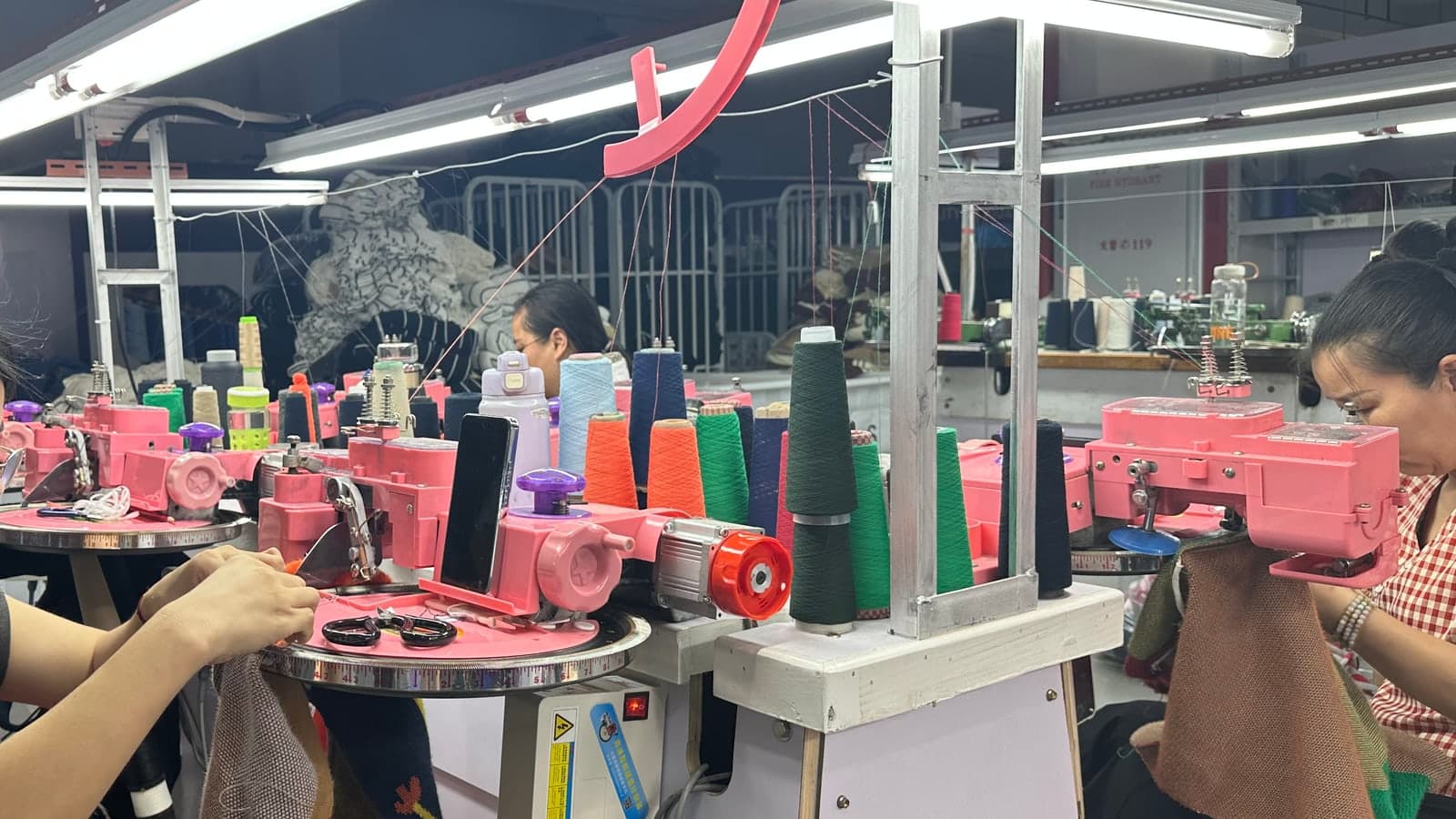
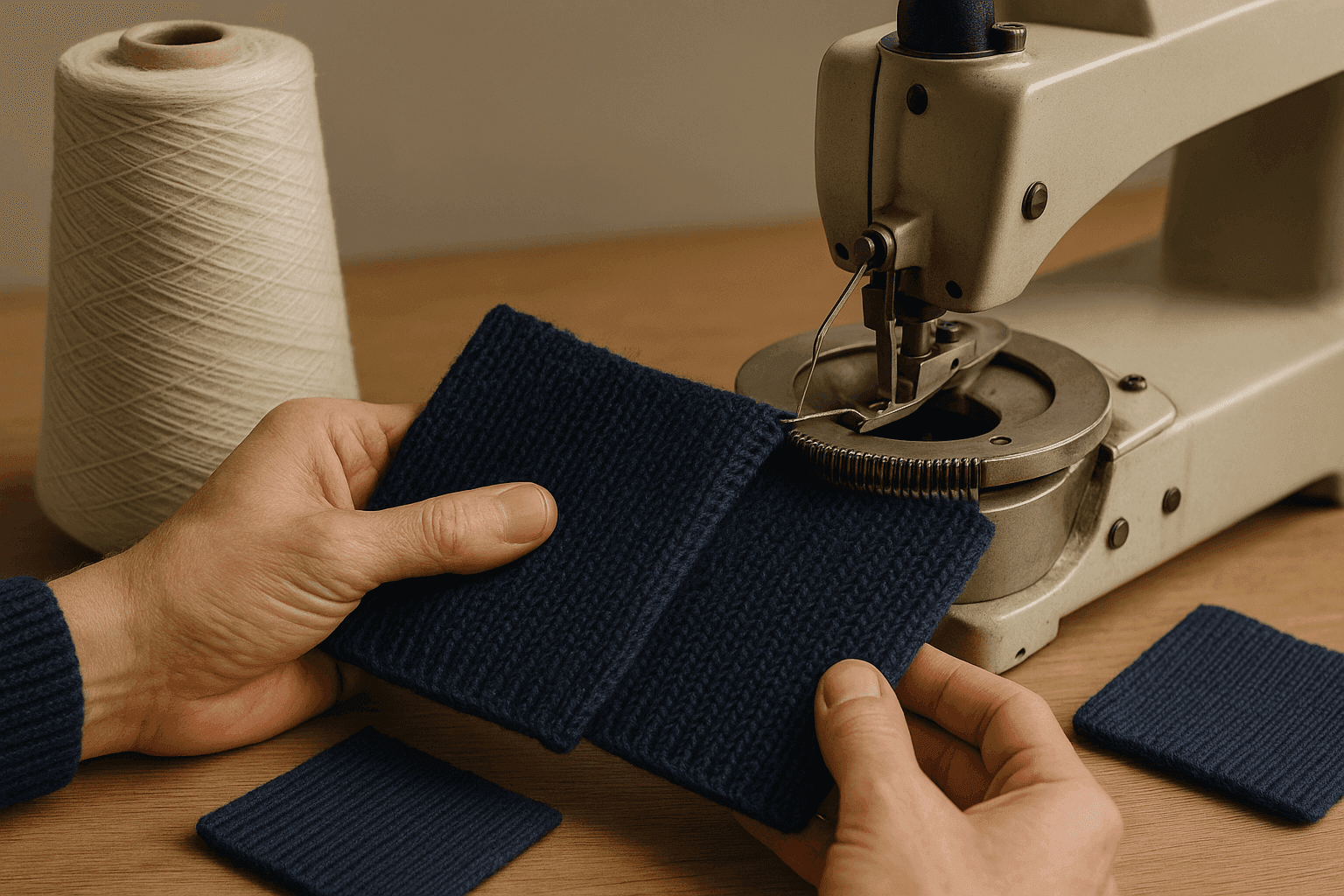
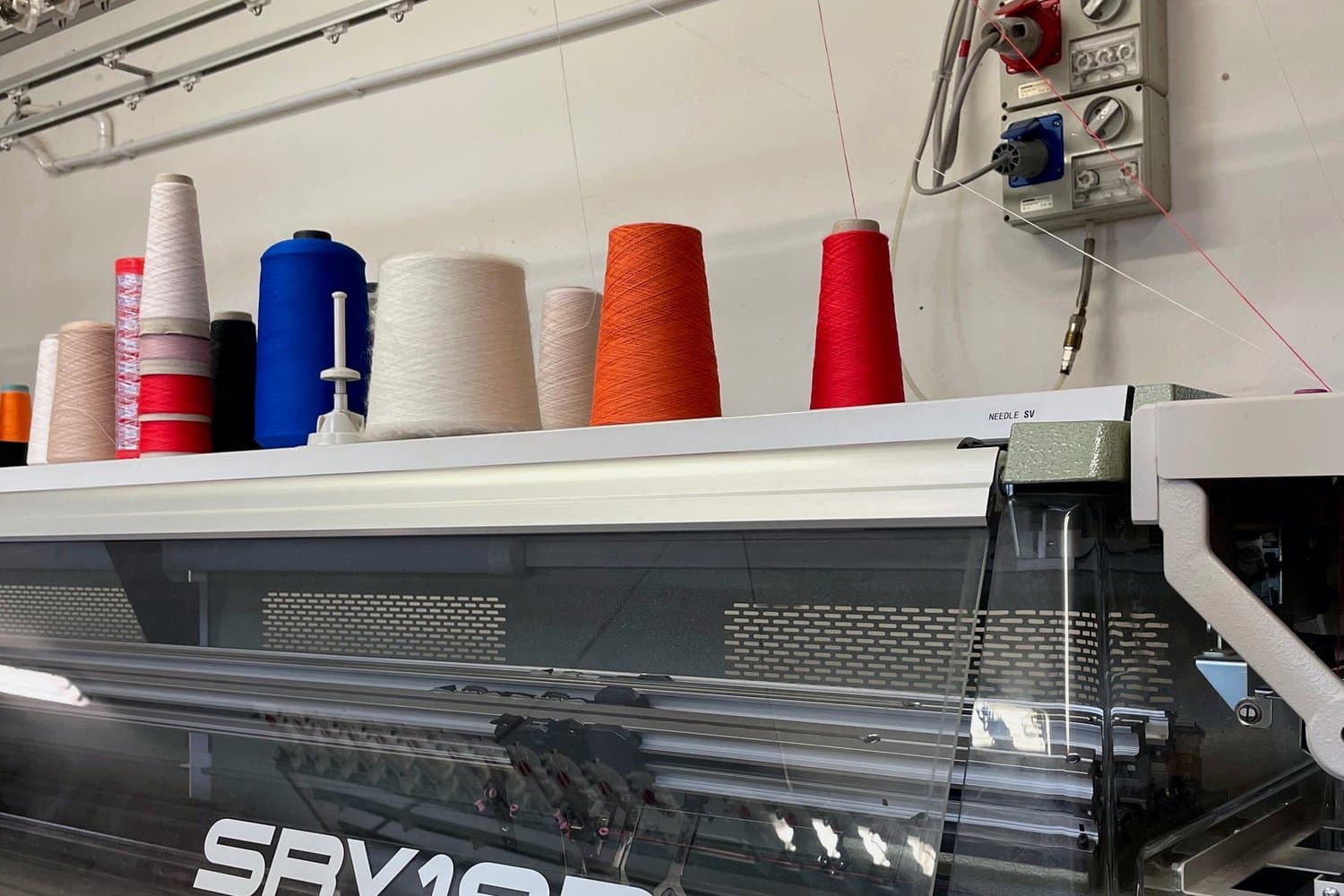
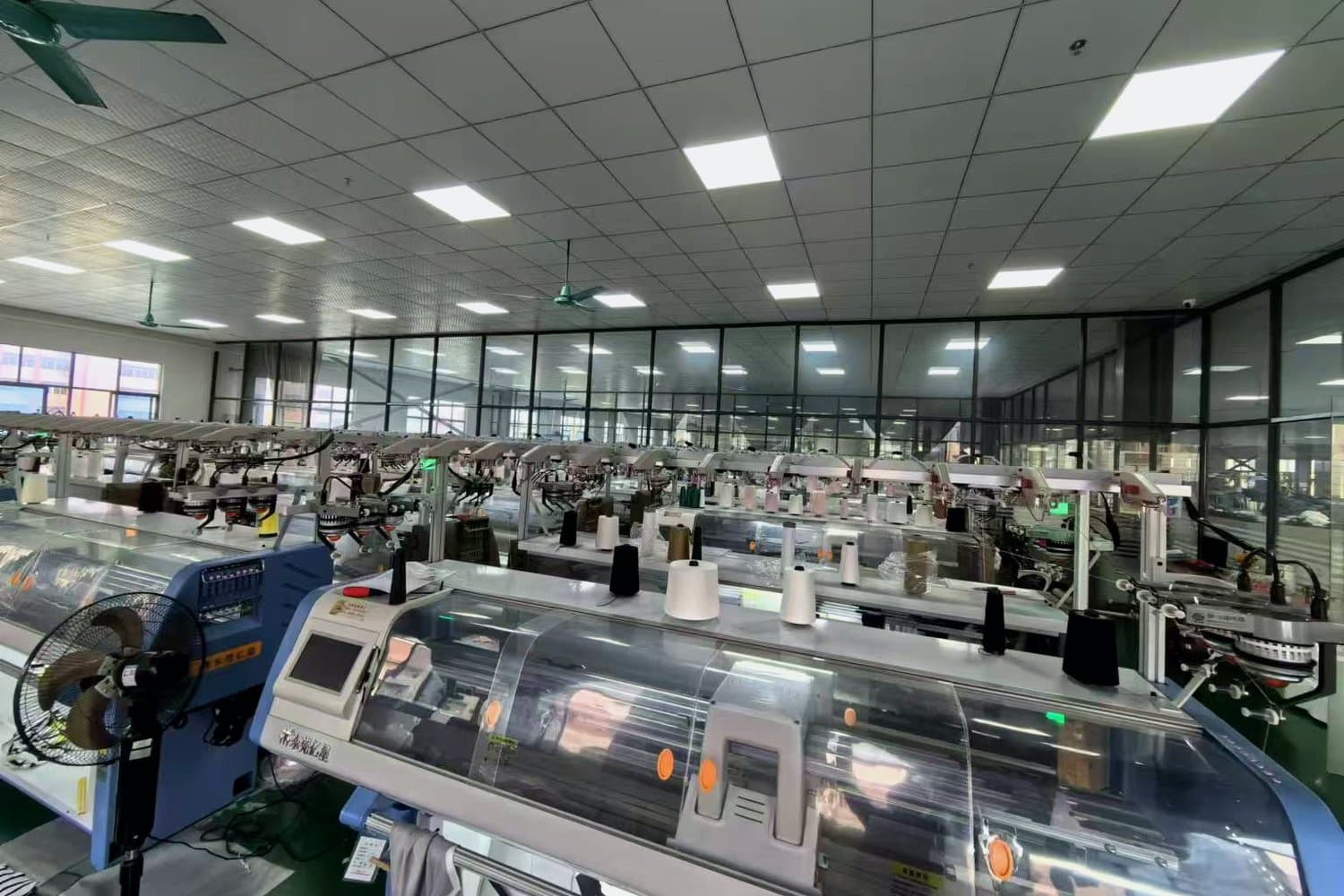
Eine Linking-Maschine ist ein kreisförmiges Bett aus Spitzen (kleine aufrecht stehende Nadeln), das auf eine bestimmte Feinheit ausgelegt ist – 7-Punkt, 12-Punkt, 14-Punkt. Der Bediener legt jede Masche von der Kante eines Paneels auf eine Spitze und anschließend die passende Masche des anderen Paneels auf dieselbe Spitze. Wenn die Maschine durchläuft, zieht eine Nadel der Reihe nach einen Faden Verbindungsgarn durch jedes Maschenpaar und erzeugt eine Kettenmasche, die strukturell mit dem Gestrick selbst identisch ist.
Das prägende Merkmal – und der Grund, warum Linking als eigenständiges Handwerk vom Nähen existiert: Die Naht wird Masche zu Masche, im Maschenlauf, ohne Garnschnitt und ohne Stoffüberlappung gebildet. Die beiden Paneele treffen sich an einer einzigen Kette aus Verbindungsgarn, die im Strickmuster verschwindet, wenn die Naht flach aufgeklappt wird.
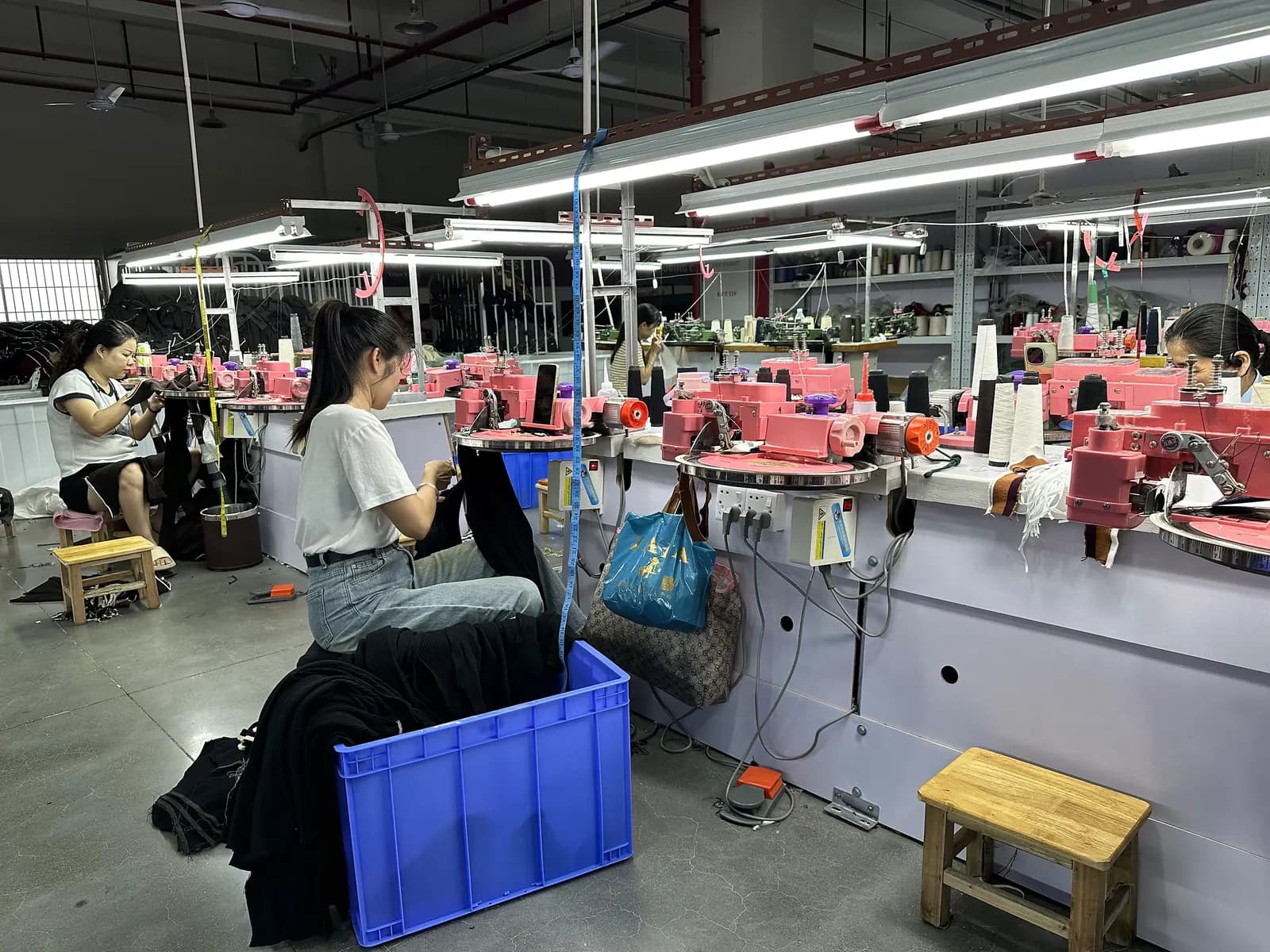
Was sich zwischen Hand-Linking und Maschinen-Linking unterscheidet, ist, wer die Maschen auf die Spitzen lädt. Beim Hand-Linking legt ein erfahrener Bediener jede Masche einzeln mit einem kleinen Haken auf – der Bediener ist sowohl der Engpass als auch die Qualitätskontrolle. Beim Maschinen-Linking werden die Paneele entlang einer Führung eingespeist, und der Lader hängt die Maschen in Gruppen ein – schneller, aber an unregelmäßigen Kanten etwas weniger präzise. Beide erzeugen eine echte gelinkte Naht. Overlock ist eine völlig andere Maschine und erzeugt eine andere Naht.
Die drei Linking-Verfahren im Vergleich
Die drei Linking-Verfahren im Vergleich
1. Voll-Nadel-Hand-Linking
Dies ist die Premium-Option und das einzige Verfahren, das eine echte Punkt-für-Punkt-Kette über die gesamte Nahtbreite liefert. Jede einzelne Masche von Paneel A trifft auf einer eigenen Spitze der Linking-Maschine auf die entsprechende Masche von Paneel B – eine Kante mit 60 Maschen erfordert 60 Platzierungen. Bei einem feinen Baumwoll-Crew können das 200 Platzierungen pro Halsbund sein.
Naht-Querschnitt. Eine einzelne Kette aus Verbindungsgarn, die durch gepaarte Maschen verläuft, kein Garnschnitt, keine Überlappung. Wenn Sie die Nahtzugabe auf der Innenseite aufklappen, ist die Nahtzugabe gleich null – es gibt keinen Garnlappen, nur die endende Maschensäule. Die Nahtrichtung folgt exakt dem Maschenlauf.
Sichtbares Qualitätssignal. Von außen ist die Verbindung bei einer farbgleichen Naht unsichtbar und erscheint bei einem Kontrast-Halsbund als eine einzelne saubere Masche. Von innen zeigt eine handgelinkte Schulter kein Volumen, keinen Grat, und das Rippmuster setzt sich über die Naht hinweg ununterbrochen fort.
Feinheits-Kompatibilität. Alle Feinheiten, 3GG bis 18GG. Dies ist das einzige Verfahren, das 12GG und 14GG aus feiner Baumwolle ohne Verzug bewältigt.
Kosten. Üblicher Branchenbereich 0,80–2,50 USD pro Kleidungsstück an Linking-Lohn, je nach Feinheit und Nahtlänge. Höhere Feinheit bedeutet mehr Maschen pro Zentimeter und mehr Zeit pro Naht.
Hier spezifizieren. Sichtbare Halsausschnitte (Crew, V-Ausschnitt, Mock, Rollkragen) bei Premium-Produkten; Bündchen und Bündchenabschlüsse bei feiner Feinheit; Schulternähte bei jedem als Premium positionierten Kleidungsstück; jede Naht bei Kaschmir, Merino oder feiner Baumwolle, bei der die Innenseite des Kleidungsstücks sichtbar ist.
Maschinen-Linking nutzt dieselbe Linking-Hardware, beschleunigt jedoch den Ladeschritt. Ein Bediener lädt die Maschen entlang einer Führung in Gruppen, statt jede einzeln von Hand zu platzieren. Das Ergebnis ist nach wie vor eine Masche-zu-Masche-Kette, aber die Ausrichtung von Masche zu Spitze ist an Kantenübergängen weniger perfekt, und die Kette überspringt gelegentlich eine Masche an unregelmäßigen, fully-fashioned-Rundungen.
Naht-Querschnitt. Eine Kette aus Verbindungsgarn durch gepaarte Maschen, dieselbe Struktur wie beim Hand-Linking, jedoch mit gelegentlichen Mikro-Unregelmäßigkeiten dort, wo die Platzierung des Laders nur näherungsweise war. Die Nahtzugabe ist nach wie vor praktisch null, mit einer leichten Verdickung dort, wo sich Maschen verdoppelt haben.
Sichtbares Qualitätssignal. Von außen unter normalen Betrachtungsbedingungen bei einer farbgleichen Naht nicht vom Hand-Linking zu unterscheiden. Im direkten Vergleich bei Kontrastfarbe kann man manchmal sehen, wie die Kette um den Bruchteil einer Masche aufreitet. Von innen wirkt die Naht gelinkt statt genäht, und das ist das Signal, auf das es den meisten Einkäufern ankommt.
Feinheits-Kompatibilität. 5GG bis 12GG problemlos. Wir führen kein Maschinen-Linking bei 14GG oder bei 3GG-Grobstrick durch, wo die Maschengröße das Gruppenladen unzuverlässig macht.
Kosten. Üblicher Branchenbereich 0,30–0,70 USD pro Kleidungsstück. Der Grund, warum die meisten Pullover im mittleren Marktsegment Maschinen-Linking verwenden, ist einfach – es bietet 80 % der optischen Qualität des Hand-Linkings bei einem Drittel des Lohns.
Hier spezifizieren. Standard-Produkte des mittleren Segments, bei denen die Innenseite nicht fotografiert wird. Körpernähte bei kommerziellen Strickwaren. Bündchen- und Saumverbindungen bei 7GG-12GG-Produkten, deren Feinheit nicht an den Extremen liegt. Schulternähte bei einem Produkt im Bereich von 15–25 USD FOB.
3. Overlock-genähte Naht (Cut-and-Sew-Stil)
Overlock ist kein Linking. Es ist eine Overlock-Naht – zwei oder drei Fäden, die die geschnittene Kante des Paneels mit einer Kettenmasche und einem Umschlingungsfaden umfassen, dieselbe Konstruktion wie bei Jersey-T-Shirts. Bei Strickwaren wird sie entweder verwendet, weil die Paneele aus einem größeren Rohling geschnitten wurden (Cut-and-Sew-Konstruktion), oder weil das Preisniveau des Einkäufers keinen Linking-Lohn tragen kann.
Naht-Querschnitt. Eine gefaltete Paneelkante plus ein Umschlingungsfaden, der beide Schnittkanten einfasst. Auf der Innenseite des Kleidungsstücks gibt es eine sichtbare Nahtzugabe von 3-5 mm. Der Umschlingungsfaden verläuft senkrecht zum Maschenlauf, nicht entlang davon.
Sichtbares Qualitätssignal. Von außen bei einer farbgleichen Naht bei 7GG und darunter beim normalen Tragen oft unsichtbar. Bei 12GG zeigt sie sich als leicht zusammengedrückter Grat entlang der Nahtlinie. Von innen unverkennbar overlock-genäht – gefaltete Kante, Umschlingungsfaden, und bei dunkleren Garnen ist der Kontrast des Overlock-Fadens gegen den Strickkörper sichtbar.
Feinheits-Kompatibilität. Mechanisch jede Feinheit, aber das optische Signal wird umso schlechter, je feiner die Feinheit wird. Wir empfehlen Overlock bei sichtbaren Nähten oberhalb von 7GG für kein als Premium positioniertes Produkt.
Kosten. Üblicher Branchenbereich 0,10–0,25 USD pro Kleidungsstück. Die günstigste Naht-Option.
Hier spezifizieren. Nur verdeckte Nähte – Armlochformung an Ärmeln, die von einem Futter verdeckt werden, Taschenbeutel-Verbindungen, interne Nähte, die der Kunde nicht sieht. Einstiegsprodukte, bei denen das Preisniveau keinen Linking-Lohn tragen kann und die Innenseite nicht geprüft wird.
Sichtbare Halsausschnitte, Bündchen, Schultern bei Premium; alle Nähte bei feiner Feinheit
Körpernähte im mittleren Segment; Standard 7GG-12GG
Verdeckte Nähte; Value-Einstiegsprodukt
Premium-Signal
Stark
Mittel
Keines
Die angegebenen Kostenbereiche sind typische Branchen-Lohnwerte, kein Angebot von Licheng – der tatsächliche Linking-Lohn pro Kleidungsstück hängt von Nahtlänge, Feinheit, Garnverhalten und Farbe ab und wird in unseren Angeboten als eigene Position ausgewiesen.
So formulieren Sie die Linking-Spezifikation auf Ihrem Techpack
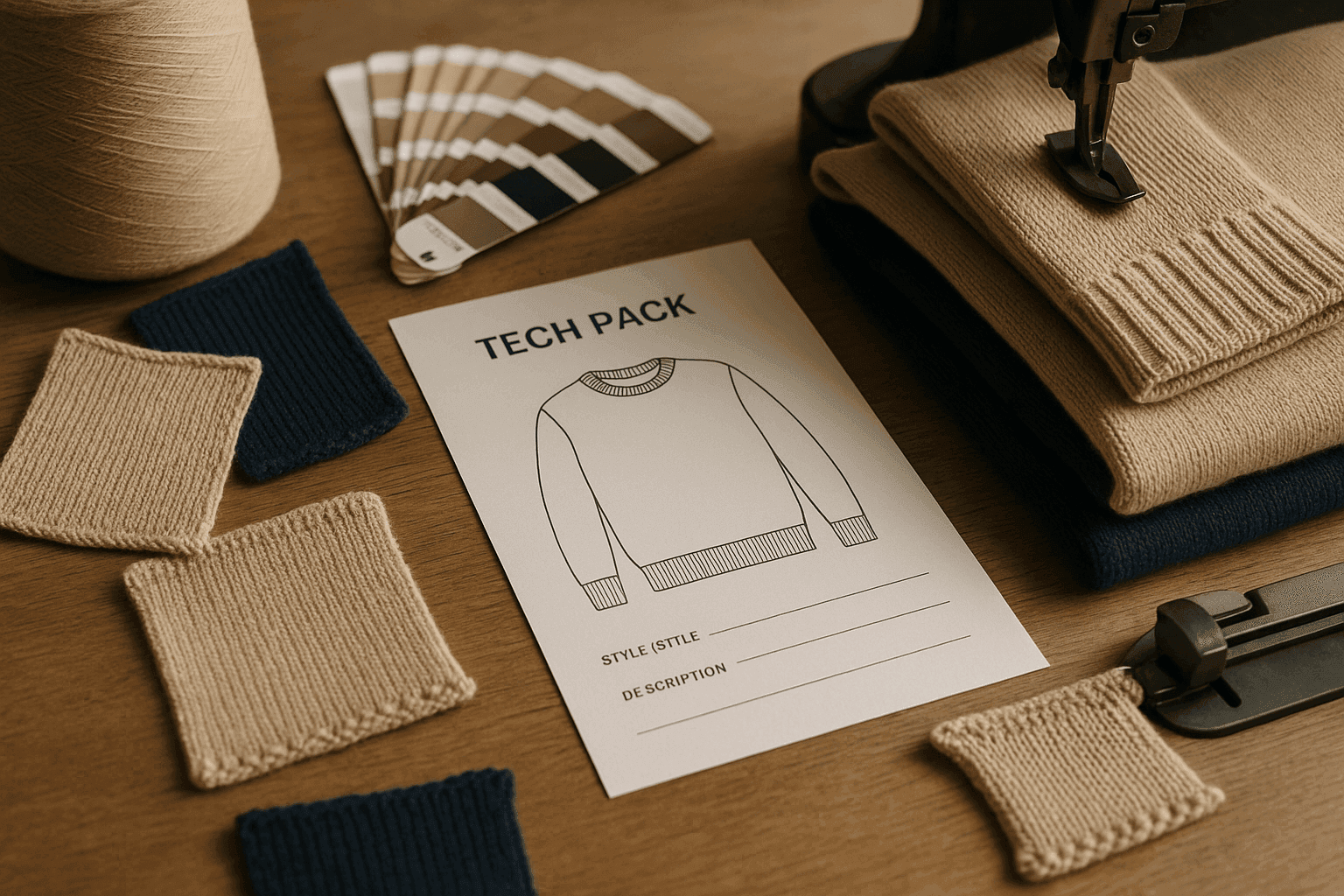
Der häufigste Fehler bei einem Premium-Techpack besteht darin, "Linking" einmal oben auf dem Konstruktionsblatt zu schreiben und es der Fabrik zu überlassen, es einheitlich anzuwenden. In der Praxis hat jeder Pullover mehrere Nähte, und diese erfordern oft unterschiedliche Verfahren. Die saubere Art, es zu schreiben:
Halsbund an Körper: explizit nach Verfahren benennen – "Voll-Nadel-Hand-Linking, passendes Garn."
Schulternaht: Hand- oder Maschinen-Linking angeben und "im Maschenlauf" ergänzen, damit die Fabrik kein flach aufgenähtes Schulterband einsetzt.
Seitennähte und Unterarm: bei fully-fashioned-Produkten Linking angeben. Bei Cut-and-Sew-Produkten ist Overlock akzeptabel, und die Spezifikation sollte dies so festhalten.
Bündchen und Bündchenabschluss: Wenn die Rippe separat gestrickt und angesetzt wird, ist dies eine Linking-Naht – Hand für Premium, Maschine für das mittlere Segment angeben.
Interne/verdeckte Nähte (Taschenbeutel, Futterbefestigung): Overlock ist angemessen.
Bei feinem, als Premium-Menswear positioniertem Produkt empfehlen wir Hand-Linking an den vier sichtbaren Nähten (Halsbund, beide Schultern, optional Bündchen) und Maschinen-Linking am Körper. Hier ist das Verhältnis von Kosten zu Signal am besten – der Einkäufer sieht und ertastet die handgelinkten Nähte, und die maschinengelinkten Körpernähte sind bei einer normalen Prüfung unsichtbar.
Was Sie die Fabrik in der Musterphase fragen sollten
Das Muster ist der Moment, in dem die Linking-Spezifikation eingehalten oder stillschweigend herabgestuft wird. Drei Dinge sind zu prüfen:
Erstens: Fordern Sie während des Musterns ein beschriftetes Naht-Querschnittsfoto von Halsbund und Schulter an. Wir stellen dies auf Anfrage bereit – eine seitliche Makroaufnahme der Naht, nachdem der Pullover 24 Stunden lang von der Maschine genommen wurde, damit sich das Garn entspannt hat. Handgelinkte Nähte erscheinen auf dem Foto als einzelne Kette entlang des Maschenlaufs; Overlock erscheint als gefaltete Kante mit Umschlingungsfaden.
Zweitens: Betrachten Sie in der Musterphase die Innenseite des Halsbunds und die Innenseite der Schulternaht. Der Halsbund sollte ohne dicken Grat, der gegen die Wange drückt, über den Kopf gleiten. Die Schulternaht sollte flach am Trapezmuskel anliegen, ohne dass eine Leiter aus Umschlingungsfaden sichtbar ist.
Drittens: Lassen Sie sich schriftlich bestätigen, welches Verfahren in der Serie verwendet wird. Ein häufiges Szenario ist, dass ein Muster handgelinkt wird, um die Freigabe zu gewinnen, und die Serie auf Maschinen-Linking umschwenkt, um den kalkulierten FOB zu treffen. Das ist nicht zwangsläufig falsch – Maschinen-Linking bei 7GG kann eine völlig vernünftige Produktionsentscheidung sein –, aber der Einkäufer sollte wissen, dass es geschieht.
Wo Licheng beim Linking steht
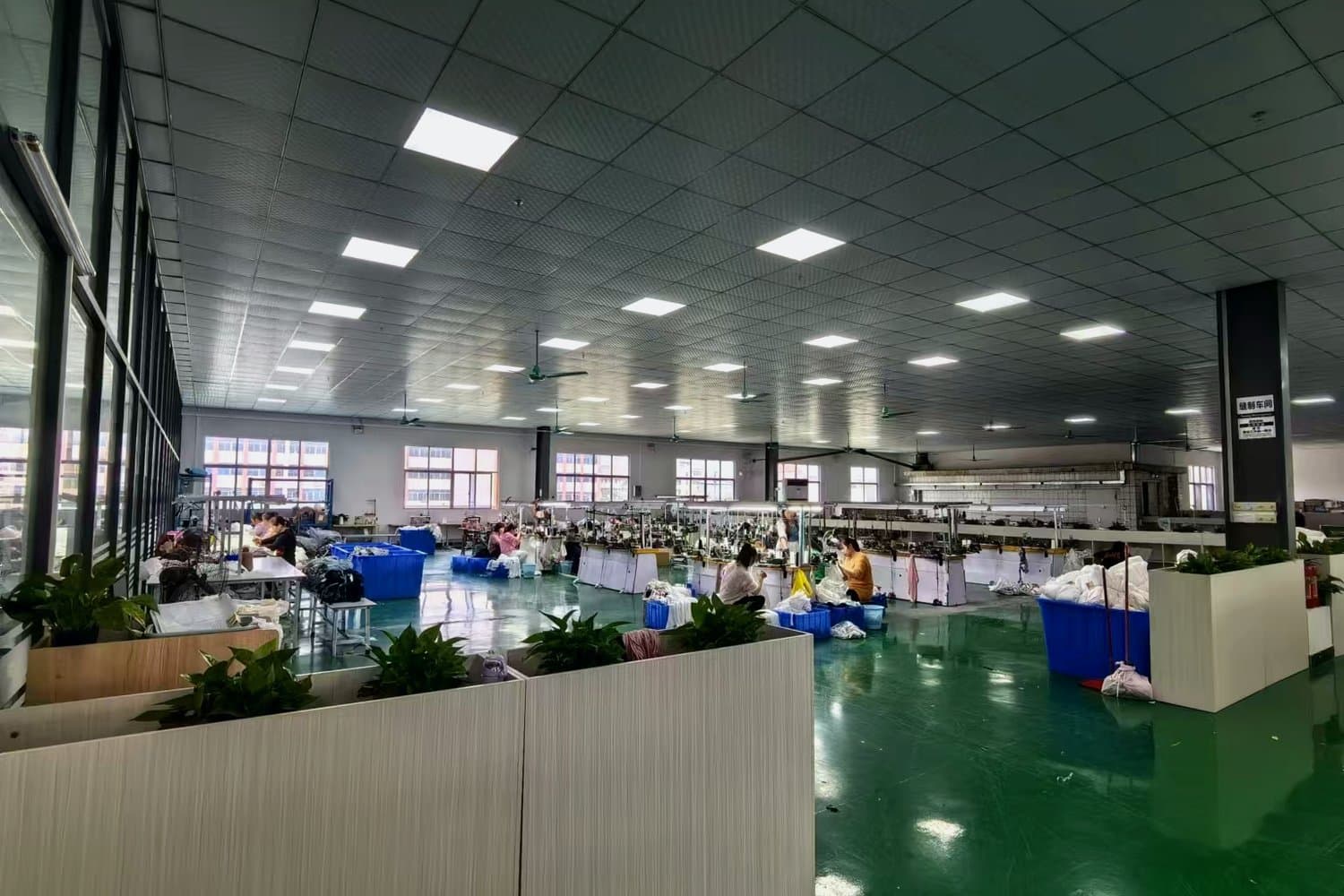
Wir betreiben in unserem Werk in Dongguan sowohl Hand- als auch Maschinen-Linking-Maschinen und leiten die Arbeit jeweils dem Verfahren zu, das zur Spezifikation passt. Unser Feinheitsbereich von 3GG-18GG deckt alles ab – von Grobstrick-Zopfmustern (bei denen 3GG-Hand-Linking erforderlich ist) bis hin zu 14GG-Feinbaumwoll-Polos (bei denen 14GG-Hand-Linking wiederum die einzige Option ist, die einen sauberen Halsbund erzeugt). Für 5GG-12GG-Produkte, die den Großteil des Pullovervolumens im Menswear-Bereich ausmachen, sind sowohl Hand- als auch Maschinen-Linking verfügbar, und wir kalkulieren beide Varianten, wenn der Einkäufer Preisniveaus vergleicht.
Ein häufiges Muster, das wir bei Premium-Menswear-Designern sehen, ist ein Techpack, das Hand-Linking am Halsbund, an beiden Schultern und an den Bündchen sowie Maschinen-Linking am Körper vorgibt – diese Kombination verleiht der Innenseite des Kleidungsstücks das Signal, das ein Premium-Einkäufer erwartet, und hält den FOB dabei im Band von 18–28 USD, in dem die meiste unabhängige Menswear angesiedelt ist. Außerdem weisen wir den Linking-Lohn pro Kleidungsstück als separate Position in Angeboten aus, damit der Einkäufer die Kosten der Spezifikation sehen und vor der Freigabe anpassen kann.
Linking ist außerdem eine der Nähte, bei denen sich AQL-Inspektionsbefunde häufen – offene Maschen, fallengelassene Maschen am Kettenbeginn oder ersatzweise Overlock bei einer Hand-Linking-Spezifikation. Wir beziehen Linking gezielt in unsere Stichprobenprüfung vor dem Versand ein und benennen jede Abweichung von der freigegebenen Spezifikation, bevor die Ware die Fabrik verlässt.
Abschließende Anmerkung
Abschließende Anmerkung
Die Linking-Spezifikation ist eine der günstigsten Techpack-Änderungen, die ein Designer vornehmen kann und die einen Pullover im Auge des Einkäufers tatsächlich zwischen Preisklassen verschiebt. Hand-Linking an den sichtbaren Nähten eines Premium-Produkts vorzugeben, fügt 1-2 USD FOB-Lohn hinzu und verändert, wie die Innenseite des Kleidungsstücks bei der ersten Prüfung wirkt. Overlock bei einem als Premium positionierten Pullover vorzugeben, spart 1 USD und verrät jedem Einkäufer, der den Halsbund umschlägt, die tatsächliche Klasse des Produkts. Das Verfahren ist die Botschaft – stellen Sie sicher, dass die Spezifikation auf dem Techpack mit der Botschaft übereinstimmt, die die Naht senden soll.
---
Sprechen Sie mit unserem Team darüber
Wenn Sie ein echtes Projekt rund um einen der oben genannten Punkte planen, werfen wir gerne einen kurzen Blick darauf. Senden Sie uns ein kurzes Briefing, und wir melden uns innerhalb eines Werktages mit einer praktischen Richtung, einer Schätzung zu MOQ + Lieferzeit und – falls sinnvoll – einem Musterplan.
An einer farbgleichen Naht unter normaler Betrachtung sehen handgelinkte und maschinengelinkte Nähte von außen nahezu identisch aus. Der Unterschied zeigt sich auf der Innenseite des Kleidungsstücks bei genauer Inspektion, an kontrastfarbigen Halsbündchen, wo der Kettenstich sichtbar ist, und an fein-Gauge-Stoff (12GG und darüber), wo Hand-Linking die Maschenausrichtung präziser hält. Overlock ist immer optisch von beiden Linking-Methoden zu unterscheiden, aufgrund der gefalteten Kante und des umwickelnden Fadens.
Typische Branchen-Linking-Arbeit fällt in den Bereich von 0,10–0,25 USD pro Kleidungsstück für Overlock, 0,30–0,70 USD für Maschinen-Linking und 0,80–2,50 USD für vollständiges Hand-Linking, in USD FOB China. Der Wert hängt von Gauge, Nahtlänge, Garnverhalten und davon ab, wie viele Nähte gelinkt werden. Wir weisen Linking als eigene Zeile in Angeboten aus, damit Einkäufer die Kosten der Spezifikation sehen können.
An internen verdeckten Nähten — Taschenbeutel, Futterbefestigung, Ärmelformung unter einem Jackenfutter — ist Overlock in Ordnung und die Standardwahl. An sichtbaren Nähten eines Premium-positionierten Produkts (Halsbündchen, Schulter, Manschette) empfehlen wir Overlock nicht, weil sich die Naht als Cut-and-Sew-Konstruktion liest und der Premium-Positionierung widerspricht, die der Rest des Kleidungsstücks zu signalisieren versucht.
Wir betreiben Maschinen-Linking komfortabel von 5GG bis 12GG. Bei 3GG-grob sind die Maschen zu groß und unregelmäßig, als dass der Lader sie zuverlässig einführen könnte, und bei 14GG sind die Maschen zu klein für das Standard-Linking-Setup. Für beide Enden des Gauge-Bereichs leiten wir die Arbeit stattdessen an Hand-Linking weiter.
Spezifizieren Sie die Methode explizit pro Naht, nicht als einzelne Zeile oben auf der Konstruktionsseite. Schreiben Sie "Halsbündchen an Körper: Full-Needle-Hand-Linking, passendes Garn" und "Schulternaht: handgelinkt im Fadenlauf" anstatt nur "Linking". Fordern Sie während des Musterns eine beschriftete Naht-Querschnittsfotografie an und bestätigen Sie schriftlich, welche Methode in der Massenproduktion verwendet wird. Wir dokumentieren die vereinbarte Methode im Produktionsauftrag, damit sie nicht stillschweigend substituiert werden kann.
Wir konzentrieren uns auf Herrenpullover, Cardigans, Strickjacken, Jacquard-Strickwaren und Private-Label-Strickwaren. Wir unterstützen B2B-Käufer bei OEM/ODM-Entwicklung, Mustererstellung und Serienproduktionsplanung.
MOQ, Lieferzeiten, Kostenspannen, Feinheitenwahl und Qualitätsprüfpunkte typischer OEM/ODM-Strickprogramme für Nordamerika und Europa. E-Mail eintragen — den Link schicken wir in 30 Sekunden.
Kein Spam. Abmeldung mit einer einzigen Antwort. Wir nutzen Ihre E-Mail ausschließlich, um Ihnen den Report zu senden und auf Wunsch das Sourcing-Gespräch fortzusetzen.
Die gezeigten Marken sind zuvor betreute OEM/ODM-Partner. Die Logos sind dekorativ und bedeuten keine aktuelle Empfehlung.