7GG vs 12GG vs 14GG Knitwear: A Side-by-Side Cost and Hand-Feel Comparison
Aktualisiert 4.6.202612 min readLicheng Knitwear Team
Choosing between 7GG, 12GG and 14GG is one of the first technical decisions a product developer makes for an SS collection, and it quietly drives weight, drape, cost and lead time for the rest of the program. At Licheng we build sweaters across 3GG to 14GG out of Dongguan, and the gauges most SS developers debate are 7GG (mid-fine, the workhorse), 12GG (refined, polo-and-fine-knit territory) and 14GG (the finest commercial gauge we run, very close to jersey hand). This guide puts the three side by side: stitches per inch, typical garment weight, compatible yarn counts, knit time per piece, finishing complexity, hand-feel character, season fit, a typical industry cost index, the product types each gauge suits, the buyer markets where they sell, and the sampling and bulk lead-time deltas you should expect. The intent is practical — read the table, pick the gauge that matches your retail price and hand-feel target, and brief your factory with confidence.
1. Überblick
Choosing between 7GG, 12GG and 14GG is one of the first technical decisions a product developer makes for an SS collection, and it quietly drives weight, drape, cost and lead time for the rest of the program. At Licheng we build sweaters across 3GG to 14GG out of Dongguan, and the gauges most SS developers debate are 7GG (mid-fine, the workhorse), 12GG (refined, polo-and-fine-knit territory) and 14GG (the finest commercial gauge we run, very close to jersey hand). This guide puts the three side by side: stitches per inch, typical garment weight, compatible yarn counts, knit time per piece, finishing complexity, hand-feel character, season fit, a typical industry cost index, the product types each gauge suits, the buyer markets where they sell, and the sampling and bulk lead-time deltas you should expect. The intent is practical — read the table, pick the gauge that matches your retail price and hand-feel target, and brief your factory with confidence. This guide walks you through the manufacturing journey with Licheng Knitwear.
Buyer Guide Content
Gauge is the most consequential decision a product developer makes for a Spring/Summer knit, and it is usually made too fast. By the time the tech pack lands, the choice between 7GG, 12GG and 14GG has already set the weight, the drape, the yarn options, the price band and roughly the calendar. We see this from the factory side every day — a brief asking for "a fine knit polo at $14 FOB, ship in five weeks" is really three different briefs depending on the gauge, and only one of those briefs is buildable.
This comparison is written from Licheng's bench. We are a Dongguan-based custom knitwear manufacturer running 3GG to 14GG, founded in 2018, with 7GG, 12GG and (selectively) 14GG covering most of the SS work that crosses our floor. We will keep numbers honest: cost percentages are typical industry ranges, not exact promises, and lead-time deltas are what we plan against for an averagely complex SS sweater, polo or fine-knit pullover. Use the body sections to understand the reasoning, then use the table at the end to brief your team in one screen.
What Gauge Actually Means On The Machine
💬 Sourcing this for an upcoming project? · MOQ 30 pcs · Sample in 7–15 days ·
Bereit, Ihr Projekt zu starten?
Fordern Sie einen Katalog an oder senden Sie heute eine Anfrage. Unser Team antwortet innerhalb von 24 Stunden.
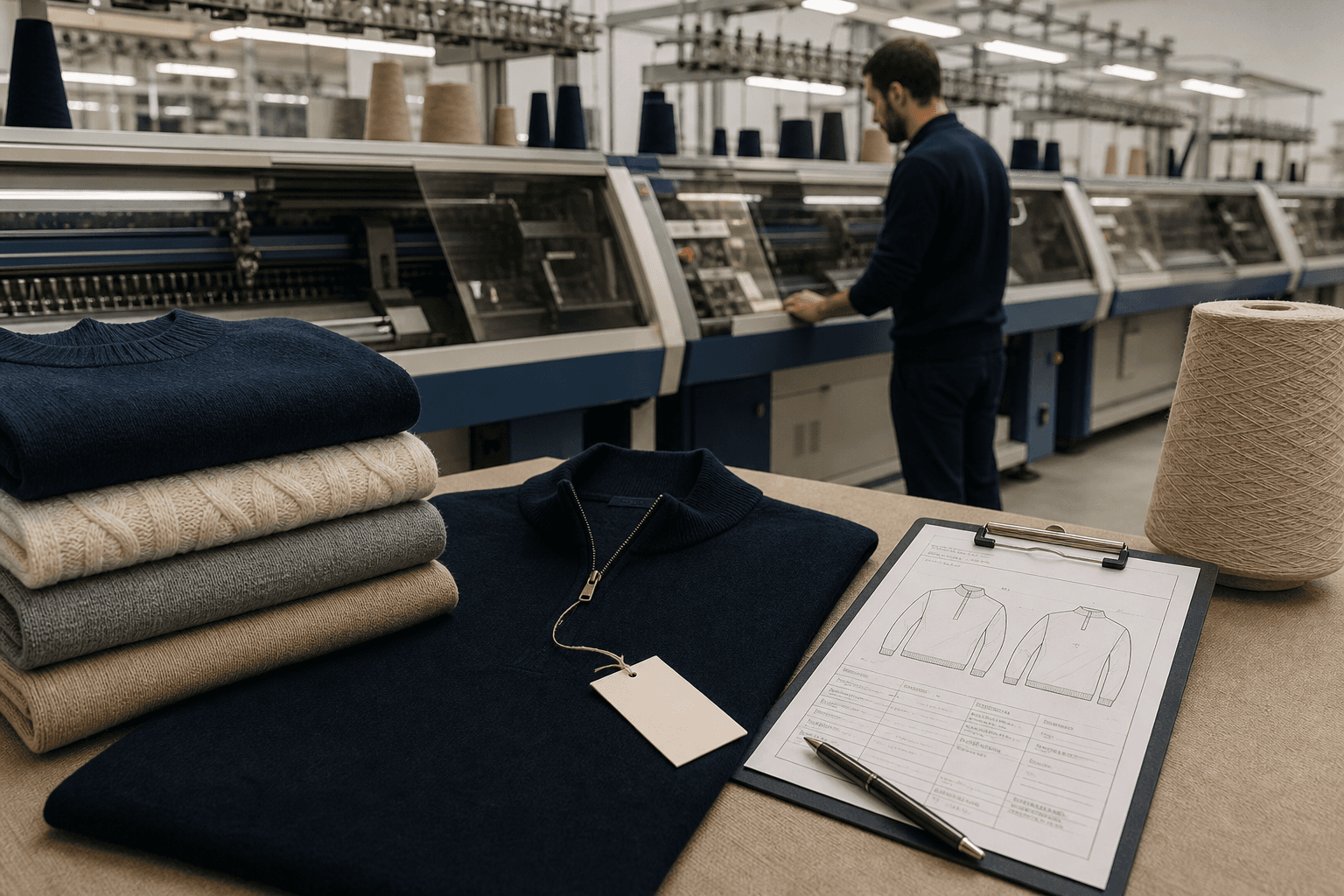
Gauge (GG, "German gauge") counts the number of needles per English inch on a flat knitting machine. 7GG means seven needles per inch, 12GG means twelve, 14GG means fourteen. More needles in the same inch means finer, denser fabric — but it also means a thinner yarn must be used (the needles cannot accept a yarn thicker than their channel), more passes to cover the same garment area, and tighter tolerances at every downstream step: linking, washing, pressing, measuring.
For SS work, this is exactly the trade you are making. You move down from 7GG toward 14GG to chase a lighter, smoother, more shirt-like hand. You pay for it in yarn cost (finer yarn is more expensive per kilogram), knit time (more rows for the same panel) and quality risk (defects are harder to hide). For a buyer planning a season, the cleanest mental model is: 7GG is the workhorse mid-fine, 12GG is the refined fine-gauge default, 14GG is the premium finest commercial gauge.
Stitch Density And Garment Weight
The most useful single number for an SS developer is fabric weight in grams per square metre, because it ties directly to perceived weight on body and to freight cost.
7GG typically lands around 280–360 g/m² for a plain jersey body in a standard SS yarn (2/30 to 2/48 Nm cotton or cotton blend). A 7GG men's crew neck in size M usually weighs 380–460 g finished.
12GG typically lands around 220–300 g/m², with the same M crew sitting around 300–380 g finished.
14GG sits around 180–260 g/m² depending on yarn and structure. A men's polo can come in under 280 g — close to a heavyweight cotton tee.
These are envelopes, not promises. Structure changes them: a 7GG rib or cable can climb past 400 g/m², and a 14GG open-stitch summer pullover can drop below 180 g/m². But for planning, the three ranges above are reliable.
Yarn Count Compatibility
Yarn count determines what you can run on each gauge, which in turn determines hand-feel, surface and cost. Counts here are metric (Nm) and are the most common SS pairings we see.
7GG is happy with 2/16 to 2/30 Nm. Single-ply 1/8 to 1/16 Nm works for chunkier looks. This is the gauge where mid-weight cotton, linen blends, cotton-acrylic and mid-weight wool blends sit naturally.
12GG typically runs 2/30 to 2/48 Nm cotton, 2/48 to 2/60 Nm wool blends, mercerised cotton, viscose blends and the finer linen-cottons. This is where most modern fine polos and lightweight crews live.
14GG demands 2/48 to 2/60 Nm and finer — 2/72 and 2/80 are routine in cotton, mercerised cotton and silk blends. Premium yarns (extra-fine merino, Supima, silk-cotton) earn their reputation here because the fabric is fine enough to feel them.
A practical rule: if your yarn lab dip has been built for a heavier count, do not assume it carries up to 14GG. The same fibre at a finer count looks and feels different.
Knit Time Per Piece And Finishing Complexity
Knit time per piece is rarely on a tech pack but it is half the cost equation. Finer gauges need more rows to build the same garment, so per-panel machine time grows.
7GG is the fastest. A standard men's body panel typically knits in 25–40 minutes on a single computerised flat machine.
12GG typically runs 40–70 minutes per body panel for the same geometry.
14GG typically runs 60–110 minutes per body panel, and the yarn breakage risk is higher, so the operator monitors the machine more closely.
Finishing scales with gauge too. Linking — joining the panels needle-by-needle on a linking machine — is per-stitch work, so a 14GG linker handles roughly twice the stitches per inch a 7GG linker does for the same seam. Pressing is more delicate: heavy steam on a 14GG cotton will glaze the surface if the operator is not careful. Measurement tolerance tightens: a ±1 cm allowance that feels generous on a 7GG chunky crew is roughly half a stitch on a 14GG fine polo, so a more skilled QC step is needed.
Hand-Feel Character
Hand-feel is subjective but predictable across gauges.
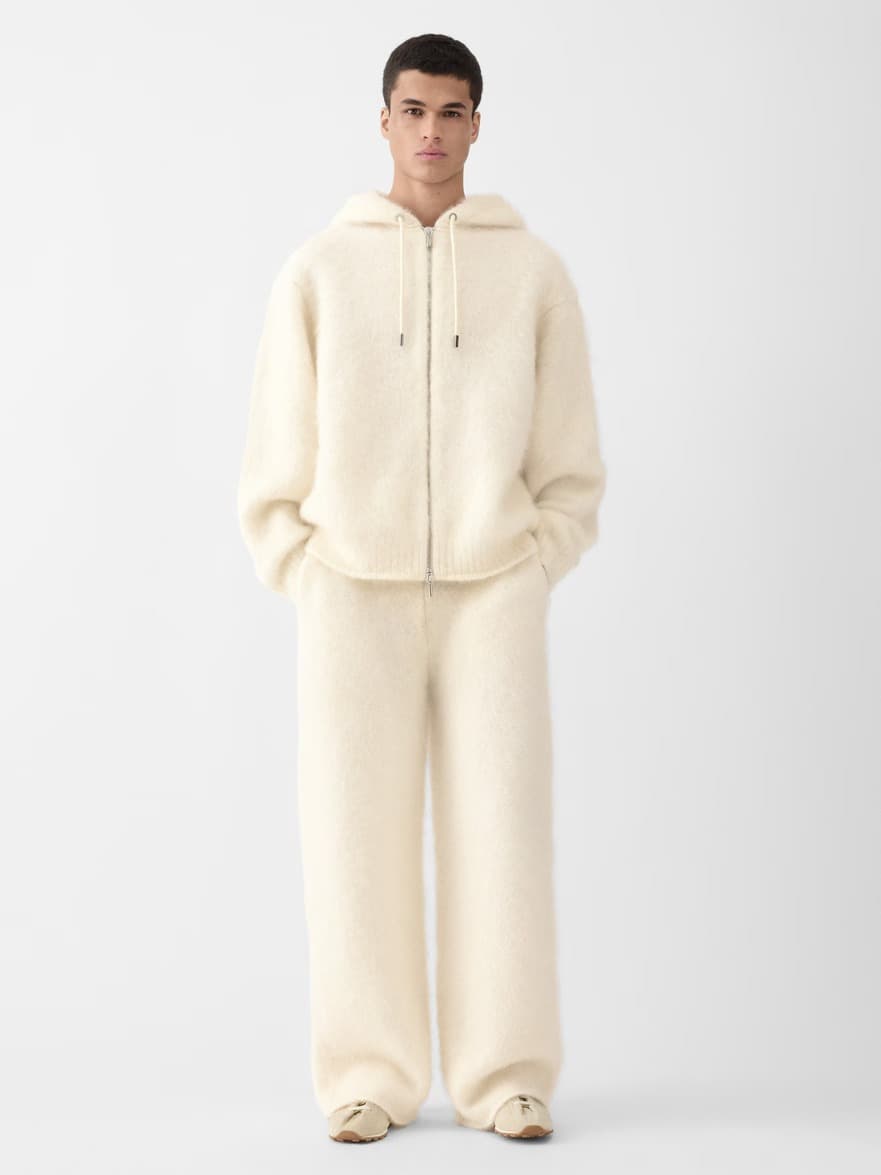
7GG reads as a classic mid-fine sweater. Visible stitches, comfortable weight, some structure. In SS it is the gauge for a casual cotton crew, a textured stitch, a relaxed cardigan. It hangs with body rather than draping.
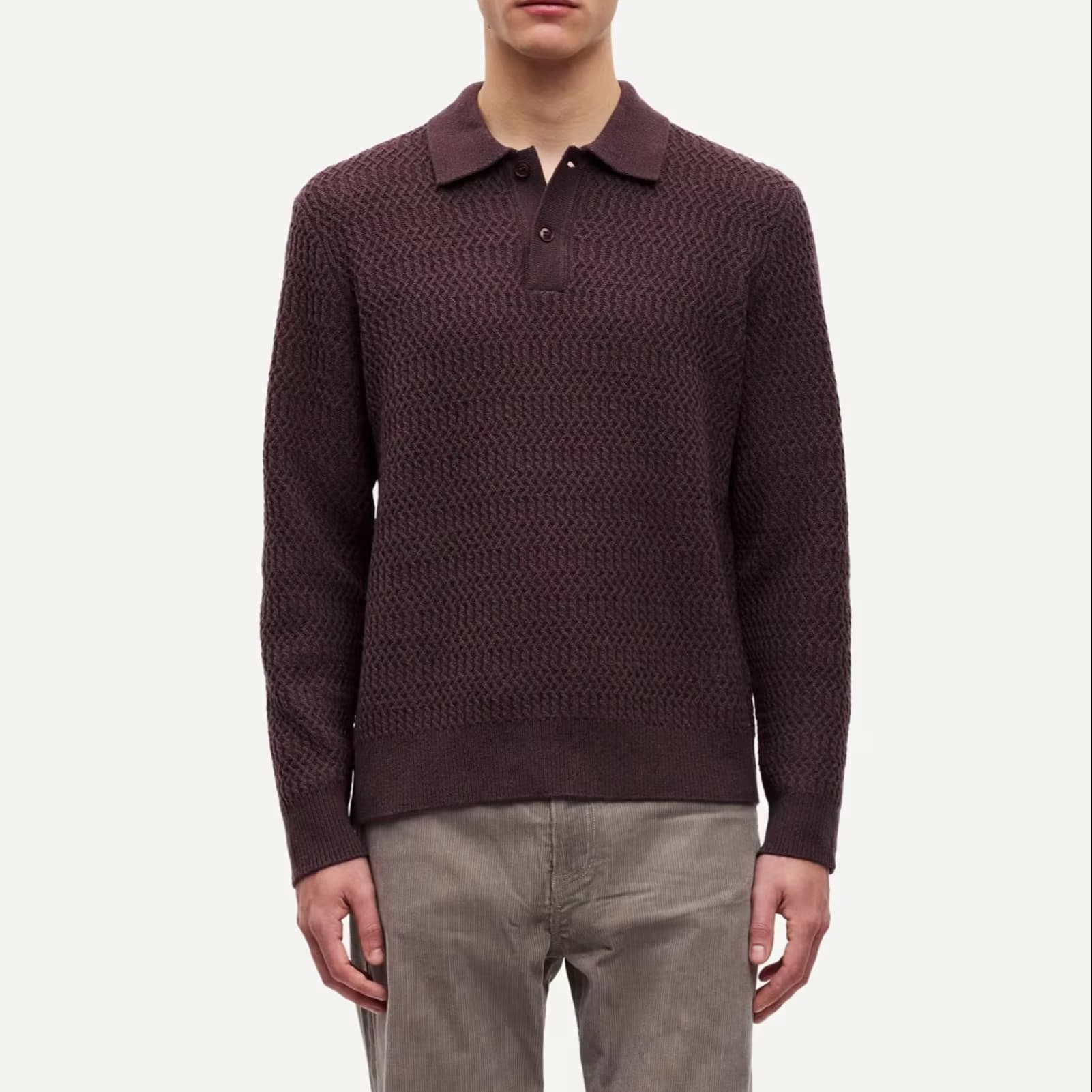
12GG reads as refined and considered. Stitches are visible at arm's length but smooth at body distance, hand-feel is cool and clean, drape is closer to a woven shirt. This is the SS polo and fine pullover gauge.
14GG reads closer to jersey. From a metre away, customers often cannot tell it is a sweater rather than a luxury knit tee or a fine-merino base layer. The hand is smooth, the surface is even, the drape is fluid.
Moving from 7GG to 14GG is moving from "sweater" to "fine knit" as a product category in the buyer's mind.
Season Fit And Product Types
For an SS collection picking one gauge as the spine, the choices are clear:
1. 7GG For Casual Spring And Mid-Season Pieces
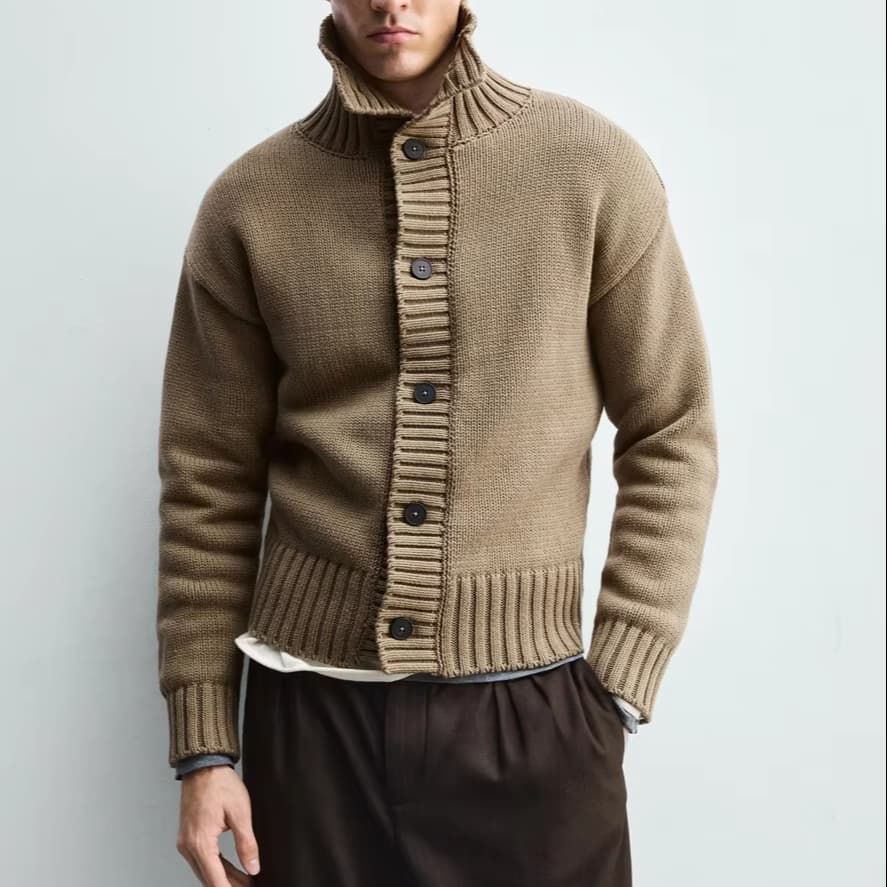
7GG carries the weight of a casual SS knit — a textured cotton crew, a waffle stitch, a relaxed shawl-collar cardigan, a chunkier knit polo. It works for early spring when the customer still wants some structure, and for layering pieces. It is also the easiest gauge to develop in: yarn options are broad, lead times are shorter, sampling is forgiving.
2. 12GG For Fine-Knit Polos And Lightweight Crews
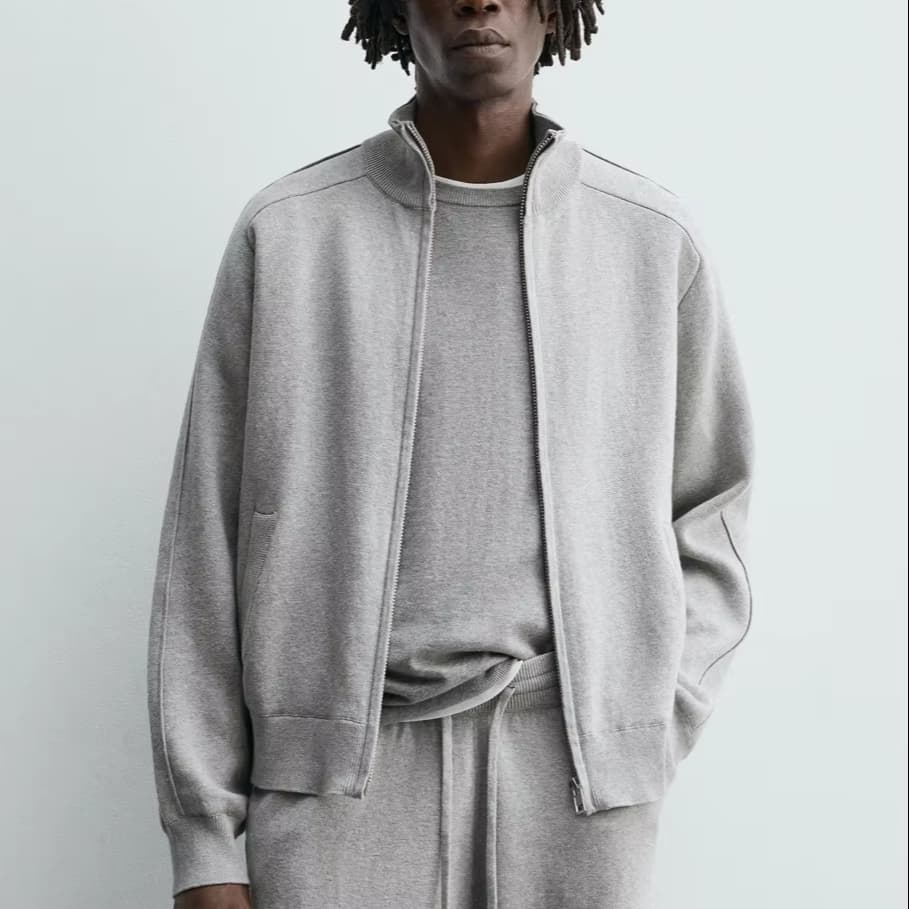
12GG is where most modern "fine-knit polo" briefs land. It also covers lightweight crew necks, mock necks and zip-collars positioned at premium retail. If you only pick one fine gauge for SS, this is it: refined enough to read premium, robust enough to ship on a reasonable calendar at a reasonable cost.
3. 14GG For Premium SS Anchors
14GG is the finest commercial gauge we routinely build, and it suits brands selling a small number of premium-anchor SS pieces — a featherweight crew, a knit T-shirt, a knit shirt-substitute, a silk-blend pullover. We do not recommend 14GG for a brand's first SS knit program. It is gauge for a brand that already understands its quality and return expectations.
Buyer Markets Where Each Gauge Sells
These are Licheng's observed patterns with the buyers we work with, not global statistics.
7GG sells broadly across all our markets — US, Canada, Germany, UK, France, Spain, Netherlands, Sweden — because the price-to-perceived-value ratio is strong.
12GG indexes a little higher in Western Europe (Germany, France, Netherlands, Sweden) and in US premium-casual brands where the fine-polo direction has held.
14GG is concentrated with premium menswear and luxury-adjacent brands across Europe, plus a small number of US and Canadian boutiques.
If your SS program targets mass-premium European retail, 12GG is usually the strategic centre with 7GG as the lower-price flanker. If you target premium-only at higher price points, 14GG plus 12GG makes more sense than 7GG plus 12GG.
Sampling And Bulk Lead-Time Deltas
We plan against the following deltas for an averagely complex SS sweater, polo or pullover, including yarn that is in stock or quick-ship.
Sampling. 7GG typically samples in 7–12 days. 12GG typically sits at 10–18 days. 14GG typically sits at 14–25 days. The deltas come from yarn lead time (finer yarn is more often dyed-to-order), longer knit time per piece, and the higher chance of a second revision because tolerances are tighter.
Bulk. Our normal bulk window across gauges is 30–45 days. 7GG sits comfortably at the lower end, 12GG sits mid-range, 14GG sits at the upper end. If your launch calendar is fixed, the gauge choice can move the start date back by a working week.
The 7GG vs 12GG vs 14GG Comparison Table
Attribute
7GG
12GG
14GG
Stitches per inch (across)
~7 wales/in, ~9–11 courses/in
~12 wales/in, ~15–18 courses/in
~14 wales/in, ~18–22 courses/in
Typical garment weight (plain body)
280–360 g/m²
220–300 g/m²
180–260 g/m²
Yarn count compatibility (Nm)
2/16 to 2/30 (singles 1/8–1/16)
2/30 to 2/48 (up to 2/60 in blends)
2/48 to 2/80+
Knit time per body panel
~25–40 min
~40–70 min
~60–110 min
Finishing complexity
Standard
Higher — finer linking, careful pressing
High — tight tolerance, skilled QC
Hand-feel character
Classic mid-fine sweater
Refined, shirt-adjacent
Near-jersey, fluid drape
Season fit
Spring, mid-season, layering
Full SS, premium fine knits
Peak SS, featherweight anchors
Typical cost index (FOB, USD)
1.00 (baseline)
1.15–1.25
1.30–1.45
Common product types
Cotton crews, textured stitches, casual cardigans, knit polos
Fine-knit polos, lightweight crews, mock necks, zip collars
Cost index is a typical industry range relative to the same garment built in 7GG, holding fibre and structure constant. Actual quotes depend on yarn, colour count, MOQ split and trims; our catalogue MOQ is 30 pcs per colour, sampling is 7–25 days, bulk is 30–45 days.
How To Use This For Your SS Brief
When we build a tech pack with a developer at the start of a season, the gauge decision usually clarifies four other decisions at the same time: target retail price (because the cost index moves), target weight on body (because the g/m² range moves), target shipping window (because the lead time moves) and target customer perception (because the hand changes from "sweater" to "fine knit" between 7GG and 14GG). Pick the gauge that lines up with all four, not just one. If three out of four say 12GG and one says 14GG, that one is usually a wish, not a constraint.
We are happy to quote any of the three gauges against your tech pack, and to flag the points in the spec where the gauge choice is fighting the rest of the brief. That conversation is faster early than late.
---
Talk to our team about this
If you're planning a real project around any of the points above, we'd be glad to take a quick look. Send a short brief and we'll come back within one business day with a practical direction, MOQ + lead time estimate, and a sample plan if it makes sense.
→ [Request a free quote](/request-quote) · [WhatsApp us](https://wa.me/8615170244792) · info@lcgarment.cn