Why a 30-Piece Minimum: Where the Money Actually Goes on a Short Knitwear Run
Updated 10/13/202612 min readBy Simon Liu · Licheng Knitwear
Our minimum is 30 pieces per colour and it does not move. This explains what that number is made of - knitting programme set-up, yarn lot, sampling - why it is per colour rather than per order, and where gauge changes the arithmetic.
Buyers ask us to go below 30 pieces regularly, and the honest answer is no. This explains why, because a minimum without a reason looks arbitrary, and knowing the reason usually changes how a group structures its order rather than whether it places one.
What you are actually buying before the first garment exists
Three costs land before a single sellable piece comes off the machine, and none of them gets smaller if you order fewer.
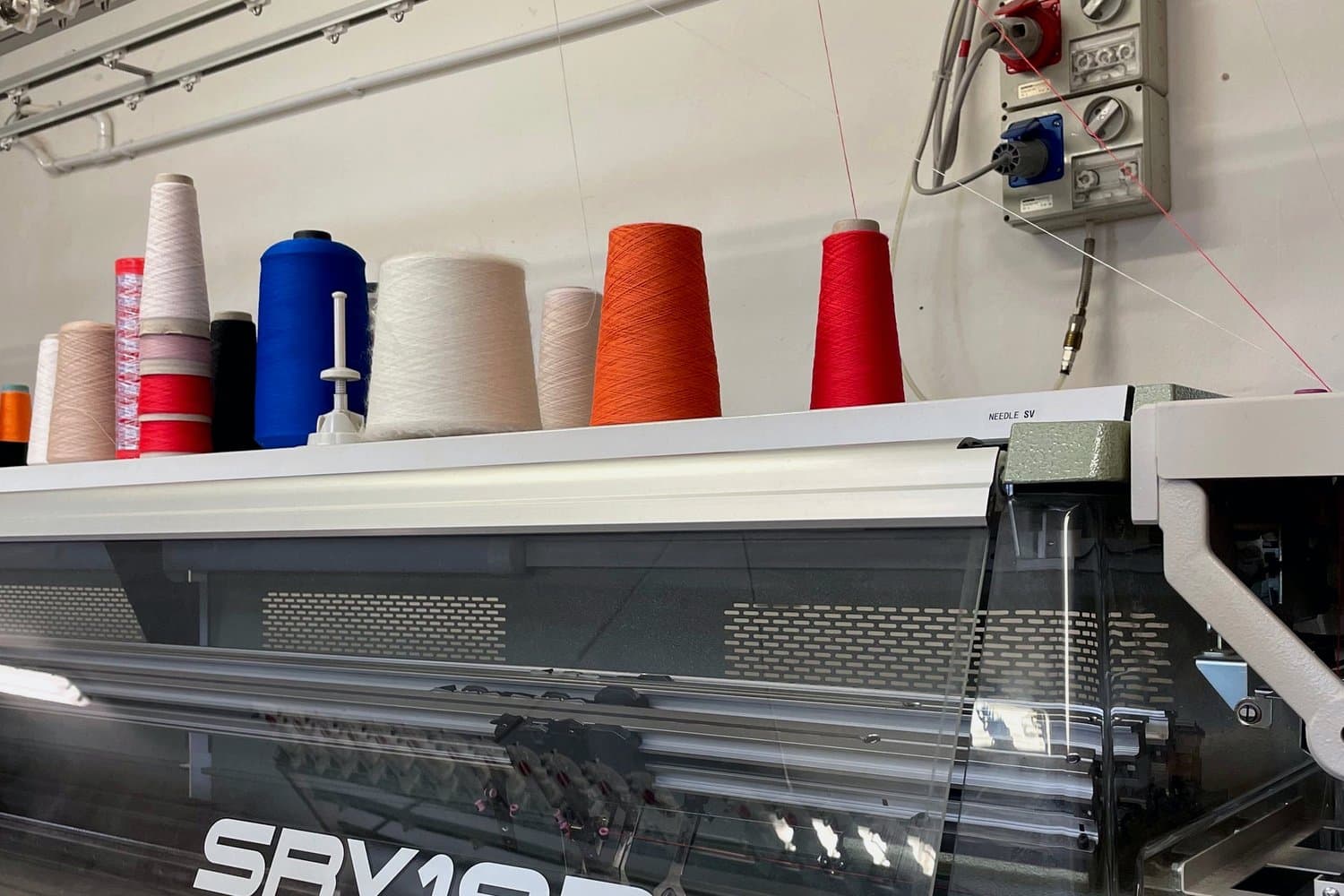
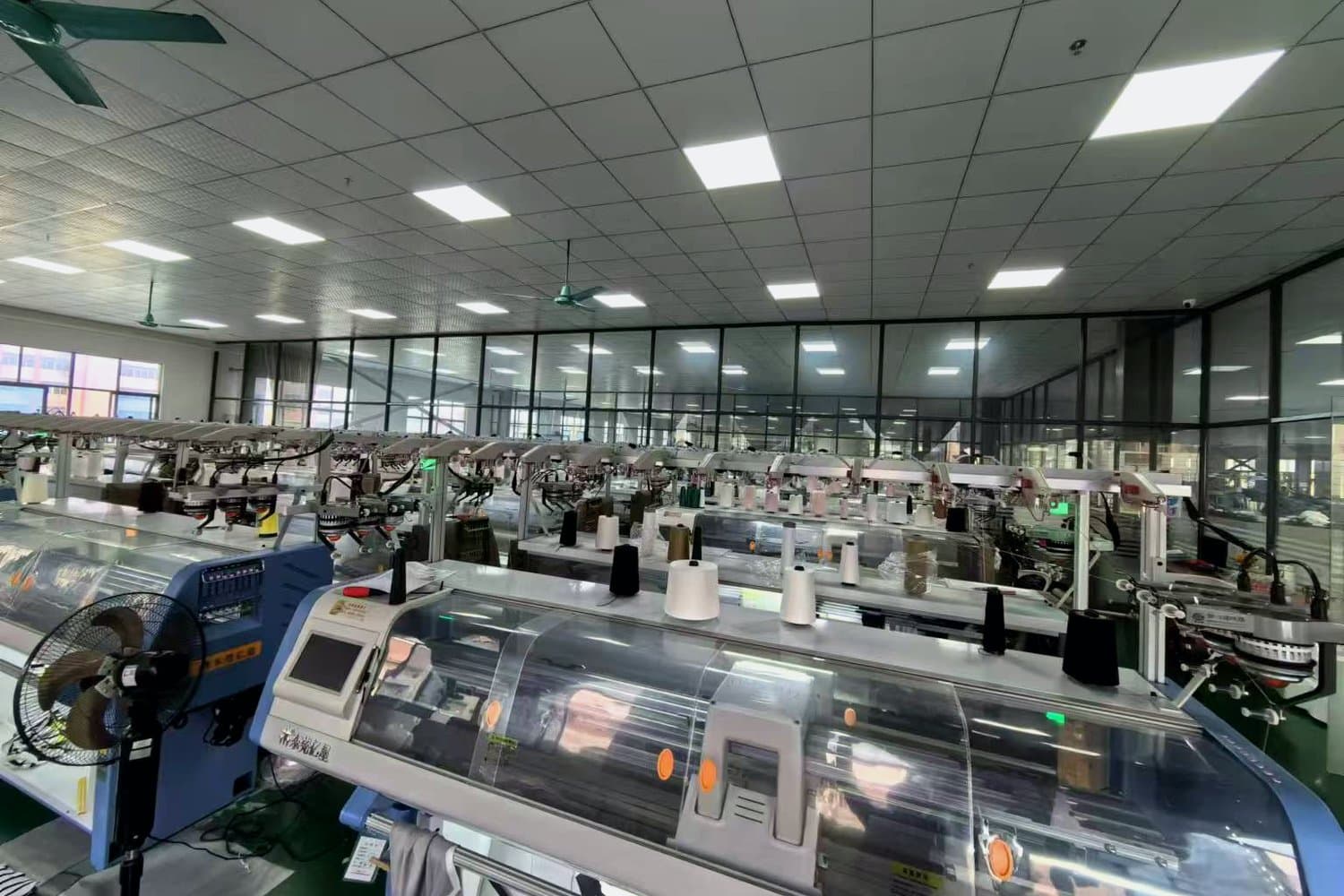
The knitting programme. A knitted garment is not cut from cloth; it is built by a machine following a programme written for that specific body, in that specific size set, at that specific gauge. Writing and proving that programme is a fixed job. It costs the same for 30 pieces as for 3,000.
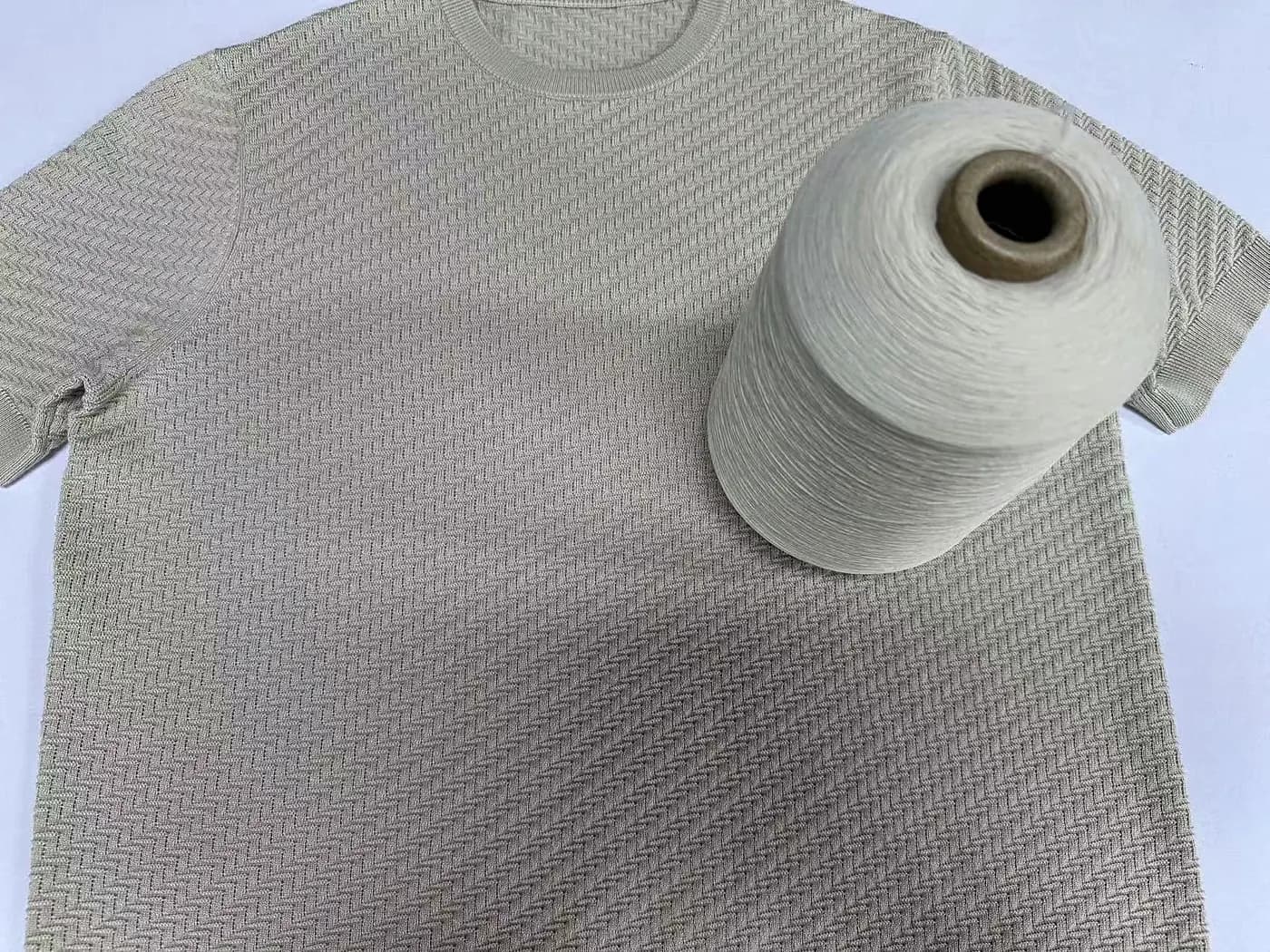
The yarn lot. At 30 pieces the colour normally comes from our stock yarn colours, so the yarn is taken from a lot that is already dyed. An exact club or school colour dyed to order is a different job: the yarn is dyed for you, which adds a lab dip and 7-15 days, and below the mill's full dye lot of 100-300 pieces per colour it is dyed as a small lot for a small-lot dyeing surcharge.
Sampling. One physical sample, made properly, approved before bulk. Also fixed.
Thirty pieces is roughly where those three fixed costs stop dominating the per-piece price to the point of absurdity. Below it, the unit cost does not fall gently - it climbs steeply, and quoting it would produce a number no group would accept anyway.
Why it is per colour, not per order
This is the part that surprises people, so it is worth stating plainly: the minimum is 30 pieces per colour.
One body in one colour for a group of forty is a single order of forty. The same body in two colours is thirty plus thirty, not two lots of twenty. The reason is directly above - each colour is its own yarn lot, and a second colour means a second lot with its own minimum.
For a group smaller than sixty this usually settles the question of two colours. The alternative that works: one body colour, with the groups distinguished by the crest, by a trim colour on collar and cuffs, or by the placement of the mark. We can show both routes at sampling.
Where gauge changes the arithmetic
Not every short run behaves the same way, and the variable is gauge.
On a chunky body at 3GG-5GG, the garment is mostly yarn. Yarn weight dominates the unit cost, so the quantity breaks move the price more - and, usefully, the fixed set-up is a smaller share of the total.
On a fine body at 12GG and above, there is far less yarn and proportionally more machine time and finishing. The fixed costs weigh more heavily, which is why very small runs of fine-gauge pieces are the least economic thing to ask for.
The bulk of what we publish sits at 7GG-12GG, where neither dominates.
What our published prices are and are not
Of the 410 styles published on this site, 288 carry an index median - a figure from our own yarn cost index at MOQ 30, published so a buyer can position a style before asking. 72 carry a real quoted range instead, where an actual quotation exists for that piece.
Neither is a quote for your order. Both are honest about which they are. A price for your programme depends on your colour count, your quantity, your decoration and your delivery window, and we would rather quote it than have you plan against an index figure that was never about your job.
The practical advice, for a group of 25
Order 30 and keep the spares. That is not a sales line - a group order with no spares has no answer for a late joiner, a wrong size, or a garment damaged before the event, and the marginal cost of the five extra pieces is the lowest-cost insurance in the whole project.
No. Our minimum is 30 pieces per colour and it does not move. Below that, the fixed costs of the knitting programme, the yarn lot and the sample push the unit price up steeply rather than gently.
Three: writing and proving the knitting programme for that body, size set and gauge; the yarn lot, taken from our stock yarn colours (an exact colour dyed to order is also possible at 30 pieces, for a small-lot dyeing surcharge that falls away at the mill's 100-300-piece dye lot); and one properly made sample approved before bulk. None of them gets smaller if you order fewer pieces.
Keep one body colour and tell the groups apart by the crest, by a trim colour on the collar and cuffs, or by where the mark is placed. Two body colours means two yarn lots, and for a group smaller than sixty that usually settles the question.
At 12GG and above there is far less yarn and proportionally more machine time and finishing, so the fixed set-up weighs more heavily per piece. On a 3GG-5GG chunky body the garment is mostly yarn and the set-up is a smaller share of the total.
Order 30 and keep the spares. They cover a late joiner, a wrong size or a garment damaged before the event, and the five extra pieces are the lowest-cost insurance in the whole project.
We focus on men's sweaters, cardigans, knit jackets, jacquard knitwear and private label knitwear. We support B2B buyers with OEM/ODM development, sampling and bulk production planning.
Ready to Start Your Project?
Get a free catalog or submit an RFQ today. Our team will respond within 24 hours.
MOQ, lead time, cost ranges, gauge selection and QC checkpoints across typical OEM/ODM knitwear programs in NA + EU. Enter your email — we'll send you the report link in 30 seconds.
No spam. Unsubscribe with one reply. We use your email only to send you the report and follow up if you want a sourcing conversation.
Brand names shown are previously serviced OEM/ODM partners. Logos are decorative and do not imply current endorsement.