Quick answer — where should you manufacture knitwear and sweaters in 2026? There is no single "best" country; the right one depends on your order size, fibre/gauge, target market and how fast you need it. As a rule of thumb: China is the strongest all-rounder for small-to-mid brands that need a low MOQ, fast samples, deep yarn/gauge variety and fine-gauge fashion knitwear; Bangladesh wins on lowest unit cost at high volume (and duty-free landed cost into the EU) but needs large MOQs and long lead times; Vietnam is excellent for high-end fine-gauge merino and cashmere-blend programmes at scale; and Türkiye is the near-shore pick for EU brands that want speed, small batches and fast replenishment. The comparison table and the "choose by your situation" section below break down MOQ, lead time, cost and strengths so you can match a country to your actual order.
This is a vendor-neutral sourcing comparison, not a ranking. Figures are drawn from public 2022–2025 trade data and typical factory-quoted terms; individual factories vary widely within every country.
The global sweater market is estimated at roughly $104 billion, and the supply base has been shifting. China is still the largest apparel exporter in the world (around 31.7% of global apparel exports), but it has been moving *up-market* — out of low-margin basic sweaters and toward higher-value, faster-turn, more complex knitwear. That shift created room for Bangladesh, Vietnam, Türkiye, Cambodia and Myanmar to grow, each carving out a different niche.
For a brand, that means the question isn't "which country is cheapest" — it's "which country's typical factory profile matches *my* order." A 200-piece run of fine-gauge merino polos and a 20,000-piece run of basic acrylic crewnecks belong in very different places.
|
| Typical MOQ (per colour) | Low — 30–100 at small-brand factories; 300–500 at larger plants | High — 1,000+ typical, tier-1 often 5,000+ | Medium-high — 300–1,000 tier-2, 3,000+ tier-1 | Low-medium — flexible, small batches OK |
| Sampling / lead time | Sampling ~15–25 days; bulk ~30–45 days | PO-to-FOB ~75–120 days | ~75–100 days | Short — near-shore to EU, fast turns |
| Unit cost | Mid (rising labour, offset by efficiency & yarn access) | Lowest mainstream-Asia labour | Mid | Higher unit cost, lower freight/duty into EU |
| Sweet spot | Fine-gauge fashion knitwear, variety, low-MOQ custom | High-volume basics, EU landed-cost programmes |
China's advantage isn't being the cheapest anymore; it's depth and flexibility. The yarn ecosystem (wool, merino, cotton, cashmere blends, acrylic blends, recycled) is the broadest in the world, gauge capability runs from chunky 3–5GG to fine 12–18GG in the same industrial cluster, and small-brand-friendly factories will quote MOQs of 30–100 pieces per colour with sampling in 15–25 days. That combination — low MOQ, fast samples, wide fibre/gauge range — is exactly what a small or mid-size fashion brand needs, and it's hard to match elsewhere. The trade-off: unit labour cost is higher than Bangladesh, so for plain high-volume basics China is often not the cheapest landed option.
Best for: small-to-mid brands, fashion/seasonal knitwear, custom yarns and gauges, frequent new styles, and anyone who can't commit to four-figure per-colour minimums.
Bangladesh has become the next big bet in sweaters precisely as China stepped back from the low end. Labour cost is the lowest in mainstream Asia, and — critically for European brands — Bangladeshi goods often enter the EU duty-free under preferential schemes, which can make the *landed* cost meaningfully lower even when the FOB looks similar. Good Bangladeshi sweater factories now compete with China on gauge consistency and shade for high-volume programmes. The trade-offs are structural: high MOQs (1,000+ per colour is normal, tier-1 compliant factories rarely quote under 5,000) and long lead times (often 75–120 days PO-to-FOB), so it suits planned, large, repeat programmes — not fast fashion or small test runs.
Best for: high-volume basics and core programmes, cost-led EU brands that can plan months ahead and order in the thousands.
Vietnam's northern knitwear factories have moved firmly up-market, producing fine-gauge merino, cashmere-blend and technical knits on advanced machinery, with quality that premium brands compare to Portugal or Italy. Strong free-trade agreements (EVFTA, CPTPP) help on tariffs. The catch for smaller brands is MOQ: tier-2 factories start around 300–1,000 pieces and the best tier-1 plants want 3,000+ and annual commitments, with lead times around 75–100 days.
Best for: premium brands placing larger orders of refined fine-gauge wool/cashmere knitwear who want top-tier quality at scale.
For European brands, Türkiye trades a higher unit price for proximity and speed: short freight, fast turnarounds, relatively low MOQs and genuine flexibility for small batches and quick replenishment. Its knitwear capability is strong. If your priority is reacting to sales within the season — rather than squeezing the lowest possible FOB — Türkiye is often the answer, particularly for EU-based labels.
Best for: EU brands prioritising lead time, near-shoring and small, frequent reorders over rock-bottom unit cost.
- Small/indie brand, low MOQ, fashion knitwear, custom yarns → China.
- Large, planned, cost-led programme into the EU → Bangladesh.
- Premium fine-gauge merino/cashmere at higher volumes → Vietnam (or China / Portugal for the very top end).
- EU brand that needs speed and small replenishment runs → Türkiye.
- You're testing 1–3 styles before scaling → China — it's the only one of the four that reliably supports genuinely small first orders without a cost penalty.
Most "best country" and "top 10 manufacturer" listicles are either generic or pay-to-list. Use them for names at most. The decision that actually protects your order is matching your order's size, fibre, gauge, market and timeline to a factory's real profile — and then vetting the specific factory (real floor, honest MOQ per colour, compliance paperwork) before you commit.
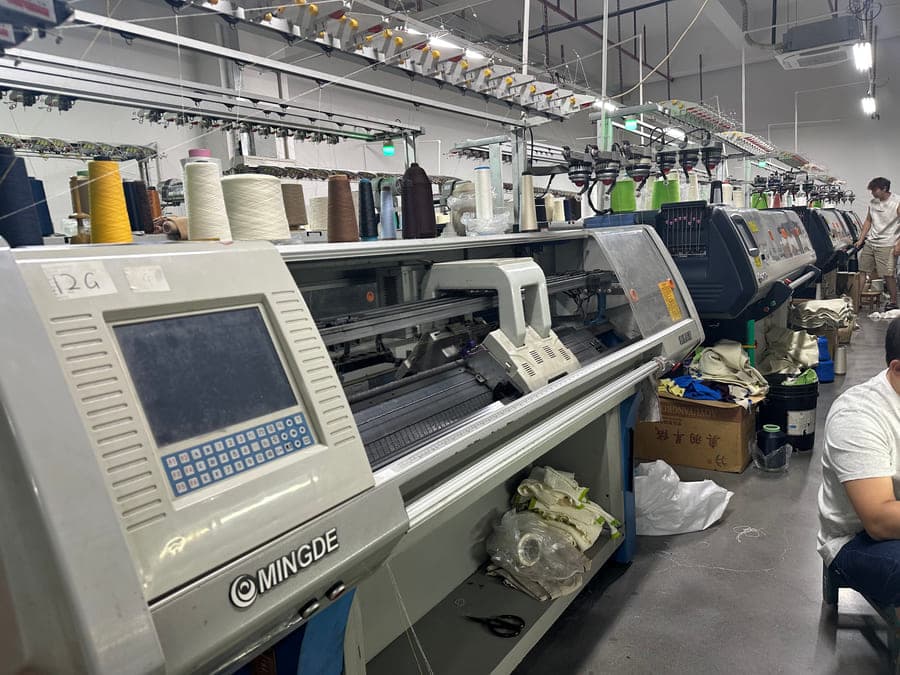
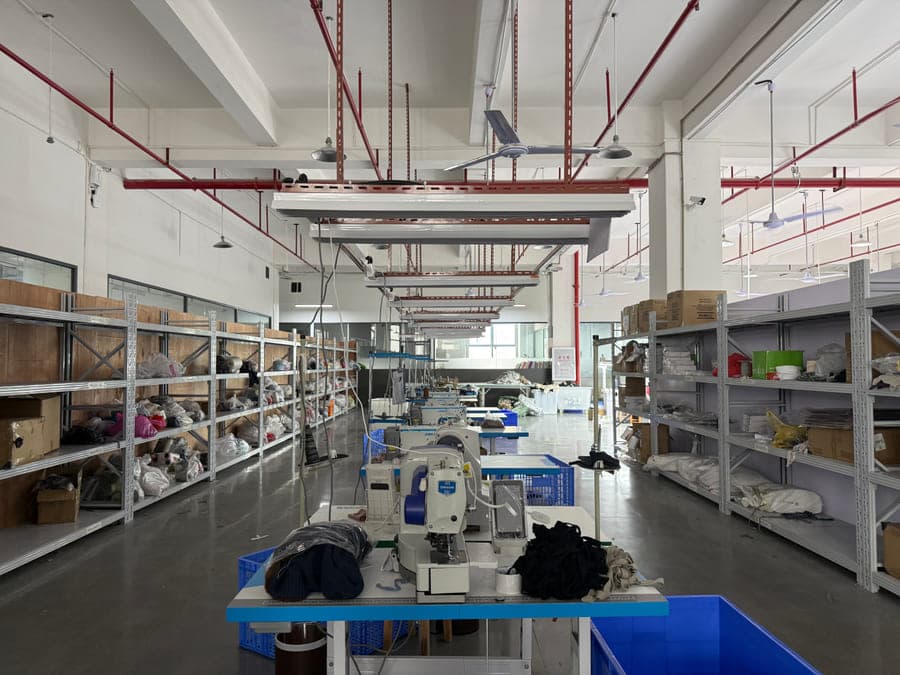
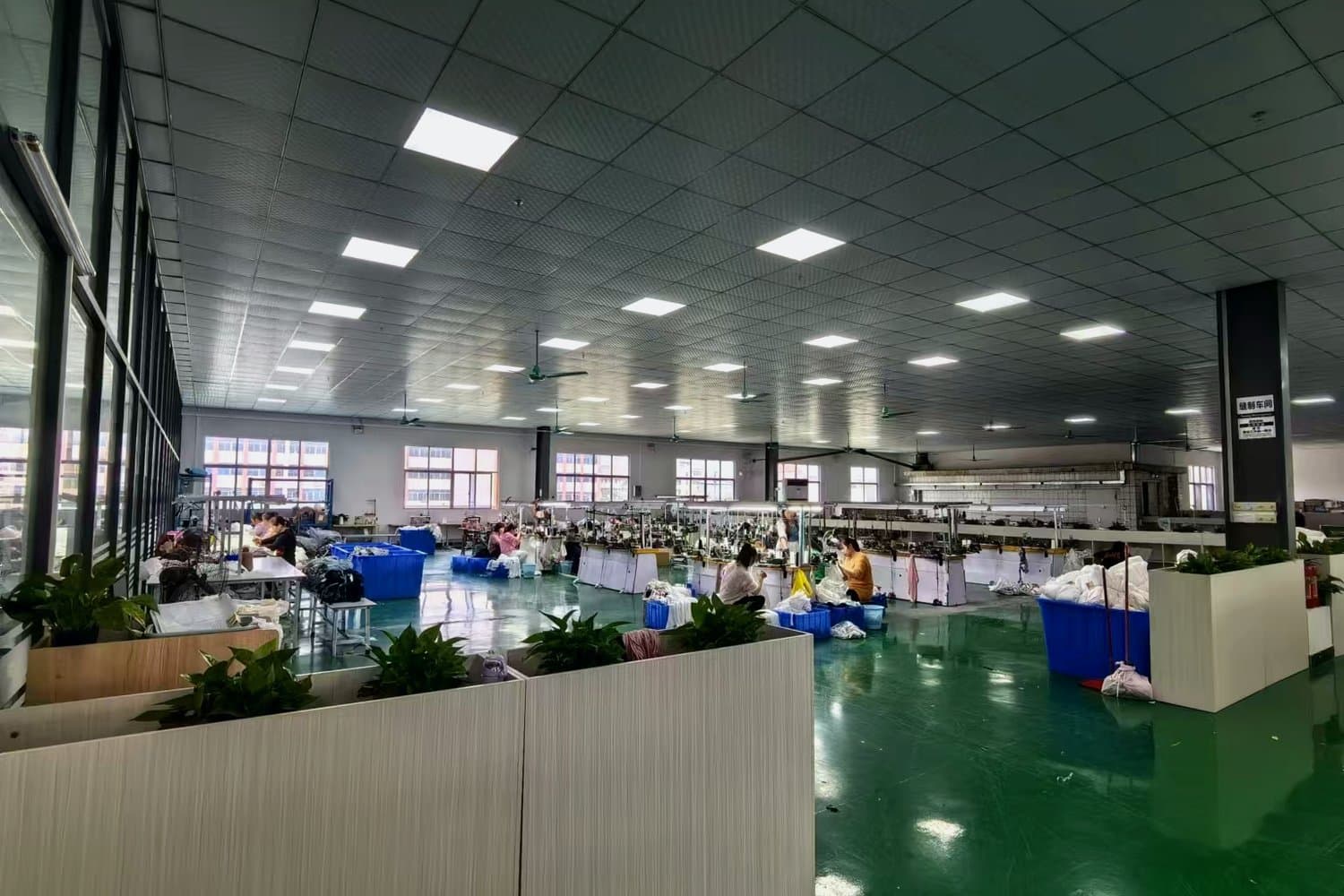
We're a Dongguan, China knitwear manufacturer (founded 2018), OEM/ODM and private label, with MOQ 30 pcs per colour, sampling 15–25 days, and gauge 3GG–18GG across wool, merino, cotton, cashmere blends, acrylic blends and recycled yarns. In the framework above, we sit squarely in the China "low-MOQ, fashion-led, fast-sample" lane — built for small-to-mid brands and seasonal collections, not for being the cheapest 20,000-piece basics run. We're also EU-market-ready (EU Authorized Representative under the GPSR, German packaging EPR registration, OEKO-TEX/GRS/GOTS/ISO processes — all verifiable on our Trust Center), which closes the compliance gap European buyers worry about with Asian suppliers. If that profile matches your order, send a tech pack and we'll reply within a business day.
What is the cheapest country to manufacture sweaters?
For unit labour cost at high volume, Bangladesh is typically the lowest in mainstream Asia, and its frequent duty-free access into the EU can lower landed cost further. But "cheapest" only holds at large MOQs and long lead times — for small or fast orders, the cheapest *headline* country is rarely the cheapest *total* once minimums, freight and time are counted.
Which country is best for low-MOQ custom knitwear?
China. Small-brand-friendly Chinese factories quote MOQs around 30–100 pieces per colour with 15–25-day sampling and the widest yarn/gauge range, which is hard to match in Bangladesh or Vietnam where minimums run into the thousands.
Is China still competitive for knitwear in 2026?
Yes — but its edge has shifted from "cheapest" to "most flexible and capable." It leads on low MOQ, sampling speed, fibre/gauge variety and fashion-led complexity, while ceding plain high-volume basics to lower-labour-cost countries.
Best country to manufacture knitwear for an EU brand?
It depends on the trade-off: Bangladesh for lowest landed cost on large duty-free programmes, Türkiye for near-shore speed and small batches, China for low-MOQ fashion knitwear with full EU compliance support (GPSR Responsible Person, packaging EPR). Confirm any supplier can provide the EU paperwork — most Asian factories can't.
How big does my order need to be to manufacture in Vietnam or Bangladesh?
Generally four figures per colour — Vietnam tier-2 from ~300–1,000 and tier-1 3,000+; Bangladesh 1,000+ and often 5,000+ at compliant tier-1 plants. Below that, China is usually the realistic option.
---
Deciding where to make your next knitwear range? Tell us your styles, target MOQ, fibre/gauge and destination markets, and we'll give you a straight answer on whether China — and Licheng specifically — is the right fit, including MOQ, lead time and a sample plan. If another country fits your order better, we'll say so.
→ Request a free quote · See our Trust Center · info@lcgarment.cn