Men's Sweater Vest and Knit Vest Development Guide
Updated 8/18/202612 min readBy Simon Liu · Licheng Knitwear
How to develop men's sweater vests and knit vests, from neckline and pattern to fit and yarn, for layering-focused B2B knitwear ranges.
How to develop men's sweater vests and knit vests, from neckline and pattern to fit and yarn, for layering-focused B2B knitwear ranges.
Our team is ready to support your brand from concept to delivery.
Discuss Your ProjectThe sweater vest has returned from preppy nostalgia to become a genuine wardrobe staple, and for brands it is a high-margin, layering-friendly piece that extends a knit range across seasons. This guide covers developing men's sweater vests and knit vests, from silhouette and pattern to yarn and fit.
A sweater vest is a layering piece first. It has to look intentional over a shirt or tee, which makes fit and armhole finish critical.
💬 Sourcing this for an upcoming project? Request a free quote → · MOQ 30 pcs · Sample in 15–25 days · WhatsApp us
Knit vests use less yarn than full sweaters, layer across seasons, and tap into both preppy and minimalist trends. They are versatile sellers: worn over shirts for smart-casual, over tees for streetwear, or alone in transitional weather. For brands, they add range depth at lower material cost.
| Element | Options | Style signal |
|---|---|---|
| Neckline | V-neck, crew, shawl | Preppy to relaxed |
| Pattern | Argyle, cable, plain, fair isle | Heritage to minimal |
| Gauge | Fine to chunky | Dressy to casual |
| Armhole finish | Ribbed, linked | Quality marker |
| Fit | Slim, regular, oversized | Trend positioning |
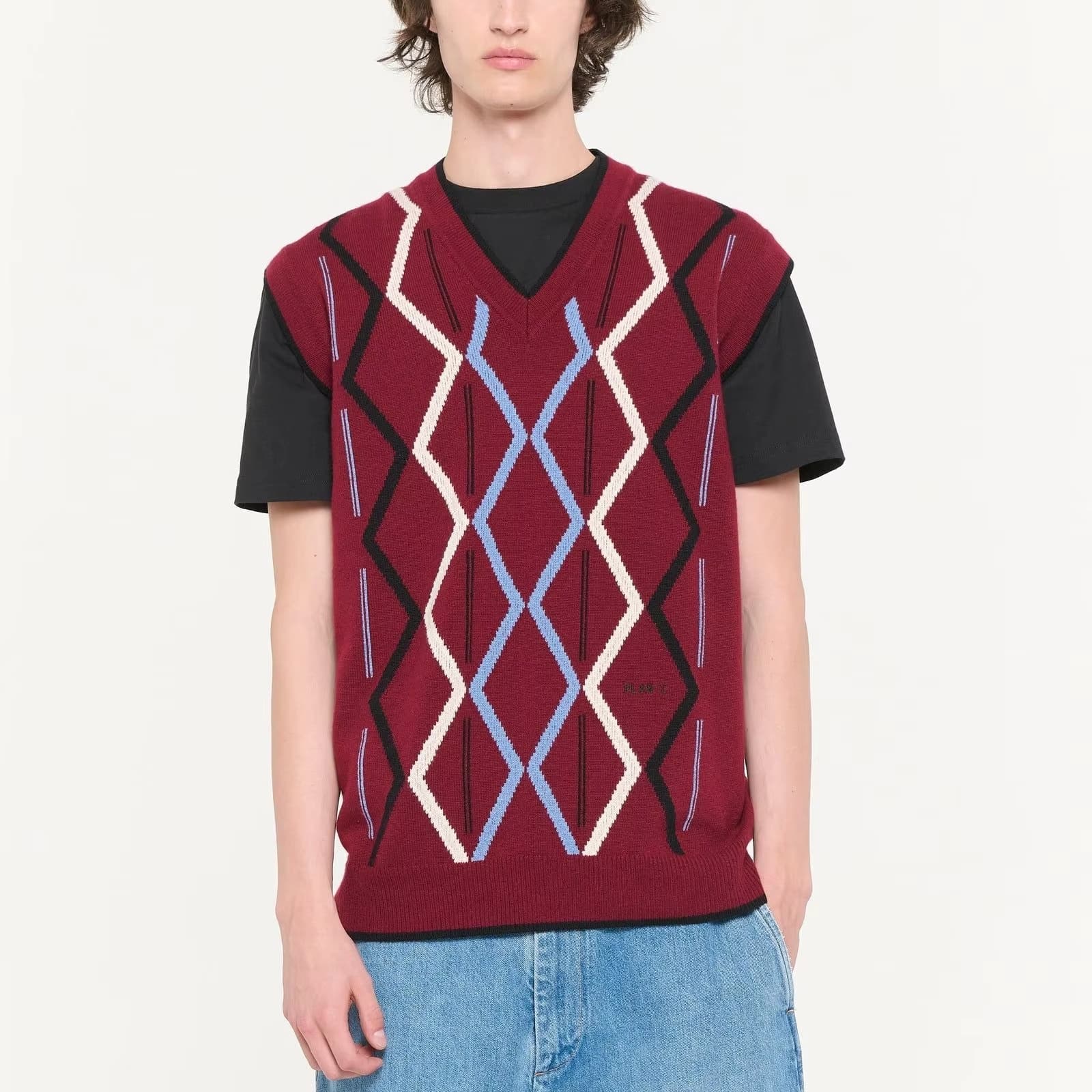
The V-neck is the classic vest neckline, especially with argyle or cable, reading preppy and timeless. A crew neck feels more modern and minimalist; a shawl-collar vest reads cozy and premium. Pattern sets the era: argyle and fair isle for heritage, plain or subtle cable for contemporary minimalism. See pattern techniques in our jacquard vs intarsia guide.
Because a vest is worn as a layer, fit matters more than on a sweater. Too boxy and it looks dated; too tight and it pulls over a shirt. The armhole depth and finish are critical, a clean ribbed or linked armhole signals quality, while a raw or sloppy one undermines the whole piece. Develop the fit over the layers your customer will actually wear, and confirm with a fit sample, see our sizing and grading guide.
Vests work across gauges: fine 12GG for dressy layering, mid 7GG for everyday, chunky 5GG for statement winter pieces. Wool and wool blends suit autumn/winter; cotton suits transitional. Because vests use less yarn, you can sometimes justify a premium fiber at an accessible price, see our yarn guide.
Vests are a trans-seasonal workhorse: they sell in early autumn and spring when a full sweater is too warm, and as a mid-layer in winter. Merchandise them next to shirts and tees to show the layering story, and consider pairing a vest with a coordinating sweater so customers buy the whole look. Because they use less yarn, vests are also a smart, lower-risk way to test a pattern — for example argyle — before committing it to a full sweater run.
Is the sweater vest still on trend? Yes — it has settled from a fad into a staple, with strong demand in both preppy and minimalist directions.
What is the most important quality detail? The armhole finish — a clean ribbed or linked armhole is the difference between intentional and dated.
What fit sells best now? A regular-to-slightly-relaxed fit; avoid both boxy-dated and skin-tight.
Licheng Knitwear develops men's sweater vests and knit vests across necklines, patterns and gauges. Browse our knit vests or request a quote.
---
If you're planning a real project around any of the points above, we'd be glad to take a quick look. Send a short brief and we'll come back within one business day with a practical direction, MOQ + lead time estimate, and a sample plan if it makes sense.
→ Request a free quote · Download the men's knitwear catalog · WhatsApp us · info@lcgarment.cn
V-neck, crew, argyle, ribbed and button or zip knit vests and gilets, in wool, cotton, merino and blends, with your colours and labels.
Yes - vests are a strong layering and trans-seasonal piece; they use less yarn than a full sweater, which can help cost and MOQ.
From 30 pieces per colour using in-stock yarns.
We focus on men's sweaters, cardigans, knit jackets, jacquard knitwear and private label knitwear. We support B2B buyers with OEM/ODM development, sampling and bulk production planning.
Ready sample styles and selected custom programs can support lower-risk trials before larger seasonal orders.
Yes. Brands, including new labels preparing a first collection, can pay for a sample and see it before placing a production order. Two routes: a ready sample of a published style at USD 60 per piece in about 7 days, or a development sample from your tech pack at USD 150 per style, covering yarn sourcing, knit programming, one prototype and one revision round, in 15-25 days. Cashmere and mohair styles are quoted individually and shipping is charged at cost. Production starts only after you approve the physical sample, at our minimum of 30 pieces per colour with sizes mixed inside the 30. A sample does not commit you to a production run; we do not make garments for personal use.
Get a free catalog or submit an RFQ today. Our team will respond within 24 hours.
Men's Sweaters
MOQ, lead time, cost ranges, gauge selection and QC checkpoints across typical OEM/ODM knitwear programs in NA + EU. Enter your email — we'll send you the report link in 30 seconds.
No spam. Unsubscribe with one reply. We use your email only to send you the report and follow up if you want a sourcing conversation.



Brand names shown are previously serviced OEM/ODM partners. Logos are decorative and do not imply current endorsement.