Case Study Pattern: A First-Time Brand Launching 30 SKUs of Custom Knitwear
Updated 8/24/202612 min readBy Simon Liu · Licheng Knitwear
Most first-time apparel brands underestimate two things about a knitwear debut: how many decisions sit upstream of the tech pack, and how unforgiving the calendar gets once dye lots are locked. This composite case study walks through a 30-SKU debut collection launched by a US D2C brand with no in-house tech designer and a tight equity round, sketching out the 90-day timeline that actually worked. We cover the yarn library walk-through that replaced a tech pack in weeks one and two, the ODM development phase where our pattern team carried the load, the PP sample loop, the lab-dip recovery on two darker shades, the boxy jacket that needed re-grading, and the bulk production window that finally shipped on week fourteen. The point is not the brand — names are not used and the pattern is composite, drawn from how repeat-launch clients actually behave. The point is the discipline: locking the color palette before tech-pack iteration, accepting 30-piece MOQ per colorway as a feature rather than a hardship, and learning where to spend revision cycles and where not to. Buyers reading this should come away with a realistic mental model of cost, cadence, and the moments where a founder's instinct to push the timeline costs more than it saves.
A first-time brand sourcing knitwear walks into a meeting with a Pinterest board, a price target, and a launch date that is already wrong. That is not a criticism — it is the starting point for almost every debut collection we see. The hard part of a first PO is not the manufacturing; it is the sequencing of decisions, and the founder's tolerance for letting the calendar dictate the design.
This is a composite case study. Names are not used. The brand below is stitched together from several real first-time clients who launched 30-SKU debut collections with us between 2022 and 2025. The patterns are consistent enough that the timeline below is reliable as a planning template — but no single brand experienced every detail exactly as written. Treat it as a reference architecture, not a transcript.
The Brand and the Brief
Common Questions
Is 30 SKUs realistic for a first knitwear order?
It is achievable but it is not the easy path. Thirty styles multiplies every decision that sits upstream of the tech pack - fits, yarns, colours, labels - and each of those has to be resolved before sampling can converge. Most first-time brands would be better served launching fewer styles well.
Ready to Start Your Project?
Get a free catalog or submit an RFQ today. Our team will respond within 24 hours.
Why start with ODM rather than OEM for a first order?
Because ODM starts from patterns and constructions the factory already runs, which removes most of the fit risk from a first programme. OEM - building entirely to your own pattern - is the right move once you know what your customer actually buys.
What does the yarn library walk-through achieve?
It converts a mood board into buyable specifications. Handling actual yarns settles fibre, count and colour direction faster than any amount of correspondence, and it front-loads the decision that carries the longest external lead time.
How long should a first-time brand allow?
Plan a 90-day working timeline and treat it as tight rather than generous. Sampling alone is 15-25 days per round from confirmed yarn and artwork, and first programmes rarely converge in one round.
What most often derails a first knitwear launch?
Late colour decisions. Dye lot minimums and dyeing lead times belong to the mill, not to the factory, so a colour confirmed late pushes everything downstream and cannot be recovered by working faster in the factory.
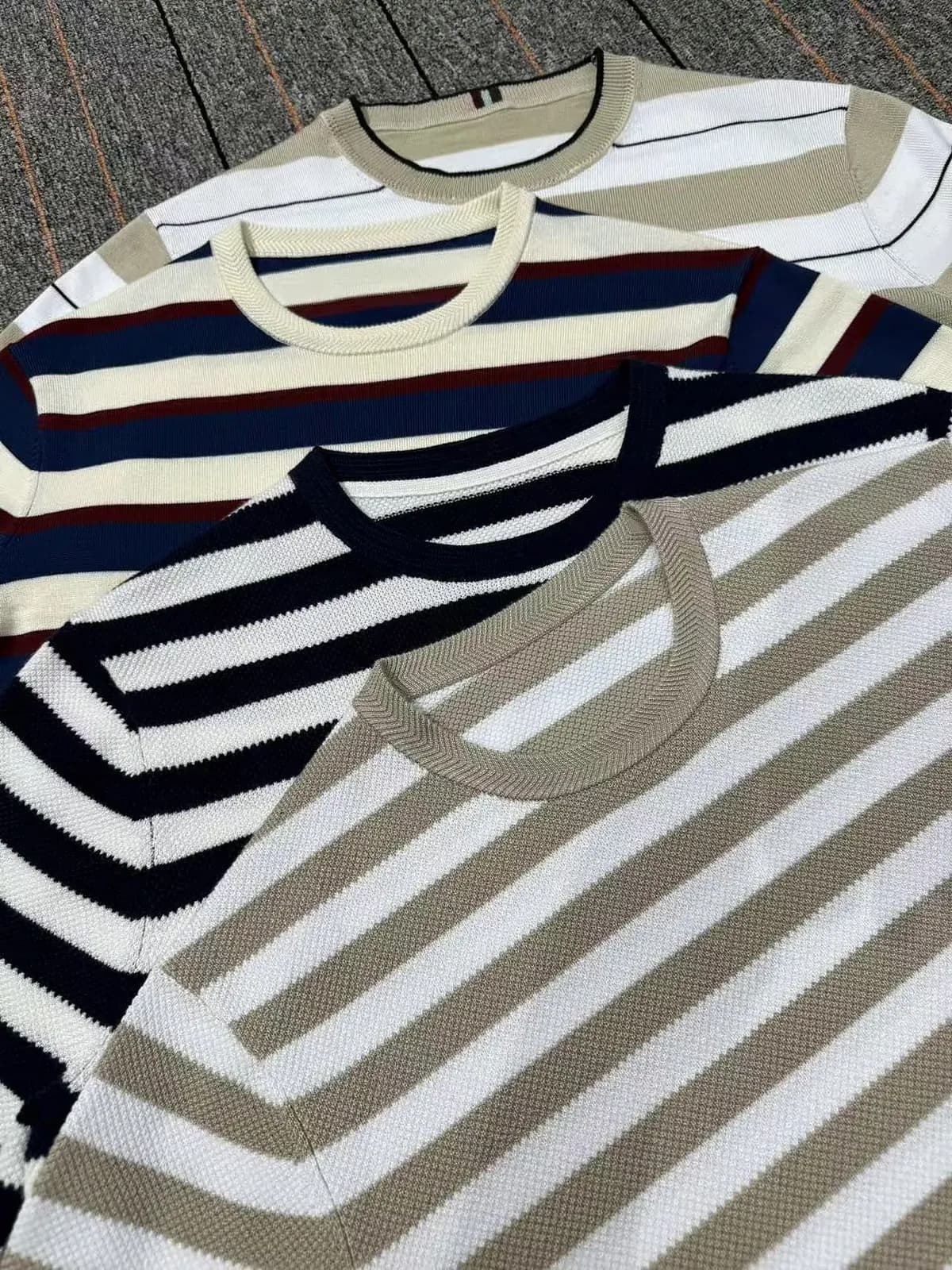
The client was a US-based direct-to-consumer menswear brand, founder-operated, with a small seed round and no in-house tech designer. The debut collection was scoped at 30 SKUs: five sweater silhouettes (crew, mock neck, half-zip, cardigan, knit polo) in twelve colorways across the range, plus three jacket styles in a tighter palette. The founder had a clear aesthetic — heritage texture, muted earth tones, fall-winter weight — but had never written a tech pack and could not have approved one if we sent it.
The ask landed in our inbox in early March, with a target retail launch the first week of August. That gave us roughly 22 weeks of calendar, of which around 14 would be actual production and development work and the rest would absorb shipping, photography, and the founder's existing day job.
Why ODM, Not OEM, for a First PO
The single most important decision the founder made was accepting that this would be an ODM project rather than OEM. A tech designer with five years of knitwear experience can hand a factory a complete tech pack, lock specs in two rounds, and treat the mill as a pure execution partner. A first-time founder cannot. Trying to do OEM without that capability turns every PP sample into a debate the founder is not equipped to win, and the revision count balloons.
Under ODM, our pattern team carried the technical load. The founder brought references, fit preferences on their own body, and a yarn-handfeel point of view. We brought the pattern blocks, the gauge selection, the construction call (raglan versus set-in, full-needle versus half-cardigan rib), and the grading. That division of labor is the difference between 14 weeks of development work and 28.
The 90-Day Working Timeline
The table below is the actual cadence that worked. "Day 0" is the kickoff call after deposit terms were agreed; the calendar weeks below run from that point.
Phase
Weeks
What Happens
Brand-Side Workload
Yarn library + catalog walk-through
1-2
Founder reviews physical yarn cards and existing ODM catalog; narrows to 8 base yarns
High — decision-heavy
ODM development
3-4
Pattern team drafts first patterns, fit blocks, construction specs
Low — review only
PP sample iterations
5-7
First and second PP samples; fit comments; handfeel sign-off
High — try-on, comments
Lab dips + bulk PO
8-9
Pantone matching, lab dip approval, deposit released, PO locked
Medium — color decisions
Bulk production
10-13
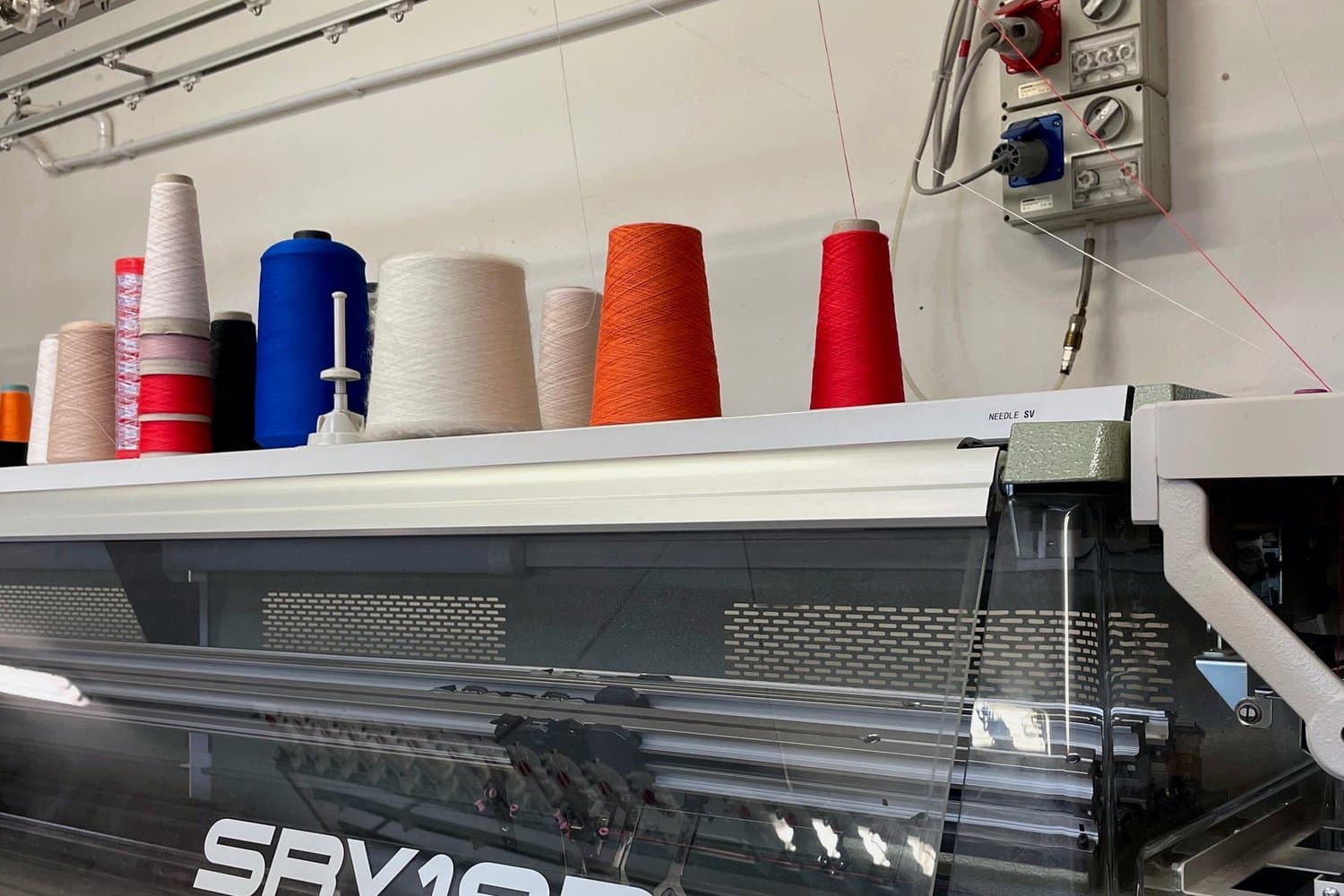
Knitting, linking, washing, finishing, QC
Low — status check-ins
Shipment
14
Final inspection, packing, freight booking
Low
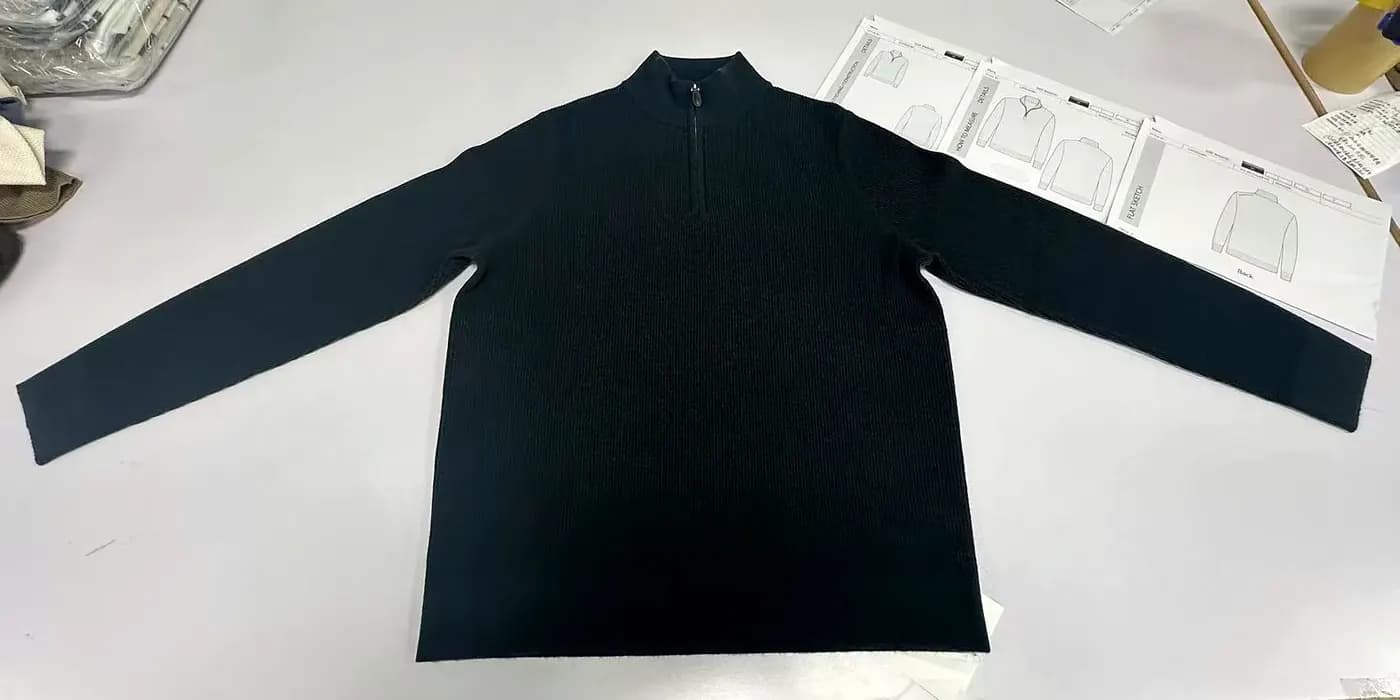
Notice what is not in there: a tech-pack phase. For an ODM debut with a founder who cannot read flat sketches at the spec-sheet level, formal tech packs would have been performance art. Instead, we treated the approved PP sample plus our internal pattern files as the source of truth, with the founder signing physical samples rather than CAD documents.
Weeks 1-2: The Yarn Library Walk-Through
This was the phase the founder almost skipped. Every first-time brand wants to jump to sketches. We pushed back, and the project survived because of it.
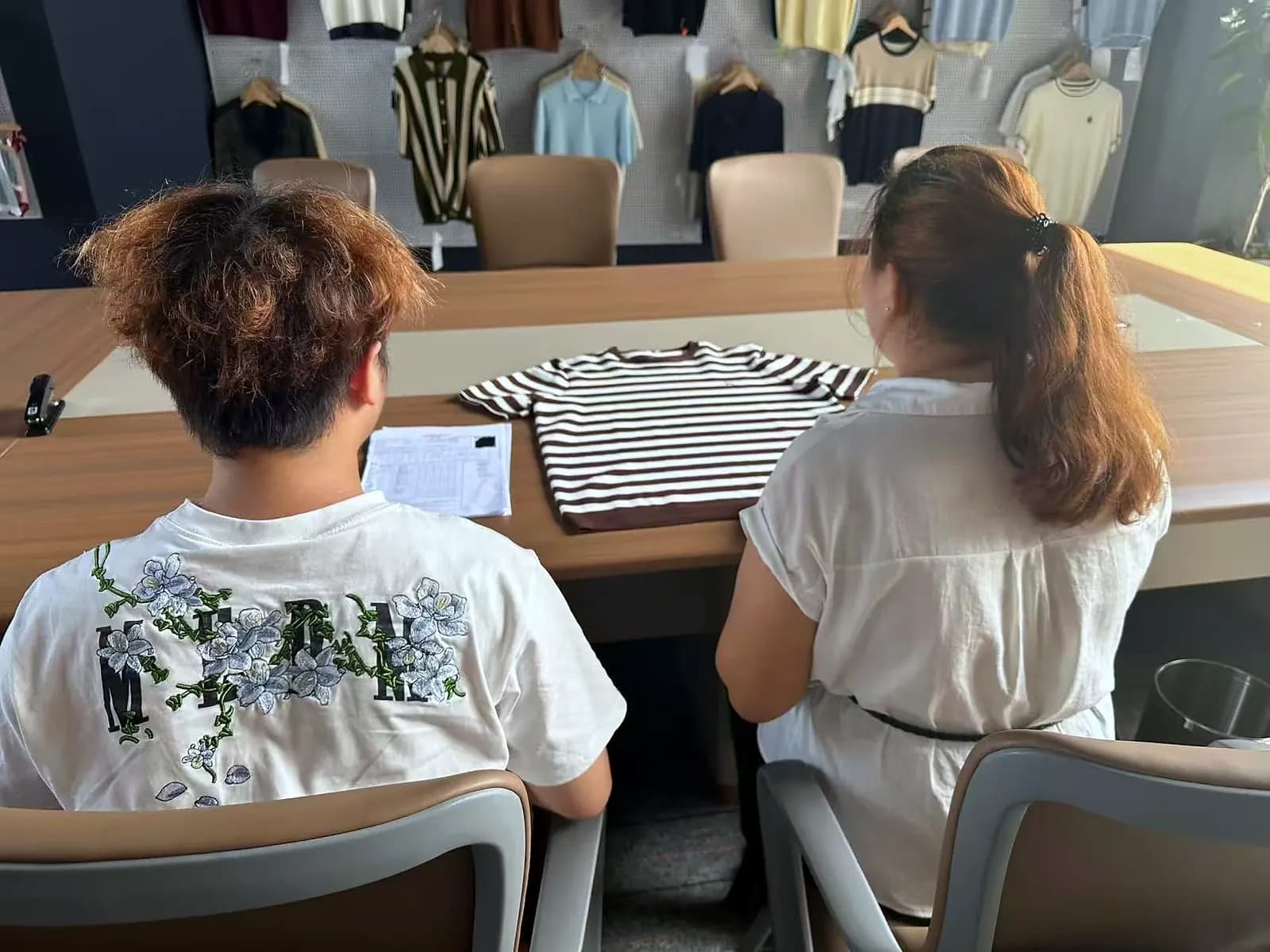
Weeks one and two were spent narrowing the yarn list. The founder visited our showroom early in week one (the trip was budgeted into the project) and physically handled around 60 yarn options across lambswool, merino, cotton-cashmere blends, brushed mohair blends, and a handful of recycled-blend options. We walked through which yarns we had reliable mill relationships for at 30-piece dye lots versus which would require larger commitments. By the end of week two, the founder had committed to eight base yarns covering the five sweater silhouettes and three jackets.
This matters because every later decision — gauge, hand, drape, weight, price — flows from yarn. A founder who locks yarns in week two is making downstream decisions on a known canvas. A founder who keeps yarn open through week six is paying for sample iterations they should not have needed.
Weeks 3-4: ODM Pattern Development
With yarns locked, our pattern team developed fit blocks for the five sweater silhouettes plus three jackets. The founder reviewed sketches and gauge swatches by video call; physical samples followed in week five.
The key brand-side discipline here was restraint. The founder wanted to make small fit adjustments at the sketch stage — a tighter sleeve, a cropped body length — based on intuition rather than a worn sample. We held the line: changes get made on the PP sample, in fabric, on a body, not on a drawing. Half of those early-stage fit instincts evaporated the moment the founder tried on the actual PP samples in week five. Honoring that pattern saved at least two rounds of revision.
Weeks 5-7: PP Sample Iterations
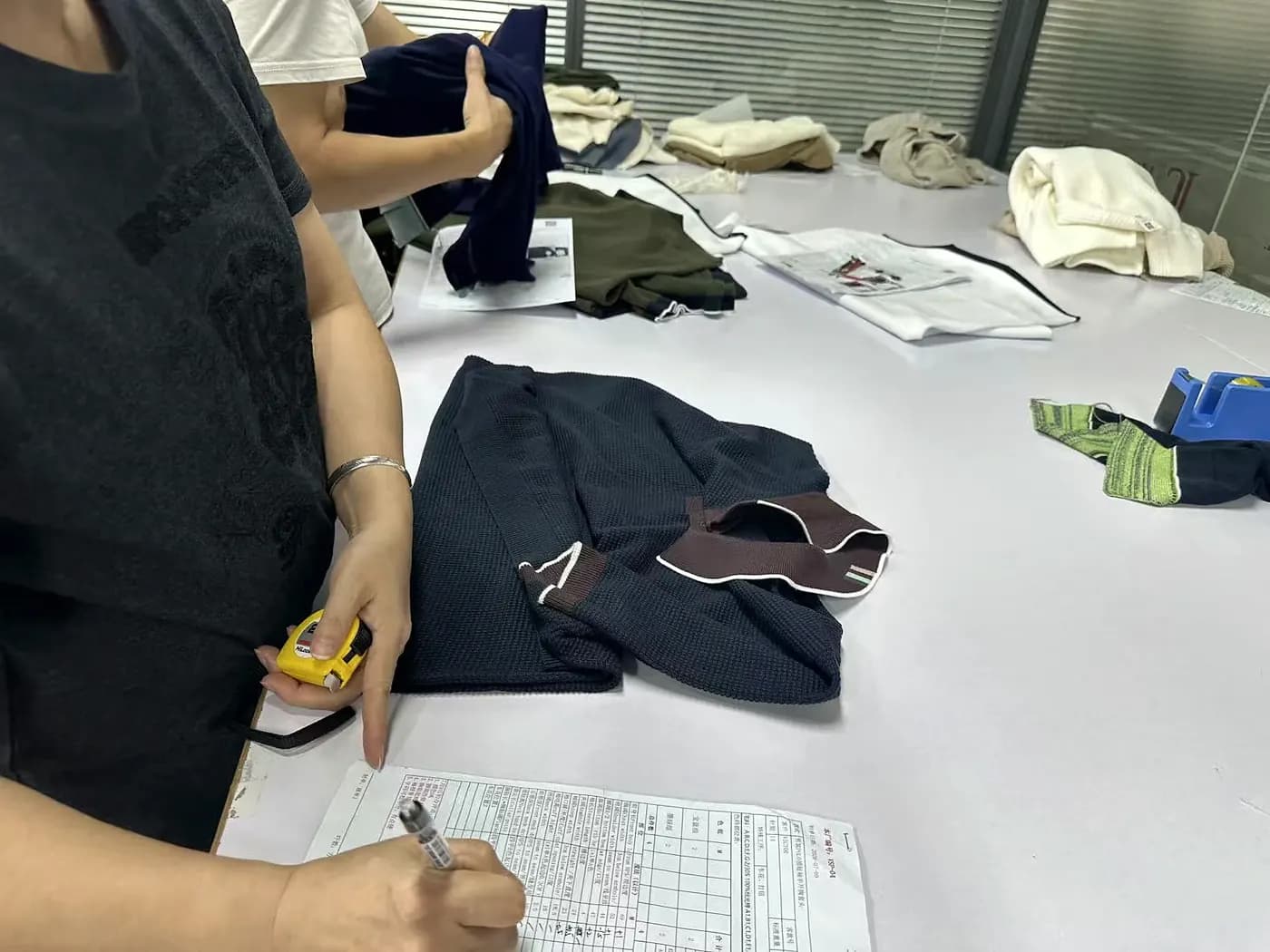
First PP samples shipped via express courier to the US in week five. The founder spent two days with the samples, photographed on a fit model, and returned consolidated comments. Second PPs went into production immediately and arrived back in week seven.
This is where the first real problem showed up. One of the three jackets — a chunky knit zip-front design — came back too boxy through the chest and torso. The fit block we had used was over-graded for an oversized silhouette the founder no longer wanted. Re-grading required a third PP, which pushed that single SKU's bulk start by 10 days. The other 29 SKUs moved on schedule. We absorbed the schedule slip on the jacket by air-freighting that one style at final shipment rather than holding the whole consignment.
The lesson the founder repeated back to us afterward: the moment a sample fits wrong, address it on the next sample, not in a long email thread. They had drafted a 600-word note trying to describe the fit problem and then deleted it in favor of a 30-second video on a fit model. The video was unambiguous; the prose would have produced another wrong sample.
Weeks 8-9: Lab Dips and the PO
With fit locked across all but the one jacket, the project moved to color. The founder had committed to a palette of 12 colorways early — that was the discipline that mattered most for cost — but lab-dip approval still consumed two full weeks. Pantone references were sent in week eight, first lab dips returned mid-week-nine.
Two of the twelve colors needed a re-dye. Both were on the darker end of the palette — a deep oxblood and a charcoal-brown — and the first lab dips came back darker still, with too much red shift on the oxblood and not enough warmth in the charcoal. Re-dyeing on darker shades is common; the dyestuff load is heavier and the operating window narrower. We pushed those two through a second lab dip in five days. The other ten approved on first round.
The PO was confirmed at the end of week nine, with deposit released and bulk knitting scheduled to start week ten.
Weeks 10-13: Production
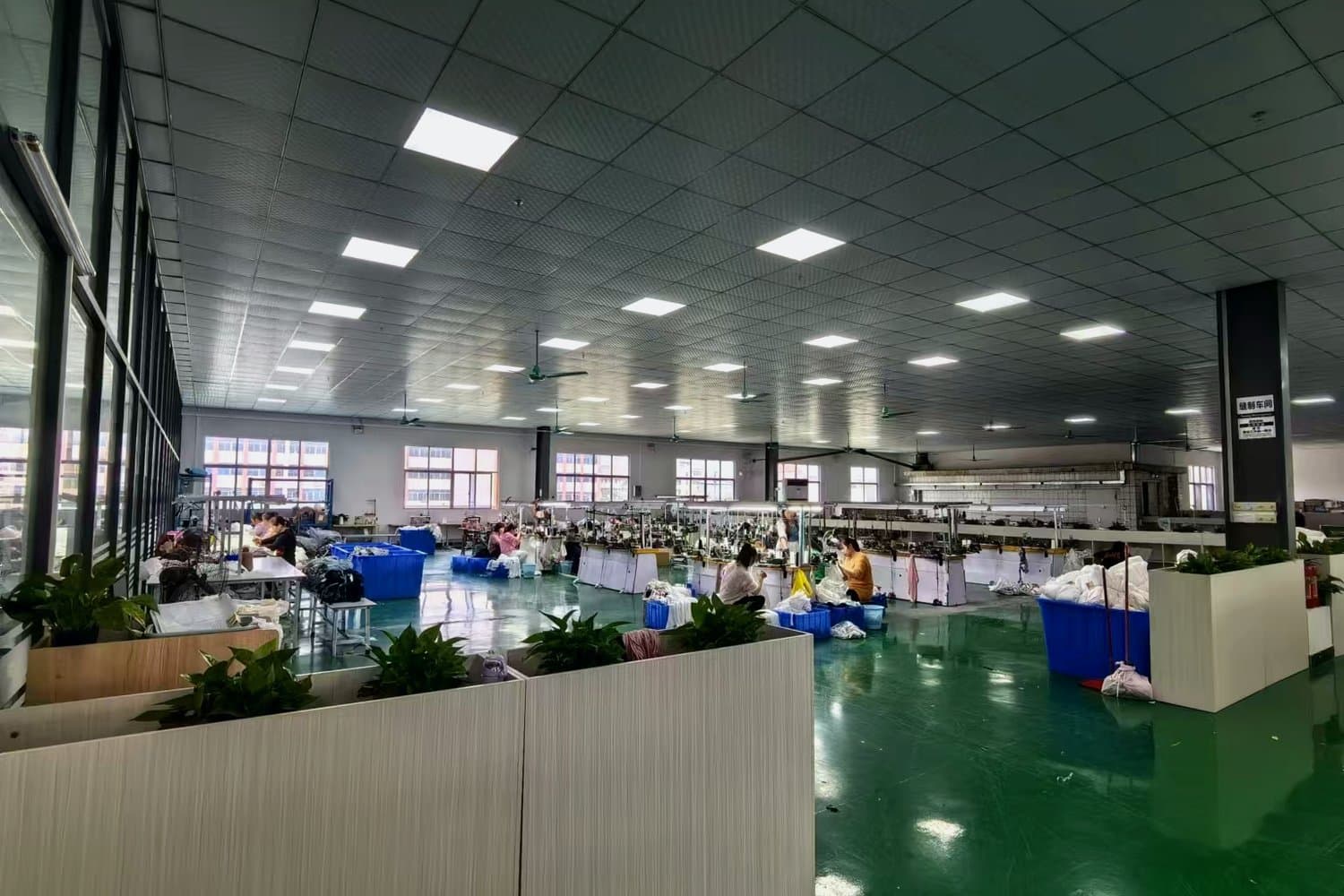
Nothing dramatic happened in bulk, which is what you want. Total bulk run was roughly 1,400 pieces — 30 pieces per colorway across most SKUs, with three best-bet styles bumped to 60 pieces. Knitting, linking, washing, and finishing ran across four weeks. We sent two in-line photo updates and the founder did not request a mid-production inspection, which was appropriate for a project this size.
The one production-side note worth flagging: dye-lot consistency held across all 30 SKUs because the founder had locked the palette early enough for us to batch lab dips and bulk dye in coordinated cycles. A founder who keeps changing colors mid-development ends up paying for fragmented dye lots — sometimes literally a 10-15 percent surcharge per off-cycle lot. Avoiding that was the single biggest cost saver in the project.
Week 14: Shipment
Final inspection ran on day 92. The 29 on-schedule SKUs shipped by sea from Yantian. The one re-graded jacket shipped by air ten days later, at the brand's cost — roughly an extra 1.20 to 1.60 dollars per piece on that style, which the founder accepted as the price of their own revision.
Landed cost on the sea-freight portion came in within around 4 percent of the original quote, the variance driven almost entirely by the re-dye fees on the two darker colors and a small fuel surcharge on the booking. For a debut PO with this much complexity, that is a clean outcome.
What This Project Did Not Do
It is worth being explicit about what the founder did not attempt, because the omissions were as important as the inclusions. They did not request custom labels, custom branded hangtags, or custom packaging in the first PO — they used our stock private-label packaging options and saved the custom packaging round for PO number two. They did not try to negotiate MOQ below 30 pieces per colorway, which would have killed the dye-lot economics. They did not push for OEM-style tech packs they could not maintain. They did not add SKUs mid-development. Every one of those choices, made by a first-time founder, is unusual and disciplined.
What a Repeat Buyer Should Take from This
The takeaway is not that 90 days is always possible — it is not. A 90-day debut works when the founder accepts ODM, locks yarn in week two, locks color in week eight, and treats sample revisions as the only place to change fit. Stretch any of those decisions and the calendar stretches with it, usually by two to three weeks per slipped decision.
The second takeaway is about MOQ. A 30-piece-per-colorway floor sounds restrictive until you do the dye-lot math. Pushing colorways below that threshold means either paying premium dye fees on shared lots, accepting longer lead times while we batch with other clients, or rejecting the run. For a 12-color palette, 30 pieces each is the sweet spot where a debut brand can hold its margin without forcing the supply chain into unprofitable territory.
Finally, the boring observation: nothing about this project required heroics. It required a founder willing to make decisions in the right week, a manufacturer willing to carry the technical load that the founder could not, and a tolerance for the fact that some samples come back wrong and that the cost of fixing them on the next round is always lower than the cost of arguing about them on this round.
---
Talk to our team about this
If you're planning a real project around any of the points above, we'd be glad to take a quick look. Send a short brief and we'll come back within one business day with a practical direction, MOQ + lead time estimate, and a sample plan if it makes sense.
Most first-time brands we work with land between 18 and 35 SKUs at debut, with 25-30 being the sweet spot. Below 18 you cannot build a coherent collection story on the website; above 35 you start straining a single founder's decision bandwidth and burning through development weeks on styles that will not earn their slot at retail. The composite case in this article used 30 SKUs across eight base patterns and twelve colorways, which is on the higher end of comfortable for a debut without a dedicated production manager. If you are running solo, consider 20-25 SKUs for round one and use the second PO to expand.
If you are working ODM with a manufacturer that has its own pattern team, a formal tech pack is not required to begin development. References, yarn selections, fit preferences, and a willingness to sign physical samples are enough to start. If you are working OEM, the answer is the opposite — without a tech pack, OEM development collapses into endless revisions, because there is no shared source of truth. The honest answer for most first-time brands is that ODM without tech packs is faster and cheaper for round one, and the tech-pack discipline can come in PO two or three once you have learned what your fit actually looks like.
It comes down to dye-lot economics. Yarn dyeing has minimum batch sizes set by the dye vat and the cost of mounting the dye job, and for the yarn weights typical in mid-gauge sweaters that floor lands at roughly 30 garments worth of yarn per color. Below that, either the per-unit cost climbs sharply or the mill batches your color with another client's order, which extends lead times and reduces control over the exact shade. Thirty pieces per colorway is the smallest run that lets a first-time brand keep both cost and color consistency under control.
Sometimes, but rarely without compromise. Real compression usually means cutting sample rounds (which raises the risk of bulk problems), pulling from existing ODM patterns instead of developing new fits (which limits how distinctive the collection feels), or air-freighting the final shipment at three to five times the sea-freight cost. We have shipped debut collections in 70-75 days when a brand committed early, ran a single PP round, and accepted the catalog patterns. If you need 60 days, you are probably better served buying a small run of existing ODM styles and saving custom development for the following season.
Three show up repeatedly. First, re-dye fees on hard-to-match colors, especially darker shades and very saturated brights, which can add 50-150 dollars per off-spec lab dip. Second, packaging — first-time brands often forget to budget polybags, hangtags, size stickers, and inner cartons, which together usually add around 0.80 to 1.40 dollars per piece even with stock options. Third, air-freight rescues on styles that needed an extra sample round, which can add 1-2 dollars per piece on the affected SKUs. None of these are large individually, but together they explain why landed cost typically runs 3-6 percent over the original quote.
We focus on men's sweaters, cardigans, knit jackets, jacquard knitwear and private label knitwear. We support B2B buyers with OEM/ODM development, sampling and bulk production planning.
MOQ, lead time, cost ranges, gauge selection and QC checkpoints across typical OEM/ODM knitwear programs in NA + EU. Enter your email — we'll send you the report link in 30 seconds.
No spam. Unsubscribe with one reply. We use your email only to send you the report and follow up if you want a sourcing conversation.