Color is the part of a knit program most buyers are most emotional about — and the part where the factory has the least margin for error. A sweater that arrives one shade off from your reference can make the entire bulk unsellable. This guide explains how Pantone color matching actually works in custom knitwear, what tolerances are realistic, and how to set up an approval process that lands the color you imagined.
Color is not subjective in production. It is measured, signed-off and tracked — and the buyers who treat it that way get repeatable results.
Why Color Matching Is Harder in Knitwear Than in Wovens
Common Questions
Why is colour matching harder in knitwear than in woven fabric?
Because a knitted surface is three-dimensional. Loops create shadow, so the same dye reads differently at different gauges and in different structures. A colour approved on a flat swatch can look different on a ribbed cuff of the same yarn.
Should I specify TPX or TCX?
TCX, where you have the choice. The cotton-based standard is closer to a textile surface than the paper-based one, so it gives the dyehouse a more achievable target. Whichever you use, name it - a Pantone number without the suffix is ambiguous.
What is a lab dip and how many rounds are normal?
A lab dip is a small dyed sample submitted for approval before bulk dyeing. More than one round is normal; each round costs a fee and calendar time, which is why an unambiguous colour reference at the start is the cheapest thing a buyer can provide.
What is Delta-E and why should it be in the spec?
Delta-E is a numeric measure of colour difference. Specifying an acceptable Delta-E turns colour approval from an argument into a measurement, which matters most when a colour has to match across styles or across a reorder.
Why do buyers need to agree the light source?
Because a match under one light can fail under another - the effect known as metamerism. Agreeing the light booth conditions, typically D65 with a secondary source, means both sides are approving the same thing.
A flat woven swatch and a knitted swatch dyed in the same dye bath will read differently to the eye. The reason is structure: knit loops scatter and absorb light differently than the flat warp-and-weft of a woven, so the perceived color shifts. Surface texture changes this further — a brushed mohair reads softer and lighter than a smooth fine-gauge merino dyed in the identical lot.
That is why Pantone matching for knitwear is always fiber-on-fiber: the lab dip must be done on the exact yarn that will be used in bulk, knitted to the same gauge and stitch, with the same finishing.
Variable
Effect on perceived color
Buyer should specify
Fiber
Cotton, wool, acrylic absorb dye differently
Final yarn composition
Gauge
Loop size changes light reflection
Final GG (e.g. 7GG vs 12GG)
Stitch structure
Cables and ribs cast shadow
Reference stitch
Finishing
Brushing, washing, anti-pill alter shade
Finishing route
Light source
Color shifts under D65, TL84, A
Approve under all 3
The Pantone System: TPX, TCX and Solid Coated
Not every Pantone book is appropriate for knitwear. The three you will encounter:
Pantone Solid Coated (PMS-C) — the graphic design standard. Useful as a starting reference but printed on paper, so it does not represent a textile.
Pantone TPX (Textile Paper eXtended) — pigments printed on paper, designed for textile briefing. Common in tech packs.
Pantone TCX (Textile Cotton eXtended) — the same colors dyed on cotton fabric. The most accurate reference for textile work.
Where possible, brief in TCX. A code like `19-1664 TCX True Red` gives the dye house a real textile target rather than a printed approximation. If you only have a Solid Coated reference, send it but flag that the match will be interpreted onto yarn.
Lab Dips: The First Color Round
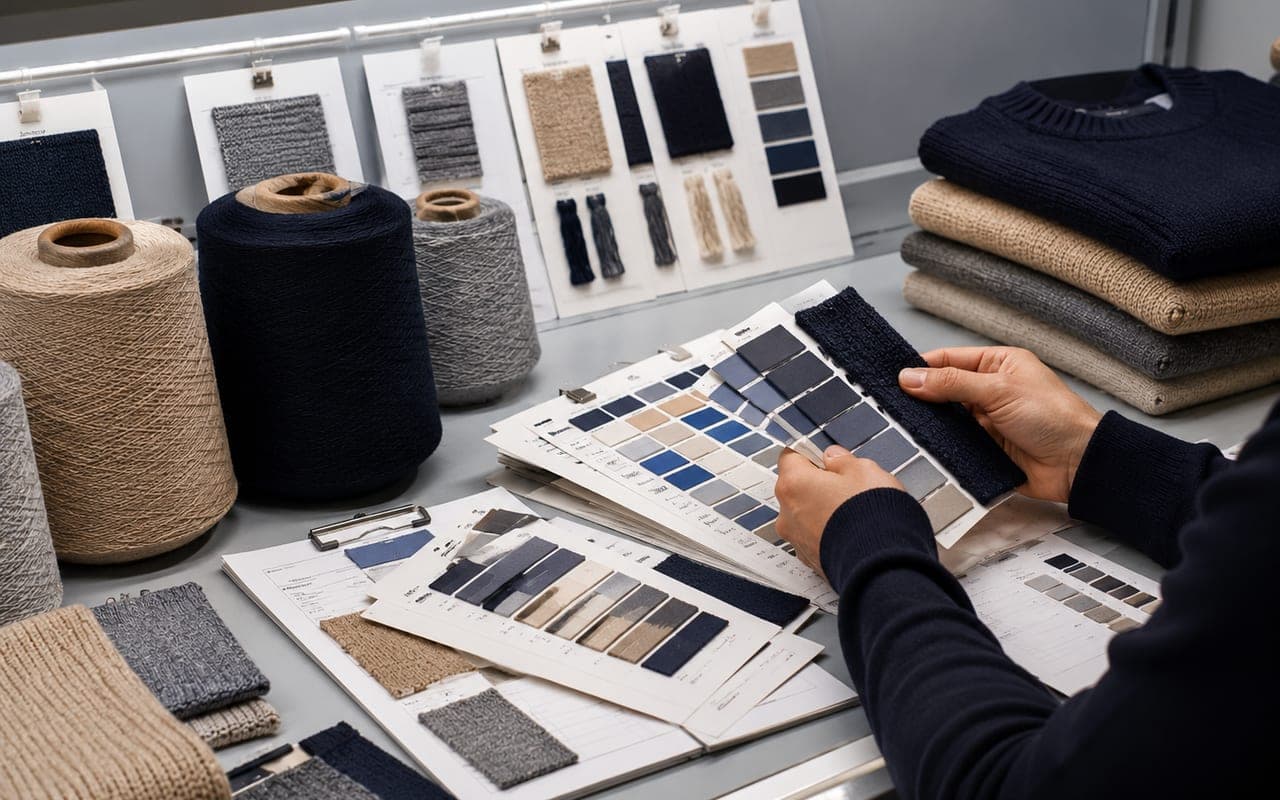
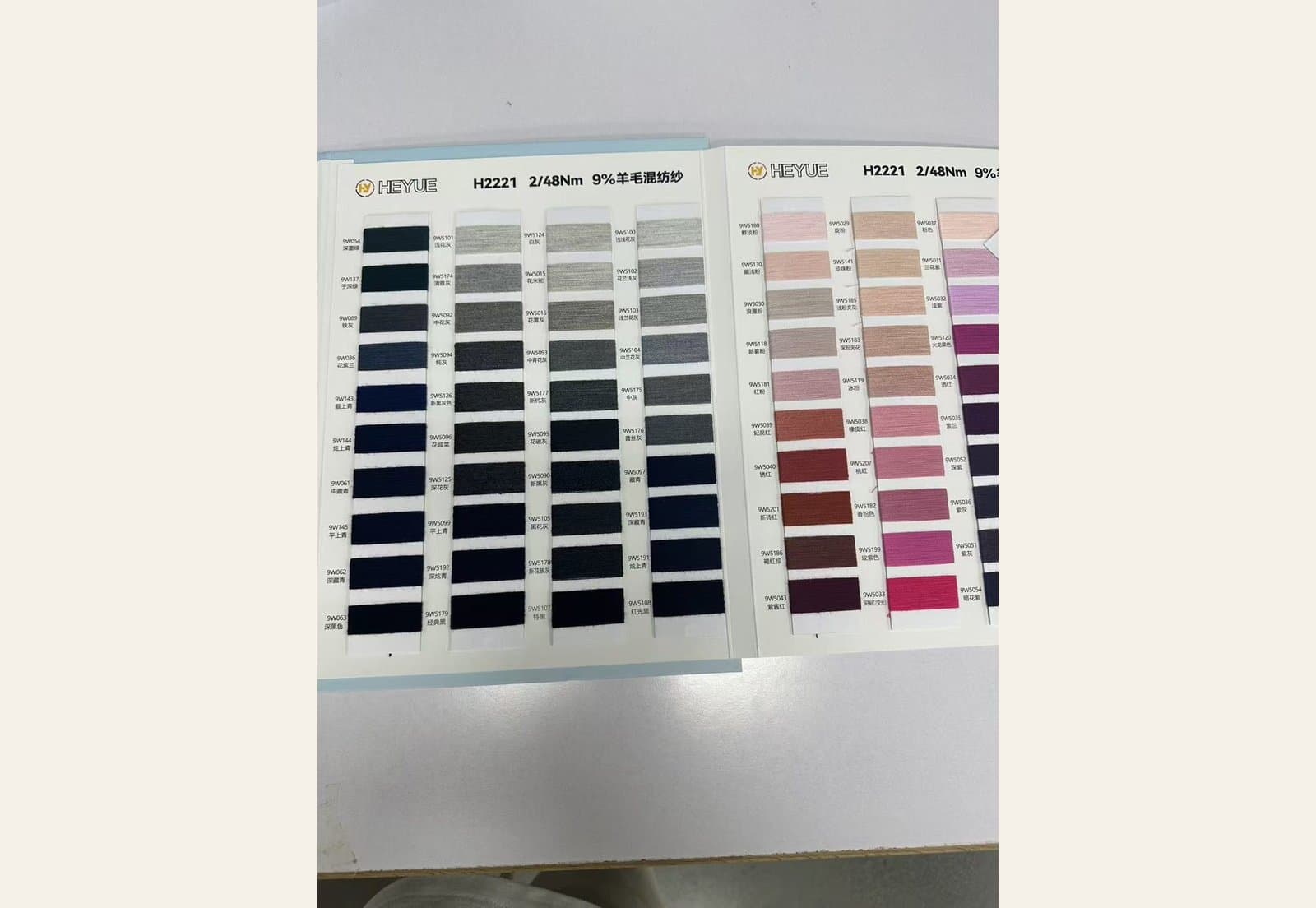
A lab dip is a small test-dyed yarn skein produced before bulk dyeing. The dye house mixes a recipe, dyes a skein, and sends two or three options — usually a tone slightly above, on, and slightly below the target. The buyer picks the closest, comments on direction ("warmer," "less yellow," "darker by 5%"), and a second round is dyed against that feedback.
A typical lab dip cycle:
Round
Typical time
What you get
What you do
Round 1
7–10 days
2–3 options against your Pantone
Comment on direction
Round 2
5–7 days
Refined 1–2 options
Approve or fine-tune
Round 3 (if needed)
5–7 days
Final corrected lab dip
Sign-off for bulk
Most colors land in 2 rounds. Difficult shades — saturated reds, deep navies, vibrant teals, fluorescent tones — can take 3 or more. Build that into your calendar; do not assume one round is enough. For broader timeline context, see our sweater sampling lead time guide.
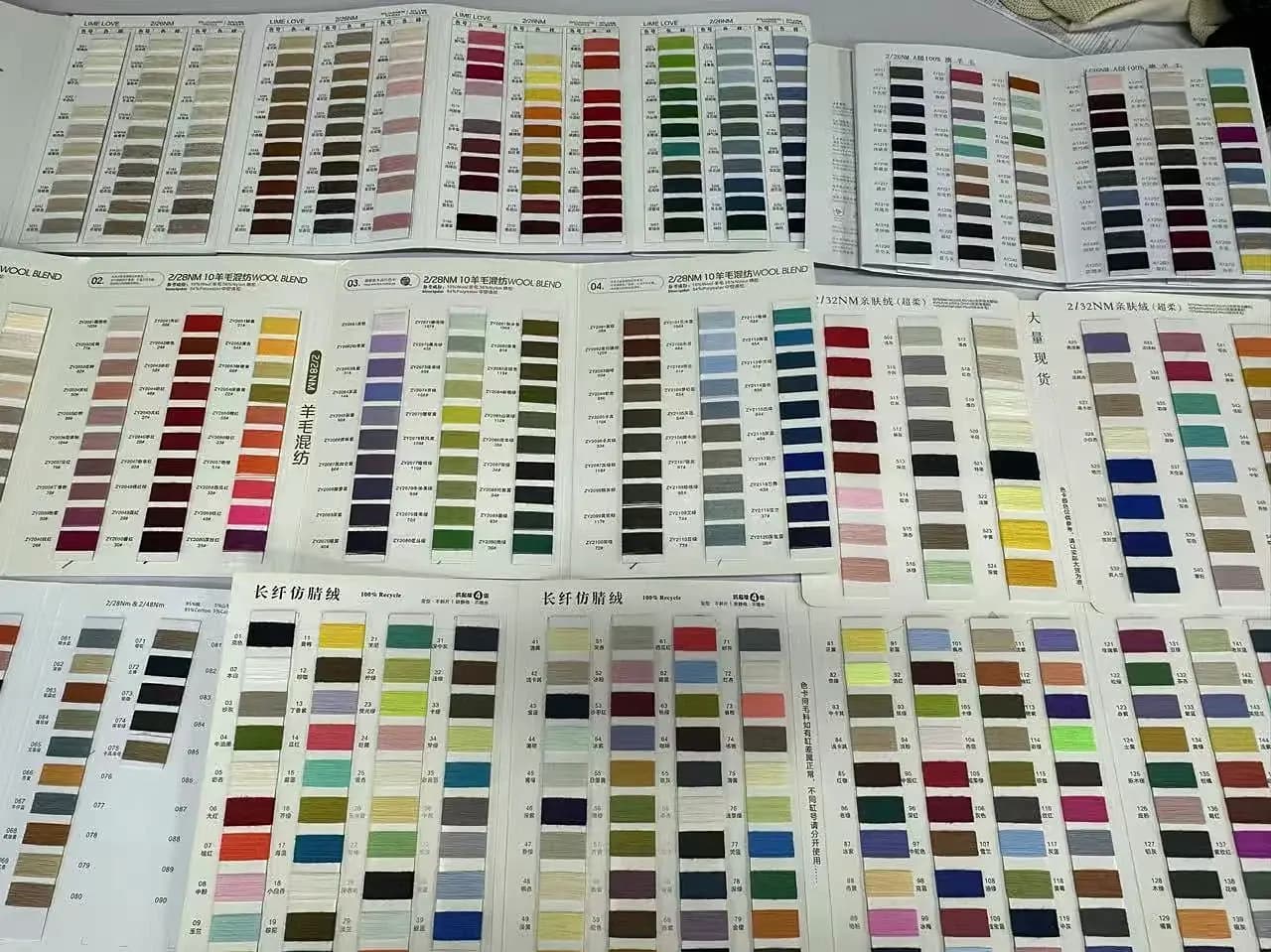
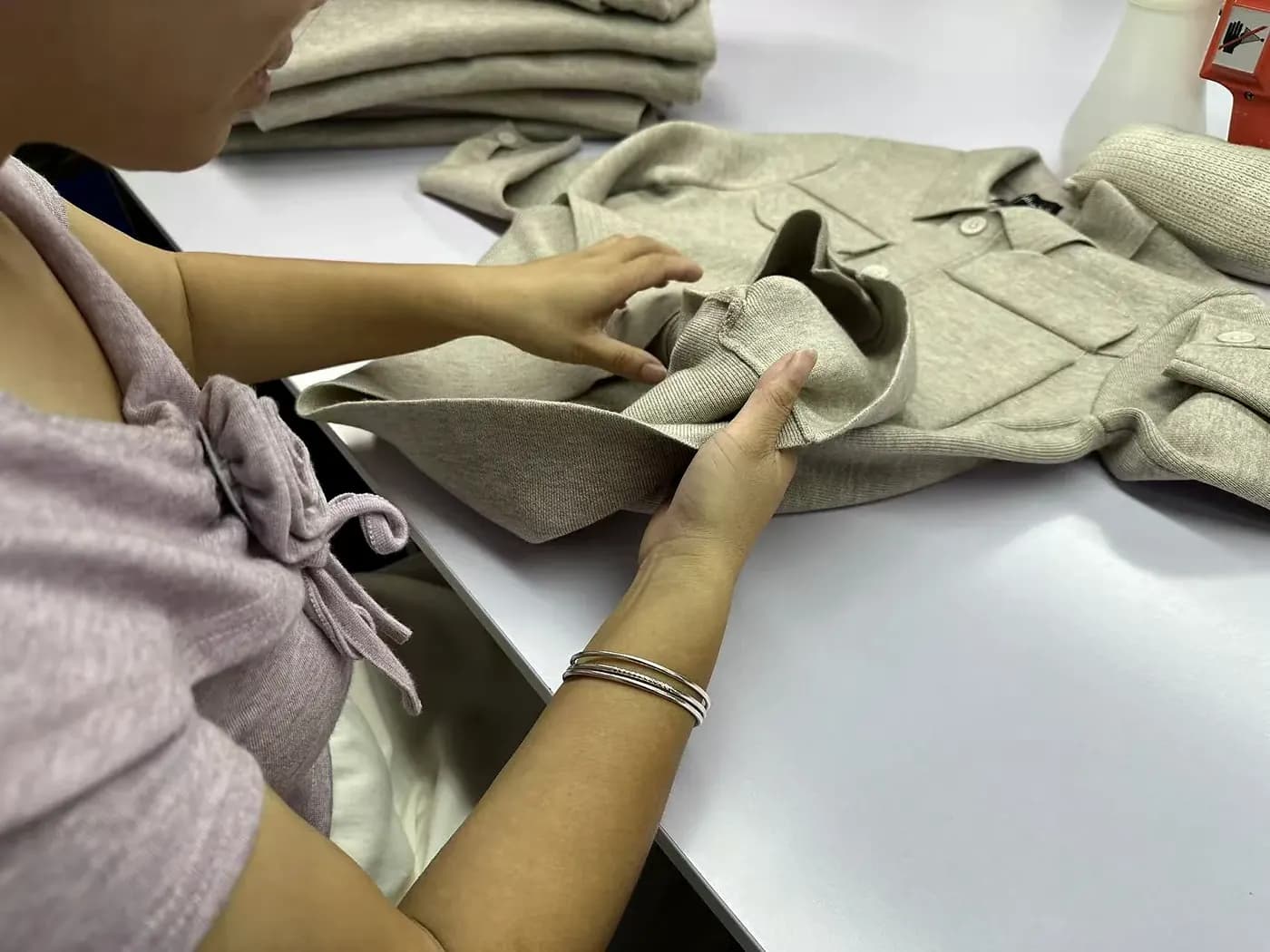
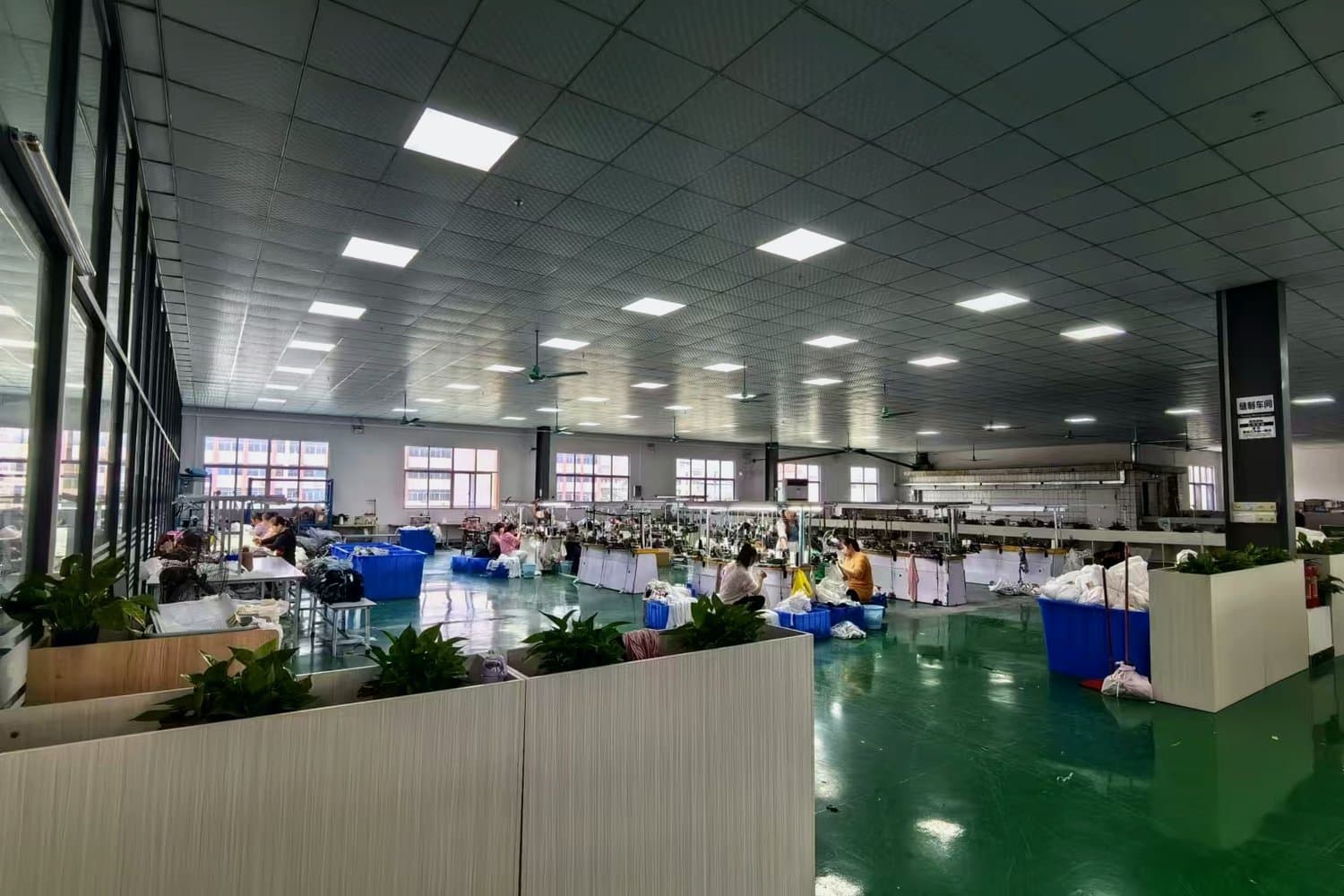
Stock yarn shades are checked against the brief first; a lab dip is only needed when no stock shade is close enough. Photographed in our Dongguan factory, November 2026.
Delta-E: The Numeric Tolerance
Professional color approval uses a measured tolerance, not just an eyeball check. Delta-E (ΔE) is the calculated distance between two colors in a uniform color space (CIELAB). Lower ΔE means closer match.
ΔE ≤ 1.0 — virtually no perceptible difference, premium standard
ΔE ≤ 1.5 — Licheng's working tolerance for bulk vs approved lab dip
ΔE ≤ 2.0 — acceptable for casual / promotional ranges
ΔE > 2.5 — visible difference, typically rejected
Reputable factories use a spectrophotometer (such as Datacolor or X-Rite) to measure bulk yarn against the approved standard. Ask whether your factory measures color or only assesses visually — measurement is what makes color repeatable across reorders.
The Light Booth: D65, TL84 and A
Two colors that match under one light source can mismatch under another. This is called metamerism, and it is the source of most color disputes between buyer and factory.
All serious color approval is done in a standardized light booth under three illuminants:
D65 — average daylight; the primary standard for apparel
TL84 — European retail fluorescent; how the sweater will look in store
Illuminant A — incandescent / warm domestic light
Approve your color under all three. If it matches under D65 but shifts noticeably under TL84, the dye recipe needs adjustment before bulk. This is also why approving a lab dip from a phone photo is never sufficient — request the physical skein.
The Bulk Approval Step
Lab dip approval is not the end. Before mass production, the factory dyes the actual bulk yarn lot and sends a bulk yarn submit (sometimes called BYS or bulk lab dip) against the approved lab dip standard. Only when the bulk lot reads within the agreed ΔE tolerance does knitting begin.
For multi-color programs, also confirm whether colors must match across styles within the collection — a navy on a polo should read the same as the navy on a crew neck. This requires shared dye lots or strict lot-to-lot tolerance, and should be flagged in the tech pack.
Common Color Approval Mistakes
Approving from a JPEG. Screens lie. Always sign off on the physical skein under booth lights.
Skipping the bulk yarn submit. A great lab dip does not guarantee a great bulk lot.
Briefing with a worn garment as reference. Wash, sun and time shift the original color; it is not a reliable target.
Underestimating saturated and dark shades. Reds, royal blues and deep blacks routinely need an extra dip round.
Mixing fiber composition mid-program. If you change from 100% cotton to a cotton/acrylic blend after lab dip approval, the color will move.
Practical Buyer Checklist
Before the first lab dip:
[ ] Pantone code(s) specified, ideally TCX, with `Solid Coated` only as fallback
Request a quote with your Pantone references and we will run the lab dip program against your tolerance, on the exact yarn you will use in bulk.
---
Talk to our team about this
If you're planning a real project around any of the points above, we'd be glad to take a quick look. Send a short brief and we'll come back within one business day with a practical direction, MOQ + lead time estimate, and a sample plan if it makes sense.
You supply a Pantone (TCX/TPX) reference; the mill dyes a lab dip, we send it for approval, then dye the bulk yarn to the approved standard. Stock colours skip the dyeing step.
A lab dip is a small dyed yarn sample for colour sign-off before bulk. It prevents costly colour mismatches on the full order.
Not the MOQ - a custom-dyed colour still starts at 50 pieces per colour, with a small-lot dyeing surcharge below the mill's 100-300-piece dye lot, and the lab dip adds 7-15 days. Designing around in-stock colours keeps cost and lead time lowest.
We focus on heren truien, cardigans, gebreide jacks, jacquard knitwear en private label knitwear. We ondersteuning B2B-kopers met OEM/ODM ontwikkeling, sampling en bulkproductie planning.
Ready sample styles en selected custom programma's can ondersteuning lower-risk trials voor larger seizoensgebonden orders.
Ja. Merken, ook nieuwe labels die hun eerste collectie voorbereiden, kunnen een monster betalen en bekijken voordat ze een productieorder plaatsen. Twee routes: een ready sample van een gepubliceerd model voor USD 60 per stuk in ongeveer 7 dagen, of een ontwikkelmonster op basis van uw tech pack voor USD 150 per model (inclusief gareninkoop, breiprogrammering, één prototype en één correctieronde) in 15-25 dagen. Kasjmier- en mohairmodellen worden apart geoffreerd en verzending wordt tegen kostprijs berekend. De productie start pas nadat u het fysieke monster hebt goedgekeurd, vanaf 50 stuks per kleur met maten mixbaar binnen de 50. Een monster verplicht u niet tot productie; kleding voor persoonlijk gebruik maken we niet.
Ready to Start Your Project?
Get a free catalog or submit an RFQ today. Our team will respond within 24 hours.
MOQ, doorlooptijden, kostenranges, gaugekeuze en QC-checkpoints in typische OEM/ODM-breiprogramma's voor Noord-Amerika en Europa. Laat uw e-mail achter — u krijgt de link binnen 30 seconden.
Geen spam. Afmelden kan met één antwoord. We gebruiken uw e-mail alleen om u het rapport te sturen en, als u dat wilt, het sourcinggesprek voort te zetten.
De getoonde merken zijn eerder bediende OEM/ODM-partners. De logo's zijn decoratief en impliceren geen actuele aanbeveling.