Children's Knitwear Manufacturing Guide
A guide to children's knitwear manufacturing for B2B brands, covering safety compliance, sizing, material choices and design considerations.
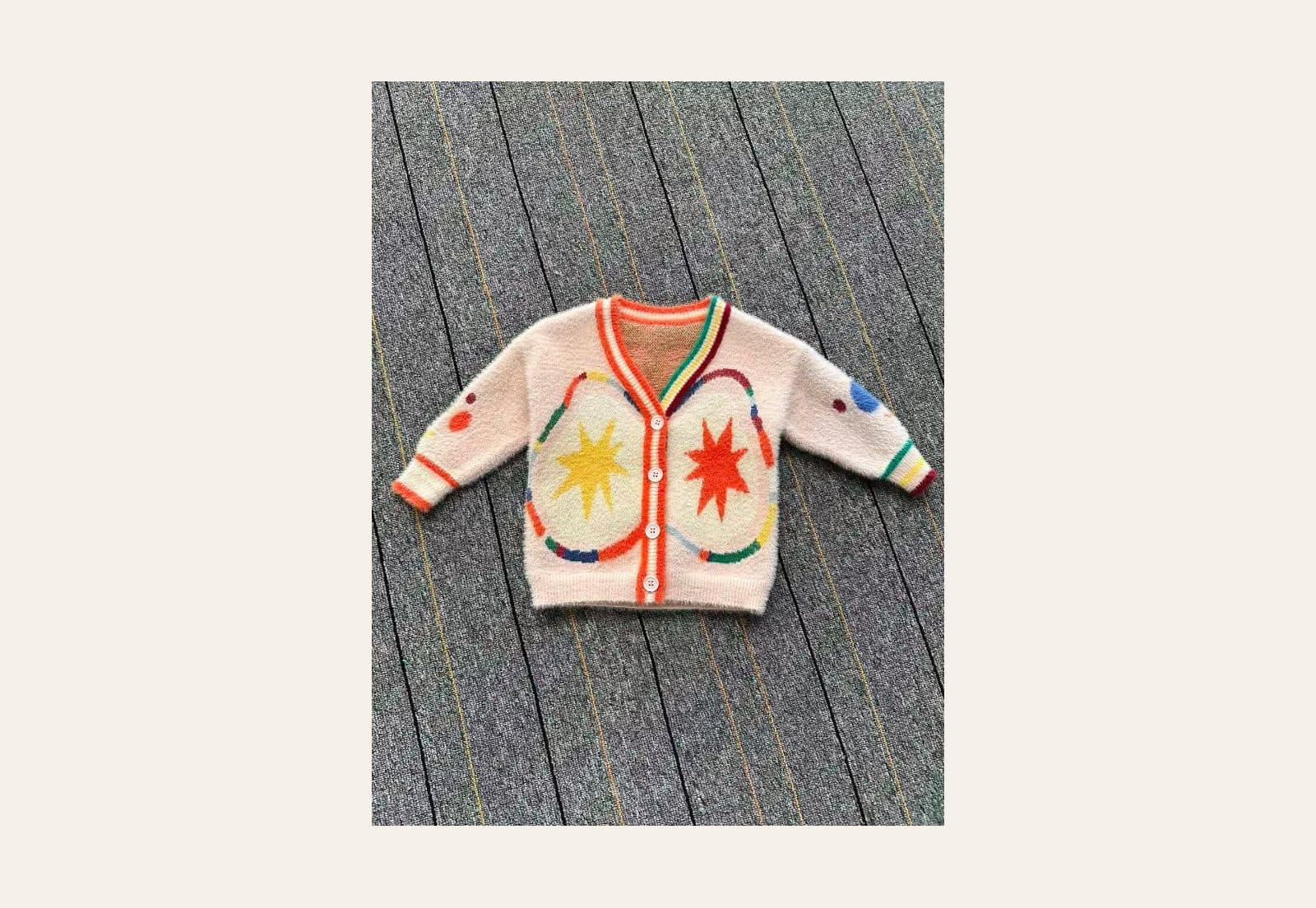
Children's knitwear is a distinct category with its own rules, especially around safety, that brands cannot simply scale down from adult sweaters. For B2B buyers entering kids' knitwear, understanding sizing, safety compliance and design differences is essential. This guide covers children's knitwear manufacturing for apparel brands.
Children's knitwear is not just smaller knitwear. Safety regulation, sizing and durability all work differently, and getting them wrong carries real liability.
What Makes Children's Knitwear Different
💬 Sourcing this for an upcoming project? Request a free quote → · MOQ 50 pcs · Sample in 15–25 days · WhatsApp us
Beyond size, children's knitwear differs in safety requirements, durability needs (kids are hard on clothes), ease of dressing, and softer fiber demands for sensitive skin. Below the children's size run those demands tighten again: our maternity and baby range is graded 0–24m separately and carries cotton or bamboo on 12 of 18 styles. Each of these shapes design and material choices in ways adult knitwear does not.
Safety Compliance Comes First
This is the non-negotiable difference. Children's apparel faces strict safety rules that vary by market:
| Market | Key requirements |
|---|---|
| North America | CPSIA: lead/chemical limits, tracking labels; drawstring rules |
| Europe | EN 14682 (cords and drawstrings), REACH chemicals |
| Both | Secure trims (no choking hazards), flammability |
The most cited rules concern drawstrings and cords (a strangulation hazard, heavily restricted on children's necklines and hoods) and small parts like buttons that must be securely attached. Confirm your factory understands and certifies to your market's children's standards before producing, see our market sourcing guide.
Sizing and Fit for Children
Children's sizing is typically by age or height (e.g. 2-3Y, 98-104cm) and varies by market. Allow for growth and ease of movement, and design for easy dressing, wider necklines or shoulder openings for younger ages. Build a proper size spec and grade carefully, see our sizing and grading guide, as kids' grading differs from adults'.
Material Choices for Kids
- Softness: children's skin is sensitive, favor soft yarns (cotton, fine merino, soft acrylic blends), avoid scratchy coarse wool
- Durability: kids are tough on clothes, so durable, easy-care, often machine-washable yarns win
- Easy care: parents want machine-washable, see our care and labeling guide
See fiber options in our yarn selection guide.
Design Considerations
- Necklines: wide or with shoulder openings for easy dressing on small children
- Trims: securely attached, no small detachable parts, no restricted drawstrings
- Fun without hazard: color and pattern over risky embellishment
- Comfort: flat seams and soft finishes against the skin
Working With a Factory on Kids' Knitwear
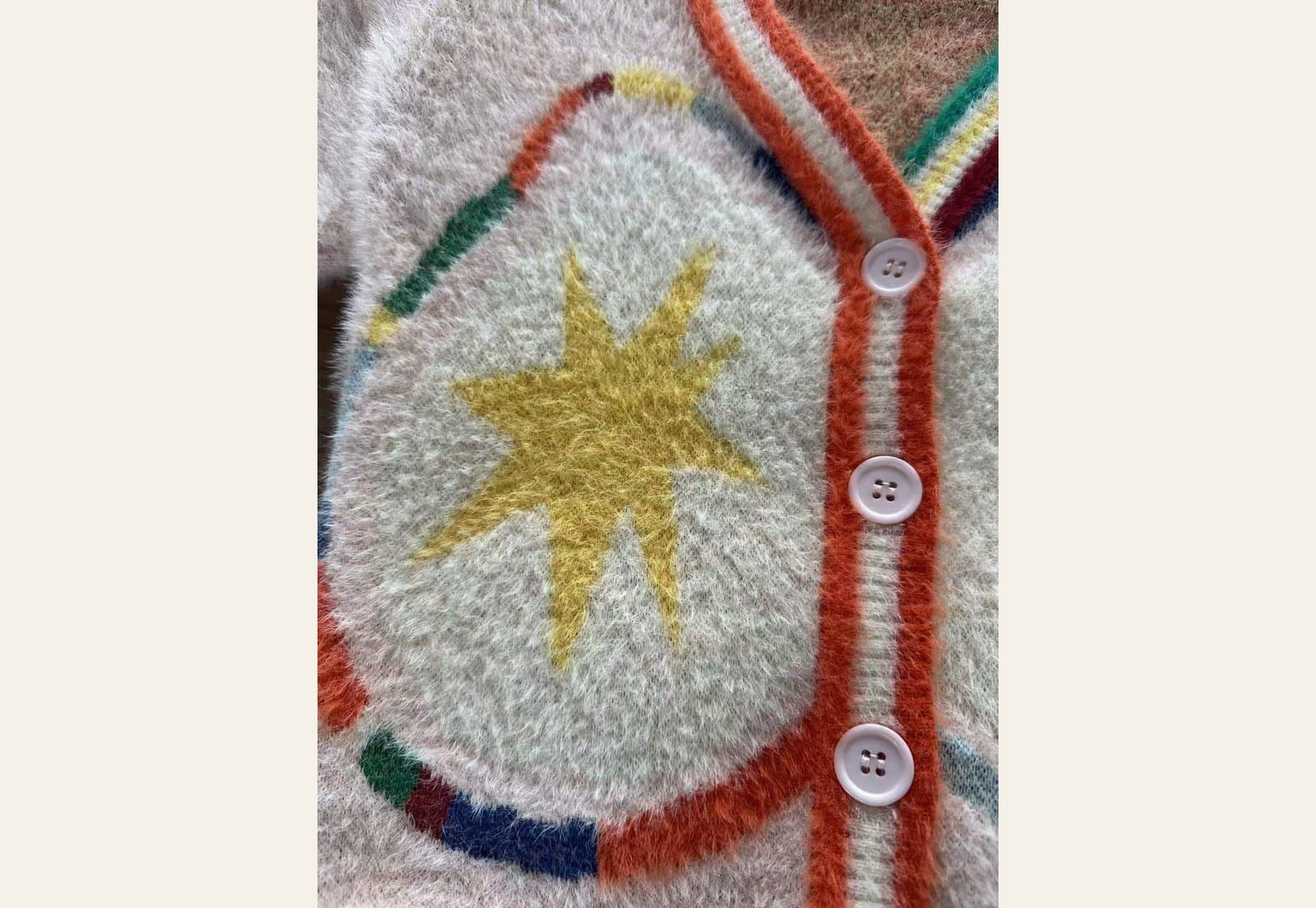
Choose a factory experienced in children's compliance, not every knitwear maker is. Confirm they can provide the test reports and tracking labels your market requires, and treat safety certification as a gating requirement in your vetting process. The liability of getting children's safety wrong makes this the most important factor.
Spec and Quality Detail by Age Band
Construction choices should follow the age band, because a toddler garment and an older-child sweater are effectively different products. Use this as a starting frame and refine against your own fit blocks:
| Age band | Typical sizing | Suggested gauge | Neckline approach | Key safety focus |
|---|---|---|---|---|
| Baby (0–24M) | by month / 56–86cm | 7GG–12GG fine soft knit | envelope shoulder or shoulder snaps | no drawstrings at all, secure trims, soft flat seams |
| Toddler (2–4Y) | 2-3Y, 98-104cm | 5GG–12GG | wide crew or shoulder opening | drawstring restrictions, securely attached buttons |
| Older child (5–12Y) | 110–152cm by height | 3GG–7GG for outerwear weights | standard crew, mock or zip | no neck/hood drawstrings (EN 14682), small-parts pull test |
We knit children's ranges across our full 3GG–18GG capability, and pair the gauge to softness and warmth rather than defaulting to the finest or chunkiest yarn. Cotton, fine merino and soft acrylic or recycled blends carry most kids' programs; for a recycled-content story, our GRS (Global Recycled Standard) certification covers traceability, and OEKO-TEX Standard 100 addresses the chemical-safety question parents care about most. ISO 9001 governs the quality system behind consistent grading and finishing. The published kids' range is 18 styles graded Newborn-12y, with cotton in 11 of them.
Worked Example: a Toddler Crewneck Program
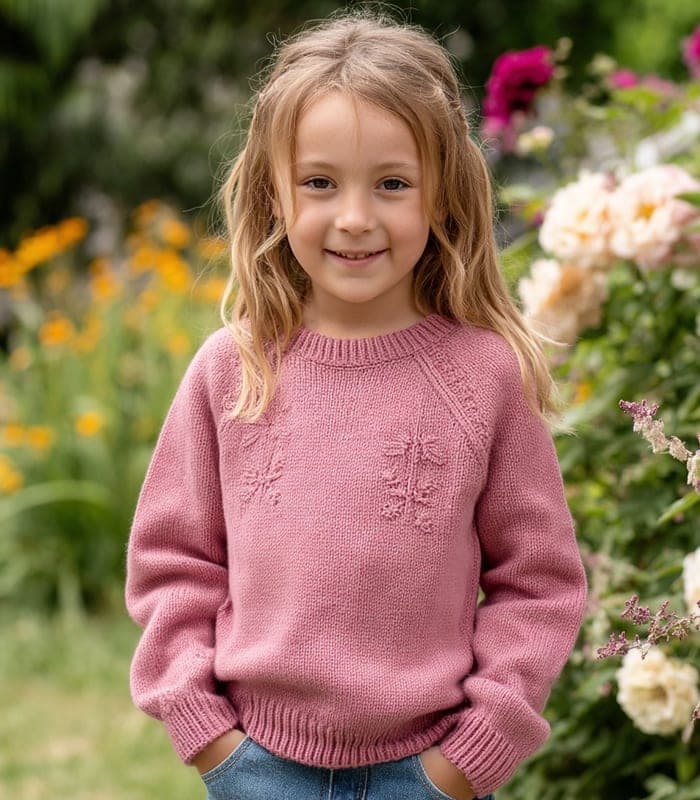
A brand briefs a 4-color toddler crewneck (2-6Y) in 100% combed cotton, wide ribbed neckline, no drawstrings, with embroidered chest motif instead of appliqué.
- MOQ: the program clears our 50-piece minimum comfortably; small launches can pilot one color at 50 pcs to test sell-through before scaling.
- Sampling: first fit and color samples in 15–25 days, used to confirm neck stretch, dressing ease and motif placement.
- Compliance check: before bulk, the factory confirms market standards (CPSIA tracking labels for North America, EN 14682 cord rules for Europe) and a small-parts pull test on any button or trim.
- Bulk: once the sealed sample and test plan are approved, bulk runs in 30–45 days with size grading set per the band table above.
A short pre-production checklist keeps these programs clean: confirmed size spec and grade, sealed sample, market test reports, tracking-label artwork, secure-trim sign-off, and a care/wash label that matches the fiber.
Common Questions
What is the minimum order quantity for a children's knitwear program? Our MOQ starts at 50 pieces, which lets new kids' brands launch a single style or pilot one color before committing to a full size run.
Which certifications matter most for children's knitwear? For kids' programs, OEKO-TEX Standard 100 covers chemical safety, GRS covers recycled-content claims, and ISO 9001 underpins consistent quality; market safety rules like CPSIA or EN 14682 are confirmed per order on top of these.
How long does it take to develop and produce a kids' style? Plan for 15–25 days to sample and 30–45 days for bulk after the sealed sample and safety test plan are approved, with extra lead time if you need third-party test reports for your destination market.
Licheng Knitwear develops children's knitwear with attention to safety compliance, soft durable yarns and market-appropriate sizing. Browse our products or request a quote.
---
Talk to our team about this
If you're planning a real project around any of the points above, we'd be glad to take a quick look. Send a short brief and we'll come back within one business day with a practical direction, MOQ + lead time estimate, and a sample plan if it makes sense.
→ Request a free quote · WhatsApp us · info@lcgarment.cn
Frequently Asked Questions
Kids' sweaters, cardigans, hoodies and sets, with child-safe trims and compliant labelling, in soft yarns and your colours and branding.
Yes - markets like the US (CPSIA) and EU have child-safety requirements on trims, drawcords and labelling. We produce to the applicable standards.
From 50 pieces per colour, samples 15-25 days, bulk 30-45 days.
We focus on heren truien, cardigans, gebreide jacks, jacquard knitwear en private label knitwear. We ondersteuning B2B-kopers met OEM/ODM ontwikkeling, sampling en bulkproductie planning.
Ready sample styles en selected custom programma's can ondersteuning lower-risk trials voor larger seizoensgebonden orders.
Ja. Merken, ook nieuwe labels die hun eerste collectie voorbereiden, kunnen een monster betalen en bekijken voordat ze een productieorder plaatsen. Twee routes: een ready sample van een gepubliceerd model voor USD 60 per stuk in ongeveer 7 dagen, of een ontwikkelmonster op basis van uw tech pack voor USD 150 per model (inclusief gareninkoop, breiprogrammering, één prototype en één correctieronde) in 15-25 dagen. Kasjmier- en mohairmodellen worden apart geoffreerd en verzending wordt tegen kostprijs berekend. De productie start pas nadat u het fysieke monster hebt goedgekeurd, vanaf 50 stuks per kleur met maten mixbaar binnen de 50. Een monster verplicht u niet tot productie; kleding voor persoonlijk gebruik maken we niet.